

U.S. hospitals should plan for a winter respiratory peak about as heavy as last season’s, according to the CDC’s outlook for the 2026–2027 season, which the agency’s October 16 respiratory illness update continues to point to. The CDC expects the combined peak in hospitalizations from COVID-19, flu, and RSV to be within 20% of last season’s peak, with low to moderate confidence.
The update arrives as flu activity runs ahead of the usual calendar. In the week ending October 10, 5.0% of clinical lab specimens tested positive for influenza, up from 3.9% the week before, according to the CDC’s FluView report, with the highest activity on the West Coast. National activity remains low overall.
For households, a season like last year’s still means crowded emergency rooms, missed work and school, and real danger for babies, older adults and people with chronic illness. The CDC says the outlook offers high-level information on how the season could unfold and stresses that “it is not a forecast.”
Putting “Similar to Last Season” Into Numbers
Last season’s combined peak came in the week ending January 3, 2026, according to the CDC. This year’s CDC season outlook for COVID-19, flu, and RSV, published September 23, lays out what a similar season could look like for each virus.
For COVID-19, modeling suggests a peak weekly hospitalization rate of 1.4 to 2.5 per 100,000 people in early to mid-January if no new immune-evading variant appears. If a variant with moderate immune escape emerges, the projected peak rises to 2.8 to 6.7 per 100,000, likely in late January 2027. About two-thirds of the experts the CDC surveyed considered that scenario unlikely.
For flu, the CDC expects a moderate season across all ages, with low to moderate confidence. Last season was moderate overall but high in severity for children. For RSV, the CDC expects a peak within 20% of last season’s, with moderate confidence. RSV peaked unusually late last season, in the week ending February 21, 2026, and the CDC says that may signal another late peak this season.
Timing is hard to predict. COVID-19 hospitalizations usually peak in late December or early January, flu between December and February, and RSV around late December or early January. When those peaks overlap, hospitals feel the combined strain.
The CDC lists several reasons the peak could run higher: a new COVID-19 variant, flu mutations that weaken immune protection, more severe strains, and lower vaccine uptake or effectiveness than last season.
West Coast Flu Climbs Ahead of the Usual Calendar
FluView shows activity highest in HHS Regions 9 and 10, which include California, Arizona, Nevada, Hawaii, Washington, Oregon, Idaho, and Alaska. The CDC called early-season activity higher than typical for this time of year but within expected seasonal variation.
Nationally, 2.1% of outpatient visits were for flu-like illness, below the 2.9% baseline. Hospitals reported 4,024 lab-confirmed flu admissions that week, a rate of 1.2 per 100,000 people, with adults 65 and older highest at 3.8 per 100,000. No flu-related pediatric deaths had been reported for the new season, and no new human infections with novel flu viruses were reported as of October 14.
Most flu viruses identified so far are A(H1N1). Early lab testing found that 94.6% of characterized H1N1 viruses, and all tested H3N2 and B/Victoria viruses, were well recognized by antibodies against this season’s vaccine strains. That is an encouraging early signal, but it does not guarantee how well the vaccine will work.
Elsewhere, the CDC’s October 16 update said COVID-19 activity remains elevated in some regions but is declining nationally, RSV activity is very low, and rhinovirus and enterovirus, common causes of colds, are elevated.
Protecting Babies, Older Parents, and Chronically Ill Relatives
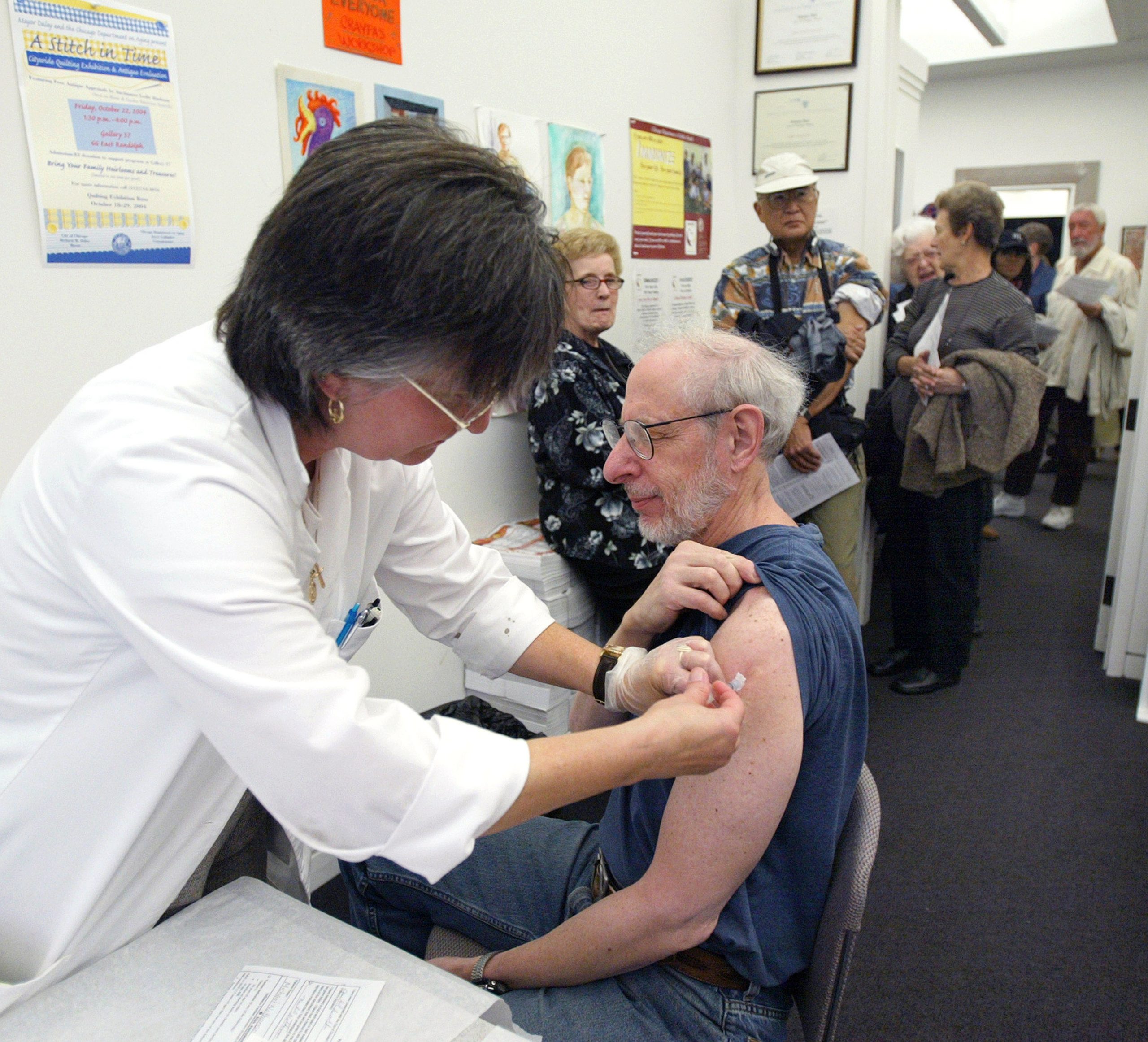
The CDC recommends annual flu vaccination for everyone 6 months and older, ideally in September or October. Flu vaccines prevented an estimated 180,000 hospitalizations in the 2024-2025 season, according to the outlook.
For RSV, CDC’s RSV vaccine recommendations call for vaccinating adults 75 and older and adults 50 to 74 who are at increased risk. Infants under 8 months can be protected through maternal vaccination during pregnancy or a long-acting antibody shot. Adults considering a 2026–2027 COVID-19 vaccine can ask a doctor or pharmacist whether it fits their age and health and how their plan covers it.
Prescription flu antivirals work best when started early and matter most for higher-risk patients, the CDC says. People with fever, cough or shortness of breath should rest, stay hydrated and seek care for severe symptoms such as difficulty breathing, chest pain, confusion or bluish lips.
Families with an infant, an older parent or someone with a chronic condition at home may want a plan now for testing, telehealth visits and where to go after hours. Parents of young children can also ask their pediatrician whether the office offers same-day sick visits or a nurse line during peak months.
The CDC says it will update the outlook if any virus shifts course, and it posts new respiratory data every Friday. For now, the agency’s outlook suggests this winter will likely look familiar, and the steps that helped last season still apply.
Key Questions Answered
What does the CDC expect this winter?
The CDC expects the combined peak in COVID-19, flu, and RSV hospitalizations to be within 20% of last season’s peak, with low to moderate confidence.
When will respiratory illness peak?
COVID-19 and RSV usually peak in late December or early January, and flu between December and February. RSV peaked late last season and could do so again.
Is flu already spreading?
Yes, but activity remains low nationally. Flu test positivity rose to 5.0% in the week ending October 10, with the highest activity in West Coast states.
What could make the season worse?
A new COVID-19 variant, flu mutations that weaken immune protection, more severe strains, or lower vaccine uptake or effectiveness could push the peak higher than expected.
Who faces the highest risk?
Young children, adults 65 and older, pregnant people, and those with chronic conditions or weakened immune systems face the greatest risk of severe illness.
How can families prepare?
Get recommended flu, RSV, and COVID-19 shots after talking with a clinician, know when to seek care, and ask early about antivirals for high-risk relatives who get sick.
Published by Medicaldaily.com


