

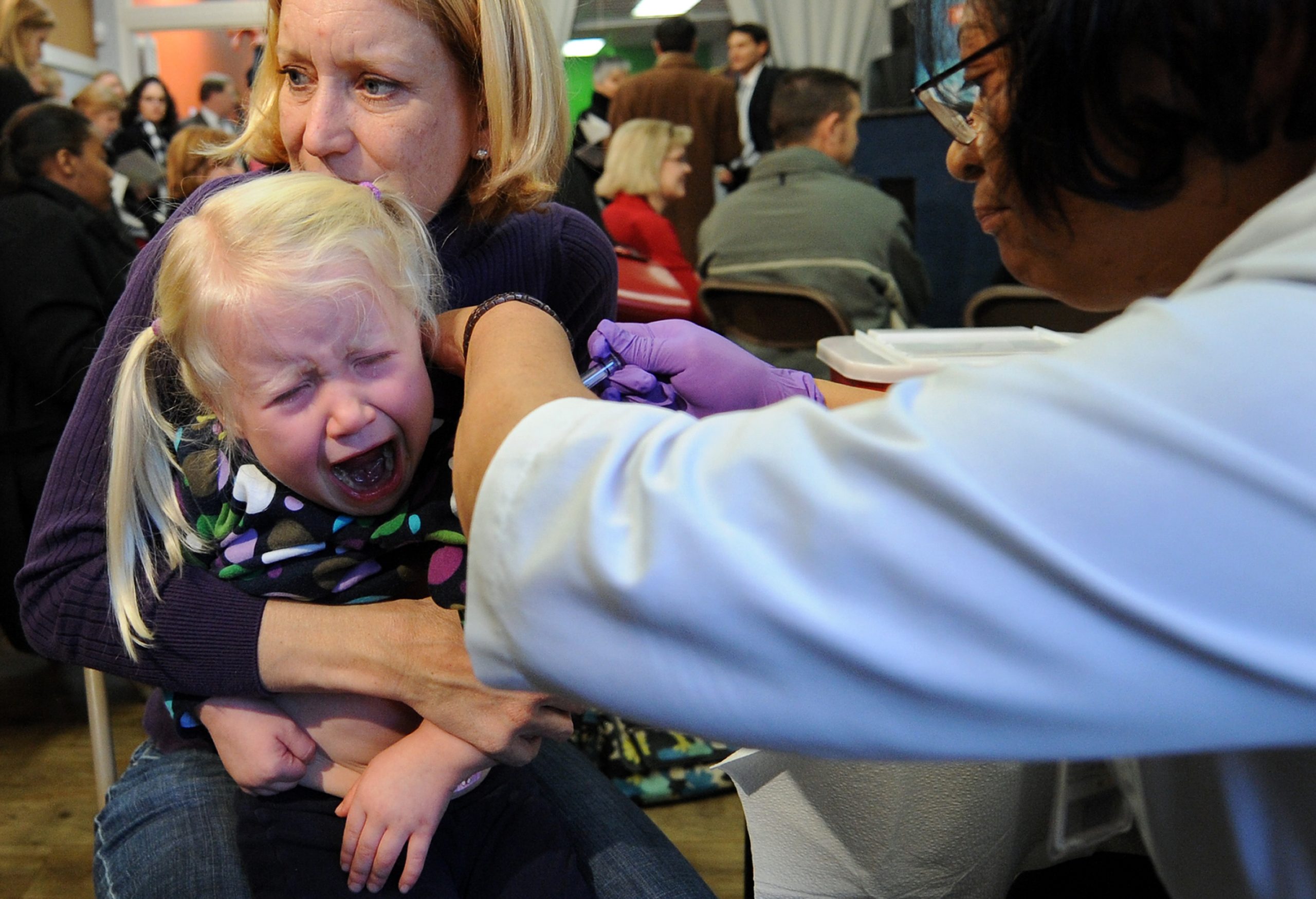
Sixteen states and Pennsylvania’s governor are now asking a federal judge in San Francisco to undo the Department of Health and Human Services’ January decision to stop recommending seven vaccines for all children. An amended complaint filed Oct. 2 in the U.S. District Court for the Northern District of California added New York and Vermont as plaintiffs and named Erica Schwartz, now director of the Centers for Disease Control and Prevention, as a defendant.
The seven vaccines protect against rotavirus, meningococcal disease, hepatitis A, hepatitis B, influenza, COVID-19, and respiratory syncytial virus (RSV). Under the January schedule, they were moved out of the universal category and into “shared clinical decision-making,” meaning a parent and clinician decide together, or into recommendations for certain higher-risk children.
For parents, the case is more than legal procedure. Federal recommendations shape what insurers must cover at no cost, what the Vaccines for Children program supplies and which shots pediatric offices treat as routine. Families planning fall checkups and flu shots are watching a fight that could decide which recommendations stand.
Two New States and a Second Try on Advisory Panel Claims
The lawsuit, Arizona et al. v. Kennedy, is not new. Fourteen states and Pennsylvania Gov. Josh Shapiro filed it on Feb. 24, 2026, before Judge Vince Chhabria. On Sept. 8, Chhabria let the core challenge proceed but dismissed, for lack of standing, the states’ bid to remove Kennedy’s appointees to the Advisory Committee on Immunization Practices (ACIP), giving them 21 days to amend, Courthouse News Service reported.
“The states plausibly allege that demoting a vaccine from ‘universally recommended’ to ‘shared clinical decision-making’ will predictably lead to less vaccine uptake,” Chhabria wrote, according to that report.
The amended complaint filed by the states again seeks relief “to declare the Kennedy Schedule and the appointments of the Kennedy Appointees unlawful and to have them set aside.” It alleges the schedule was adopted through a Jan. 5 decision memo signed by the heads of the National Institutes of Health, the Centers for Medicare & Medicaid Services and the Food and Drug Administration, bypassing ACIP review and public comment. It also cites a May 19, 2025, email from an HHS deputy chief of staff, disclosed by a Senate committee, asking that the next ACIP meeting include votes on “joint decision making” for hepatitis B. These are the states’ allegations, and the court has not ruled on whether they are true.
Announcing New York’s entry on Oct. 5, Attorney General Letitia James said in a press release: “Every parent wants their child to grow up healthy and protected from preventable diseases. For decades, these vaccines have kept millions of children out of the hospital and saved countless lives.”
HHS Defends a Smaller Schedule Built Around Peer Nations
HHS has described the change very differently. In the January CDC announcement of the new schedule, Secretary Robert F. Kennedy Jr. said, “This decision protects children, respects families, and rebuilds trust in public health.”Then-acting CDC Director Jim O’Neill said, “The data support a more focused schedule that protects children from the most serious infectious diseases while improving clarity, adherence, and public confidence.”
An HHS fact sheet on the schedule said that in 2024, “the U.S. recommended more childhood vaccine doses than any other peer nation, and more than twice as many as some European nations.” It also said trust in U.S. public health fell from 72% to 40% between 2020 and 2024. The schedule followed a presidential directive to review practices in peer, developed nations, a comparison the states’ complaint disputes.
HHS did not respond to requests for comment on the amended filing, Bay News 9 reported Oct. 5. No public HHS statement on the amended complaint was found as of Oct. 6.
Shots Remain Available and Covered While Courts Sort It Out
The most practical point for families is simple: none of the seven vaccines has been banned or pulled from the market. Children can still receive them. In January, CMS Administrator Dr. Mehmet Oz said: “All vaccines currently recommended by CDC will remain covered by insurance without cost sharing.” The HHS fact sheet said vaccines recommended as of Dec. 31, 2025, would stay covered under Affordable Care Act plans and federal programs, including Medicaid, the Children’s Health Insurance Program and Vaccines for Children, adding, “Families will not have to purchase them out of pocket.”
A separate case has also changed the picture. On March 16, a federal judge in Boston stayed the January schedule in a suit led by the American Academy of Pediatrics, and the earlier June 2024 schedule was restored, according to Georgetown University’s Center for Children and Families. MedicalDaily previously reported that the pediatricians’ lawsuit was paused ahead of an appeals court argument in the First Circuit, scheduled for Oct. 6.
Insurers have added another layer. The trade group AHIP extended a voluntary vaccine coverage pledge through 2027, though it does not bind every plan. Families in self-funded employer plans or without insurance face the most uncertainty. New York has enacted two laws so that insurance coverage, school immunization requirements, Medicaid coverage and pharmacists’ authority to vaccinate no longer depend on ACIP, James’ office said.
Parents can ask their pediatrician which vaccines a child is due for, confirm coverage with their plan before a visit, and ask local health departments about Vaccines for Children clinics if uninsured. Infants, children with chronic conditions and families in states without their own coverage laws have the most at stake if recommendations shift again.
Appeals Argument in Boston and Next Steps in San Francisco
The First Circuit’s ruling on the pediatricians’ case will determine whether the March stay holds, while Chhabria will decide whether the amended complaint fixes the standing problems he identified in September.
Much remains unsettled. No court has issued a final ruling on whether the January schedule was lawful, and the states’ claims about how it was adopted have not been tested at trial. The amended complaint does not, by itself, change any current recommendation.
For now, the vaccines remain available, coverage protections are in place through several channels, and parents can keep routine visits on track with their child’s clinician. MedicalDaily will follow both cases as rulings arrive.
Key Questions Answered
What changed in the states’ lawsuit?
An amended complaint filed Oct. 2 added New York and Vermont as plaintiffs, bringing the total to 16 states plus Pennsylvania’s governor. It names CDC Director Erica Schwartz as a defendant and again challenges both the January schedule and Kennedy’s ACIP appointments.
Which seven vaccines are involved?
The vaccines protect against rotavirus, meningococcal disease, hepatitis A, hepatitis B, influenza, COVID-19 and RSV. The January schedule moved them from universal recommendations to shared decision-making or risk-based categories.
When did the lawsuit begin, and where is it?
Fourteen states and Pennsylvania’s governor filed it Feb. 24, 2026, in the U.S. District Court for the Northern District of California. Judge Vince Chhabria partly dismissed it on Sept. 8 and allowed the states to amend some claims.
Can my child still get these vaccines?
Yes. None of the vaccines have been banned, and a separate federal court order in Boston stayed the January schedule in March. Parents can talk with their child’s clinician about which shots are due.
Will insurance still pay for them?
HHS said in January that vaccines recommended as of Dec. 31, 2025, would remain covered without cost sharing under ACA plans, Medicaid, CHIP and Vaccines for Children. Families should still confirm details with their plan, especially in self-funded employer plans.
What reasons has HHS given for the change?
HHS said the U.S. recommended more childhood doses than peer nations and that a more focused schedule would improve clarity and public trust. HHS had not publicly responded to the amended complaint as of Oct. 6.
What happens next?
The First Circuit is reviewing the Boston stay, and Judge Chhabria will consider whether the amended complaint in California can proceed. Either court’s decision could affect which federal recommendations apply.
Published by Medicaldaily.com


