Tag: women

  • Cultivating Courage and Confidence in Motherhood

    Cultivating Courage and Confidence in Motherhood

    My memories of motherhood are filled with moments of self-doubt. No mother alive doesn’t go through some self-doubt. Given all of the ideas of what is best for children, it is easy to doubt your decisions. From the mundane to the seemingly “big decisions,” it is easy to spiral into negative emotion doubting ourselves. 

    A client of mine spent some time talking with me about the fact that she and her son and husband didn’t have a ritual for dinner together. It made sense for her family and their schedule that her son ate before her husband got home, yet nearly every day she would have thoughts of doubt about whether that was really okay. Turns out it was just fine, as now he is a wonderful young adult and they are very close. It seems silly looking back that we can get so hung up on things like this but it’s easy to do. How do we know it’s going to be okay?

    Magazines, newspapers, and websites often produce stories out of research findings that show how some action or behavior is linked to some outcome, even when there is no definitive evidence that it was the cause for the outcome. The best test of how something works for your family is how it works for your family, over time!

    How nice it would be to have a crystal ball to be able to know for sure that any given choice would be the “right choice,” and that everything would turn out okay. The mind can blow things way out of proportion and make the risk to their development and well-being seem enormous. In our grasping for certainty and our fear of our doubt, we may create a lot of optional suffering. It is helpful to kindly remind yourself that kids are resilient and that you can be too. You can always make new choices after seeing the outcome.

    When Fear Is Present

    Like self-doubt, fear is another major topic in parenting. From the barrage of news reports about terrible things happening to children, mass shootings, catastrophic weather events, wars, etc., there is plenty to fearfully focus on. Add to that “time travel” in the mind, thoughts of what might or could happen, and that’s a whole lot of optional suffering in motherhood. Using mindfulness, especially a regular practice of mindfulness of thoughts and feelings, can help you step out of autopilot to see if you are actually suffering unnecessarily.

    You can shift the focus of your mind at any time. Fear is not a sign that the feared outcome is going to happen. Trying to imagine how you would face something you are afraid of that isn’t happening right now is often a waste of energy and can lead to self-condemnation. My favorite mantras, “Just this moment,” and “Just here, just now,” really help me to get out of my mind and get back into the flow of life. When you find yourself trying to “think it away,” you have to choose to redirect the mind to just be with now, to be with what is right in front of you and let fear fade into the background. It may arise again, and you can refocus again.

    I have come to understand that when fear is present, I must dig deep to move toward the thing I value. I don’t need to be rid of the fear to get through it.

    I have come to understand that when fear is present, I must dig deep to move toward the thing I value. I don’t need to be rid of the fear to get through it. I can decide to dig deep anyway, giving myself positive self-talk along the way.

    Uncovering Your Courage 

    Being brave or having courage is often described in a way that looks like having no fear. Motherhood calls for courage from the very beginning. We may go into it with sweet ideas, but we soon come to see how much we are needing to face that’s frightening or intimidating. Just like with appreciation, it is useful to stop and recognize where you were courageous. Acknowledging when you were afraid and did stuff anyway helps grow a sense of confidence.

    A client of mine was worried about whether she could be brave in the face of helping her four-year old daughter through a surgery and an overnight stay at the hospital. She noticed that she often took her fearful thoughts to mean that she wouldn’t be brave. They were some kind of bad sign. If she thought these things now, how could she do it?

    Anxious anticipation can undermine any of us.

    She also felt terrible about herself for dreading it. I encouraged her to validate herself, when she noticed the dread, by saying, “This is really hard. It’s okay.” She found it really helpful to acknowledge that simple fact, rather than to indict herself as a bad mother for all of the fear and negative thoughts. No one wants to go through hard things, and there is so much that is hard. It’s really okay to acknowledge it.

    Choosing to Be Brave

    I will always remember one of the more profound moments when I decided to be brave; where I showed myself that I could be courageous. I was finishing up the bath with my toddler son when I heard my toddler daughter fall in the other room. I ran to see her and found she had fallen and split her chin open. Blood was everywhere and I was freaked out. Here was one of the moments as a mother I had feared I wouldn’t be up to when it finally arrived. I was terrified.

    Despite the urge to cry and run the other way, I soothed her and cleaned her up anyway. After calling the pediatrician’s office who recommended I take her to the emergency room to see if she needed stitches, I called my husband to tell him to drop everything and come home. I told my husband he would be going to the ER with her!

    We can choose again and again to turn toward what we want for ourselves or our child, regardless of the mind’s first reaction.

    It dawned on me a few minutes after I hung up with him that I wanted my kids to see me be strong. I wondered what kind of message I would be sending my daughter, who was leaning on me and my soothing, if I sent her off with her dad who had just come home from being gone all day. Certainly, it wouldn’t have hurt her, but I realized here was an opportunity.

    So, as much as I dreaded it, I asked my husband to stay with our son and I took her to the ER. A few stitches and several hours later we were back home and doing fine. Courage and confidence are not something you have or not. Remember the growth mindset. We can choose again and again to turn toward what we want for ourselves or our child, regardless of the mind’s first reaction.

    When we string together moments like that, those choices lead to courage and confidence. Another gift of motherhood! Where I once went running away, I tamed my fears of spiders, bees, and snakes as well! Motherhood can show us how brave we can be.


    Excerpt reproduced with author’s permission from Just This Moment: A Guide for Moms Who Want to Enjoy Parenting, Raise Great Kids and THRIVE! by Elizabeth Torres, Psy.D. ABPP. (2019). 

    Mindfulness for Kids 

    When we teach mindfulness to kids, we equip them with tools to build self-esteem, manage stress, and skillfully approach challenges. Explore our guide on how to introduce mindfulness and meditation to your children—at any age. Read More 

    • Mindful Staff
    • June 11, 2020

    No posts found


    Source link

  • The Women Engineering the Future of Cardiovascular Tech

    The Women Engineering the Future of Cardiovascular Tech

    Few health threats loom larger in the U.S. than heart disease. It remains the nation’s leading cause of death, killing over 900,000 people in 2023, according to the CDC. Yet despite the universal stakes, the cardiovascular technology sector responsible for developing treatments and devices continues to be led overwhelmingly by men. This imbalance matters: when leadership and R&D teams do not reflect the diversity of the patient population, blind spots in design and decision-making can emerge.

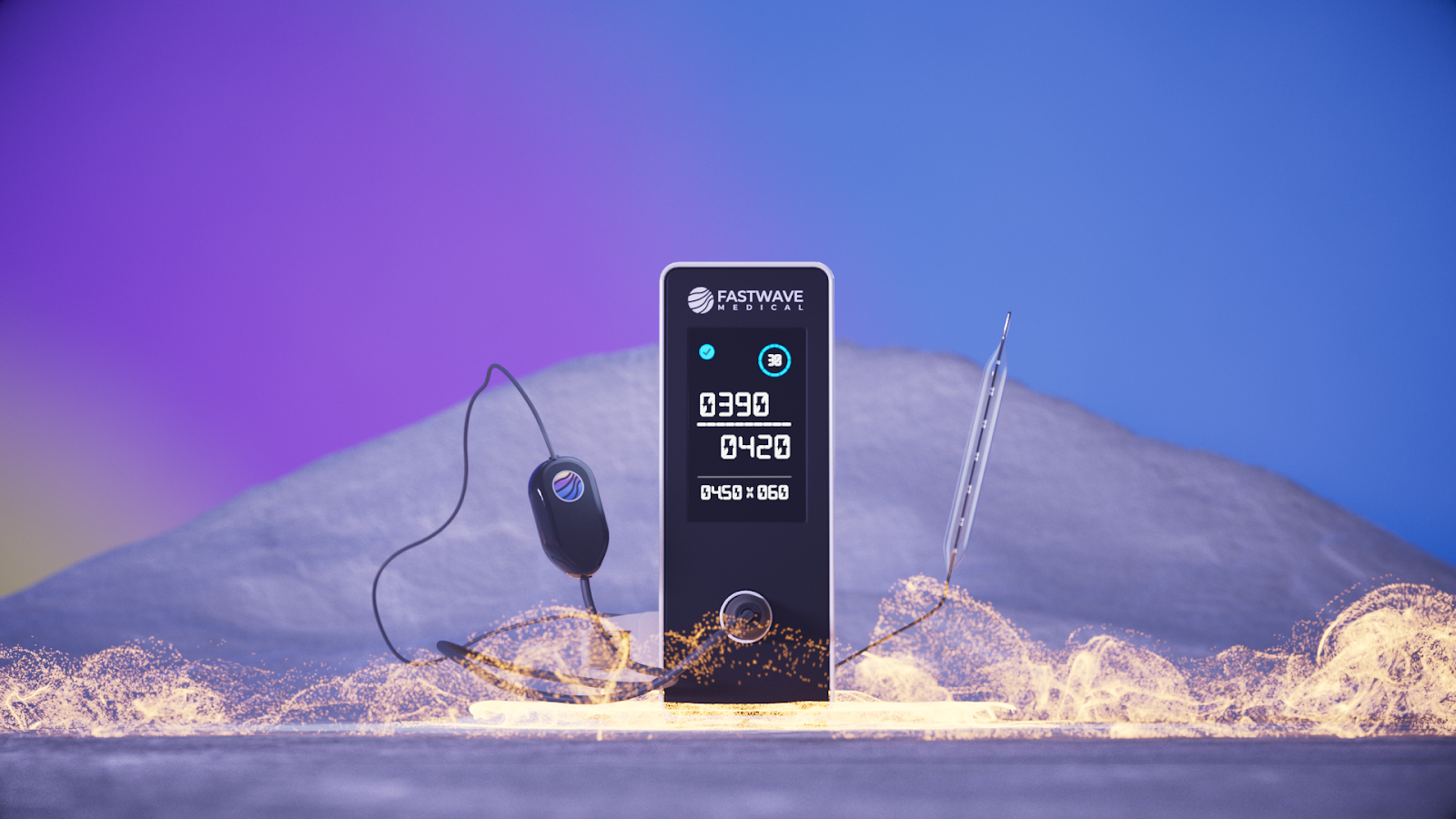
    One exception is FastWave Medical, where women hold pivotal roles in both operations and technology, shaping the company’s next-generation intravascular lithotripsy (IVL) platforms for calcified arteries. It’s a model that remains relatively uncommon in cardiovascular device development — and one that’s influencing how the technology itself is being designed.

    Why Representation Matters in Cardiovascular Innovation

    How did that composition come about? It wasn’t the result of deliberate targets, as FastWave Co-Founder and CEO Scott Nelson explains. “At FastWave, we have a majority female leadership team — not because of quotas, but because they were simply the best people for the job,” he says. That framing — merit first, diversity as outcome — reflects a hiring philosophy that prioritizes environment over intention. “Our philosophy is straightforward: create a great place to work, and you’ll attract top talent. That’s exactly how we’ve ended up with such a strong team.”

    The benefit extends beyond hiring philosophy. When team members bring different perspectives to the table, they surface questions that more homogeneous teams may not think to ask. In cardiovascular innovation — where patient needs vary widely across gender, age, and anatomy — that breadth of insight shapes everything from device design to workflow integration.

    Building Technology Through Diverse Perspectives

    The company is advancing a dual-platform approach to IVL, with two devices engineered to address limitations of first-generation systems: Sola, its coronary laser IVL platform, and Artero, its electric IVL platform for peripheral artery disease. But the technology isn’t being shaped just by leadership on paper — it’s being built day-to-day by women with decades of device development experience.

    Tristan Tieso, FastWave’s Chief Operating Officer, brings more than 20 years of experience in cardiovascular and neurovascular devices to her role — including leadership positions at Vention Medical, where she managed over 50 professionals, and at Worrell, a global healthcare design and strategy firm.

    At FastWave, she oversees engineering, quality, regulatory, and preclinical operations, and her leadership has been instrumental in building the company’s intellectual property portfolio. “When you consider that FastWave is only four years old, securing nine U.S. patents is really quite remarkable — it speaks to our team’s innovative capabilities and how seriously we’ve approached building our intellectual property portfolio from day one,” Tieso says. “This isn’t just about collecting patents for the sake of it. We’re strategically protecting the core technologies that differentiate our platforms.”

    What drives those technologies is “problem-first design.” Tieso explains, “Our entire development approach has been built around spending extensive time with interventional cardiologists, vascular surgeons, and interventional radiologists to understand their daily frustrations with existing IVL technology, then engineering backward from those pain points,” she explains. One clear example: doctors were consistently reporting hassles with reusable dongles and time lost to generator charging. “That direct input led us to make some compelling improvements to the user experience,” Tieso says — resulting in a plug-and-play, AC-powered system with one-click activation that does away with reusable dongles, generator charging, and the need to hold down buttons during procedures.

    Sukanya Iyer, Head of Technology, leads product development and engineering. With prior roles at Boston Scientific, Abbott, and St. Jude Medical, she holds multiple patents in ablation systems and has contributed to the development of major cardiovascular devices, including multiple generations of the WATCHMAN system, force-sensing ablation catheters, and renal denervation systems.

    At FastWave, she is reimagining how sonic pressure waves are generated and delivered. “From a technology perspective, we’ve fundamentally reimagined how sonic pressure waves are generated and delivered,” Iyer explains, “Artero utilizes independently powered emitters that deliver uniform, circumferential sonic pressure, eliminating the uneven energy delivery and localized degradation issues that plague legacy IVL systems. Sola, our other platform, takes an entirely different approach with a single, translating laser emitter that delivers true 360° sonic pressure with every pulse.”

    For Iyer, physician input is essential to the engineering itself. “We’ve spent considerable time listening to physicians describe moments when existing IVL technology simply didn’t meet their clinical needs,” she says. “What became clear was that legacy systems had fundamental engineering limitations that created clinical constraints — physicians were dealing with limited energy pulses and unpredictability when treating eccentric or nodular calcific lesions.” Those technical insights drove the team to question the underlying physics of how sonic pressure waves should be generated and delivered.

    “We’ve spent considerable time listening to physicians describe moments when existing IVL technology simply didn’t meet their clinical needs,” she says. “What became clear was that legacy systems had fundamental engineering limitations creating clinical constraints — physicians were dealing with limited energy pulses and unpredictability when treating eccentric or nodular calcific lesions.” Those technical insights drove the team to question the underlying physics of how sonic pressure waves should be generated and delivered.

    A Model for Medtech

    Despite progress in some areas of medtech, cardiovascular technology leadership remains predominantly male, particularly at the senior technical level. But there are other paths forward. When companies build leadership teams on merit and foster cultures that value diverse perspectives, technical excellence, and representation, the two don’t just coexist — they reinforce each other.

    At FastWave, women aren’t just present in leadership meetings. Tieso and Iyer are shaping intellectual property, redesigning workflow, and rethinking how procedures can be performed more efficiently and safely. As the team has grown, other FastWave leaders like Anindita Sengupta, Head of QA/RA, have joined to build out the regulatory and quality infrastructure needed to bring the technology to market.

    Crucially, they are also leading with openness — actively engaging with cardiologists and vascular specialists from a variety of backgrounds to refine and advance the company’s platforms. That willingness to integrate broad, real-world feedback ensures the technology reflects not just engineering expertise but the lived experience of those using it in practice.

    The outcome is instructive: when diverse, merit-based leadership combines technical depth with responsiveness to user needs, the technology becomes more aligned with both physician workflow and patient realities. In cardiovascular care, where the stakes are life and death, that alignment matters. Tieso and Iyer offer evidence that representation, technical rigor, and an openness to diverse voices can intersect to advance medical technology in meaningful ways.

    Source link

  • 13 Overlooked Anemia Symptoms in Women

    13 Overlooked Anemia Symptoms in Women

    As one of many female fatigue causes, anemia can quietly drain a woman’s energy, mood, and quality of life long before it is diagnosed. Many women normalize ongoing exhaustion and other vague discomforts, not realizing these may be important warning signs of low iron and other deficiencies.

    What Anemia is and Why Women Are at Risk

    Anemia is a condition in which the body does not have enough healthy red blood cells or hemoglobin to carry adequate oxygen to tissues. When cells do not get enough oxygen, organs have to work harder, and a wide range of anemia symptoms can develop, from mild tiredness to serious complications. In women, the most common form is iron deficiency anemia, though vitamin B12 and folate deficiency, chronic disease, and genetic conditions can also play roles.

    Women are particularly vulnerable to anemia because of blood loss and hormonal factors across the reproductive years. Heavy menstrual periods, uterine fibroids, endometriosis, pregnancy, postpartum bleeding, and short intervals between pregnancies all increase the risk of depleted iron stores.

    Diet patterns such as low red meat intake, vegetarian or vegan diets without careful planning, or eating disorders can further reduce iron and nutrient intake. Digestive issues like celiac disease, inflammatory bowel disease, or chronic acid-suppressing medication use can impair absorption and contribute to low iron signs over time.

    Classic Anemia Symptoms That are Easier to Recognize

    Some anemia symptoms are widely known and easier to connect with a blood problem. Persistent fatigue, low energy, and a sense of weakness are among the most common. Shortness of breath with activity, such as walking up stairs or carrying groceries, may appear in women who previously handled these tasks comfortably. Pale skin, especially noticeable in the face, lips, and nail beds, can also signal low hemoglobin.

    Headaches, dizziness, or feeling lightheaded on standing are additional classic features. Some women experience rapid heartbeat or heart palpitations with minimal exertion because the heart works harder to deliver oxygen.

    While these symptoms are important, they can overlap with many other conditions, so they often get attributed to stress, poor sleep, or a busy lifestyle rather than investigated as potential signs of anemia.

    Strange Cravings, Taste Changes, and Mouth Problems

    Some of the more distinctive low iron signs involve appetite and taste. Pica is a condition in which people crave or chew non-food items. In iron deficiency anemia, a classic example is a powerful urge to chew ice, often throughout the day, according to the World Health Organization.

    Some women find themselves constantly crunching ice cubes from drinks or seeking out ice specifically. While wanting a few ice chips occasionally is not necessarily a concern, intense or persistent cravings can be a strong anemia symptom.

    The mouth and tongue may also show changes. Recurrent sores at the corners of the lips, a sore or inflamed tongue, or a smooth, swollen tongue surface can indicate nutrient deficiencies. A persistent metallic taste, changes in how foods taste, or reduced enjoyment of meals may accompany these symptoms. These issues are often treated with topical creams or dental products, yet the underlying problem may be low iron or low B vitamins.

    Brain Fog, Mood Changes, and Sleep Disruption

    Anemia affects not only the body but also the mind. When the brain does not receive enough oxygen, concentration and memory can suffer. Many women report “brain fog,” difficulty focusing on work or conversations, or needing to reread material to absorb it. Tasks that once felt manageable can suddenly seem overwhelming or exhausting.

    Mood changes are common but easily misattributed. Irritability, low mood, and anxiety may appear or worsen, and some women feel emotionally flat or less motivated. Poor sleep quality or waking up unrefreshed, even after a full night in bed, can compound these problems. Because these features overlap with depression, burnout, and hormonal changes, they often get labeled as purely psychological rather than connected to underlying anemia symptoms.

    Overlap with PMS, Thyroid, and Perimenopause

    Anemia symptoms often overlap with other common conditions in women, which is one reason they are easy to overlook. Premenstrual syndrome can cause mood swings, bloating, headaches, and fatigue, while heavy periods themselves may both cause and mask anemia. Thyroid disorders also lead to tiredness, weight changes, hair thinning, and feeling cold. Perimenopause introduces hot flashes, sleep disruption, mood shifts, and irregular bleeding.

    Because of this overlap, it is common for women and even clinicians to attribute everything to hormones or stress. Yet, anemia can coexist with these issues or even worsen them. Objective testing, rather than assumptions, is essential, as per Harvard Health.

    A woman who experiences heavy menstrual bleeding, frequent pregnancies, or restrictive eating patterns, along with low energy and other low iron signs, has particular reason to be checked.

    Diagnosis, Tests, and Medical Treatment

    When anemia is suspected, a healthcare professional usually orders a complete blood count to measure hemoglobin, hematocrit, and red blood cell indices. Additional tests may include ferritin and other iron studies, vitamin B12 and folate levels, and sometimes tests for inflammation or underlying diseases. These results help determine whether iron deficiency, another nutrient problem, or a chronic condition is responsible.

    Treatment depends on the cause and severity. Iron deficiency anemia is often managed with oral iron supplements, taken for several months to replenish stores, along with dietary adjustments. In more severe cases or when absorption is poor, intravenous iron may be recommended.

    If heavy menstrual bleeding, gastrointestinal bleeding, or another medical issue is driving the anemia, treating that underlying problem is crucial. Simply taking iron without understanding the cause can delay proper diagnosis and may be unsafe for some conditions.

    Lifestyle, Diet, and Prevention Strategies

    Diet plays a key role in preventing and improving low iron signs. Iron-rich foods include lean red meat, poultry, fish, beans, lentils, tofu, dark leafy greens, and fortified cereals. Pairing plant-based iron sources with vitamin C–rich foods, such as citrus fruits or bell peppers, helps enhance absorption. On the other hand, large amounts of tea, coffee, and some calcium-rich products taken with iron-containing meals can interfere with uptake.

    Women with a history of heavy periods, pregnancies close together, or restrictive diets benefit from regular checkups and open discussion about anemia symptoms. Following medical advice on supplements, continuing them long enough to restore iron stores, and attending follow-up blood tests are all important.

    Self-prescribing iron without professional guidance is not recommended, especially in individuals with chronic illnesses or a family history of genetic blood conditions.

    Frequently Asked Questions

    1. Can Anemia Affect Exercise Performance and Workout Recovery?

    Yes, anemia can significantly affect both exercise performance and recovery because muscles receive less oxygen than they need, causing earlier fatigue and reduced endurance even with familiar routines.

    Women may notice slower running times, difficulty lifting usual weights, or feeling unusually sore and drained for longer after workouts, which can be mistaken for “being out of shape” rather than a medical issue.​

    2. Is it Possible to Have Anemia Even if Periods are not Heavy?

    It is possible to have anemia without heavy periods because blood loss is only one of several causes of low iron signs. Poor dietary intake, chronic illnesses, gastrointestinal bleeding, or absorption problems in the gut can all lead to anemia even when menstrual cycles seem normal, so lighter periods do not rule out the condition.​

    3. Can Anemia Impact Fertility or Chances of Getting Pregnant?

    Untreated anemia, especially iron deficiency anemia, may be associated with reduced fertility because it can disrupt ovulation, overall energy balance, and hormonal function. In early pregnancy, low iron and anemia can increase the risk of complications such as fatigue-related functional limits and, in more severe cases, poor outcomes for the mother and baby, so optimizing iron status before conception is recommended.​

    4. How Long Does it Usually Take to Feel Better After Starting Iron Treatment?

    Some women notice improvement in fatigue and other anemia symptoms within a few weeks of starting appropriate iron therapy, but full recovery of iron stores typically takes several months. Healthcare professionals often advise continuing supplements for a period after blood levels normalize to rebuild body reserves, with regular monitoring to avoid both ongoing deficiency and excess.


    Source link

  • NHS to Include Menopause in Health Checks from 2025 – What It Means for Women

    NHS to Include Menopause in Health Checks from 2025 – What It Means for Women

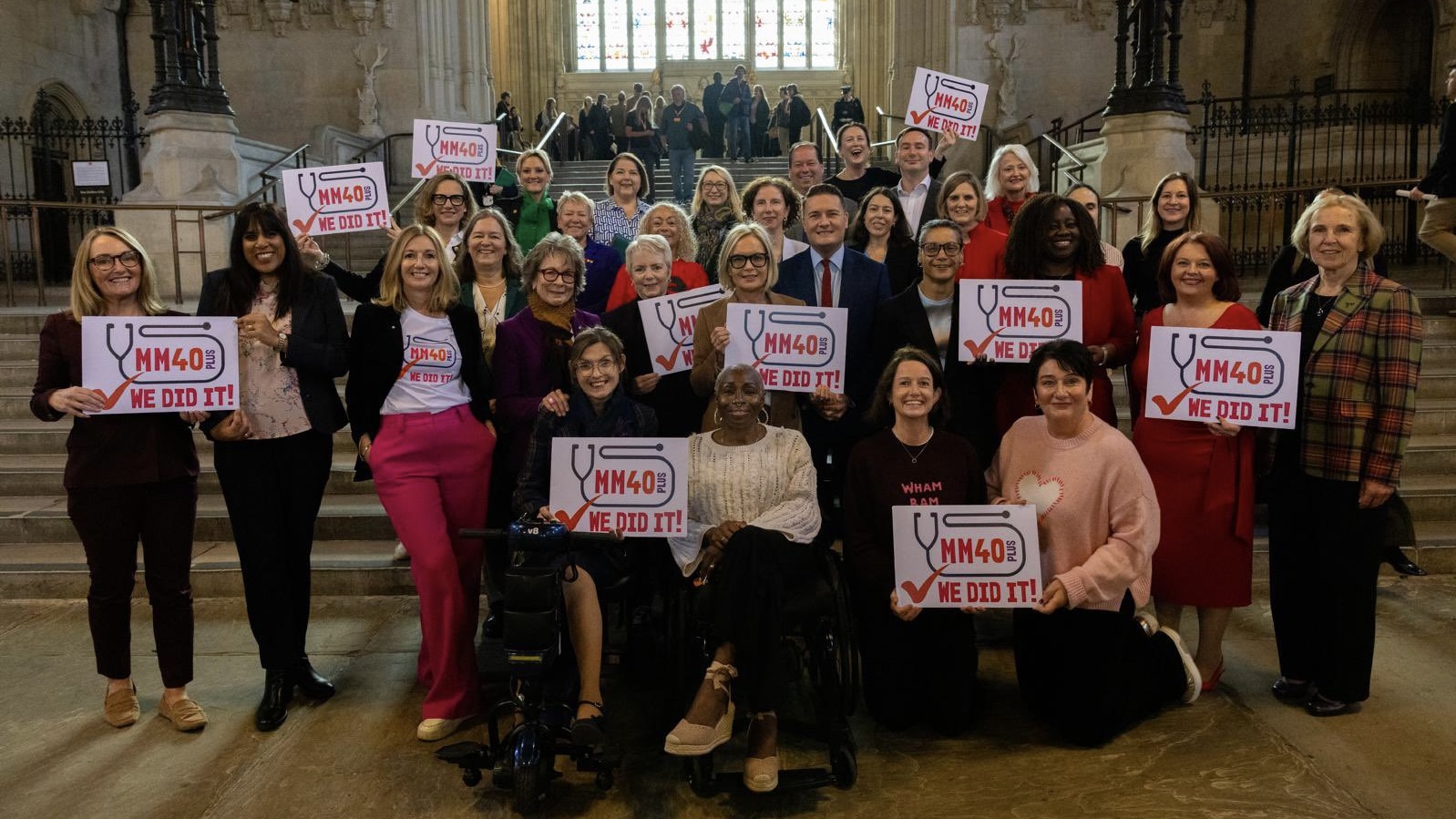
    In what campaigners are calling a ‘historic breakthrough’, the NHS in England will, for the first time, include questions about menopause during routine health checks for adults aged 40 to 74. The change, set to benefit up to millions of women, follows years of public pressure and advocacy from high-profile figures who accused the health system of failing women during one of the most consequential stages of their lives.

    Health Secretary Wes Streeting voiced that too many women had been dismissed, ignored or told their symptoms were just part of getting older. He added:

    ‘Women have been suffering in silence for far too long. This is the clearest signal yet that their voices are being heard.’

    For many, this policy is the culmination of a grassroots movement driven by high-profile advocates such as Davina McCall, whose own words laid bare the confusion and frustration that many women experience. She revealed:

    “I was furious at the lack of knowledge that I had as a 43-year-old woman going through perimenopause,” and said she felt “terrified, lonely, not knowing what it was.”

    Her candid testimony became part of the tide of public awareness and demand that the health service recognise menopause as the vital health priority it is.

    Reflecting on why she had not recognised the symptoms sooner, she said in an interview:

    “I had no idea. And I thought, how, why? Why do I not know about this?”

    Her testimony resonated widely, helping women across the UK identify their own symptoms and call for systemic change in how menopause is addressed within the NHS.

    Menopause specialist Dr Louise Newson, who founded the balance menopause app and has long argued that menopause should be part of preventive healthcare:

    ‘I didn’t realise until I opened my clinic … how many women really suffer and how many women give up their jobs, have partners that leave them, are in crisis, really worry about their future health and actually have quite intrusive suicidal thoughts as a direct consequence of their hormones.’

    The push for reform has been relentless. Labour MP Carolyn Harris, who chaired the UK’s All-Party Parliamentary Group on Menopause, was instrumental in shining a political spotlight on the issue. She told MPs last year:

    ‘This menopause revolution will bring an end to women’s suffering.’

    Advocacy organisation Menopause Mandate, which represents thousands of women, said the NHS decision proves the power of public outcry. A spokesperson commented:

    ‘Including menopause as a key part of the NHS 40+ health check is a major leap forward — for women and for business.’

    The NHS Health Check currently screens for heart disease, diabetes and stroke risk — all conditions that menopause can exacerbate. Symptoms such as hot flushes, heart palpitations, joint pain, sleep disturbance and anxiety affect around 75% of women, with 25% reporting severe symptoms.

    However, until now, menopause has not been included in any NHS screening programme, leaving many women to battle years of untreated symptoms or misdiagnoses.

    Professor Ranee Thakar, President of the Royal College of Obstetricians and Gynaecologists, said: “It is fantastic news that menopause conversations will now be included in routine NHS health checks for women over 40 years old… Creating space for women to get information about menopause symptoms, support and treatments will break down barriers, reduce stigma, and help many women live more happily and healthily in middle age.”


    GP Dr Ellie discusses new Menopause bill benefits in X video


    Beyond the clinical implications, the move is seen as a symbolic shift towards dismantling what campaigners have called ‘medical misogyny’. The decision marks a profound change in how the state views midlife women: not as invisible patients, but as individuals whose health is central to societal wellbeing.

    As Carolyn Harris MP stated during the parliamentary debate introducing the Menopause (Support and Services) Bill,

    “This is not just about women; this is about families, communities, the economy and society as a whole.”

    Originally published on IBTimes UK


    Source link

  • Med Students Must Stop Performing Pelvic Exams on Unconscious Women Without Their Consent 

    Med Students Must Stop Performing Pelvic Exams on Unconscious Women Without Their Consent 

    Please note: This blog contains descriptions of sexual assault.

    “Recent reports of medical students performing pelvic exams for training purposes on anesthetized women without their consent”—or their knowledge—“have produced a firestorm of controversy and calls for greater regulation.” However, that “burst of public outcry” was in the mid-1990s. California was the first state to make the practice illegal, but the “early gains quickly petered out.”

    As I discuss in my video Ending the Hidden Practice of Pelvic Exams on Unconscious Women Without Their Consent, “This practice, common since the late 1800s, was largely unchallenged until a 2003 study reported that 90 percent of medical students who completed obstetrics and gynecology (ob-gyn) rotations at four Philadelphia-area medical schools performed pelvic exams on anesthetized women for educational purposes.” (A subsequent study found the percentage to be lower than that in other areas of the country.) The bottom line? “Pelvic Exams Done on Anesthetized Women Without Consent: Still Happening.” How can this continue into 2025? Medical ethicists have called such practices “immoral and indefensible.” “At the end of the day, this is a practice that should come to an abrupt and immediate halt.” Some schools vowed they’d end the practice, but, unfortunately, these early victories quickly stalled. At the same time, a handful of schools revamped their policies, an equal number of hospitals and medical schools publicly dug in, defending the practice.

    The Association of Professors of Gynecology and Obstetrics wrote: “As medical educators, we must balance our obligation to develop the next generation of physicians with women’s freedom to decide from whom they receive treatment and what aspects of their care are performed by learners.” “Some especially blunt teaching faculty contend that ‘public’ patients”—those without health insurance—“owe it to the facility and society to participate since they receive free or subsidized care.” Regulations to curb this practice are said to be “placing inappropriate and unnecessary barriers in the way of medical students who need to learn fundamental medical skills” and therefore “should be resisted.” Unsurprisingly, medical students still perform pelvic exams on anesthetized women.

    Professional medical societies have given lip service to the concept of asking for explicit consent, but despite the recommendations, “evidence…suggests that the practice is alive and well.” And the “unauthorized use of women is not a localized phenomenon confined to a handful of errant medical schools,” a few bad med school apples, but an international problem.

    Even with the emergence of the #MeToo movement and even after Larry Nasser, the infamous USA gymnastics doctor, was sentenced to 40 to 175 years in prison for touching women’s genitalia without their consent, “there are still women who are being used as teaching subjects for these exams without their permission, without their consent.”

    A 2020 update from Yale’s Center for Bioethics was entitled: “A Pot Ignored Boils On: Sustained Calls for Explicit Consent of Intimate Medical Exams.” It reads, “Over the last 30 years, several parties—both within and external to medicine—have increasingly voiced opposition to these exams. Arguments from medical associations, legal scholars, ethicists, nurses, and some physicians have not compelled meaningful institutional change.” Yes, there is the lip service paid by medical associations recommending bans on pelvic exams without consent, but those statements are “advisory and incomplete. Associations simply do not have the capacity to compel systemic change, as evidenced by institutions’ inaction.” In response to the medical profession’s inability to police itself, many states have passed legislation to protect patients from this practice.

    But, of course, if you are anesthetized, how would you even know if medical students are lining up or not? “Teaching hospitals take patients who are in the worst position to know what’s occurring—they are unconscious—and use them in ways that leave no physical signs and are often undocumented in the patients’ medical records.” So, when the media loses interest, as it has decade after decade, “what incentive is there for teaching faculty or hospitals to voluntarily change?” Perhaps, “when physicians start being threatened with litigation, they’ll start obtaining informed consent.” As one commentator wrote, “Hospital administrators who allow medical students in their facilities to perform pelvic examinations on unconsenting anesthetized women ought to consult with their legal counsel concerning the definition of rape in their jurisdiction.”

    “The solution is simple: Just ask.” Ask women for permission. It’s their body, their choice. “But recent experience has shown that meaningful and complete hospital-by-hospital change is unlikely to come until a hospital or doctor pays a substantial award [in some lawsuit] for this error in ethical judgment. We believe that day is coming soon, lest that ignored pot finally boil over. 
     
    “Some defend it as harmless and say asking for consent would make it more likely that patients would say no, denying students a crucial part of their training.” When I first wrote about this practice more than 20 years ago in my book Heart Failure about my time in medical school, I talked about how I had gotten the same comments from my classmates: “A well-then-how-are-we-going-to-learn response. To even present such a question is to lose a bit of one’s humanity. The answer, of course, is we should learn from women who give their consent! And to do that—God forbid—we might actually have to first establish a relationship with the patient, a trust—talk to them even. We may have to treat them like human beings.”

    It’s unconscionable that medical students are legally allowed to practice pelvic exams on anesthetized women without their consent. Even if you live in one of the states where this practice is technically illegal, how do you know the law will be respected once you’re unconscious? Maybe medical students should wear bodycams.

    If you missed the related video, see Medical Students Practice Pelvic Exams on Anesthetized Women Without Their Consent


    Source link

  • Pelvic Exams by Med Students on Anesthetized Women 

    Pelvic Exams by Med Students on Anesthetized Women 

    Please note: This blog contains descriptions of sexual assault.

    From Heart Failure, a book I wrote about my time at Tufts University School of Medicine: “I am all gloved up, fifth in line. At Tufts, medical students—particularly male students—practice pelvic exams on anesthetized women without their consent and without their knowledge. Women come in for surgery and, once they’re asleep, we all gather around; line forms to the left…We learn more than examination skills. Taking advantage of the woman’s vulnerability—as she lay naked on a table unconscious—we learn that patients are tools to exploit for our education.”

    Using female patients to teach pelvic exams without their consent or knowledge remains “a dirty little secret about medical schools.” It is an “age-old” practice that continues to this day in med schools around the world. It’s been referred to as “the ‘vending machine’ model of pelvic exams, in which medical students line up to take their turn…” “Only it’s not a vending machine; it’s a woman’s vagina.”

    It’s been called “an outrageous assault upon the dignity and autonomy of the patient…The practice shows a lack of respect for these patients as persons, revealing a moral insensitivity and a misuse of power.” Indeed, “it is yet another example of the way in which physicians abuse their power and have shown themselves unwilling to police themselves in matters of ethics, especially with regard to female patients.” Said a residency-program director at the Johns Hopkins University School of Medicine, “I don’t think any of us even think about it. It’s just so standard as to how you train medical students.”

    What happened when this practice came to light in New Zealand? The chair of the New Zealand Medical Association got on television and said: “‘Until recently it wasn’t an issue…I’m very sorry that women feel they’ve been assaulted and violated in this way. That was never our intention.’ He had no idea then, asked the [TV] presenter, that women might object? ‘All I can say is that there have been no objections…’ ‘Could the reason be,’ asked the interviewer logically, “that it’s very hard for an anesthetized woman to know what’s going on?’”

    The practice has been defended publicly by many medical schools and hospitals, contending “this touching is entirely appropriate and clearly falls well within the patient’s ‘implied consent’ to carry out the operation.” After all, “patients are aware they are entering a teaching hospital and therefore know that trainees will be actively participating in their care.” However, “researchers have found that many patients do not know when they have interacted with medical students, or even whether they are in a teaching hospital.” How can this be? “Deliberate lies and deception.”

    “A survey of medical students found that 100% of them had been introduced to patients as ‘doctor’ by members of the clinical team,” and, as they go through training, there is, as a journal article is titled, an “Erosion in Medical Students’ Attitudes About Telling Patients They Are Students.” “Additionally, as medical students complete their clinical years of training, their sense of responsibility to inform patients that they are students is found to decrease,” especially if there is an opportunity to perform an invasive procedure. That may be why medical students seem to develop a “don’t ask, don’t tell” policy when it comes to seeking consent for pelvic examinations on anesthetized patients. More than a third of 1,600 medical students surveyed across the country strongly disagreed with the statement “Hospitals should obtain explicit permission for student involvement in pelvic exams,” as seen below and at 4:03 of my video Medical Students Practice Pelvic Exams on Anesthetized Women Without Their Consent.

    After all, doctors “argue that performing a pelvic examination is no more intimate than placing one’s hands inside an abdomen during general surgery or attempting to intubate a patient” and assert that sticking your fingers in a woman’s vagina is “just as intimate” as an ophthalmologist looking into the back of your eye; any claim to the contrary is just “another attempt to justify the obsession with political correctness.” Said one medical school professor, “Personally, I would prefer to see a new generation of well-trained doctors…rather than a nation of women whose vaginas are protected from battery by medical students.”

    The national survey concluded: “Patients admitted to teaching hospitals do not, however, by the mere act of admission relinquish their rights as human beings to have ultimate control over their own body and to be involved in decisions concerning their health care.”

    Is it possible that women just don’t care? Studies show that up to 100% of women asked said they would want to know that vaginal exams were being performed by medical students. Since patients care deeply about being asked, why can’t we at least ask their permission? “We can’t ask women,” the medical school faculty replied. “If we do, they might say no.”

    It’s jaw-dropping to me that I’m still trying to expose this practice more than 20 years after I first wrote about it. What’s to be done? Ending the Hidden Practice of Pelvic Exams on Unconscious Women Without Their Consent


    Source link

  • NEW: The Slim Splits Method — Home Fitness & Flexibility for Women

    NEW: The Slim Splits Method — Home Fitness & Flexibility for Women

    Product Name: NEW: The Slim Splits Method — Home Fitness & Flexibility for Women

    Click here to get NEW: The Slim Splits Method — Home Fitness & Flexibility for Women at discounted price while it’s still available…

    All orders are protected by SSL encryption – the highest industry standard for online security from trusted vendors.

    NEW: The Slim Splits Method — Home Fitness & Flexibility for Women is backed with a 60 Day No Questions Asked Money Back Guarantee. If within the first 60 days of receipt you are not satisfied with Wake Up Lean™, you can request a refund by sending an email to the address given inside the product and we will immediately refund your entire purchase price, with no questions asked.

    (more…)

  • New Study Links COVID-19 to Accelerated Blood Vessel Aging, Particularly in Women

    New Study Links COVID-19 to Accelerated Blood Vessel Aging, Particularly in Women

    The latest research showed that coronavirus infection may accelerate the aging of blood vessels, potentially increasing cardiovascular risk by roughly the equivalent of five years. A study in the European Heart Journal reported that the effect was strongest in women and in people with Long Covid, and that the changes tended to stabilize or lessen over time.

    Researchers analyzed data from 2,390 participants recruited between September 2020 and February 2022 at 34 centers in 16 countries, including Austria, Australia, Brazil, Canada, Cyprus, France, Greece, Italy, Mexico, Norway, Turkey, the UK, and the US. Participants were grouped by COVID-19 severity (never infected, mild illness, hospitalized on a ward, or admitted to intensive care), and underwent measurements at six and twelve months after infection. Vascular age was assessed by carotid–femoral pulse wave velocity (PWV), where higher values indicate stiffer, older vessels. Analyses accounted for factors such as age and sex.

    On average, people who had COVID-19 had higher PWV than those never infected, including those with mild illness. The differences were pronounced in women, while men showed little or no statistically robust change. The effect was greater in those with Long Covid. In the intensive care group, vessel stiffness regressed toward normal by 12 months. Vaccinated individuals showed milder changes than those unvaccinated. Researchers noted that an increase of about 0.5 m/s in PWV is clinically relevant and roughly comparable to five years of vascular aging, corresponding to an estimated 3% increase in cardiovascular risk in a 60-year-old woman.

    “We know that Covid can directly affect blood vessels. We believe that this may result in what we call early vascular ageing, meaning that your blood vessels are older than your chronological age and you are more susceptible to heart disease. If that is happening, we need to identify who is at risk at an early stage to prevent heart attacks and strokes,” said Professor Rosa Maria Bruno of Université Paris Cité, according to EurekAlert. “Women have a faster and stronger immune response, which can protect them from infections. However, the same response may also increase vascular damage after the original infection,” said Bruno, according to EurekAlert. “There are several possible explanations for the vascular effects of Covid. The Covid-19 virus acts on specific receptors in the body, called the angiotensin-converting enzyme 2 receptors, that are present on the lining of the blood vessels. The virus uses these receptors to enter and infect cells. This may result in vascular dysfunction and accelerated vascular ageing. Our body’s inflammation and immune responses, which defend against infections, may be also involved,” said Bruno, according to EurekAlert.

    “This large, multicentre, prospective cohort study enrolled 2390 participants from 34 centres to investigate whether arterial stiffness, as measured by PWV, persisted in individuals with recent COVID-19 infection,” said Dr. Behnood Bikdeli and colleagues, according to EurekAlert. “Sex-stratified analyses revealed striking differences: females across all COVID-19-positive groups had significantly elevated PWV, with the highest increase (+1.09 m/s) observed in those requiring ICU admission,” said Bikdeli and colleagues, according to EurekAlert. “The CARTESIAN study makes the case that COVID-19 has aged our arteries, especially for female adults. The question is whether we can find modifiable targets to prevent this in future surges of infection, and mitigate adverse outcomes in those afflicted with COVID-19-induced vascular ageing,” said Bikdeli and colleagues, according to EurekAlert. Bruno added that vascular aging is measurable and can be addressed with lifestyle changes and blood pressure- and cholesterol-lowering therapies, and that the team planned to follow participants to determine whether accelerated vascular aging translated into more heart attacks and strokes.

    “One must look very closely whether these groups were really equal to say whether the cause of this acceleration of aging lay in COVID,” said Dominik Rath, a cardiologist at University Hospital Tübingen, according to Stern. “After the 12-month visit, the aging processes had relatively strongly regressed—what could mean that hospitalization per se or the stay in the intensive care unit also plays a relevant part,” said Rath, according to Stern.

    “Nevertheless, this study is a certain wake-up call,” said Heribert Schunkert, vice president of the German Heart Foundation, according to DW. “It is necessary to check carefully whether these groups were really the same to determine whether the coronavirus was the cause of the accelerated aging,” said Schunkert, according to DW. “Many people were affected by a COVID infection. We wanted to avoid everything to prevent aging. That makes you sit up and take notice,” said Schunkert, according to Bild.

    “The findings strongly suggest that after having COVID, the elasticity of the arteries is clearly worse than usual. It was somewhat surprising that the effect was observed only in women. However, it is difficult to say what the practical risk of arterial stiffness to arterial diseases is,” said Juhani Airaksinen, emeritus professor of cardiology, according to Iltalehti Rakkaus. “Blood pressure should therefore be managed with lifestyle changes and, if necessary, with medications,” said Airaksinen, according to Iltalehti Rakkaus. He noted that infected participants were older and generally sicker than controls and that baseline stiffness was unknown, which could influence results. “A positive aspect is that some changes partially improved within less than a year,” said Airaksinen, according to Iltalehti Rakkaus. He added that pulse wave velocity has been used for decades but is not part of routine outpatient care.

    Researchers cautioned that it was unclear whether the observed effect reflected large changes in a few individuals or small changes across many. They suggested that higher mortality in men during the pandemic could have introduced survivor bias, potentially masking effects in male participants. They also noted that many people experienced prolonged symptoms after COVID-19, including post-acute COVID-19 syndrome, which affected up to 40% of initial survivors, and called for further studies to clarify mechanisms and long-term risks.

    Source link

  • Doctor Promotes Vasectomies With Promise to ‘Trip Out’ While High on Laughing Gas. Women Are Outraged

    Doctor Promotes Vasectomies With Promise to ‘Trip Out’ While High on Laughing Gas. Women Are Outraged

    An Idaho urologist’s viral TikTok marketing a vasectomy procedure that includes “tripping out” on pain medication while wearing virtual reality goggles has women asking why no one has made their reproductive healthcare experience more enticing.

    Dr. Austen Slade’s video, touted as “genius marketing” by men in the comments, makes having a vasectomy look fun.

    “Do you wanna have a legal excuse to trip out to some virtual reality content while high on nitrous oxide?” he asks viewers. “See me for your vasectomy and sign up for the ultimate relaxation package.”


    While praise rolled in for the innovative and patient-centered approach to a typically minor outpatient procedure, the comment section became a forum for women expressing long-standing frustration over pain management disparities in reproductive healthcare.

    Responses ranged from disbelief to anger. Dozens of women reported being offered only ibuprofen—or nothing at all—for procedures described as excruciating.

    “Damn, I passed out and threw up when I got my IUD and went back to work after,” one wrote.

    “Dang when we get IUDs we get ibuprofen and denied PTO requests 😪,” said another.

    Some women shared harrowing experiences of undergoing intrauterine device (IUD) insertions, cervical biopsies, and even abdominal surgeries with minimal or no pain relief.

    One user, @momo_vs_endo, recalled a gynecologist brushing off her pain during an IUD placement despite her crying. “She grabbed my shoulders and looked me in the eyes to say ‘You’re going to be fine,’ then walked out.”

    Another, @Introvertebrate32, described withstanding an unanesthetized cervical biopsy as she battled cancer: “No numbing, no pain management at all while I cried and almost loss consciousness due to the extreme pain.”

    “They make women endure colposcopies, uterine biopsies, and IUD placement with ZERO pain management and offer this to men for something they get completely numbed for?!” a woman said. “They wouldn’t even let my husband stay and hold my hand for my biopsy!!”

    A mother of five completely rejected the concept of cushioning the vasectomy experience, admitting: “Had I known this was an option prior to my husband getting his vasectomy I would have made sure he never found out about it.”

    But most women just wanted the same consideration. “I’m happy for them, but this made me irrationally ANGRY with what women have to go through,” one wrote, with another quipping, “PLEASE put this on my OBGYN’s FYP (for you page) not mine LMAO.”

    Dr. Slade weighed in on the tide of outrage from female patients, writing, “That just isn’t right,” in reply to one woman who noted the disparity in pain management.

    He also responded to a user who questioned why he wasn’t “liking” many comments from women. “Feels weird liking stories about being poorly treated,” Slade wrote. “I’ve let several gynecologists know about the comments I’m receiving.”

    The 11 second TikTok achieved its desired effect — the video racked up nearly one million views, got a lot of laughs, and had dozens of commenters announcing their willingness to book the procedure. It also unintentionally sparked conversation about inequity in pain management and calls for a reassessment of how healthcare systems approach procedures for women.

    As one commenter summed up: “Like. Yes. This is good. But also do this for women. Hear that OBGYNs???”

    Originally published on Latin Times

    Source link

  • 10 Powerful Women of the Mindfulness Movement: 2025

    10 Powerful Women of the Mindfulness Movement: 2025

    The women platformed here show us what’s possible when we honor ourselves and honor each other. In this fifth installment of our feature shining a light on powerful women—nominated by their peers—who are leading the mindfulness movement, a common thread ties each of their stories: the strength to live with open eyes and an open heart, even when it would be easier to shut down and tune out. They exemplify the courage to listen deeply, to be fully present with themselves and the world around them, to welcome the moment and work with it. They’ve each shaped unique practices that nourish their growth and calling. And in sharing their stories, they bolster us with inspiration so that each of us may, in our own way, do the same.

    Embrace What’s Broken

    Brenda K. Mitchell

    Pastor, Activist, Teacher

    All her adult life, Brenda K. Mitchell has rightly been known as a strong tower in her community: driven, politically active, rising up in her career. As a pastor, she cares deeply for others and gets things done. 

    When her 31-year-old son Kenneth was killed by gun violence in 2005, leaving behind two young sons with another on the way, Brenda tried to keep being that strong tower. She had grandsons to care for and people who needed her. 

    She didn’t understand then how trauma affects both mind and body. Grief took an immense toll, and her doctor told her she needed to stop everything. “As strong as I’ve always been,” she says, “I had to stop and embrace my brokenness so that I could finally start to heal.” 

    “As strong as I’ve always been, I had to stop and embrace my brokenness so that I could finally start to heal.”

    Pastor Mitchell took her doctor’s advice and rested. At a grief group, she was asked to try a mindfulness retreat with other survivors of gun violence. 

    At the retreat, she discovered the “power of the pause” and how to be fully with herself and others in the present moment. She saw there were still pieces of herself left unattended, even in the midst of good healing work. 

    The compassion of mindfulness allowed her to make herself the priority in her healing process, to fully own all grief’s scattered pieces. 

    She committed herself to practice and leadership in mindfulness spaces, especially to help other survivors of trauma and violence. 

    Today, she incorporates mindfulness into all she does—as a leader, pastor, activist, and facilitator. “I realized how important this is to me, to work in communities of color and in the faith community,” she says. “Yes, you have God. Yes, you have therapy. But there still might be a need for deeper healing. We have to utilize all our resources, because trauma is real.” – SM

    Center Love and Liberation

    Shelly Harrell

    Psychologist, Mindfulness Teacher, Founder of the Soulfulness Center

    Motown was the soundtrack of Shelly Harrell’s childhood in the ’60s in Detroit. Earth, Wind & Fire’s That’s the Way of the World and Stevie Wonder’s Songs in the Key of Life played on repeat. “In those songs, compassion is so central, care for humanity is so central,” she says.

    She credits music as her first ever mindfulness teacher, dance as her first form of meditation, “a place I could come home to.” When she was a teenager, her father passed away and “all I could think to do was dance,” she says. “I started to trust coming back to my body and coming into presence with my inner life.” 

    Today, Harrell’s personal and professional growth are guided in part by seeking wisdom about mental health and healing beyond Eurocentric frameworks. “Stillness and silence are beautiful, but those aren’t the only paths to mindful presence,” she says.

    “Stillness and silence are beautiful, but those aren’t the only paths to mindful presence.”

    In the early 2000s she recognized a gap between Black Americans and the mindfulness community, caused not only by mostly white representation in mindfulness spaces, but also by the undercurrent of detachment that lies beneath attempts to attain individual calm and happiness. “For collectivist, communal, interconnected-worldview cultures, a message of detachment just doesn’t call,” she says. So she founded The Soulfulness Center where the focus is “love and liberation…centering connection and reconnection to what has been lost, stolen, forgotten,” she says. 

    “Mindfulness is about return, return to breath, return to that anchor again and again.” Harrell often refers to an African proverb, associated with the West African Adinkra symbol called Sankofa, meaning “to return and get it.” 

    “There’s this temporal interconnectedness that we’re invited into with past, present, and future ancestors and living descendants, to connect with that continuity of where we come from, where we are, and where we’re going,” she says. “For me it’s this bigger worldview, the wisdom of a collective, that centers interconnectedness as an ethic. And when we start there, what does that mean for how we live?” – AWC

    Meet It With Love

    Caverly Morgan

    Founder of Peace in Schools, Teacher, Author

    Before Caverly Morgan found mindfulness, she had no idea that she had any negative self-talk at all. On her first retreat, she thought the people who were talking about this were a little loopy. “To me, it wasn’t negative self-talk. These were just facts about myself. So there was this voice that was always driving the car, and I didn’t even know it.” 

    Her mindfulness practice started as a way to learn how to be in a different kind of relationship to this voice. 

    Once we realize the presence of that Inner Critic, she says, we’re conditioned to make the logical leap that there’s something we have to fix. We have to overcome the voice, learn more practices, and build more skills so we can get better at being compassionate. Then our lives will feel happier and more complete. 

    When we approach compassion with that energy of self-improvement, though, we just turn it into something else that we can get good at or fail at. We stay stuck in the mental ruts of good enough/not good enough. 

    “When we approach compassion with that energy of self-improvement, we stay stuck in the mental ruts of good enough/not good enough.”

    Morgan offers gentle guidance for how to rewire these mental patterns. When the Inner Critic shows up, we don’t have to defeat it. We can greet it and meet it with a practice that’s steeped in unconditional reassurance. 

    Unconditional reassurances aren’t just saying the opposite of the Inner Critic by offering false positivity. They’re anchored in the truth, regardless of what’s happening or how we feel about it. So when we’re struggling with a sense of failure, the practice isn’t to say, You’re amazing and super-successful! It’s Whether you succeed or you don’t, I love you no matter what. 

    Our mindfulness practice, then, isn’t a tool we wield to change what we don’t like about ourselves. Rather, it’s like a life preserver we hold onto when we’re flailing, until we feel safe enough to simply float again in the vast ocean of love. Our practice helps us return to presence, and the more we return to presence, the more we sense the reality that compassion is already in and around us—that compassion is actually a natural byproduct of who we authentically are. We don’t have to make more of it for ourselves or other people; we just need to sit still long enough to allow it to naturally emerge. – SM

    Celebrate Who You Are

    Sue Hutton

    Social Worker, Mindfulness Teacher, Disability Rights Advocate

    Sue Hutton has been working with neurodevelopmentally disabled adults, as well as their families and caregivers, since her 20s—and practicing mindfulness for even longer. These communities offer a beautiful place to practice, she says. “I love celebrating our differences and getting to know people’s individual ways of being and helping celebrate who they are.”

    Compassion has always motivated her. As a child, her mother’s suicide attempts awakened her desire to help ease suffering. “My experiences of being an outsider or alienated rested within me and really strengthened my interest in validating other people and never wanting anyone to feel like an outsider.” At the Azrieli Adult Neurodevelopmental Centre in Toronto, Hutton works alongside paid autistic advisers to develop and adapt mindfulness curriculums for neurodivergent communities and caregivers. 

    Earlier in her career, Hutton specialized in providing disability rights education to disabled adults and their families. And because there is also neurodiversity in her own family, she says, “Weaving access to justice and accessibility rights into my mindfulness practice was a natural fit.” 

    “I love celebrating our differences and getting to know people’s individual ways of being and helping celebrate who they are.”

    Although conversations around disability and neurodiversity have become more common, including in the mindfulness sphere, meaningful change lags behind. She says she often witnesses tokenistic actions that result in even more exclusion, instead of a genuine commitment to the work of inclusion and accessibility rights. 

    Alongside systemic change, Hutton also believes in the power of self-compassion. She notes that with standardized meditation instruction, it is assumed that we all experience the practice in more or less the same way, so self-compassion is particularly important for neurodivergent meditators. 

    “Every single person who sits down to meditate is doing so through the fabric of their wiring and their brain structure,” she says. “For me, it is so important to know that each person is going to have their very unique and individualized way of experiencing mindfulness, and to honor and accept that, hey, we all do this differently.” – AT

    Find Your Strength

    Melli O’Brien

    Mindfulness Educator, Entrepreneur, Mental Health Coach

    As a teenager, Melli O’Brien went to her public school library and pulled every book she could find on mental health and happiness. 

    At the time, her days were defined by deep depression and an eating disorder fueled by a belief that she wasn’t enough. Meanwhile, the Iraq war raged on and she struggled to make sense of world leaders taking actions that harmed so many. She saw only two paths ahead: One would lead to taking her own life and the other would mean trying to heal, build inner strength, and maybe be part of the change she wanted to see in the world. 

    “If I believed all those voices and if I didn’t transform them, I don’t think I would have been able to help so many people,” she says today. “That’s a really good reason to unlock your own gifts, so that you can share them with the world and do your own little thing, no matter what it is, to make other people’s lives a bit better too.” 

    Her study of happiness led to two lessons that changed her life: that inner strength is a skill you can build, and that mindfulness is one way to cultivate it. 

    “That’s a really good reason to unlock your own gifts, so that you can share them with the world.”

    “Within a couple sessions of mindfulness training I had the experience of understanding I’m not my mind, I’m not my thoughts, I can get space… I got a taste of freedom,” she says. “I fell in love with the practice.” 

    O’Brien spent years nurturing her practice, which helped her heal and led her to become a mindfulness teacher. In 2015, she cofounded The Mindfulness Summit, which raised $500,000 for mental health charities around the world and led to her cofounding the popular app Mindfulness.com in 2020. 

    And then she burned out

    “The amount of adversity coming my way in one go really had me on my metaphorical knees,” she says. Around this time, the World Health Organization named a world mental health crisis, which she saw reflected not only in herself, but her clients. 

    “I had to get really still inside and really think about who I want to be now, how I want to serve now, how I want to live now,” she says. And the result was The Deep Resilience Method, and her forthcoming book by the same name. 

    “I think this book and this method are like a love letter to myself. It’s the answer to my own question of What do I need? And what I need is hopefully going to be what really serves other people when they want to show up in these crazy times we’re living in and be able to make positive change,” she says. 

    “One of the biggest obstacles that I’ve observed is people feeling like there’s no point, and it’s practices like recognizing your own strength that would help you get there.” – AWC

    Come Home to the Body

    S. Helen Ma

    Clinical Psychologist, Mindfulness Researcher, Teacher Trainer

    In 1998, S. Helen Ma traveled from Hong Kong to the US for mindfulness training with Jon Kabat-Zinn, founder of Mindfulness-Based Stress Reduction. She told him, “I know mindfulness helps, but I want to know how it helps.” 

    At that time, Ma had spent much of her career working in Hong Kong and Australia hospitals with people experiencing clinical depression. While she saw healing, she also saw relapse. Empathy and compassion fatigue threatened to take over—until a colleague introduced her to mindfulness. 

    “For psychology we would be very interested in people’s stories—what’s happened before now,” she says. But in mindfulness, “You don’t need to be concerned about the stories at all… Everything comes and everything goes. It’s so liberating.” 

    She learned she could say to herself, It’s just a thought that I’m not helping people, it’s just a thought that the suffering will go on forever. Instead, in this moment, what is happening?

    “Everything comes and everything goes. It’s so liberating.”

    Kabat-Zinn connected Ma with John Teasdale, a leading Oxford researcher, and together they conducted one of the first studies on mindfulness for clinical depression relapse. The study showed mindfulness is a viable intervention in clinical settings, revolutionizing the field. 

    Lately, though, she’s taken a step back from her career in researching and educating about mindfulness to be a full-time caregiver to her husband, who has dementia. 

    “I’m forever grateful for the practice,” she says. “There’s still attachment, there’s still aversion, there’s still joy, there’s still sorrow, and sometimes the narrative is so thick… But I can recognize, right now my heart is hurting. So can I allow my heart to open up, to fill with sorrow, to feel the grief? Let me see how long it will last and when it will fade. 

    “It’s very difficult now in this very fast-paced and electronic age, but if we can just allow for a moment of stillness and coming back to the body and sensing how the body is tensing up… There’s so much wisdom that starts with being mindful of the body,” she says. “It’s coming home, you know. If everyone in the world could come home, it would be a different world.” – AWC

    Create New Paths

    Nanea Reeves

    Founder and CEO of TRIPP

    Nanea Reeves learned to meditate, she says, before mindfulness “was even a thing.” Her mother struggled with mental illness and addiction, and 15-year-old Nanea (whose name is Hawaiian for peacefulness and serenity) found herself in hospital, experiencing a crisis. A hospital therapist taught her a breathing technique to connect to the present moment. 

    “I believe it was one of the greatest gifts I’ve ever been given,” she says. After her younger sister, Vicki, died from a drug overdose, Reeves deepened her commitment to helping others access the healing tools meditation can offer. 

    “It’s been a real practice for me to learn how to open up my heart more. And now, to be able to put it into work is an honor.”

    A vision began to take shape while she was working in the video game industry. Today her award-winning company, TRIPP, offers virtual reality- and AI-powered guided meditations. “There are many paths up the mountain,” Reeves says. “If we can give people the experience of having present-moment awareness through this method, can it help them translate that into the physical world as well?” 

    The TRIPP app’s AI guide, Kōkua—a Hawaiian word for support and selfless giving—generates guided meditations tailored to a meditator’s mood, and adjusts with their feedback. While not meant to replace human support, Reeves describes it as “that compassionate voice that you can connect to at two in the morning.” 

    “As a kid who had to deal with a lot of violence in the home, I tended to really close off my heart, because it had been hurt so much,” she says. “It’s been a real practice for me to learn how to open up my heart more. And now, to be able to put it into work is an honor.” – AT

    Hold It Lightly

    Vidyamala Burch

    Mindfulness Teacher, Writer, Founder of Breathworks

    After 50 years of living with chronic pain and 40 years of meditation, Vidyamala Burch says, “I laugh much, much more than I used to.” She smiles. “I love telling people that because it’s so surprising.” 

    “I think one of the fruits of long-term practice is an ability to hold life lightly. Take it seriously, because it is a very serious business, but hold it lightly.” 

    Burch is the founder of Breathworks, a charity based in the UK that teaches people living with chronic pain, illness, and stress how to live a fuller life with the help of mindfulness. Her approach comes from her own lived experience of pain. 

    As a child, she lived an active, outdoorsy life in New Zealand and dreamed of becoming a wildlife officer. But that all changed when her spine was fractured, once at the age of 16 and again at 23. 

    “You can’t really be mindful without being loving, and can’t really be loving without being mindful.”

    Lying alone in an intensive care unit after the second accident, faced with intolerable pain, she didn’t know how she would make it to morning. Then she realized that all she had to do was make it through one moment, then one more, and in this way she made it to dawn. 

    “As human beings, we’ve always got two options. One is to turn away from suffering, and the other is to acknowledge it and see if we can keep our hearts open,” she says. “I always say to people at Breathworks, ‘You’re heroes because you’re willing to look at your mind and you’re willing to be in your body.’” 

    At Breathworks, they teach people how to embody a middle way between denial and overwhelm, first with their own pain but also with global issues. “If we had billions of humans who were able to be with whatever’s happening with an open heart and not tipping into either denial or overwhelm, we might have a species that was quite well-equipped to deal with the challenges of our age.” 

    “Just keep practicing. This is what the world needs. This is what we need as individuals,” she says. “You can’t really be mindful without being loving, and can’t really be loving without being mindful.” – AWC

    Keep Your Heart Open

    Shalini Bahl

    Mindfulness Teacher, Researcher, Consultant, Author

    Shalini Bahl feels that trees were her first mindfulness teachers. Years ago, after getting divorced and then moving with her son from India to Amherst, Massachusetts—leaving behind family, friends, and culture—she would sit among the trees, “contemplating my life,” she says. “I’d have all these questions: Why me? What happened? Then I would get this sense or thought in my mind: Just breathe first, and you will get the answers.” 

    This reflective experience sparked her mindfulness journey, and she pursued training with luminaries including Jon Kabat-Zinn and Mirabai Bush. In her academic career, she began sharing the practice with her marketing students. Eventually she redirected her full-time work toward mindfulness, not only teaching, but offering organizational consulting as well as leading research on beneficial ways to be mindful in marketing and business. “What I’m really interested in is using these mindfulness skills for real-world change, to create a better world.” 

    If that sounds simple, it’s not. While serving as an Amherst town councilor, Bahl realized that the qualities she’d been honing in meditation—compassion, equanimity, curiosity—weren’t always translating to the way she was showing up. So she developed a framework for acting and living mindfully in everyday life, using eight habits rooted in foundational contemplative teachings. 

    “The important thing is that we keep our hearts open, and we continue to keep our eyes open and see each other along the way.”

    This framework forms the basis of her book Return to Mindfulness, published in January 2024. Its reminders, she says, “allow us to take a breath, to step back: Am I acting from a place of reaction, default bias, unconscious bias? Or is it from a place of spaciousness, ease, and clarity?” 

    She’s also noticed how cultivating openness and clarity can lead us to deeper compassion. One day, she was talking with an unhoused man on the sidewalk, and a passerby gave the man a bag with two croissants. Immediately, he offered one to Bahl. This act of selfless generosity moved her deeply. “I had judged him as someone who was there on the street, who needs my help.” They became friends, enriching her understanding of shared humanity. 

    At the time, she set an intention: “For now, I’m going to show up for him and stay open. Don’t close my heart. And when I can do more, my heart and my eyes will be open to seeing that opportunity.” Later, when she was elected to town council, that intention gave her the courage to speak up in support of shelters for unhoused people and others who needed help. 

    “I think that’s part of living compassionately, when we don’t know what we can do right away,” she says. “But the important thing is that we keep our hearts open, and we continue to keep our eyes open and see each other along the way.” – AT

    Tell a New Story

    Yuria Celidwen

    Scholar, Researcher, Teacher, Indigenous Nahua and Maya

    When Yuria Celidwen talks about contemplative practice, she’s describing something much more expansive than solely what’s going on in the mind. 

    “From the Mesoamerican tradition specifically, but generally in many Indigenous practices, it’s also about the emotional state, the heart that is involved with the body that informs the mind processes that end up revealing…that animating principle of life.” 

    As a child, she already possessed this rich awareness of complexity. From her parents, grandparents, and great-grandparents, she says, “I learned a lot about how to really be with the landscape, be part of the landscape of a larger community.” Then, starting in elementary school, she faced racist discrimination. Inhabiting these conflicting worlds led her to the study of identity, consciousness, and cultural narratives. 

    Today, a growing range of Indigenous perspectives is found within contemplative studies; when Celidwen entered the field 15 or 20 years ago, there was no such representation. “I was the one to push for Indigenous wisdoms to be part of this field, and to also look at them as sophisticated systems of transforming our sense of identity and cultural identity, examining those identities, and then creating social and environmental transformation for well-being,” she says. 

    “How do we learn to listen to the world? To the whole living, beautiful mother planet that we inhabit?”

    Mindfulness is often interpreted in the West as a set of tools to benefit primarily the individual self. In the Indigenous epistemologies that she researches and teaches about at the University of California, Berkeley, there’s a vision of “a responsible community, an ethical community,” where there is room for every being to be heard and valued as kin. “How do we learn to listen to the world? To the whole living, beautiful mother planet that we inhabit?” she asks. 

    These are glimpses into what Celidwen calls the Ethics of Belonging. It’s elucidated in her academic work, as well as explored in her new book, Flourishing Kin: Indigenous Wisdom for Collective Well-Being (published November 2024). 

    “We know that humans learn through stories,” she says. And old narratives that haven’t served us—“about uniqueness, personal achievement, material possessions, using nature as a resource”—can be composted, she says, “for the nourishment of a new story, but a new story that brings us together. 

    “To relate better, to listen better, to express better, to create better, to nourish our landscapes better—so we realize that yes, we are part of this system, and we can be part of the change.” – AT


    Source link