Tag: Woman

  • Brain-Dead Georgia Woman Kept Alive Due to Pregnancy Delivers Baby Weighing Less Than 2 Pounds Via C-Section

    Brain-Dead Georgia Woman Kept Alive Due to Pregnancy Delivers Baby Weighing Less Than 2 Pounds Via C-Section

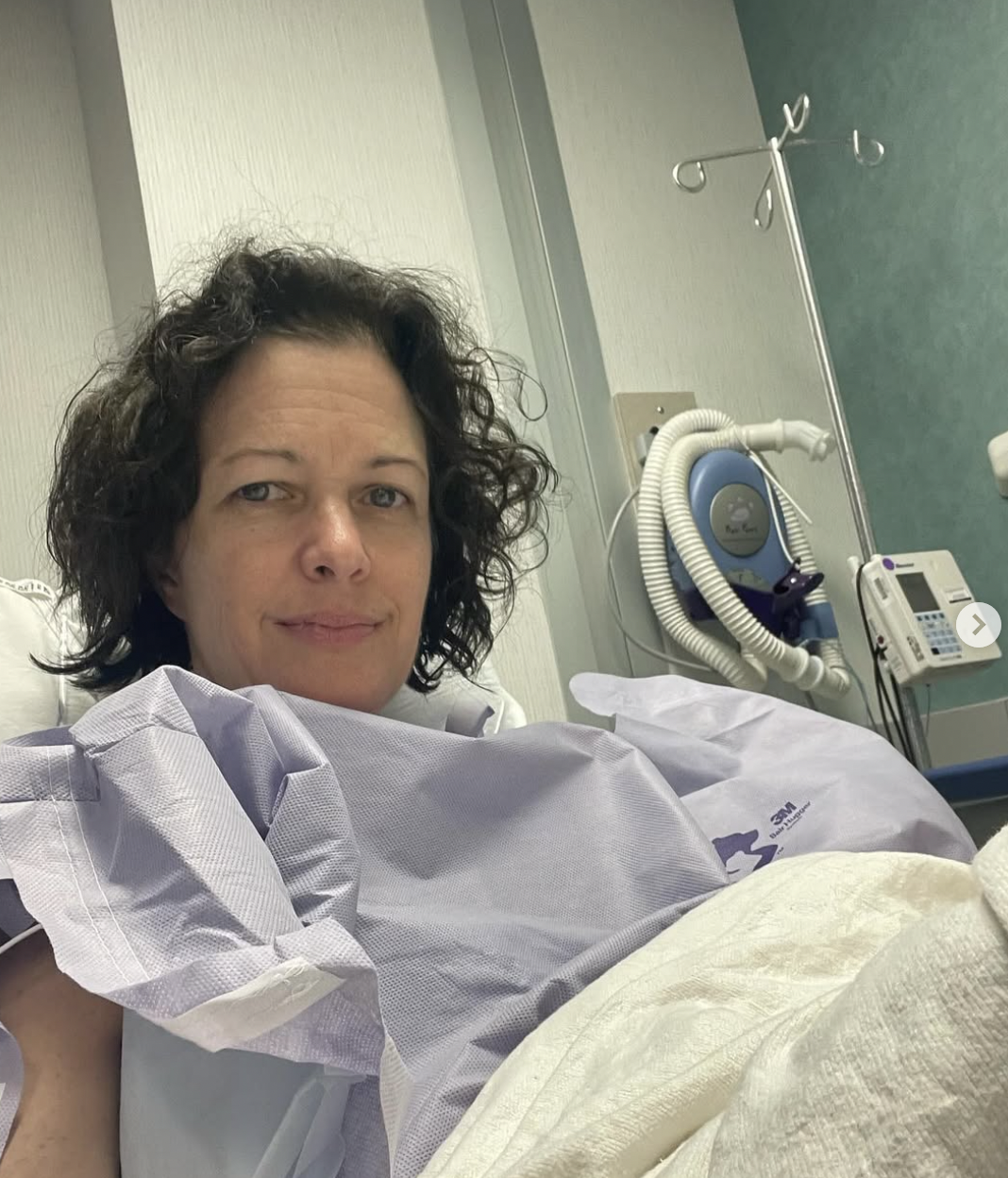
    A Georgia woman who was put on life support after being declared brain dead in February at eight weeks pregnant has given birth to a baby boy.

    Adriana Smith’s son, named Chance, was delivered by emergency cesarean section early Friday morning, June 13, at just under 26 weeks gestation, Smith’s family told 11 Alive. Weighing approximately 1 pound 13 ounces, he is currently in the neonatal intensive care unit (NICU).

    “He’s expected to be OK,” Smith’s mother, April Newkirk said. “He’s just fighting.”

    Smith, 31, was declared brain dead on February 19 after suffering a medical emergency linked to blood clots in her brain. Her case garnered national attention as her family said they were told Georgia’s abortion law—House Bill 481, also known as the LIFE Act—required that she be kept on life support to allow the pregnancy to continue, even though she was legally dead.

    State officials later said the law does not mandate life support in such cases, but the lack of clarity contributed to confusion and distress for Smith’s family.

    Newkirk said doctors had hoped to deliver the baby closer to 32 weeks but were forced to act early. The family now prepares to say goodbye to Smith, who will be removed from life support on Tuesday.

    “She was a ray of light,” Newkirk said. “I shouldn’t be burying my daughter. My daughter should be burying me.”

    Smith leaves behind two sons: newborn Chance and a 7-year-old. The family has launched a fundraiser to help cover mounting hospital costs and provide long-term support for the children.

    Newkirk is calling for greater clarity and compassion in laws impacting medical decision-making, particularly in complex cases like her daughter’s. “I’m not saying we would have chosen to terminate her pregnancy,” she said. “But we should have had a choice.”

    Originally published on Latin Times

    Source link

  • Woman Suffocates, Dies During Cryotherapy Session at the Gym Due to Nitrogen Leak

    Woman Suffocates, Dies During Cryotherapy Session at the Gym Due to Nitrogen Leak

    A 29-year-old woman has died and another is in intensive care after a nitrogen leak during a cryotherapy session at a Paris gym led to a fatal case of suffocation, prompting a criminal investigation.

    Cryotherapy, which exposes the body to extreme cold for therapeutic purposes, typically involves nitrogen gas to achieve ultra-low temperatures. Safety concerns have persisted for years, with organizations like the European Industrial Gases Association warning in 2018 of asphyxiation risks tied to improper nitrogen use.

    Emergency services responded to an incident at the On Air gym in east-central Paris shortly before 6:30 p.m. local time on April 14, the Guardian reported. Two women were found in cardiorespiratory arrest, believed to be caused by a nitrogen leak in a cryotherapy chamber that had been repaired earlier that day.

    The 29-year-old victim, an employee of the gym, was declared dead on the scene. The second woman, aged 34, was listed in critical condition.

    Three others were hospitalized after attempting resuscitation, and 150 people were evacuated from the building. The Paris prosecutor’s office has launched an investigation into the incident, involving both police and workplace safety inspectors.

    An autopsy and toxicology report are pending to confirm the exact cause of death. Authorities are also scrutinizing the maintenance and safety protocols surrounding the repaired cryotherapy chamber.

    Originally published on Latin Times

    Source link

  • ‘Healthy’ Woman With Terminal Colon Cancer Warns Of Unexpected Symptom

    ‘Healthy’ Woman With Terminal Colon Cancer Warns Of Unexpected Symptom

    A 57-year-old special education teacher from England deemed “fit and healthy” by those around her is now advised to receive end-of-life care after being diagnosed with stage 4 colon cancer. What makes her story even more alarming is that her only warning sign was an unusual symptom most people would not associate with cancer.

    Though the heartbreaking diagnosis came as a sudden blow to Karen Kennerley from Lancashire, England, she is determined to fight the disease and raise awareness among people about little-known signs of colon cancer.

    Colon cancer typically presents with digestive changes like persistent diarrhea, constipation, blood in the stool, rectal bleeding, abdominal pain, or bloating. But Kennerley did not have any of these signs. All that she felt before her devastating diagnosis was a symptom that had nothing to do with her gut.

    “The scary thing is, I had no symptoms apart from a bit of fatigue,” she said. However, the mother of three who worked at a small school for special education kids thought it was just exhaustion from the work.

    “I went to my GP, who ran some blood tests, and referred me for a FIT test and then I was referred for a colonoscopy in January 2023. Everyone was telling me I was fit and healthy, that there was nothing to worry about but they were doing the tests to rule things out,” she recollected.

    During a routine colonoscopy, doctors found a seemingly harmless tumor, but their suspicions grew, and a biopsy soon confirmed the worst: it was cancerous. In June 2023, she underwent surgery to remove the tumor along with part of her large intestine, followed by eight grueling rounds of chemotherapy.

    Though her cancer was initially believed to be in remission, she was hospitalized in March 2024 with suspected appendicitis. However, scans revealed a devastating turn, her cancer had progressed to stage 4 and spread to the ovaries. The medics then advised her to receive palliative cancer treatments offered through the NHS.

    However, Kennerley is now determined to fight as she hopes to receive cancer treatments in Germany that promise her the best chance of survival. She is raising money to fund her treatment.

    “People with stage four cancer feel totally abandoned, I want to change that, not only for me but for everyone else going through this,” she added.

    Source link

  • Woman Collapses, Vomits Blood After Weight Loss Jabs: ‘I Could’ve Died’

    Woman Collapses, Vomits Blood After Weight Loss Jabs: ‘I Could’ve Died’

    A UK mother of four who turned to weight loss jabs to shed her baby weight now warns others it’s not worth the risk after collapsing and vomiting blood.

    The 43-year-old, already following weight loss diets, weighed 171 lbs when she decided to try the injections to look slimmer. Now, she realizes the dangerous gamble could have left her children without a mother, Manchester Evening News reported.

    Gill Riley from Cheshire, England, was determined to get back to her pre-pregnancy weight and was constantly on several weight loss diets. But when she felt the diet plans were no longer working, she decided to take GLP-1-class weight loss injections which she obtained from a friend who had purchased them from an online pharmacy.

    Within just three months of starting the injections, Riley experienced a dramatic weight loss of 18 lbs. By the end of December last year, she began feeling unwell, but she thought it was just the flu. However, everything took a terrifying turn on December 26th when Riley collapsed, vomiting blood. She was immediately rushed to the emergency room, facing a life-threatening situation. The doctors found her body resembled someone with anorexia, and blood results showed that she had very low levels of potassium and sodium.

    Riley was diagnosed with pneumonia and put on antibiotics, which she believes was a result of her weakened immunity caused by the weight loss jabs. During her hospital stay, she was treated with IV drips and supplements to help restore her health before getting discharged.

    Although Riley has now recovered from the emergency, she needs further tests to evaluate if she has developed any permanent kidney damage.

    After her terrifying ordeal, Riley is now urging other women to seriously consider the health risks before using weight loss injections. “Just because I wanted to be skinny, I could have died and left my kids with no mum because I felt like I had to look a certain way and I don’t,” she said.

    “People need to be aware that it’s not as simple as taking a skinny jab and everything goes smoothly, you need to think of the risks that are involved with it,” she added.

    Source link

  • Ohio Hospital Called Cops on Woman Who Suffered Horrific Miscarriage in Bathroom: Lawsuit

    Ohio Hospital Called Cops on Woman Who Suffered Horrific Miscarriage in Bathroom: Lawsuit

    An Ohio woman is suing her hometown, her healthcare providers and law enforcement after she was arrested for having a miscarriage about a year ago.

    Brittany Watts is suing the city of Warren, as well as law enforcement and doctors and nurses at Mercy Health for false arrest prosecution without probable cause, infliction of emotional distress, medical negligence and unauthorized disclosure of medical information and indemnification, among others, reported CBS News.


    In September 2023, Watts suffered a miscarriage in her home after her fetus had already been declared non-viable by healthcare professionals.

    Watts, who had been at Mercy Health – St. Joseph Warren Hospital the day she miscarried, was examined by multiple doctors and diagnosed with an abruption and premature rupture of membrane. Hospital staff reportedly consulted the hospital’s clinical ethics committee without Watts’ knowledge, forcing Watts to wait for the committee’s consultation report.

    Ohio’s legislation prevents abortions from being performed legally after 22 weeks, with exceptions for life-saving care. Watts was 21 weeks and six days pregnant.

    “[Hospital staff’s] actions cannot be explained by concern for the life of the fetus because the doctors, including Defendant [Parisa] Khavari, knew that there was almost no chance of the fetus surviving the induced labor,” the suit reads, according to CBS News.

    After becoming frustrated at the hospital’s wait times, Watts allegedly told a nurse she would rather have been waiting at home after she had been waiting for hours with no instruction. She then decided to check out of the hospital and return home.

    The next morning, Watts had a miscarriage in her bathroom at home. She later went to the hospital and was treated for blood loss.

    “The nurse comes in and she’s rubbing my back and talking to me and saying, ‘Everything’s going to be okay. You’re going to be okay,’” Watts told the outlet. “Little do I know, there’s a police officer that comes into the room a short time later. And I’m wondering, ‘Why is a police officer coming in here? I don’t recall doing anything wrong.’ And little do I know the nurse comforting me and saying that everything was gonna be okay was the one who called police.”

    Police searched Watts’ house and found the fetus stuck in the trap of the toilet. Watts said she never saw the fetus and did not know where it was.

    Watts was later arrested by the Warren Police Department and charged with abuse of a corpse, as reported by WFMJ. She pleaded not guilty.

    Hospital staff, including named nurse Connie Moschell and Detective Nick Carney, allegedly created false reports and hospital notes, misrepresenting the situation to Watts during interrogation in order to build up a case against her, according to the lawsuit.

    In January 2024, a jury refused to indict Watts, allowing for her to be cleared of all charges.

    “While Ms. Watts was relieved that the truth had prevailed, the closing of the criminal case did not erase the harm Defendants’ misconduct caused,” the suit stated.

    Watts is seeking compensation for damages, including those caused by mental and emotional distress, and a trial by jury.

    Originally published by Latin Times.

    Source link

  • Virginia Woman Forced to Raise Money for Prosthetic Hand After Insurance Refuses to Cover It Despite Doctor Recommendation

    Virginia Woman Forced to Raise Money for Prosthetic Hand After Insurance Refuses to Cover It Despite Doctor Recommendation

    A Virginia woman who lost her hand in a shark attack is now turning to the public for help after her insurance company refused to cover the cost of a prosthetic device recommended by her medical team.

    Elisabeth Foley, a 45-year-old mother of three, was bitten by a shark in June while vacationing in Florida. She was one of three people attacked within 90 minutes that day. Foley’s injuries were devastating, leading to the loss of her left hand and severe damage to her midsection. Her recovery involved 60 days in the hospital, where she endured multiple surgeries, including nerve and laser procedures, according to WWBT.

    Despite these challenges, Foley has made remarkable progress. Now, her doctors recommend a myoelectric prosthetic hand, an advanced device that uses residual muscle signals in the arm to control its movements.

    This prosthetic would dramatically improve her mobility and independence, according to her GoFundMe page.


    Without it, Foley claims she faces “a diminished quality of life,” marked by limited mobility. Her insurance company has declined to cover the $73,000 prosthetic, deeming it “not medically necessary,” her fundraiser explains.

    The device would enable her to regain some normalcy and tackle tasks many take for granted.

    As of Thursday, Foley’s GoFundMe campaign had raised over $60,000.

    Her journey and updates on her recovery are also documented on her Instagram, where she has received an outpouring of support.

    Foley’s struggle for a prosthetic comes amid a national reckoning over frustrations with the healthcare system prioritizing profits over people. The killing of UnitedHealthcare CEO Brian Thompson has sparked a wave of support for the suspect, Luigi Mangione, with many applauding him as a symbol of growing frustration and anger toward the insurance industry.


    Source link

  • Pregnant Woman And Baby Saved After Doctors Identify Her Bad Cough, Breathlessness Was Rare Tumor In Chest

    Pregnant Woman And Baby Saved After Doctors Identify Her Bad Cough, Breathlessness Was Rare Tumor In Chest

    MaKenna Lauterbach from Illinois was 36 weeks pregnant when she received the shocking diagnosis of a large tumor in her chest, revealing the real cause of the persistent cough and breathlessness during her pregnancy. The 26-year-old, who was diagnosed with stage 3 melanoma, is now stable and recovering, along with her healthy baby, thanks to the timely intervention and coordinated efforts of a dedicated team of doctors.

    When Lauterbach experienced a bad cough while she was expecting, she knew something was wrong. Simple tasks, like walking to the barn to feed her horses, left her unusually winded, as if she had just run two miles. However, doctors were initially hesitant to perform chest scans due to concerns about radiation exposure.

    When Lauterbach was almost due, the cough worsened to the extent that she started throwing up and had to be hospitalized for shortness of breath. The scans then revealed a grapefruit-sized tumor in her chest, blocking the artery to her right lung.

    By the time Lauterbach received the diagnosis, she was in respiratory distress, the tumor obstructing her airway, putting both her life and her baby’s at risk.

    After being airlifted to the intensive care unit at Northwestern Memorial Hospital in Chicago, her condition worsened, she went into labor, her blood pressure spiked, and the baby began showing signs of distress during contractions.

    “Lauterbach was in real trouble, and we had to act quickly – this wasn’t something that could wait for Monday morning. When you’re pregnant with a baby that’s nearly full-term, your lungs already aren’t functioning at full capacity, and when you add a huge tumor on top of it, you run the risk of having respiratory collapse and cardiac arrest,” said Dr. Lynn Yee, maternal-fetal medicine specialist at Northwestern Medicine in a news release.

    Doctors quickly prepared Lauterbach for extracorporeal life support (ECMO) and performed an emergency C-section, successfully delivering a healthy baby boy.

    “Because of the tumor, the delivery happened so quickly. I was grieving the birth plan I had spent months preparing for, while also dealing with the news of my unexpected diagnosis,” Lauterbach said.

    While her newborn remained in the hospital’s neonatal intensive care unit, doctors performed an advanced bronchoscopy on Lauterbach. The procedure revealed that her tumor was stage 3 melanoma, prompting the medical team to immediately begin developing a treatment plan.

    “Lauterbach’s diagnosis was difficult to make because we weren’t sure if the melanoma started in the chest or somewhere else, and there isn’t much literature or published cases on how to best treat tumors like these, so we had to rely on the expertise that we’ve developed here at Northwestern Medicine,” said Dr. Kalvin Lung, a thoracic surgeon with the Northwestern Medicine Canning Thoracic Institute.

    The medical team decided on surgery to remove the tumor. Before the procedure, Lauterbach was given three cycles of immunotherapy which helped shrink the tumor from 13 centimeters to nine centimeters.

    “We think at some point, Lauterbach had a melanoma on her skin and her own immune system took care of it, but not before a cell or two may have escaped and eventually started growing inside her body,” explained Dr. Sunandana Chandra, medical oncologist with the Robert H. Lurie Comprehensive Cancer Center of Northwestern University at Northwestern Memorial Hospital.

    During the surgery, doctors had to remove her right lung parts of the main pulmonary artery, and lymph nodes. “The tumor was sitting on top of Lauterbach’s heart and extended into the right lung, impacting all three lobes and the entire main trunk of the pulmonary artery, which is why we had to remove the right lung,” said Dr. Lung who conducted the surgery along with Dr. Chris Mehta, a cardiac surgeon with the Northwestern Medicine Bluhm Cardiovascular Institute.

    “It’s extremely rare to see this type of tumor invading into the major blood vessels of the heart. We may see something like this once every few years,” Dr. Mehta added.

    Lauterbach’s latest scans show no evidence of metastatic melanoma, and while her cancer remains stable with no new tumors, she will continue immunotherapy treatments for the next year.


    Source link

  • Woman Who Spent Days in Hospital with Painful Open Wound Waiting to Be Stitched Up Ends Up Losing Entire Leg

    Woman Who Spent Days in Hospital with Painful Open Wound Waiting to Be Stitched Up Ends Up Losing Entire Leg

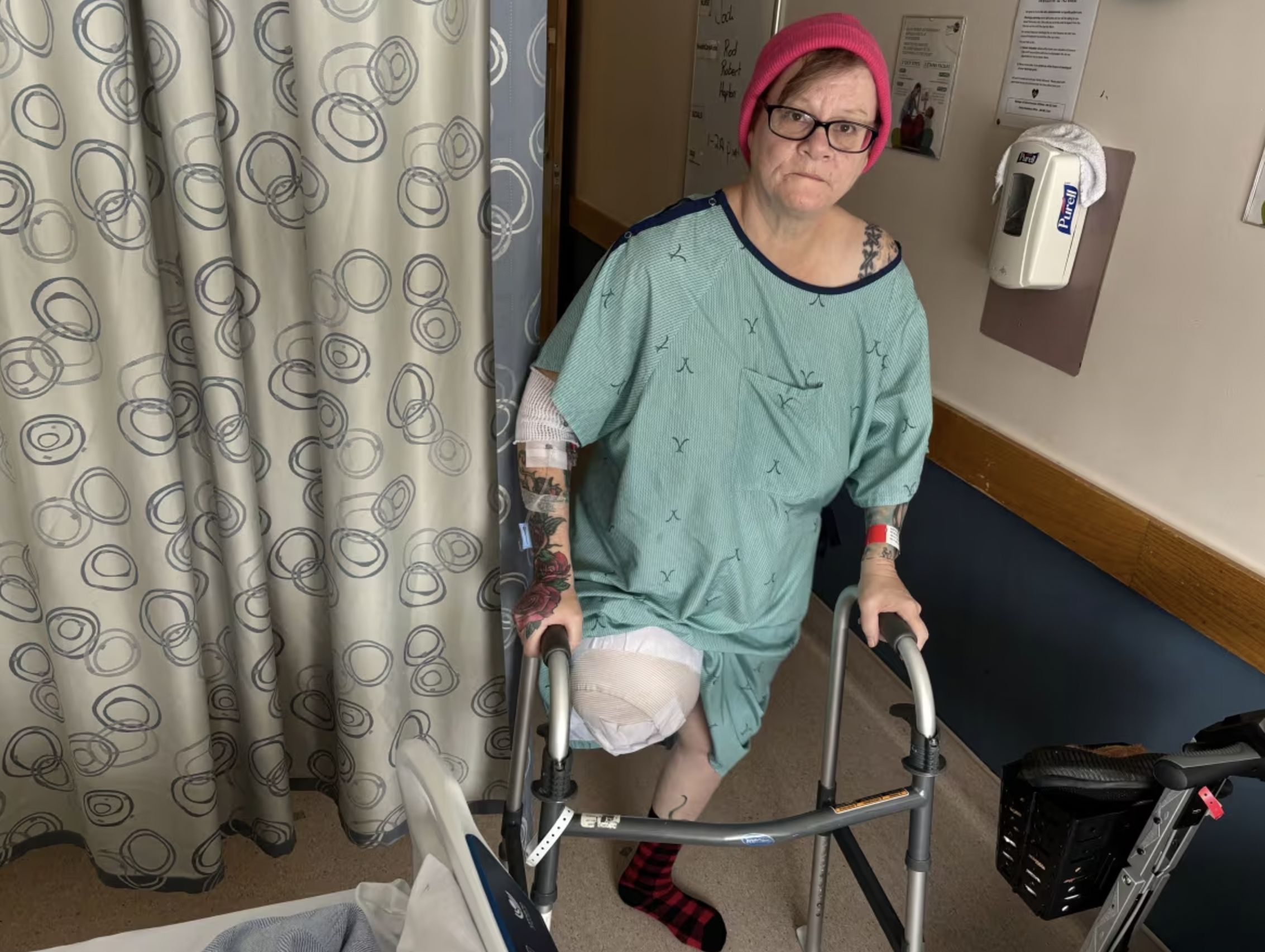
    A 61-year-old woman from Canada had her right leg amputated following weeks of suffering and complications caused by delayed medical care after a knee replacement surgery.

    Roseanne Milburn’s health struggles began in October 2023 when she finally underwent a right knee replacement after waiting six years, CBC reported.

    In late November, a post-surgery infection required emergency removal of dead tissue, but she faced an eight-day delay in treatment when her transfer between Winnipeg’s Health Sciences Centre (HSC) and Concordia Hospital was disrupted by bed shortages.

    This prolonged delay left Milburn with a painful open wound and worsening complications.

    By the time she returned to HSC, the damage from the untreated infection made her leg unsalvageable, forcing her to choose between multiple uncertain surgeries or amputation.

    Milburn opted for the latter and is recovering at Concordia Hospital, where she expects to remain through the holiday season as she learns to adapt to life with one leg.

    “Discouraged. Don’t know if I’m going to be home for Christmas,”Milburn said. “Still living this hell day-by-day, hour-by-hour, not knowing anything.”

    Originally published by Latin Times

    Source link

  • Miscarrying Texas Mother Becomes Latest Woman to Die As Doctors Risk 99-Year Prison Sentence for Administering Life-Saving Drug

    Miscarrying Texas Mother Becomes Latest Woman to Die As Doctors Risk 99-Year Prison Sentence for Administering Life-Saving Drug

    A Texas mother became the third woman to die as a result of the state’s abortion ban when legislation prevented a doctor from administering life-saving care.

    In June of 2023, 35-year-old Porsha Ngumezi suffered a miscarriage at just 11 weeks pregnant, causing her to lose an immense amount of blood. Ngumezi, who already had young children, had been “passing large clots the size of grapefruit,” according to nurse’s notes obtained by ProPublica.

    “You need a D&C,” Hope Ngumezi, Porsha’s husband, was told by his mother who was a former physician. A dilation and curettage, also referred to as a D&C, is a common procedure by which a doctor removes the remaining tissue from a uterus in order to allow the uterus to close up and stop bleeding. The procedure addresses first-trimester miscarriages and abortions.

    However, the obstetrician on duty, Dr. Andrew Ryan Davis, gave Porsha misoprostol, a drug intended to help her body pass the tissue independently instead of administering life-saving care due to hospital policy.

    The drugs were not enough to stop the bleeding, and Porsha eventually passed away.

    Porsha’s death could have been easily prevented by a simple medical procedure that has become intertwined in state abortion laws because it is sometimes used to enact first-trimester abortions. Texas state law demands a prison sentence of up to 99 years for any doctor who violates legislation.

    Porsha’s death is the fifth preventable death caused by a lack of access to a D&C in the first trimester or a dilation and evacuation in the second. Three of these deaths occurred in Texas, according to ProPublica.

    Instead of administering D&Cs, doctors are giving patients misoprostol instead as the drug is often used to induce labor and treat postpartum hemorrhage, making it less directly related to abortion. However, the drug is not recommended to treat unstable patients.

    “Stigma and fear are there for D&Cs in a way that they are not for misoprostol,” said Dr. Alison Goulding, an OB-GYN in Houston. “Doctors assume that a D&C is not standard in Texas anymore, even in cases where it should be recommended. People are afraid: They see D&C as abortion and abortion as illegal.”

    “All Houston Methodist hospitals follow all state laws,” said a spokesperson for Houston Methodist, “including the abortion law in place in Texas.”

    Originally published by Latin Times.

    Source link

  • Texas Woman Who Briefly Died After Rare Delivery Room Complication Has No Memory of Giving Birth to Triplets

    Texas Woman Who Briefly Died After Rare Delivery Room Complication Has No Memory of Giving Birth to Triplets

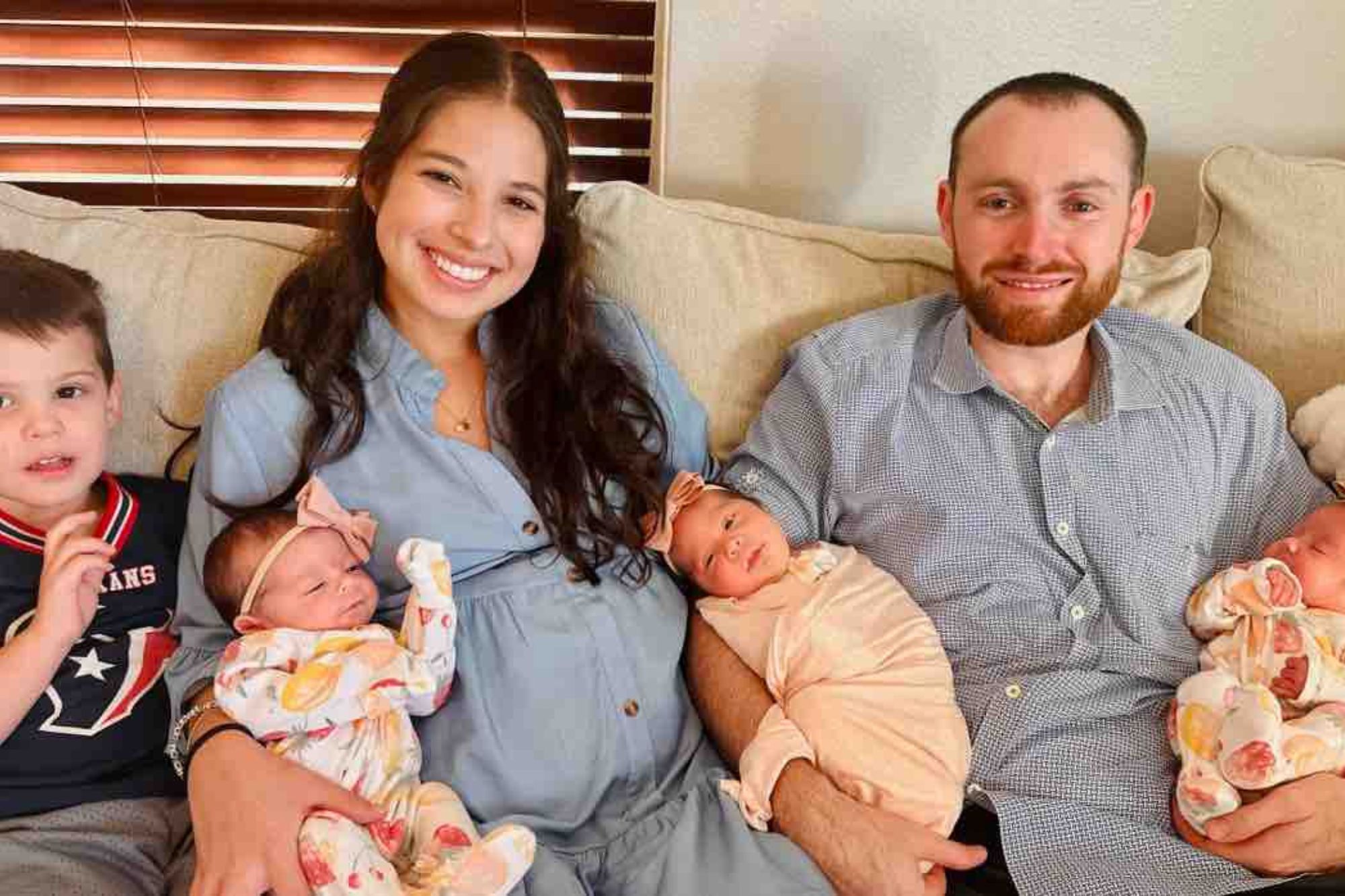
    A Texas woman retained no memory of giving birth to triplets, including the 48 to 72 hours leading up to the delivery, after being clinically dead for about 45 minutes post-birth.

    Tomball resident Marisa Christie gave birth to triplets in late August, during which she faced multiple pregnancy-related complications causing her to flatline multiple times in just 45 minutes.

    “It was the toughest moment of my life going from the most beautiful experience in seeing our baby girls for the first time to ‘oh my gosh my wife is—they’re doing CPR on her’. I just remember going to the restroom and collapsing on the ground expressing myself to God,” said her husband, Dylan Christie, who had been in the delivery room at the time of the births.

    Marisa, who had already had one son before giving birth to triplets, miraculously survived the ordeal. According to her Maternal Fetal Medicine Physician, Dr. Amber Samuel, Marisa survived a rare post-birth complication called amniotic fluid embolism, a condition with a mortality rate of 80%.

    “Some exposure that causes the mom’s body to react like a really bad allergic reaction. I think they call it like 7.7 cases on 100,000,” Dr. Samuel said.

    Dylan made the call for Marisa to be administered a hysterectomy, which ultimately saved her life. However, when she recovered and woke up, she had no recollection of the delivery or the days leading up to it.

    “My family took lots of photos and videos of me when I was in the hospital, which helped a lot to kind of have reality hit,” Marisa said.

    The family has set up a GoFundMe in order to cover Marisa’s medical costs.

    Originally published by Latin Times.

    Source link