Tag: well-being

  • Inner Calm: The Key is Letting Go

    Inner Calm: The Key is Letting Go

    We often hear about inner calm, but it can be so much more than a fleeting moment of peace after yoga or the perfect massage. Inner calm is actually our ability to let go of attachments and reactions to life’s events, resulting in ease and clarity.

    As a mindfulness skill, inner calm is the ability to let go of attachments and reactivity based on an understanding of impermanence—the changing nature of our thoughts, emotions, and desires. When we find ourselves rushing and reacting, we can remind ourselves, This too shall pass. The purpose is not to negate what we’re feeling but to put brakes on accelerated feelings. Once we return to our inner stillness, we can look at the source of our reactivity, intimately seeing its changing nature: This right here is what frees us.

    Once we return to our inner stillness, we can look at the source of our reactivity, intimately seeing its changing nature: This right here is what frees us.

    As a practice, inner calm is the art of stopping, looking and letting go for purposes of healing and clarity. It involves physical composure and mental tranquility. It can be seen as the ultimate balm for your soul—like a cool breeze on a hot day. Inner calm brings ease to body and mind alike. In the body, composure is experienced in the muscles and as an overall feeling of ease. In the mind, inner calm creates the space to hold everything without attachment and resistance. Conversely, the absence of inner calm may show up as restlessness in the body and agitation or reactivity in the mind.

    Seeking inner calm can often leave us wanting more, but it’s ironic that true inner calm is achieved when we let go of our desires, even the desire for inner calm itself—a catch-22 if there ever was one. This paradox becomes evident when we consider the case of a client dealing with anxiety who turned to meditation as a way to ease his mind. Surprisingly, he found himself even more anxious post-meditation. He had hoped that meditation would improve his sleep, but he was left frustrated when he observed his restlessness during a body scan meditation, which only seemed to worsen his sleep problems.

    The moral here? To find peace, he had to let go first of his expectations around finding peace. In order to let go, he learned to see the three hindrances to his achieving mindfulness: running in circles (a restless mind), pulling (striving to sleep), and pushing (frustrated with his restlessness). With practice, he learned to accept his restless mind, which softened the striving and frustration, and he was able to find ease, even when he couldn’t sleep, which ultimately allowed him to sleep.

    Letting go of attachments to certain outcomes doesn’t, however, mean that we’re suppressing or evading challenging situations. Instead, this release occurs organically when we comprehend that emotions arise and dissolve—all within ninety seconds.

    The Ninety-Second Rule

    Inner calm is not about suppressing, denying, or avoiding our emotions. When we don’t give in to the urge to react, we’re cultivating the ability to stay with unpleasantness (knowing that emotions are physiological responses in the body that will arise and dissolve). Just as happiness triggered by external events doesn’t last, negative emotions also don’t last. Have you heard of the ninety-second rule? Neuroscientist Jill Bolte Taylor reveals in her book My Stroke of Insight: A Brain Scientist’s Personal Journey that all emotions have a beginning, middle, and end—all within ninety seconds from when they first arise.

    The reason we continue to experience negative emotions, sometimes for days, weeks, and even years, is that we continue to fuel these feelings with our narratives. Instead, if we stop and let the emotion move through our body, we’ll create space in our minds to better understand what they are trying to tell us. Rather than suppressing or using positive thinking to bypass our experience, we can form an alliance with our feelings. By doing this, we can uncover how they’re trying to protect us, address our unmet needs, or draw our attention to new information in the environment.

    The ninety-second rule is a helpful reminder to ride the waves of our emotions, but emotions can sometimes be so powerful that they hijack our rational thought processes. It’s helpful in these situations to remember where those emotions come from—deep in the past, when we were hunter-gatherers facing real tigers!

    How Inner Calm Supports Resilience

    So much of our lives are marked by perceived threats to our identity, career, or relationships. Our primal reactions—fight-flight-freeze—can be unhelpful when it comes to navigating these everyday psychological and social stressors. What’s needed to resolve problems common to the modern world is clarity and creativity, but our reaction is the opposite—to fight, flee, or freeze. This evolutionary response to any threat is automatic and unconscious.

    What’s needed to resolve problems common to the modern world is clarity and creativity, but our reaction is the opposite—to fight, flee, or freeze.

    When our emotions are triggered such that we can’t think or see clearly, it’s called an “amygdala hijack”—a term popularized by emotional intelligence expert Daniel Goleman. The amygdala is the emotional center of the brain. One of its functions is to scan the environment for threats and prepare the body for an emergency response. When it perceives a threat, such as a tiger lurking in the bushes, it sends an immediate signal to release stress hormones—adrenaline and cortisol—that ramp up an emergency response. Blood stops flowing to the organs and instead floods into the limbs to prepare us for fight or flight. Meanwhile, the prefrontal cortex (which is responsible for thinking and executive decision-making) shuts down because there is no time to think and analyze when we’re facing what the brain perceives as a life-threatening situation.

    During an amygdala hijack, it is said that our IQ temporarily drops by ten to fifteen points. Maybe this explains that feeling after we’ve reacted to a verbal trigger: What was I thinking when I said that? That’s exactly the point. We stop thinking rationally. It also compromises memory, which is why we can’t remember a single good thing about a person with whom we have a conflict or why we can’t find our keys in the middle of a panic attack. Being in a continuous state of fight or flight from modern threats also compromises the integrity of other systems, like immunity and digestion.

    Cultivating inner calm is an important step in avoiding the amygdala hijack so we can think clearly even in highly charged situations. Using practices to promote inner calm—like breath awareness—helps slow our escalating emotions and allows the parasympathetic nervous system to kick back in so we can once again think clearly. Another activity that nudges the prefrontal cortex to start thinking again is “noting” or “labeling.” The act of noting or labeling our emotions gets the prefrontal cortex to regain healthy communication with the amygdala and avoids the hijack. Inner calm offers opportunities to learn and improve or for us to provide a deeper understanding of the “what” and the “why” behind our actions. We can replace tension and misunderstanding with harmony and understanding. Inner calm is key for resilience in relationships and life in general.

    Where Are You on the Inner Calm Continuum?

    You can strengthen your ability for inner calm, regardless of your circumstances. First, pay attention to when you’re calm and when you’re not. Next, notice the causes and conditions that promote calm and what stops you from being calm. By cultivating a habit of calming the mind and body, you’ll develop the ability to access this place more quickly and easily.

    Daily Practice: One-Minute Rest

    Rested, we care again for the right things and
    the right people in the right way.
    —David Whyte

    Take time in your day, several times a day, if possible, to empty your cup and make space for what matters. You can do this very quickly by checking in with your body.

    1. Any tension or tightness in the body is a clue that you’re holding on to something that needs your loving attention. You can’t let go without knowing what it is you’re trying to let go. Just turning your attention to places you’re holding tension can help you uncover the emotions and thoughts associated with that tension.
    2. Once you can see the cause of your tension, you can figure out the solution. It’s also clarifying to realign with your intentions as you’re emptying your cup—what is it you’re clearing the space for?
    3. Return. Take a one-minute rest and return to your body. Rub the palms of your hand and place them on your eyes, allowing them to rest. Move your hands to your jawline, neck, shoulders, chest, or wherever feels good in your body.
    4. Listen. Listen within. What can you let go of at this moment to make room for what matters?
    5. Begin. Begin your activities with a relaxed body and mind aligned with what matters.

    Try practicing and playing with this reminder with your family, with team members, and in your community before beginning a meeting or activity together.

    Excerpted from the book Return to Mindfulness: Disrupting Default Habits for Personal Fulfillment, Effective Leadership, and Global Impact by Shalini Bahl Milne. Copyright © 2024 Shalini Bahl Milne. Republished with permission from the author. Return to Mindfulness will be available on Amazon on January 18, 2024.



    Source link

  • Self-Compassion for Nervous System Reset

    Self-Compassion for Nervous System Reset

    If you find yourself stuck in a stress cycle, try this gentle practice to pause, calm your nervous system, and reset.

    It’s not always an instinctual go-to for us, but self-compassion is one of the most powerful forms of healing and restoration for our mental and physical well-being. 

    In this meditation, mindfulness teacher Shamash Alidina offers three ways to show compassion for yourself when you’re stressed and need a reset. 

    Shamash Alidina has been practising mindfulness since 1998 and runs his own successful training organisation. He is the author of Mindfulness For Dummies and most recently, The Mindful Way Through Stress. He frequently pops up in newspapers, magazines and on radio shows. Based in London, he runs online trainings and speaks at conferences all over the world. He’s been teaching mindfulness full-time since 2010.

    Self-Compassion for Nervous System Reset

    Read and practice the guided meditation script below, pausing after each paragraph. Or listen to the audio practice.

    1. Let’s take these 12 minutes for a nervous system reset—to step out the doing mode and into the being mode. Start by finding a posture that feels like a hug for your body, whether you’re sitting or lying down. See if you can be one or two percent more comfortable. Maybe that means a cushion behind your back or unclenching your jaw just a fraction.
    2. Now let’s take a deep slow breath in. And as you exhale, imagine you’re letting go of the days to-do list. Just let it drop to the floor for now. It’ll still be there later, if you really want it, but for now, you’re off duty.
    3. What is the state of your nervous system? Is it buzzing? Is it tight? See if you can greet it with a bit of curiosity rather than judgment. Instead of saying, I shouldn’t feel stressed, try saying Oh, that’s interesting. Stress is visiting me right now. That’s okay. It’ll pass in time.
    4. Now let’s bring some kindness to the physical body. Our nervous systems often get stuck in high alert because they’re trying to protect us. Let’s send a signal that it’s safe to rest.
    5. Begin by bringing awareness to your lower abdomen. Invite it to soften. So as you breathe in, it gently expand. And as you breathe out, it gently contracts. If it feels okay with you, placing a hand over your heart. Or if you prefer, cradling one hand in the other. Feel the warmth and the gentle pressure. This isn’t just a gesture, it actually releases oxytocin. The body’s natural soothing chemical.
    6. As you gently bring awareness to your breath, there’s no need to breathe “perfectly.” Just feel the breath moving in and out, like the tide of the ocean. Each inhale is a gift of energy. And each exhale is an opportunity to release.
    7. You could say, breathing in, I know that I’m breathing in. Breathing out, I gently smile to my nervous system. When we’re overwhelmed, we tend to isolate.
    8. Let’s practice the three steps of self-compassion together. Step 1: Mindfulness. Acknowledge any struggle that you’re going through right now. Silently say to yourself, This is a moment of suffering or this is really tough right now. You’re not trying to minimize it. You’re validating your own experience.
    9. Step 2: Common humanity. Remind yourself that you aren’t alone. Thousands of people will feel exactly like this, right now. This buzzing feeling or heaviness feeling is part of being human. You’re part of the big, messy, beautiful club. The Club of Humanity.
    10. Now Step 3: Self-kindness. Ask yourself the magic question. How can I be kind to myself right now? Maybe you need to hear the words, It’s going to be okay. You’re doing the best you can. Say these words to yourself, with the warmth you’d use for a dear friend. Or perhaps to a little puppy that’s struggling.
    11. Now, just sit in this stillness for a moment for a bit. If your mind wonders, which it will, because that’s what minds do, just gently, playfully invite it back. Imagine a golden light of kindness radiating from your heart, filling up your chest, your limbs. And there’s space around you, creating a buffer zone of peace. The nervous system is gently recalibrating. Shifting from fight or flight to rest and digest and restore. You don’t have to earn this rest. You deserve it simply because you exist.
    12. When you’re ready, as we gradually come to the end of this short journey, give your fingers and toes a little wiggle. Try to carry this kindness muscle with you into the rest of your day. Things get hectic later, remember you can always come back to that soft lower abdomen or that gentle hand on your heart. Thank yourself for taking this time. It’s a radical act of kindness to stop and breathe. When you’re ready, slowly open your eyes. Do a good stretch. And perhaps give yourself a little smile.


    Source link

  • Why We Wake Up At Night and How Mindfulness Helps Us Sleep Again

    Why We Wake Up At Night and How Mindfulness Helps Us Sleep Again

    You’re awake, and the time on your nightstand shows 3:33 a.m. There’s no reason to be awake, but your mind has other ideas. Some nights it could be an overactive mind; other times, you’re fighting a hot flash or the urge to scroll on your phone, hoping to fall back asleep.

    Regardless of what’s calling to you in the middle of the night, the message you really need to hear: You’re not alone.

    Nearly 18% of U.S. adults report trouble staying asleep, and 30–50% experience insomnia symptoms, including difficulty falling or staying asleep. And yet, our initial response to waking in the middle of the night tends to lean toward frustration or anger rather than curiosity.

    Dr. Jessica Shepherd asks her readers to be curious about the patterns and symptoms we experience around wakefulness instead of moving towards “fixing” our sleep problem.

    What would happen if we chose to investigate our feelings around wakefulness with self-compassion and mindfulness, instead of pushing against our own discomfort with what’s unwanted? Understanding more about why we wake up at night can help.

    The Nervous System and Sleep Disruption

    When did 3 a.m. become the new wake-up call?  If you’ve slept soundly for most of your life, only to be suddenly confronted with a nightly routine that involves struggling to get back to sleep, know you’re in good company. These “wakeups” happen across ages, genders, and all life stages. Some of us (ahhem, menopause ladies, we see you) begin having some of these issues as a result of hormone shifts (we’ll get into that later).

    What you need to know is that waking in the night is not a personal failure.  Oftentimes, your nervous system responds to cues your body sends, both internal and external. Here are a few reasons why we wake up at night, and why your sleep may be feeling more fragmented:

    • Hyperarousal: Stress hormones like cortisol and adrenaline can trigger micro-awakenings. Even while asleep, your brain is scanning for potential threats.
    • Racing or overloaded mind: Daytime to-do lists, worries, or plans can linger into the night, keeping your brain alert.
    • Environmental triggers: Neighborhood noise, light, temperature swings, or even screens can subtly wake the brain.
    • Aging sleep architecture: As we age, our sleep naturally becomes lighter and more fragmented.
    • Hormonal shifts: As I mentioned above, if you’re in perimenopause or menopause, changes in estrogen, testosterone, and progesterone can significantly affect your sleep cycles. They can disrupt sleep when you’re experiencing hormone imbalances. Still, these shifts are a small part of the overall picture when we consider why many people experience nighttime wakefulness.

    Why starting with curiosity helps

    OB-GYN and author of Generation M, Dr. Jessica Shepherd, asks her readers to be curious about the patterns and symptoms we experience around wakefulness instead of moving towards “fixing” our sleep problem. Here are four questions she poses to help guide reflection: 

    • Is this wake-up due to hot flashes or night sweats?
    • Am I waking repeatedly or having trouble breathing?
    • Is my mind racing too much to fall asleep or fall back asleep?
    • Do I need to use the bathroom frequently at night?

    While Dr. Shepherd is a go-to source for menopausal struggles and solutions, these questions can be used to assess your symptoms, regardless of your age. Typically, mid-morning wakeup calls fall into one of these four categories:  mental overactivity, changes in body or room temperature, repeated environmental disruptions, or physical cues. When we understand the causes and conditions for our experience, we can cultivate a mindful response.

    Why Are My Thoughts Awake at 3 a.m.?

    The main culprit for middle-of-the-night wakefulness can vary from person to person. No matter what time you’re waking up, if it’s before your alarm clock goes off, it’s likely to feel unsettling.

    For those of you in perimenopause or menopause, the shift of our hormones (feeling hot flashes/night sweats) can make us feel very stressed out. As our stress levels rise, so do our cortisol levels. Typically, this stress hormone rises around 3 a.m. to prepare us for waking, but if our stress levels are too high, it can shift that baseline and cause us to wake up earlier than usual.

    Mindfulness offers a different way to approach these interruptions. It nudges us first to accept what’s happening in the present moment, and then to gently turn towards curiosity and self-compassion.

    For those of you who have surpassed that hurdle of menopause or generally have trouble falling asleep or staying asleep, this time of night can feel so much louder than usual. When we’re alone with our thoughts in the middle of the night, our fears can feel heightened. Sleep deprivation heightens amygdala reactivity, making even small anxieties feel intense. Mindfulness can help settle our nervous system by guiding us towards practical tools that help us eliminate spiraling narratives.

    So, how can you shift your perspective when it comes to that mid-morning wake-up? Mindfulness offers a different way to approach these interruptions. 

    We’ve all heard the phrase, What you resist, persists, and you likely know from experience that it doesn’t work to fight sleeplessness or try to force yourself to go back to sleep. 

    Mindfulness nudges us first to accept what’s happening in the present moment, and then to gently turn towards curiosity and self-compassion. So perhaps the questions and phrases we could be engaging with might sound more like, “How can I offer myself compassion when sleeplessness makes itself known?” or, “What is this experience trying to show me?”

    Look for clues in your daily routines

    Sleep expert and author of Powerful Sleep, Shawna Robins, encourages people who have trouble navigating the “wide-awake” brain by taking a look at what they’re doing during the day.

    She emphasizes laying the groundwork for a healthy routine (meals, exercise, self-care) that supports hormone balance and your nervous system. For Robins, that begins with stress management, proper nutrition, and some form of physical activity. When we do these things, sleeping, and specifically “falling asleep” or returning to sleep after that three o’clock wake-up, can get much easier. Robins says, “Healthy sleep starts during the daytime with healthier habits. It’s not just about what happens when you get into bed at night.”

    Mindful Sleep Strategy

    What does a mindfulness strategy look like for cultivating good sleep? Think about all the tools you’ve developed over the course of your mindfulness journey and start putting them to use.

    Sleep supports the choices we make before bed.

    That means journaling, sitting regularly, mindfully eating and noticing the times you’re eating. It can also involve checking in with your physical body (think body-scan meditation or breathwork), coupled with daytime routines (yoga/gym workout, exercises you can do throughout the day at work/your desk, etc.) that will help create a stable space for you to reset your energy and recalibrate your nervous system. Sleep supports the choices we make before bed.

    If you find yourself up in the middle of the night and can’t get back to sleep, here are some different ways you can try to help yourself. 

    1.  30-Second Body Scan
      Redirect attention from racing thoughts to physical sensations, noticing each part of the body without judgment.
    2. Lengthened Exhale Breathing (4–6 breaths)
      Extending the exhale calms the parasympathetic nervous system, signaling the body that it is safe to rest.
    3. Thought Noting
      Label thoughts gently (“I’m worrying,” “I’m planning”) to create mental distance.
    4. Journaling
      Keep a notepad by the bed to externalize racing thoughts and reduce cognitive load.
    5. Gentle Somatic Grounding
      Release tension in the jaw, shoulders, or belly to help the body signal safety.

    Nighttime wakefulness often coincides with vivid or emotionally charged dreams. Sansan Fibri, founder of the app Wakefully.io, describes dreams as “our subconscious screenplay, where hidden narratives sometimes replay on repeat.”

    Wakefully is an AI-driven dream-analysis and journaling app that allows users to examine dream themes and emotions or reframe dreams with evidence-based techniques. For those who wake at night due to intense dreams or lingering emotional tension, incorporating tools like Wakefully alongside your mindfulness practice can help shift into a more reflective space, calming a reactive mind. With curiosity, gentle awareness, and practical tools, you can transform these moments into opportunities for connection with your body and mind.

    When we approach sleep with mindfulness,  we can meet moments of wakefulness with curiosity instead of frustration, helping us meet them in the middle of the night with presence and ultimately a sense of well-being.


    Source link

  • What Is Mindfulness? – Mindful

    What Is Mindfulness? – Mindful

    Summary

    What Is Mindfulness? The practice of being fully present and aware of your current experience—without overreacting or getting lost in thoughts.

    Core Concept: It’s an innate human ability that you can access and cultivate through practices like seated, walking, standing, or moving meditation.

    Benefits: Mindfulness enhances focus and performance, reduces stress, deepens self-insight, and fosters compassion toward oneself and others.

    Practical Insights:

    • Everyday Integration: Mindfulness can be applied through brief pauses and by merging it with activities such as yoga or sports.
    • Mind-Body Connection: Mindfulness meditation begins in the body; awareness of your physical posture and sensations is essential.

    Meditation Posture Tips:

    • Sit on a stable surface (chair, cushion, bench) ensuring your feet are grounded or legs comfortably crossed.
    • Keep your spine naturally curved, shoulders relaxed, and chin slightly dropped. Let your gaze be soft.
    • Focus on your breath and gently return your attention when distractions arise.

    What Is Mindfulness?

    Mindfulness. It’s a pretty straightforward word. It suggests that the mind is fully attending to what’s happening, to what you’re doing, to the space you’re moving through. That might seem trivial, except for the annoying fact that we so often veer from the matter at hand. Our mind takes flight, we lose touch with our body, and pretty soon we’re engrossed in obsessive thoughts about something that just happened or fretting about the future. And that makes us anxious.

    Mindfulness is the basic human ability to be fully present, aware of where we are and what we’re doing, and not overly reactive.

    Yet no matter how far we drift away, mindfulness is right there to snap us back to where we are and what we’re doing and feeling. If you want to know what mindfulness is, it’s best to try it for a while. Since it’s hard to nail down in words, you will find slight variations in the meaning in books, websites, audio, and video.

    The Definition of Mindfulness

    Mindfulness is the basic human ability to be fully present, aware of where we are and what we’re doing, and not overly reactive or overwhelmed by what’s going on around us.

    Mindfulness is a quality that every human being already possesses, it’s not something you have to conjure up, you just have to learn how to access it.

    The Types of Mindfulness Practice

    While mindfulness is innate, it can be cultivated through proven techniques. Here are some examples:

    1. Seated, walking, standing, and moving meditation (it’s also possible lying down but often leads to sleep);
    2. Short pauses we insert into everyday life;
    3. Merging meditation practice with other activities, such as yoga or sports.

    The Benefits of Mindfulness Practice:

    When we meditate it doesn’t help to fixate on the benefits, but rather to just do the practice, and yet there are benefits or no one would do it.

    When we’re mindful, we reduce stress, enhance performance, gain insight and awareness through observing our own mind, and increase our attention to others’ well-being.

    Mindfulness meditation gives us a time in our lives when we can suspend judgment and unleash our natural curiosity about the workings of the mind, approaching our experience with warmth and kindness—to ourselves and others.

    8 Facts About Mindfulness:

    1. Mindfulness is not obscure or exotic. It’s familiar to us because it’s what we already do, how we already are. It takes many shapes and goes by many names.
    2. Mindfulness is not a special added thing we do. We already have the capacity to be present, and it doesn’t require us to change who we are. But we can cultivate these innate qualities with simple practices that are scientifically demonstrated to benefit ourselves, our loved ones, our friends and neighbors, the people we work with, and the institutions and organizations we take part in
    3. You don’t need to change. Solutions that ask us to change who we are or become something we’re not have failed us over and over again. Mindfulness recognizes and cultivates the best of who we are as human beings.
    4. Mindfulness has the potential to become a transformative social phenomenon. Here’s why:
    5. Anyone can do it. Mindfulness practice cultivates universal human qualities and does not require anyone to change their beliefs. Everyone can benefit and it’s easy to learn.
    6. It’s a way of living.  Mindfulness is more than just a practice. It brings awareness and caring into everything we do—and it cuts down needless stress. Even a little mindfulness makes our lives better.
    7. It’s evidence based. We don’t have to take mindfulness on faith. Both science and experience demonstrate its positive benefits for our health, happiness, work, and relationships.
    8. It sparks innovation. As we deal with our world’s increasing complexity and uncertainty, mindfulness can lead us to effective, resilient, low-cost responses to seemingly intransigent problems.

    Mindfulness Is Not All in Your Head

    When we think about mindfulness and meditating (with a capital M), we can get hung up on thinking about our thoughts: we’re going to do something about what’s happening in our heads. It’s as if these bodies we have are just inconvenient sacks for our brains to lug around.

    Having it all remain in your head, though, lacks a feeling of good old gravity.

    Meditation begins and ends in the body. It involves taking the time to pay attention to where we are and what’s going on.

    That approach can make it seem like floating—as though we don’t have to walk. We can just waft.

    But meditation begins and ends in the body. It involves taking the time to pay attention to where we are and what’s going on, and that starts with being aware of our body. That very act can be calming, since our body has internal rhythms that help it relax if we give it a chance.

    How to Sit for Meditation Practice

    Here’s a posture practice that can be used as the beginning stage of a period of meditation practice or simply as something to do for a minute, maybe to stabilize yourself and find a moment of relaxation before going back into the fray. If you have injuries or other physical difficulties, you can modify this to suit your situation.

    1. Take your seat. Whatever you’re sitting on—a chair, a meditation cushion, a park bench—find a spot that gives you a stable, solid seat, not perching or hanging back.
    2. Notice what your legs are doing. If on a cushion on the floor, cross your legs comfortably in front of you. (If you already do some kind of seated yoga posture, go ahead.) If on a chair, it’s good if the bottoms of your feet are touching the floor.
    3. Straighten—but don’t stiffen— your upper body. The spine has natural curvature. Let it be there. Your head and shoulders can comfortably rest on top of your vertebrae.
    4. Situate your upper arms parallel to your upper body. Then let your hands drop onto the tops of your legs. With your upper arms at your sides, your hands will land in the right spot. Too far forward will make you hunch. Too far back will make you stiff. You’re tuning the strings of your body—not too tight and not too loose.
    5. Drop your chin a little and let your gaze fall gently downward. You may let your eyelids lower. If you feel the need, you may lower them completely, but it’s not necessary to close your eyes when meditating. You can simply let what appears before your eyes be there without focusing on it.
    6. Be there for a few moments. Relax. Pay attention to your breath or the sensations in your body.
    7. Begin again. When your posture is established, feel your breath—or some say “follow” it—as it goes out and as it goes in. (Some versions of the practice put more emphasis on the outbreath, and for the inbreath you simply leave a spacious pause.) Inevitably, your attention will leave the breath and wander to other places. When you get around to noticing this—in a few seconds, a minute, five minutes—return your attention to the breath. Don’t bother judging yourself or obsessing over the content of the thoughts. Come back. You go away, you come back.
    8. That’s it. That’s the practice. It’s often been said that it’s very simple, but it’s not necessarily easy. The work is to just keep doing it. Results will accrue.

    Try This Beginner’s Mindfulness Meditation:

    A 5-Minute Breathing Meditation To Cultivate Mindfulness. This practice is designed to reduce stress, anxiety, and negative emotions, cool yourself down when your temper flares, and sharpen your concentration skills.

    Learn more About Mindfulness:

    Explore the science of mindfulness, learn how to meditate, and how to practice mindful movement, plus dispel some of the myths of mindfulness with Mindful’s Getting Started Guide.

    How to Practice Mindfulness 

    Becoming more aware of where you are and what you’re doing, without becoming overly reactive or overwhelmed by what’s going on around you.
    Read More 

    • Mindful Staff
    • December 12, 2018

    5 Simple Mindfulness Practices for Daily Life 

    Your day-to-day activities offer ample opportunities to call up mindfulness in any moment. These simple practices will breathe space into your daily routines.
    Read More 

    • Parneet Pal, Carley Hauck, Elisha Goldstein, Kyra Bobinet, and Cara Bradley
    • October 14, 2024


    Source link

  • How to Model Mindfulness When Talking to Kids

    How to Model Mindfulness When Talking to Kids

    Kids are highly perceptive—so how can we give them feedback while also modeling mindfulness, calm, and kindness? Mindfulness Director and educator Alex Tzelnic shares tried-and-true tips for effective, mindful communication, whether in the classroom or at home.

    Summary

    • Modeling mindfulness when we communicate with kids and students is a research-backed educational tool.
    • Giving wise feedback is a framework for encouraging students’ learning, without the sense they’re being criticized.
    • Teachers can create a Mindful Language Cheat Sheet with go-to phrases for clarity, calm, and kindness.

    As much as we might like to believe that growing up involves possessing wisdom, kids have a way of undermining that perception. Think of how often our most well-intentioned advice is met with a dramatic eye roll. It can even feel like sarcasm is the primary purpose of eyeballs, with sight being just a byproduct, particularly if it is unsolicited feedback you’ve deigned to offer up.

    Yet kids are also often in need of feedback. Without feedback they would be in danger of losing the eyes they are so adept at rolling (“Don’t run with scissors!”). Of course, their job is to test boundaries, and our job as educators and caregivers is to nudge them toward navigating those boundaries independently without letting them fall off the cliff. It can be a delicate balance.

    As a Mindfulness Director at a PK-8 school, I often think about the ways we communicate with students and how language can be such a powerful way to model mindfulness.

    What Happens When Teachers Model Mindfulness?

    At the start of this school year, I shared with the faculty at my school just how impactful our communication styles can be. I related one of my favorite studies on mindfulness. It involved 599 high school students, and took place over the course of the year. The study found that students that had merely perceived their teachers as more mindful at the start of the year showed greater development in mindfulness and compassion by the end of the year.

    The point I was trying to make was that one doesn’t have to have a deeply developed personal practice to have an impact on student well-being. As someone trying to encourage teachers to incorporate mindfulness into their classrooms, I wanted to let them know their ability to implicitly model mindfulness might be more powerful than any explicit mindfulness lessons. After all, teaching your own curriculum is challenging in and of itself, and people feel uncomfortable implementing a tool that is not part of their own personal repertoire. If somebody asked me to start weaving chemistry into my lessons, I’d be hard-pressed to even know where to begin.

    One doesn’t have to have a deeply developed personal practice to have an impact on student well-being.

    It can be illuminating to grasp that how we show up and engage with students can be a crucial factor in their development. The study identified the characteristics of a mindful teacher as one that is calm, clear, and kind. The researchers concluded, “The presence of a calm, clear, and kind teacher can support students’ holistic growth, whether through modeling or need fulfillment.” Language can impart the kind of coded lessons that could meaningfully influence student behavior, letting them know that they are seen and supported, and in turn helping them see and support others.

    How to Give Wise Feedback

    Of course, it can be difficult to communicate with clarity, calmness, and kindness, particularly when you are outnumbered by an audience that is there because it has to be, and not necessarily because it wants to be. Though we might assume our statements are innocuous, from the student perspective much of our communication can feel critical. Asking, “Did you complete the assignment?” could be interpreted by a student as their teacher thinking they’re  too inept to remember to get work done on their own.

    To help with inadvertent critiquing, I also shared the concept of “wise feedback” with my faculty. Psychologist David Yeager explained that providing a clear and transparent statement about the reason feedback is being given helps adolescents understand that one has high standards that can be met, and the feedback comes across as encouragement rather than nagging. “I’m wondering if you completed that assignment, because there are some fascinating nuggets in there and I’m looking forward to hearing your thoughts on them,” lands much differently.

    Language can impart the kind of coded lessons that could meaningfully influence student behavior, letting them know that they are seen and supported, and in turn helping them see and support others.

    Yeager pointed to a study he conducted in which seventh grade social studies teachers returned papers to their students with corrections and either a neutral note or a note featuring wise feedback. Eighty percent of students who received the wise feedback ended up revising their essays as opposed to forty percent in the neutral note group. Anecdotally, I can report that the use of wise feedback in my own pedagogy has led to a significant reduction in eye rolling.

    Mindful Language, Made Easy

    At the end of my session with the faculty, I expressed that I was confident most teachers probably already do express the elements of mindful teaching even if they don’t realize it. One of the hallmarks for being an educator is having the patience and compassion required to nurture learning. But in the words of the Zen teacher Shunryu Suzuki, “You are perfect as you are and you could use a little improvement.” To expand our collective repertoire of mindful phrases, I gave everyone an index card so that we could take advantage of the assembled wisdom.

    I asked teachers to help me create a “mindful language cheat sheet” that featured language they use when they are trying to communicate with clarity, calmness, and kindness. In other words, it was a collection of wise feedback. I then sent out a document that compiled these phrases, which featured such pearls of wisdom as:

    • Everything is figureoutable.
    • Worrying is paying a debt you don’t owe.
    • This is one day. There are many days.
    • Everyone’s best looks different. Focus on what your best looks like.
    • I’m walking with you in this.
    • When in doubt, breathe it out.

    Thus, we were equipped with language to start the year that could help cut to the heart of the matter, support students through challenging moments, and bring a little levity to the proceedings.

    In the ancient lore of meditation and mindfulness, we hear stories of legendary teachers who effortlessly transmit all their wisdom to adoring and rapt students in a single act. It’s an impossibly high bar for modern educators, of course, and not how regular learning occurs, which is most often in tiny moments that accumulate over the course of years. For us mere mortals that find ourselves in the position of dispensing wisdom—whether it is to students of mindfulness, students of chemistry, or students of Play-Doh—it typically takes a much higher word count to get our point across. Teaching is hard. But don’t forget, everything is figureoutable.


    Source link

  • Foster Your Authentic Self With These 4 Questions

    Foster Your Authentic Self With These 4 Questions

    When we fear that we can’t think and act as we truly are, we put parts of ourselves on hold. Here’s how we can begin to let go of expectations and pressures and tend to our wants and needs with kindness.

    Key Points

    • Authenticity is linked to happiness, confidence, and better relationships with ourselves and others, but fear holds us back.
    • Inquiring into our fears about showing up as our authentic self can help us understand barriers to authenticity and how we can move past them.
    • The meditation practice of loving-kindness is one way to build self-trust and connection with our inner truth and well-being.

    Did you know that authenticity is inextricably linked to happiness? To be authentic is to feel at home in your body, accepted into a particular group, and to feel true to our sense of values. It is a kind of confidence that doesn’t come from attaining something outside of ourselves, but knowing deeply we are enough whatever our particular feelings, needs, or skills are and that we add to the greater whole of life and matter. We can be true to our authentic self—to our own personality, spirit, or character—despite external pressures.

    Authenticity is one of the most important ingredients in creating a healthy and sustainable relationship. Yet it can also be one of the most challenging to practice on a day-to-day basis. Why? the answer is simple: fear. We fear that if we showed up as we truly are—saying, doing, and feeling the real things that are going on within us without augmenting or censoring ourselves in any way—that others might disconnect from us, feel upset with us, or even leave us.

    “Authenticity is the daily practice of letting go of who we think we are supposed to be and embracing who we actually are.”
    —Brené Brown,
    author and researcher

    Authenticity: The Ultimate Practice of Letting Go

    Brené Brown, who has spent the past ten years studying authenticity, writes in her book, The Gifts of Imperfection: “Authenticity is the daily practice of letting go of who we think we are supposed to be and embracing who we actually are.” Choosing authenticity means:

    • cultivating the ability to be imperfect
    • allowing ourselves to be vulnerable, and
    • setting boundaries.

    If we aren’t being authentic with our deeper feelings and needs, then we can’t establish healthy boundaries. (In my last post, I share tools for how to cultivate compassionate boundaries at home and work.)

    One of the things I personally practice and share with my students that enhances authenticity is to choose “discomfort over discontentment.” For example, when fear arises, it can feel uncomfortable and to avoid discomfort we can distract or push away how we really feel and what we really need—but this is ultimately never satisfying.

    There is a risk involved when we put ourselves out there personally and professionally. However, if we don’t honor our true feelings and needs, they will eventually leak out when we sometimes least expect it and cause harm to oneself and others. The more we’re connected to our authentic self, the easier it becomes to live and lead from this place.

    Authenticity in Action

    I was sitting with Amy, a student in one of my Mindful & Well-Being programs at work. We were speaking to the practice of authenticity when she shared her feelings: “I feel afraid to share something with my husband—I am afraid it will ‘ruin’ our night and he will disconnect from me. I am afraid of his reaction. So I tuck it under the rug. Then it arises again a few days later and I put it off again. Resentment builds within me and I start to feel disconnected from him. After a week, a wall begins to form between us. I start to feel less connected to myself. He asks what is wrong and notices that I feel distant. My feelings have built up so much that I explode in a fit of anger and frustration. We get into a fight. All of this could have been prevented if I had just had the courage to share what I was really feeling and needing.”

    Authenticity Practice: 4 Questions for Authenticity

    Think of a recent experience with a partner, friend, family member, or co-worker where you wanted to be your authentic self but weren’t. Imagine pausing at the height of this interaction and asking yourself the following questions:

    1. What am I afraid would happen if I shared my experience right now with this person?
    2. How will feel if I don’t share what I’m thinking and feeling?
    3. If I weren’t afraid, what would I most want to say to this person right now?
    4. How can I share this with even more vulnerability?

    I asked these questions to Amy (the student above) and these were her responses:

    1. What are you afraid would happen if you really shared your truth with your husband? That he won’t love or accept what I want to share, and this will create conflict and he will become defensive and/or distant with me.
    2. How will you feel if you don’t share this? I will become angry at myself and him for not sharing my feelings and needs. I will then likely then be aggressive or distant with him.
    3. If you weren’t afraid, what would you most want to say? I would say, “Sweetheart, I know your mother is coming out for a visit next month, but I would really prefer she only stay with us for three days instead of a whole week. I understand you have a close relationship with her, but due to our work schedules during her visits, I often feel overwhelmed by her demands on top of our full schedules. I feel the duration of her visit puts a strain on our relationship and makes it difficult to enjoy the time she is here. I feel it would be easier and more enjoyable for everyone if she spent half the time with us and half the time with your sister, or maybe there is a way that you can take some time off to spend more time with her? I don’t know what the solution is and I would like your support and welcome your input. I want to have a good visit with her and I know that is important to you too. Could we come up with a plan that works for both of us for her visit?”

    How Do We Listen to the Internal and External Pressures and Make the Right Decision?

    When we meditate, we sense the interconnectedness of all beings and can tap into what matters to us. Authenticity is an important value of mine. I grow my authenticity daily by loving myself enough to take the risk to show myself warts and all to my friends, family, clients, and the world. It can be really scary sometimes and fear often shows up right before I show my truth. Fear will say, “What if others don’t love or accept this part of me?” They may not, but no one is ever going to love or like everything about me. The consequence of not being real and genuine is that I start to live only from a few rooms in the “Carley Castle” and I put the rest of me that is bright, loud, and a little silly at times in the closet. Who wants to live life like that? I have lived this way before and it wasn’t fulfilling. So I am opening doors, closets, and sharing these authentic parts of me in skillful ways personally and professionally.

    “Loving-kindness” is defined as a well wishing for oneself and others. It also has the meaning of trusting oneself and trusting that we have what it takes to know ourselves thoroughly and completely without feeling hopeless, and most importantly, without turning against ourselves for what we see.

    The practice of loving-kindness has been a large support of mine that aids in authenticity. “Loving-kindness” is defined as a well wishing for oneself and others. It also has the meaning of trusting oneself and trusting that we have what it takes to know ourselves thoroughly and completely without feeling hopeless, and most importantly, without turning against ourselves for what we see.

    8 Ways to Be Your Authentic Self

    • Maintain alignment between what you feel and need and what you say and do.
    • Make value-based choices while taking into account intuition, research, and the bigger picture.
    • Do something each day that reflects your deepest needs, wishes, and values.
    • Speak up for yourself and ask for what you want.
    • Don’t put up with abuse of any kind.
    • Give up designing your behavior by the desire to be liked (be imperfectly perfect and yourself!)
    • State and maintain your boundaries, especially about the level of energy you can handle being around or taking in.
    • Offer your fear loving-kindness and compassion.

    Keep Learning and Growing

    A regular meditation practice facilitates and enhances authenticity. When we are mindful, we are leaning in and listening to what is true and matters in the midst of the external forces, pressures, and influences that can often times be in opposition to our internal truth and knowing.

    Another way to cultivate authenticity is setting goals for learning, which helps us experiment with our identities without feeling like impostors. We shouldn’t expect to get everything right from the start. We stop trying to protect our comfortable old selves from the threats that change can bring, and start to explore how we can lead our lives from greater authenticity, power, and well-being.


    Source link

  • Game Over? Tips and Techniques for Mindful Gaming

    Game Over? Tips and Techniques for Mindful Gaming

    Playing video games can help you feel energized and engaged, but they can also be a huge drain on your well-being. Here’s an intro to gaming mindfully, using simple habits to help you keep playing (and feeling) your best.

    Video games offer endless sense-rocking pleasure, welcoming you into an incredible multiverse of art and story, the dopamine rush of points, the pure escapism of an all-consuming on-screen experience. It can be hard to pull yourself away from the screen, even when you really need to. Here’s what’s important to know: Constant sensory super-charge is like constantly revving your engine, without giving it time to cool down. Mindful strategies can help you game the game by learning how to rev down, which will help you sleep, which will help you feel less exhausted, making you stronger and more savvy in the game of life.

    In life, and in the game, when something comes your way that you don’t want and can’t avoid, you might feel powerless, cornered, or destabilized. The key to regaining strength and agility—health points, if you will—is seeing what is right in front of you, ready to be used to help you bounce back. This might include super-simple and highly effective rejuvenators like standing up once an hour, stretching and walking around the room, going to work or class, talking to people you love, petting your dog, cuddling with your goldfish, and generally maintaining your connection to the vividness of life, on and offscreen.

    The key to regaining strength and agility—health points, if you will—is seeing what is right in front of you, ready to be used to help you bounce back.

    This is mindfulness. Other mindfulness practices include the following ways to help you keep your eye on the prize when life is pwning you.

    3 Mindful Gaming Techniques

    1. A simple breath technique can help you be more present, stable, and energized, in and out of the game. Bonus points: Training yourself to focus on breathing can help when upsetting thoughts threaten to bring you down.  

    Try This: Once you take a seat at your monitor, take a moment to feel what happens when your body breathes in and out. Notice the belly rise, the back expand and any ways that you experience your body breathing. Focus your attention, as best you can, on feeling yourself breathing in and out three times.

    Level up: To bring deeper calm, engage the body’s relaxation response by experimenting with making your out-breath longer than your in-breath. Extending your out-breath soothes the parasympathetic nervous system, which will also help you feel more relaxed and focused. 

    Try breathing in for a count of three and breathing out for a count of five. Do this for three or more breaths. Find your ideal ratio: Is it two breaths in and four breaths out?  Or maybe five breaths in and seven breaths out? 

    Explore the ratio that brings you greatest calm.

    2. Tuning in to your senses is another technique that’s great for gaming. Give yourself five seconds throughout your day to intentionally focus on one or more of your senses. Five seconds of acute listening. Five seconds of feeling your body being held by the chair.

    Level Up: When you leave the familiar and welcoming world of the game, you might find it can take time to transition from that sensurround world to being able to joyfully and fully connect to life outside of the game.  Paying close attention to your senses, rather than the burbling of your mind can give you somewhere to anchor other than terrified thoughts about an uncertain future or negative chatter about the past.  Your senses can only be experienced in the here and now. If you start to feel overwhelmed in daily life, regain ground by diving into touch, taste, smell, sight, and hearing to increase a feeling of okayness.

    Try This: A 5-Second Sensory Mission 

    Explore Sound

    • Bring your attention to your ears and deeply listen to the sounds in the room for five seconds. 
    • Then, bring your attention to fully listening to the music and immersive soundscape of the video game.
    • Heighten awareness by noticing how the creators have used adaptive music and sound to create a fantastical world.  

    Seeing Is Believing

    • Look around the room or at your screen and find something that’s been right in front of your eyes this whole time, but you never noticed it. 
    • For five seconds, take in the artwork, the colors, the impressive detail. Don’t just rush by. Appreciate what you are seeing. (This helps increase the flow of dopamine, endorphins, serotonin, and oxytocin—the feel-good chemicals.)
    • Notice what happens to your busy mind when you take five seconds to tune in to what you can see, or any of your other senses. 

    3. Try a little IRL movement. Feeling fidgety? Been sitting playing all night? Just Died and waiting for the scene to load again? Don’t forget you have a body that also needs refreshing to support your AAA game. 

    Just Died and waiting for the scene to load again? Don’t forget you have a body that also needs refreshing to help support your AAA game.

    Try This: Stand up and walk around your room. While you are walking, bring your attention to the ordinary sensations of movement that you normally wouldn’t take the time to notice. Feel yourself walking: picking up a foot, moving it through the air, feeling the foot touching the ground. Just keep bringing your attention back to the feeling of picking up your foot, moving it through space, and putting it down. Easter Egg: You’ve just unlocked the synergy between body and mind. 

    Level Up: Going outside to catch at least 5-15 minutes of morning sun every day will feed your bones, help you sleep, and keep you buff.

    Try these short mindful gaming exercises, using your senses to connect you to the present, to help you to feel more alive and give you more game. Feel your feet touching the ground as you walk to your gaming chair. Be gently alert, because going gently allows you to be more precise and takes a lot less energy than wasting fire power that isn’t needed. You are cultivating mindfulness and focus by gathering your energy before you even sit down. Well Played.


    Source link

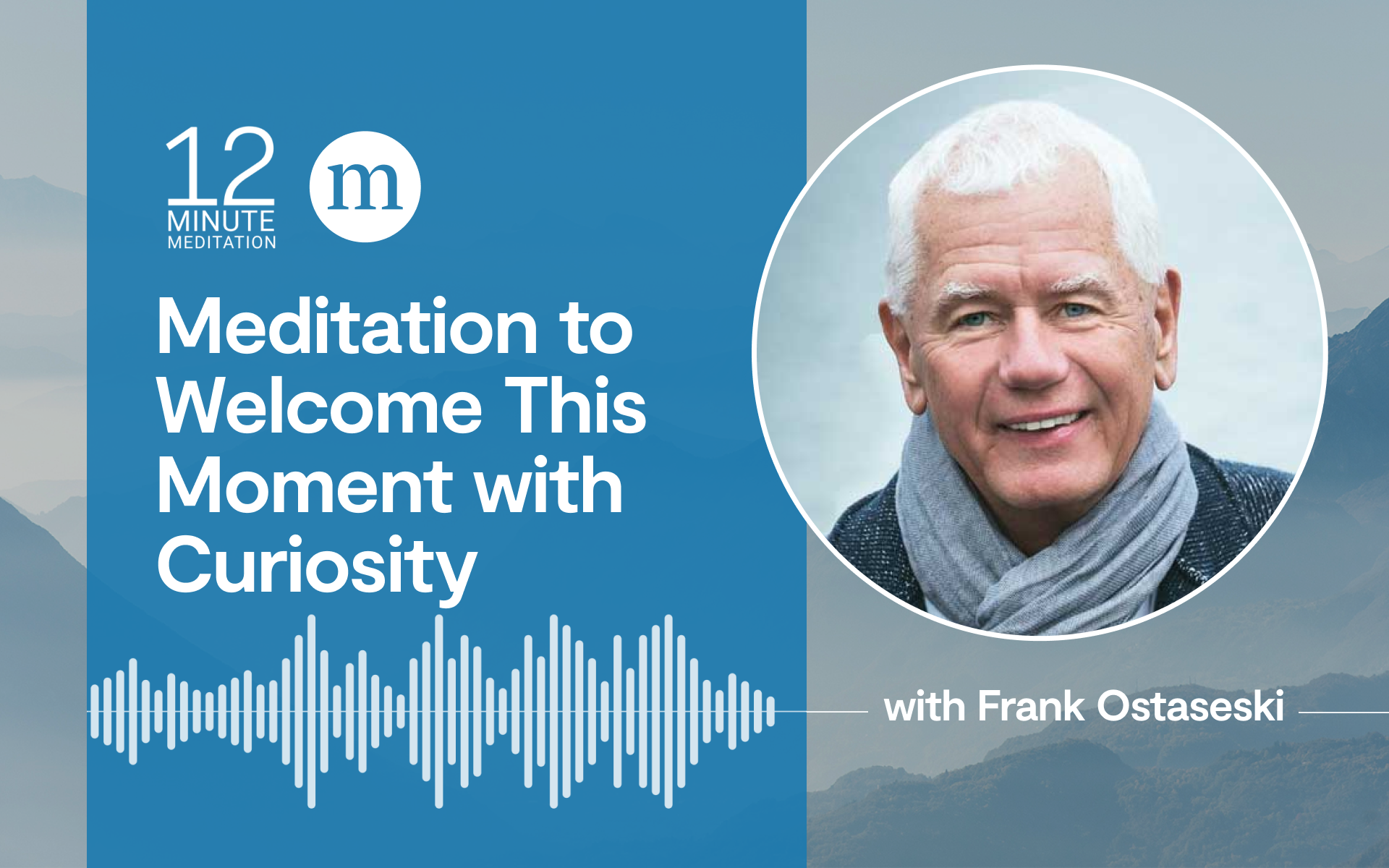
  • Let Curiosity Lead the Way With A 12-Minute Meditation

    Let Curiosity Lead the Way With A 12-Minute Meditation

    When we allow what is to simply be, we relieve ourselves of the suffering that can get heaped on top of our moments of difficulty. Frank Ostaseski leads this meditation to let curiosity lead the way.

    A lot of times we use languages like enlightenment or liberation or awakening. These terms feel far off and distant to me, like we’re trying to achieve something supernatural or transformative in our lives. I think meditation practice is about learning to become intimate—intimate with ourselves, with every aspect of life. Then we can bring the healing power of loving awareness to what scares us, what’s sad for us, and what feels raw for us. I prefer the word intimacy because it expresses a wish to come closer—to know that we already belong, that we’re not separate. 

    To me, intimacy expresses what liberation actually feels like: relaxed, easeful, ordinary, in a way. Liberation isn’t found someplace else. It’s found right here. That’s why one teaching says the path is right beneath your feet. When we look into the mind’s conditioning, in a close and personal way, we begin to understand the ways that we cause ourselves suffering—and that’s the real freedom of meditation. It isn’t about helping us to transcend or get out of our experience. It’s about learning to know our experiences intimately. 

    When we look into the mind’s conditioning, in a close and personal way, we begin to understand the ways that we cause ourselves suffering—and that’s the real freedom of meditation.

    To love the past is simply a memory, and to love the future is just a fantasy. The only place we can love, the only place we can really be aware, is right here, in this present moment. Intimacy connects us with each other with a deep sense of belonging. And with this belonging, we know that we’re not separate anymore. And this helps us to move beyond our small story of a limited sense of self. 

    Meditation, like love, is intimate, and this intimacy is the condition of deepest learning. Mindfulness and compassion are the least expensive, most available, and most appropriate tool we can use in just about every situation in our lives. But sadly, often they’re viewed as inappropriate or even shelved for some other time. And I think, as a result, a lot of us live and work in a great deal of fear and distress. And I think we can do something about that.

    A 12-Minute Meditation to Let Curiosity Lead the Way

    1. Let’s begin really simply: Just pause. A pause is an opportunity not to be swept away by the habit of our lives. A pause is an opportunity to remember who we actually are. A pause is a way of bringing our mind, heart, and body, collecting it all into the present moment. So let’s just pause. No hurry. 
    2. Now, relax. See how little effort is required just to hear the sound of my voice. Relaxing body, heart, and mind—mindfulness emerges much more easily in a relaxed mind, heart, and body. So, pause. And relax.
    3. Now, open. A Characteristic of an open mind is spaciousness infused with interest. Open. You’ll be open for just a moment, liberating yourself from any limiting ideas about who you are and what you think is possible. Can your curiosity be greater than your criticality? Open. So, again and again: Pause. Relax. Open. 
    4. And now, allow. Allowing takes us beyond accepting and rejecting altogether—beyond hope and fear. Just rest in a moment of allowing. There’s no one special to be, nothing special to do, no place special to go. It’s resting in allowing, again and again: Pause. Relax. Open. And allow.
    5. And now, become intimate. This is a kind of communion with your experience, or willingness to enter the immediacy of your life. It’s a kind of fearless receptivity—a willingness to welcome everything and push away nothing—nothing between you and your experience: no subject and object; no I and other. Just intimacy. So, again and again: Pause. Relax. Open. Allow. Become intimate. 
    6. Pause. Relax. Open. Allow. Become intimate


    Source link

  • 5 Mindful Reasons to Lean In to Self-Love

    5 Mindful Reasons to Lean In to Self-Love

    This article is independently researched and written by the Mindful editors. However, we may earn revenue or commission if you purchase via links included.


    Even today, the idea of loving ourselves often gets a bad rap. Won’t that make me egotistical? we might think, or, Shouldn’t I spend my time and energy caring for others first? Or, we seek love and acceptance exclusively from other people, forgetting that we can always find them within ourselves.

    Both mindfulness teaching and scientific studies show that, far from leading to self-indulgence, a daily practice of self-compassion can have powerful benefits that extend beyond ourselves. As leading Mindful Self-Compassion researcher Kristin Neff writes, “We can learn to embrace ourselves and our lives, despite inner and outer imperfections, and provide ourselves with the strength needed to thrive.”

    Benefits of Self-Love

    With inspiration from our community of mindfulness teachers and experts, we’re sharing five reasons for everyone to cultivate self-love.

    1. Loving yourself supports improved mental health and well-being, as well as positive habit change. Many of us were brought up to think that being kind to ourselves is equivalent to being complacent or lacking the drive to “better” ourselves. Whole sections of the self-help industry have made millions off this assumption that we need “tough love” to force ourselves to change. Fortunately, current research shows that the reverse is true.

    As clinical psychologist and Acceptance and Commitment Therapy trainer Diana Hill shares, “Self-criticism lowers your self-confidence and increases anxiety and depression, undermining your ability to take steps toward change. In contrast, self-compassion motivates you to make healthier decisions and care for yourself.”

    2. Self-love is part of healing from hurt and trauma. Once thought to be a result of living through catastrophic events such as wars or natural disasters, trauma is now more broadly understood by researchers as “normal reactions to abnormal circumstances.” Whether or not a person experiences trauma after going through something difficult depends on a complex set of factors, including available coping mechanisms, access to the resources needed to bounce back, and community response.  

    While it is important that anyone seeking to heal from trauma be supported by a mental health professional, beginning to cultivate self-love is one powerful tool for a healing journey. When we offer ourselves care and compassion, this helps create a sense of inner safety and acceptance, instead of (in many cases) blaming ourselves for something that happened to us. Ali Smith, Atman Smith, and Andres Gonzalez, who work with youth in disadvantaged communities in West Baltimore, summarize this by saying: “Trauma closes all of our hearts. Self-love practices can open them.”

    3. Self-love creates more thoughtful, resilient leaders. All types of leaders risk burning out, whether they are responsible for a committee, a company, or a classroom. Leaders often care so much about the work itself—and about the people they are leading—that they neglect their own well-being. While genuine care for others is a leadership asset, it isn’t sustainable if we never take the time to fill our own cup. 

    CEO and leadership consultant Georgina Miranda suggests several ways that we can incorporate small habits of self-love and self-care into our leadership style: “When the world feels heavy and overwhelming, we can take a pause and ask ourselves: What would actually be helpful in this moment?”

    4. Self-compassion makes us braver, more mindful communicators. Most of us prefer to avoid what Mitch Abblett calls “the muck of difficult interactions—the blame, shame, resentment, and anxiety,” if we have the option. Even if we are willing to talk about the problem, humans are neurologically wired to slip into reactive habits such as blaming, bias, or defensiveness.

    When the time comes for a tough conversation, a foundation of self-love is our ally. Self-compassion practice allows us to stay grounded and present in the moment, so even if things start to get heated, we are able to engage with respect and consideration for all involved. Abblett says, “Bringing more flexible awareness to discomfort seems to open pathways to communication, even when it’s quite challenging.”

    5. Last but not least, loving yourself affirms that you are already enough. One reason we often seek love from others instead of ourselves is that we want someone else’s approval and acceptance–things we often don’t feel we can give to ourselves. We may spend years chasing accomplishments and accolades, and yet still feel unfulfilled. External “wins” are wonderful, but if we can’t accept ourselves as we are, it will never feel like enough. 

    Jenée Johnson offers this reminder that self-compassion empowers us to release perfectionism and realize that we are already worthy of acceptance and love: “You are a unique and perfect expression of life. No one before you and no one after you, is like you. Your journey is composed of experiences and the things you think, do, and pay attention to with consistency. You are enough.”

    Practice Self-Love With Mindful Affirmations

    Meet the Self-Love Affirmations Deck: A collaboration between Mindful and Mindfulness.com that reminds us all to fuel our heart and mind with the deepest kindness.

    Each of the 52 cards in this brand-new deck draws on the time-honored wisdom of mindfulness teachers and traditions, whispering notes of self-love, optimism, and inner courage and strength, so you can take on whatever comes your way.

    Guiding your journey on this path, each card is also embedded with a QR code. Simply scan it with your phone’s camera to access a special collection of 25 guided meditations from beloved teachers, curated specifically to enhance self-kindness and self-care.

    These cards are perfect for those of us who want:

    • Increased self-esteem: Choosing to love yourself, no matter what, can boost your self-worth and confidence, enabling you to approach life’s challenges with a positive and resilient mindset.
    • Reduced anxiety and improved mental well-being: Having a self-compassionate perspective helps in managing stress and anxiety, promoting a sense of inner peace and calm and nurturing emotional balance.
    • Self-care for all: Using Self-Love Affirmations makes it easy to bring mindfulness and self-compassion into your daily life, wherever you are on your journey.
    • Beautiful practice tools: The Self-Love Affirmations cards are created to last and, most importantly, to be enjoyed. Featuring a matte finish, silky smooth texture, and sturdy cardstock, you’ll want to bring them everywhere you go.
    • Versatility in our practice: Ideal for personal reflection or as a meaningful gift, the cards can be used in various settings, including personal meditation, family bonding time, or group activities in educational or professional environments.


    Source link

  • Mountain-Climbing Mindfulness: The Power of 10 Deep Breaths

    Mountain-Climbing Mindfulness: The Power of 10 Deep Breaths

    For the past four decades, I’d gazed out of my grandparents’ home window at the Criou mountain. It stands majestically, a proud presence towering over the valley—a real landmark for hikers, birds, and paragliders.

    Nestled in the French Alps, amidst renowned summits and tales of nighttime expeditions with crampons and ice picks, the Criou may not fit the typical alpine mountain archetype. Nevertheless, in this part of France, she reigns as a true queen, and most of my memories with my grandparents feature glimpses of her.

    Yet, over those fortyish years, somehow I’d never climbed the Criou.

    Let’s rewind for a moment. Here’s some context: I am French-American, born and raised in San Francisco, yet I’ve spent every summer since birth with my grandparents in a quaint alpine village in Haute-Savoie. It’s indeed a privilege to shuttle between these two gems.

    Moreover, spending time with my grandparents was always incredibly enriching, as their lives and stories could easily inspire books and movies. My grandfather, a true local legend, not only survived a work camp in Austria during World War II but also played diverse roles post-war. He became the 11th guide on the “French national high mountain guide registry,” directed alpine centers, created the local radio station, and relished conversation—a crucial aspect of his personality. At heart, he was a teacher and an exceptional storyteller. He would often declare, “Watch this, I’m going to talk for 45 minutes, and no one is going to interrupt me.” Then, he’d launch into captivating discussions about how he’d worked to democratize access to the mountains, on ski expeditions and rescue parties. He’d weave together a myriad of facts, and he was right—no one interrupted him.

    My summers in the Alps left an indelible mark on me. Growing up hearing stories about summiting peaks, rescuing people in snowstorms, or casually beating the Austrian ski team in Chamonix, it’s no surprise I fell in love with someone who appreciated high-intensity nature moments. One of my greatest joys is that my husband spent significant time with my grandfather before he passed away at the age of 90.

    Despite my grandfather’s mountain escapades stealing the spotlight with tales of skiing,
    mountain climbing, hiking, rescues, and community living, none of his stories involved the Criou. To him, it was a mountain of little interest, home to only a few snakes and cows. So, even though it was ever-present in our gaze, I relegated it to a somewhat lower position in my mental mountain hierarchy—until my husband came into the picture.

    Embracing the Adventure

    We got together when I was 25, and for the next 15 years, whenever we were in France, I’d hear my husband leave at 5 a.m. to hike to the top of the Criou. It would take him anywhere from five to seven hours, and he always returned exhausted and exhilarated, usually after trying to beat his best time.

    Strangely, for years, I never even considered accompanying him, which is slightly out of character because I also love hiking and the outdoors. Maybe it was the 5 a.m. wake-up call (I’m just not a morning person) or some strange leftover notion that the Criou wasn’t a good enough peak to bag. Whatever the case, it wasn’t until we moved to the French village of Samoëns in the summer of 2019 that I decided to go for it.

    That year, we’d taken a sabbatical from our teaching jobs in San Francisco and moved our family to my grandparents’ home to live with my mom. My grandparents had both passed away, but my mom inherited their home, and it continued to be our summer escape from the fog.

    At the end of that summer, we decided to hike to the top of the mountain during the first day of the new school year. Our plan: We’d drop the girls off, and then do a roundtrip hike before swooping them up for their chocolate croissant goûter. Already, I liked that it wasn’t starting at 5 a.m. and that it was ending with pastries.

    So, we dropped them off for their first day at the small village school and drove to the base of the Criou. All of this was totally new to me, but my husband had already done it several times. I didn’t question anything that much because we’ve gone on countless hikes together and I really wasn’t expecting anything out of the ordinary. Oh, how wrong one can be.

    I really wasn’t expecting anything out of the ordinary. Oh, how wrong one can be.

    For the next two-plus hours, we zigzagged on a path in the forest, climbing steadily, our heads covered by so many trees. One hour into it, I was starting to wonder about the trail, and when we might finally emerge from this tree-covered situation. Two hours into the hike later, I was quite relieved by a change in scenery.

    So far, this hike was leaving much to be desired, but as we emerged above the tree line, I stopped in my tracks. The view was glorious, overlooking the entire valley, with Switzerland and Italy a stone’s throw away. We were so high up, and could see so far. It was stunning to stand there above the trees, the sun streaming down, and to be at eye level with some hawks.

    Plus, there were a couple of paragliders in the air, and I later found out that one of them was Tom Cruise! (Yes, we were on a mountain with Tom Cruise. How many people can say that?) While he was prepping stunt scenes for the next Mission Impossible movie, we were just trying to make it to the top by foot. Everyone’s on their own journey.

    For the next 30 minutes, I was in pure bliss. We traversed in the grass, passed by cows, and ran into a few other people, all the while overlooking villages and seeing the paragliders go down and then get helicoptered back up. It was all amazing, as well as peaceful, sunny, and relaxing. I felt proud of having slogged it uphill under a canopy of trees and was enjoying the reward of the views, thinking we just had a little bit longer to go before reaching the giant cross at the peak.

    But then, at the last section of the hike—the final 35 minutes—the trail became more vertical than horizontal. Though I considered myself in good shape, I was astounded at how hard it was.

    A Grandmother’s Wisdom

    As we started our ascent, this is where I slowly began to crumble, shrinking into a smaller and smaller version of myself with each step. Meanwhile, my husband, who hikes more than I do, was pulling ahead, and the gap between us was widening.

    Were blisters popping up? I don’t really know, because I couldn’t concentrate on anything other than barely putting one foot in front of the other, which I was doing an awful job at. My usual go-to techniques of meditation and breathwork, which typically keep me calm during tough moments, completely failed me. Suddenly, my entire body was in total freak-out mode and I was shutting down. Just me, having a mental breakdown on top of a mountain.

    With 15 minutes left to the top, I stopped. More like, I grunted, then angrily plopped down. I couldn’t believe how hard it was: to lift my foot and place it down again, to keep breathing, and to do it alone, because my husband was already at the top.

    I had a private tantrum, cursing the Criou, my husband for abandoning me, and myself for not being strong enough to make it. As I sat there, I made the decision to not continue, to stay where I was sitting and wait for him to come back down. I refused to go on any longer. Like I said, I was having a real private tantrum.

    That is, until I heard something that made me turn my head. And there she was, a grandmother, walking past me with her adult son. She paused, smiled, shared how they were from Nepal and loved living in the French alps. And then she continued on her way.

    I looked at this old woman, with her kind face, deeply wrinkled eyes, her very slow but steady gait, and felt a moment of gratitude for this reminder to appreciate the present. Watching her pass me as she continued to climb up the mountain inspired me to stand back up. This wasn’t a race; I could do this, and I would be proud of finishing this journey with my partner.

    With each breath, I felt my shoulders unwind, my frustration subside, and my mood lift.

    Her gentleness and perseverance reminded me of my own grandparents. I was raised on their stories about their upbringing, the hardships they’d endured during World War II, and the hope and joy they’d found by choosing a life filled with exercise, connection, and education in the mountains. They had worked hard to create the life of their dreams, which involved sharing their passion for a mindful way of life with others, and watching this grandmother reminded me so much of them. I wanted to be like them, like her!

    So, I closed my eyes and pictured my favorite bedroom in my grandparents’ chalet, where I could see the Criou through the window. I took ten long, deep breaths, inhaling deeply through my nose and exhaling slowly through my mouth. With each breath, I felt my shoulders unwind, my frustration subside, and my mood lift. I don’t know why I couldn’t do this before on my own, but something about seeing this grandmother on the mountain gave me the mental strength I needed to dig deep.

    Feeling stronger, I stood up and followed in her footsteps, and made it to the top, where my husband was waiting, with his hand outstretched, holding a huge ham-and-cheese baguette sandwich for me. Was this heaven?

    Finding Peace at the Peak

    As I sat there next to him, feeling like I was at the top of the world, I took a moment to acknowledge what had just happened inside of me, in the hopes that the next time I was doing something hard and felt like I couldn’t handle it anymore, I would recall that beautiful smiling grandmother and hit the pause button. I’d been so impatient to be at the top already, I nearly forgot to breathe through hard things, to try and find peace in the present moment, and to sometimes just slow down.

    I’ve never hiked the Criou again, but that day remains forever etched into my mind as a beautiful life lesson that I can embrace the adventure of life, try new things, test myself, and keep going. Taking 10 long, slow deep breaths is what helped change the energy in my body that day and gave me the extra push to keep going.

    Since then, I’ve rededicated myself to my meditation and breathwork practice. That moment on the mountain transformed me into someone who meditates twice daily, breathes intentionally throughout the day, and even teaches these techniques to both kids and adults. I look forward to facing the Criou again someday, with a huge ham-and-cheese sandwich by my side. Fingers crossed that Tom Cruise might be there too.


    Source link