Tag: Vitamin

  • Do Vitamin C Supplements Help Reduce Anxiety?

    Do Vitamin C Supplements Help Reduce Anxiety?

    What are the risks and benefits of using vitamin C for depression and anxiety?

    “In adults, emerging evidence suggests that higher daily intake of fiber-rich fruit and vegetable servings is associated with lower incidences of anxiety, greater happiness, higher life satisfaction, and greater social-emotional well-being,” says a review in the journal Nutrients. So, “persuading people to consume more fruits and vegetables may not only benefit their physical health in the long-run, but also their mental well-being in the short-run,” concluded a study in Social Science & Medicine. Fruit consumption, for example, has a protective association with leading killers like heart disease, stroke, diabetes, and cancer, as well as depression. The question is why?

    Several mechanisms have been proposed. For example, one posits it’s the antioxidant and anti-inflammatory properties of produce, which scavenge the free radicals that are involved in some of the inflammation associated with depression. If that’s the case, what about simply taking vitamin C supplements? The brain has some of the highest levels of vitamin C in the body, so it’s thought that if extra vitamin C is consumed, it may have some sort of therapeutic role in brain diseases, especially given that it is not just an antioxidant, but also has other critical functions in the brain, such as helping to build neurotransmitters like dopamine. But you don’t know whether it actually helps until you put it to the test.

    One study found a beneficial effect of adding vitamin C as an adjunct treatment to an antidepressant, while another study found no benefit from vitamin C supplementation.

    So, there are mixed results for vitamin C and depression. Another study found no benefit when it came to depression, but those randomized to vitamin C instead of placebo pills did show a significant decrease in anxiety level. And this wasn’t only seen in that study.

    The effects of oral vitamin C supplementation on anxiety in high school students were studied in a double-blind, randomized, placebo-controlled trial. The teens were given 500 mg a day of vitamin C or a placebo. That daily amount of vitamin C is about what you’d find in five oranges, four yellow kiwifruit or guavas, or one and a half yellow bell peppers. Within just two weeks, the vitamin C reduced anxiety levels compared to placebo, as well as provided a significant drop in heart rate.

    Given these data showing that vitamin C may have an anxiety-reducing effect, researchers sought to find out if a single dose could acutely affect emotional states. And indeed, within only two hours of taking some vitamin C, study participants experienced a significant drop in anxiety compared to placebo, though only among those who started out the most anxious in the first place, as you can see below and at 2:42 in my video Do Vitamin C Supplements Help With Anxiety?.
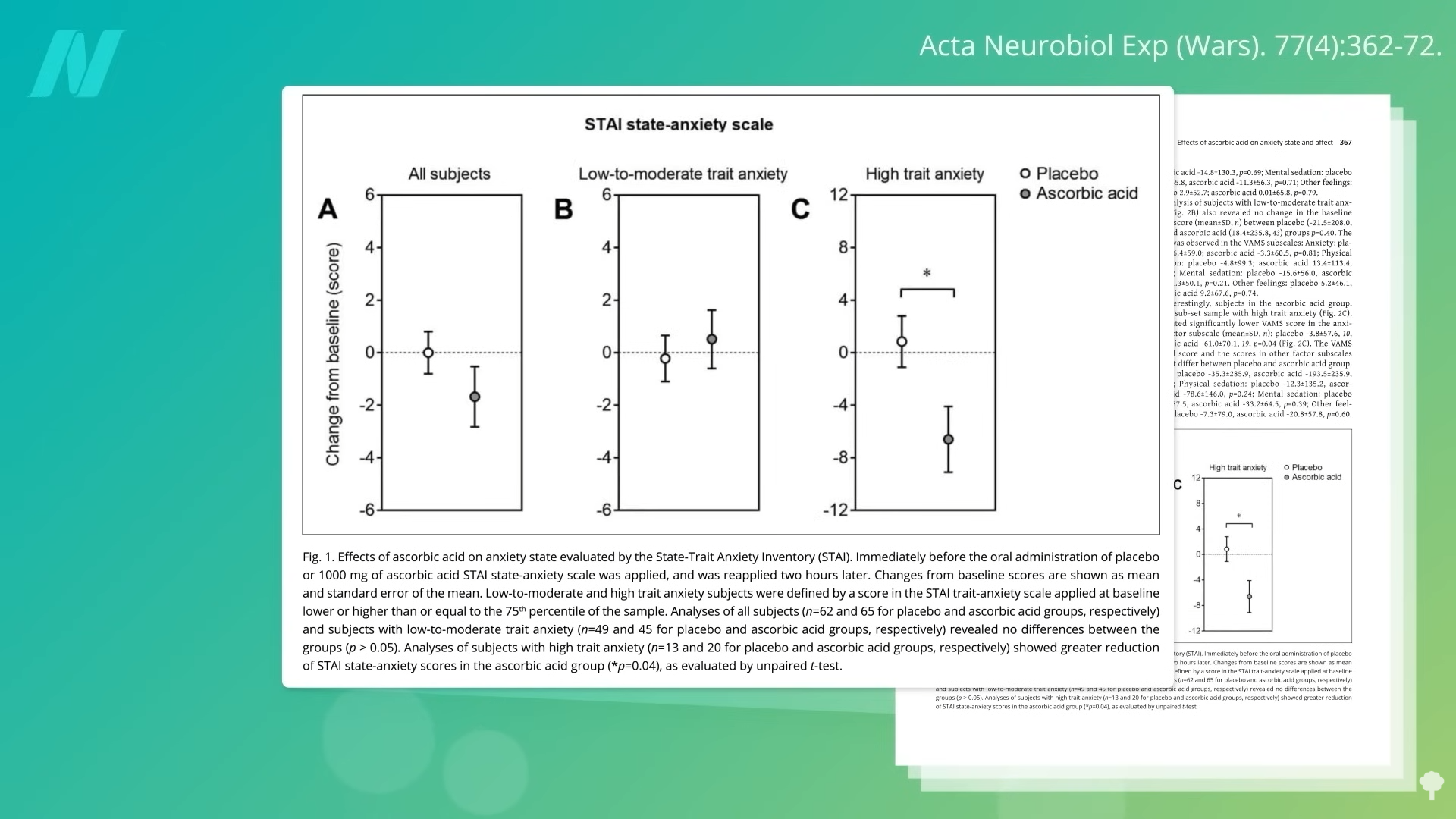
     

    As a bonus, vitamin C supplementation may lower our blood pressure a few points, but whole fruits and vegetables can do the same thing—and may even do it better for those who need it the most, as shown below and at 2:53 in my video.

    As I’ve shown previously, simply adding just two servings of fruits and vegetables a day can have psychological well-being benefits within only two weeks—and without the kidney stone risk associated with vitamin C supplements, though that appears to be only a problem in men.

    Doctor’s Note

    For more on vitamin C and on anxiety, check out related posts below.


    Source link

  • Bone Fractures, Lung Cancer, and Vitamin B12 Supplements? 

    Bone Fractures, Lung Cancer, and Vitamin B12 Supplements? 

    What do randomized controlled trials of high-dose daily vitamin B12 supplementation show about its effects on cancer risk, death, and longevity? 

    In 2019, “Association of High Intakes of Vitamins B6 and B12 from Food and Supplements with Risk of Hip Fracture Among Postmenopausal Women in the [Harvard] Nurses’ Health Study” was published. Note, though, that only the combined high intake of vitamins B6 (≥35 mg/day) and B12 (≥20 mcg/day) was associated with an increased hip fracture risk. We know that treatment with high doses of vitamin B6 may increase hip fracture risk on its own. After a decade or so, those who had been taking high-dose (40 mg) B6 supplements had about a 40 percent higher hip fracture risk, but not those taking B12, as you can see below and at 0:35 in my video Do Vitamin B12 Supplements Cause Bone Fractures and Lung Cancer?.  

    That’s what the Harvard study found, too. High intake of vitamin B12 alone was not associated with increased risk. In fact, some observational studies suggest a slightly lower fracture risk at high B12 blood levels. What we care about most, though, are interventional studies, where people are randomized to B12 so we can see what happens, and when we look at those, we find there is no increased fracture risk among those given B12. In conclusion, based on randomized controlled trials, high doses of vitamin B12 have not been shown to be associated with the risk of fractures.

    Okay, but what about this? In 2017, a study found that men taking vitamin B12 supplements appeared to have increased lung cancer risk. Now, the researchers didn’t find any such association in women, and the increased risk was mostly among men who smoked. Could it be that B12 was feeding budding tumors? It’s hard enough imagining a vitamin being carcinogenic on its own, especially if it somehow only affects men and not also women. “Replication of these findings in additional prospective studies with careful measurement of B vitamin supplement use is warranted.” And, indeed, when you put together all the observational studies, there is no significant correlation between lung cancer and levels of B12 in the blood, whether you’ve smoked or not. If anything, most studies seemed to trend towards higher B12 levels being protective, as you can see below and at 2:03 in my video

    Then, in 2018, a new study found an association between overall lung cancer risk and higher circulating levels of B12, again appearing to be more of a concern with smokers, as seen here and at 2:16 in my video

    Now, this was another observational study. Those with higher B12 levels were just observed to have higher cancer levels. Those of you who have been following my work know the drill: There are two potential issues that arise in observational studies that prevent us from ascribing cause-and-effect: confounding factors, also known as “lurker variables,” and reverse causation.

    What might be a lurker variable in this case? What might be a third factor associated with both higher B12 levels and cancer that may be the true cause? Well, who has higher levels of B12 circulating in their blood? Those who eat a lot of meat and dairy, which are, in fact, “the most important contributors to serum vitamin B-12,” that is, B12 in our blood. And those who eat more meat do tend to have more lung cancer: “Dose-response analysis showed that consumption of red meat for 120 g per day might increase the risk of lung cancer by 35%, and consumption of processed meat for 50 g per day might increase the risk of lung cancer by 20%.” So, we’re generally talking about 35 percent more risk for every quarter-pound burger eaten each day and about 20 percent increased risk for every breakfast sausage link. It’s no wonder those with higher B12 levels in their blood could have more lung cancer. The B12 could just be a marker for meat intake.

    And, if you remember, reverse causation is when X may not lead to Y, but, instead, Y may lead to X. So, instead of high B12 blood levels leading to cancer, maybe cancer leads to high blood levels of B12. And, indeed, nearly 75 percent of patients diagnosed with cancer exhibit elevated B12 levels. So, elevated B12 levels may simply be a marker for cancer. Besides taking extra B12, there are all sorts of reasons your levels can rise, such as liver problems, kidney problems, bone marrow problems, and cancer, as you can see below and at 3:50 in my video. So, high B12 levels may just be a marker of brewing, but not yet diagnosed, cancer. 

    What about observational studies specifically linking B12 supplement use to lung cancer, though? Those could also be reverse causation: “The consequence of being at risk for cancer is that patients will engage in healthier behaviors, including taking multivitamins (reverse causality). The well-established causes, such as smoking, chronic obstructive pulmonary disease, and previous cancers, are the real lung cancer risks.” So, we’re left with this “chicken or the egg causality dilemma,” which is why, ideally, we need randomized controlled trials to see if there’s any cause and effect.

    This became even more urgent with genetic evidence suggesting that those born with higher lifelong levels may be at increased risk. Thankfully, as you can see below and at 4:47 in my video, we do have randomized controlled trials—more than a dozen randomized controlled trials randomizing thousands of people up to 2,000 micrograms of B12 every single day for years, in fact. 

    The findings? “Vitamin B supplementation does not have an effect on cancer incidence, death due to cancer, or total mortality.” And this includes specifically looking at lung cancer, as seen below and at 5:02 in my video. In fact, if anything, vitamin B supplements may actually lower the risk of the most dangerous form of skin cancer. 

    If you missed my previous video, check out Do Vitamin B12 Supplements Cause Acne?.

    For my other B12 updates, see related posts below. All of these videos can be found in one digital download: Latest Vitamin B12 Recommendations.

    I’ve also explored vitamin B12’s role in stroke risk. See the related posts below. That series is available for digital download, too: Why Do Vegetarians Have Higher Stroke Risk?.


    Source link

  • Acne and Vitamin B12 

    Acne and Vitamin B12 

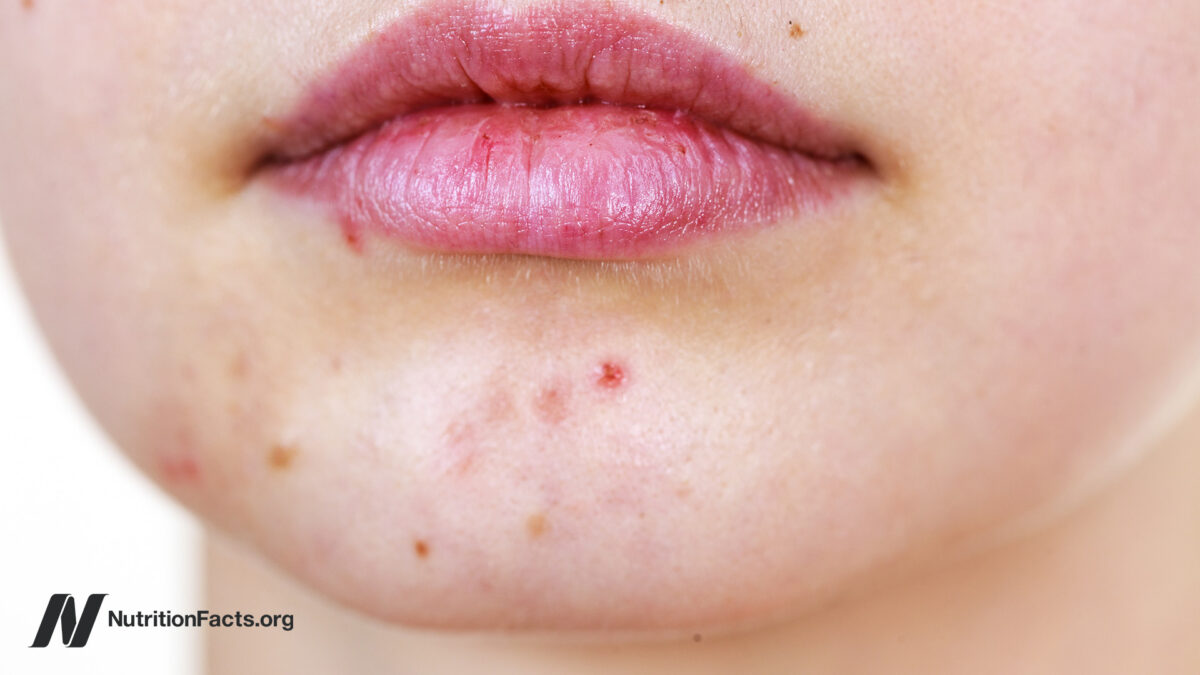
    Acne can be triggered in one in ten people who get vitamin B12 injections.

    “Acne is a disease unique to humans.” Why do we even get it? Well, think about the distribution of those greasy sebaceous glands. They’re “on the face, chest and back; these are exactly the same structures that pose the greatest obstruction during childbirth…Having extra lubrication at these sites would help make the baby more slippery for birth conferring a selective advantage to successful delivery.” Perhaps, but what triggers them to become inflamed into pimples later in life?

    “In westernized societies, acne vulgaris is a nearly universal skin disease afflicting 79% to 95%” of teens. Not even a single case could be found in some populations where more “traditional” diets are eaten (i.e., minimally processed, high-carb, low-fat diets). “Nutrition counseling” has been suggested “as a first-line or adjunctive therapy…for individuals with mild to moderate acne.” It looks like high glycemic foods and dairy products are “exacerbating factors,” so we’re talking about sugar, soda, refined junky carbohydrates, white flour, breakfast cereal, and dairy products, like milk, cheese, yogurt, and whey, as well as saturated and trans fats, which are concentrated in meat, dairy, junk, and fast food. You can see a table detailing this below and at 1:21 in my video Do Vitamin B12 Supplements Cause Acne?.

    “Acne patients should be encouraged to discontinue any whey protein supplements they might be taking,” for example. “The relationship between milk and acne severity may be explained by the presence in dairy of normal reproductive [sex] steroid hormones or the enhanced production of polypeptide [growth] hormones such as IGF-1…” What if you gave up dairy a month ago and there’s still no change? “It should be noted that changes in acne due to any pharmaceutical treatment or dietary changes are likely to take at least 10 to 12 weeks,” so you have to stick with it.

    “Acne patients,” not surprisingly, “were more than twice as likely to have a non-vegan diet compared with controls,” but the difference did not reach statistical significance. Were the vegans eating a lot of vegan junk? Maybe, but what about the paper entitled, “Vitamin B-12 Induced Acne”? Mammalian herbivores, including nonhuman primates like gorillas, and our fellow great apes, get all the B12 they need by practicing coprophagy, the eating of feces, but my preference would be to take B12 supplements. And you don’t have to worry about getting too much because it’s been reported that “there are no reports of adverse effects associated with excess B12 intake”—but that’s not true. First described back in the 1950s, acne erupts in about one in ten people within days or even hours of getting an injection of vitamin B12, which then disappears rapidly when injection “treatment is discontinued.”

    At the time, we had no idea what the mechanism might be, and the problem remained unsolved until just a few years ago when we finally figured it out: Vitamin B12 modulates the gene expression of the skin bacteria that cause acne. Researchers swabbed the skin of ten people before and after being injected with vitamin B12. As you can see below and at 3:20 in my video, it turns out that the level of B12 on our skin is proportional to the level in our blood, so, after a B12 injection, the bacteria on our skin have to make less of their own B12. As a result, the acne bacteria could concentrate instead on using their cellular machinery to churn out more compounds to attack our face and “induce inflammation in acne.” 

    Indeed, as you can see here and at 3:53 in my video, without excess B12 on the skin (with B12 shown in green), the bacteria have to make most of it on their own at the expense of porphyrins (shown in red), which can trigger acne inflammation. When there is a lot of B12 floating around, the bacteria don’t have to waste resources and, instead, can focus on trying to pimple you up. 

    So, what do you do? We know that individuals on plant-based diets have to take supplemental B12, but we don’t have to get injections. Vitamin B12-related acne tends to occur only “in dosages in excess of 5 to 10 mg per week.” That’s 5,000 to 10,000 micrograms a week, which is well in excess of the 50 micrograms a day or, alternately, the 2,000-microgram single weekly dose that I recommend. The only time you should be taking 5,000 to 10,000 micrograms a week is if you are treating B12 deficiency. If you remember from my previous video, B12 deficiency is treated with 1,000 micrograms a day for a month or more, as shown below and at 4:35 in my video, and that could potentially trigger acne. 

    For example, a vegan woman who hadn’t been taking B12 developed a deficiency and had to be treated with such high doses of the vitamin that her face erupted in acne, as you can see at 4:49 in my video. All the more reason not to become B12-deficient in the first place. But, even if you do get B12 injections, the likelihood of it triggering acne may only be about one in ten.

    For background and my updated recommendations, see my extended look at vitamin B12 in the related posts below. All of these videos can be found in one digital download. Check out Latest Vitamin B12 Recommendations.

    I previously explored vitamin B12’s role in stroke risk, which you can also see in the related posts below. That series is available for digital download, too: Why Do Vegetarians Have Higher Stroke Risk?.

    Up next is Do Vitamin B12 Supplements Cause Bone Fractures and Lung Cancer?.


    Source link

  • Vitamin D During Pregnancy Linked To Better Bone Health In Children At Age 7: Study

    Vitamin D During Pregnancy Linked To Better Bone Health In Children At Age 7: Study

    Vitamin D is essential for maintaining healthy bones, and a recent study reveals that supplementing with this vitamin during pregnancy can have a lasting impact on children’s bone health, keeping them strong into mid-childhood.

    Researchers found that children have greater bone mineral density at age 7 when expectant mothers had taken vitamin D supplements during pregnancy.

    “Our findings show that the benefits of vitamin D supplementation during pregnancy persist into mid-childhood. This early intervention represents an important public health strategy. It strengthens children’s bones and reduces the risk of conditions like osteoporosis and fractures in later life,” said Dr. Rebecca Moon, lead investigator of the study in a news release.

    The researchers began the MAVIDOS study in 2009, enlisting over 1,000 pregnant women in England to explore the potential effects of vitamin D on child bone health. During the trial, the women were randomly divided into two groups: one received an additional 1,000 International Units of vitamin D daily, while the other took a placebo. The participants and healthcare providers who attended them did not know which group they belonged to.

    As part of the study’s first phase, researchers assessed the bone mass of the children at age four using detailed bone scans. The results showed that children born to mothers who received vitamin D supplements during pregnancy had greater bone mass compared to those whose mothers had taken a placebo.

    In the latest phase of the study, researchers examined whether the benefits of prenatal vitamin D would extend into mid-childhood. They conducted follow-up bone scans on 454 children between the ages of six and seven, finding that those whose mothers had received vitamin D supplements continued to show stronger bone density at age seven.

    “These findings suggest that pregnancy vitamin D supplementation may represent a population health strategy to improve bone health, although further work is needed to demonstrate the persistence of this effect into adulthood, together with, ideally replication in additional studies,” the researchers wrote in the study published in The American Journal of Clinical Nutrition.

    Although vitamin D deficiency during pregnancy remains a significant concern, the U.S. dietary recommendations for vitamin D intake in pregnant women remain conservative. It is primarily due to concerns over potential toxicity. However, current evidence suggests that a daily intake of 4,000 IU of vitamin D3 is both safe and necessary to meet the needs of all pregnant women, with no adverse effects reported.

    Since the effects and harms of vitamin D supplementation on maternal and infant health are not yet fully understood, WHO does not recommend vitamin D supplementation as part of standard prenatal care.

    Source link

  • Vitamin D Deficiency In Kids Raises Risk Of Auto-Immune Disorders: Study Explains How

    Vitamin D Deficiency In Kids Raises Risk Of Auto-Immune Disorders: Study Explains How

    Ensure your child is getting adequate sunshine vitamins. Beyond the role of calcium absorption and bone strengthening, researchers have discovered more about its connection to the immune system. A recent study revealed how a deficiency of vitamin D in young children can raise the risk of developing autoimmune disorders.

    According to the latest study published in the journal Science Advances, the deficiency of vitamin D in kids is linked to premature aging of the thymus gland. The thymus is a small lymph gland that makes and trains T-cells that are crucial for the immune system, defending the body against infections and diseases. While most of these vital cells are produced before birth, the remainder are generated during childhood, and by puberty, individuals would have developed the complete T cells for their lifetime.

    “An aging thymus leads to a ‘leaky’ immune system. This means the thymus becomes less effective at filtering out immune cells that could mistakenly attack healthy tissues, increasing the risk of autoimmune diseases like type 1 diabetes,” said the lead author of the study John White in a news release.

    Studies have shown that vitamin D is essential for immunity but according to White, the recent study findings “bring new clarity to this connection and could lead to new strategies for preventing autoimmune diseases.”

    During the trial, researchers examined mice that could not produce vitamin D to assess how this deficiency affected their thymus glands. They then conducted cell analyses and gene sequencing to understand the impact of vitamin D deficiency on the immune system. The researchers expect similar findings in humans as the thymus functions similarly in both species.

    Based on the study findings, researchers suggest that young children should get adequate vitamin D, either through natural sources such as fortified food and sunlight or through supplementation.

    “If you have a young child, it’s important to consult with your healthcare provider to ensure they’re getting enough,” said White.

    Earlier research conducted by the same team in 2021, which followed up more than 10,000 children showed that early vitamin D supplementation can reduce the risk of developing type 1 diabetes by up to five-fold.

    Source link

  • Testing for Vitamin B12 Deficiency 

    Testing for Vitamin B12 Deficiency 

    Many doctors mistakenly rely on serum B12 levels in the blood to test for vitamin B12 deficiency.

    There were two cases of young, strictly vegetarian individuals with no known vascular risk factors. One suffered a stroke, and the other had multiple strokes. Why? Most probably because they weren’t taking vitamin B12 supplements, which leads to high homocysteine levels, which can attack our arteries.

    So, those eating plant-based who fail to supplement with B12 may increase their risk of both heart disease and stroke. However, as you can see in the graph below and at 0:47 in my video How to Test for Functional Vitamin B12 Deficiency, vegetarians have so many heart disease risk factor benefits that they are still at lower risk overall, but this may help explain why vegetarians were found to have more stroke. This disparity would presumably disappear with adequate B12 supplementation, and the benefit of lower heart disease risk would grow even larger.

    Compared with non-vegetarians, vegetarians enjoy myriad other advantages, such as better cholesterol, blood pressure, blood sugars, and obesity rates. But, what about that stroke study? Even among studies that have shown benefits, “the effect was not as pronounced as expected, which may be a result of poor vitamin B12 status due to a vegetarian diet. Vitamin B12 deficiency may negate the cardiovascular disease prevention benefits of vegetarian diets. To further reduce the risk of cardiovascular disease, vegetarians should be advised to use vitamin B12 supplements.” 

    How can you determine your B12 status? By the time you’re symptomatic with B12 deficiency, it’s too late. And, initially, the symptoms can be so subtle that you might even miss them. What’s more, you develop metabolic vitamin B12 deficiency well before you develop a clinical deficiency, so there’s “a missed opportunity to prevent dementia and stroke” when you have enough B12 to avoid deficiency symptoms, but not enough to keep your homocysteine in check. “Underdiagnosis of this condition results largely from a failure to understand that a normal serum [blood level] B12 may not reflect an adequate functional B12 status.” The levels of B12 in our blood do not always represent the levels of B12 in our cells. We can have severe functional deficiency of B12 even though our blood levels are normal or even high.

    “Most physicians tend to assume that if the serum B12 is ‘normal,’ there is no problem,” but, within the lower range of normal, 30 percent of patients could have metabolic B12 deficiency, with high homocysteine levels. 

    Directly measuring levels of methylmalonic acid (MMA) or homocysteine is a “more accurate reflection of vitamin B12 functional statuses.” Methylmalonic acid can be checked with a simple urine test; you’re looking for less than a value of 4 micrograms per milligram of creatinine. “Elevated MMA is a specific marker of vitamin B12 deficiency while Hcy [homocysteine] rises in both vitamin B12 and folate deficiencies.” So, “metabolic B12 deficiency is strictly defined by elevation of MMA levels or by elevation of Hcy in folate-replete individuals,” that is, in those getting enough folate. Even without eating beans and greens, which are packed with folate, folic acid is added to the flour supply by law, so, these days, high homocysteine levels may be mostly a B12 problem. Ideally, you’re looking for a homocysteine level in your blood down in the single digits.

    Measured this way, “the prevalence of subclinical functional vitamin B12 deficiency is dramatically higher than previously assumed…” We’re talking about 10 to 40 percent of the general population, more than 40 percent of vegetarians, and the majority of vegans who aren’t scrupulous about getting their B12. Some suggest that those on plant-based diets should check their vitamin B12 status every year, but you shouldn’t need to if you’re adequately supplementing. 

    There are rare cases of vitamin B12 deficiency that can’t be picked up on any test, so it’s better to just make sure you’re getting enough.

    If you do get your homocysteine tested and it’s still too high, up in the double digits despite B12 supplementation and eating beans and greens, I have a suggestion for you in the final videos of this series, which we’ll turn to next with: Should Vegetarians Take Creatine to Normalize Homocysteine? and The Efficacy and Safety of Creatine for High Homocysteine.

    How did we end up here? To watch the full series if you haven’t yet, check the related posts below. 


    Source link

  • What About Homocysteine, Vitamin B12, and Vegetarians’ Stroke Risk? 

    What About Homocysteine, Vitamin B12, and Vegetarians’ Stroke Risk? 

    Not taking vitamin B12 supplements or regularly eating B12-fortified foods may explain the higher stroke risk found among vegetarians.

    Leonardo da Vinci had a stroke. Might his vegetarian diet have been to blame? “His stroke…may have been related to an increase in homocysteine level because of the long duration of his vegetarian diet.” A suboptimal intake of vitamin B12 is common in those eating plant-based diets (unless they take B12 supplements or regularly eat B12-fortified foods) and can lead to an increased level of homocysteine in the blood, which “is accepted as an important risk factor for stroke.”

    “Accepted” may be overstating it as there is still “a great controversy” surrounding the connection between homocysteine and stroke risk. But, as you can see in the graph below and at 0:57 in my video Vegetarians and Stroke Risk Factors: Vitamin B12 and Homocysteine?, those with higher homocysteine levels do seem to have more atherosclerosis in the carotid arteries that lead up to the brain, compared to those with single-digit homocysteine levels, and they also seem to be at higher risk for clotting ischemic strokes in observational studies and, more recently, bleeding hemorrhagic strokes, as well as increased risk of dying from cardiovascular disease and all causes put together. 

    Even more convincing are the genetic data. About 10 percent of the population has a gene that increases homocysteine levels by about 2 points, and they appear to have significantly higher odds of having a stroke. Most convincing would be randomized, double-blind, placebo-controlled trials to prove that lowering homocysteine with B vitamins can lower strokes, and, indeed, that appears to be the case for clotting strokes: Strokes with homocysteine-lowering interventions were more than five times as likely to reduce stroke compared with placebo.

    Ironically, one of the arguments against the role of homocysteine in strokes is that, “assuming that vegetarians have lower vitamin B12 concentrations than meat-eaters and that low vitamin B12 concentrations cause ischaemic stroke, then the incidence of stroke should be increased among vegetarians…but this is not the case.” However, it has never been studied until now.

    As you can see in the graph below and at 2:16 in my video, the EPIC-Oxford study researchers found that vegetarians do appear to be at higher risk.

    And no wonder, as about a quarter of the vegetarians and nearly three-quarters of the vegans studied were vitamin B12-depleted or B12-deficient, as you can see below and at 2:23, and that resulted in extraordinarily high homocysteine levels.

    Why was there so much B12 deficiency? Because only a small minority were taking a dedicated B12 supplement. And, unlike in the United States, B12 fortification of organic foods isn’t allowed in the United Kingdom. So, while U.S. soymilk and other products may be fortified with B12, UK products may not. We don’t see the same problem among U.S. vegans in the Adventist study, presumably because of the B12 fortification of commonly eaten foods in the United States. It may be no coincidence that the only study I was able to find that showed a significantly lower stroke mortality risk among vegetarians was an Adventist study.

    Start eating strictly plant-based without B12-fortified foods or supplements, and B12 deficiency can develop. However, that was only for those not eating sufficient foods fortified with B12. Those eating plant-based who weren’t careful about getting a regular reliable source of B12 had lower B12 levels and, consequently, higher homocysteine levels, as you can see below and at 3:27 in my video.

    The only way to prove vitamin B12 deficiency is a risk factor for cardiovascular disease in vegetarians is to put it to the test. When researchers measured the amount of atherosclerosis in the carotid arteries, the main arteries supplying the brain, “no significant difference” was found between vegetarians and nonvegetarians. They both looked just as bad even though vegetarians tend to have better risk factors, such as lower cholesterol and blood pressure. The researchers suggest that B12 deficiency plays a role, but how do they know? Some measures of artery function weren’t any better either. Again, they surmised that vitamin B12 deficiency was overwhelming the natural plant-based benefits. “The beneficial effects of vegetarian diets on lipids and blood glucose [cholesterol and blood sugars] need to be advocated, and efforts to correct vitamin B12 deficiency in vegetarian diets can never be overestimated.”

    Sometimes vegetarians did even worse. Worse artery wall thickness and worse artery wall function, “raising concern, for the first time, about the vascular health of vegetarians”—more than a decade before the new stroke study. Yes, their B12 was low, and, yes, their homocysteine was high, “suggest[ing] that vitamin B12 deficiency in vegetarians might have adverse effects on their vascular health.” What we need, though, is an interventional study, where participants are given B12 to see if that fixes it, and here we go. The title of this double-blind, placebo-controlled, randomized crossover study gives it away: “Vitamin B-12 Supplementation Improves Arterial Function in Vegetarians with Subnormal Vitamin B-12 Status.” So, compromised vitamin B12 status among those eating more plant-based diets due to not taking B12 supplements or regularly eating vitamin B12-fortified foods may explain the higher stroke risk found among vegetarians.

    Unfortunately, many vegetarians resist taking vitamin B12 supplements due to “misconceptions,” like “hold[ing] on to the old myth that deficiency of this vitamin is rare and occurs only in a small proportion of vegans.” “A common mistake is to think that the presence of dairy products and eggs in the diet, as in LOV [a lacto-ovo vegetarian diet], can still ensure a proper intake [of B12]…despite excluding animal flesh.”

    Now that we may have nailed the cause, maybe “future studies with vegetarians should focus on identifying ways to convince vegetarians to take vitamin B12 supplements to prevent a deficiency routinely.” 

    I have updated my recommendation for B12 supplementation. I now suggest at least 2,000 mcg (µg) of cyanocobalamin once weekly, ideally as a chewable, sublingual, or liquid supplement taken on an empty stomach, or at least 50 mcg daily of supplemental cyanocobalamin. (You needn’t worry about taking too much.) You can also have servings of B12-fortified foods three times a day (at each meal), each containing at least 190% of the Daily Value listed on the nutrition facts label. (Based on the new labeling mandate that started on January 1, 2020, the target is 4.5 mcg three times a day.) Please note, though, that those older than the age of 65 have only one option: to take 1,000 micrograms a day. 

    We started this series on what to eat and not eat for stroke prevention, and whether vegetarians really have a higher stroke risk. Check related posts for the last few videos that looked at specific factors.

    Stay tuned for: 


    Source link

  • What About Vitamin D and Vegetarians’ Stroke Risk? 

    What About Vitamin D and Vegetarians’ Stroke Risk? 

    Could the apparent increased stroke risk in vegetarians be reverse causation? And what about vegetarians versus vegans? 

    In the “Risks of Ischaemic Heart Disease and Stroke in Meat Eaters, Fish Eaters, and Vegetarians Over 18 Years of Follow-Up” EPIC-Oxford study, not surprisingly, vegetarian diets were associated with less heart disease—10 fewer cases per 1,000 people per decade compared to meat eaters—but vegetarian diets were associated with three more cases of stroke. So, eating vegetarian appears to lower the risk of cardiovascular disease by 7 overall, but why the extra stroke risk? Could it just be reverse causation?

    When studies have shown higher mortality among those who quit smoking compared to people who continue to smoke, for example, we suspect “reverse causality.” When we see a link between quitting smoking and dying, instead of quitting smoking leading to people dying, it’s more likely that being “affected by some life-threatening condition” led people to quit smoking. It’s the same reason why non-drinkers can appear to have more liver cirrhosis; their failing liver led them to stop drinking. This is the “sick-quitter effect,” and you can see it when people quit meat, too.

    As you can see below and at 1:16 in my video Vegetarians and Stroke Risk Factors: Vitamin D?

    , new vegetarians can appear to have more heart disease than non-vegetarians. Why might an older person all of a sudden start eating vegetarian? Well, they may have just been diagnosed with heart disease, so that may be why there appear to be higher rates for new vegetarians—an example of the sick-quitter effect. To control for that, you can throw out the first five years of data to make sure the diet has a chance to start working. And, indeed, when you do that, the true effect is clear: a significant drop in heart disease risk. 

    So, does that explain the apparent increased stroke risk, too? No, because researchers still found higher stroke risk even after the first five years of data were skipped. What’s going on? Let’s dive deeper into the data to look for clues.

    What happens when you break down the results by type of stroke and type of vegetarian (vegetarian versus vegan)? As you can see below and at 2:09 in my video, there are two main types of strokes—ischemic and hemorrhagic. Most common are ischemic, clotting strokes where an artery in the brain gets clogged off, as opposed to hemorrhagic, or bleeding strokes, where a blood vessel in the brain ruptures. In the United States, for example, it is about 90:10, with nine out of ten strokes the clotting (ischemic) type and one out of ten bleeding (hemorrhagic), the latter being the kind of stroke vegetarians appeared to have significantly more of. Now, statistically, the vegans didn’t have a significantly higher risk of any kind of stroke, but that’s terrible news for vegans. Do vegans have the same stroke risk as meat eaters? What is elevating their stroke risk so much that it’s offsetting all their natural advantages? The same could be said for vegetarians, too. 

    Even though this was the first study of vegetarian stroke incidence, there have been about half a dozen studies on stroke mortality. The various meta-analyses have consistently found significantly lower heart disease risk for vegetarians, but the lower stroke mortality was not statistically significant. Now, there is a new study that can give vegetarians some comfort in the fact that they at least don’t have a higher risk of dying from stroke, but that’s terrible news for vegetarians. Statistically, vegetarians have the same stroke death rate as meat eaters. Again, what’s going on? What is elevating their stroke risk so much that it’s offsetting all their natural advantages?

    Let’s run through a couple of possibilities. As you can see in the graph below and at 3:48 in my video, if you look at the vitamin D levels of vegetarians and vegans, they tend to run consistently lower than meat eaters, and lower vitamin D status is associated with an increased risk of stroke. But who has higher levels of the sunshine vitamin? Those who are running around outside and exercising, so maybe that’s why their stroke risk is better. What we need are randomized studies.

    When you look at people who have been effectively randomized at birth to genetically have lifelong, lower vitamin D levels, you do not see a clear indicator of increased stroke risk, so the link between vitamin D and stroke is probably not cause-and-effect.

    We’ll explore some other possibilities, next.

    So far in this series, we’ve looked at what to eat and what not to eat for stroke prevention, and whether vegetarians do have a higher stroke risk

    It may be worth reiterating that vegetarians do not have a higher risk of dying from a stroke, but they do appear to be at higher risk of having a stroke. How is that possible? Meat is a risk factor for stroke, so how could cutting out meat lead to more strokes? There must be something about eating plant-based that so increases stroke risk that it counterbalances the meat-free benefit. Might it be because plant-based eaters don’t eat fish? We turn to omega-3s next. For other videos in this series, see related posts below. 

    There certainly are benefits to vitamin D, though. Here is a sampling of videos where I explore the evidence.


    Source link