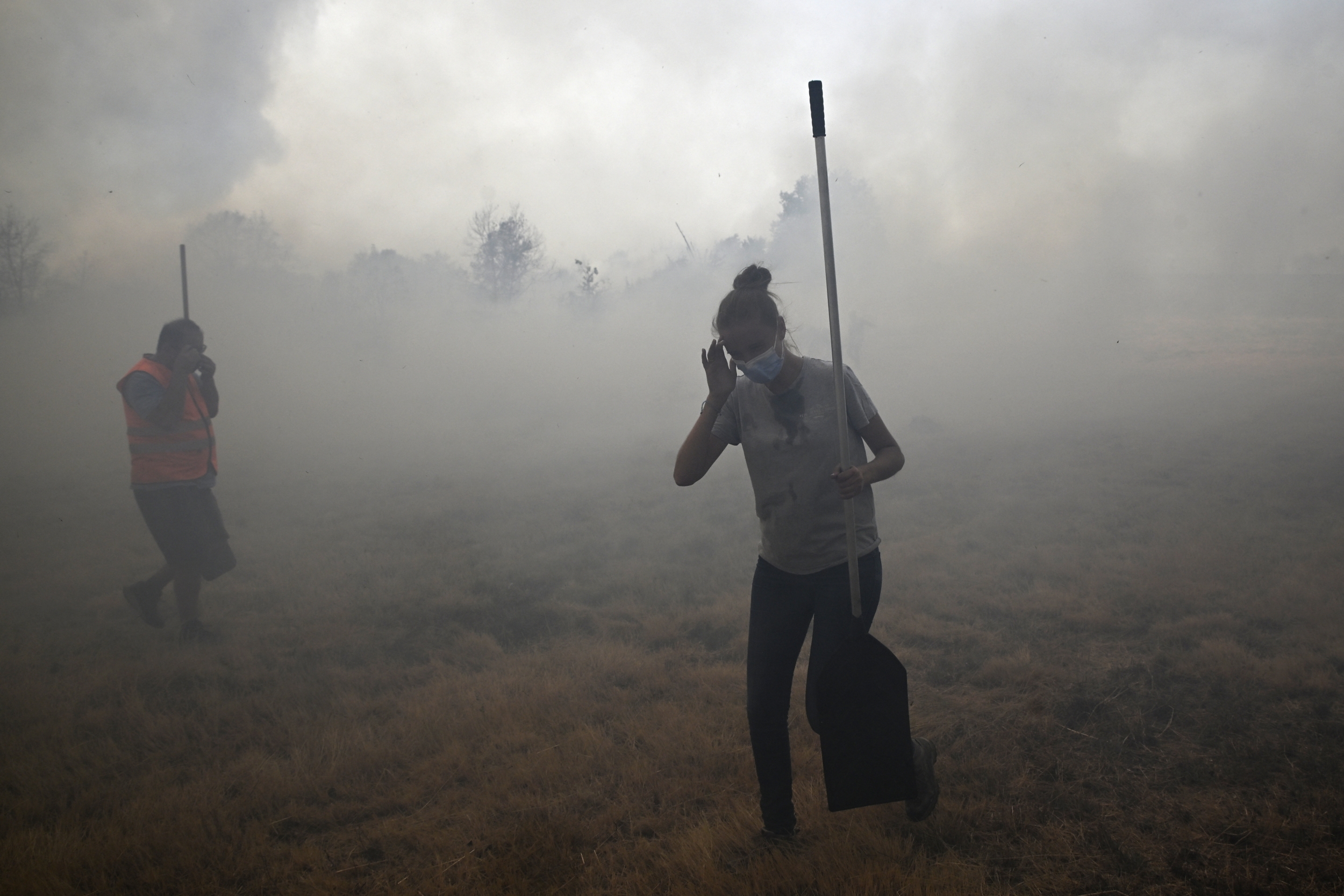
Canada’s wildfires continue to blanket parts of its provinces and the United States with a large amount of smoke, prompting Code Purple air quality alerts and warnings for millions of residents to limit outdoor activities. While much of the concern has focused on the effects of poor air quality on the lungs, health experts say the smoke can also significantly affect the eyes, causing irritation, blurred vision, and making it harder to see as the thick haze reduces overall visibility.
The Canadian nation remains in the midst of an active wildfire season, with dozens of fires burning across several provinces. Strong winds have carried dense smoke hundreds of miles from the fires themselves, drifting east, creating hazy skies and unhealthy air conditions in communities far from the source. The air isn’t just difficult to breathe; the smoke has reduced visibility for motorists and outdoor workers while exposing people’s eyes to microscopic particles that can trigger irritation and temporary vision problems.
Smoke Travels East, While Also Blanketing Canada’s Neighbors
Satellite imagery from NASA has shown massive smoke plumes stretching across eastern Canada and into parts of the United States, illustrating how wildfire smoke can travel long distances depending on wind patterns and weather conditions. Even communities located hundreds of miles away from active fires may experience hazardous air quality as airborne particles remain suspended in the atmosphere.
To reduce health risks, local governments and public health agencies have issued the aforementioned Code Purple and other high-level air quality advisories in affected regions. Officials have encouraged residents to stay indoors whenever possible, postpone strenuous outdoor activities, monitor local air quality reports, and use clean-air shelters if available. Some jurisdictions have also distributed protective masks and expanded public messaging to help people reduce smoke exposure during periods of particularly poor air quality.
Burning Vision? A Better Look at Smoke’s Effect on the Eyes
Wildfire smoke contains microscopic particles and irritating gases that can come into direct contact with the surface of the eye. According to the American Academy of Ophthalmology (AAO), smoke exposure can disrupt the tear film that protects the eyes, leading to dryness and inflammation. The result is often burning, redness, watering, and irritation that can make it uncomfortable to keep the eyes open.
The Cleveland Clinic notes that burning eyes are a symptom rather than a disease and may develop when smoke, dust, or other airborne irritants inflame the eye’s delicate tissues. Common symptoms include:
- Burning or stinging eyes
- Redness
- Excessive tearing
- Dryness
- Itching
- Blurred vision
- Increased sensitivity to light
- A gritty sensation, as though something is in the eye
People who wear contact lenses, have allergies, or live with chronic eye conditions such as dry eye syndrome may experience more severe symptoms because wildfire smoke further irritates already sensitive eyes. Spending extra time outdoors during heavy smoke events can worsen discomfort and prolong inflammation.
Beyond its effects on the eyes themselves, wildfire smoke also reduces overall visibility by scattering sunlight and filling the atmosphere with fine particles. This haze can make it more difficult for drivers to see other vehicles, pedestrians and road hazards, while also affecting outdoor workers, pilots and emergency responders who rely on clear sightlines to perform their jobs safely. Although the haze typically does not cause permanent vision loss, it can temporarily impair how clearly people see their surroundings until air quality improves.
Most eye irritation resolves after smoke exposure ends, but prolonged exposure without protection may increase inflammation and worsen pre-existing eye conditions. Health experts recommend limiting outdoor activities during heavy smoke events, staying indoors with windows closed, avoiding rubbing the eyes, using preservative-free artificial tears to flush away irritants, and wearing glasses instead of contact lenses when smoke levels are high.
If symptoms become severe, vision changes persist, or significant eye pain develops, medical evaluation is recommended.
Keep Your Eyes Hydrated, Not Peeled
The ongoing Canada wildfires highlight the effects poor air quality affects on not just the lungs, but also the eyes. Smoke can also interfere with eye health and vision, making routine activities such as driving, exercising or working outdoors more difficult and, in some cases, less safe because of reduced visibility.
The widespread Code Purple alerts also highlight the importance of paying attention to local air quality advisories. While many people think of smoke primarily as a respiratory hazard, protecting the eyes by reducing exposure can help prevent irritation and temporary vision problems during prolonged wildfire events.
For people living in affected areas, the situation serves as a reminder that monitoring air quality should become part of daily decision-making during wildfire season. By being prudent and taking simple preventive measures, such as staying indoors when smoke levels are high, using indoor air filtration, wearing eye protection outdoors when appropriate, and seeking medical attention if symptoms worsen, you can help protect both respiratory health and vision until conditions improve.