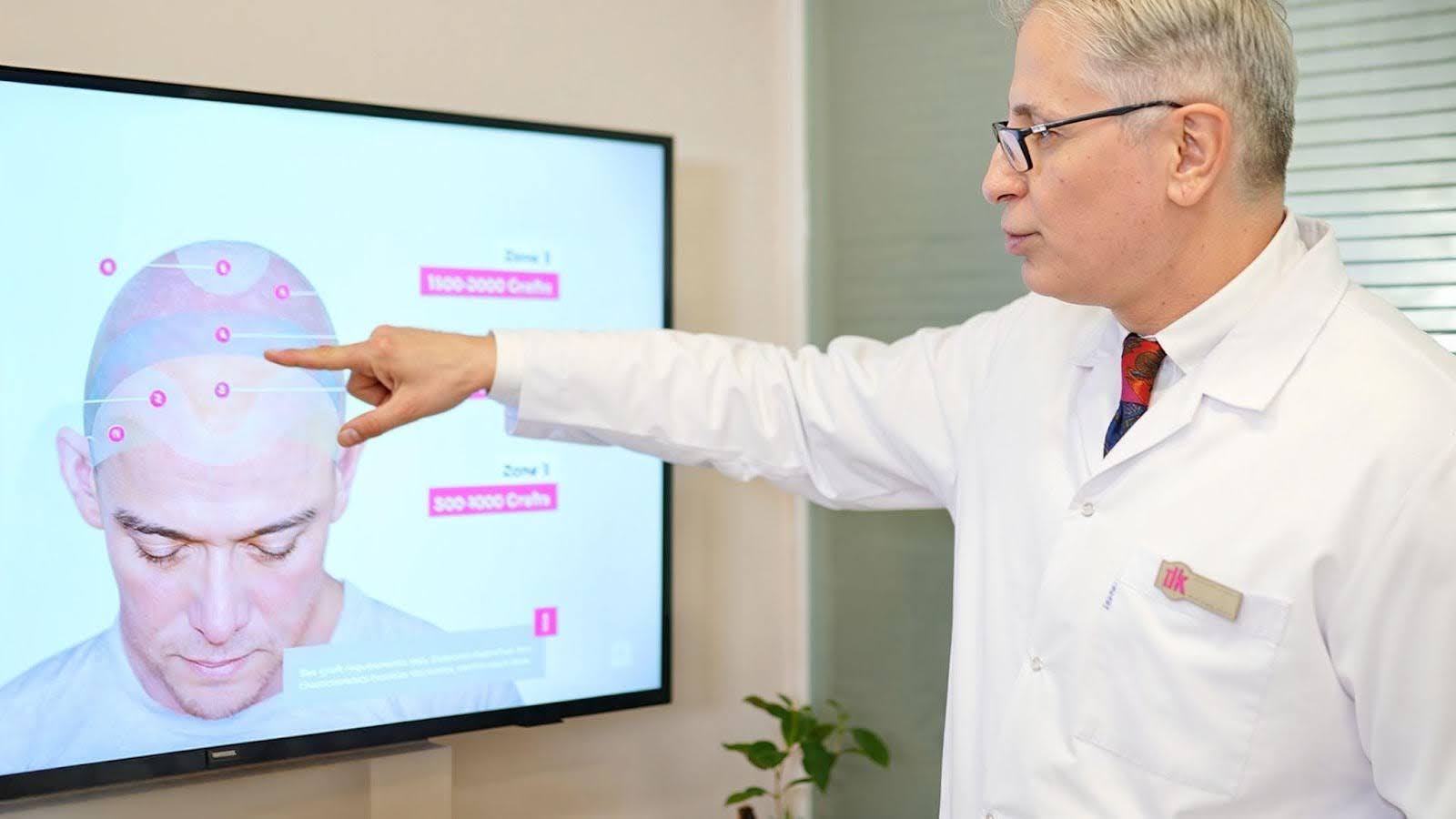
In a study conducted by an internationally recognised association of hair restoration surgeons, doctors specialising in hair transplantation reported that 6 out of every 100 procedures are corrective surgeries for transplants previously conducted at black market clinics.
Considering that not every individual who underwent a transplant at a black market clinic seeks a second operation, the actual rate of hair transplants performed in black market clinics appears to be significantly higher.
This situation highlights an evaluation process that is far from scientific standards and lacks transparency.
In an effort to improve transparency and scientific structure in hair transplantation, DK Klinik has introduced a new clinical evaluation system: the Hair Donor Index.
The Hair Donor Index, created by analysing thousands of hair transplantation cases performed at the clinic over the years, was developed by DK Klinik—operating in the field of dermatology and hair transplantation in Turkey for 23 years—to grade the donor area quality of patients in preparation for hair transplantation.
Unlike traditional approaches that often rely heavily on subjective visual inspection, DK Klinik’s Hair Donor Index scores the donor area based on four critical parameters: follicular density, donor area size, follicular unit distribution, and hair thickness.
Each factor has a different level of influence on donor site suitability. Therefore, each score is multiplied by a specific weight, and the patient’s donor area is ultimately scored between 20 and 100 based on the weighted results.
‘Many hair transplant evaluations focus on how much area needs to be covered, but they rarely assess whether the donor area can sustainably provide enough grafts,’ said Prof. Dr. Ümit Kemal Şentürk, a senior executive at DK Klinik and added:
‘While the Norwood-Hamilton classification helps estimate how many grafts may be needed to restore coverage, it does not measure whether the donor area can supply them without risk. There has been no standardised methodology for evaluating donor sufficiency — until now. Our Hair Donor Index addresses this critical gap with a structured, data-based system.
We have long used the Hair Donor Index to classify patient candidates in our internal case evaluations, and it has been highly beneficial. However, I believe it is important to note that this methodology is only semi-standardised, as in some cases, individual patient factors can override the four main parameters we consider.’
Another persistent challenge for hair transplant candidates is inconsistent graft number estimations between clinics.
While traditional scales can approximate the recipient area’s needs, the donor area’s capacity has primarily been left to subjective interpretation. This often leads to exaggerated promises and a confusing environment where clinics compete over inflated graft numbers. The Hair Donor Index aims to replace guesswork with measurable, realistic evaluations.
Raising Global Standards
Hair transplantation has grown increasingly global, with countries like Turkey becoming major destinations for affordable, high-quality procedures. As more patients seek multiple opinions across clinics, tools like the Hair Donor Index provide a critical layer of transparency, helping patients avoid misleading promises and make better-informed decisions.
DK Klinik’s initiative not only sets a new benchmark for donor area evaluation but also reinforces its long-standing commitment to patient-centred, evidence-based care.