Tag: Tech

  • The Women Engineering the Future of Cardiovascular Tech

    The Women Engineering the Future of Cardiovascular Tech

    Few health threats loom larger in the U.S. than heart disease. It remains the nation’s leading cause of death, killing over 900,000 people in 2023, according to the CDC. Yet despite the universal stakes, the cardiovascular technology sector responsible for developing treatments and devices continues to be led overwhelmingly by men. This imbalance matters: when leadership and R&D teams do not reflect the diversity of the patient population, blind spots in design and decision-making can emerge.

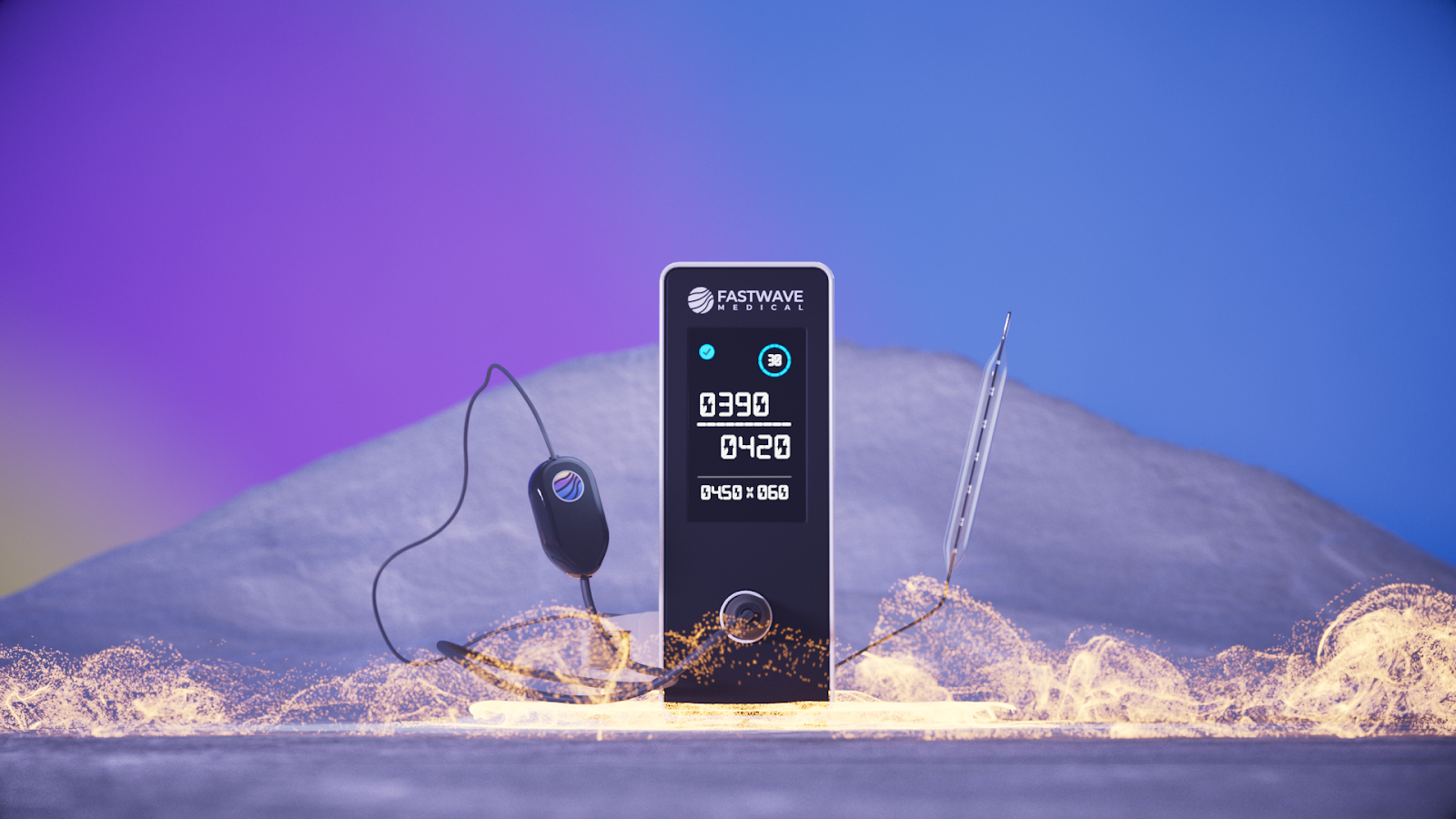
    One exception is FastWave Medical, where women hold pivotal roles in both operations and technology, shaping the company’s next-generation intravascular lithotripsy (IVL) platforms for calcified arteries. It’s a model that remains relatively uncommon in cardiovascular device development — and one that’s influencing how the technology itself is being designed.

    Why Representation Matters in Cardiovascular Innovation

    How did that composition come about? It wasn’t the result of deliberate targets, as FastWave Co-Founder and CEO Scott Nelson explains. “At FastWave, we have a majority female leadership team — not because of quotas, but because they were simply the best people for the job,” he says. That framing — merit first, diversity as outcome — reflects a hiring philosophy that prioritizes environment over intention. “Our philosophy is straightforward: create a great place to work, and you’ll attract top talent. That’s exactly how we’ve ended up with such a strong team.”

    The benefit extends beyond hiring philosophy. When team members bring different perspectives to the table, they surface questions that more homogeneous teams may not think to ask. In cardiovascular innovation — where patient needs vary widely across gender, age, and anatomy — that breadth of insight shapes everything from device design to workflow integration.

    Building Technology Through Diverse Perspectives

    The company is advancing a dual-platform approach to IVL, with two devices engineered to address limitations of first-generation systems: Sola, its coronary laser IVL platform, and Artero, its electric IVL platform for peripheral artery disease. But the technology isn’t being shaped just by leadership on paper — it’s being built day-to-day by women with decades of device development experience.

    Tristan Tieso, FastWave’s Chief Operating Officer, brings more than 20 years of experience in cardiovascular and neurovascular devices to her role — including leadership positions at Vention Medical, where she managed over 50 professionals, and at Worrell, a global healthcare design and strategy firm.

    At FastWave, she oversees engineering, quality, regulatory, and preclinical operations, and her leadership has been instrumental in building the company’s intellectual property portfolio. “When you consider that FastWave is only four years old, securing nine U.S. patents is really quite remarkable — it speaks to our team’s innovative capabilities and how seriously we’ve approached building our intellectual property portfolio from day one,” Tieso says. “This isn’t just about collecting patents for the sake of it. We’re strategically protecting the core technologies that differentiate our platforms.”

    What drives those technologies is “problem-first design.” Tieso explains, “Our entire development approach has been built around spending extensive time with interventional cardiologists, vascular surgeons, and interventional radiologists to understand their daily frustrations with existing IVL technology, then engineering backward from those pain points,” she explains. One clear example: doctors were consistently reporting hassles with reusable dongles and time lost to generator charging. “That direct input led us to make some compelling improvements to the user experience,” Tieso says — resulting in a plug-and-play, AC-powered system with one-click activation that does away with reusable dongles, generator charging, and the need to hold down buttons during procedures.

    Sukanya Iyer, Head of Technology, leads product development and engineering. With prior roles at Boston Scientific, Abbott, and St. Jude Medical, she holds multiple patents in ablation systems and has contributed to the development of major cardiovascular devices, including multiple generations of the WATCHMAN system, force-sensing ablation catheters, and renal denervation systems.

    At FastWave, she is reimagining how sonic pressure waves are generated and delivered. “From a technology perspective, we’ve fundamentally reimagined how sonic pressure waves are generated and delivered,” Iyer explains, “Artero utilizes independently powered emitters that deliver uniform, circumferential sonic pressure, eliminating the uneven energy delivery and localized degradation issues that plague legacy IVL systems. Sola, our other platform, takes an entirely different approach with a single, translating laser emitter that delivers true 360° sonic pressure with every pulse.”

    For Iyer, physician input is essential to the engineering itself. “We’ve spent considerable time listening to physicians describe moments when existing IVL technology simply didn’t meet their clinical needs,” she says. “What became clear was that legacy systems had fundamental engineering limitations that created clinical constraints — physicians were dealing with limited energy pulses and unpredictability when treating eccentric or nodular calcific lesions.” Those technical insights drove the team to question the underlying physics of how sonic pressure waves should be generated and delivered.

    “We’ve spent considerable time listening to physicians describe moments when existing IVL technology simply didn’t meet their clinical needs,” she says. “What became clear was that legacy systems had fundamental engineering limitations creating clinical constraints — physicians were dealing with limited energy pulses and unpredictability when treating eccentric or nodular calcific lesions.” Those technical insights drove the team to question the underlying physics of how sonic pressure waves should be generated and delivered.

    A Model for Medtech

    Despite progress in some areas of medtech, cardiovascular technology leadership remains predominantly male, particularly at the senior technical level. But there are other paths forward. When companies build leadership teams on merit and foster cultures that value diverse perspectives, technical excellence, and representation, the two don’t just coexist — they reinforce each other.

    At FastWave, women aren’t just present in leadership meetings. Tieso and Iyer are shaping intellectual property, redesigning workflow, and rethinking how procedures can be performed more efficiently and safely. As the team has grown, other FastWave leaders like Anindita Sengupta, Head of QA/RA, have joined to build out the regulatory and quality infrastructure needed to bring the technology to market.

    Crucially, they are also leading with openness — actively engaging with cardiologists and vascular specialists from a variety of backgrounds to refine and advance the company’s platforms. That willingness to integrate broad, real-world feedback ensures the technology reflects not just engineering expertise but the lived experience of those using it in practice.

    The outcome is instructive: when diverse, merit-based leadership combines technical depth with responsiveness to user needs, the technology becomes more aligned with both physician workflow and patient realities. In cardiovascular care, where the stakes are life and death, that alignment matters. Tieso and Iyer offer evidence that representation, technical rigor, and an openness to diverse voices can intersect to advance medical technology in meaningful ways.

    Source link

  • The Nature Remedy: Find Freedom from Tech Overload

    The Nature Remedy: Find Freedom from Tech Overload

    In the summer of 2014, I participated in the first-ever digital detox retreat, Camp Grounded in Northern California.

    My camp name was Momma Zen. Each morning, I led mindfulness practice to ease the adult campers’ edgy tech cravings, guiding them through simple breath work to settle their restless minds.

    I had also joined a songwriting “play-shop.” I’d never written a song, but how hard could it be?

    Under a majestic canopy of towering redwoods, I was awkwardly front and center on the roughly hewn wooden stage, moments from belting out my just-written song “Digital Distraction Brings NO Satisfaction.” (Yes, inspired by the Stones’ classic.)

    On that last night, everyone was gathered beneath those grand old trees for our closing celebration. Unexpectedly, the young crowd of Silicon Valley techies stamped their feet loudly and cheered wildly.

    I mumbled to the musicians, “Can you play some slow funk?” Honestly, I had no idea what that was. Fortunately, they did. Then we all sang together, belting out the words:

    Digital Distraction Brings … NO Satisfaction

    Why does life often feel so empty
    When your digital feed never ends?
    Why is the night so long and lonely
    When you’ve got five thousand “friends”?

    Isolated inside children; families gone astray
    All sadly disconnected
    Forgotten how to play

    Selfies, trolling, swiping, scrolling
    Hey my friends, hear what I say
    Endless digital distraction
    Brings NO true satisfaction.

    We are living, breathing humans
    Who long to be seen
    Truly connected … heart to heart
    Face to face … not on a screen!

    Here in the redwoods, happy just to be
    Playing like kids again
    Joyously screen-free!

    That night we celebrated being free from all those notifications, the pinging and buzzing of digital demands. We were simply present. And it was glorious.

    The Lure of Digital Distraction

    You’ve probably felt that pull, too, right?—the urge to check your phone, the compulsion to scroll endlessly, the creeping exhaustion that comes from too many hours in front of a screen. Digital overload is real, and it’s quietly seeping into every corner of our lives.

    Here’s some good news: If you are already a meditator, or interested in mindfulness, you have a distinct advantage in finding freedom from tech overload.

    Dr. Michael Rich is author of The Mediatrician’s Guide and a Harvard University pediatrician who directs the Digital Wellness Lab at Boston Children’s Hospital. He has spent years studying the effects of digital media on our well-being (and is a major contributor to my book, Less Screen More Green). Threaded through all of his robust research are two major recommendations.

    Digital overload is real, and it’s quietly seeping into every corner of our lives.

    Here’s some good news: If you are already a meditator, or interested in mindfulness, you have a distinct advantage in finding freedom from tech overload.

    Make Friends With Boredom

    Dr. Rich advises not to fill most of our waking hours with digital media:

    Bring back boredom! Perhaps the most difficult challenge to overcome in finding healthier alternatives to screens is our cultural aversion to boredom. Locked in our downward gaze, we no longer look at the world around us, or talk to each other. It’s easier to absorb the continuous feed of stimulus on our phones.”

    Balance screentime with more greentime

    “For many of us, our focus on screens has distanced us from the natural world. Albert Einstein said it well: ‘Look deep, deep into nature, and you will understand everything better.’ Time in nature is often prescribed by physicians aware of the many benefits to human health, and breaking free from tech overload. Research shows that even modest steps to spend more time outdoors can make a difference in our media use, and in our health and well-being.”

    When we keep these two maxims in mind—more boredom, more greentime—it’s easier to guide our choices as we take steps to bring more balance and sanity to our tech usage.

    Digital Detox, Made Fun: 4 Steps to Mindful Tech Use

    Dr. Rich offers four simple reminders for those moments when the pull of digital consumption feels intense or overwhelming:

    Be mindful. Use our powerful digital tools for what they do well and turn them off when they are not the best tool for the activity.

    Be balanced. Intentionally balance your screen use and non-screen activities.

    Be bored. Shake off the tendency to default to a screen and use the discomfort of nothing to do and the available space in your attentive mind to imagine the new.

    Be present. Consciously put down your devices so their near-infinite connectivity with strangers does not undermine our deep and sustaining connectedness with those we love.

    4 Practical Techniques for Freedom From Tech Overload

    1. Recognize the Early Warning Cues

    Just like we recognize hunger or thirst, we can learn to recognize the subtle (or not-so-subtle) signs of tech fatigue:

    • Eyes feeling dry or strained?
    • Headaches creeping in?
    • A vague sense of restlessness or irritability?
    • That odd, disoriented feeling when you finally look up from your screen?

    These are your body’s way of whispering, “Hey, I need a break.” Listen.

    2. Try the 20-20-20 Remedy

    One simple way to protect your eyes and refocus your mind is the 20-20-20 rule:

    Every 20 minutes, look at something 20 feet away for 20 seconds.

    Your eyes will thank you, and so will your nervous system.

    3. Savor the Nature Remedy

    If you take away nothing else from this article, take this: Less screen, more green.

    Even if you live in the middle of a bustling city, find ways to step outside.

    • Drink your morning tea on the balcony.
    • Walk to a park on your lunch break.
    • Sit under a tree and just be.

    There’s something about fresh air, the movement of leaves, the simple act of looking at the sky—it resets us in a way that no digital escape ever can.

    4. Create Your Tech-Free Sanctuary

    Choose one place in your home to be completely screen-free. Maybe it’s your bedroom. Maybe it’s the dinner table. Maybe it’s that cozy corner where you like to read or meditate.

    Guard this space like a sacred garden, a refuge from the endless digital noise.

    Your Invitation to Healthier Tech Habits

    This isn’t about guilt. It’s not about demonizing technology or vowing to live like your great-grandparents. It’s about finding balance.

    Pick one of these steps and try it today. Just one.

    • Set a timer for the 20-20-20 rule.
    • Take five minutes to step outside.
    • Decide that, tonight, the phone stays out of the bedroom.

    And then, notice. Notice how you feel. Notice if you breathe a little easier. Notice if you see the people around you just a little more clearly.

    Notice how you feel. Notice if you breathe a little easier. Notice if you see the people around you just a little more clearly.

    If you do, I’d love to hear about it. Share your experience with us: What’s the hardest part of unplugging for you? What little changes have helped? Let’s start the conversation.

    And stay tuned for Part Two, where we’ll explore how to bring mindful tech habits into your workplace. Because if there’s one thing I know for sure, it’s that we can find freedom from tech overload. And it begins—always—with awareness.

    Excerpted with permission of the author from Less Screen More Green: Finding Freedom with The Mindful Tech Plans™ by Kerry Crofton, PhD. Revised and updated second edition (2025).


    Source link

  • A Meditation for Clarifying Your Motivations for Using Tech

    A Meditation for Clarifying Your Motivations for Using Tech

    Your motivations for using tech can also point the way toward developing a healthier relationship with it. In today’s practice, Jay Vidyarthi guides us to identify our motivations and ways to establish more balance and intention in our tech use — without the guilt.

    Recent studies have confirmed that the constant presence and use of tech in our lives has become a hazard to our well-being on multiple levels. Yet it’s not going anywhere—so how do we mindfully hold that tension and seek balance in our relationship to technology?

    Meditation teacher, mindful tech designer, and self-identified tech lover Jay Vidyarthi observes, “It’s okay to enjoy technology. Tech becomes a problem when we get so attached to it that our lives fall out of balance—and this happens because a certain device or app or game or even your work email might satisfy a specific, lacking, healthy emotional need.”

    In today’s practice, Jay leads us through a contemplative practice that can help us dig down and understand our motivations for using tech, while also helping us identify ways to be more intentional about the why, how, and when of our digital consumption.

    A Meditation for Clarifying Your Motivations for Using Tech

    Read and practice the guided meditation script below, pausing after each paragraph. Or listen to the audio practice.

    1. This is going to be a contemplation. So choose whether you want to meditate with your eyes closed in a certain posture or position, or whether you’d rather journal, in which case you can grab a pen or a paper or even type on your computer.
    2. Hit pause on the audio if you need a little bit more space to get settled. There’s never a need to rush into this kind of thing, so try to find a place that’s quiet, maybe even inspiring, for your contemplation or journaling.
    3. When you’re ready, start by thinking or writing about why you personally might be interested in a better relationship with technology. What’s motivating you here? Is it a general feeling? Are there specific patterns you’re trying to change? Are there specific things that have happened that felt off to you that maybe inspired this idea that you needed to work on your relationship with technology? Are there maybe stories you’ve heard in the media or the press about technology and what it might be doing to us? Are there positive experiences that you have with technology where you find joy or meaning or purpose that maybe you want to get more of, or maybe you want to get back to? Maybe those are memories from an earlier incarnation of technology that feels lost.

    Are there positive experiences that you have with technology where you find joy or meaning or purpose that maybe you want to get more of, or maybe you want to get back to?

    1. Consider or write down how a more mindful relationship with technology might positively impact you and the people around you, whether those are family members or friends or roommates or coworkers, or even just the barista at the coffee shop or the clerk at the grocery store.
    2. If you’re having a hard time getting to deeper answers, try asking why over and over again like young children do. It’s a very powerful word. You might start with, Why am I interested in a better relationship with technology? Your mind might answer that with something like, I want to be less stressed. From there you might ask, Why do I want to be less stressed? Maybe your answer is because you want to be more present for the people you care about. You might ask why again, Why do I want to be more present for the people I care about? Keep going with this, and you’ll eventually find yourself at some deeper personal truths.
    3. Now, as you do this, notice if any judgment or shame is coming up. If you’re journaling, you can look back over the page, but if you are contemplating, you can just reflect. If judgment is arising, just let that come and go. So for example, you might ask why and hear your inner voice get self-critical. Like, Why do I want a healthy relationship with technology? Oh, well, because I can’t control myself and I’m addicted and destroying my life with this technology. Our inner voice can go all over the place, as you well know. If that happens, there’s no need to resist it, but don’t give it more energy, either. Try to stay curious and focus on those motivations, those intentions, those answers that feel like they’re encouraging positive growth.
    4. As we approach the end of our session here, see if you can distill what’s come up in this practice into a simple word or phrase. If you’re journaling, you can draw a big line on the page. If you are contemplating, you can clear your palate. Try to find something that captures the essence of what is motivating you, what your intention is to form a more mindful, healthier, better relationship with the technology in your life. Try to be very specific and concise.
    5. Once you have something, commit that to memory or write it down. Then, let go of all the effort that we’ve put into this practice and let’s take a few moments to just be as we are. There’s nothing more to do, yet we’re not yet moving into the next thing. We’re enjoying this transition, this moment of emptiness and non-doing.
    6. When you’re ready, you can gradually open your eyes if they were closed. Have a little stretch or a sip of water, whatever you need. And if you haven’t yet, you can write down the word or phrase you came up with, put that in a visible place, and let that be a reminder of your intention, your motivation, your commitment to an improved relationship with technology. 

    It’s important to remember that this doesn’t necessarily mean only setting boundaries around problematic use patterns. It also means setting yourself up to fully enjoy the parts of technology you enjoy and to find authentic connection online and to allow any meaning or purpose that you get from technology to fully flourish into your life. I hope this was helpful. See you next time.


    Source link

  • Tech is Human Nature: Reframing Your Relationship With Technology

    Tech is Human Nature: Reframing Your Relationship With Technology

    Key Points:

    • Technology is disruptive and distracting, yet it also has many useful roles in our life.
    • Instead of feeling guilty or ashamed for relying on technology, accept tech and learn to use it well.
    • Technology isn’t separate from human nature—it is part of our nature.
    • Clarifying why you want a healthier relationship with tech can help you shift your habits.

    When I first started meditating, I was banging my head against the wall, trying to silence my mind. I was so harsh with myself because I was desperate. I was numb and lost, and I thought that if only I could stop thinking, everything would be bliss. So I gritted my teeth and tried to force my mind to shut up.

    My practice opened up when I gave up on trying so hard to clear my mind. I learned to embrace thoughts as a natural and expected part of the human experience, because they are. Sometimes challenging, sometimes useful, sometimes silly—I accept my thoughts. I let them come and go as if they were clouds passing in the sky. Turns out the idea that thinking is a problem was just another passing thought.

    Many of us get caught in a similar pattern with our tech. In the modern world, trying to completely stop using technology feels a lot like trying to stop thinking. Some inspirational quote from a yoga teacher on social media tells you to “clear your mind,” and not only is that impossible, but it also generates a ton of unnecessary guilt and shame. When more thoughts inevitably come, you beat yourself up for failing. You start to think you’re broken.

    There are technologies out there that respect your attention, and even some that restore it, but they are certainly not the norm. We’re mostly swimming in a cornucopia of mindless, triggering tech that narrows our awareness and erodes our patience.

    The more tech disrupts our lives, the more we blame it for everything. We get desperate for freedom and try to disconnect. But tech is so integrated into modern life that it’s not long before we need to reconnect. The pendulum swings back and forth as we spiral into shame and self-judgment for being so attached to the very devices we depend on.

    Mindfulness is a way out, and acceptance is the first step. 

    A Middle Way with Tech

    Blaming technology for all our problems is the same mistake we make when we try to force ourselves to stop thinking. In the same way meditators learn to befriend their thoughts, we can work gently and gradually toward finding a middle way with technology. It won’t necessarily be easy, but awareness is mysterious, powerful, and always present. Tap into it directly and you just might be able to conquer a few tugs from devious little apps that are trying to manipulate you. If that feels impossible, you may need formal meditation to train up in meta-awareness. If even that feels impossible, it might be time to set boundaries or delete a few apps.

    Certainly, corporations need to design more ethically, scientists need to continue researching the impact on mental health and well-being, and lawmakers need to consider if regulation can help. But in the meantime, you are not powerless. Right here, right now, you can stand up for your right to point your mind in whichever direction you damn well please. Pessimists who claim we are all victims of forces larger than ourselves love to convince everyone they’re realists, but this is a battle being waged in the mundane moments of everyday life. You have choice. Even if you don’t have the power to influence your family, community, organization, or lawmakers, you don’t have to give up on your own mind.

    Whether you choose to put the devices away today, or whether you choose to spend the whole day in front of a screen, there’s nothing to be ashamed of. A little bit of guilt can help you stick to your intentions, but if you’re constantly feeling bad about yourself, there are better ways. It’s easy to drown in guilt when you wake up from a digital trance and realize you’ve spent the whole day online. It’s just as easy to feel guilty for disconnecting, missing messages, or falling behind on social media and news.

    Blaming technology for all our problems is the same mistake we make when we try to force ourselves to stop thinking.

    Is there ever a moment to just . . . not feel guilty? Even when glued to a screen, you are worthy just as you are. No shame necessary. No need to beat up on yourself. Accept the part of you that loves tech and the part that wants to lock it away. While you’re at it, accept your loved ones, even when they ignore you for their screens. No need to harshly punish your kids, or shame other people just for living a modern life. Accept people both younger and older, even if their relationship with tech looks alien to you.

    From this foundation of acceptance, pay close attention to how tech shapes you. Forgive yourself when it captures you, because it most definitely will. See clearly how it happened, and you can get better at seamlessly moving between offline and online worlds without getting stuck. It is possible to live a mindful digital life.

    You don’t have to retreat to the mountains or switch to a dumbphone to find balance. By all means, take an offline day when you need it. Or head off to a retreat center. Hell, go to India and find yourself. I certainly got a lot out of retreating over the years. Time apart from your everyday routine can help you break compulsive habits and find new perspectives. But don’t let the benefits of a temporary digital detox distract you from learning how to use tech well in everyday life.

    What We Forget About Nature

    When we get overwhelmed, we often say we want to “get out in nature” or go on a “nature walk,” but we are just as natural as the birds and the trees. So is the fly buzzing around your garbage can and the mold growing on old fruit. Nature is not somewhere out there. It’s everywhere. So where exactly are we trying to go?

    When we get overwhelmed, we often say we want to “get out in nature” or go on a “nature walk,” but we are just as natural as the birds and the trees. So is the fly buzzing around your garbage can and the mold growing on old fruit. Nature is not somewhere out there. It’s everywhere. So where exactly are we trying to go?

    We think of our modern lives as artificial, but is that really true? For the past two years, in the spring, a robin has built a nest on top of the light fixture beside my front door. Every time we step out of our home, she squawks to protect her hatchlings. My little boy and I love keeping tabs on Mrs. Robinson.

    Inside the house holding up that nest, my family and I cook in a sophisticated kitchen and fiddle with temperature controls. We watch TV, use social media, play video games, and work on laptops. It all feels very different from a nest, but the way we source materials from our natural environment to build these modern lives is not so different from a bird gathering sticks, though certainly on a different scale.

    We think of our modern lives as artificial, but is that really true?

    It can be useful to reframe our technological wonders as natural. We imagine our civilization as somehow removed from the wild world. We love to think we’re special, but you probably accept that you are a part of nature. So why wouldn’t your nest be natural too, just like Mrs. Robinson’s?

    If this feels off, you might be idealizing Mother Nature. Remember, she can be just as destructive as she can be harmonious. There is infinite wonder in the ocean, trees, and skies, but there are also viral infections, natural disasters, and predators killing their prey. When I describe our tech as natural, I’m certainly not saying it’s all good.

    These days, we yell at our kids to put away their phones while lost in our own. We glance to check a text and end up scrolling for hours. We go down rabbit holes on social until we feel inadequate. We skim polarizing headlines until it feels like the world is on fire. We compulsively reply to work emails on our day off.

    Some days we feel more used than user.

    But tech is also beautiful, wonderful, and awe-inspiring. It connects us in ways previously thought impossible. It can bring us so much joy. It can help us be productive and organized. We can express ourselves like never before. I use it to stay in touch and collaborate with people across the planet. I use it to listen to and make music. And yes, I even use it to meditate.

    Tech as Human Nature

    You might love smartphones and the social internet. If that’s you, it can be hard to admit to the problems without getting defensive. Or you might be someone who hates the way your devices interfere with every moment. You might feel like they’re running your life—or worse, ruining your life. You might even notice how they’re causing harm to people you care about. If you’re the type who wants to escape and live on a mountain somewhere, it can be hard to admit how amazing technology can be.

    Accepting tech as part of who we are means acknowledging that it’s not some foreign, alien invader. It’s neither good nor evil. It’s us. Even the AIs that seem more independent than ever before depend on the text and images we feed them. They don’t exist without us. The internet is a powerful extension of our minds. It amplifies our flaws as much as our strengths. To have a better relationship with technology, we need a better relationship with ourselves.

    Accepting tech as part of who we are means acknowledging that it’s not some foreign, alien invader. It’s neither good nor evil. It’s us.

    This is where the issue becomes spiritual.

    Tech isn’t just nature, it’s human nature. And these days, it’s getting exhausting. With our minds constantly plugged in to amplifiers, it’s never been more important to find balance. Our tech mirrors our own values back at us in a distorted way, often causing the opposite effect of what we intend. It isolates us as much as it connects us. It numbs us as much as it inspires us. It bores us as much as it entertains us.

    Sometimes we just want to run away from all the emails, feeds, and desperate pleas to like and subscribe. We want to escape the news. And social media. And online shopping and porn and video games and those group chats where everyone keeps misunderstanding each other. When we say we want to “get out in nature,” what we really mean is that we want to get away from human nature. We want to escape who we are.

    Understandable. Our brains are plugged in to a billion other brains, each having tens of thousands of thoughts per day. Many organize to profit from all this, designing greedy, distracting, stressful apps—weapons of mass distraction. On the other hand, many also work to make the hive mind useful, fun, and powerful. Unfortunately, both sides produce a ton of unintended consequences.

    You Always Have a Choice

    Experts are studying technology’s effects on our mind, trying to regulate its use and establish standards for designing ethical, humane tech. Where does that leave the rest of us? What if you’re not a decision-maker? What if you don’t have any influence on science, government, media, or tech? Do you just have to sit and wait, hoping they figure it out? Of course not.

    Our job is to become aware of how tech affects us and those we care about. We can choose to be better users of technology in everyday life. We can become more discerning about the tech we pay attention to, setting boundaries around apps that exploit us, but also unapologetically delighting in the experiences that bring us joy, improve our lives, and transform us for the better.

    It feels like a big job, especially when compulsive screen time can feel completely out of our control. Tech companies can be manipulative. Unethical decision-makers need to face consequences. Still, there’s no need to give up and wait for someone to save you. With tech constantly demanding our attention and overwhelming us, your well-being is becoming more and more dependent on the quality of your relationship with it. If mindfulness has taught me anything, it’s that you always have a choice in how you relate to whatever you experience.

    A Practice for Tuning In to the Joy of Tech

    When you’ve got a moment to explore, try fully enjoying a technology that makes you happy. It’s so easy to get wrapped up in the idea of what you should and shouldn’t be doing. This little practice is an antidote to that. Let yourself enjoy something!

    1. Choose a technology that brings you joy. It can be hard to stay present with something that changes a lot, so ideally, choose something with a slower pace. For example, if you love stand-up comedy, find a video of a longer performance instead of a bunch of short clips.
    2. Put away all your distractions. Set up your experience by queuing up the tech and putting away anything that might distract you. So if you’re watching a TV show, put your phone and tablet away, and maybe even ask anyone you live with for some privacy.
    3. Enjoy the experience fully. If you want, you can start with a few deep breaths, maybe even with your eyes closed. When you’re ready, start interacting with the tech and see if you can stay present with how it makes you feel. It helps to take it slow. For example, if you’re playing a video game, take your time and notice any feelings, thoughts, or impulses that might arise as you play.
    4. Let go of shame, guilt, and doubt. If any thoughts or feelings come up about how you might be wasting your time, how weird this practice feels, or even your ability to stay aware, let that come and go. No need to resist it, but don’t dive into it either. Stay with your moment-to-moment experience of the technology.
    5. Let positive emotions flow. If any positive thoughts or feelings come up, pay close attention to them and let them flower. So for example, if you’re listening to a podcast and someone says something funny, see if you can fully enjoy that without reservation.
    6. Stop when you’re ready, but no sooner. Some experiences have a natural end, like a TV show. Others you might need to find your own end for, such as browsing a social media feed. In any case, avoid ending the practice at the first moment of resistance. See if you can give it time to run its course. Ride a few ups and downs. When you’re done, turn off your tech and take a moment to breathe, reflect, or meditate before moving on.

    Excerpt from RECLAIM YOUR MIND: Seven Strategies to Enjoy Tech Mindfully by Jay Vidyarthi, published by Still Ape Press (February 2025). Copyright © 2025 by Jay Vidyarthi. Reprinted with the permission of the author.


    Source link