My six-year-old daughter, Opal, wants nothing more than to go to the Humane Society to visit the dogs that “need the most love.” So we leave right from a half-day of school to do just that, eating almond butter and jelly sandwiches on the way.
The entryway of the Boulder Valley Humane Society smells like wood chips. There is a stack of hamster cages by the front door, placed like intended impulse purchases, like Chapstick and breath mints at Target.
“May I help you?” The pleasant lady behind the counter says with a mouth that is more gums than teeth. I tell her we’d like to visit a dog or two that are especially in need of love.
“Hmmm,” she says, thinking, with a close-mouthed smile. “Yes, Leo could use a visit. He’s big, that ok?”
We have an 85-pound lab at home. I assure her we are accustomed to Big.
We find Leo asleep on a bed in a very large crate with a bone-shaped sign marked “Sweetie pie.” He is a five-year-old pit bull with a face as wide as a loaf of bread and fur the shade of sand. We return to the front room where we wait for a staff person to bring him out.
I notice as we walk through the halls, many—but not all—of the dogs have the same bone-shaped signs hanging from their cages, but with all different descriptions: “Playful!” “Timid.” It occurs to me that the ones without the signs must not be as forthcoming in their nameable characteristics. In my mind I imagine hosting a party in the New Year where I’ll have each guest wear a little sign around their neck that states one of their prominent qualities: People pleaser. Observer. Perfectionist.
Leo busts through the swinging doors, pulling a staff member behind him on a pink leash. This should be an indication of what we’re in for, but I grab the leash anyway and out the front doors we go. Walking this dog is essentially like walking a linebacker who is heading in the opposite direction. I desperately try to keep my footing while he pulls me down a muddy decline and we leave Opal behind, yelling MOM!
Giving this dog love is proving to be an arduous task. So we start to head back towards the building where we came from.
As we walk, I notice the fur is missing from the tops of both of Leo’s ears and there are chalky mushroom-shaped lumps on his skin where the hair should be growing. Same on the backs of his legs. There are pin stripes in his short fur where the hair doesn’t grow, much more subtle than the scars that would have come from the mouth or claws of another animals.
Opal says, “Why does he look like that?”
I tell her it looks like he’s been in a fight with another dog. Harmless enough—animals fight. I don’t say that it looks like he has probably been in dogfights. That he was likely rescued from a rough situation with either an abusive owner or an owner who condoned violence. The kind of scenario that gives pit bulls a bad name. He is horrid on a leash—left both of my hands red and burned from the yanking—but he doesn’t seem to have any fear of or aggression towards people. This, to me, is a marvel.
Upon our return, we catch sight of a man playing with a pit bull puppy, smiling and laughing as the pup climbs into his lap then flops over the side. I can see that Opal wants that experience, so we give Leo a final head-scratch and then ask to trade him in for a puppy.
The Discomfort, the Squirming Away, the Return to Presence
We take one of seven pit bull puppies to a fenced-in area outside. The fresh air and the puppy-energy feel like a relief. He’s as small as a football and slick-black except for his belly and the tips of his paws, which are pure white. Watching him teeter and fumble from point A to point B is pure comedy. Opal is beside herself with delight.
Then she asks the inevitable question: “Can we take him home?”
I tell her no. A puppy is way too much work. They poop and chew on everything. But we can come visit him next week.
“What if he’s gone by then?”
Opal doesn’t say much on the way home. “Blackbird” by the Beatles is playing on the radio—Take these broken wings and learn to fly. I can see her in the rear-view mirror gazing out the window with a million-mile stare.
I tell her that if he’s gone, that would mean a good family adopted him. These puppies would probably get adopted really fast.
Opal doesn’t say much on the way home. “Blackbird” by the Beatles is playing on the radio—Take these broken wings and learn to fly. I can see her in the rear-view mirror gazing out the window with a million-mile stare.
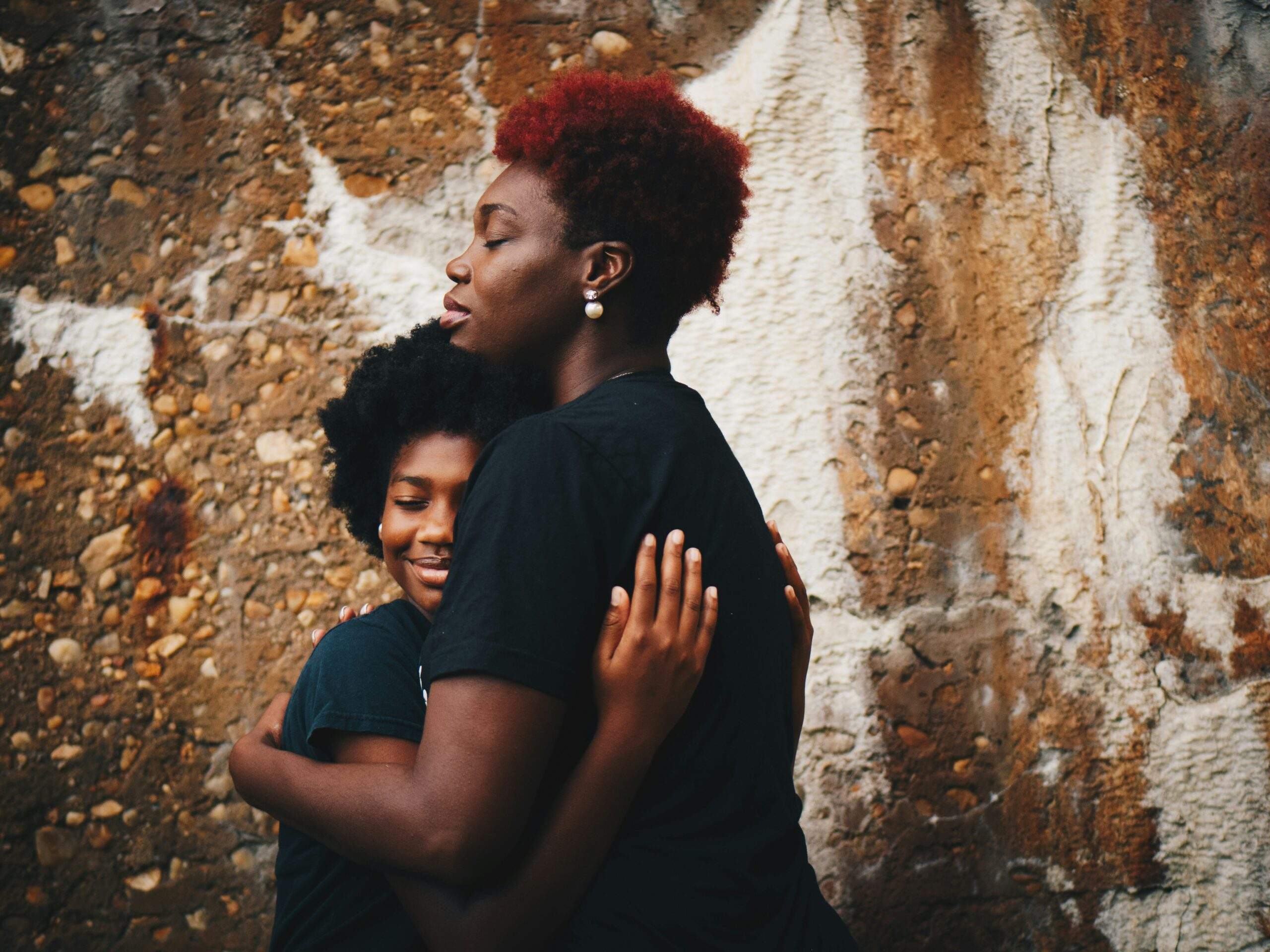
At home, Opal drapes her body over my lap as we sit on the couch. Our huge lab is snoring at my feet. Opal is sniffling and periodically wipes her nose on her sleeve. I caress her hair.
She says, “What if nobody wants to adopt Leo?” Plump little tears pool in the corners of her eyes.
I tell Opal that maybe we shouldn’t return to the Humane Society if it’s just going to break her heart. But that only upsets her more and I quickly realize those words are counter to everything we’ve been teaching her.
We—the Grimes family—have spent the better part of a year as a foster family. And we frequently talk about how we never need to shy away from big emotions, especially when they come as a repercussion of helping others. But it’s such a habit to either tense-up or cower in the face of unhappiness, and to want to shield others from the pain of being human.
“Honey, the Humane Society will find a good home for Leo. And for the little puppy and all his brothers and sisters.”
“But what if the man who adopts them is mean?”
I know there are no shortcuts to getting to the other side of sadness aside from going through it.
“Oh honey,” I say. I am constantly at odds with how much truth to share with her about this crazy, uncertain, often-terrifying-but-also-beautiful-and-miraculous world. I swing back and forth between feeling like I say too much, and not knowing what else to say.
So I return to simply paying attention—to my own thoughts, my own discomfort, my own shallow breath, my own want to talk about happier things—because I know there are no shortcuts to getting to the other side of sadness aside from going through it.
I ask, “Can you take a deep breath with me?”
“Uh-huh.” She is looking up at me now as we inhale and exhale. Choppy, partial breaths at first, then calm and deep.
“Hey, it’s okay to feel sadness, sweetie. Fact is, there is a lot of sadness in the world. We just keep doing what we can. And you did good today, giving love like you did.”
It in that moment, she stands up, gathers herself, and flashes me a tiny but genuine smile as she moves on with her day.
Realizing: It’s Okay to Feel My Own Sadness, Too
Two days later, we take a trip to visit our beloved foster baby of nearly a year who returned to live with her parents three weeks earlier. This baby, we’ll call her Little Blue Eyes.
I’m so pleased to find her looking happy and healthy, very connected to her mother. She has an adorable room with quilts on the walls, loads of toys and books. Their pit bull strangely resembles the one from the humane society, though he is exponentially more calm and civilized.
I didn’t realize it, but many of my feelings of loss had been shuffled in with the hubbub of the holidays and travel. The grief is immediately present when I rest my gaze on her face and hear her say OpalOpalOpal.
All good news. And yet, in spite of the fact that we will likely see her again, it feels as if this visit is a good-bye. Little Blue Eyes went home days before Christmas and I didn’t realize it, but many of my feelings of loss had been shuffled in with the hubbub of the holidays and travel. The grief is immediately present when I rest my gaze on her face and hear her say OpalOpalOpal.
The sorrow feels like fatigue at first, then grumpy over-sensitivity during dinner. Then, later, after Opal is asleep, a torrent of tears comes like a valve has burst behind my eyes. I can’t stop it, though my first inclination is to do just that. My mindful self is telling me that crying is a natural and healthy reaction, and that I can relax with my sadness. But my body—bones and muscles—wants to make the discomfort go away. I am aware of all of this.
I make my way into our bedroom where Jesse is watching TV. He sees my face and says, “Little Blue Eyes?”
I think of how intense these emotions feel to me, a “big strong grown-up,” and I can only imagine how the same vast emotions must feel to my daughter, on the planet only six years and with much less experience in seeing her feelings through to the other side. It’s up to us to show her that emotions are fluid, always in flux.
I nod and lie down next to him. I put my head on his chest the way Opal did with me a few days earlier. His heart is in my ear like a distant drum against my shifting breath. I think of how intense these emotions feel to me, a “big strong grown-up,” and I can only imagine how the same vast emotions must feel to my daughter, on the planet only six years and with much less experience in seeing her feelings through to the other side. It’s up to us to show her that emotions are fluid, always in flux.
“It’s okay to feel sad,” Jesse says to me. “I feel sad, too.”
These are the same words I spoke to Opal when we were on the couch, the same compassionate tone. I sit up and stretch my arms high and to the sides, the sound of inner-movement like a soft rumble deep in the canals of my ears. Some life re-enters my bones.
Those words, “It’s okay to feel sad,” open a window in the tiny, claustrophobic room of emotion I am crouched in. And it isn’t so stifling anymore. This is what happens when I am mindful of not trying to manipulate, hide, or wrestle with my sadness. I can let it roam more freely until, naturally and eventually, it simply dissolves on the back of an unsuspecting outbreath.
Children learn largely by example. Susan Kaiser Greenland explains how the “about to” moment can foster awareness and compassion.
Have you ever noticed a funny feeling in your body the split-second before doing something you later regret? Maybe the funny feeling is a tightening in your chest, or a flush of heat rushing to your face, or a sinking feeling in the pit of your stomach. These funny feelings can take place in what Western meditation teacher Joseph Goldstein calls the “about to” moment. This moment is the split-second before you speak or act.
We can train ourselves to identify when the “about to” moment is occurring in our lives, and notice the internal signals that accompany it. By paying attention to the physical sensations that sometimes accompany an “about to” moment, we have an opportunity to pause before acting and reflect on what we’re about to do or say. This is a chance to ask ourselves critical questions, like:
“Why choose to act in this way?”
“How does it make me feel?”
“Will what I’m about to do or say lead me and my family closer to, or further away from, genuine happiness?”
Parenting in the “About To” Moment
The “about to” moment has special relevance to parenting because it is also the place and time where we choose (whether consciously or not) what we teach our children by example. It is a chance to shift direction if we recognize that our automatic reaction to a stressful situation is not consistent with our image of the parent we hope to be, or the adults we hope our children will become. Character development is a life-long process, happening through repeated actions both large and small. One place it happens is during the countless “about to” moments in our lives.
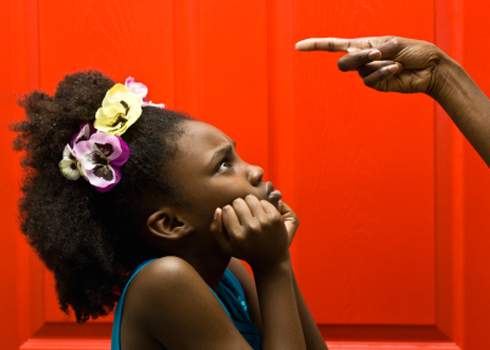
In 2018, several prestigious universities published a study about the effect of spanking on three-year-old children. They reported that three-year-olds who had been spanked by their mothers more than twice in the month prior to the time they were assessed by researchers had an increased risk for higher levels of child aggression at age five than children who had not been spanked.
Even though this finding is consistent with a well-established body of academic literature on the topic, and the American Academy of Pediatrics recommends that parents refrain from spanking entirely, the reporting of this study has been somewhat controversial. In the comment section of several blogs about the research, some people have taken offense. Perhaps because many parents continue to spank their kids, even those as young as three. According to the American Academy of Pediatrics, more than 90 per cent of families report having used spanking as a form of discipline.
The “about to” moment, when a parent chooses to spank a child, is an opportunity for the parent to ask what he or she is trying to accomplish. Spanking is, at the very least, a stressful life experience for both parent and child, and it is well known that stressful life events can have a profound impact on brain development, especially in young children.
In their book Born for Love: Why Empathy is Essential, Dr. Bruce Perry and Maia Szalavitz explain that when early childhood experiences are nurturing and empathetic, a child’s nervous system will wire up one way. If early childhood experiences are stressful, harsh and frightening, the same child’s brain wires up in a different way. “About to” moments can make learning and later relationships easier or more challenging. I doubt that any parent, upon reflection, hopes that his or her actions will make it more difficult for kids to learn and get along with others at school or home.
Self-Reflection, Compassion, and Modeling
The “about to” moment is also an opportunity to reflect on the quality that one is reinforcing within oneself and modeling for one’s kids. For example, is striking out in response to behavior that we disagree with/disapprove of a quality that we want to strengthen in ourselves? Is it one we want to model for our child? Will teaching children that it’s OK to hit other people help them become their best selves? Help them have an easier time on the playground? Lead them toward genuine happiness?
The choices that we make in our “about to” moments determine who we are and who we will become. They also let our kids know loud and clear what’s important to us. Making the choice to exercise restraint, empathy, compassion and even-handedness time and time again is how these qualities become habitual in both parent and child. For example, when our kids see us being kind to others, we’re both practicing kindness ourselves and modeling it for them. When they watch us exercise patience while waiting our turn in the grocery line or when stuck in traffic, we’re both modeling patience to our kids and practicing it ourselves. When we find nonviolent ways to address inappropriate behavior we’re both modeling nonviolence and practicing it ourselves.
To borrow from Ralph Waldo Emerson, “Character is higher than intellect.” It is the choices we make in the “about to” moments—choices we make over and over again all day every day—that determine our character and set an example for our children to follow.
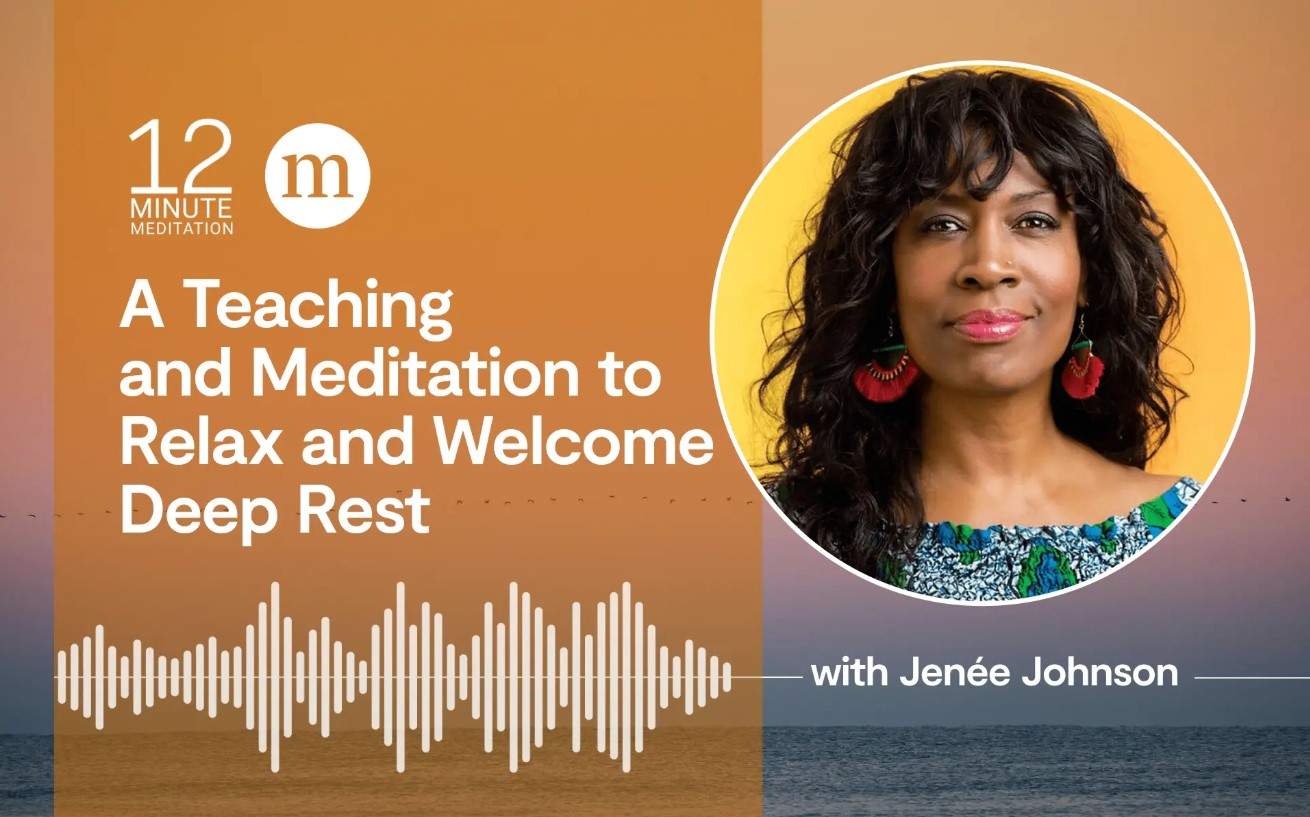
In today’s offering, Jenee Johnson guides us through a teaching on the why and how of deep relaxation practices, along with a meditation you can do anytime.
Rest isn’t a “reward” for working hard enough. It’s a human need and birthright.
This week’s episode is a little different. We’re not only sharing a guided meditation from mindfulness leader and professional coach Jenée Johnson, but also her teaching on some of the brain science behind relaxation—why it’s essential for our well-being, how it works, and how to incorporate intentional relaxation practices into your daily life.
Jenée Johnson is the founder of the Right Within Experience, where she works to cultivate the experience of inner calm, resilience, self-love, and joy through meditation and mindfulness practices for people of African ancestry. She is also the former program innovation leader at the San Francisco Department of Public Health, Mindfulness, Trauma and Racial Healing.
A Teaching and Meditation to Relax and Welcome Deep Rest
At some point during the day, the body will signal us that it is time to rest, to be still, to withdraw from activity, to be quiet, to take the journey from sound to silence. The mind and body need moments when they can be at ease, free from agitation, pressing, planning, or even celebration.
Stress and trauma and tension play a role in our ability to rest and relax. Therefore, it is so important to do daily “relaxation drills” to help counter the bad effects that stress has on the human body. According to Dr. Frank Staggers Jr., people who do daily relaxation drills remain healthier, have more energy, and think more clearly. This is why it’s important to take 20 minutes, once or twice daily, to deeply relax.
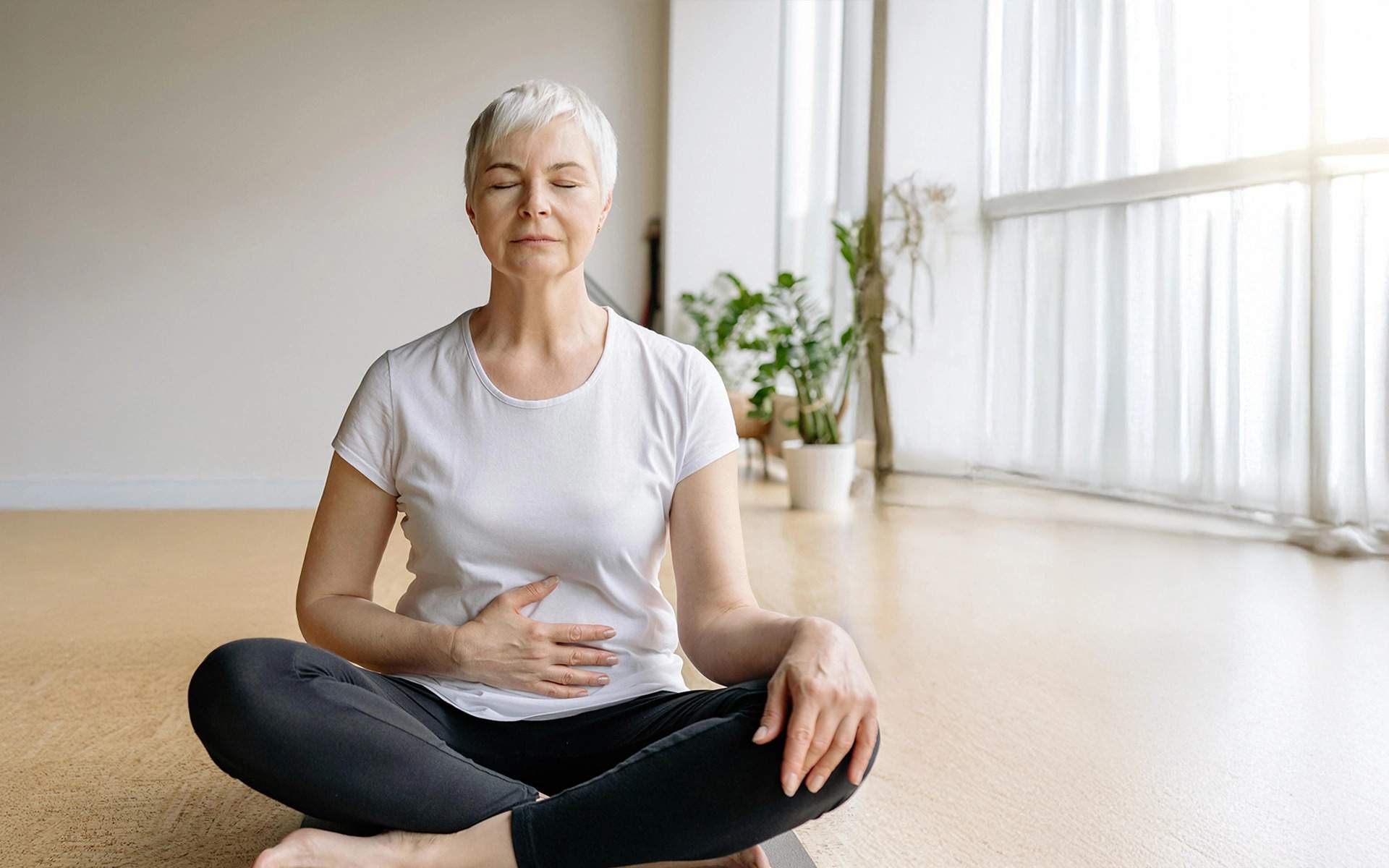
An effective deep relaxation technique is known as quiet sitting or free-floating relaxation. You simply sit quietly for about 20 minutes and allow your mind to float freely until it settles down. Don’t think about anything in particular. Don’t concentrate on anything. Just allow your mind and body to settle down naturally on its own.
An effective deep relaxation technique is known as quiet sitting or free-floating relaxation. You simply sit quietly for about 20 minutes and allow your mind to float freely until it settles down.
In order to deeply relax, you must let thoughts come and go as they please. As you are relaxing, some thoughts may spontaneously rush through your mind. That’s okay. Don’t worry about these thoughts. Don’t exert yourself by trying to block these thoughts. Don’t dwell on these thoughts, either. Just remain passive. Leave the thoughts alone, and the thoughts will gradually fade into the background so you can continue to relax.
The scientific term for the deep state of awake relaxation is the alpha state. This is because the brain calms and produces smooth, harmonious waves called alpha brain waves when it is completely relaxed. The alpha brainwaves have a frequency of eight to 12 cycles per second, whereas arousal or excitation brain waves, called beta brain waves, are much faster at 13 to 40 cycles per second. The alpha state is usually associated with widespread relaxation throughout the entire body and a healthy lowering of the body’s metabolism.
Activities like watching TV, listening to the radio, reading, sewing, or fishing will not hit the alpha deep relaxation state, because these activities still place demands on the brain and keep the brain too busy to completely relax. This means that these activities may get you to the shallow states of relaxation, but they won’t get you into deep states of relaxation. Even sleep will not hit the alpha deep relaxation state, because the brain remains very active during sleep, especially during dreaming.
Even after sleep, you can still be stressed out. Relaxation drills allow your mind and body to hit the deep states of relaxation.
Therefore, while obviously essential for multiple other functions, sleep does not completely relax the brain or counter stress. Even after sleep, you can still be stressed out. Relaxation drills allow your mind and body to hit the deep states of relaxation. So settle back, and let’s try a practice together.
Read and practice the guided meditation script below, pausing after each paragraph. Or listen to the audio practice.
Sitting in an upright but relaxed position, drop your gaze or close your eyes. Take a deep breath in and an audible exhale out. Breathing in and breathing out, sitting quietly, free floating, invite your body to relax.
When we simply sit and breathe, we activate the body’s calming response. It allows the brain to display the calm, smooth, harmonious waves called alpha brain waves—like the waves of the ocean, coming in to the shore and rolling back out. Coming in and going out. Breathing in and breathing out. Relax.
Drop your shoulders, relax the jaw, and unfurl your brow. Allow your mind to float freely until it settles down. Let thoughts come and go as they please.
Bring your attention back gently to your breath. Don’t exert yourself trying to block thoughts. Just remain passive and remind your body that we’re sitting now, we’re breathing now, we’re relaxing now. Sit quietly, stay with your breath. Like the waves of the ocean, breathing in, breathing out. Let thoughts fade into the background. Relax. To be still, to be quiet, to be at ease. This is the gift of relaxation.
Based out of the UK, Vidyamala Burch is an award-winning teacher whose courses and work in the field of mindfulness and pain management have been recognized for the measurable ways they have served the common good. She recently launched a new program, HEALS, which offers a comprehensive, holistic approach for managing and living with chronic pain and illness.
As a writer who loves interviewing, I came to my conversation with Burch with my list of questions and a healthy dose of journalistic curiosity. I felt a little starstruck to get to meet her.
If I’m honest, though, these weren’t the only things I brought, because this conversation also felt personal.
So many people I know, myself included, have had experiences living with chronic pain and illness. I was nearly 40 years old when I finally found healing from more than 20 years of recurring and increasingly debilitating low back issues. I have many friends, some just in their 30s or 40s, who deal with fibromyalgia, chronic fatigue syndrome, recurring migraines, and other adrenal and nervous-system challenges.
My mother survived polio as a young child and lived with relentless chronic conditions for her entire life as a result. She passed away suddenly a decade ago, at the young age of 67. Polio wasn’t technically the thing that killed her, but I knew from many conversations with her in her final years that the long slogging decades of complications, disability, and pain made her long for relief. I was with her when she took her last breath, and I felt the surrender in her body, finally.
To suffer ourselves, or to watch people we love suffer over long periods of time, often without real answers or effective treatments—the questions that bubble up aren’t academic. They sit close to the bone and the heart.
Why did this happen? Why did it go on for so long? Why does it feel so lonely? Where do these ailments come from, and why are they often so mysterious and so intractable, even in the face of intense medical interventions? Can practices like mindfulness reallyoffer anything meaningful into this complicated, messy world of living with chronic illness and pain?
Yes, I wanted to talk to Vidyamala, the expert on mindfulness and pain management. But I also didn’t want to waste the opportunity to talk to Vidyamala, the human being who has traveled this long road herself, and who understands intimately that the clinical ways we think and talk about physical suffering can’t meet us fully where we need to be met.
The clinical ways we think and talk about physical suffering can’t meet us fully where we need to be met.
Siri Myhrom: I’m curious about where the HEALS Program got its start for you. How do you see it as unique from and also working together with your other programs?
Vidyamala Burch: I developed Mindfulness for Health, which is our eight-week mindfulness program for people living with chronic pain and long-term health conditions. So the seeds for HEALS were way back in 2000, when I started running that [Mindfulness for Health] as an experimental course in 2001.
In my own experience as somebody who’s lived with chronic pain and disability for nearly 50 years now, mindfulness has been absolutely crucial to that journey because my life, my quality of life now, is really pretty good, notwithstanding my disability.
So mindfulness is foundational. And when I look at my own journey of reclaiming my quality of life, I realized that it was mindfulness-plus. So what I’ve done is I’ve worked on my nutrition. I’ve worked on how I move. I’ve looked at my sleep habits. I try to have time in nature. So if I looked at what’s worked for me, it was mindfulness plus these other dimensions. I felt that it would be really helpful to come up with an applied mindfulness program.
This is my vision, that people come through either doorway. You might come through the HEALS doorway or you might come through the Mindfulness for Health doorway. I see them as definitely complementary and as two doorways into the same room.
SM: Mindfulness talks a lot about awareness, and I have a question around that that’s maybe more personal. The people I know who live with chronic pain would likely say, I’m already very aware of my pain. I’m curious how you understand that word awareness, especially within a mindful context, and how does that serve to alleviate the suffering, rather than creating a focus on it?
VB: That’s an excellent question because it’s very counterintuitive. People might think, I’m very, very aware of it. And I don’t want to be more aware of it. And maybe people might think, The last thing I want to do is become aware of my body. My body is my tormentor. I want to just split off from my body.
So those are all very reasonable things to think about. What we do is right up front in both Mindfulness for Health and HEALS, we talk about how by using awareness, you can investigate this experience that you label pain. Investigate that and realize that it’s got two components. One component is your basic unpleasant sensations.
The other component is all things that you do to create extra suffering when you resist those basic unpleasant sensations. What most people call pain would be that whole set of sensations, plus resistance, plus depression, plus anxiety, plus secondary tension, plus breath holding, plus poor sleep.
Most people think that’s what their pain is. But actually, the only thing that’s a given in any moment are the unpleasant sensations. Everything else is added through our reactions. So you’re learning to accept the unpleasant sensations with kindliness, tenderness, to soften the resistance, and a lot of that secondary stuff can fall away. You’re just left with unpleasant sensations. People find that a very optimistic message.
We put that right up front in all our programs. Week one, we talk about primary and secondary suffering. The other thing about awareness that we really strongly emphasize— again, in week one—is that it’s awareness that gives us agency. If we’re aware, we have choices. If you’ve got no choices, you know, you’re just swept along by this thing that’s ruining your life as if it’s a kind of enemy.
Awareness doesn’t make it pleasant. I think this is one of the ways people misunderstand this: that if I’m mindful, I’m aware, then suddenly I’m going to love my pain. You probably aren’t, because your pain is unpleasant, but you’re going to learn to relate to the unpleasantness with much more spaciousness, much more kindliness, more acceptance.
One of the things I say is by coming closer and examining this experience, you realize it’s a process, not a thing. One of the ways I talk about that is to experience it as a river rather than a rock, because everything is changing all the time. Most people relate to their pain as a solid lump, like it’s a big boulder that’s kind of taken up residence. But it’s amazing to be able to experience it as a river rather than a rock. Just let it flow through the moments and then have this less-reactive mindset. That’s very liberating.
SM: Do you attract people who already have experience with mindfulness, or is it a mix of people?
VB: I iteratively develop my programs with potential audiences. The first one was a six-week program with people who know about mindfulness, who have a health condition and have worked with us before. I really wanted them to have a sense of co-creation. They gave me lots of feedback. Out of that, I made it longer, 10 weeks.
My second cohort was with people who didn’t know anything about mindfulness, but did have a health condition. It was people who were recruited from a cancer charity and a fibromyalgia charity, and that was very interesting as another test case. It went down very well with both those audiences.
Then the third pilot was with physicians from a primary care medical center. A lot of them didn’t know anything about meditation, didn’t have a health condition, but were trying it out for themselves, thinking about their patients. Again, very positive feedback. So I feel confident now that you don’t need to know anything about mindfulness to do this program.
SM: Where does HEALS fit into general medical care?
VB: I don’t know what it’s like in the States, but certainly over here there’s a crisis in our healthcare system—not enough money, aging population, multiple chronic health conditions.
Western medicine is particularly good with acute care. But with multiple chronic conditions all happening at the same time, Western healthcare isn’t brilliant. There’s more of a move towards a recognition that lifestyle has an enormous impact on our health and well-being, particularly with people being sedentary, eating a poor diet, scrolling on their phones late at night, not being able to sleep, all these kinds of things. There’s a whole field emerging of what’s called lifestyle medicine over here, which is called integrative care in the States. So we’re very well placed to be able to offer this program.
What’s unique about our program is that it’s got mindfulness as the foundation. I think a lot of people know what they should be doing for their health and well-being. They’ve got the information, but they don’t know how to make it stick. So my thesis is that mindful awareness is really crucial to that, because you have to know what you’re experiencing to have some facility and agency, instead of just being swept away by habitual behaviors. These people in general practice who tested the program said, “You’re absolutely on the right track. You’re ahead of the field. Keep going.”
SM: I notice, again relating to other people I’ve known with chronic conditions, that there’s an emphasis on tiny steps. Why is that effective?
VB: This has come out of my experience, and what I’ve observed is that a lot of people think you need to make big changes all at once—get another job, change your diet, change the way you exercise. When you do these big changes all at once, you don’t sustain any of them. You don’t know what’s affecting what because you’ve changed too many variables all at once. Very often you just need to change a tiny thing. In the program, I use a model called Tiny Habits, which is developed by B.J. Fogg. It’s a lovely model where you have a prompt, a behavior, and a celebration.
For example, for me to do a little bit more strengthening in my arms outside my office, I’ve got some straps. Every time I go in and out my office door, that’s the trigger. I go to my straps. It might be three to five movements, just a few. That’s the behavior. Then the congratulations, and you get a little dopamine hit, and then you’re going to want to do it again.
One of the things I’ve really learned from my own life, and this is a very important point, I think, is that you can bring about major transformation through tiny little nudges across a broad front for a long time. I always say to people that we won’t do any of these things perfectly, but if you’re doing all of them adequately, you’re going to experience change.
SM: It looks like the most recent cohort for HEALS is October 25th? Is that right?
VB: Yes, the first course booked out in 24 hours. That seems to be going very well. One of the things we’re doing in this program is using buddy groups testing. We divide into groups of four or five people based on geography. They decide for themselves how they want to keep in touch. Most of them are using WhatsApp. The idea is that they will contact each other daily, ideally so they can let people know how they’re getting on.
SM: Is the buddy system partly addressing the sense of isolation that can come with being in pain?
VB: Yes, I think so. Also, with these online programs, it helps to have something that’s more intimate, a daily reminder so that people are really forming connections. I think that’s very helpful in this tiny-habits method for behavior change.
SM: If someone came to you looking for help, but they were feeling skeptical, how would you describe this work in a way that would open up the possibility for them?
VB: We’ve used validated questionnaires in our three pilots and we’ve got hard data. Doing this work has measurable results. It makes people catastrophize about their pain less. It makes people able to function better in daily life. They’re less depressed, less anxious.
For people who live with chronic pain or health conditions, I say just try it and see what you think. You can have your pain and your illness and be miserable and have a very difficult life. Or you can have your pain and illness and be happier and have a more fulfilling life. So which one would you rather have?
By doing these very simple, evidence-based approaches, we know that it can help you reclaim your life. It doesn’t take long, 10-15 minutes a day, with a very supportive group for 11 weeks. We know that people are experiencing quite a strong improvement in quality of life. So it doesn’t seem like a big risk. It’s training and getting your mind working with you rather than against you. Most people don’t even realize that their mind is working against them. In the untrained mind, 75% of our thoughts are negative. It’s staggering. 95% of our thoughts, we’ve had before. We’ve got the same old undermining rubbish, just going around and around like the spin cycle on a washing machine, and you can do something about that. You can do something about it through these small changes across a broad front.
Would that be convincing to you if you were skeptical?
SM: Well, I dealt with chronic low back pain for about 25 years. I went to all kinds of different doctors. I tried all sorts of different modalities, and it was not an uncommon experience to go to an allopathic doctor and kind of feel like they don’t quite believe you. Especially in the US, there’s a tendency to prescribe opiates or recommend surgery, which I knew had a very low success rate.
For me, finding contemplative practice really did make a difference. But I think being able to speak to the exhaustion is important, because a lot of people who have been dealing with chronic issues, especially for a long time, it’s not that they want to give up. It’s that they’ve already tried 10 or 15 different things that haven’t worked.
VB: Yes, absolutely. Something we do at Breathworks is we believe people first, because I’m not interested in your diagnosis. I’m interested in your experience. With chronic health conditions, it’s sometimes hard to get a diagnosis. People are often not believed, and it’s awful. If someone says they’re suffering, I believe them. I think it’s really important that it’s an experience orientation rather than a diagnostic orientation.
We all have our habits of sort of resisting and fighting our experience. We can all learn to be more at peace with whatever’s happening. In my own case, you know, I’ve still got disability, I’ve still had all the surgeries, I’ve still got pain, but my overall pain has massively improved.
A lot has gradually fallen away over the years. My breathing is much more regulated, soft, and open. I’m fitter, I’m stronger. You get out of a downward spiral into a more opportunistic spiral.
You don’t have to be stuck with what you’ve got. There will be small changes you can make that will have an impact on your quality of life, because this quality of life is the thing that I think is most important, not whether you can walk or run. You know, I can’t walk and run, but I have a quality of life. I find that deeply, deeply moving. It’s unimaginably better than it was 30, 40 years ago.
SM: Yes, being with people who can just be with you and see you—that in itself is humane and tender and can initiate healing.
VB: Absolutely. One of the things that we hear again and again at Breathworks is that there’s a quality of lightness. One woman who came back the second week said, “I feel I’m learning to laugh again.”
She’d done awareness practice. She was in a lot of pain, had a difficult life, quite a lot of sadness, I think. It wasn’t like, Well, I’m becoming more aware. It was, I feel I’m ready to laugh.
I thought, that is so good, because we have a big group of people, many of them with really difficult circumstances. If we can help them find a way to bring some lightness into how they deal with their heaviness, they’re getting a great gift. I think particularly when one lives with difficulty, it is healing to find a way to relate to it in a more light, but not trivial way.
SM: In the process of discovering meditation and studying more deeply, did you have a moment where you thought, I really want to teach this to other people? Or did it happen in a more subtle way?
VB: I always go back to when I was 25 in intensive care in hospital, and I had this really big experience about the present moment, which changed my life. I knew that my pain was only happening one moment at a time and that most of my torment was about the future or the past.
That’s the very short version. I thought, I really, really want to figure out what it means to be present. How can I train in that, and how can I train my mind?
And interestingly that experience rose up out of hell. It was not an experience that happened in the bliss of a meditation retreat. No, it was an absolute existential kind of moment.
I had a social worker who was wonderful. She got me some tapes in the library, sort of beginning to meditate. I became a Buddhist a couple of years later, moved to England to live in a retreat center, and I was finding as I wasn’t really getting much guidance on how to meditate in the painful body. There weren’t many people around who seemed to know how to do that. I was always having to figure it all out for myself. People were very kind and very helpful, but the specifics of, how do you meditate when your back is absolutely screaming? It was a really hard thing to do.
Gradually I worked out how to do that with the help of Jon Kabat-Zinn. Actually, when I came across his book Full Catastrophe Living, that was massively helpful. I realized that I needed to learn to tend towards my experience and soften around it and release all this kind of extra suffering that I’m bringing through my evasion and my craving, really in my grasping for a different experience and my aversion to this experience.
With those two things together, I figured something out here, painfully and slowly over decades. And there’s going to be lots of other people like that young woman in hospital in intensive care, not knowing what the hell to do. There wasn’t any medical solution for my spine at that point. It was just like, we’re going to have to learn to live with it.
That’s why I wanted to teach, because I wanted to offer these to other people who were in the situation I was in so they didn’t have to have this 15 years of long, lonely journey. I was surrounded by incredible friends, and people couldn’t have been more supportive—but the specifics of how to meditate with pain, I wasn’t getting much.
When I started, I just wanted to help people. Now, 25 years later, I just want to help people. It’s a very, very simple motivation. And if I can help one person suffer less, that’s my journey.
When I started, I just wanted to help people. Now, 25 years later, I just want to help people. It’s a very, very simple motivation. And if I can help one person suffer less, that’s my journey.
SM: And it seems like it’s working. The response is there.
VB: It’s just very meaningful. It reframes all my suffering. More importantly, it helps others.
And what I really love about Breathworks and the HEALS program is, it’s not rocket science. It’s not some sort of advanced, metaphysical, complicated teaching. It’s: Be present. Know what’s happening. Let go of aversion and clinging. Release into the flow of love. Breathe and breathe out. And relax your bum. That’s my highest teaching now: Relax your bum.
That’s the whole. That’s it. You don’t really need much more than that. It’s very practical, very pragmatic. You don’t meditate to have a good meditation. You meditate so that you can cope with the moments in your daily life with a little bit more ease and grace and kindness and connection with others.
You don’t meditate to have a good meditation. You meditate so that you can cope with the moments in your daily life with a little bit more ease and grace and kindness and connection with others.
People quite rightly say, It saved my life, and I know it saved mine.