Tag: Talk

  • Dr. Charles Powell Goes To Washington to Talk PTSD, Hope And Healing

    Dr. Charles Powell Goes To Washington to Talk PTSD, Hope And Healing

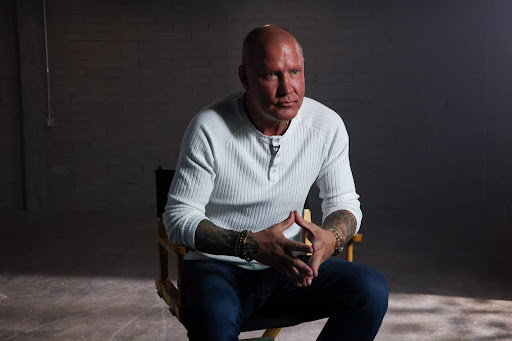
    This summer in Washington, D.C., the Healthy America 2025 Kickoff National Conference gathered an extraordinary coalition of health innovators, veterans, lawmakers, and advocates under one roof to tackle America’s most pressing healthcare challenges. Among the most memorable voices was that of Dr. Charles “Charlie” Powell, MD, a former Navy Lieutenant Commander, multi-boarded physician, and founder of Solo Vive, a company dedicated to holistic, purpose-driven healing.

    Dr. Charlie’s address was more than a speech; it was a man laying out a new way of looking at some very complex issues.

    “Taking off the uniform doesn’t mean the battle is over,” Dr. Charlie told a packed room at the conference’s mainstage venue. “For many, it’s the beginning of a new kind of fight.”

    He spoke not only as a physician but also as a fellow veteran and survivor of trauma, loss, and the often silent internal wars that follow military service. His talk, part of Robert F. Kennedy Jr.’s Make America Healthy Again (MAHA) initiative, was one of the most talked-about moments of the conference because it was a veteran’s voice with a physician’s insight.

    Dr. Charlie’s story is one of service and transformation. After graduating from Louisiana State University School of Medicine in Shreveport, he completed a Family Medicine residency at the Naval Hospital in Pensacola. His naval career included roles in New Orleans, where he directed clinical services at the Naval Ambulatory Care Clinics and worked as a staff emergency physician.

    In 2005, Dr. Charlie transitioned into civilian medicine, but the mission stayed with him. His clinical work expanded into quality improvement, compliance, and healthcare innovation. Yet the challenges he saw facing veterans and first responders, especially those grappling with PTSD, remained at the forefront of his mind.

    In part, it was his own journey that pushed him to do more.

    “I’ve faced the darkness,” Powell said. “I’ve lived with PTSD. I’ve seen what happens when the system looks past people who need it most.”

    In 2024, Dr. Charlie founded Solo Vive, a multidisciplinary venture that includes Vive Scientific, Solo Vive Studios, Saint Charlie Resorts, and the highly anticipated Healing Heroes – No Mind Left Behind documentary. Each project reflects Powell’s central belief: healing must be comprehensive. Medical intervention is only one piece of the puzzle, along with connection, dignity, and finding a true inner meaning.

    “Healing doesn’t happen in isolation,” Powell emphasized. “It happens in community, in purpose, and in being truly seen.”

    The documentary film, which may become a reality series, aims to share the stories of veterans, first responders, and survivors navigating life with PTSD. Focusing on elevating real voices and breaking stigma, Dr. Charlie hopes the film will catalyze change in public perception and policy.

    His work is shaped not just by military service or medical training, but by fatherhood. As the parent of a special-needs son, he understands the everyday battles faced by families pushed to the margins of the healthcare system.

    He says his advocacy comes from love and a deep desire to create systems where people aren’t just treated but supported.

    “I’ve seen what it means to be overlooked,” he told attendees. “And I’ve made it my life’s mission to ensure no mind is left behind.”

    At the Healthy America 2025 conference, Dr. Charlie’s words rang clear: healing isn’t only about recovery, it’s about rebuilding. His presence was a powerful reminder that change often begins with those willing to speak their truth.

    “The scars we carry don’t make us weak; they’re evidence we survived. And survival is just the beginning.”

    In a gathering full of optimism and innovation, Dr. Charlie Powell reminded everyone that the human heart remains the center of every health journey. His voice, grounded in experience and rich with compassion, stood out as a beacon of hope and a challenge to all of us to do better, together.
    Source link

  • Let’s talk IBS | Dietitian Connection

    Let’s talk IBS | Dietitian Connection


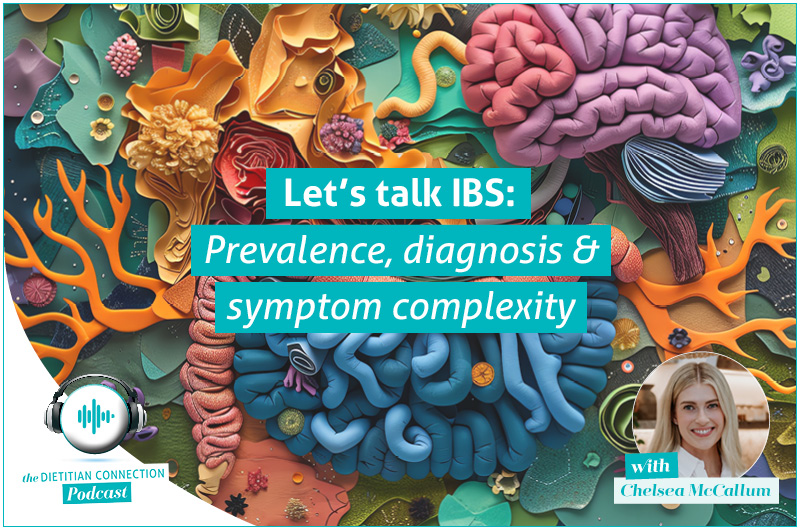
    April is IBS Awareness Month – the perfect time to spotlight a condition that affects millions worldwide yet is often misunderstood. In this episode, gut health dietitian Chelsea McCallum joins us to unpack the complexities of IBS and share her empowering, food-positive approach to care.

    Hosted by Brooke Delfino

    Biography

    Chelsea McCallum is a digital dietitian with a special interest in gut health and the founder of the IBS Relief Program, a private coaching program to support people with IBS. Chelsea helps people with IBS take control of their symptoms without endless food restrictions. With a background in recipe development and a deep understanding of the science, Chelsea takes an empowering, practical approach to IBS care that’s all about what we can add to the diet, not just take away.

    In this episode, we discuss:

    • Why IBS is often missed or misunderstood
    • When (and when not) to use the low-FODMAP diet
    • How to guide clients through reintroduction with confidence
    • Strategies to reduce food fear and overwhelm
    • Tips to simplify IBS education in clinical consults


    Additional resources


    The content, products and/or services referred to in this podcast are intended for Health Care Professionals only and are not, and are not intended to be, medical advice, which should be tailored to your individual circumstances. The content is for your information only, and we advise that you exercise your own judgement before deciding to use the information provided. Professional medical advice should be obtained before taking action. The reference to particular products and/or services in this episode does not constitute any form of endorsement. Please see  here  for terms and conditions.


    Source link
  • The Art of Communication: How to Talk to Your Partner Without Losing Your Mind

    The Art of Communication: How to Talk to Your Partner Without Losing Your Mind

    The Art of Communication: How to Talk to Your Partner Without Losing Your Mind

    Effective communication is the backbone of any successful relationship. It’s the foundation upon which trust, understanding, and intimacy are built. Yet, for many couples, communication is a constant source of frustration and conflict. Why is this? And more importantly, how can you learn to communicate with your partner in a way that strengthens your bond and keeps you both happy and fulfilled?

    Understanding the Power of Communication

    Communication is not just about exchanging information; it’s about building a connection with your partner. When you communicate effectively, you’re not just conveying your thoughts and feelings, you’re also listening to and understanding your partner’s. This creates a sense of empathy and understanding, which is essential for a healthy and fulfilling relationship.

    In today’s fast-paced world, it’s easy to get caught up in the hustle and bustle of daily life and neglect to prioritize communication with your partner. But neglecting this essential aspect of your relationship can have serious consequences. Miscommunication, misunderstandings, and unresolved conflicts can lead to feelings of resentment, anger, and even disconnection.

    The Importance of Active Listening

    Active listening is a crucial component of effective communication. When you listen actively, you’re not just hearing your partner’s words; you’re also paying attention to their tone, body language, and emotions. This helps you to better understand their perspective and respond in a way that shows you’re engaged and interested.

    Active listening involves several key elements, including:

    • Giving your partner your undivided attention
    • Avoiding interruptions and distractions
    • Paraphrasing and summarizing what your partner has said
    • Asking open-ended questions to encourage further discussion
    • Avoiding judgment and criticism

    The Art of Effective Expression

    Effective expression is just as important as active listening. When you express yourself clearly and assertively, you’re able to convey your thoughts, feelings, and needs in a way that’s easy for your partner to understand. This helps to prevent misunderstandings and miscommunications, and ensures that your partner is aware of your needs and desires.

    Effective expression involves several key elements, including:

    • Using "I" statements instead of "you" statements
    • Staying calm and composed, even in the face of conflict
    • Avoiding blaming or attacking language
    • Using specific examples and anecdotes to illustrate your point
    • Practicing assertiveness, rather than aggression or passivity

    The Role of Nonverbal Communication

    Nonverbal communication is a powerful tool that can either support or undermine your verbal communication. Your body language, tone of voice, and facial expressions all convey important messages to your partner, and can either build trust and intimacy or create distance and conflict.

    Some key nonverbal communication skills to focus on include:

    • Maintaining eye contact and open body language
    • Using a warm and respectful tone of voice
    • Smiling and using positive facial expressions
    • Avoiding crossed arms and legs, which can convey defensiveness
    • Using gentle and soothing touch to build intimacy and connection

    The Importance of Conflict Resolution

    Conflict is inevitable in any relationship, and it’s how you resolve those conflicts that can make all the difference. When you learn to communicate effectively during conflicts, you’re able to work through issues and come out stronger on the other side.

    Some key conflict resolution skills to focus on include:

    • Staying calm and composed, even in the face of conflict
    • Avoiding blame and criticism
    • Focusing on the issue at hand, rather than personal attacks
    • Using "I" statements to express your feelings and needs
    • Seeking common ground and compromise

    Conclusion

    Effective communication is the key to a happy and fulfilling relationship. By learning to communicate effectively, you can build trust, intimacy, and understanding with your partner, and work through conflicts in a way that strengthens your bond. Remember to prioritize active listening, effective expression, nonverbal communication, and conflict resolution, and you’ll be well on your way to creating a relationship that’s filled with love, laughter, and connection.

    FAQs

    Q: How can I improve my communication skills with my partner?
    A: To improve your communication skills, focus on active listening, effective expression, nonverbal communication, and conflict resolution. Practice these skills in your daily interactions with your partner, and seek feedback and guidance from a therapist or counselor if needed.

    Q: What are some common communication mistakes that couples make?
    A: Common communication mistakes that couples make include interrupting each other, not listening actively, using blaming or attacking language, and avoiding conflict rather than working through it.

    Q: How can I stay calm and composed during conflicts with my partner?
    A: To stay calm and composed during conflicts, take a few deep breaths, count to 10, or step away for a moment to collect your thoughts. Remember that conflicts are a normal part of any relationship, and that working through them can actually strengthen your bond.

    Q: What are some nonverbal cues that can indicate a lack of interest or disconnection?
    A: Nonverbal cues that can indicate a lack of interest or disconnection include avoiding eye contact, crossing your arms or legs, and using a distant or distracted tone of voice. If you notice these cues in your partner, try to initiate a conversation and re-engage with each other.

    Q: How can I prioritize communication in my busy schedule?
    A: To prioritize communication in your busy schedule, set aside dedicated time to talk with your partner each day, even if it’s just for a few minutes. Make communication a priority by scheduling it into your daily routine, and try to avoid distractions and interruptions during your conversations.