Tag: surprising

  • 6 Surprising Things Your Body Does Every Day and What They Mean for Your Health

    6 Surprising Things Your Body Does Every Day and What They Mean for Your Health

    The human body is constantly at work behind the scenes, performing countless automatic processes that keep a person alive and functioning. Reflexes, metabolism, hormones, inflammation, and circadian rhythms operate every day without conscious effort, yet they quietly shape energy levels, mood, and long-term health.

    Understanding what these systems do, and what changes in them might mean, can offer useful insight into overall well-being.

    1. Your Body’s Reflexes Are Constantly Protecting You

    Reflexes are rapid, automatic responses that protect the body from immediate harm. They are controlled by the nervous system and happen without a person having to think about them, allowing the body to react faster than conscious decision-making would allow.

    Simple actions like blinking when something approaches the eye, sneezing to clear irritants from the nose, or pulling a hand away from a hot surface are all examples of everyday reflexes at work.

    Healthcare professionals often check reflexes during routine exams because they can reveal important information about nerve and muscle function. Slowed, exaggerated, or absent reflex responses may point to issues in the nervous system or spinal cord pathways.

    While most people rarely think about their reflexes, these quick reactions are a key layer of protection built into the body’s daily routine.

    2. Your Metabolism Never Truly “Stops”

    Metabolism is the term for all the chemical reactions that occur in the body to convert food into energy and maintain vital functions. Even during sleep or rest, the body uses energy to support breathing, circulation, temperature control, and cell repair.

    This baseline energy demand is known as the basal metabolic rate, and it represents how much energy the body needs just to keep everything running.

    Metabolism changes throughout the day based on activity level, food intake, age, muscle mass, and hormonal signals. A person with more muscle mass, for example, tends to burn more energy at rest.

    Signs often associated with a slower metabolism include fatigue, easier weight gain, and feeling cold more often, while a faster metabolism may show up as increased hunger and difficulty maintaining weight.

    Although many factors are beyond direct control, lifestyle habits like regular physical activity and balanced nutrition can support a healthier metabolic pattern.

    3. Hormones Fluctuate More Often Than You Think

    Hormones are chemical messengers that travel through the bloodstream to coordinate a wide range of body functions.

    They influence mood, appetite, stress response, growth, reproduction, and sleep, often shifting subtly throughout the day. These fluctuations are tightly linked to both metabolism and circadian rhythms, creating a complex but coordinated internal communication system.

    Cortisol, sometimes referred to as the body’s primary “stress hormone,” typically rises in the morning to promote alertness and gradually falls later in the day. Melatonin, by contrast, increases in the evening to help the body prepare for sleep. Insulin is released in response to food to regulate blood sugar, according to Cleveland Clinic.

    When hormone levels become imbalanced, a person may notice symptoms such as mood swings, changes in weight, fatigue, irregular periods, or disrupted sleep. These shifts can be early clues that the body’s regulatory systems need attention.

    4. Inflammation Happens Even Without Obvious Injury

    Inflammation is often imagined as swelling or redness after an injury, but it is also a normal part of the immune system’s response inside the body. In the short term, inflammation helps fight infections and repair damaged tissue.

    This type, known as acute inflammation, is usually helpful and temporary, appearing after events like a cut, a sprained ankle, or a viral illness.

    Problems arise when inflammation becomes low-grade and long-lasting. Chronic inflammation can be driven by a variety of factors, including ongoing stress, smoking, highly processed diets, or lack of sleep and physical activity.

    Over time, this persistent inflammatory state has been linked to conditions such as heart disease, type 2 diabetes, and certain autoimmune disorders.

    While inflammation itself is a protective tool, noticing patterns like ongoing joint discomfort, digestive issues, or unexplained fatigue may be a reason to pay closer attention to lifestyle habits and medical checkups.

    5. Circadian Rhythms Do More Than Control Sleep

    Circadian rhythms are the body’s internal 24-hour clocks that synchronize many processes with day and night. These rhythms influence sleep-wake cycles, body temperature, hormone release, metabolism, and even immune function.

    Light is one of the strongest signals for these internal clocks, especially natural morning light, which helps set the timing for alertness and energy during the day.

    When circadian rhythms are consistently disrupted, through shift work, irregular sleep schedules, frequent late-night screen time, or crossing multiple time zones, health can be affected in subtle and not-so-subtle ways.

    People may notice poor sleep quality, daytime sleepiness, irritability, difficulty concentrating, or changes in appetite and weight, as per Harvard Health.

    Over the long term, misaligned circadian rhythms can contribute to metabolic and cardiovascular issues. Supporting these rhythms by keeping regular sleep and wake times, getting daylight exposure, and limiting bright light late at night can help the body’s internal clock run more smoothly.

    6. Micro-Adjustments That Keep the Body in Balance

    Beyond these more noticeable systems, the body constantly makes tiny adjustments to maintain balance, a state known as homeostasis. It fine-tunes temperature by making a person sweat when overheated or shiver when cold.

    It maintains hydration by triggering thirst and adjusting how much water the kidneys conserve. Blood pressure and heart rate are constantly regulated in response to posture, stress, and physical activity.

    These micro-adjustments generally occur without any awareness but are crucial for survival.

    When the underlying balance is disturbed, such as frequent dizziness when standing, chronic dehydration, or persistent exhaustion, it can indicate that the body is working harder than it should to keep systems stable.

    Paying attention to these small but persistent changes can help people recognize when something deserves further evaluation.

    How Everyday Body Signals Can Guide Better Health

    Reflexes, metabolism, hormones, inflammation, and circadian rhythms form a tightly connected network that shapes how the body performs from moment to moment. A shift in sleep can alter circadian rhythms, which may change hormone patterns, influence metabolism, and even affect how the immune system and inflammation behave.

    Instead of viewing these processes in isolation, it is helpful to see them as parts of one larger picture of health.

    By noticing recurring signs, such as ongoing fatigue, changes in appetite, persistent pain, difficulty sleeping, or heightened sensitivity to stress, individuals can gain a clearer understanding of what their bodies may be signaling.

    While only a healthcare professional can diagnose underlying conditions, paying attention to these everyday processes can prompt timely conversations and proactive choices.

    Recognizing how reflexes, metabolism, hormones, inflammation, and circadian rhythms behave from day to day turns the body’s automatic functions into a useful guide for protecting and improving long-term health.

    Frequently Asked Questions

    1. Can someone improve their reflexes with practice?

    Yes. While basic reflex pathways are automatic, activities like balance training, sports drills, and reaction-time exercises can help the brain and muscles respond more efficiently.

    2. Does eating at irregular times affect metabolism and circadian rhythms?

    Yes. Frequently eating late at night or on an irregular schedule can disrupt circadian rhythms and may negatively influence metabolism and blood sugar regulation over time.

    3. Can chronic stress change hormone levels and inflammation at the same time?

    Yes. Ongoing stress can keep cortisol elevated, which may disturb other hormones and contribute to low-grade, chronic inflammation in the body.

    4. How quickly do circadian rhythms adjust after changing sleep schedules or time zones?

    On average, circadian rhythms may shift by about 1–2 hours per day, so full adjustment to a major schedule change or time zone can take several days.


    Source link

  • Nuts, Sperm, and Sex: The Surprising Connection

    Nuts, Sperm, and Sex: The Surprising Connection

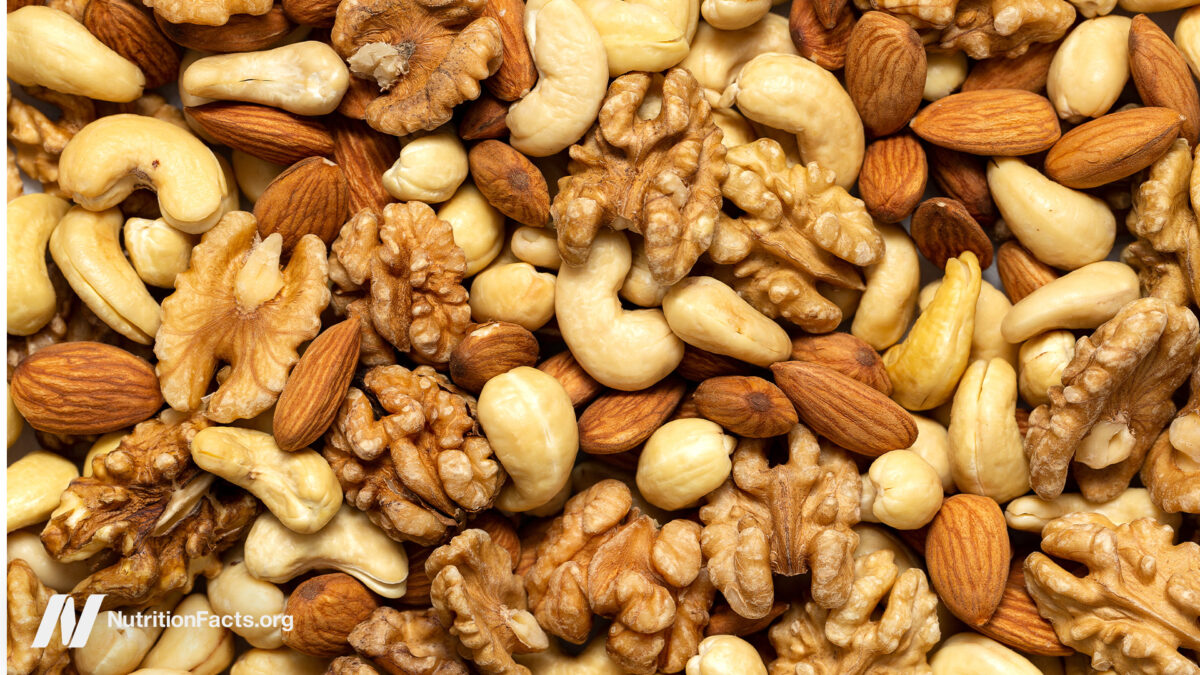
    Walnuts, almonds, and hazelnuts are put to the test for erectile and sexual function, sperm count, and semen quality.

    In 2013, I posted a video based on a study that found that men with erectile dysfunction who ate 100 grams of pistachios (a little more than three handsful) a day for three weeks had “a significant improvement in erectile function.” It’s always nice to see a whole-food intervention have clinical effects, and I was curious to revisit the topic and see what’s been published since.

    Even if you ignore all the lab animal studies on hazelnuts improving the function of rat testicles—really, there’s a study titled “Hazelnut Consumption Improves Testicular Antioxidant Function and Semen Quality in Young and Old Male Rats”—you still never know what you’ll find searching the medical literature for nuts and sexual function. I found “a case of penile strangulation with a metal hex nut” in which someone put one on his penis “for sexual pleasure” but couldn’t remove it. (I guess some kinds of nuts can sometimes make things worse.) They tried the Dundee technique, which involves creating 20 puncture holes to relieve the pressure, but that didn’t work, so then they tried a diamond disk cutter. It slipped a few times, but the hex nut was successfully removed. All’s well that ends well.

    That got me curious. Evidently, penile entrapment is so common that there is an entire grading system that emergency room doctors can use, as you can see here and at 1:21 in my video Mixed Nuts Put to the Test for Erectile Dysfunction. If a drill isn’t available, the surgeons advised, “a hammer and chisel may be used to remove nuts.”

    A drill? Oh, they mean a dental drill. Doctors describing one case bragged about the “precisely cut edges,” but it looks pretty jagged to me. You can see for yourself below and at 1:38 in my video.

    To “preserve the penis from fatal outcomes” (that’s a strange way to put it), urologists should be aware of all the available tools and approaches, and if you don’t know how to operate the saw, you can always call in the local blacksmith—but only if “special consent [is] taken from the patient”!

    But how are you going to remove an iron barbell or steel sledgehammer head? “With a heavy-duty air grinder provided by the fire department,” requiring six hours of cutting and fire coats to protect the patient from the sparks. Use whatever it takes—hack saw, “cement eater.” You can even use the silk winding method pioneered by Dong et al.

    Back to the task at hand! Consuming “at least one serving of vegetables a day and more than two servings of nuts a week was associated with a more than 50% decrease in the probability of ED” [erectile dysfunction] in a snapshot-in-time cross-sectional study. But such observational studies can’t prove cause and effect. It’s like finding that men who eat healthier have better sperm motility. Maybe men who eat nuts are just health nuts, and the improvement is due to some other factor, like exercise. What we need is an interventional trial.

    And there is one: a randomized controlled trial studied the “effect of nut consumption on semen quality and functionality.” Healthy men were fed the standard American diet with or without a mixture of nuts—a handful (30 grams) of walnuts and half a handful (15 grams) each of almonds and hazelnuts. Individuals in the nut group experienced significant improvements in their total sperm count, vitality, motility, and shape, perhaps because those “in the nut group showed a significant reduction in SDF”—sperm DNA fragmentation. The nuts appeared to protect their sperm DNA. It’s too bad that the researchers didn’t measure the men’s erectile and sexual dysfunction while they were at it. Oh, but they did!

    What is the effect of nut consumption on erectile and sexual function from that same study? The researchers report that those in the nut group saw a significant increase in orgasmic function and sexual desire, but what about erectile function? Any time you see this kind of selective glass-half-full reporting, you suspect some kind of industry funding, and, indeed, that was the case here; the study was partially funded by the International Nut and Dried Fruit Council. Yes, there was a marginal increase in orgasmic function and sexual desire of questionable clinical significance, but there was no improvement in erectile function, intercourse satisfaction, or overall satisfaction. As with so many comparisons, even the so-called significant findings may not even be statistically significant.

    But why did the pistachios I talked about back in 2013 work, while these other nuts didn’t? Well, the original study was done on men mostly in their 40s and 50s who already had chronic erectile dysfunction for at least one year, whereas the average age of participants in the newer study was 24. So, the individuals in the later study may have started out with near-maximum circulation, not leaving much room for the nuts to work any magic.

    Doctor’s Note

    Sorry for that crazy tangent! I just wanted to give people a taste of what it can be like when you dive deep into the medical literature.

    The 2013 video I mentioned is Pistachio Nuts for Erectile Dysfunction.

    What about walnuts for arterial blood flow? See Walnuts and Artery Function.

    More on fertility and sexual function in the related posts below.

    Source link

  • The Surprising Benefits of Exercise for Older Adults

    The Surprising Benefits of Exercise for Older Adults

    Introduction

    As we age, our bodies undergo a range of changes that can affect our physical and mental health. While it’s common to assume that our bodies naturally decline with age, the truth is that many of the negative effects of aging can be mitigated or even reversed through regular exercise. In this article, we’ll explore the surprising benefits of exercise for older adults, and why incorporating physical activity into your daily routine can have a significant impact on your overall health and wellbeing.

    The Importance of Exercise for Older Adults

    Exercise is essential for people of all ages, but it’s particularly important for older adults. As we age, our bodies naturally lose muscle mass and bone density, which can increase our risk of falls, fractures, and other injuries. Regular exercise can help to slow down or even reverse this process, keeping our muscles and bones strong and healthy. Exercise can also help to improve our balance and coordination, reducing our risk of falls and other accidents.

    Physical Benefits of Exercise for Older Adults

    The physical benefits of exercise for older adults are numerous. Regular physical activity can help to:

    • Improve cardiovascular health by reducing blood pressure and improving circulation
    • Increase muscle mass and bone density, reducing the risk of falls and fractures
    • Improve balance and coordination, reducing the risk of falls and other accidents
    • Boost energy levels and reduce fatigue
    • Improve sleep quality and duration
    • Reduce the risk of chronic diseases, such as heart disease, diabetes, and certain types of cancer

    Mental and Emotional Benefits of Exercise for Older Adults

    Exercise is not just good for our physical health – it also has a range of mental and emotional benefits. Regular physical activity can help to:

    • Reduce symptoms of anxiety and depression
    • Improve mood and overall sense of wellbeing
    • Enhance cognitive function and reduce the risk of dementia
    • Improve self-esteem and body confidence
    • Provide opportunities for social interaction and connection with others

    Types of Exercise Suitable for Older Adults

    While it’s true that our bodies may not be as flexible or agile as they once were, there are still many types of exercise that are suitable for older adults. Some examples include:

    • Brisk walking
    • Swimming or water-based exercise
    • Cycling or using a stationary bike
    • Yoga or tai chi
    • Resistance training, such as weightlifting or bodyweight exercises
    • Group fitness classes, such as dance or aerobics

    Overcoming Barriers to Exercise

    Despite the many benefits of exercise, many older adults face barriers that prevent them from incorporating physical activity into their daily routine. Some common barriers include:

    • Lack of time or energy
    • Physical limitations or health concerns
    • Lack of access to exercise facilities or equipment
    • Fear of injury or embarrassment
    • Lack of motivation or support

    Strategies for Staying Motivated and Engaged

    Staying motivated and engaged with exercise can be challenging, but there are several strategies that can help. These include:

    • Finding an exercise buddy or workout partner
    • Setting achievable goals and tracking progress
    • Varying your routine to avoid boredom or plateaus
    • Rewarding yourself for milestones or achievements
    • Seeking support from a healthcare professional or fitness expert

    Safety Considerations for Older Adults

    While exercise is essential for older adults, it’s also important to take certain safety precautions to avoid injury or other complications. Some tips include:

    • Consulting with a healthcare professional before starting a new exercise routine
    • Warming up and cooling down properly
    • Listening to your body and taking regular breaks
    • Avoiding high-impact or high-intensity activities
    • Staying hydrated and fueling your body with a balanced diet

    Conclusion

    Exercise is a powerful tool that can have a significant impact on the health and wellbeing of older adults. By incorporating physical activity into your daily routine, you can improve your physical and mental health, reduce your risk of chronic disease, and enhance your overall quality of life. Whether you’re looking to improve your cardiovascular health, boost your mood, or simply stay active and engaged, there’s an exercise program out there that’s right for you. So why not get started today?

    FAQs

    Q: I’m not sure where to start with exercise – what’s the best type of exercise for older adults?
    A: The best type of exercise for older adults will depend on your individual needs and abilities. Consult with a healthcare professional to determine the best exercise program for you.
    Q: I have a health condition – is it still safe for me to exercise?
    A: Yes, exercise is still beneficial for people with health conditions, but it’s essential to consult with a healthcare professional before starting a new exercise routine.
    Q: I’m worried about falling or injuring myself – how can I stay safe while exercising?
    A: Take certain safety precautions, such as warming up and cooling down properly, listening to your body, and avoiding high-impact or high-intensity activities.
    Q: How often should I exercise, and for how long?
    A: Aim for at least 30 minutes of moderate-intensity exercise per day, and consider incorporating strength training and flexibility exercises into your routine.
    Q: Can I still benefit from exercise if I’m not able to leave my home?
    A: Yes, there are many exercises that can be done from the comfort of your own home, such as bodyweight exercises, yoga, or following along with exercise videos.
    Q: How can I stay motivated and engaged with exercise?
    A: Find an exercise buddy, set achievable goals, vary your routine, and reward yourself for milestones or achievements.

  • Make a Difference: The Surprising Ways Volunteering Can Benefit Your Career

    Make a Difference: The Surprising Ways Volunteering Can Benefit Your Career

    Introduction

    In today’s fast-paced and competitive job market, professionals are constantly looking for ways to differentiate themselves, enhance their skills, and build meaningful connections. While many focus on traditional methods such as taking courses or attending networking events, there’s a often-overlooked strategy that can significantly impact one’s career: volunteering. Volunteering, or the act of giving one’s time and energy to help others without expectation of payment, is widely recognized for its societal benefits. However, it also has a profound impact on personal and professional development. This article will delve into the surprising ways volunteering can benefit your career, from enhancing your skill set and broadening your network, to boosting your career prospects and fostering a sense of fulfillment.

    Enhancing Your Skill Set

    Volunteering provides a unique opportunity to develop and refine skills that are highly valued by employers. Whether it’s leadership, communication, problem-solving, or teamwork, volunteering can help you hone these skills in real-world settings. For instance, managing a volunteer project can teach you about planning, budgeting, and executing tasks, all of which are crucial in any professional environment. Similarly, working with diverse groups of people can improve your interpersonal skills, adaptability, and empathy, making you a more effective collaborator in the workplace.

    Moreover, volunteering can expose you to new industries, roles, and challenges, allowing you to explore different career paths without making long-term commitments. This can be particularly beneficial for students, recent graduates, or those looking to transition into a new field, as it provides hands-on experience and insight into what a particular career entails. By taking on volunteer roles that align with your career aspirations, you can gain practical experience, build your portfolio, and demonstrate your capabilities to potential employers.

    Broadening Your Network

    Volunteering is an excellent way to meet like-minded professionals, establish meaningful connections, and expand your professional network. The contacts you make through volunteering can lead to valuable recommendations, mentorship opportunities, and even job openings. Many organizations use volunteer programs as a way to identify and recruit talented individuals who share their mission and values. By volunteering, you can get your foot in the door and showcase your skills and commitment to potential employers.

    Additionally, the diversity of volunteer environments means you can interact with people from various backgrounds, industries, and levels of expertise. These interactions can lead to learning from others’ experiences, gaining new perspectives, and developing a more nuanced understanding of your field. Networking opportunities are not limited to the volunteer organization itself; many volunteers attend community events, conferences, and workshops related to their cause, further expanding their professional circle.

    Boosting Your Career Prospects

    The impact of volunteering on career prospects should not be underestimated. Employers view volunteering as a positive trait, indicating a candidate’s willingness to take initiative, contribute to society, and work towards a common goal. In a competitive job market, highlighting volunteer experience can make a candidate’s resume more attractive, demonstrating their proactive approach to skill development and community engagement.

    Moreover, volunteering can lead to career advancement opportunities within your current organization. Demonstrating your commitment and value through volunteer work can position you for promotions or new roles, as it showcases your leadership potential, work ethic, and ability to handle additional responsibilities. In some cases, volunteer experience can be directly applicable to your professional role, allowing you to apply the skills and knowledge gained through volunteering to improve your performance and contribute more significantly to your organization.

    Fostering a Sense of Fulfillment

    Beyond the professional benefits, volunteering has a profound impact on personal fulfillment and happiness. Contributing to a cause you believe in can give you a sense of purpose and satisfaction, improving your overall well-being and life balance. This, in turn, can lead to increased positivity, resilience, and motivation, benefiting all areas of your life, including your career.

    Furthermore, the challenges and achievements experienced through volunteering can enhance your self-confidence and self-esteem. Overcoming obstacles and seeing the positive impact of your efforts can be incredibly empowering, allowing you to approach your professional life with more confidence and ambition. By integrating volunteering into your lifestyle, you can cultivate a more positive and growth-oriented mindset, which is essential for achieving long-term career success and personal fulfillment.

    Overcoming Challenges and Finding Opportunities

    While the benefits of volunteering are numerous, there are challenges to consider, such as finding the time, identifying the right opportunity, and balancing volunteering with other commitments. However, with a little creativity and planning, these challenges can be overcome. Many volunteer roles are flexible, offering part-time, remote, or project-based opportunities that can fit into even the busiest of schedules.

    To find the right opportunity, reflect on your interests, skills, and career goals. Look for volunteer roles that align with these aspects, as this will not only make the experience more enjoyable but also more beneficial for your career. Utilize online platforms, community centers, and professional networks to discover volunteer opportunities. Some organizations also offer volunteer abroad programs, which can be a unique way to gain international experience and broaden your cultural understanding.

    Conclusion

    Volunteering is a powerful tool for career development, offering a wide range of benefits from enhancing your skill set and broadening your network, to boosting your career prospects and fostering a sense of fulfillment. By incorporating volunteering into your professional strategy, you can differentiate yourself in the job market, gain valuable experience, and contribute to causes that matter. Whether you’re looking to advance in your current role, transition into a new field, or simply build meaningful connections, volunteering can play a significant role in achieving your career goals. So, take the first step today, explore volunteer opportunities that resonate with you, and discover the surprising ways volunteering can make a difference in your career.

    FAQs

    Q: How do I find volunteer opportunities that align with my career goals?

    A: Utilize online volunteer platforms, professional networks, and community centers to find opportunities. Reflect on your interests, skills, and career aspirations to identify roles that are a good fit.

    Q: Can volunteering really lead to job opportunities?

    A: Yes, volunteering can lead to job opportunities. Many organizations use volunteer programs as a way to identify and recruit talented individuals. Additionally, the contacts and networks you build through volunteering can lead to job recommendations and openings.

    Q: How can I balance volunteering with my busy schedule?

    A: Look for flexible volunteer opportunities such as part-time, remote, or project-based roles. Prioritize your commitments and plan your time effectively to ensure you can fulfill your volunteer responsibilities.

    Q: What skills can I expect to gain through volunteering?

    A: Volunteering can help you develop a wide range of skills including leadership, communication, problem-solving, teamwork, and time management. The specific skills you gain will depend on the type of volunteer work you do.

    Q: Is volunteering beneficial for recent graduates or those looking to change careers?

    A: Yes, volunteering can be particularly beneficial for recent graduates or those looking to transition into a new field. It provides hands-on experience, insight into different careers, and the opportunity to build a professional network in your desired field.

  • Unlock Total Fitness: 10 Surprising Benefits of CrossFit Training for Beginners (Target keywords: CrossFit training, total fitness, beginners)

    Unlock Total Fitness: 10 Surprising Benefits of CrossFit Training for Beginners (Target keywords: CrossFit training, total fitness, beginners)

    For those looking to achieve total fitness, CrossFit training has become a popular choice among beginners. This high-intensity workout program has gained a reputation for delivering impressive results, and for good reason. By incorporating a variety of exercises and techniques, CrossFit training helps individuals build strength, endurance, and agility, making it an excellent way to unlock total fitness.

    What is CrossFit Training?

    CrossFit training is a unique approach to fitness that combines elements of weightlifting, gymnastics, and cardio exercises. It’s designed to be a comprehensive workout program that targets all aspects of physical fitness, including strength, power, speed, flexibility, and endurance. By constantly varying the exercises and intensity levels, CrossFit training helps prevent plateaus and keeps the body guessing, making it an effective way to achieve total fitness.

    Benefits of CrossFit Training for Beginners

    While CrossFit training may seem intimidating at first, it’s an excellent choice for beginners. Here are 10 surprising benefits of CrossFit training that make it an ideal way to unlock total fitness:

    1. Improved Cardiovascular Health: CrossFit training is an excellent way to improve cardiovascular health, as it involves a combination of cardio exercises, such as running, jumping, and rowing. By incorporating these exercises into a workout routine, beginners can improve their heart health and increase their endurance.

    2. Increased Strength and Power: CrossFit training involves a variety of weightlifting exercises, such as squats, deadlifts, and bench press. These exercises help build strength and power, making it easier to perform daily tasks and improving overall physical fitness.

    3. Enhanced Flexibility and Mobility: CrossFit training includes a range of exercises that target flexibility and mobility, such as yoga and Pilates. By incorporating these exercises into a workout routine, beginners can improve their range of motion and reduce the risk of injury.

    4. Weight Loss and Management: CrossFit training is an excellent way to lose weight and maintain weight loss. By combining a healthy diet with regular CrossFit workouts, beginners can achieve their weight loss goals and improve their overall health.

    5. Improved Mental Health and Focus: CrossFit training is not just physically demanding, but also mentally challenging. By pushing themselves to new limits, beginners can improve their mental health and focus, reducing stress and anxiety.

    6. Community Support and Motivation: CrossFit training is often done in a group setting, providing a sense of community and support. By working out with others, beginners can stay motivated and inspired, making it easier to achieve their fitness goals.

    7. Improved Coordination and Balance: CrossFit training involves a range of exercises that target coordination and balance, such as box jumps and balance beams. By incorporating these exercises into a workout routine, beginners can improve their overall physical fitness and reduce the risk of injury.

    8. Increased Metabolism and Energy: CrossFit training is an excellent way to boost metabolism and increase energy levels. By incorporating high-intensity exercises into a workout routine, beginners can improve their overall health and well-being.

    9. Improved Bone Density and Reduced Risk of Injury: CrossFit training involves a range of exercises that target bone density, such as weightlifting and resistance training. By incorporating these exercises into a workout routine, beginners can improve their bone density and reduce the risk of injury.

    10. Enhanced Overall Physical Fitness: CrossFit training is a comprehensive workout program that targets all aspects of physical fitness. By incorporating a variety of exercises and techniques, beginners can achieve total fitness and improve their overall health and well-being.

    How to Get Started with CrossFit Training

    For beginners, getting started with CrossFit training can seem intimidating. However, with a few simple steps, anyone can start achieving total fitness with CrossFit. Here are some tips for getting started:

    • Find a local CrossFit gym or box and schedule a introductory session.
    • Invest in proper gear, such as a good pair of shoes and comfortable clothing.
    • Start with beginner-friendly workouts and gradually increase intensity and difficulty.
    • Focus on proper form and technique, and don’t be afraid to ask for help or guidance.

    Common Misconceptions About CrossFit Training

    Despite its many benefits, CrossFit training is often misunderstood. Here are some common misconceptions about CrossFit training:

    • CrossFit training is only for experienced athletes. (False: CrossFit training is suitable for beginners and can be modified to suit individual needs and abilities.)
    • CrossFit training is too intense and will lead to injury. (False: While CrossFit training can be intense, proper form and technique can help prevent injury.)
    • CrossFit training is a fad and will not deliver long-term results. (False: CrossFit training has been shown to deliver impressive results and can be a sustainable way to achieve total fitness.)

    Conclusion

    CrossFit training is an excellent way for beginners to achieve total fitness. By incorporating a variety of exercises and techniques, CrossFit training helps build strength, endurance, and agility, making it an ideal way to unlock total fitness. With its many benefits, including improved cardiovascular health, increased strength and power, and enhanced flexibility and mobility, CrossFit training is an excellent choice for anyone looking to improve their overall health and well-being.

    FAQs

    Q: Is CrossFit training suitable for beginners?
    A: Yes, CrossFit training is suitable for beginners. It can be modified to suit individual needs and abilities, and many CrossFit gyms offer introductory sessions and beginner-friendly workouts.

    Q: Do I need to be in good shape to start CrossFit training?
    A: No, you don’t need to be in good shape to start CrossFit training. CrossFit training is designed to be scalable, and workouts can be modified to suit individual needs and abilities.

    Q: How often should I do CrossFit training?
    A: The frequency of CrossFit training depends on individual goals and needs. Typically, 3-4 times per week is recommended, with at least one day of rest in between.

    Q: What should I wear to a CrossFit training session?
    A: Wear comfortable clothing and a good pair of shoes. It’s also recommended to invest in a jump rope, kettlebell, and other gear as you become more comfortable with the workout.

    Q: Can I do CrossFit training at home?
    A: Yes, you can do CrossFit training at home, but it’s recommended to start with a qualified coach or trainer to ensure proper form and technique. Additionally, many CrossFit gyms offer online workouts and tutorials for those who prefer to work out at home.

    unlock-total-fitness-10-surprising-benefits-of-crossfit-training-for-beginners-target-keywords-crossfit-training-total-fitness-beginners

  • The Science of Happiness: Uncovering the Surprising Benefits of Positive Thinking

    The Science of Happiness: Uncovering the Surprising Benefits of Positive Thinking

    Introduction to the Science of Happiness

    The pursuit of happiness is a fundamental human endeavor. For centuries, philosophers, psychologists, and scientists have explored the concept of happiness, seeking to understand its underlying mechanisms and how it can be cultivated. Recent advances in the field of positive psychology have led to a significant shift in our understanding of happiness, revealing that it is not just a fleeting emotional state, but a complex and multifaceted construct that has a profound impact on our overall well-being. In this article, we will delve into the science of happiness, uncovering the surprising benefits of positive thinking and exploring the various strategies that can be employed to cultivate happiness in our daily lives.

    The Benefits of Positive Thinking

    Positive thinking has long been touted as a key component of happiness, but its benefits extend far beyond the realm of emotional well-being. Research has shown that positive thinking can have a profound impact on our physical health, relationships, and even our career success. When we think positively, our brains release neurotransmitters such as dopamine, serotonin, and endorphins, which have been shown to have a range of benefits, including reducing stress and anxiety, improving mood, and even boosting our immune system. Furthermore, positive thinking has been linked to increased resilience, creativity, and problem-solving ability, making it an essential tool for navigating the challenges of everyday life.

    The Neuroscience of Happiness

    So, what exactly happens in our brains when we experience happiness? Neuroscientists have made significant progress in understanding the neural mechanisms underlying happiness, and their findings are fascinating. When we experience pleasure or reward, our brains release dopamine, a neurotransmitter that plays a key role in motivation, pleasure, and reward processing. Dopamine release is associated with the activation of the brain’s reward system, which includes structures such as the ventral tegmental area and the nucleus accumbens. Additionally, happiness has been linked to increased activity in the prefrontal cortex, an area responsible for executive function, decision-making, and emotional regulation. By understanding the neural mechanisms underlying happiness, we can gain insight into the ways in which we can cultivate happiness in our daily lives.

    The Role of Gratitude in Happiness

    Gratitude is a powerful emotion that has been shown to have a significant impact on our happiness. When we focus on what we are grateful for, we begin to shift our perspective, moving away from a focus on what is lacking in our lives and towards an appreciation for what we already have. Research has shown that practicing gratitude can have a range of benefits, including increased happiness, improved relationships, and even better physical health. So, how can we cultivate gratitude in our daily lives? One effective strategy is to keep a gratitude journal, where we write down three things we are grateful for each day. This simple practice can help us develop a greater appreciation for the good things in our lives and shift our focus towards the positive.

    The Importance of Social Connections in Happiness

    Social connections are a critical component of happiness, and research has shown that people with strong social relationships tend to be happier and healthier than those who are isolated or disconnected. When we have close relationships with others, we experience increased feelings of belonging, support, and validation, all of which are essential for our emotional well-being. Furthermore, social connections have been shown to have a range of benefits, including reduced stress, improved mental health, and even increased longevity. So, how can we cultivate stronger social connections in our lives? One effective strategy is to prioritize face-to-face interactions, such as meeting friends for coffee or joining a social club. By investing in our social relationships, we can build stronger, more meaningful connections with others and cultivate greater happiness in our lives.

    The Impact of Mindfulness on Happiness

    Mindfulness is a powerful practice that has been shown to have a significant impact on our happiness. When we are mindful, we are fully present in the moment, paying attention to our thoughts, feelings, and sensations without judgment. This increased awareness allows us to develop a greater appreciation for the present moment and to cultivate a sense of acceptance and compassion for ourselves and others. Research has shown that mindfulness can have a range of benefits, including reduced stress, improved emotional regulation, and even increased happiness. So, how can we cultivate mindfulness in our daily lives? One effective strategy is to practice meditation or deep breathing exercises, which can help us develop greater awareness and presence in the moment.

    The Role of Self-Care in Happiness

    Self-care is an essential component of happiness, and research has shown that people who prioritize self-care tend to be happier and healthier than those who do not. When we take care of our physical, emotional, and mental needs, we experience increased feelings of relaxation, rejuvenation, and overall well-being. So, how can we prioritize self-care in our lives? One effective strategy is to schedule self-care activities into our daily or weekly routine, such as taking a relaxing bath, reading a book, or practicing yoga. By prioritizing self-care, we can cultivate greater happiness and well-being in our lives.

    Conclusion

    The science of happiness is a complex and multifaceted field that has revealed a range of surprising benefits to positive thinking and happiness. By understanding the neural mechanisms underlying happiness, cultivating gratitude, prioritizing social connections, practicing mindfulness, and taking care of ourselves, we can cultivate greater happiness and well-being in our lives. Remember, happiness is not just a fleeting emotional state, but a complex and multifaceted construct that has a profound impact on our overall well-being. By incorporating these strategies into our daily lives, we can build stronger, more meaningful relationships with others, improve our physical and mental health, and cultivate a greater sense of purpose and fulfillment.

    FAQs

    Q: What is the most effective way to cultivate happiness in my life?
    A: The most effective way to cultivate happiness in your life is to incorporate a range of strategies, including practicing gratitude, prioritizing social connections, practicing mindfulness, and taking care of yourself.

    Q: Can positive thinking really make a difference in my life?
    A: Yes, positive thinking can have a significant impact on your life, from improving your emotional well-being to boosting your physical health and career success.

    Q: How can I prioritize self-care in my busy life?
    A: One effective strategy is to schedule self-care activities into your daily or weekly routine, such as taking a relaxing bath, reading a book, or practicing yoga.

    Q: What is the role of neuroscience in understanding happiness?
    A: Neuroscience has made significant progress in understanding the neural mechanisms underlying happiness, revealing that happiness is associated with increased activity in the brain’s reward system and prefrontal cortex.

    Q: Can I really change my happiness levels by changing my thoughts?
    A: Yes, research has shown that our thoughts and attitudes have a significant impact on our happiness levels, and that by changing our thoughts, we can cultivate greater happiness and well-being in our lives.

    Q: How can I cultivate stronger social connections in my life?
    A: One effective strategy is to prioritize face-to-face interactions, such as meeting friends for coffee or joining a social club, and to invest in your relationships with others.

    Q: What is the benefit of practicing mindfulness?
    A: Mindfulness has been shown to have a range of benefits, including reduced stress, improved emotional regulation, and even increased happiness.

    Q: Can happiness be learned?
    A: Yes, happiness can be learned, and research has shown that by incorporating strategies such as gratitude, social connections, mindfulness, and self-care into our daily lives, we can cultivate greater happiness and well-being.

  • Get Fit, Feel Alive: Top 10 Surprising Health Benefits of Regular Exercise

    Get Fit, Feel Alive: Top 10 Surprising Health Benefits of Regular Exercise

    The Power of Movement: Unlocking the Surprising Health Benefits of Regular Exercise

    As we navigate our busy lives, it’s easy to neglect our physical health in favor of more pressing concerns. But neglecting exercise can have severe consequences on our overall well-being. Regular physical activity is not only essential for maintaining a healthy body, but it also has a profound impact on our mental and emotional health. In this article, we’ll delve into the top 10 surprising health benefits of regular exercise, highlighting the incredible advantages of making physical activity a priority in your daily routine.

    1. Boosts Mental Health and Reduces Stress

    Regular exercise is often touted as an effective stress-reliever, and for good reason. Physical activity stimulates the release of endorphins, also known as "feel-good" hormones, which help combat anxiety and depression. As you move your body, you’ll be surprised by the significant reduction in stress levels, allowing you to tackle everyday challenges with renewed energy and clarity.

    2. Improves Sleep Quality

    A good night’s sleep is crucial for physical and mental rejuvenation. Research suggests that regular exercise can significantly improve sleep quality, leading to better rest and recovery. By incorporating physical activity into your daily routine, you’ll be enjoying deeper, more restorative sleep in no time.

    3. Enhances Cognitive Function and Improves Memory

    Remember the old adage "use it or lose it"? When it comes to cognitive function, regular exercise is the ultimate brain-stimulating activity. Exercise has been shown to improve memory, boost creativity, and even delay the onset of age-related cognitive decline.

    4. Reduces Inflammation and Improves Chronic Disease Management

    Chronic diseases like diabetes, cardiovascular disease, and certain types of cancer are often linked to chronic inflammation. Regular exercise has been shown to reduce inflammation, making it an essential component in managing and even reversing these conditions.

    5. Supports Weight Loss and Management

    Let’s face it: losing weight and maintaining a healthy weight can be a daunting task. However, regular physical activity plays a critical role in the process. Exercise not only burns calories but also builds lean muscle mass, which helps increase metabolism, making it easier to shed pounds and keep them off.

    6. Increases Bone Density and Strength

    As we age, our bones naturally lose density, making them more susceptible to fractures and osteoporosis. Regular exercise, particularly weight-bearing activities, can help increase bone density, reducing the risk of osteoporosis and related injuries.

    7. Boosts Immune System Function

    Did you know that regular exercise can actually boost your immune system’s function? Exercise stimulates the release of immune cells, which help fight off infections and diseases, keeping you healthier and more resilient.

    8. Reduces Risk of Chronic Pain and Osteoarthritis

    Regular physical activity can significantly reduce the risk of developing chronic pain and osteoarthritis. By maintaining flexibility and range of motion, you’ll be better equipped to handle everyday tasks without the added burden of chronic pain.

    9. Improves Social Connections and Overall Well-being

    Exercise is often a social activity, whether it’s joining a fitness class, playing team sports, or simply exercising with friends. Regular physical activity has been shown to improve social connections, boost mood, and enhance overall well-being.

    10. Increases Longevity and Reduces Mortality Rate

    The most surprising benefit of regular exercise? It can actually increase your life expectancy and reduce your mortality rate. Research suggests that individuals who engage in regular physical activity have a lower risk of premature death, making exercise a vital component of a long and healthy life.

    In conclusion, the health benefits of regular exercise are nothing short of remarkable. By incorporating physical activity into your daily routine, you’ll be effortlessly tackling the challenges of daily life, sleeping better, and enjoying a longer, healthier, and more fulfilling life.

    Frequently Asked Questions:

    Q: What kind of exercise is best for beginners?
    A: Start with low-impact activities like walking, swimming, or yoga, and gradually progress to more intense activities like running or weightlifting.

    Q: How often should I exercise?
    A: Aim for at least 30 minutes of moderate-intensity exercise per day, five days a week.

    Q: What if I have mobility issues or injuries? Can I still exercise?
    A: Yes! Modify your exercises to accommodate your limitations, and consult with a healthcare professional or fitness expert for personalized guidance.

    Q: Can I overdo it with exercise?
    A: Yes, it’s possible to experience safety concerns like overexertion or injury. Listen to your body, and consult with a medical professional if you experience any symptoms of overexertion.

    Q: Is it too late to start exercising?
    A: Absolutely not! It’s never too late to start reaping the benefits of regular exercise, regardless of your age or fitness level.

    Remember, every small step counts, and every bout of exercise is a step closer to unlocking the life you deserve. So, lace up your shoes, and get moving – your body (and mind) will thank you!

    get-fit-feel-alive-top-10-surprising-health-benefits-of-regular-exercise

  • Upgrade Your Daily Routines: The Surprising Benefits of Functional Training for Everyday Life

    Upgrade Your Daily Routines: The Surprising Benefits of Functional Training for Everyday Life

    Functional training is a type of exercise routine that is designed to improve real-life movement and daily activities. It’s a departure from traditional gym workouts that focus on isolated exercises, and instead, prioritizes functional movements that mimic daily tasks. The benefits of functional training go beyond physical fitness, as it also improved cognitive function, coordination, and overall well-being. In this article, we’ll explore the surprising advantages of incorporating functional training into your daily routine.

    What is Functional Training?

    Functional training is a type of exercise that targets various aspects of physical fitness, including strength, power, endurance, and flexibility. It’s designed to improve overall physical function, enabling individuals to perform everyday tasks more efficiently and effectively. This type of training focuses on movements that mimic real-life activities, such as:

    • Picking up heavy bags or groceries
    • Carrying children or pets
    • Moving furniture
    • Doing household chores
    • Playing sports or hobbies

    Functional training exercises often involve compound movements that engage multiple muscle groups, rather than isolating a single muscle or joint. This approach helps to reduce the risk of injury, as it prepares the body for the demands of everyday life.

    Surprising Benefits of Functional Training

    1. Improved Coordination and Balance: Functional training helps to develop coordination and balance by incorporating exercises that require coordination of multiple limbs and body parts. This can be particularly beneficial for older adults, athletes, or individuals with balance issues.
    2. Reduced Risk of Injury: By mimicking real-life movements, functional training helps to prepare the body for the demands of daily activities, reducing the risk of injury. This is because it strengthens the muscles, tendons, and ligaments used in everyday movements.
    3. Increased Strength and Power: Functional training can help build strength and power, which is essential for everyday activities like lifting, carrying, and moving. This can be particularly beneficial for individuals who work in physically demanding jobs or have physically demanding hobbies.
    4. Enhanced Cognitive Function: Functional training has been shown to improve cognitive function, including attention, memory, and processing speed. This is because it challenges the brain to adapt to new movements and situations, keeping it active and engaged.
    5. Better Posture and Body Awareness: Functional training helps to improve posture and body awareness by engaging the core muscles and promoting good alignment. This can reduce the risk of back and joint pain, as well as improve overall physical comfort.
    6. Reduced Stress and Anxiety: Functional training can be a stress-reducing activity, as it allows individuals to focus on the physical movements and sensations, rather than stressors like work or personal issues.
    7. Improved Flexibility and Mobility: Functional training incorporates exercises that promote flexibility and mobility, such as lunges, squats, and step-ups. This can be particularly beneficial for older adults or individuals with mobility limitations.

    Tips for Incorporating Functional Training into Your Daily Routine

    1. Start with Simple Exercises: Begin with simple exercises like squats, lunges, and step-ups, which can be modified to suit your fitness level.
    2. Focus on Compound Movements: Incorporate exercises that engage multiple muscle groups, such as deadlifts, bench press, and rows.
    3. Incorporate Every-Four-To-Six Day: Aim to practice functional training exercises every 4-6 days, allowing for rest and recovery.
    4. Make it a Habit: Incorporate functional training into your daily routine, such as doing a quick 10-15 minute workout during lunch break or before bed.
    5. Mix It Up: Vary your exercises and movements to keep things interesting and engaging, and to avoid plateaus.
    6. Find a Workout Buddy: Exercise with a friend or family member to make it more enjoyable and motivating.
    7. Consult with a Professional: If you’re new to functional training, consider consulting with a fitness professional to create a personalized routine that suits your needs and goals.

    Conclusion

    Functional training is a game-changer for daily life, offering a range of benefits that extend beyond physical fitness. By incorporating this type of training into your daily routine, you can experience improved coordination, reduced risk of injury, increased strength and power, and enhanced cognitive function. Whether you’re a busy professional, an athlete, or an individual seeking to improve your overall well-being, functional training is an excellent way to upgrade your daily routines and achieve a more active, healthy, and fulfilled life.

    FAQs

    Q: Do I need to have previous experience with exercise or sports to incorporate functional training into my daily routine?
    A: No, you don’t need previous experience with exercise or sports to start functional training. Functional training is designed to be accessible and adaptable for individuals of all fitness levels.

    Q: Is functional training suitable for older adults or individuals with mobility limitations?
    A: Yes, functional training can be modified to suit individuals with mobility limitations or older adults. It’s essential to consult with a healthcare professional or fitness expert to create a personalized routine that meets your needs and abilities.

    Q: Can I still do functional training if I have a desk job or sit for most of the day?
    A: Yes, incorporating even simple exercises like stretching, toe curls, and chair squats can help to combat the negative effects of prolonged sitting and improve overall physical function.

    Q: Will I need to invest in special equipment or gear for functional training?
    A: No, functional training can be done with minimal equipment, such as bodyweight, resistance bands, or a yoga mat. You can also use household items, like water bottles or cans, to add resistance to your exercises.

    upgrade-your-daily-routines-the-surprising-benefits-of-functional-training-for-everyday-life

  • The Secret to a Happy and Healthy Life: Research Reveals the Surprising Truth

    The Secret to a Happy and Healthy Life: Research Reveals the Surprising Truth

    The Secret to a Happy and Healthy Life: Research Reveals the Surprising Truth

    For centuries, people have been searching for the secret to a happy and healthy life. From ancient wisdom to modern self-help books, the quest for a better life has been a constant theme in human history. But what if the answer wasn’t as elusive as we thought? Recent research has uncovered some surprising truths about what it takes to live a truly happy and healthy life.

    The Surprising Truth About Happiness

    Research has shown that happiness is not just about achieving success, wealth, or material possessions. In fact, studies have found that once basic needs are met, additional wealth does not necessarily lead to increased happiness. This phenomenon is known as the "Easterlin paradox". So, what does it take to achieve happiness?

    A study conducted by the University of Michigan found that the key to happiness is not what we do, but rather who we are. The study discovered that people who scored high on a scale of emotional intelligence, such as being able to recognize and understand emotions, had higher levels of happiness.

    The Surprising Truth About Health

    When it comes to health, the picture is not much clearer. Conventional wisdom would suggest that a healthy diet and regular exercise are the keys to good health. But is that really true?

    A study published in the Journal of the American Medical Association found that people who engaged in regular physical activity were not necessarily healthier than those who did not. In fact, the study suggested that physical activity may not be the most effective way to improve health.

    So, what does work? Research has shown that a healthy social network, good relationships, and a sense of purpose are all important factors in maintaining good health. A study conducted by the University of California, Berkeley found that people who had a strong sense of purpose and meaning in life were less likely to experience depression and anxiety.

    The Surprising Truth About Success

    Success is often seen as the ultimate goal, but what does it really mean? Research has found that success is not as closely linked to external factors such as wealth, fame, or status as we might think. A study conducted by the University of Washington found that people who were successful in their personal and professional lives were not necessarily the happiest or healthiest.

    So, what does success really look like? Research has shown that success is often linked to internal factors such as self-awareness, self-acceptance, and self-compassion. A study conducted by the University of Pennsylvania found that people who had high levels of self-acceptance were more likely to experience success and happiness.

    Conclusion

    The secret to a happy and healthy life is not as elusive as we thought. Research has revealed that it is not about achieving success, wealth, or material possessions, but rather about cultivating emotional intelligence, a sense of purpose, and self-awareness. By focusing on internal measures of success, rather than external ones, we can find the happiness and health we are searching for.

    Frequently Asked Questions

    Q: How can I cultivate emotional intelligence?
    A: A number of strategies can help, including practicing mindfulness, developing empathy, and taking the time to understand and recognize emotions.

    Q: How can I find a sense of purpose?
    A: Start by asking yourself what gives you a sense of fulfillment and meaning. This could be anything from helping others to pursuing a hobby or passion.

    Q: How can I cultivate self-acceptance?
    A: Start by practicing self-compassion and self-kindness. Acceptance of yourself as you are, flaws and all, is key to finding true happiness and success.

    Q: How can I prioritize my well-being?
    A: Prioritize self-care, take time for yourself, and focus on your mental and emotional health.

    Q: What are some ways to cultivate a strong sense of community and social connection?
    A: Join a community group, volunteer, or take a class. Building strong, meaningful relationships with others is key to happiness and health.

    Q: How can I measure success?
    A: Focus on internal measures of success, such as personal growth, self-awareness, and self-acceptance, rather than external factors.

  • Recharge Your Body: The Surprising Benefits of Incorporating Active Recovery Days into Your Fitness Routine

    Recharge Your Body: The Surprising Benefits of Incorporating Active Recovery Days into Your Fitness Routine

    As the world of fitness has evolved, so has the understanding of the importance of recovery days. Gone are the days of "no day off" and the notion that pushing oneself to the limit is the only way to achieve results. In fact, incorporating active recovery days into your fitness routine can have a significant impact on your overall well-being, performance, and longevity in the gym.

    The Science Behind Recovery Days

    When we exercise, our bodies induce small tears in our muscles, tendons, and ligaments. This damage triggers an inflammatory response, which is a normal and important part of the repair process. However, if we don’t take the time to allow our bodies to recover, this damage can lead to chronic inflammation, fatigue, and potential long-term damage.

    Active recovery days, on the other hand, allow us to "reboot" our bodies, promoting optimal recovery while still engaging in physical activity. This paradox seems counterintuitive, but the benefits are undeniable.

    The Benefits of Active Recovery Days

    1. Reduced Muscle Soreness: Intense workouts can leave us feeling stiff and sore, making everyday activities a challenge. Active recovery days can help alleviate this discomfort, allowing for a greater range of motion and reduced stiffness.
    2. Improved Mental Clarity: Exercise has a well-documented impact on mental health, and active recovery days can help maintain this benefit without exhausting the body. A clear and focused mind can lead to improved productivity, better decision-making, and enhanced overall well-being.
    3. Increased Performance: Active recovery days can actually enhance performance by allowing the body to rebuild and adapt to the demands placed upon it. This can lead to improved strength, speed, and overall athleticism.
    4. Reduced Injury Risk: By giving the body a break from intense training, active recovery days can reduce the risk of injury. This is especially important for high-intensity, high-risk sports or activities.
    5. Better Sleep: Adequate sleep is essential for repair and recovery, and active recovery days can help regulate sleep patterns. A well-rested body and mind are better equipped to tackle the demands of daily life and exercise.
    6. Increased Motivation: Taking a break from intense training can actually boost motivation, as the body and mind are given a chance to recharge. This can lead to a renewed sense of enthusiasm and commitment to fitness goals.

    Types of Active Recovery Activities

    So, what exactly does active recovery look like? The options are vast, but some popular choices include:

    • Yoga or Pilates: Gentle, low-impact exercises that promote flexibility, balance, and strength.
    • Light Cardio: Activities like jogging, cycling, or swimming that stimulate blood flow and heart rate without pushing the body too hard.
    • Stretching and Foam Rolling: Targeted exercises to loosen tight muscles and reduce muscle soreness.
    • Restorative Yoga: A more passive approach, focused on relaxation, breathing, and restoration.
    • Walking or Hiking: A low-impact, natural way to get some exercise while still allowing the body to recover.

    Incorporating Active Recovery Days into Your Routine

    1. Start Small: Begin with one day per week and gradually increase the frequency as needed.
    2. Listen to Your Body: Pay attention to how you’re feeling. If you’re struggling to recover, it may be necessary to reduce the frequency or intensity of your workouts.
    3. Experiment with Activities: Try different types of active recovery to find what works best for you. Be open to new activities and adjust as needed.
    4. Make It a Habit: Treat active recovery days as a non-negotiable part of your fitness routine, ensuring consistent progress and a healthier, happier you.

    Conclusion

    Incorporating active recovery days into your fitness routine can have a profound impact on your overall well-being, performance, and longevity. By giving your body a break from intense training, you can reduce muscle soreness, improve mental clarity, and increase performance. Don’t be afraid to try something new and adjust your approach as needed. Remember, the goal is to listen to your body and find what works best for you.

    Frequently Asked Questions

    Q: Can I still get a good workout in on a recovery day?
    A: Yes, but keep it low-intensity and focused on technique rather than intensity.

    Q: Do I need to do active recovery on a specific day or can I do it at any time?
    A: Active recovery can be done at any time, but it’s often more effective as a dedicated day rather than scattered throughout the week.

    Q: Can I do active recovery in the morning or evening?
    A: It’s best to do active recovery in the morning, allowing you to tackle the rest of your day with a clear and focused mind.

    Q: Can active recovery be done solo or with a group?
    A: Both, but solo active recovery may be more beneficial for those struggling with motivation or accountability.

    Q: Will active recovery slow down my progress or hinder my goals?
    A: On the contrary, active recovery days can help you reach your goals by reducing injury risk, improving performance, and increasing motivation.

    recharge-your-body-the-surprising-benefits-of-incorporating-active-recovery-days-into-your-fitness-routine