
Tag: Struggling

  • Struggling With Insomnia? Sleep Fixes That Restore Circadian Rhythm and Deep Rest

    Struggling With Insomnia? Sleep Fixes That Restore Circadian Rhythm and Deep Rest

    Insomnia causes often stem from circadian rhythm disruptions, where late-night light exposure delays melatonin onset and weakens sleep pressure accumulation. Poor sleep hygiene and inconsistent bedtime routines can further reduce sleep quality, making it harder to fall and stay asleep.

    Natural sleep aids and structured bedtime routines help restore balance by supporting the body’s internal clock. When combined with proper sleep hygiene, these strategies improve melatonin onset latency, regulate core body temperature, and promote deeper, more consistent rest over time.

    Insomnia Causes and Sleep Fixes That Work

    Insomnia causes are often tied to everyday habits that interfere with circadian rhythm and weaken sleep hygiene. These disruptions affect melatonin onset latency and reduce sleep pressure accumulation, making it harder to fall asleep naturally. Understanding these patterns helps identify what needs to change for better sleep quality.

    • Blue Light Exposure at Night: Delays melatonin onset latency and disrupts circadian rhythm, making it harder to fall asleep naturally.
    • Inconsistent Sleep Schedules: Weakens sleep pressure accumulation and confuses the body clock, reducing sleep quality.
    • Caffeine and Late-Day Stimulants: Interfere with the body’s ability to relax by blocking sleep signals and delaying sleep onset.
    • Evening Stress and Mental Stimulation: Increases alertness and cortisol levels, prolonging the time it takes to fall asleep.
    • Screen Time Before Bed: Suppresses natural melatonin production, making it harder for the body to wind down.
    • Irregular Bedtime Routines: Prevents the brain from associating specific habits with sleep, weakening sleep consistency.
    • Late-Night Eating Habits: Activates digestion and delays the body’s transition into rest mode.
    • Lack of Consistent Sleep Environment: Poor temperature, noise, or lighting conditions disrupt sleep hygiene and reduce overall rest quality.

    Sleep Hygiene Science: Environment Optimization

    Sleep hygiene is essential for reducing insomnia caused by creating conditions that support circadian rhythm stability. Environmental factors such as light, temperature, and noise directly influence melatonin production and core body temperature, both of which are critical for initiating sleep. When these elements are optimized, the body can transition into sleep more naturally and maintain deeper rest cycles.

    According to the Centers for Disease Control and Prevention (CDC), maintaining a cool, dark, and quiet bedroom environment improves sleep quality and duration. Learn more here:

    A drop in core body temperature signals the body that it is time to sleep, which is why a slightly cool room can improve sleep onset. Reducing noise and eliminating light exposure also prevent disruptions that can fragment sleep cycles and reduce deep sleep stages. Morning light exposure and dim evening lighting further reinforce circadian rhythm alignment, helping regulate consistent sleep-wake patterns.

    Natural Sleep Aids and Circadian Rhythm Protocols

    Natural sleep aids support circadian rhythm by helping the body transition into a relaxed state before bedtime. These methods are most effective when combined with structured bedtime routines that signal the brain it is time to wind down. By reinforcing these signals consistently, the body begins to associate certain behaviors with sleep readiness.

    Based on guidance from the Sleep Foundation, supplements like magnesium and calming techniques such as breathing exercises can reduce sleep latency and improve overall rest.

    Magnesium helps regulate neurotransmitters that promote relaxation, while breathing exercises activate the parasympathetic nervous system. These natural sleep aids reduce stress levels and prepare the body for sleep more effectively. Consistency is key, as repeating these habits nightly strengthens circadian rhythm patterns and improves sleep pressure accumulation over time.

    How Bedtime Routines Reset Circadian Rhythm

    Bedtime routines are one of the most effective ways to address insomnia caused by reinforcing circadian rhythm signals. Repeating the same sequence of relaxing activities each night helps the brain associate those actions with sleep. This conditioning process gradually improves sleep consistency and reduces difficulty falling asleep.

    Research from the National Institutes of Health (NIH) shows that consistent sleep schedules improve long-term sleep quality and stability.

    Simple actions like dimming lights, avoiding screens, and engaging in calming activities can significantly reduce stimulation. These habits lower cortisol levels and support natural melatonin production. Over time, consistent bedtime routines strengthen sleep pressure accumulation, making it easier to fall asleep quickly and stay asleep longer while restoring healthier sleep patterns.

    Restore Healthy Sleep Patterns With Consistent Habits

    Addressing insomnia causes a combination of sleep hygiene, natural sleep aids, and consistent bedtime routines. These elements work together to regulate circadian rhythm, improve melatonin onset latency, and support better sleep pressure accumulation.

    Making small but consistent changes can lead to lasting improvements in sleep quality. By maintaining a regular schedule and optimizing your sleep environment, the body naturally adapts to healthier sleep patterns. Over time, these habits make restful, uninterrupted sleep more achievable and sustainable.

    Frequently Asked Questions

    1. What are the most common insomnia causes?

    Insomnia causes often include poor sleep hygiene, irregular schedules, and excessive screen time before bed. Stress and caffeine intake also play a major role in disrupting sleep. Environmental factors like noise and temperature can contribute as well. Identifying these triggers helps improve sleep quality.

    2. How does sleep hygiene improve sleep?

    Sleep hygiene creates an environment that supports natural sleep processes. It includes maintaining a consistent schedule and reducing light exposure at night. These habits help regulate circadian rhythm and improve sleep onset. Over time, they lead to deeper and more consistent rest.

    3. Do natural sleep aids really work?

    Natural sleep aids can be effective when combined with good sleep habits. Supplements like magnesium and relaxation techniques help reduce stress and improve sleep readiness. They work best alongside consistent bedtime routines. Long-term results depend on overall lifestyle changes.

    4. How long does it take to fix insomnia?

    Improving sleep patterns can take several days to a few weeks depending on the cause. Consistent sleep hygiene and routines usually show results within 2–3 weeks. The body needs time to reset its circadian rhythm. Staying consistent is key to lasting improvement.


    Source link

  • Families Struggling With Sudden Infant Death Syndrome Receive Assistance From Local Support Groups

    Families Struggling With Sudden Infant Death Syndrome Receive Assistance From Local Support Groups

    Local support groups are assisting families who are struggling with sudden infant death syndrome (SIDS) due to the unique challenges that they are facing.

    In a statement, Texas Tech physician Dr. Ana Montanez said that one child lost for any reason is still “one too many.” The medical professional said that SIDS can be difficult for them to work through with families.

    Sudden Infant Death Syndrome

    Montanez added that historically, SIDS has been recognized as a syndrome that is associated with children dying unexpectedly in their sleep or unknowingly without symptoms, simply dying while sleeping. This has been expanded to include infants under the age of one who have died unexpectedly for reasons that could not be medically explained.

    The physician said that there was no exact way to prevent SIDS, but noted that there are steps that can be taken to lower the risk. It was noted that one of the most important factors to consider is a child’s sleep positioning, according to KCBD.

    Montanez said that the first thing parents or caretakers should do is put infants to sleep on their backs. She added that when they are awake, infants can be placed on their tummies without any adverse effects on their health.

    Another important factor to consider is that children need a safe sleep environment. Montanez noted that from a newborn baby’s perspective, the entire world is new, and everything they go through is a new sensory experience. It is important to keep the environment dark and quiet, and for the temperature to be appropriate when they go to sleep.

    Other factors that should be taken into consideration include smoking, which should be avoided around newborns. Another is letting kids sleep on their own and ensuring that there is no chance they could suffocate while sleeping, Fox34 reported.

    Providing Needed Support

    The medical professional noted that because it is impossible to reduce the risks of SIDS to zero, everyone should try to support each other as best they can. This is where local support groups come in, including Isabel Espinosa, the chapter leader of The Compassionate Friends in Lubbock.

    Espinosa’s daughter died in a car crash, an incident that changed how she viewed the world. She said that when the tragedy happened, she sank, noting she needed to find a chapter or a grief support group that was more specialized towards her loss.

    The situation comes after Mississippi health officials in August this year declared a public health emergency as the rate of mortality among young infants hit a decade-long high. State Health Officer Dr. Dan Edney said at the time that too many families were losing their babies before their first birthday, as per People.


    Originally published on parentherald.com

    © {{Year}} ParentHerald.com All rights reserved. Do not reproduce without permission.

    Source link

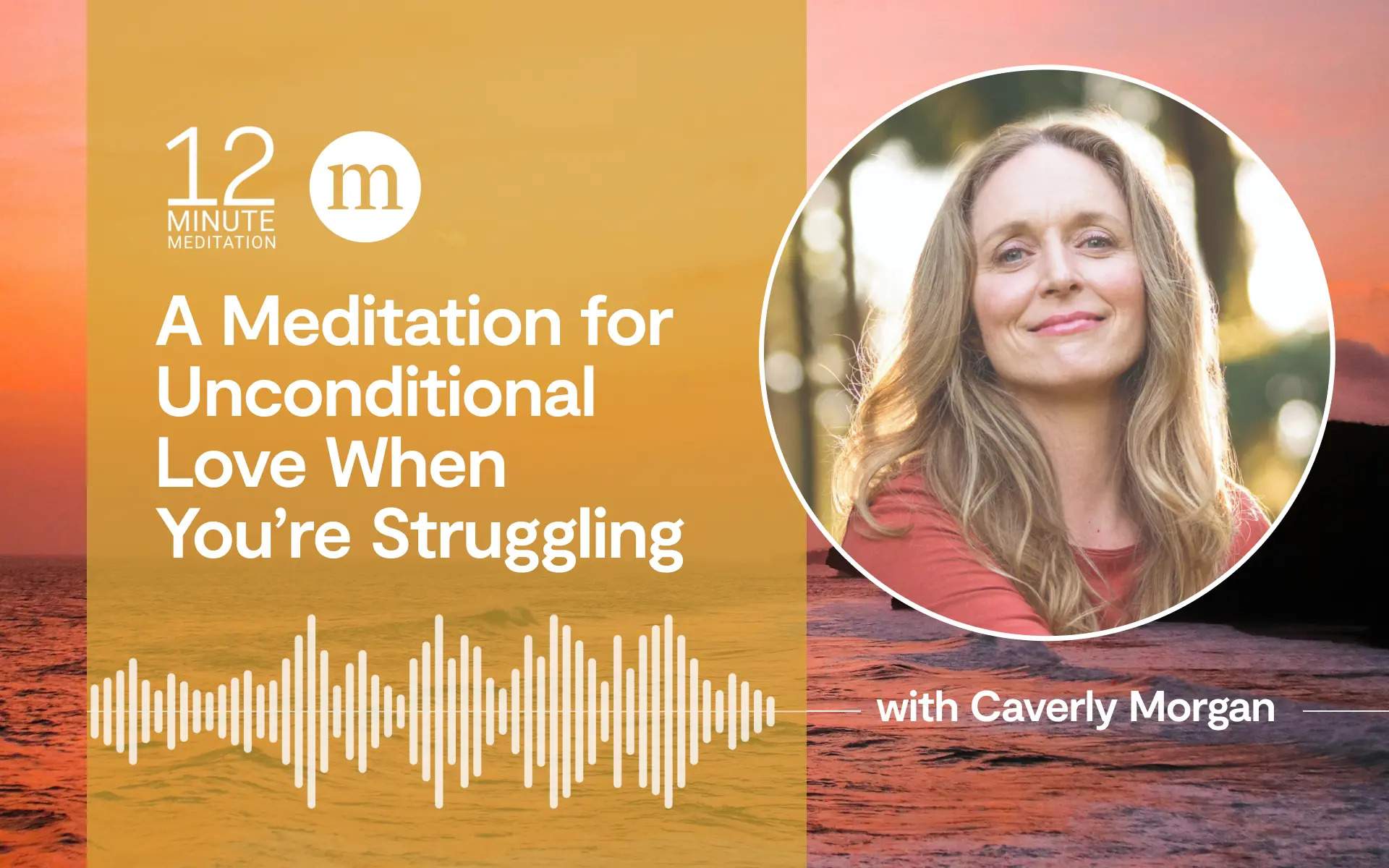
  • A Meditation for Unconditional Love When You’re Struggling

    A Meditation for Unconditional Love When You’re Struggling

    In this guided meditation, Caverly Morgan invites us to move beyond “positive thinking” in difficult moments and instead tap into a deep well of unconditional love for ourselves

    When we’re wrestling with experiences that challenge our identities or our confidence—like failures at work, relationship struggles, or letting go of old belief systems—it can be tempting to reach for positive self-talk that pushes back against the difficult feelings we might be having.

    In today’s guided practice, Caverly Morgan offers something much sturdier, what she calls unconditional reassurances.

    In this practice, we’re not just saying the opposite of what we’re feeling, hoping that it will be true. Rather, it’s about anchoring into a deep-down sense of worthiness and compassion that’s always present, regardless of how well things are going for us or how great we feel about ourselves in any given moment. It’s the difference between saying, Don’t feel bad! You’re the best! and saying, Whether you succeed or you don’t, I love you no matter what.  

    A Meditation for Unconditional Love When You’re Struggling

    Read and practice the guided meditation script below, pausing after each paragraph. Or listen to the audio practice.

    1. I invite you to begin this meditation with three of the longest and deepest inhalations and exhalations you’ve taken yet today. So often we take the breath for granted. Give yourself permission right now to simply enjoy breathing
    2. Picture a moment in your life in which you are struggling. If the scale is one to ten, ten being the greatest struggle you’ve ever known, pick something in the middle. Think of some time, perhaps in your recent past, when you were resisting what is, or seeking a different experience. 
    3. Notice what you were saying to yourself as you were struggling. Or to be even more accurate, what “the judge” was asserting, maybe commanding. Maybe for you there wasn’t any negative self-talk present, or perhaps the voice of the inner critic wasn’t alive in that moment. But for most of us, in moments of struggle the judge is somewhere on the scene. For this contemplation, see if you can get a sense of what’s being said. 
    4. Now see yourself as the one who’s listening to the judge. Really play with this in your imagination. Maybe you even see a young part of you that’s taking this message in. You might even let yourself feel, consciously identifying with this young part of you feeling what they feel. 
    5. From this space, ask, What do I need to hear? What do I need to know? If it’s not this, what is it? 
    6. Now in this struggle, take on the feeling as though you’re drowning, flailing your limbs around. See someone sitting on a dock nearby. Someone that really loves you, knows you, sees you. It might not be a real person in your life. It might be a kind stranger that is walking by the lake and doesn’t want to see you drown. See this person? With a bright, shiny, brand new life preserver in their hand, see them tossing it to you as your arms flail. Let yourself grab on to it. 
    7. If there were messages inscribed on this life preserver, what would the messages be? Perhaps it’s really simple. Like, I’m here. You don’t need to flail around any longer. You can hang on to me. I’ve got you. What phrases light up for you? What sentiments? Touch that unmet need. There’s no right or wrong here. 
    8. What is important is that the sentiments are unconditional. If they were to come in the form of phrases, they’re phrases that have no opposite. For example, they wouldn’t be something like, You’re a winner! Rather, they would be things like, I love you no matter what. 
    9. Take a moment now to say these phrases to yourself. Offer this part of you who’s been struggling unconditional Love. It’s not transactional or based on performance. Offer that now. Really see the part of you that needs to hear these things, needs to know these things. 
    10. If it feels difficult to access unconditional Love in this moment, that is absolutely fine. It’s just not the right moment to touch it. A part of you might be blocking the love. That’s always in the backdrop of our experience, but they can often feel out of reach. See if you can touch this love, this recognition that you are worthy.  
    11. Next, play with the image of releasing the life preserver. Just breathing and floating in the sea of presence. You don’t need to strive. Floating isn’t the byproduct of your hard work and your effort to do this “right.” It is your nature to float, just as it is your nature to love. If you meditate to be a better person, you’ll always be busy trying to be a better person. If you meditate because you’re in love, resting in your own luminous, infinite being in this sea of love, you’ll always be in love. 
    12. For one more full minute, let yourself rest in love. I’ll stop talking now. And if you wish to rest in this way for longer than a minute, I invite you to do so. If you need to move into your day, just give yourself one more minute before doing so. Resting in love. Letting yourself float. Thank you.


    Source link

  • Struggling To Stick To Your Resolutions? It Takes At Least Two Months To Build A Habit

    Struggling To Stick To Your Resolutions? It Takes At Least Two Months To Build A Habit

    As January comes to an end, many of us may be struggling to stick to our New Year’s resolutions. But don’t give up just yet. Researchers say it takes not just 21 days but at least two months to turn a new habit into part of your routine.

    A new study from the University of South Australia (UniSA) challenges the common belief that habits form in just 21 days. The researchers examined how long it takes to establish health-related habits, such as exercise, drinking water, taking vitamins, and flossing. The results of the meta-analysis that evaluated 20 studies conducted between 2008 and 2023, involving over 2,600 participants revealed that it typically takes around two months — and in some cases, nearly a year.

    The study noted that while certain health habits took a median time of 59-66 days, some may take as long as 335 days. “Sometimes we found that the simple behaviors, (like) if someone wanted to start flossing each day, might take someone a week to get into their routine, but more complex behaviors such as changing someone’s diet and physical activity can take a lot longer,” Ben Singh, co-author of the study told CNN.

    Singh also noted that people looking to build healthy habits, such as eating better or exercising more, may have greater success if they practice them in the morning when motivation tends to be higher.

    The researchers believe that the current findings would help “people set realistic expectations” about habit formation, encouraging them to stay committed even if progress feels slow.

    The idea that habits form in 21 days traces back to plastic surgeon Maxwell Maltz, who observed that his patients, whether recovering from nose jobs or amputations, typically needed about 21 days to adjust to their new appearance. This led to the theory that people in general would take the same period to adopt a new behavior.

    “There is the possibility that it will put people off and maybe discourage them and demotivate them. (But) some people (who) may think that it’s going to take them 21 days, but then after 21 days they’re still struggling, then at least this research and this evidence provides people with some realistic benchmarks that they can follow,” Singh noted.

    Source link

  • Struggling To Sleep Due To Stress? Doc Shares Tips To Calm Your Mind Before Bed

    Struggling To Sleep Due To Stress? Doc Shares Tips To Calm Your Mind Before Bed

    Job stress, relationship anxieties, financial worries, and looming deadlines, all these worrying thoughts can leave your mind racing, making it difficult to get a restful night’s sleep. Want to know how to calm your mind? Well, deal with these thoughts head-on, so that they don’t follow you to bed.

    According to a board certified physician and certified sleep specialist, Dr. Angela Holiday Bell, also known as “the sleep_md” on social media, the secret to calming your mind before sleep is not avoiding these thoughts, but addressing them during a scheduled “worry time”.

    “Stress triggers cortisol, the fight or flight hormone which keeps your brain awake and makes it harder to fall asleep,” Dr. Bell wrote on her Instagram page, sharing practical hacks for calming the mind before bed.

    “Stress can steal your sleep, but these tips can help you take control,” Dr Bell wrote.

    Schedule a ”worry time”:

    Dr. Bell suggests a simple but effective technique to manage your worries: schedule a “worry time.” Set aside 10 to 15 minutes during your day to write down your racing thoughts. This allows you to unload your stress before it crowds your mind at bedtime. The key is the timing, make sure this worry session happens well ahead so that by the time you get into bed, you will have already “offloaded” your concerns, Dr.Bell explained.

    Adopt a breathing technique:

    While most breathing exercises are effective for calming the mind, Dr. Bell offers a quick and simple 4-7-8 technique for those short on time. In just seconds, this method can help you relax and drift into restful sleep.

    “Breathe in for 4 seconds, hold for 7 seconds and exhale for 8 seconds. This technique lowers your heart rate and relaxes your nervous system,” she wrote in her Instagram post.

    Set a Bedtime Winds Down Alarm:

    Setting up a consistent sleep schedule is often the first step specialists recommend for improving poor sleep. Dr. Bell advises setting an alarm as a nightly reminder to prepare for bedtime, ideally 30 to 60 minutes before your scheduled sleep time. This signals your brain that it’s time to wind down. Use this time for calming activities like breathing exercises or progressive relaxation techniques to help your body transition into a restful state.


    Source link

  • Struggling With Hunger During Weight Loss? High-Intensity Workouts Could Be The Key

    Struggling With Hunger During Weight Loss? High-Intensity Workouts Could Be The Key

    Managing hunger pangs can sometimes be difficult for those struggling to lose weight while on exercise and weight loss programs. Researchers now suggest engaging in high-intensity workouts may help curb hunger more than moderate exercise, particularly in women.

    In the study published in the Journal of the Endocrine Society, researchers investigated the effects of exercise intensity on ghrelin, a hormone that regulates satiety and feelings of hunger.

    “We found that high-intensity exercise suppressed ghrelin levels more than moderate intensity exercise. In addition, we found that individuals felt ‘less hungry’ after high intensity exercise compared to moderate intensity exercise,” said Kara Anderson, study author in a news release.

    Higher levels of ghrelin are associated with increased appetite. Ghrelin works in two molecular forms to regulate appetite: acylated (AG) and deacylated (DAG). Earlier studies have investigated the impact of exercise on these two forms of ghrelin, but most of them were limited to men.

    In the latest study, the researchers used eight male and six female participants to investigate how the impact affects men and women differently.

    Participants fasted overnight and then completed exercises at varying intensity levels. Blood lactate measurements and appetite levels, as reported by the participants, were taken.

    The results suggest that, although total ghrelin levels were initially higher in females than in males, there was a significant reduction in AG levels following intense exercise only among women.

    However, the researchers note that, because the study was based on a small sample size of female participants, the ability to assess the differences in impact between sexes may be limited.

    “Collectively, the results of the present study strengthen data on the role of high-intensity exercise in the reduction ghrelin and hunger. All isoforms of ghrelin may be associated with perception of hunger; however, more work is needed to determine if the relationship differs by sex,” the researchers wrote.

    “Exercise should be thought of as a ‘drug,’ where the ‘dose’ should be customized based on an individual’s personal goals. Our research suggests that high-intensity exercise may be important for appetite suppression, which can be particularly useful as part of a weight loss program,” Anderson said.

    Apart from appetite regulation, ghrelin is also crucial for other functions including energy balance, appetite, glucose homeostasis, immune function, sleep, and memory.

    Source link