Tag: sperm

  • Nuts, Sperm, and Sex: The Surprising Connection

    Nuts, Sperm, and Sex: The Surprising Connection

    Walnuts, almonds, and hazelnuts are put to the test for erectile and sexual function, sperm count, and semen quality.

    In 2013, I posted a video based on a study that found that men with erectile dysfunction who ate 100 grams of pistachios (a little more than three handsful) a day for three weeks had “a significant improvement in erectile function.” It’s always nice to see a whole-food intervention have clinical effects, and I was curious to revisit the topic and see what’s been published since.

    Even if you ignore all the lab animal studies on hazelnuts improving the function of rat testicles—really, there’s a study titled “Hazelnut Consumption Improves Testicular Antioxidant Function and Semen Quality in Young and Old Male Rats”—you still never know what you’ll find searching the medical literature for nuts and sexual function. I found “a case of penile strangulation with a metal hex nut” in which someone put one on his penis “for sexual pleasure” but couldn’t remove it. (I guess some kinds of nuts can sometimes make things worse.) They tried the Dundee technique, which involves creating 20 puncture holes to relieve the pressure, but that didn’t work, so then they tried a diamond disk cutter. It slipped a few times, but the hex nut was successfully removed. All’s well that ends well.

    That got me curious. Evidently, penile entrapment is so common that there is an entire grading system that emergency room doctors can use, as you can see here and at 1:21 in my video Mixed Nuts Put to the Test for Erectile Dysfunction. If a drill isn’t available, the surgeons advised, “a hammer and chisel may be used to remove nuts.”

    A drill? Oh, they mean a dental drill. Doctors describing one case bragged about the “precisely cut edges,” but it looks pretty jagged to me. You can see for yourself below and at 1:38 in my video.

    To “preserve the penis from fatal outcomes” (that’s a strange way to put it), urologists should be aware of all the available tools and approaches, and if you don’t know how to operate the saw, you can always call in the local blacksmith—but only if “special consent [is] taken from the patient”!

    But how are you going to remove an iron barbell or steel sledgehammer head? “With a heavy-duty air grinder provided by the fire department,” requiring six hours of cutting and fire coats to protect the patient from the sparks. Use whatever it takes—hack saw, “cement eater.” You can even use the silk winding method pioneered by Dong et al.

    Back to the task at hand! Consuming “at least one serving of vegetables a day and more than two servings of nuts a week was associated with a more than 50% decrease in the probability of ED” [erectile dysfunction] in a snapshot-in-time cross-sectional study. But such observational studies can’t prove cause and effect. It’s like finding that men who eat healthier have better sperm motility. Maybe men who eat nuts are just health nuts, and the improvement is due to some other factor, like exercise. What we need is an interventional trial.

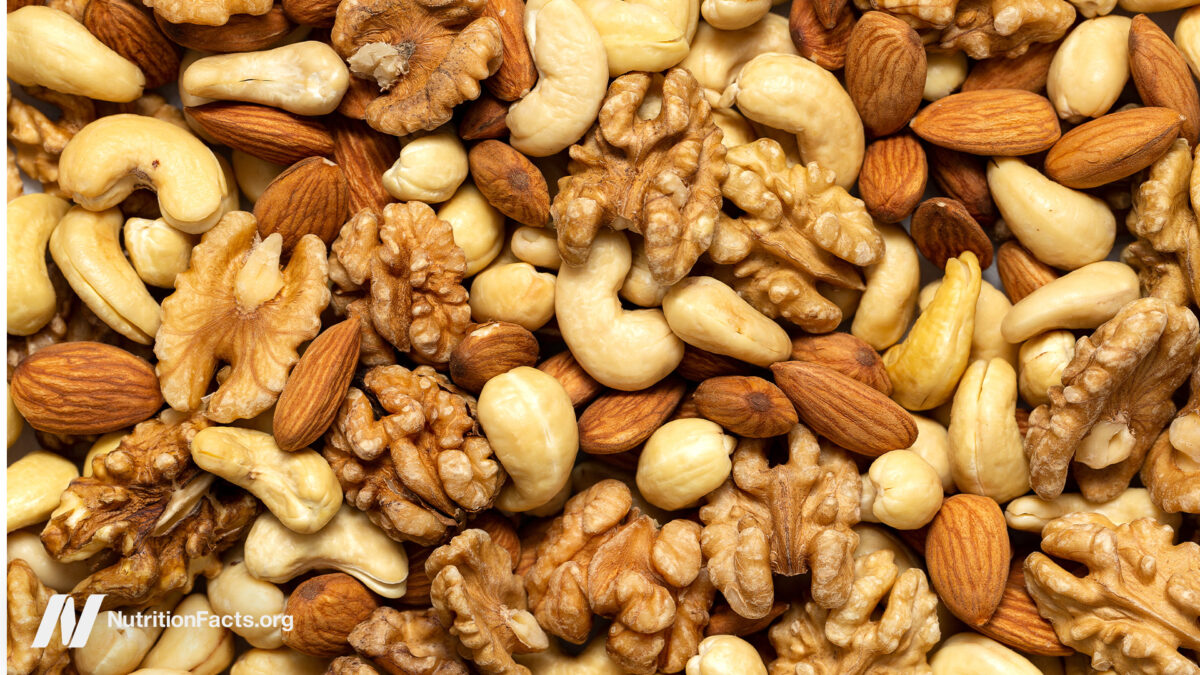
    And there is one: a randomized controlled trial studied the “effect of nut consumption on semen quality and functionality.” Healthy men were fed the standard American diet with or without a mixture of nuts—a handful (30 grams) of walnuts and half a handful (15 grams) each of almonds and hazelnuts. Individuals in the nut group experienced significant improvements in their total sperm count, vitality, motility, and shape, perhaps because those “in the nut group showed a significant reduction in SDF”—sperm DNA fragmentation. The nuts appeared to protect their sperm DNA. It’s too bad that the researchers didn’t measure the men’s erectile and sexual dysfunction while they were at it. Oh, but they did!

    What is the effect of nut consumption on erectile and sexual function from that same study? The researchers report that those in the nut group saw a significant increase in orgasmic function and sexual desire, but what about erectile function? Any time you see this kind of selective glass-half-full reporting, you suspect some kind of industry funding, and, indeed, that was the case here; the study was partially funded by the International Nut and Dried Fruit Council. Yes, there was a marginal increase in orgasmic function and sexual desire of questionable clinical significance, but there was no improvement in erectile function, intercourse satisfaction, or overall satisfaction. As with so many comparisons, even the so-called significant findings may not even be statistically significant.

    But why did the pistachios I talked about back in 2013 work, while these other nuts didn’t? Well, the original study was done on men mostly in their 40s and 50s who already had chronic erectile dysfunction for at least one year, whereas the average age of participants in the newer study was 24. So, the individuals in the later study may have started out with near-maximum circulation, not leaving much room for the nuts to work any magic.

    Doctor’s Note

    Sorry for that crazy tangent! I just wanted to give people a taste of what it can be like when you dive deep into the medical literature.

    The 2013 video I mentioned is Pistachio Nuts for Erectile Dysfunction.

    What about walnuts for arterial blood flow? See Walnuts and Artery Function.

    More on fertility and sexual function in the related posts below.

    Source link

  • Essential Foods, Habits & Conditions That Boost Sperm Health and Combat Infertility in Men

    Essential Foods, Habits & Conditions That Boost Sperm Health and Combat Infertility in Men

    Understanding male fertility is important for those seeking to optimize reproductive health or address infertility in men. Sperm health, which refers to the quality, quantity, and motility of sperm, plays a crucial role in fertility. Various foods, lifestyle habits, and medical conditions can significantly influence male fertility outcomes. This article covers essential male fertility tips, key dietary components, lifestyle factors, conditions impacting sperm health, and insights on supplements.

    Foods That Improve Male Fertility

    A balanced diet plays an essential role in maintaining and improving sperm health, according to the National Institutes of Health. Nutrients with antioxidant properties, such as vitamins C, E, and D, protect sperm from oxidative damage. Zinc and selenium are critical minerals linked to sperm production and hormone regulation. Foods rich in these nutrients include citrus fruits, berries, leafy greens, nuts (like walnuts), lean meats, fish, and shellfish.

    A Mediterranean-style diet with abundant fruits, vegetables, whole grains, olive oil, and fish has shown benefits for fertility, while diets high in processed foods and saturated fats can adversely affect sperm quality. Incorporating omega-3 fatty acids found in fatty fish or flaxseeds also supports sperm membrane health and motility.​

    Habits Influencing Sperm Health

    Regular moderate exercise is beneficial, as physical activity raises testosterone levels and improves semen quality. However, excessive intense exercise may have the opposite effect and reduce sperm counts. Avoiding smoking and limiting alcohol consumption are strongly recommended since both smoking and heavy drinking impair sperm concentration and motility.

    Managing stress is another important factor because high stress levels can disrupt hormone balance and reduce sperm production; techniques like meditation and mindfulness can be helpful. Maintaining a healthy body weight with a normal BMI is crucial since overweight and obesity correlate with lower fertility rates in men.​

    Conditions and Factors Impacting Male Fertility

    Several medical and health conditions can compromise sperm health. Erectile dysfunction and low libido may hinder conception efforts and reflect underlying hormonal imbalances. Sexually transmitted infections (STIs) can damage reproductive organs and interfere with sperm production; regular testing and treatment are vital for sexually active men.

    Hormonal disorders, especially low testosterone, directly affect sperm synthesis. Chronic illnesses, genetic disorders, and exposure to environmental toxins further contribute to infertility in men. Men facing persistent fertility challenges should seek evaluation by healthcare professionals to identify and address specific causes.​

    Male Fertility Supplements: What Science Says

    Supplements marketed to improve male fertility and sperm health often promise quick fixes, but scientific evidence supporting their effectiveness remains mixed and limited. Reviews of popular male fertility supplements show that only a minority of ingredients have solid evidence from randomized controlled trials proving benefits on sperm parameters such as count, motility, morphology, or DNA integrity.

    Ingredients with the most support include L-carnitine, Coenzyme Q10, vitamins C and E, zinc, and selenium. However, some studies found that supplementation does not necessarily improve fertility outcomes like live birth rates and in some cases may increase sperm DNA fragmentation. Experts often recommend obtaining these nutrients through a balanced diet rather than supplements unless prescribed by a healthcare provider. More well-designed research is needed, and men should approach supplements cautiously, focusing on evidence-based lifestyle changes for best results.​

    In summary, male fertility depends on a combination of diet, habits, and underlying health conditions. Following comprehensive male fertility tips such as eating nutrient-rich foods, exercising moderately, avoiding harmful substances, managing stress, and addressing medical conditions can lead to improved sperm health and reduced infertility risks, as per the World Health Organization. Supplements may have a role but currently lack robust evidence for broad recommendation. Seeking medical advice is important if fertility issues persist despite lifestyle changes. This approach promotes not only reproductive success but overall well-being as well.

    Frequently Asked Questions

    1. How accurate are genetic tests in diagnosing male infertility?

    Genetic testing can identify causes of infertility in about 10-15% of men, especially when sperm count is extremely low or absent. However, genetic tests are not definitive for all cases and are typically used alongside semen analysis and hormone testing to provide a clearer picture of reproductive health. The interpretation of genetic test results still requires expert clinical correlation.​

    2. What is the role of sperm DNA fragmentation testing in fertility evaluation?

    Sperm DNA fragmentation tests measure DNA damage in sperm and can offer additional insight beyond standard semen analysis. While a high level of DNA fragmentation may be linked to reduced fertility and poorer assisted reproductive technology outcomes, its predictive value is still debated. Not all clinics use these tests routinely, and results are best interpreted by fertility specialists.​

    3. Can environmental toxins and pollutants affect male fertility?

    Yes, exposure to environmental toxins such as pesticides, heavy metals, radiation, and endocrine-disrupting chemicals can negatively impact sperm quality and quantity. Limiting exposure by using protective equipment, avoiding polluted areas, and making lifestyle adjustments can help mitigate these effects, although complete avoidance is often challenging.​

    4. How does age affect male fertility and sperm health?

    While men can produce sperm throughout life, advancing age is associated with gradual declines in sperm motility, volume, and an increase in DNA damage. Older paternal age has also been linked to a higher risk of genetic abnormalities in offspring. Maintaining healthy lifestyle habits becomes increasingly important with age to support sperm health.


    Source link