Tag: Safely

  • How Refusing to Join the Old Farts Club Helped Me Drive Safely at Night Again

    How Refusing to Join the Old Farts Club Helped Me Drive Safely at Night Again

    Product Name: How Refusing to Join the Old Farts Club Helped Me Drive Safely at Night Again

    Click here to get How Refusing to Join the Old Farts Club Helped Me Drive Safely at Night Again at discounted price while it’s still available…

    All orders are protected by SSL encryption – the highest industry standard for online security from trusted vendors.

    How Refusing to Join the Old Farts Club Helped Me Drive Safely at Night Again is backed with a 60 Day No Questions Asked Money Back Guarantee. If within the first 60 days of receipt you are not satisfied with Wake Up Lean™, you can request a refund by sending an email to the address given inside the product and we will immediately refund your entire purchase price, with no questions asked.

    (more…)

  • How Treatment Is Safely Started and Supported

    How Treatment Is Safely Started and Supported

    Seeking mental health support no longer has to involve long wait times or uncomfortable appointments. As telehealth continues to expand across the United States, online care platforms like Nurx are helping people access mental health support in a way that feels more personal, private, and flexible, without compromising safety or clinical oversight.

    Designed to meet people where they are, Nurx offers a fully online approach that allows individuals to request care, connect with licensed medical providers, and receive ongoing support from home. For many, this model makes it easier to take the first step toward feeling better and maintaining emotional well-being.

    Starting Care Online Begins With a Thoughtful Intake Process

    Mental health care through Nurx begins with a comprehensive online consultation. Patients complete a detailed intake that covers symptoms, medical history, current medications, and lifestyle factors. This process helps ensure care is tailored to each individual’s needs rather than applying a one-size-fits-all approach.

    All information is reviewed by a licensed medical provider authorized to prescribe in the patient’s state. If responses indicate that online care may not be appropriate, patients are guided toward other care options. This screening step reflects established medical safety practices and helps ensure people receive the right level of support.

    Personalized Treatment Led by Licensed Medical Providers

    Once a consultation is reviewed, a licensed medical provider determines whether treatment can be safely initiated through telehealth. Care plans are developed based on evidence-based practices and adjusted over time as needed.

    Nurx focuses on personalized care, recognizing that mental health experiences vary widely. Treatment decisions are guided by the individual’s health history, goals, and how they’re feeling with ongoing check-ins built into the process to support long-term well-being.

    Medication Support With Safety at the Forefront

    When medication is part of a care plan, prescribing follows the same regulatory standards required for in-person care. Providers comply with state and federal guidelines, and not all medications are eligible for online prescribing, reflecting safety-first protocols.

    Patients receive clear guidance on how to use their treatment, what to expect, and when to reach out with questions. Orders are fulfilled through licensed pharmacies and shipped in discreet packaging, helping protect privacy while removing the need for in-person pharmacy visits.

    Ongoing Monitoring Without Extra Appointments

    Unlike traditional models that rely on infrequent office visits, online mental health care emphasises continuous support. Through the Nurx app, patients can message their medical team with questions, share updates, and discuss how they’re feeling without scheduling new appointments or making phone calls.

    Licensed medical providers proactively check in to monitor progress and make adjustments when appropriate. This ongoing connection allows concerns to be addressed early and helps patients feel supported throughout their care journey.

    Making Mental Health Care More Accessible and Affordable

    Access and affordability remain major barriers to mental health support. Nurx aims to reduce these obstacles by offering transparent pricing and insurance-friendly options. For some patients with insurance, care may cost as little as $0. Even without insurance, affordable treatment options are available.

    Importantly, more than two-thirds of Nurx mental health patients report a significant reduction in symptoms, highlighting how timely access and consistent support can make a meaningful difference in quality of life.

    Privacy, Convenience, and Care on Your Terms

    For many people, privacy and convenience are essential when seeking mental health support. Nurx operates under strict healthcare privacy standards, with secure digital systems and encrypted communications. Medications are delivered discreetly, and all care happens on the patient’s schedule.

    By eliminating waiting rooms, commutes, and unnecessary barriers, Nurx creates a supportive environment where seeking help feels manageable and stigma-free.

    Understanding What Online Mental Health Care Can — and Can’t — Do

    Online mental health care is not intended for every situation. Severe emergencies or cases requiring intensive supervision may still require in-person treatment. Responsible telehealth providers clearly define these limits and prioritise patient safety above convenience.

    For many people, however, online care offers a practical and empowering way to begin managing anxiety, depression, sleep concerns, seasonal mood changes, and other mental health challenges with professional oversight.

    Supporting Well-Being Through Modern Care Models

    As awareness of mental health continues to grow, platforms like Nurx demonstrate how technology can expand access without sacrificing safety or quality. By combining faster intake, licensed medical provider review, and ongoing monitoring, online mental health care helps more people get the support they deserve, when and where they need it.

    When delivered responsibly, telehealth offers a meaningful path toward improved mood, greater resilience, and a better quality of life.

    Source link

  • Boosting Your Metabolism Safely 

    Boosting Your Metabolism Safely 

    If you drink two cups of water, the adrenal hormone noradrenaline can surge in your bloodstream, similar to the response of smoking a few cigarettes or having a few cups of coffee.

    Given the 60 percent surge in noradrenaline within minutes of drinking just two cups of water, as shown in the graph below and at 0:13 in my video What Is the Safest Metabolism Booster?, might one be able to get the weight-loss benefits of noradrenaline-releasing drugs like ephedra—without the risks? You don’t know until you put it to the test. Published in the Journal of the Endocrine Society, the results were described as “uniquely spectacular.” Researchers found that drinking two cups of water increased the metabolic rate of men and women by 30 percent. The increase started within ten minutes and reached a maximum within an hour. In the 90 minutes after drinking one tall glass of water, the study participants burned about an extra 25 calories (100 kJ). Do that four times throughout the day, and you could eliminate 100 additional calories (400 kJ). That’s more than if you had taken ephedra! You’d trim off more calories drinking water than taking weight-loss doses of the banned substance ephedrine (the active component of ephedra) three times a day. And we’re just talking about plain, cheap, safe, and legal tap water.

    Using the Ten-Calorie Rule I’ve explained previously, drinking that much water could make us lose ten pounds over time unless we somehow compensated by eating more or moving less. Concluded one research team, “In essence, water drinking provides negative calories.

    A similar effect was found in overweight and obese children. Drinking about two cups of water led to a 25 percent increase in metabolic rate within 24 minutes, and it lasted at least 66 minutes, until the experiment ended. So, just getting the recommended daily “adequate intake” of water—about 7 cups (1.7 L) a day for children aged 4 through 8, and for ages 9 through 13, 8 cups (2.1 L) for girls and 10 cups (2.4 L) for boys, as shown below and at 1:45 in my video—may offer more than just hydration benefits. 

    Not all research teams were able to replicate these findings, though. For example, one found an increase of only about 10 to 20 percent, while another found only a 5 percent increase, and yet another team found effectively none at all. What we care about, though, is weight loss. The proof is in the pudding. Let’s test the waters, shall we?

    Some researchers suggest that the “increase in metabolic rate with water drinking could be systematically applied in the prevention of weight gain….” Talk about a safe, simple, side-effect-free solution. It’s free in every sense. Drug companies may spend billions of dollars getting a new drug to market. Surely a little could be spared to test something that, at the very least, couldn’t hurt. That’s the problem, though. Drinking water is a “cost-free intervention.”

    There are observational studies suggesting that those who drink four or more cups (1 L) of water a day, for example, appear to lose more weight, independent of confounding factors, such as drinking less soda or exercising more. What happens when you put it to the test?

    In 2013, “Effect of ‘Water Induced Thermogenesis’ on Body Weight, Body Mass Index and Body Composition of Overweight Subjects” was published. Fifty “overweight girls”—who were actually women, aged 18 to 23—“were instructed to drink 500 ml [2 cups] of water, three times a day, half an hour before breakfast, lunch, and dinner, which was over and above their daily water intake” and without otherwise changing their diets or physical activity. The result? They lost an average of three pounds (1.4 kg) in eight weeks. What happened to those in the control group? There was no control group, a fatal flaw for any weight-loss study due to the “Hawthorne effect,” where just knowing you’re being watched and weighed may subtly affect your behavior. Of course, we’re just talking about drinking water. With no downsides, why not give it a try? I’d feel more confident if there were some randomized, controlled trials to really put it to the test. Thankfully, there are!

    I hate it when the title ruins the suspense. “Water Consumption Increases Weight Loss During a Hypocaloric Diet Intervention in Middle-Aged and Older Adults.” Overweight and obese men and women randomized to two cups of water before each meal lost nearly five pounds more body fat in 12 weeks than those in the control group, as shown below and at 4:08 in my video. Both groups were put on the same calorie-restricted diet, but the one with the added water lost weight 44 percent faster.

    A similar randomized controlled trial found that about 1 in 4 in the water group lost more than 5 percent of their body weight compared to only 1 in 20 in the control group. The average weight-loss difference was only about three pounds (1.3 kg), but those who claimed to have actually complied with the three-times-a-day instructions lost about eight more pounds (4.3 kg) compared to those who only drank the extra water once a day or less. This is comparable to commercial weight-loss programs, like Weight Watchers, and all the participants did was drink some extra water. 

    The video I mentioned is The New Calories per Pound of Weight Loss Rule.

    If you missed my previous video, see The Effect of Drinking Water on Adrenal Hormones.

    For all the specifics, check out Optimizing Water Intake to Lose Weight, coming up next. 


    Source link

  • Can We Safely Use Melamine Dishes and Polyamide Plastic Utensils?

    Can We Safely Use Melamine Dishes and Polyamide Plastic Utensils?

    I recommend glass, ceramic, porcelain, or stainless steel tableware and wooden or stainless steel cooking utensils.

    Melamine is used to make a variety of hard plastic “food contact items such as cups, plates, bowls, and utensils because they are dishwasher safe, inexpensive, and durable.” If that word sounds familiar, it may be because melamine has also been added illegally to protein products to game the system to make it appear that “food commodities” like pet food contain more protein than they actually do. By 2007, more than a thousand potentially contaminatedpet food products were recalled after “the chemical was found to be a contaminant in wheat gluten used in those products,” but not before it caused disease and death in pets throughout North America. 

    “It is presumed that melamine was intentionally added by suppliers in China to falsely elevate the measured protein content and, hence, the monetary value of these products.” The pet food scandal was just the writing on the wall. The following year, “melamine was discovered to be the cause of an outbreak of urinary tract stones and renal failure” (kidney stones and kidney failure), affecting hundreds of thousands of infants and young children throughout China. “Investigations revealed that the compound was added illegally to powdered milk and baby formulas to falsify protein content.” 

    As I discuss in my video Are Melamine Dishes and Polyamide Plastic Utensils Safe?, in the United States, you can find it in food packaging and sneaking its way into animal feed. However, those using melamine dishware can be exposed directly, as it migrates straight into the food upon exposure to heat. In fact, “cooking spoons and crockery made of melamine resin are not suited for microwaves and cooking,” according to food safety authorities. Okay, but what if you never cook with it, fry with it, or microwave it? What if you just use melamine to eat out of? 

    In “A Crossover Study of Noodle Soup Consumption in Melamine Bowls and Total Melamine Excretion in Urine,” researchers measured the amount of melamine flowing through the study subjects’ bodies compared to eating the same soup out of ceramic bowls. Their findings? “Melamine tableware may release large amounts of melamine when used to serve high-temperature foods”—and not even hot foods. “Melamine migration can be detectable from daily-use melamine-made tableware, even in the low temperatures,” like just warm water. Why do we care? Because the level of melamine you’re exposed to “is significantly associated with kidney function deterioration in patients with early-stage CKD,” chronic kidney disease, in which even relatively “low melamine levels may cause a rapid decline in kidney function.” So, I would suggest glass, ceramic, porcelain, or stainless steel tableware instead. 

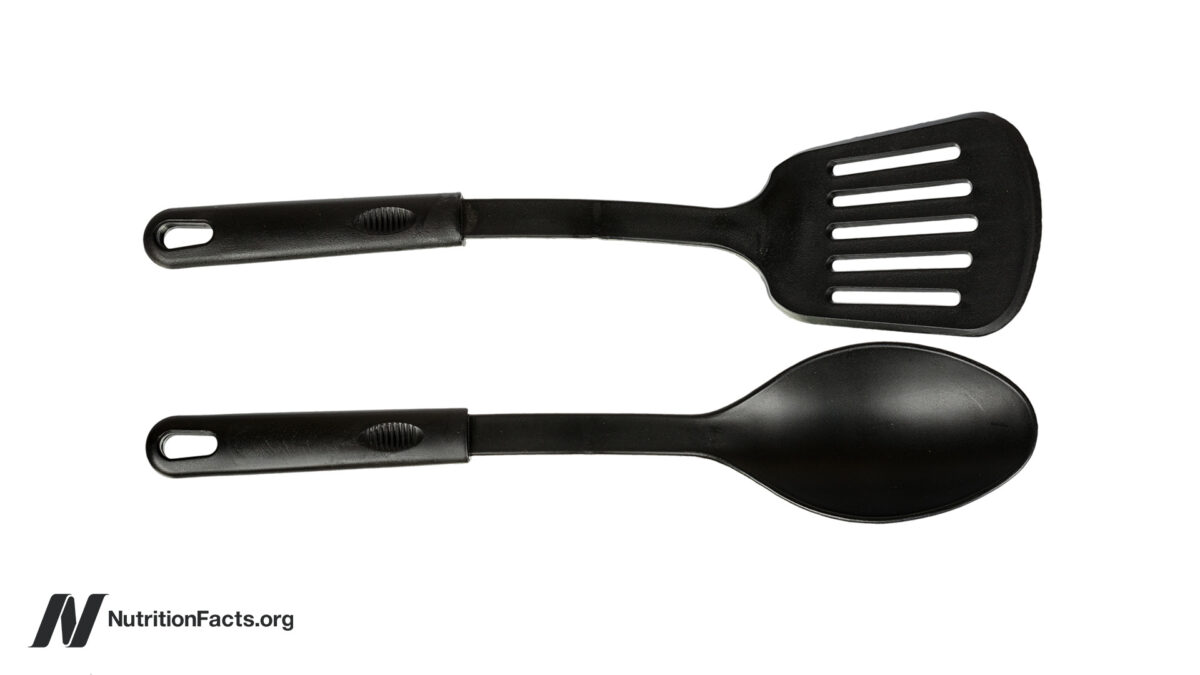
    What about polyamide utensils, common black plastic spoons, spatulas, and the like? All sorts of different plastic materials are used in kitchen utensils. Polyamide is “typically used for turners [spatulas] or ladles due to their high heat and oil resistance.” “However, components of this plastic can migrate from the utensils into the food and consequently be ingested by consumers.” Out of 33 utensils tested, nearly 1 in 3 exceeded the upper safety limit. The German Federal Institute for Risk Assessment “recommends that consumers keep contact with food as brief as possible when using PA [polyamide] kitchen gadgets, especially at high temperatures,” such as above the temperature at which we may drink hot tea or coffee. 

    A different survey of black plastic kitchen utensils found about a third contaminated with flame retardant chemicals. Why? Because it may be made from plastic recycled from electronic equipment that was impregnated with the stuff. Then, should you dip the polyamide utensil into oil, the chemicals can trickle out, suggesting that using such “utensils for frying may lead to considerable dietary exposure.”

    The black dye itself in some polyamide utensils can leach out, too. Eventually, with enough use, the levels drop, but it may take the equivalent of boiling the utensils for about a hundred hours before the dye leaking approaches safety levels. It’s probably just easier to use utensils that are wooden or stainless steel.

    This is the last in a three-part series of cookware videos. If you missed the others, check out Are Aluminum Pots, Bottles, and Foil Safe? and Stainless Steel or Cast Iron: Which Cookware Is Best? Is Teflon Safe?.

    It may not be safe to microwave melamine, but what about microwaving in general? See Are Microwaves Safe? and The Effects of Radiation Leaking from Microwave Ovens


    Source link

  • Can We Safely Use Aluminum Foil, Bottles, and Pots? 

    Can We Safely Use Aluminum Foil, Bottles, and Pots? 

    DNA damage is assessed in users of aluminum cookware.

    “Over the last decades, the toxicity of aluminum for humans has been heavily discussed and is still not completely clarified.” Those occupationally exposed to aluminum—for instance, in smelter plants—suffer from oxidative stress and free radicals that can damage their DNA. What about just using aluminum cookware? Articles like “Metal Exposures from Aluminum Cookware: An Unrecognized Public Health Risk in Developing Countries,” suggesting an “unrecognized public health risk,” were limited to the developing world where “cookware is made in informal shops by casting liquid aluminum melted from a collection of scrap metal,” including the likes of vehicle radiators, lead batteries, and computer parts, which is how you can get so much lead leaching into people’s food. 

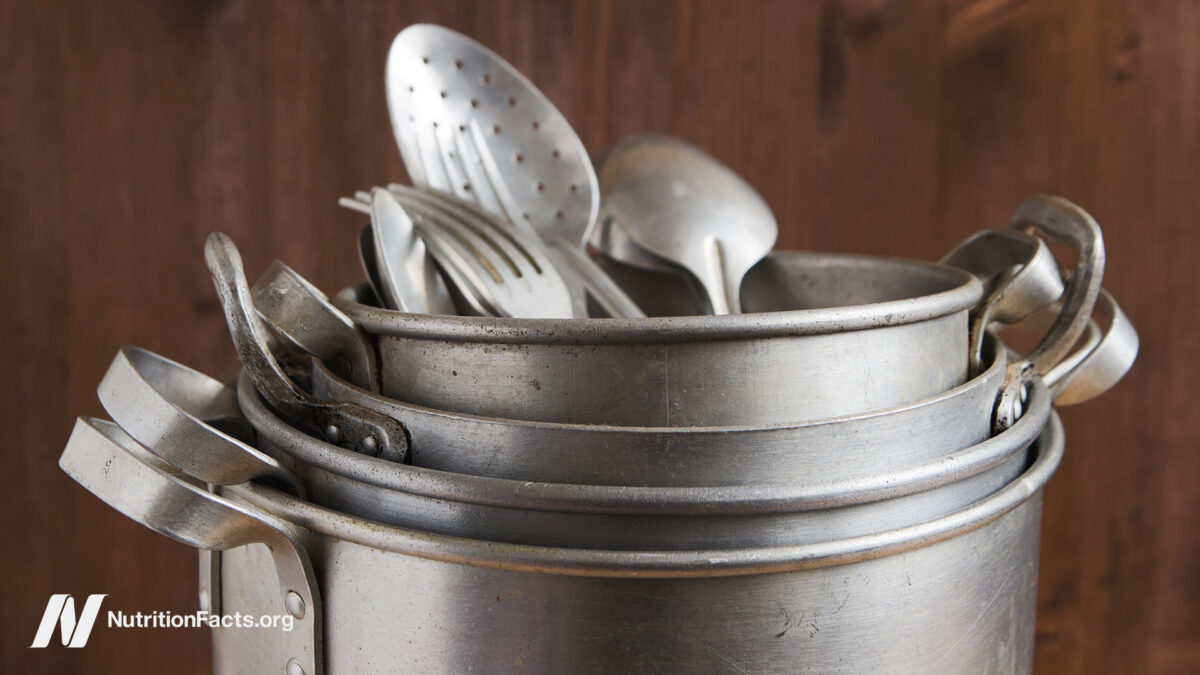
    Then “The Relationship Between Plasma Aluminum Content, Lymphocyte DNA Damage, and Oxidative Status in Persons Using Aluminum Containers and Utensils Daily” was published, suggesting that aluminum itself may be harmful. Most of our aluminum exposure comes from processed junk food containing aluminum additives, “including those within some processed cheeses, baking powders, cake mixes, frozen dough, and pancake mixes.” However, about 20 percent of the daily intake of aluminum may come from aluminum cooking utensils, such as “pans, pots, kettles, and trays.” 

    Might this cause a problem? Researchers took blood from consumers who used aluminum cookware versus those who did not and found that not only did the aluminum users have twice the level of aluminum in their blood, as you can see below and at 1:33 in my video Are Aluminum Pots, Bottles, and Foil Safe?, but they had more free radical damage of their body fats and proteins. What’s more, the total antioxidant capacity of the bloodstream of those using aluminum cookware was compromised, so they suffered significantly more DNA damage. 

    Indeed, as you can see below and at 1:52 in my video, those with the highest levels of aluminum in their blood tended to suffer significantly more damage to their DNA. No surprise, since “aluminum is considered to be a pro-oxidant agent.”

    These folks weren’t just casually using aluminum pots, though. Specifically, they use them every day to cook and store acidic foods, like yogurt and tomato sauce, which can leach out more aluminum. But, even using “camping dishes,” which tend to be aluminum since it’s so light, for just one week, could greatly exceed the tolerable weekly intake guidelines, especially for children, if you incorporated something acidic, like marinating a fresh catch in lemon juice. Once in a while won’t make much difference, but these findings suggest that you may not want to cook in aluminum day in and day out. 

    What about aluminum drinking bottles? They’re nice and light, but children drinking two cups a day of tea or juice from them could exceed the tolerable aluminum exposure limit. So, out of an abundance of caution, safety authorities like the German Federal Institute for Risk Assessment “recommend that consumers avoid the use of aluminum pots or dishes for acidic or salted foodstuffs such as apple sauce, rhubarb, tomato puree, or salt herring…thus prophylactically avoiding the ‘unnecessary ingestion’ of aluminum.” 

    What about aluminum foil? Wrapping and baking food in aluminum foil is a common culinary practice. The concern is that this could represent “a potentially hazardous source of aluminum in the human diet.” When put to the test, there was leakage of aluminum from the foil to the food, but the amount was so small that it would be more of an issue for small children or those suffering from diminished kidney function. 

    What about just wrapping food in foil to store it in the refrigerator? Only marginal increases in aluminum are seen—except when the food is in contact with the foil and, at the same time, certain other types of metal, such as stainless steel, which is largely iron. That sets up a battery and “can lead to tremendous food aluminum concentrations.” For example, as you can see below and at 4:34 in my video, the aluminum levels in a ham before and after a day coveredin foil are negligible; there’s hardly a bump in the foil-covered ham. But, if that same foil-wrapped ham sits on top of a steel tray or serving plate for a day, the aluminum levels in the ham shoot up.

    Finally, you know how aluminum foil is often glossy on one side and dull on the other? Which would be worse? Fish fillets were baked and grilled both ways, wrapped with the glossy side out versus the dull side out, and no significant difference was found.

    This is the first in a series of three videos on cookware. Stay tuned for Stainless Steel or Cast Iron: Which Cookware Is Best? Is Teflon Safe? and Are Melamine Dishes and Polyamide Plastic Utensils Safe?.

    I’ve discussed aluminum in antiperspirants, food, medications, and tea. Check out the related posts.


    Source link

  • The Ultimate Guide: Building Muscle Mass Safely and Efficiently

    The Ultimate Guide: Building Muscle Mass Safely and Efficiently

    Building muscle mass is a challenging and complex process, but with the right approach, it can be safe and efficient. As a fitness enthusiast or athlete, you’re likely no stranger to the gym, but you might be wondering how to take your training to the next level and achieve the muscle gain you’re looking for. In this guide, we’ll provide you with a comprehensive rundown of the best practices for building muscle mass, as well as some valuable tips and considerations to keep in mind along the way.

    Understanding Muscle Growth: Myth-Busting and Fundamentals

    Before we dive into the nitty-gritty of building muscle, let’s take a step back and explore what’s actually happening when we focus on muscle growth. One of the biggest myths surrounding muscle gain is that we need to constantly increase the amount of weight we’re lifting in order to trigger growth. This couldn’t be farther from the truth. In reality, your muscles are made up of two primary types: slow-twitch and fast-twitch fibers. Slow-twitch fibers are designed for endurance and are responsible for allowing you to perform low-intensity tasks for extended periods of time. Fast-twitch fibers, on the other hand, are capable of generating immense force and power, but are typically used during high-intensity, short-duration efforts.

    When you’re lifting weights, your muscles are constantly adapting to the stress you’re placing on them. As your muscles become accustomed to the demand, they’ll begin to grow in response to the stimulus. This doesn’t necessarily mean that you need to start with tiny weights and gradually increase them. Instead, it’s more about creating progressive overload, which means that each workout is slightly more challenging than the last. This can be achieved through a combination of increasing the weight, reps, sets, or rest time between sets.

    Key Principles for Building Muscle Mass

    So, with the basics out of the way, let’s move on to the key principles that’ll help you build muscle safely and efficiently. Here are a few crucial guidelines to keep in mind:

    • Volume and Frequency: To build significant muscle mass, you’ll need to stimulate your muscles regularly. Aim to train each major muscle group three to four times per week, with three to five sets per exercise. The more volume you’re able to handle, the more your muscles will grow.
    • Progressive Overload: As we touched on earlier, progressive overload is crucial for creating the necessary stimulus for muscle growth. This can be achieved through a combination of increases in weight, reps, sets, and rest time between sets.
    • Proper Form and Technique: It goes without saying that proper form and technique are essential for avoiding injury and effective muscle growth. Make sure to practice each exercise with a focus on slowing down and controlling the weight throughout the full range of motion.
    • Consistency and Patience: Building muscle mass takes time, folks! Don’t expect overnight results, and be prepared to stick to a solid training and nutrition plan for at least three to six months before seeing noticeable gains.

    The Importance of a Balanced Diet

    When it comes to building muscle mass, a balanced diet plays a crucial role in providing your muscles with the necessary building blocks for growth and repair. Here are a few key nutrients to keep in mind:

    • Protein: Your muscles are made up of protein, and they require a consistent supply of amino acids in order to grow and repair. Aim to consume around 1.2 to 1.7 grams of protein per kilogram of bodyweight daily.
    • Carbohydrates: Carbs provide your body with energy, and are essential for fueling your workouts. Aim to consume complex, slow-digesting carbs like oats, brown rice, and sweet potatoes.
    • Healthy Fats: Healthy fats like those found in avocados, nuts, and olive oil are essential for hormone regulation and overall health.

    Sample Meal Plan and Macro Breakdown

    Here’s an example meal plan that incorporates the aforementioned nutrients:

    • Breakfast: Omelette with turkey bacon, spinach, and whole wheat toast (40g protein, 30g carbs, 20g fat)
    • Snack: Apple slices with peanut butter (8g protein, 25g carbs, 16g fat)
    • Lunch: Grilled chicken breast with brown rice and steamed broccoli (40g protein, 40g carbs, 10g fat)
    • Snack: Greek yogurt with berries and almonds (20g protein, 10g carbs, 10g fat)
    • Dinner: Grilled salmon with quinoa and roasted vegetables (40g protein, 30g carbs, 20g fat)

    Common Mistakes to Avoid When Building Muscle Mass

    As much as we’d like to think we’re doing everything right, there are always areas where we can improve. Here are a few common mistakes to avoid when building muscle mass:

    • Overreaching: Don’t push your body too hard, too fast. Start with a manageable training plan and gradually increase volume and intensity over time.
    • Overtraining: Make sure to incorporate rest days and active recovery techniques (like foam rolling and light cardio) to avoid burnout and injury.
    • Poor Nutrition: Stick to a balanced diet and avoid unnecessary supplements and processed foods.

    How to Incorporate Progressive Overload in Your Training

    So, how do you know when it’s time to increase the weight you’re lifting? Here are a few signs it’s time to bump up the heaviness:

    • You’re barely completing the last rep: If you’re struggling to complete the last rep with good form, it’s likely that your muscles have adapted to the stress and it’s time to challenge them further.
    • You’ve stopped feeling sore: If you’re not experiencing soreness or fatigue after your workouts, your muscles may have become too accustomed to the stimulus and it’s time to introduce more challenge.
    • You’ve seen no progress: If you’ve stopped seeing gains in strength or muscle size, it may be time to re-evaluate your training plan and introduce more progressive overload.

    Conclusion

    Building muscle mass is a rewarding and challenging process, but with the right approach and mindset, you can achieve significant results safely and efficiently. Remember to focus on consistency, patience, and progressive overload, and prioritize proper form and technique. Don’t get discouraged if you don’t see instant results – muscle growth is a marathon, not a sprint. Stick to your training and nutrition plan, and you’ll be on your way to building the muscle mass you’ve always wanted.

    Frequently Asked Questions

    Q: How long does it take to build muscle mass?
    A: With consistent training and nutrition, you can see noticeable gains in muscle mass after three to six months.

    Q: Do I need to take supplements to build muscle?
    A: While supplements can be helpful, they’re not necessary for building muscle mass. Focus on proper nutrition and training, and avoid using supplements as a crutch.

    Q: How often should I train my major muscle groups?
    A: Aim to train each major muscle group three to four times per week, with three to five sets per exercise.

    Q: What’s the most important factor for building muscle mass?
    A: Progressive overload is the most important factor in building muscle mass. Make sure to progressively increase the weight, reps, sets, or rest time between sets.

    the-ultimate-guide-building-muscle-mass-safely-and-efficiently

  • How to Safely Play and Win

    How to Safely Play and Win


    Slots games are arguably one of the more popular casino games in existence. They have captured the imaginations of millions of people worldwide who enjoy the thrill of taking a chance that their next spin will be the one that floods their pockets with all the cash they could ever imagine. While slots, like most casino games, tend to be heavily weighted towards lady luck more than anything else, there are a few tips and tricks you can follow that should help to slightly improve your odds. If this sounds right up your street, then you have landed on the right post, as we will explore a few of them that should make it a little bit more likely that you will walk away with some cash in your pocket rather than losing the shirt off your back!

    Research Reputable Online Casinos Carefully

    Before you pull your first level or head online to the first available online casino that pops up in the search results, you really should understand what to look for to ensure that you are playing in a casino that plays by the rules rather than flouting them for its own gain. Your first step is simply observing the site in question and checking for anything that makes it look unappealing or out to take your money as fast as possible. If you see anything untoward, like grammatical errors or poor design quality, or if it isn’t using encrypted protocols, you may have landed upon a site that is on the riskier side of things, and it may be prudent to move elsewhere. 

    Another thing to check is the game selection and how seriously they take slots. Many of the better casinos will have invested significant amounts of money to make sure they have a broad range of slots to appeal to as many customers as possible and keep things fresh. If you check out betflixpro888, you will see that they have a vast range of options for you to engage with, making this sort of site one that will remain fun for longer. Finally, you should explore how they accept payments and what their withdrawal procedures are. If they use sketchy-looking payment processors or have completely crazy withdrawal limits (all casinos will have some kind of limitation, but it should be feasible and not over the top), then moving on to another choice could save you a lot of aggravation.

    Understand Game Rules Before Playing

    You wouldn’t jump behind the wheel of a car before learning how to drive, and you would not invest in a company without first figuring out its fundamentals. The same is true when it comes to slots, and although they may appear simple at first glance, they can be fiendishly tricky to fully grasp. This is where it makes sense to understand the rules before committing to spending your hard-ensured cash, as this will help you to become au fait with the rules for the particular type of slots you want to play and thus reduce your chances of losing. You can achieve this by practicing with a dummy account before using the real things. These accounts allow you to practice by spending fake money in order to really become familiar with and gain a deeper insight into what works and what doesn’t. As we said, luck plays an outsized part in the process, but you are far more likely to lose if you don’t know how to play than if you do. 

    online slot games for maximum payouts. Photo by Joakim Honkasalo via unsplash

    Choose High RTP Slot Games

    Understanding and applying RTP to online slot games may significantly improve your overall experience and possible earnings. RTP stands for “Return to Player,” and it refers to the proportion of all gambled money that a slot machine will pay out to players over time. Essentially, it’s a measure of how much you can expect to get back from a particular game. Slot games with a higher RTP percentage will generally offer better returns to players over the long run, making them a safer and smarter choice for those who are looking to maximize their chances of winning. Choosing high RTP slots means you are selecting games that are designed to give back a higher portion of bets to the players. This doesn’t guarantee you’ll win every time, but it does mean that the odds are slightly tipped more in your favor compared to lower RTP games. For instance, a game with a 94% RTP will return $94 for every $100 wagered on average, which can stretch your bankroll further and provide more opportunities to enjoy and potentially win. 

    slot games. Photo by Ays Be unsplash

    Play Progressive Slots For Bigger Payouts

    If you’re looking to increase your potential winnings while playing slots significantly, progressive slots are an excellent choice. Progressive slots are unique because they have jackpots that grow incrementally every time the game is played but not won. This means a portion of each bet contributes to a continually increasing jackpot, which can result in massive payouts for the lucky winner. The distinct advantage of progressive slots over other types is the potential for huge jackpots that far exceed those of standard slot machines. Whereas traditional slots have fixed payouts, progressive slots lure players with the possibility of winning life-changing sums of money. While the chances of hitting the jackpot on a progressive slot are relatively lower, the excitement and potential rewards can make them worth the gamble for many players.

    Set A Budget And Stick To It

    To safely play and enhance your slot gaming experience, make sure to set a budget and stick to it. Only wager amounts you are comfortable with losing, as the allure of progressive jackpots can sometimes lead to overspending. Remember that while slots can offer substantial rewards, it’s crucial to maintain a responsible approach to your gaming activities to ensure a fun and sustainable experience. If you find yourself on a losing streak, it is always better to step back, regroup, and live to fight another day, so to speak.

    Slots are an extremely popular game for various reasons, but gaining the upper hand over the house takes a bit more effort than signing up for a site and getting going. These tips should help you increase your odds, but always remember that luck will always play a significant role in whether you walk away with a smile on your face or not.

    Source link