The month of April marks Autism Awareness Month, a time to recognize the spectrum. Yet, Amy Trahey, founder of Great Lakes Engineering Group, insists that awareness remains incomplete without understanding. “There is still a lot of work to be done,” Trahey says. “People think they know what autism is, but the reality for families and individuals living with it is far more complex. Awareness without understanding doesn’t help anyone; it needs to come with empathy and support.”
Recent data underscores the scale and urgency of that gap. According to recent studies, approximately 1 in 31 children has been identified with autism spectrum disorder. Although increased diagnosis rates often reflect better screening and broader definitions, Trahey insists that it doesn’t translate into a nuanced understanding of the condition.
For many families, the challenge begins not with the diagnosis itself, but with the weight of assumptions that come with it. “A diagnosis doesn’t come with a roadmap. What you’ve been told, what you’ve heard, what you think autism is, it doesn’t prepare you for what it actually means inside your home,” she explains.
The Trahey Family
Her experience began with Quinn, her eldest son’s diagnosis at two and a half years old, a moment that arrived when she was pregnant with her second child. At the time, she was forced to process clinical information, statistical probabilities, and emotional uncertainty all at once. She learned about the increased likelihood of autism in a second male child, which carried an immense psychological weight. “You hear the probabilities, especially with another boy on the way, and it’s terrifying. You start thinking about worst-case scenarios because that’s what the world has taught you to expect,” she says.
That expectation, she explains, is often built on incomplete or outdated perceptions. In her experience, autism is still too frequently framed through limitation, with less attention given to capability, intelligence, and individuality. Trahey came upon that realization gradually as she began to understand her son beyond the diagnosis itself.
“He is gifted,” she says. “He is brilliant in ways that don’t always come out in traditional communication. People make assumptions because they don’t see it immediately, and if they see what they don’t understand, they label it and miss what’s actually there. Intelligence doesn’t disappear just because expression looks different.”
Communication became one of the earliest and most defining challenges. Like many children on the spectrum, her son initially struggled with verbal expression, creating a disconnect between what he understood and what he could convey. Bridging that gap, she recalls, required structured intervention, including visual communication systems, repetition, and carefully designed routines that translated abstract needs into tangible choices.
Trahey explains, “You break everything down into something manageable. You meet them where they are, and then you build from there. It takes time, patience, and a willingness to learn a different language.”
Progress came in small and meaningful steps, including pointing to indicate a choice instead of withdrawing, using pictures to communicate wants, forming words after long stretches of silence, and gradually holding eye contact longer. “Every small step matters. What looks ordinary to someone else can represent years of work,” she says.
Quinn Trahey
Sensory sensitivities added another layer of complexity. Trahey explains that what feels ordinary to most, like a brightly lit store, a noisy event, or a crowded room, could be overwhelming for her son. Yet instead of sheltering him from these experiences, she chose the path of empowering him, giving him tools to engage with the world in ways that worked for him. Headphones to manage noise or weighted vests to ease anxiety were strategies she believed could help him navigate each situation confidently.
“You don’t remove them from the world; they don’t need that. What they need is just a couple more tools in their toolbox to be able to take the sensory overload,” she adds.
Trahey emphasizes that advocacy is central to creating lasting inclusion. In the early stages, she notes that parents often bear the responsibility of interpreting needs, navigating challenges, addressing misconceptions, and securing the right support. As children grow, she says the focus must shift toward fostering independence, helping them develop the skills to express their own needs and advocate for themselves. “I will always advocate for my son,” she says. “But he also needs to learn how to speak for himself in a way that people can understand. That’s where growth happens.”
Emerging technologies, she notes, are facilitating that self-sufficiency, transforming how individuals on the spectrum navigate communication. “Technology is giving people a voice who didn’t have one before,” she says. “It’s opening doors that were closed for a long time.”
Tools such as AI-assisted platforms and other assistive technologies can help those who struggle with verbal expression convey complex thoughts, emotions, and preferences in ways that were previously difficult or impossible. From her perspective, these innovations can create new opportunities for connection and allow individuals to participate more fully in life on their own terms. Still, Trahey argues that while tools can enable communication, acceptance determines whether that communication is heard and valued.
Misconceptions continue to shape how autism is perceived in schools, workplaces, and public spaces. According to her, the tendency to equate difference with deficiency can limit opportunity and reinforce barriers that extend beyond childhood. “Being on the spectrum doesn’t mean you can’t have relationships, build a career, or contribute meaningfully,” she says. “It means your path might look different, and that difference deserves respect.”
Her son’s development reflects that perspective. She notes how deep interests, what she refers to as “splinter skills,” have provided a foundation for engagement, allowing him to connect with others through subjects he understands deeply. She says, “You use what they love to expand their world. That’s how you build confidence and create opportunities for engagement.”
Autism Awareness Month, in Trahey’s view, should prompt more than surface-level recognition. She emphasizes that meaningful change begins with individual reflection. “Ask yourself what you think you know,” she says. “Ask where that understanding came from, and whether it’s actually true.”
Trahey believes that families navigating autism live within a reality that is often misunderstood from the outside. Understanding, in that sense, becomes an active responsibility. It asks for humility and a willingness to overlook assumptions. For Trahey, that shift holds the potential to reshape how autism is perceived, and how individuals on the spectrum can be supported, included, and valued in the world around them.
“Be aware. Have empathy. Learn about it,” Trahey says. “Because even if it doesn’t affect you directly, it will touch someone you care about.”
Equanimity is often discussed in relation to mindfulness, yet it extends beyond formal practice and into the ways we meet everyday life.
In this conversation, Margaret Cullen reflects on the ideas behind her book Quiet Strength and the five-year journey of study, practice, and dialogue that shaped it.
Angela Stubbs: Quiet Strength has been in the works for how many years?
Margaret Cullen: I guess it’s five now. Five years.
Angela Stubbs: Take us back five years. Set the stage. What was going on in your life when the idea for this book began to settle in?
Margaret Cullen: Oh, thank you for asking. I haven’t been asked that before. I did talk about it a little in the book’s prologue. I had begun teaching workshops on equanimity close to 10 years before I started writing the book, and about five years ago an editor at New Harbinger reached out to me to write a second book. I wasn’t sure if I wanted to do that.
But then the idea came to me: a book about equanimity could be really interesting and useful. There were already so many books on mindfulness and quite a number on compassion. Although I had been teaching and writing about both for years, I wasn’t sure I had anything to add to that literature. Very little had been shared on equanimity. That was part of why I got interested in teaching it in the first place. It wasn’t addressed much in either the Buddhist circles I’d been practicing in for decades or in the mainstream mindfulness world.
It was time for a deep dive into this quiet virtue that’s been hiding in plain sight for 2,600 years.
I got excited and went back to New Harbinger, and they said no. They wanted a workbook. I didn’t want to write a workbook. It wasn’t time for a workbook. It was time for a deep dive into this quiet virtue that’s been hiding in plain sight for 2,600 years.
Angela Stubbs: I really love this sense of inner knowing you had, declining the workbook and following something deeper. It feels like an intuitive process. Can you talk about that, what that felt like?
Margaret Cullen: I found myself led by the book, which was a fascinating and surprising process. Very early on, the book had its own ideas. I discovered that I was following the book’s lead. The book said, “No, not a workbook”, “No, not New Harbinger”, “No, this is what I want to be.” By following the book’s lead, it became something much bigger, deeper, and richer than I could have imagined on my own.
That was quite remarkable. It led me to an agent, a big publishing house, and an editor who had a beautiful vision for the book. I felt like the book led, and I was always half a beat behind it.
Angela Stubbs: As the book began to take shape, you were also wrestling with the lineage and doctrinal differences around equanimity and mindfulness. How did those conversations, including your exchange with Sharon Salzberg, influence the direction the book ultimately took?
Margaret Cullen: Originally, I planned to write a chapter exploring the doctrinal relationship between mindfulness and equanimity. I’ve been tracking that debate for more than twenty years, beginning when I was co-teaching with Alan Wallace, who defined mindfulness quite narrowly as sati, simply as remembering to return to the present moment.
But at a certain point, I realized the scholarship wasn’t helping illuminate lived experience. So I tried to simplify the question.
In the insight tradition, mindfulness includes an attitudinal quality. It isn’t just returning to the present moment. It’s returning in a particular way, with non-judgment, spaciousness, allowing, and non-reactivity. That quality is what we call equanimity.
In one conversation, I asked Sharon Salzberg to imagine a Venn diagram: one circle mindfulness, one circle equanimity. How much do they overlap? Her answer was immediate. Completely.
I remember thinking, Really? Completely? We don’t tend to use the terms interchangeably. Yet many Western Vipassana teachers would say that without equanimity, it isn’t truly mindfulness.
In the insight tradition, mindfulness includes an attitudinal quality. It isn’t just returning to the present moment. It’s returning in a particular way, with non-judgment, spaciousness, allowing, and non-reactivity. That quality is what we call equanimity.
Angela Stubbs: Is equanimity used in traditions apart from Buddhism and mindfulness? You spoke with Tom Block about Judaism and Sufism. Are those traditions using equanimity in the same way?
Margaret Cullen: There are differences, of course, but there are also striking similarities. Equanimity appears in many traditions beyond Buddhism. We find it in Judaism, in Sufism, and in Stoicism, often expressed through a similar concern: how we relate to life’s changing conditions.
In Buddhism, this has the poetic name of the “worldly winds”: pleasure and pain, praise and blame, gain and loss, fame and disrepute. Other traditions articulate the same insight in their own language, but the essential question is the same: How do we meet the constantly shifting winds of fortune?
What surprised me was how consistently this thread runs through different traditions. If you’re coming to this with fresh eyes and know nothing about equanimity, you might be surprised to discover that it’s almost everywhere, even in some of the least expected places.
Angela Stubbs: You’ve said equanimity found you when you really needed it. Can you share what was unfolding then, and how equanimity began to function as a teacher for you?
Margaret Cullen: There have been several times when equanimity has appeared as a teacher for me, but the first was on a retreat with Sharon Salzberg. We had done basic mindfulness and lovingkindness practice, and then spent a week on equanimity.
In the Vipassana tradition, equanimity is often cultivated through reflecting on certain phrases. One of them invites you to imagine someone you love who is suffering and reflect: their happiness and unhappiness are the result of their thoughts, actions, and circumstances, not your wishes for them. And even so, you continue to wish them well.
That was a complete revelation to me.
I worked with those phrases in both sitting and walking practice. One morning after breakfast, I was walking in the desert in Southern California, during that exquisite, fleeting springtime in Joshua Tree. I wasn’t formally meditating, but the phrases had taken on a life of their own.
I thought of my mother, and the phrase arose: I am not responsible for her happiness. And not only that, I could still love her and wish her well. It wasn’t a binary choice between taking responsibility for her happiness and being a bad daughter.
My mother struggled with depression and other mental health issues. As long as I could remember, it had felt like my job to make her happy. It was an impossible task, and by my twenties, I had become more and more depressed myself because I was failing at it.
In that moment, seeing clearly that, oh my goodness, I can’t control her happiness, was incredibly liberating. It sounds obvious now. But at the time, it was a revelation. And, beyond that, it is neither disloyal nor unloving to let go of this futile effort.
We come to believe that loving someone means managing their emotional state…Equanimity is love without attachment: to outcomes, to roles, to what I need from you, to how I need you to be, even to needing you to be happy.
Angela Stubbs: Many of us feel responsible for the happiness of people we love, especially within family. How does equanimity shift that dynamic?
Margaret Cullen: Women, of course, have been inculcated to be caregivers in roles as mothers, wives, sisters, and daughters. Those stereotypical roles, which hopefully my daughter’s generation, maybe your generation, Angela, is breaking out of, have given us distorted pictures of what it means to love.
In my mother’s case, and often with our children, we take on responsibility for their happiness. We come to believe that loving someone means managing their emotional state.
But Buddhism is fundamentally a path of connecting with reality. There’s no safer ground to stand on than reality. And the reality is that I am not responsible for your happiness.
These equanimity phrases expose how easily attachment masquerades as love. In Buddhism, attachment is considered the near enemy of lovingkindness. Without careful attention, we conflate the two. We accuse others of not being loving when they’re not expressing attachment, and we feel guilty ourselves when what we’re feeling is attachment, not love.
Angela Stubbs: Can you unpack that a bit more?
Margaret Cullen: Equanimity is one of the Four Immeasurables in Buddhism, along with lovingkindness, compassion, and sympathetic joy. They’re all aspects of love. So equanimity is love without attachment: to outcomes, to roles, to what I need from you, to how I need you to be, even to needing you to be happy.
It acknowledges your complete sovereignty over your own life. Even that language can be misleading, because I don’t grant or withhold your freedom. I never had that control in the first place. The belief that I do isn’t aligned with reality.
That’s where our ideas about love get tangled. We confuse attachment with care.
The author with her forthcoming book, out March 10, 2026.
Angela Stubbs: In the world we’re living in now, where there’s always something to care about, how do you work with equanimity as a tool in difficult times?
Margaret Cullen: Having just written a book about it and being interviewed about it, I have unique pressures on myself, and from my friends and family, to be equanimous. The good news is we can turn that into a joke. Humor is actually a great doorway into equanimity.
I’m reaching for it a lot these days. There are also a few cognitive hacks that I use very frequently. They’re related to the three characteristics in Buddhism that are very close to my heart and central to my practice.
Angela Stubbs: Tell us about the hacks.
Margaret Cullen: First, I ask: Is this situation as personal as I’m making it? As meditators, we taste non-self, the experience of being connected to all things. And yet we walk around in our separate, contracted egos. It’s a reminder that there’s another way of relating to experience.
Second, impermanence. If I’m caught in reactivity, in a moment of suffering or even joy, I remind myself that things change. I loosen my grip on attachment or aversion. That’s reality. That’s the reality I want to align myself with. Things are usually less personal and less permanent than they seem.
And third, I like this question from Byron Katie: Is it really true?
Given the current political situation, it can feel like the end of the world. We say the world is on fire. It can feel literally true. But if I step back and ask, is it actually on fire, the answer is no. That’s an expression. And that expression amplifies fear, outrage, and anxiety, and pulls us out of equanimity.
Angela Stubbs: People often misunderstand equanimity. How do you describe what equanimity is not?
Margaret Cullen: Equanimity is definitely not indifference. It’s not apathy. It’s not passivity. Those are the near enemies of equanimity.
Equanimity is not withdrawal.
I think for a lot of people who care deeply about the world, even if they understand this intellectually, emotionally, it still feels like a withdrawal. I have friends who are longtime practitioners who are afraid of equanimity. They think the world is in so much trouble that equanimity somehow forecloses their opportunity to be activists and engage with the world’s problems. That’s a very important misunderstanding. It’s deep and pernicious. Equanimity is not withdrawal.
This is part of the beauty and paradox at the heart of equanimity. It’s caring perhaps even more deeply, not less, but draining that love of melodrama.
This is part of the beauty and paradox at the heart of equanimity. It’s caring perhaps even more deeply, not less, but draining that love of melodrama. It’s loving without attachment. We care just as much, perhaps even more, about this beautiful planet and all the people and species who are thriving and suffering upon it, but without the melodrama and the outrage. That frees up our energy to be as effective as possible in whatever way we engage.
Angela Stubbs: Earlier, we talked about the overlap between mindfulness and equanimity. If mindfulness is awareness, where does equanimity fit? You’ve described it as a kind of balance. What does that mean?
Margaret Cullen: The balance we’re talking about is dynamic. It’s not static. We’re not aiming for some frozen state. It’s more like walking. With every step we lose our balance and regain it.
Equanimity is the capacity to recover more quickly, to create space around our experience when we’re knocked off center. It’s not about being chill or detached. That becomes a near enemy. It’s about flexibility. It’s about resilience.
Angela Stubbs: The book is titled Quiet Strength: Find Peace, Feel Alive, Love Boundlessly. It wasn’t always called that. How did the title and subtitle evolve?
Margaret Cullen: I originally wanted to call the book Equanimity: The Quiet Virtue. If it had stayed small and focused only on Buddhism, that might have worked. But once the vision grew, that title no longer worked for my agent or publisher.
They first suggested Quiet Power, which I liked. Equanimity is quiet but incredibly powerful. In martial arts, power comes from fluidity and balance, not brute strength. But politically, “power” felt like a tainted word. So we landed on Strength.
The subtitle, Find Peace, Feel Alive, Love Boundlessly, is not language I would normally use. I have an aversion to telling people what to do. My language as a teacher is more invitational and provisional. This is declarative. I joked that I felt like a circus barker for equanimity.
But the book has a wider vision than my own. I’m one voice among many contributing to what it’s meant to do in the world.
Angela Stubbs: Is there anything in the book that people haven’t asked you about yet?
Margaret Cullen: Surprisingly, I’ve been asked very little about the neuroscience. No one has asked about the time I went to a lab in Arizona and had transcranial stimulation applied to my brain to supposedly engender equanimity.
Neuroscience labs that have studied mindfulness are now adding tools like transcranial stimulation and sophisticated fMRI mapping to reverse-engineer advanced states of meditation.
Angela Stubbs: That feels like a verydifferent angle on equanimity. What happened when you went into the lab?
Margaret Cullen: They stimulated my brain and asked what I was experiencing. I didn’t feel anything. I was disappointed because Shinzen Young was there, along with Jay Sanguinetti, who runs the lab at the University of Arizona. Over lunch, they described extraordinary experiences they’d had using the technology.
I wanted to feel that. I even considered changing my flight home to try again. I believe them. But I didn’t have that experience.
From my perspective, equanimity is part of some of the most cutting-edge research just beginning to unfold. It’s early. Where it ends up, nobody knows.
Margaret Cullen is a licensed psychotherapist and a pioneer in bringing contemplative practices into mainstream settings. She was one of the first ten people to be certified as an MBSR instructor and has taught around the world. As a therapist, she facilitated psycho-social support groups for cancer patients and their loved ones for over 30 years.
She also developed Mindfulness-Based Emotional Balance and co-authored a book about it with Gonzalo Brito Pons. She was a Senior Teacher and Curriculum Developer for Humanize, a contemplative-based dyad program founded by German neuroscientist Tania Singer. Margaret is a Mind and Life Institute Fellow, on the advisory board of the Global Compassion Coalition, and has been a meditation practitioner for over 40 years.You can findQuiet Strength here.
Practicing mindfulness and compassion helps us see our lives more clearly. Instead of staying caught up in unskillful habits and reactivity, it encourages us to live with more awareness and intention. While mindfulness and compassion serve a uniquely supportive role in ADHD care, anyone can benefit from a similar approach.
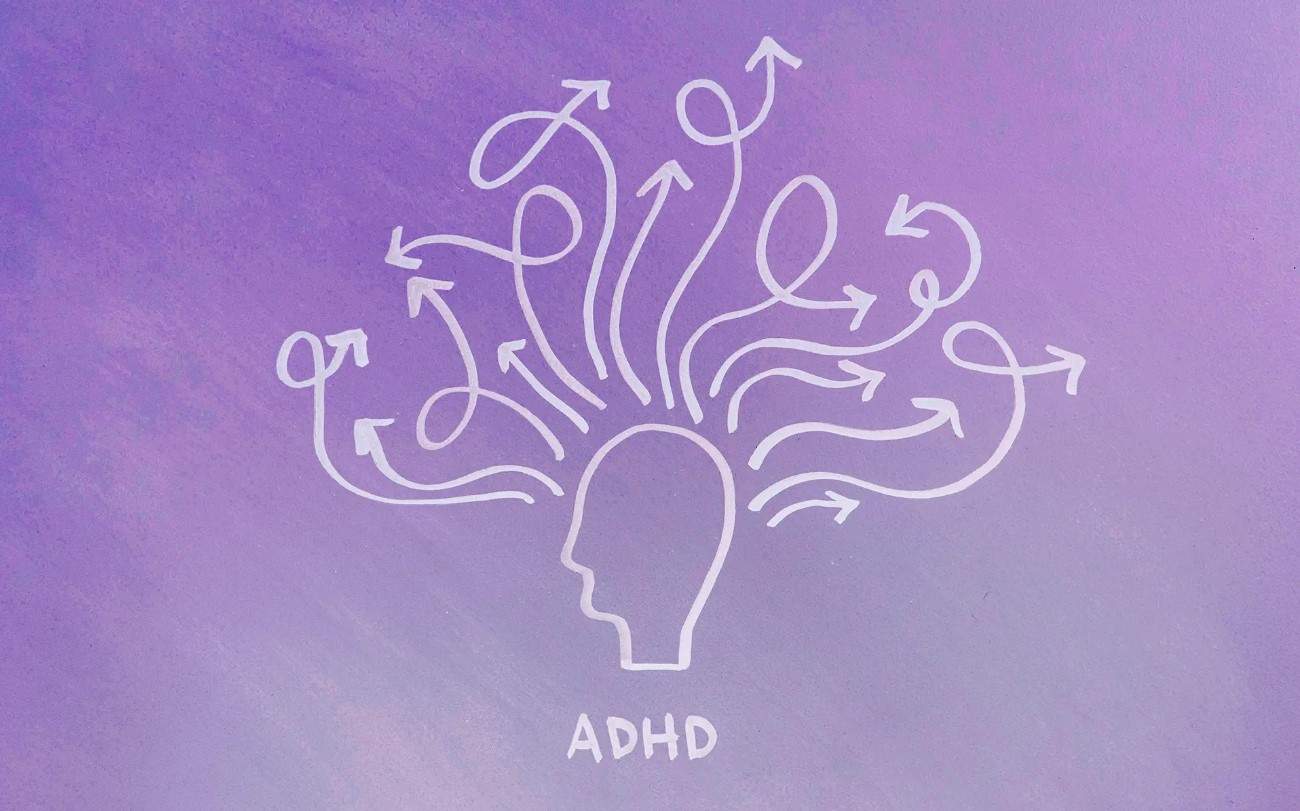
ADHD is not what most people think. Correctly diagnosed, it is a confirmed medical condition; the genetics of ADHD are nearly as strong as the genetics that predict height. ADHD undermines a wide-ranging skill set called executive function, which represents self-management abilities including attention, behavior, time, tasks, effort, and emotion.
While everyone has their emotional ups and downs in life, it is our executive function abilities that allow us to navigate them effectively. Therefore ADHD often leads to escalating challenges with emotional dysregulation, self-criticism, and stress. It even undermines the planning skills one would use to manage ADHD itself. Because of that cycle, ADHD impacts everything from work and school to relationships and physical health. Kind and comprehensive care of ADHD must acknowledge this wide-ranging impact.
Mindfulness is increasingly a part of ADHD care, though often misunderstood in ways that turn people with ADHD away. For starters, mindfulness does not replace any part of ADHD intervention. Concentration and impulse control may improve, but no single treatment works in isolation for ADHD. Instead, focusing on self-regulation and self-awareness with mindfulness, including practices such as self-compassion or loving-kindness, is a foundational shift for living with ADHD. Integrating mindfulness makes it easier to follow through with the rest of evidence-based ADHD care.
A broad approach to mindfulness in ADHD care means far more than meditation. We aim to develop traits like patience, responsiveness, and kindness that make managing the inevitable ups and downs of life easier. One useful framework for this practice invokes three foundational supports: training the mind, building community, and a desire for ongoing learning.
A broad approach to mindfulness in ADHD care means far more than meditation.
Understanding the Mind’s Mechanics
Learning is a vital aspect of mindfulness practice, often related to the principle of cause and effect. Even though so much is out of our control, how we think about things and choose to engage with the world intrinsically affects our experience. By examining our ways of thinking and communicating through this lens, we stay in closer touch with our own best intentions and core values.
Executive function can affect anything requiring “management” in life. Because of that, ADHD can impact not only work or school, but also relationships, communication, decision making, and health routines. Having ADHD is no one’s fault nor is it a moral failing. It does however often lead to a sense of self-blame. As with any challenge, the more clearly one understands the skills affected by ADHD, the easier it becomes to make skillful choices that minimize its impact.
Our actions and beliefs always have consequences, sometimes in subtle ways. For instance, deny having ADHD, and you cannot address it; recognize ADHD fully, and you can take constructive steps forward. If we rely on fleeting sources of transient happiness, like our phones or buying stuff, that undermines our well-being. In contrast, we boost our chances of flourishing with activities such as a healthy lifestyle or acts of kindness. In this way, education guides our journey through life.
This continuing education may include:
Learning about ADHD and exploring evidence-based management. Core interventions typically include a mix of educational supports, parent training (for families), cognitive behavioral therapy, coaching, and/or ADHD medication.
Prioritizing foundations like sleep, exercise, and nutrition for mental clarity, as maintaining these routines can be especially tough with ADHD.
Understanding the impact of emotional dysregulation and stress tied to ADHD and practicing tools and strategies for navigating these obstacles.
Exploring the reality of cause and effect as it relates to well-being, such as exploring how perfectionism and self-criticism compound suffering, or how meditation or gratitude practices increase the likelihood of happiness.
Training the Mind
Reframing the intention of mindfulness practice increases the likelihood of sticking with it. The goal of meditation is not a mind empty of thoughts, although it can help calm or steady the mind. As noted above, with or without ADHD, the initial motivation is often to build awareness and patience—a far more realistic goal than complete stillness.
The goal of meditation is not a mind empty of thoughts, although the practice helps calm or steady the mind. With or without ADHD, the initial intention is often to build awareness and patience—a far more realistic goal than complete stillness.
Inside this framework, we enhance our ability to notice what’s happening right now. We see both joyful moments and our challenges with more clarity. Practice doesn’t have to require sitting still; mindful eating, yoga, and other movement practices work too. This all relates to one key definition of mindfulness that is quite valuable with ADHD: aiming to see our lives with clear and compassionate awareness.
Meditation develops patterns that influence us in the long term. Short-term benefits like relaxation happen, but the broader hope is for building traits that spill into everyday life. For example, simply observing emotion during meditation, rather than falling into habits like reacting with anger or shutting down, slowly recalibrates our responses when we are outside of formal meditation. This improved emotional regulation has direct value not only for those with ADHD, but of course for anyone. Other meditation practices focus on traits like compassion, kindness, or forgiveness.
Meditation develops patterns that influence us in the long term. Short-term benefits like relaxation happen, but the broader hope is for new traits that spill into everyday life.
To get started, consider:
Setting aside a few minutes regularly to meditate, with the aim of building self-awareness and patience.
Trying compassion or loving-kindness practices to address ADHD-related challenges such as excessive shame, self-criticism, or rejection sensitivity.
Including movement practices in your day, like walking meditation or yoga.
Staying patient and kind with yourself when starting, as beginning and sticking to new routines are both especially difficult for individuals with ADHD.
Nurturing Connection and Support
Community is another pillar of mindful living. It’s crucial to seek and nurture environments that foster emotional resilience and deepen those connections. For those with ADHD, spending time with others who share similar experiences often leads to greater self-acceptance and a sense of belonging. Surrounding ourselves with caring and supportive people helps with learning and staying strong and hopefully finding friends, joy, and laughter.
With so many demands on our attention, we have to be intentional in seeking those relationships that reinforce our well-being. Difficult people may place demands on our time and deplete our energy. True friends encourage us to be our authentic self and help us feel empowered. Without judgment they accommodate to our experience of ADHD by adapting to symptoms like forgetfulness, time blindness, or sensory overload. Valuable friends support mutual growth and respect, sustain us, and can foster our mindfulness-based practices.
Ways to connect with community include:
Joining a spiritual or meditation group, or ADHD-focused organizations like, CHADD, ADDA, or ACO.
Scheduling regular time with family, if those ties feel close and supportive.
Creating or seeking shared school or workspaces that emphasize mindfulness, compassion, and growth, including executive function accommodations for ADHD.
Prioritizing time with authentic friends while reducing time spent with people who leave you feeling depleted. This typically includes limiting exposure to social media, which frequently leads to experiences like anxiety, negativity and jealousy.
Building a Practice That Works With ADHD
Let go of thoughts of perfection, a totally quiet mind, or the idea that you’re unable to meditate. With ADHD, a foundation of self-regulation and self-compassion transforms how we see and respond to our experience. That foundation increases the effectiveness of all that must be accomplished to manage this complex medical condition. Aspire to a sustainable mindfulness practice, whatever that looks for you. Even when living through difficult times, you will more easily stay in touch with your own wisdom, joy, and compassion.
Let go of thoughts of perfection, a totally quiet mind, or feeling like you’re unable to meditate.
Dr. Mark Bertin and Dana Crews are leading a retreat October 10-12, 2025, to support adults navigating life with ADHD, whether you have it yourself, are living with someone, or are a professional in the field. Hosted at the Menla Retreat Center nestled in the serene Catskill Mountains, Held and Whole is a restorative and educational three-day ADHD retreat that will offer practical, mindfulness-based tools to strengthen emotional regulation, deepen self-awareness, and foster authenticity. We hope to see you there!
You can get more information and reserve your spot here. Plus, listeners to this podcast can claim a limited-time 15% early bird discount when they enter code “Mindful” at checkout. Spots are limited!