Tag: Researchers

  • This Common Lifestyle Habit In Preteens May Trigger Manic Symptoms, Researchers Find

    This Common Lifestyle Habit In Preteens May Trigger Manic Symptoms, Researchers Find

    As screen time continues to surge, so do concerns about its effects on both physical and mental health. Although this lifestyle habit has adverse effects on people of all ages, a recent study has turned the spotlight on preteens, suggesting that excessive screen use through texting, watching videos, or playing video games could trigger manic symptoms in them.

    A recent large-scale study involving 9,243 children aged 10 and 11 has shed light on the potential mental health risks of excessive screen use. Published in Social Psychiatry and Psychiatric Epidemiology, the research explored how heavy engagement with social media, video games, texting, and video streaming impacts young minds.

    To better understand the link between screen time and mental health, researchers of the latest study analyzed data from the Adolescent Brain Cognitive Development (ABCD) study, the largest long-term study of brain development in the United States. They examined the typical screen habits of thousands of preteens, investigating whether excessive use of social media, video games, and texting was associated with manic or hypomanic symptoms.

    The results showed that those with excess screen time were at a greater chance of developing “inflated self-esteem, decreased need for sleep, distractibility, rapid speech, racing thoughts, and impulsivity – behaviors characteristic of manic episodes, a key feature of bipolar-spectrum disorders.”

    “Adolescence is a particularly vulnerable time for the development of bipolar-spectrum disorders. Given that earlier onset of symptoms is linked with more severe and chronic outcomes, it’s important to understand what might contribute to the onset or worsening of manic symptoms in teenagers,” said Dr. Jason Nagata, first author of the study in a news release.

    The researchers also noted that American adolescents now spend an average of over eight hours a day on screens, double the pre-pandemic average, coinciding with a rise in mental health concerns.

    “This study underscores the importance of cultivating healthy screen use habits early. Future research can help us better understand the behaviors and brain mechanisms linking screen use with manic symptoms to help inform prevention and intervention efforts,” said co-author Kyle Ganson.

    Although screen time offers educational benefits, Dr. Nagata cautions that parents should be mindful of potential risks and know the importance of balancing its use to protect mental health. “Families can develop a media plan which could include screen-free times before bedtime,” Dr. Nagata added.

    Source link

  • Harvard Chan School faculty recognized among world’s most influential researchers

    Harvard Chan School faculty recognized among world’s most influential researchers

    Exterior of Harvard T.H. Chan School of Public Health's Kresge building
    Harvard T.H. Chan School of Public Health’s Kresge building / Photo: Anna Webster

    More than 30 faculty members or researchers affiliated with Harvard T.H. Chan School of Public Health were named to Clarivate Analytic’s 2024 list of Highly Cited Researchers. The annual list includes researchers from around the world whose papers have been cited most often by their peers—in the top 1% of citations for a chosen field or fields.

    Worldwide, 6,886 researchers were named to the 2024 “highly cited” list. Those affiliated with Harvard Chan School are listed below. Thirteen Harvard Chan School faculty were identified as having exceptional performance across several fields. Their names are marked with an asterisk.

    They include: Rifat Atun*, Andrea Baccarelli*, David Bates*, Francesca Dominici*, Sarah Fortune*, Wendy Garrett, Edward Giovannucci, Christopher Golden*, William Hanage*, Miguel Hernan, Frank Hu, Curtis Huttenhower, Rafael Irizarry*, Ichiro Kawachi*, Karestan Koenen, Nancy Krieger, I-Min Lee, Marc Lipsitch*, Vasanti Malik*, Brendan Manning, JoAnn Manson, Vikram Patel, Alkes Price, Eric Rimm*, Shekhar Saxena, Meir Stampfer*, S.V. Subramanian, Elsie Sunderland, Tyler VanderWeele, Walter Willett, David Williams.

    Krieger was featured in a Q&A on the site as one of seven researchers whose work contributes to societal impact. She said, “As someone whose scientific work for health justice is not part of the mainstream research that dominates the public health and medical literature, I find it encouraging, from the standpoint of health equity, that my work is cited frequently enough to merit my being named a Highly Cited Researcher. It is an affirmation that my work is of use to others.”


    Last Updated

    Featured in this article

    Get the latest public health news

    Stay connected with Harvard Chan School

    Source link

  • Researchers Say They May Trigger Psoriasis

    Researchers Say They May Trigger Psoriasis

    Here’s another reason to put that bag of processed snacks aside. Ultra-processed foods, already linked to heart problems and metabolic disorders, may also trigger psoriasis, according to new research.

    Psoriasis is an autoimmune disorder that affects the skin, causing inflamed, red, raised patches that often develop into silvery scales, typically on the scalp, elbows, knees, and lower back.

    Ultra-processing involves the use of several additives, salts, oils, preservatives, and other ingredients to the food to improve its shelf life, appearance, and taste. A few examples of ultra-processed food are frozen meals, processed meats, soft drinks, sweetened breakfasts, packaged chips, cakes, pretzels, and cookies.

    Earlier studies have shown that frequent consumption of ultra-processed food raises the risk of insomnia, heart disease, cancer, and premature death. It is also linked to elevated risk of obesity and inflammatory bowel disease.

    While common known triggers of psoriasis include stress, certain medications, skin injuries, strep infections, smoking, and alcohol use, the latest study explored the connection between ultra-processed food consumption and psoriasis incidence.

    To establish the link, a research team led by Dr. Emilie Sbidian, a dermatologist at Henri-Mondor Hospital in Créteil, France, examined data from over 18,500 individuals in a health database. Among this cohort, 1,825 had psoriasis, with 802 cases considered “active.” The participant’s food intake, particularly the consumption of ultra-processed food items was recorded using questionnaires.

    Analysis revealed a significant finding: among those with active psoriasis, 36% were in the highest third of daily ultra-processed food intake when compared to individuals who had never experienced psoriasis. The association remained significant even after adjusting for factors such as age, alcohol intake, body mass index, and other underlying health conditions.

    “Results of this study showed an association between high ultra-processed food intake and active psoriasis status,” researchers concluded.

    However, the researchers caution that the findings are based on an observational study, which only demonstrates a correlation and cannot establish a definitive cause-and-effect relationship between ultra-processed food consumption and psoriasis.

    “More large-scale studies are needed to investigate the role of [ultra-processed food] intake in psoriasis onset,” the researchers wrote.

    Since the study population consisted of a relatively healthier cohort compared to the general French population, the findings may not be fully representative. Also, another limitation of the study is the potential misclassification of psoriasis, as it relied on self-reported data.

    Source link

  • Researchers Say This Simple Technique Could Shorten Colds In Kids By 2 Days

    Researchers Say This Simple Technique Could Shorten Colds In Kids By 2 Days

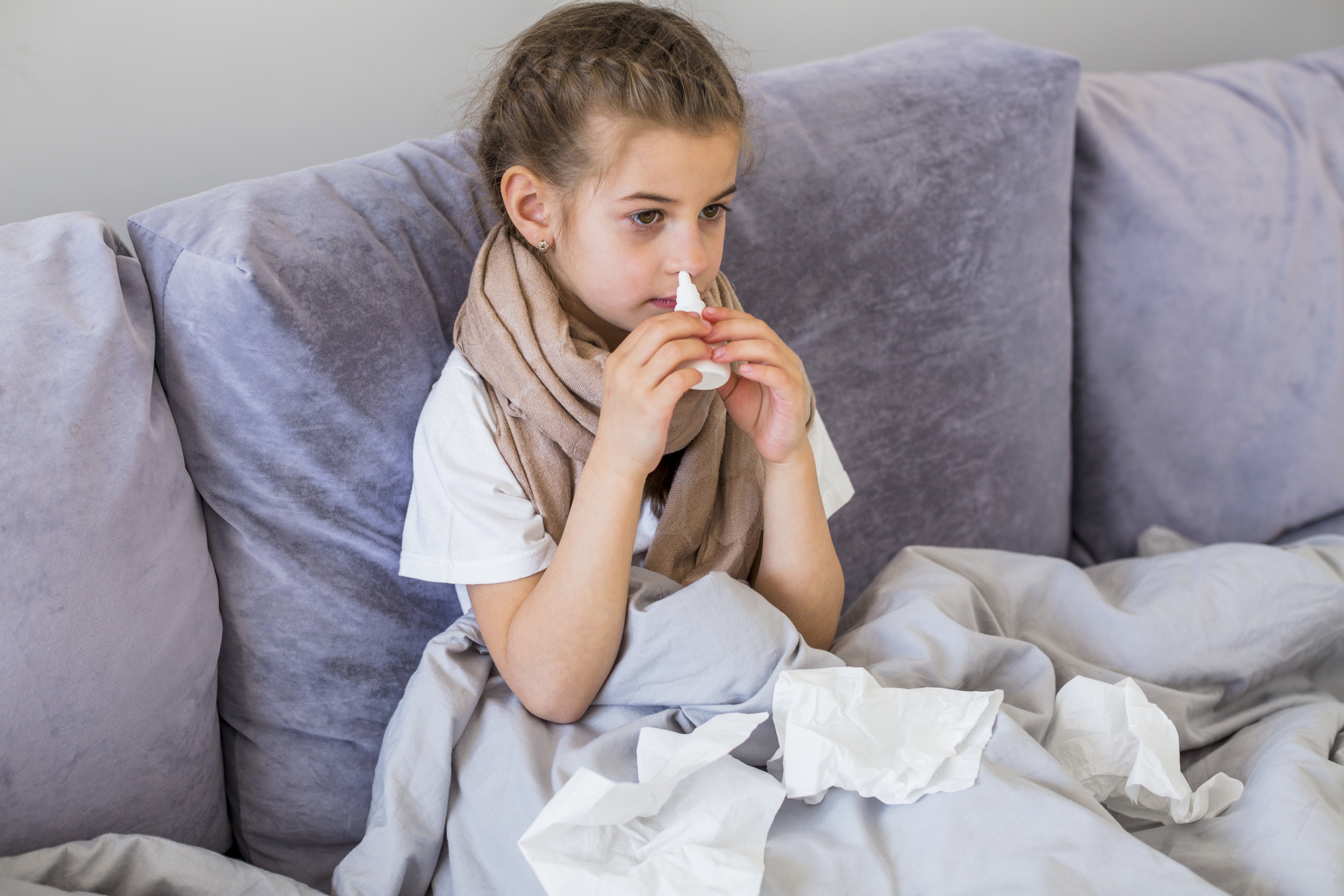
    Children often catch a cold, which usually runs its course. Although a mild illness, the common cold often stirs anxiety in parents as it can escalate into severe respiratory infections and fever, and spread to others in the family. However, a recent study suggests a quick remedy that not only shortens the duration of a cold but also lowers the risk of transmission.

    In the latest study presented at the European Respiratory Society (ERS) Congress in Vienna, Austria, the researchers discovered that using nasal saline drops can reduce the length of the common cold in children by two days.

    “Children have up to 10 to 12 upper respiratory tract infections, what we refer to as colds, per year, which have a big impact on them and their families. There are medicines to improve symptoms, such as paracetamol and ibuprofen, but no treatments that can make a cold get better quicker,” said Professor Steve Cunningham from Child Life and Health, University of Edinburgh, UK, who presented the study.

    Salt-water solutions, like nasal irrigation and gargling, are common remedies recommended for colds. Researchers decided to test the clinical benefits of saline nasal solution in a trial involving 407 children under six. Of the 407 participants, 301 kids caught a cold during the study. When the kids developed a cold, half of the parents were taught to make salt-water nose drops and apply them to their children (three drops per nostril, at least four times a day) while the other half gave the children their usual care.

    “We found that children using salt-water nose drops had cold symptoms for an average of six days, whereas those with usual care had symptoms for eight days. The children receiving salt water nose drops also needed fewer medicines during their illness,” Professor Cunningham said.

    During the trial, 82% of parents said the nose drops helped the child get better quickly and 81% said they would use nose drops in the future.

    So how does a simple salt water work against the cold virus? Salt contains sodium and chloride, and the cells in the nose and windpipes use chloride to create hypochlorous acid, which helps defend against viruses.

    “By giving extra chloride to the lining cells, this helps the cells produce more hypochlorous acid, which helps suppress viral replication, reducing the length of the virus infection, and therefore the duration of symptoms,” explained Professor Cunningham.

    The benefits of saline nasal drops go beyond shortening a cold’s duration. The study noted that they also reduce transmission within households, lowering the spread from 61% with usual care to 46% when nasal drops are used.

    “This extremely cheap and simple intervention has the potential to be applied globally; providing parents with a safe and effective way to limit the impact of colds in their children and family would represent a significant reduction in health and economic burden of this most common condition,” said Professor Alexander Möeller, Head of the ERS Pediatric Assembly and Head of the Department for Respiratory Medicine at the University Children’s Hospital Zurich, Switzerland, who was not involved in the research.

    Source link

  • Researchers clarify how soft materials fail under stress

    Researchers clarify how soft materials fail under stress

    Understanding how soft materials fail under stress is critical for solving engineering challenges as disparate as pharmaceutical technology and landslide prevention. A new study linking a spectrum of soft material behaviors — previously thought to be unrelated — led researchers to identify a new parameter they call the brittility factor, which allows them to simplify soft material failure behavior. This will ultimately help engineers design better materials that meet future challenges.

    University of Illinois Urbana-Champaign chemical and biomolecular engineering professor Simon Rogers and graduate student Krutarth Kamani specialize in determining how soft materials yield to stress and have shown how solid and liquid physical states can exist together in the same material. This area is of high interest due to its importance to industrial, environmental and biomedical applications.

    Along the way, the team identified a communication breakdown among the scientists who work in this area, causing a bottleneck between a theoretical understanding of soft material behavior and real-world applications.

    When soft materials — natural or synthetic — deform under pressure, they eventually reach a critical point where they either return to their original form or undergo permanent deformation, like stretching or breaking a piece of elastic. This process is known as yielding. A gradual yielding transition is termed ductile behavior, while an abrupt one is referred to as brittle behavior, the researchers said.

    “At a recent conference, we realized that all of us who study soft materials from all over Europe and North America couldn’t agree what the connection is between brittle and ductile behavior nor how to define it.”

    In the study, published in the Proceedings of the National Academy of Sciences, instead of viewing soft material behavior as one or the other — brittle or ductile — Rogers’ team considers a spectrum of yielding behaviors. This allowed the team to build a continuum model, which led to them uncovering the brittility factor. This factor is critical in determining how and why soft materials fail.

    Essentially, brittility affects how a material deforms permanently under stress. The team’s model indicates that the higher the brittility factor, the less a soft material will deform permanently before yielding.

    As in the team’s past studies, the model was developed and tested using data from numerous experiments that subjected various soft materials to stress while measuring the individual strain responses using a device called a rheometer.

    “We didn’t expect this study to explain as much as it does,” said Rogers, who is also an affiliate at the Beckman Institute for Advanced Science and Technology at the U. of. I. “What we ended up with was a way to bring a whole bunch of soft material behaviors together under the same physics umbrella. Previously, they’d been studied independently or maybe all been applied simultaneously, but never thought of as being physically or mathematically connected.”

    This finding will allow researchers to explain precisely why some materials are more resistant to rapid yielding than others, a question that has eluded researchers for decades.

    “This single parameter amazingly connects so many puzzling observations researchers have come across over the years,” Kamani said.

    “This work marks the point at which we are approaching the crest of the hill in understanding soft materials behavior,” Rogers said. “We’ve always felt like each step takes us higher, but with no end in sight. Now we can see the top of the hill, and we are closer to the top and free to move forward in whatever direction we would like.”

    The National Science Foundation supported this research.

    Source link