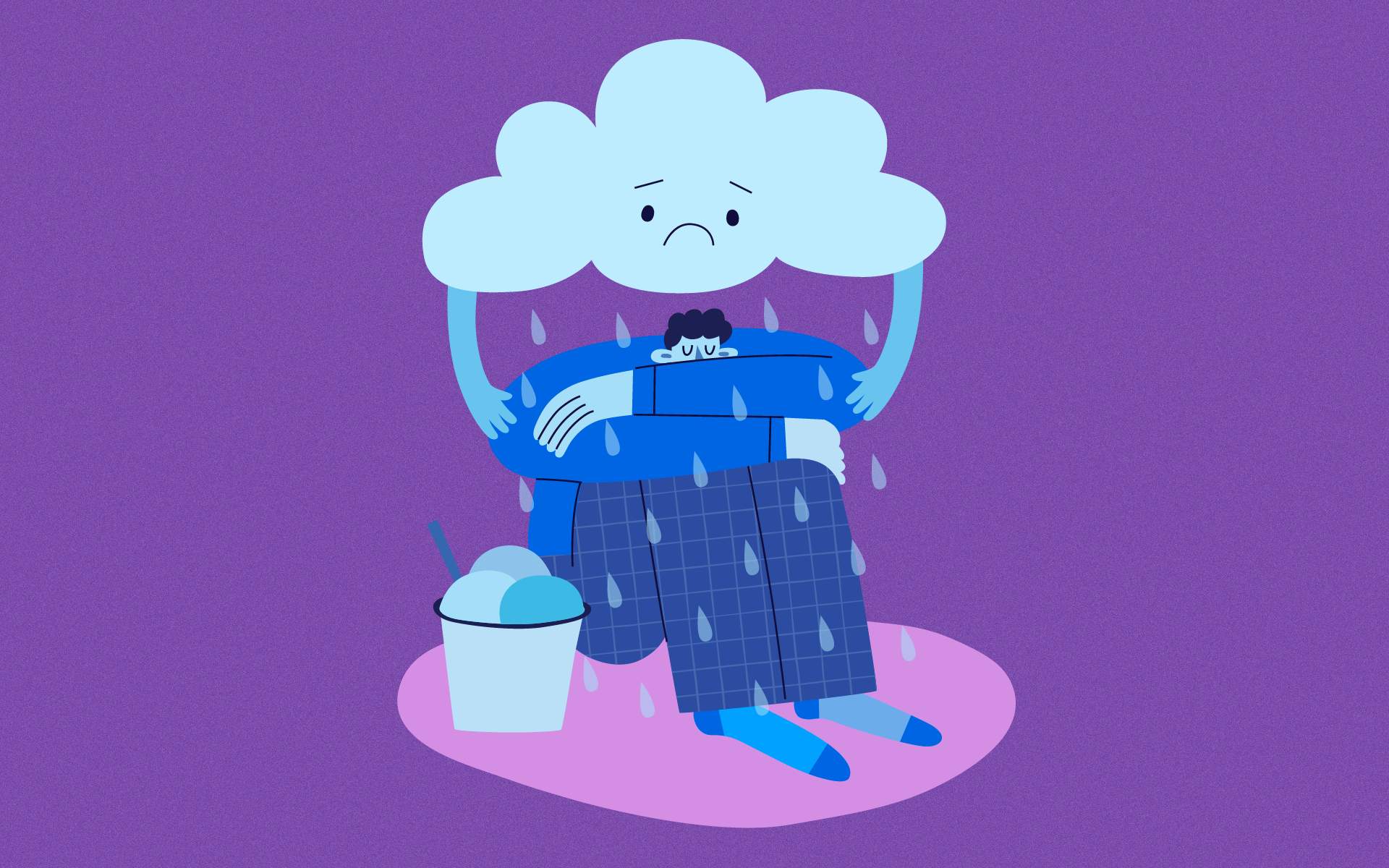
Whether you are single or in a relationship, you may be struggling with loneliness. Just because you are alone doesn’t necessarily mean that you are lonely. For example, you might be single and live by yourself but not feel lonely, spending some evenings alone and others engaged with your community, whether that’s with your nieces and nephews, neighbors, or colleagues. On the other hand, if you don’t feel comfortable in your own skin, you can never truly enjoy solitude because you feel disconnected from yourself. And even if you do enjoy solitude, you can still experience moments of loneliness. The truth is that we all feel lonely sometimes, and we all need connection with other people, so I invite you to release any shame you experience around your desire for connection.
1. Destigmatize Feeling Lonely
Some people speak in a derogatory way about those who share their experiences of loneliness, equating loneliness with a lack of self-love, but I want you to know that this is a faulty assumption. You may be working on yourself, you may have come a long way, you may even love yourself, but you can still feel lonely at times.
Loneliness can take different forms. You may feel like no one really knows you, gets you, or spends quality time with you, even if there are “friends” around. You can be dating or married and still feel lonely. You could be at a family reunion, surrounded by people to whom you are related, and still feel lonely. Loneliness is not just about a physical absence of people around you but about a lack of authentic emotional connection. We need to feel at home within ourselves in the presence of another—whether in the context of friendship, partnership, or familial relationship. It is normal and healthy to desire authentic relationship with others; this certainly does not automatically mean that you are needy or dependent or insecure.
Loneliness is not just about a physical absence of people around you but about a lack of authentic emotional connection.
There is something beautiful about being known and knowing another. There is something beautiful about friendships that withstand trials. There is something beautiful about intimacy and healthy companionship. So if you are feeling lonely, do not judge the loneliness. Do not condemn yourself for feeling lonely. Acknowledge any loneliness you might feel without shame. After all, loneliness is a universal experience.
Some people have experienced seasons when they were so hurt—perhaps in the midst of a breakup, separation, or divorce—that they didn’t even feel lonely. They may have felt so dismantled by the ending of a friendship or a relationship that they wanted to spend the rest of their lives in isolation. In these cases, getting to the point of desiring connection again is far from a bad thing; it may even be an indication of growth and healing. So when they start to reawaken, when they feel they may begin to trust again, when they start to heal and develop greater self-awareness and insight into the lessons they learned during those difficult times, then they may see an awakening of their desire for connection, friendship, or romantic relationship. If you’ve been there, it is crucial to recognize where you are in the process.
2. Start With Self-Awareness and Healthy Risk-Taking
When we aren’t aware of our own loneliness, we can make destructive decisions. Sometimes loneliness can blind us to the truth because we are so focused on our need and desire for companionship. What might this look like? It might mean I want a friend so badly I miss the warning signs that this person is not my friend, and I continue to cling to them because I want connection. The same thing can occur in the romantic arena. I might desire companionship so intensely that I ignore areas in the relationship where I feel unfulfilled or where I can’t show up authentically. If I am in this person’s presence because I just want someone present, I have to tell myself the truth and recognize my loneliness without letting it obscure my view of the truth.
I want to reiterate that I am not coming at it with the attitude of “You just need to love you.” While self-love is significant, it does not preclude emotional pain or longing for a deeper relationship. If you are feeling lonely, I encourage you to find some things that you can do on your own. People who don’t have close friends or a partner can easily end up self-isolating and doing nothing, so take the risk of doing things in your own company. That’s one of the beautiful things about feeling at home in your own body.
Are you comfortable going out to eat by yourself, not just sitting in your car to eat during your lunch break? Are you comfortable going to the movies by yourself if there is a show that you really want to see and you don’t have someone to go with? Are you willing to go to an art gallery, a religious service, or a concert by yourself?
Even as we acknowledge our need for connection and companionship, recognizing that these are beautiful things to desire and working to develop that aspect of our lives, we must refuse to put our lives on hold. Too many of us are waiting until we have a boyfriend or girlfriend, husband or wife, to start our lives; we are waiting for other people to bring us joy. But you can live a full life now.
I invite you to intentionally find spaces where you can spend time around other people, even if they do not require a lot of interaction. Past hurts and social anxiety can make it difficult to form friendships and relationships, so it may be easier to self-isolate. Be gentle with yourself, taking one step at a time as you gradually become more comfortable with other people. Some social settings are less demanding than others and don’t require you to engage with people on a deep level. For example, you could take a class on something you’re interested in, whether it’s cooking, practicing an instrument, or learning a new language.
3. Cultivate the Relationships You Already Have
As we learn to connect with others, I invite you to consider the people who are already in your life. I have worked with clients who tell me that they don’t have anyone, but as we continue to talk, they’ll mention different people, and I’ll have to ask, “Well, who is that? And who is that?” It’s easy to overlook what we have, so ask yourself: Do I want to improve the friendships that I already have? Or am I really starting from scratch? Do I actually have no one? Or are there people in my life with whom I wish I had a more substantial relationship? Loneliness is sometimes rooted in fear and distrust. This is most commonly the case for people who are lonely even when they are surrounded by other people. Have you kept your friendships superficial? Or have you been hurt in the past, so it’s become difficult for you to open up again? In a dating relationship, it’s possible to experience physical intimacy without emotional intimacy, all the while saying that you want more. But true intimacy requires vulnerability.
You might be surprised to find that when you take the risk of being vulnerable and transparent, others are more likely to do the same. If you have a group of friends who just talk about fluff all the time, you might assume that no one in the group wants to have deeper conversations. But can I let you in on a secret? The others may be longing for more meaningful connection as well. So rather than making a false assumption, take the risk of venturing into deeper waters and being honest with people about how you feel.
Can I let you in on a secret? The others may be longing for more meaningful connection as well.
Being vulnerable is especially valuable for those who are used to being the strong one in a relationship. If you hold on to that identity, you’ll never really let people in. It’s very lonely to always be the giver, and you may end up feeling resentful or disconnected from the same people you’re trying to help.
It is necessary to cultivate spaces where you do not have to wear the mask of perfection, where you can speak freely about what is going on in your life rather than hide behind the automatic response “I’m fine. How are you?” Do you find yourself asking a million questions about someone else because you’re trying to distract them from what’s going on with you? If you do this, you can feel lonely.
For those of you who are in dating relationships or marriages where you feel lonely, what would it mean for you to risk showing up for real, to stop going through the motions, to stop coexisting merely as roommates? To clarify, when I talk about showing up for real, I don’t mean simply sitting someone down and sharing your list of grievances. That wouldn’t truly require vulnerability on your part because you’d be putting all the blame for the problems in the relationship on the other person. What would it look like to show up with honesty, to openly share your desires and your wounds with the goal of repairing the relationship, instead of just venting?
Greater connection requires greater vulnerability. Although vulnerability can feel scary, being really and truly known is worth the risk. This is what it means to be at home with yourself, not with a script or a mask, not as Superwoman or Superman, but as the real you in the company of another.
Greater connection requires greater vulnerability.
4. Let Go of Self-Sabotage and Learn From the Past
If you spend all your time with people you don’t enjoy, or stay at home by yourself but keep saying that you feel lonely and want connection—well, the old routine is not working for you. Unless the deliveryman turns out to be your soulmate, I don’t know how you’re going to meet anyone new. Wherever you live, I invite you to look online and find something that is happening in your city—whether it’s a fair, a festival, a lecture series, or a concert.
I also recommend getting involved in an organization that reflects your interests. While it’s great to go to one-off events, people don’t often spend a lot of time talking to strangers. Rather, they stick with the people they showed up with and then leave with those same people. But if you join an organization or group that meets regularly, that usually creates more opportunity for conversation. In this context, you can observe other people, get a sense of them, and develop greater connection over time. You may have to get out of your comfort zone while working to build up those relationships.
Reflect on past friendships and dating relationships and the lessons you gleaned from them. If I don’t have clarity about what damaged my past relationships, then I am likely to repeat the same mistakes and continue to have relationships that do not flourish. I’m not looking solely at what other people did to me, but also considering any role that I played in how I chose my friends, how I have treated them, and how I showed up in those relationships. What challenges do I experience around intimacy, whether on an emotional, a physical, or a spiritual level? In what ways, if any, have I sabotaged past relationships?
Someone recently wrote to me about owning their part, recognizing how they had ruined what could have been a good thing in their last relationship. We want to be honest with ourselves about how we may have sabotaged relationships, chosen or been attracted to people who were problematic, or closed ourselves off.
Nobody likes to be rejected, but if I’m always walking around looking unapproachable or angry, or if I seem arrogant or my attitude communicates that I don’t want to be bothered, then I’m standing in my own way of connection. It is foremost to try to get a sense of what I may need to heal and grow so that I can be more open to connection.
Exercise: Listen, Move, and Breathe to Honor Connection
If you’re at home right now and this speaks to you, I invite you to put on a song about love for family, friendship, or a romantic partner, get up, and dance to release whatever you’re carrying in your body. If now is not a good time, I invite you to make some space later today to put on some music, move, and breathe so that you are not consumed by loneliness as you make the commitment and take the steps to live fully and authentically, honoring your connection with yourself and with others.
Affirmation: If it aligns with you, read these words aloud: “I desire friendship, companionship, and connection. There is no shame in that. I honor my desire for deeper connection.”
Adapted from MATTERS OF THE HEART Copyright © 2025 by THEMA BRYANT. Reprinted here with permission from TarcherPerigee, an imprint of Penguin Random House Publishers.
