Tag: Relax

  • Why We Wake Up At Night and How Mindfulness Helps Us Sleep Again

    Why We Wake Up At Night and How Mindfulness Helps Us Sleep Again

    You’re awake, and the time on your nightstand shows 3:33 a.m. There’s no reason to be awake, but your mind has other ideas. Some nights it could be an overactive mind; other times, you’re fighting a hot flash or the urge to scroll on your phone, hoping to fall back asleep.

    Regardless of what’s calling to you in the middle of the night, the message you really need to hear: You’re not alone.

    Nearly 18% of U.S. adults report trouble staying asleep, and 30–50% experience insomnia symptoms, including difficulty falling or staying asleep. And yet, our initial response to waking in the middle of the night tends to lean toward frustration or anger rather than curiosity.

    Dr. Jessica Shepherd asks her readers to be curious about the patterns and symptoms we experience around wakefulness instead of moving towards “fixing” our sleep problem.

    What would happen if we chose to investigate our feelings around wakefulness with self-compassion and mindfulness, instead of pushing against our own discomfort with what’s unwanted? Understanding more about why we wake up at night can help.

    The Nervous System and Sleep Disruption

    When did 3 a.m. become the new wake-up call?  If you’ve slept soundly for most of your life, only to be suddenly confronted with a nightly routine that involves struggling to get back to sleep, know you’re in good company. These “wakeups” happen across ages, genders, and all life stages. Some of us (ahhem, menopause ladies, we see you) begin having some of these issues as a result of hormone shifts (we’ll get into that later).

    What you need to know is that waking in the night is not a personal failure.  Oftentimes, your nervous system responds to cues your body sends, both internal and external. Here are a few reasons why we wake up at night, and why your sleep may be feeling more fragmented:

    • Hyperarousal: Stress hormones like cortisol and adrenaline can trigger micro-awakenings. Even while asleep, your brain is scanning for potential threats.
    • Racing or overloaded mind: Daytime to-do lists, worries, or plans can linger into the night, keeping your brain alert.
    • Environmental triggers: Neighborhood noise, light, temperature swings, or even screens can subtly wake the brain.
    • Aging sleep architecture: As we age, our sleep naturally becomes lighter and more fragmented.
    • Hormonal shifts: As I mentioned above, if you’re in perimenopause or menopause, changes in estrogen, testosterone, and progesterone can significantly affect your sleep cycles. They can disrupt sleep when you’re experiencing hormone imbalances. Still, these shifts are a small part of the overall picture when we consider why many people experience nighttime wakefulness.

    Why starting with curiosity helps

    OB-GYN and author of Generation M, Dr. Jessica Shepherd, asks her readers to be curious about the patterns and symptoms we experience around wakefulness instead of moving towards “fixing” our sleep problem. Here are four questions she poses to help guide reflection: 

    • Is this wake-up due to hot flashes or night sweats?
    • Am I waking repeatedly or having trouble breathing?
    • Is my mind racing too much to fall asleep or fall back asleep?
    • Do I need to use the bathroom frequently at night?

    While Dr. Shepherd is a go-to source for menopausal struggles and solutions, these questions can be used to assess your symptoms, regardless of your age. Typically, mid-morning wakeup calls fall into one of these four categories:  mental overactivity, changes in body or room temperature, repeated environmental disruptions, or physical cues. When we understand the causes and conditions for our experience, we can cultivate a mindful response.

    Why Are My Thoughts Awake at 3 a.m.?

    The main culprit for middle-of-the-night wakefulness can vary from person to person. No matter what time you’re waking up, if it’s before your alarm clock goes off, it’s likely to feel unsettling.

    For those of you in perimenopause or menopause, the shift of our hormones (feeling hot flashes/night sweats) can make us feel very stressed out. As our stress levels rise, so do our cortisol levels. Typically, this stress hormone rises around 3 a.m. to prepare us for waking, but if our stress levels are too high, it can shift that baseline and cause us to wake up earlier than usual.

    Mindfulness offers a different way to approach these interruptions. It nudges us first to accept what’s happening in the present moment, and then to gently turn towards curiosity and self-compassion.

    For those of you who have surpassed that hurdle of menopause or generally have trouble falling asleep or staying asleep, this time of night can feel so much louder than usual. When we’re alone with our thoughts in the middle of the night, our fears can feel heightened. Sleep deprivation heightens amygdala reactivity, making even small anxieties feel intense. Mindfulness can help settle our nervous system by guiding us towards practical tools that help us eliminate spiraling narratives.

    So, how can you shift your perspective when it comes to that mid-morning wake-up? Mindfulness offers a different way to approach these interruptions. 

    We’ve all heard the phrase, What you resist, persists, and you likely know from experience that it doesn’t work to fight sleeplessness or try to force yourself to go back to sleep. 

    Mindfulness nudges us first to accept what’s happening in the present moment, and then to gently turn towards curiosity and self-compassion. So perhaps the questions and phrases we could be engaging with might sound more like, “How can I offer myself compassion when sleeplessness makes itself known?” or, “What is this experience trying to show me?”

    Look for clues in your daily routines

    Sleep expert and author of Powerful Sleep, Shawna Robins, encourages people who have trouble navigating the “wide-awake” brain by taking a look at what they’re doing during the day.

    She emphasizes laying the groundwork for a healthy routine (meals, exercise, self-care) that supports hormone balance and your nervous system. For Robins, that begins with stress management, proper nutrition, and some form of physical activity. When we do these things, sleeping, and specifically “falling asleep” or returning to sleep after that three o’clock wake-up, can get much easier. Robins says, “Healthy sleep starts during the daytime with healthier habits. It’s not just about what happens when you get into bed at night.”

    Mindful Sleep Strategy

    What does a mindfulness strategy look like for cultivating good sleep? Think about all the tools you’ve developed over the course of your mindfulness journey and start putting them to use.

    Sleep supports the choices we make before bed.

    That means journaling, sitting regularly, mindfully eating and noticing the times you’re eating. It can also involve checking in with your physical body (think body-scan meditation or breathwork), coupled with daytime routines (yoga/gym workout, exercises you can do throughout the day at work/your desk, etc.) that will help create a stable space for you to reset your energy and recalibrate your nervous system. Sleep supports the choices we make before bed.

    If you find yourself up in the middle of the night and can’t get back to sleep, here are some different ways you can try to help yourself. 

    1.  30-Second Body Scan
      Redirect attention from racing thoughts to physical sensations, noticing each part of the body without judgment.
    2. Lengthened Exhale Breathing (4–6 breaths)
      Extending the exhale calms the parasympathetic nervous system, signaling the body that it is safe to rest.
    3. Thought Noting
      Label thoughts gently (“I’m worrying,” “I’m planning”) to create mental distance.
    4. Journaling
      Keep a notepad by the bed to externalize racing thoughts and reduce cognitive load.
    5. Gentle Somatic Grounding
      Release tension in the jaw, shoulders, or belly to help the body signal safety.

    Nighttime wakefulness often coincides with vivid or emotionally charged dreams. Sansan Fibri, founder of the app Wakefully.io, describes dreams as “our subconscious screenplay, where hidden narratives sometimes replay on repeat.”

    Wakefully is an AI-driven dream-analysis and journaling app that allows users to examine dream themes and emotions or reframe dreams with evidence-based techniques. For those who wake at night due to intense dreams or lingering emotional tension, incorporating tools like Wakefully alongside your mindfulness practice can help shift into a more reflective space, calming a reactive mind. With curiosity, gentle awareness, and practical tools, you can transform these moments into opportunities for connection with your body and mind.

    When we approach sleep with mindfulness,  we can meet moments of wakefulness with curiosity instead of frustration, helping us meet them in the middle of the night with presence and ultimately a sense of well-being.
    Source link

  • A Teaching and Meditation to Relax and Welcome Deep Rest

    A Teaching and Meditation to Relax and Welcome Deep Rest

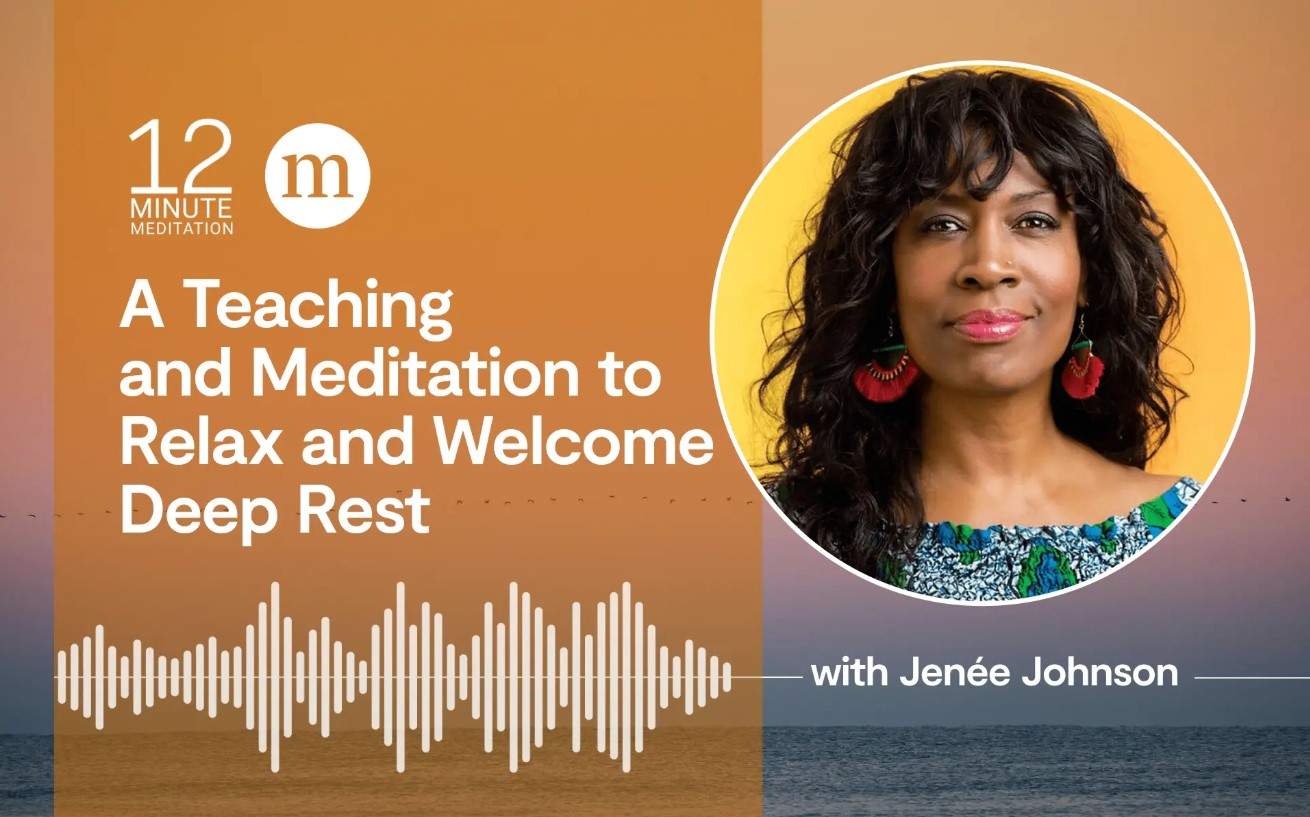
    In today’s offering, Jenee Johnson guides us through a teaching on the why and how of deep relaxation practices, along with a meditation you can do anytime.

    Rest isn’t a “reward” for working hard enough. It’s a human need and birthright. 

    This week’s episode is a little different. We’re not only sharing a guided meditation from mindfulness leader and professional coach Jenée Johnson, but also her teaching on some of the brain science behind relaxation—why it’s essential for our well-being, how it works, and how to incorporate intentional relaxation practices into your daily life.

    Jenée Johnson is the founder of the Right Within Experience, where she works to cultivate the experience of inner calm, resilience, self-love, and joy through meditation and mindfulness practices for people of African ancestry. She is also the former program innovation leader at the San Francisco Department of Public Health, Mindfulness, Trauma and Racial Healing.

    A Teaching and Meditation to Relax and Welcome Deep Rest

    At some point during the day, the body will signal us that it is time to rest, to be still, to withdraw from activity, to be quiet, to take the journey from sound to silence. The mind and body need moments when they can be at ease, free from agitation, pressing, planning, or even celebration. 

    Stress and trauma and tension play a role in our ability to rest and relax. Therefore, it is so important to do daily “relaxation drills” to help counter the bad effects that stress has on the human body. According to Dr. Frank Staggers Jr., people who do daily relaxation drills remain healthier, have more energy, and think more clearly. This is why it’s important to take 20 minutes, once or twice daily, to deeply relax. 

    An effective deep relaxation technique is known as quiet sitting or free-floating relaxation. You simply sit quietly for about 20 minutes and allow your mind to float freely until it settles down. Don’t think about anything in particular. Don’t concentrate on anything. Just allow your mind and body to settle down naturally on its own. 

    An effective deep relaxation technique is known as quiet sitting or free-floating relaxation. You simply sit quietly for about 20 minutes and allow your mind to float freely until it settles down.

    In order to deeply relax, you must let thoughts come and go as they please. As you are relaxing, some thoughts may spontaneously rush through your mind. That’s okay. Don’t worry about these thoughts. Don’t exert yourself by trying to block these thoughts. Don’t dwell on these thoughts, either. Just remain passive. Leave the thoughts alone, and the thoughts will gradually fade into the background so you can continue to relax. 

    The scientific term for the deep state of awake relaxation is the alpha state. This is because the brain calms and produces smooth, harmonious waves called alpha brain waves when it is completely relaxed. The alpha brainwaves have a frequency of eight to 12 cycles per second, whereas arousal or excitation brain waves, called beta brain waves, are much faster at 13 to 40 cycles per second. The alpha state is usually associated with widespread relaxation throughout the entire body and a healthy lowering of the body’s metabolism. 

    Activities like watching TV, listening to the radio, reading, sewing, or fishing will not hit the alpha deep relaxation state, because these activities still place demands on the brain and keep the brain too busy to completely relax. This means that these activities may get you to the shallow states of relaxation, but they won’t get you into deep states of relaxation. Even sleep will not hit the alpha deep relaxation state, because the brain remains very active during sleep, especially during dreaming. 

    Even after sleep, you can still be stressed out. Relaxation drills allow your mind and body to hit the deep states of relaxation.

    Therefore, while obviously essential for multiple other functions, sleep does not completely relax the brain or counter stress. Even after sleep, you can still be stressed out. Relaxation drills allow your mind and body to hit the deep states of relaxation. So settle back, and let’s try a practice together.

    Read and practice the guided meditation script below, pausing after each paragraph. Or listen to the audio practice.

    1. Sitting in an upright but relaxed position, drop your gaze or close your eyes. Take a deep breath in and an audible exhale out. Breathing in and breathing out, sitting quietly, free floating, invite your body to relax.
    2. When we simply sit and breathe, we activate the body’s calming response. It allows the brain to display the calm, smooth, harmonious waves called alpha brain waves—like the waves of the ocean, coming in to the shore and rolling back out. Coming in and going out. Breathing in and breathing out. Relax.
    3. Drop your shoulders, relax the jaw, and unfurl your brow. Allow your mind to float freely until it settles down. Let thoughts come and go as they please.
    4. Bring your attention back gently to your breath. Don’t exert yourself trying to block thoughts. Just remain passive and remind your body that we’re sitting now, we’re breathing now, we’re relaxing now. Sit quietly, stay with your breath. Like the waves of the ocean, breathing in, breathing out. Let thoughts fade into the background. Relax. To be still, to be quiet, to be at ease. This is the gift of relaxation.


    Source link

  • 7 Steps to Relax Your Body

    7 Steps to Relax Your Body

    When was the last time you gave your body a break? And we’re not talking about sleep. Take ten minutes and try the body scan practice.  

    Time: 10–20 minutes

    When was the last time you noticed how your body was feeling? Not just when you have a headache or you’re tired or you have heartburn after that spicy taco you ate for lunch. But just noticing how your body is feeling right now, while you’re sitting or standing or lying down. How about noticing how your body feels while you’re sitting in an important meeting or walking down the street or playing with your children?

    In our busy, high-tech, low-touch lives, it’s easy to operate detached from our own bodies. They too easily become vessels we feed, water, and rest so they can continue to cart around our brains. We don’t pay attention to the information our bodies are sending us or the effect that forces such as stress are having—until real health problems set in.

    Let’s take a small and simple step in the direction of paying our body the attention it is due. Consider spending just a few minutes—every day, if you can—to notice your own physicality. Not to judge your body or worry about it or push it harder at the gym, but to be in it.

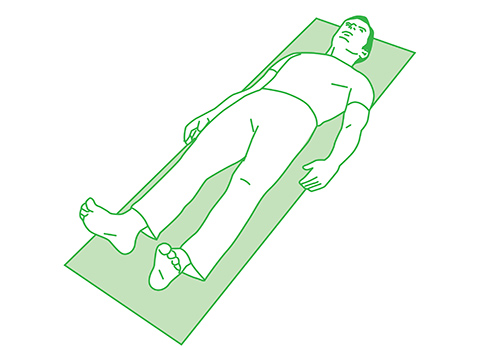
    Here’s an easy body-scan practice with just 7 steps to relax your body. It will tune you in to your body and anchor you to where you are right now. It will heighten your senses and help you achieve greater levels of relaxation. You can do it sitting in a chair or on the floor, lying down, or standing.

    Mindfulness Practice: 7 Steps to Relax Your Body

    1. Settle into a comfortable position, so you feel supported and relaxed.

    2. Close your eyes if you wish, or leave them open with a soft gaze, not focusing on anything in particular.

    3. Rest for a few moments, paying attention to the natural rhythm of your breathing.

    4. Once your body and mind are settled, bring awareness to your body as a whole. Be aware of your body resting and being supported by the chair, mattress, or floor.

    5. Begin to focus your attention on different parts of your body. You can spotlight one particular area or go through a sequence like this: toes, feet (sole, heel, top of foot), through the legs, pelvis, abdomen, lower back, upper back, chest shoulders, arms down to the fingers, shoulders, neck, different parts of the face, and head.

    6. For each part of the body, linger for a few moments and notice the different sensations as you focus.

    7. If you get distracted, gently bring your attention back. The moment you notice that your mind has wandered, return your attention to the part of the body you last remember.

    If you fall asleep during this body-scan practice, that’s okay. When you realize you’ve been nodding off, take a deep breath to help you reawaken, and perhaps reposition your body (which will also help wake it up). When you’re ready, return your attention to the part of the body you last remember focusing on.

    This article also appeared in the February 2014 issue of Mindful magazine.


    Source link

  • A 12-Minute Meditation to Relax Into Your Skin

    A 12-Minute Meditation to Relax Into Your Skin

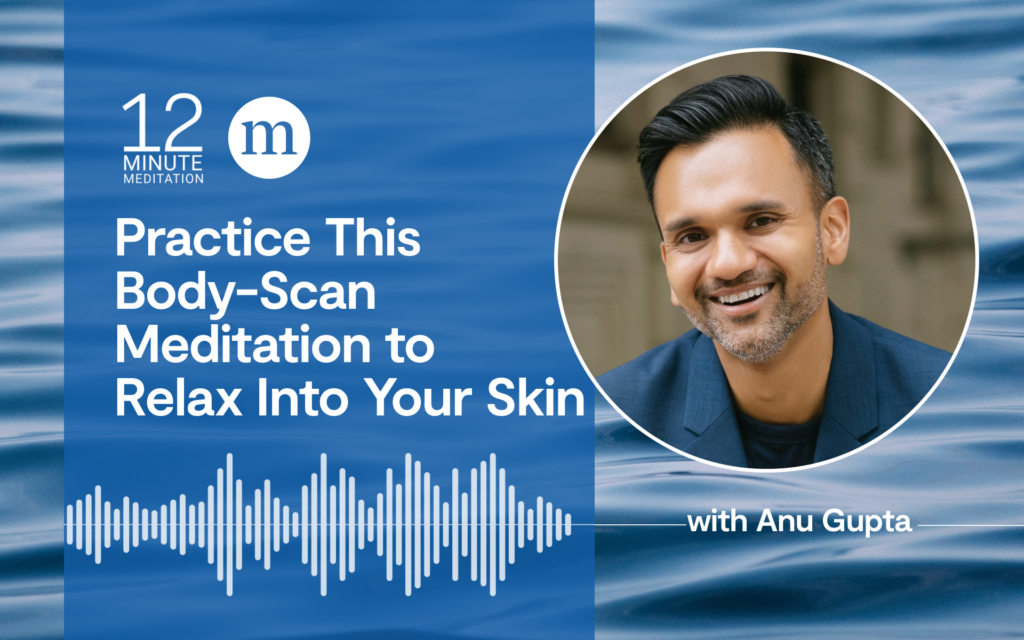
    This week, Anu Gupta leads us through a detailed body scan, guiding us to relax, release, and shift our energy back to the present moment, coming back from any distracting thoughts and worries.

    Here and now, we can return to our breath. Take this time to feel wonder and gratitude for every part of your physical body, from head to toe, just the way you are today. Relax and release. With this practice, you’ll cultivate a sense of grounding and openness as you let this energy of relaxation soothe your whole body.

    1. Come to a comfortable seated position. As much as you can without creating tension, keep your spine long, feet planted on the ground, hands resting on your knees. Relax your shoulders, neck, and jaw, opening up your chest. Bring your eyes to a gentle close or place your gaze at a stationary point in front of you. 
    2. Bring your attention to your forehead. Do you notice any sensations in the forehead? Perhaps some holding, some tightness. See if you can relax and release. Consciously repeat those phrases: Relax. Release. 
    3. Now bring your attention to your jaw and your tongue. This is often a place we collect a lot of tension, a lot of tightness. So see if you can relax and release. 
    4. If the mind has begun to drift again, notice what it’s doing. Perhaps it’s thinking, or planning. Whatever it is, it’s just a habit. See if you can bring your awareness back to your jaw. This is the practice that we’re developing, the practice of returning to the present moment and bringing mindfulness to our body. Relax, release. 
    5. Now move your attention to your chest, releasing any holding. Feel a sense of expansion and openness. Relax. Release. Come down to your belly, noticing the expansion of the belly out on your inhales and the way it comes back in on your exhales. See if you can relax and release, refocusing your attention on your body in the now. 
    6. Now bring your attention to your arms. Your left arm. Your right arm. Your left hand. Your right hand. Notice if there’s any holding there. Notice the sensations of holding. Perhaps a tightness, some tingling. Be with your mind, and see if you can loosen, relax, release. We have the most nerve endings here, so often we feel a “doing” energy in our hands. But in this moment, we have nowhere to be, nowhere to go. Nothing to do, but just being aware, being mindful of what’s always here: our bodies. Relax. Release. 
    7. Bring your attention to your legs. Your thighs. Your knees. Notice any holding, any tension. Move down to your feet. Your left foot. Your right foot. Notice any contraction, any tension there. Gently focus on surrendering, releasing all that energy. Relax. Release. 
    8. Now take that energy of relaxation to all other parts of your body. See if there’s any other body part that’s holding some tension, some tightness. Right now, there is nowhere to go, no place to be but here. Savor the ease and openness of being here in your body. 
    9. Now bring your attention to your skin, the largest organ in our body. Notice what the skin feels like, this covering that really keeps the entirety of our body together. It regulates our body temperature, maintains homeostasis. In this moment, you’re just feeling the skin across your face, your scalp, your torso, your chest, your arms, your legs. Notice any sensations. What do they feel like? There’s no need to change them, just observe them.  
    10. You can bring this energy of release of relaxation to your body any time you notice holding or tension. This is the practice we’re cultivating, the practice of mindfulness. Notice if the mind has drifted. What is it doing? And see if you can bring it back to your body. Just for these last few moments, take these last few seconds to savor the openness you may feel in your body. This is available to you at any time, anywhere. By bringing awareness to your inner experience and to your body, you’ll be better able to make decisions that align with your purpose and values. 
    11. After your next exhale, bring your chin to your chest. If your eyes were closed, gently open them. Thank you for practicing today. Have a wonderful day ahead. 


    Source link