Tag: REDUCE

  • Do Vitamin C Supplements Help Reduce Anxiety?

    Do Vitamin C Supplements Help Reduce Anxiety?

    What are the risks and benefits of using vitamin C for depression and anxiety?

    “In adults, emerging evidence suggests that higher daily intake of fiber-rich fruit and vegetable servings is associated with lower incidences of anxiety, greater happiness, higher life satisfaction, and greater social-emotional well-being,” says a review in the journal Nutrients. So, “persuading people to consume more fruits and vegetables may not only benefit their physical health in the long-run, but also their mental well-being in the short-run,” concluded a study in Social Science & Medicine. Fruit consumption, for example, has a protective association with leading killers like heart disease, stroke, diabetes, and cancer, as well as depression. The question is why?

    Several mechanisms have been proposed. For example, one posits it’s the antioxidant and anti-inflammatory properties of produce, which scavenge the free radicals that are involved in some of the inflammation associated with depression. If that’s the case, what about simply taking vitamin C supplements? The brain has some of the highest levels of vitamin C in the body, so it’s thought that if extra vitamin C is consumed, it may have some sort of therapeutic role in brain diseases, especially given that it is not just an antioxidant, but also has other critical functions in the brain, such as helping to build neurotransmitters like dopamine. But you don’t know whether it actually helps until you put it to the test.

    One study found a beneficial effect of adding vitamin C as an adjunct treatment to an antidepressant, while another study found no benefit from vitamin C supplementation.

    So, there are mixed results for vitamin C and depression. Another study found no benefit when it came to depression, but those randomized to vitamin C instead of placebo pills did show a significant decrease in anxiety level. And this wasn’t only seen in that study.

    The effects of oral vitamin C supplementation on anxiety in high school students were studied in a double-blind, randomized, placebo-controlled trial. The teens were given 500 mg a day of vitamin C or a placebo. That daily amount of vitamin C is about what you’d find in five oranges, four yellow kiwifruit or guavas, or one and a half yellow bell peppers. Within just two weeks, the vitamin C reduced anxiety levels compared to placebo, as well as provided a significant drop in heart rate.

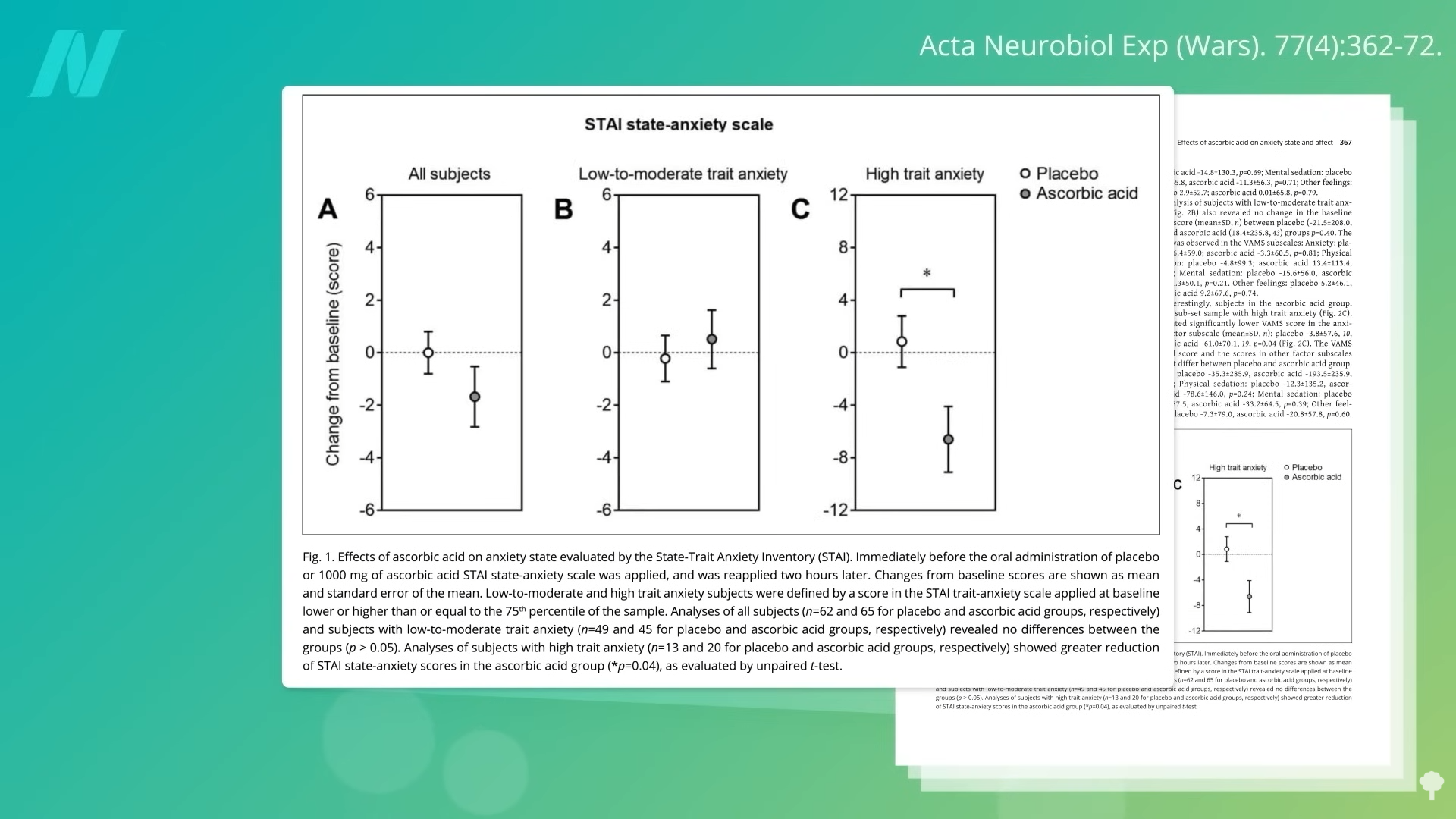
    Given these data showing that vitamin C may have an anxiety-reducing effect, researchers sought to find out if a single dose could acutely affect emotional states. And indeed, within only two hours of taking some vitamin C, study participants experienced a significant drop in anxiety compared to placebo, though only among those who started out the most anxious in the first place, as you can see below and at 2:42 in my video Do Vitamin C Supplements Help With Anxiety?.
     

    As a bonus, vitamin C supplementation may lower our blood pressure a few points, but whole fruits and vegetables can do the same thing—and may even do it better for those who need it the most, as shown below and at 2:53 in my video.

    As I’ve shown previously, simply adding just two servings of fruits and vegetables a day can have psychological well-being benefits within only two weeks—and without the kidney stone risk associated with vitamin C supplements, though that appears to be only a problem in men.

    Doctor’s Note

    For more on vitamin C and on anxiety, check out related posts below.



    Source link

  • From Stress to Serenity: How Gratitude Practice Can Reduce Anxiety and Burnout

    From Stress to Serenity: How Gratitude Practice Can Reduce Anxiety and Burnout

    Introduction to Gratitude Practice

    In today’s fast-paced world, stress and anxiety have become an unfortunate norm for many individuals. The constant pressure to perform, the fear of not meeting expectations, and the overwhelming amount of information we are exposed to daily can lead to feelings of burnout and exhaustion. However, there is a powerful tool that can help alleviate these negative emotions and cultivate a sense of serenity: gratitude practice. By focusing on the things we are thankful for, we can shift our perspective, calm our minds, and improve our overall well-being.

    The Science Behind Gratitude

    Gratitude is more than just a feeling; it’s a practice that can have a profound impact on our mental and physical health. Research has shown that practicing gratitude can increase the production of neurotransmitters such as dopamine, serotonin, and endorphins, which are associated with feelings of happiness, relaxation, and reduced stress. Additionally, gratitude has been linked to lower levels of cortisol, the hormone responsible for stress and anxiety. By incorporating gratitude into our daily routine, we can literally change our brain chemistry and develop a more positive outlook on life.

    How Gratitude Reduces Anxiety and Burnout

    So, how exactly does gratitude practice reduce anxiety and burnout? When we focus on the things we are grateful for, we begin to shift our attention away from negative thoughts and worries. This helps to calm the mind and reduce rumination, which is a common symptom of anxiety. By acknowledging the good things in our lives, we also begin to develop a sense of perspective, realizing that our problems are not the only things that exist. This can help us feel more grounded and centered, even in the midst of chaos. Furthermore, gratitude practice can help us develop a sense of resilience, allowing us to bounce back from adversity and navigate challenging situations with greater ease.

    Simple Ways to Incorporate Gratitude into Your Daily Life

    Incorporating gratitude into your daily life is easier than you think. Here are a few simple ways to get started:

    • Keep a gratitude journal: Take a few minutes each day to write down three things you are thankful for.
    • Share gratitude with a friend or family member: Express your appreciation for someone in your life, whether it’s a kind word, a text message, or a small gift.
    • Practice mindfulness: Take a few minutes each day to focus on the present moment, without judgment, and acknowledge the good things that are happening right now.
    • Create a gratitude ritual: Develop a daily or weekly ritual, such as lighting a candle or saying a prayer, to help you focus on the things you are grateful for.

    The Benefits of Gratitude Practice

    The benefits of gratitude practice are numerous and well-documented. Some of the most significant advantages include:

    • Improved mental health: Gratitude has been shown to reduce symptoms of anxiety and depression, and even help alleviate symptoms of post-traumatic stress disorder (PTSD).
    • Better sleep: Practicing gratitude before bed can help improve sleep quality and duration.
    • Stronger relationships: Expressing gratitude towards others can strengthen relationships and build stronger bonds.
    • Increased resilience: Gratitude can help us develop a sense of resilience, allowing us to navigate challenging situations with greater ease.
    • Improved physical health: Studies have shown that gratitude is linked to lower blood pressure, a healthier weight, and a stronger immune system.

    Overcoming Obstacles to Gratitude Practice

    While gratitude practice can be incredibly beneficial, it’s not always easy to get started. Here are a few common obstacles to gratitude practice, and some tips for overcoming them:

    • Difficulty finding things to be grateful for: Start small, and focus on the little things, such as a good cup of coffee or a beautiful sunset.
    • Feeling like you don’t have time: Incorporate gratitude into your daily routine, such as right before bed or during your morning commute.
    • Struggling with negative thoughts: Practice mindfulness and acknowledge your negative thoughts, but also make an effort to focus on the positive aspects of your life.

    Gratitude in the Workplace

    Gratitude is not just limited to our personal lives; it can also have a profound impact on our professional well-being. When we practice gratitude in the workplace, we can:

    • Improve our relationships with colleagues and supervisors
    • Increase our sense of job satisfaction and engagement
    • Develop a more positive and resilient attitude towards challenges and setbacks
    • Improve our communication and collaboration skills
    • Enhance our overall well-being and reduce burnout

    Cultivating Gratitude in Children

    Teaching children the practice of gratitude can have a lasting impact on their mental and emotional well-being. Here are a few ways to cultivate gratitude in children:

    • Model gratitude yourself: Children learn by example, so make sure to express gratitude in front of them.
    • Create a gratitude ritual: Develop a daily or weekly ritual, such as sharing three things you are grateful for at dinner time.
    • Encourage gratitude journaling: Help your child start a gratitude journal, and encourage them to write or draw something they are thankful for each day.
    • Practice mindfulness: Teach your child mindfulness techniques, such as deep breathing and meditation, to help them focus on the present moment.

    Conclusion

    In conclusion, gratitude practice is a powerful tool that can help reduce anxiety and burnout, and cultivate a sense of serenity in our lives. By incorporating gratitude into our daily routine, we can shift our perspective, calm our minds, and improve our overall well-being. Whether it’s through journaling, mindfulness, or simply sharing gratitude with others, there are many ways to make gratitude a part of our lives. So why not give it a try? Take a few minutes each day to focus on the things you are thankful for, and watch your life transform in amazing ways.

    FAQs

    Q: What is gratitude practice, and how does it work?
    A: Gratitude practice is the act of focusing on the things you are thankful for, and it can have a profound impact on our mental and physical health. By practicing gratitude, we can shift our perspective, calm our minds, and improve our overall well-being.
    Q: How can I incorporate gratitude into my daily life?
    A: There are many ways to incorporate gratitude into your daily life, including keeping a gratitude journal, sharing gratitude with a friend or family member, practicing mindfulness, and creating a gratitude ritual.
    Q: What are the benefits of gratitude practice?
    A: The benefits of gratitude practice include improved mental health, better sleep, stronger relationships, increased resilience, and improved physical health.
    Q: Can gratitude practice really reduce anxiety and burnout?
    A: Yes, gratitude practice has been shown to reduce symptoms of anxiety and depression, and even help alleviate symptoms of post-traumatic stress disorder (PTSD).
    Q: How can I teach my child to practice gratitude?
    A: You can teach your child to practice gratitude by modeling gratitude yourself, creating a gratitude ritual, encouraging gratitude journaling, and practicing mindfulness.
    Q: Is gratitude practice a replacement for therapy or medication?
    A: No, gratitude practice is not a replacement for therapy or medication. While it can be a powerful tool for improving mental health, it should be used in conjunction with other forms of treatment, under the guidance of a healthcare professional.

  • The Mindful Athlete: How Mindfulness Can Improve Your Performance and Reduce Injury

    The Mindful Athlete: How Mindfulness Can Improve Your Performance and Reduce Injury

    Introduction to Mindfulness in Sports

    The world of sports has witnessed a significant shift in recent years, with athletes and coaches recognizing the importance of mental preparation in achieving success. One concept that has gained popularity in this context is mindfulness. Mindfulness, in essence, is the practice of being fully present and engaged in the current moment, while cultivating a non-judgmental awareness of one’s thoughts, feelings, and bodily sensations. This article explores how mindfulness can improve athletic performance, reduce the risk of injury, and enhance overall well-being.

    What is Mindfulness and How Does it Apply to Sports?

    Mindfulness is rooted in ancient Eastern spiritual traditions but has been secularized and adapted for modern applications, including sports. In the context of athletics, mindfulness involves training the mind to focus on the present moment, letting go of distractions, and developing a greater awareness of the body’s physical and emotional states. This can be particularly beneficial for athletes, who often face high levels of stress, pressure to perform, and risk of injury. By practicing mindfulness, athletes can improve their concentration, resilience, and ability to manage stress, all of which are critical for optimal performance.

    The Benefits of Mindfulness for Athletes

    The benefits of mindfulness for athletes are multifaceted and well-documented. Firstly, mindfulness can enhance focus and concentration, allowing athletes to stay fully engaged in their training and competition. This improved focus can lead to better execution of skills, faster reaction times, and more effective decision-making under pressure. Secondly, mindfulness can help athletes manage stress and anxiety, which are common barriers to performance. By learning to recognize and manage their emotional states, athletes can maintain a more consistent level of performance, even in high-pressure situations.

    Mindfulness and Injury Prevention

    In addition to improving performance, mindfulness can also play a crucial role in injury prevention. When athletes are more aware of their body’s physical state, they are better able to recognize early signs of fatigue, strain, or potential injury. This heightened awareness allows them to adjust their training or competition strategy, reducing the risk of exacerbating an existing condition or developing a new one. Furthermore, mindfulness practices such as meditation and deep breathing can help reduce muscle tension and improve flexibility, both of which are key factors in preventing injuries.

    Implementing Mindfulness in Your Training

    So, how can athletes incorporate mindfulness into their training regimen? There are several strategies that can be effective. One approach is to start with mindfulness meditation, which involves setting aside a few minutes each day to focus on the breath, observe thoughts and feelings without judgment, and cultivate a sense of calm and clarity. Another approach is to integrate mindfulness into physical training, for example, by paying close attention to the sensations in the body during exercise, or by using mindfulness to enhance the quality of movement and technique.

    Mindfulness in Team Sports

    Mindfulness is not limited to individual sports; it can also be highly beneficial in team sports. When team members practice mindfulness together, they can develop a greater sense of cohesion and communication, leading to more effective teamwork and strategy execution. Mindfulness can also help team members manage the emotional dynamics of competition, such as dealing with frustration, anger, or disappointment, in a more constructive way. By fostering a mindful team culture, coaches and athletes can create an environment that supports peak performance, mutual respect, and enjoyment of the game.

    Overcoming Challenges and Maintaining Motivation

    Like any new skill, incorporating mindfulness into an athlete’s routine can come with its challenges. One of the main obstacles is finding the time and discipline to maintain a regular mindfulness practice. Athletes often have demanding training schedules, leaving little time for additional activities. However, even small moments of mindfulness practice, such as taking a few deep breaths before a competition or focusing on the present moment during warm-up routines, can be beneficial. Another challenge is maintaining motivation, especially when the benefits of mindfulness may not be immediately apparent. Athletes can overcome this by setting realistic goals, tracking progress, and celebrating small victories along the way.

    The Role of Coaches and Trainers

    Coaches and trainers play a vital role in supporting athletes in their mindfulness journey. By understanding the principles and benefits of mindfulness, they can encourage and guide athletes in incorporating mindfulness practices into their training. This might involve leading team meditation sessions, providing resources on mindfulness, or simply creating an environment that values mental preparation as much as physical training. Coaches can also model mindful behavior themselves, demonstrating the importance of mindfulness in achieving success and well-being in sports.

    Conclusion

    The integration of mindfulness into athletic training represents a significant shift towards a more holistic approach to sports performance. By cultivating mindfulness, athletes can enhance their focus, resilience, and overall well-being, leading to improved performance and a reduced risk of injury. As the sports world continues to evolve, the importance of mental preparation will only continue to grow, making mindfulness a valuable tool for athletes, coaches, and teams seeking to gain a competitive edge. Whether you are a professional athlete or simply enjoy sports as a hobby, embracing mindfulness can help you reach your full potential and enjoy the process of improvement and competition.

    FAQs

    Q: What is mindfulness, and how is it different from meditation?

    A: Mindfulness is the practice of being fully present and aware of the current moment, while meditation is a specific technique used to cultivate mindfulness. Meditation involves focusing on the breath, a mantra, or the body to achieve a state of inner calm and awareness.

    Q: How can I start practicing mindfulness as an athlete?

    A: Start by setting aside a few minutes each day for mindfulness meditation or deep breathing exercises. You can also integrate mindfulness into your physical training by paying close attention to your body and movements.

    Q: Can mindfulness really improve my athletic performance?

    A: Yes, mindfulness has been shown to improve focus, concentration, and resilience, all of which are critical for optimal athletic performance. It can also help manage stress and anxiety, which can be barriers to performance.

    Q: How long does it take to see the benefits of mindfulness?

    A: The benefits of mindfulness can be experienced immediately, such as feeling more calm and focused after a meditation session. However, consistent practice over time is necessary to see significant and lasting improvements in athletic performance and overall well-being.

    Q: Do I need to be religious or spiritual to practice mindfulness?

    A: No, mindfulness is a secular practice that can be adapted and beneficial to anyone, regardless of their religious or spiritual beliefs. It is based on universal principles of psychology and physiology.

    Q: Can mindfulness help with injury recovery?

    A: Yes, mindfulness can play a role in injury recovery by helping athletes manage pain, reduce stress, and stay motivated during the rehabilitation process. It can also help athletes return to their sport with a greater awareness of their body, reducing the risk of re-injury.

  • Self-Care for Busy Lives: Quick and Easy Tips to Reduce Stress and Increase Productivity

    Self-Care for Busy Lives: Quick and Easy Tips to Reduce Stress and Increase Productivity

    Introduction to Self-Care for Busy Lives

    In today’s fast-paced world, it’s easy to get caught up in the hustle and bustle of daily life. With work, family, and social obligations, it can be challenging to find time for oneself. However, neglecting self-care can lead to burnout, decreased productivity, and a weakened immune system. The good news is that self-care doesn’t have to be time-consuming or expensive. With a few quick and easy tips, you can reduce stress and increase productivity, even with a busy schedule.

    Understanding the Importance of Self-Care

    Self-care is not just a luxury, it’s a necessity. It’s essential to take care of your physical, emotional, and mental well-being to maintain a healthy work-life balance. When you prioritize self-care, you’ll experience improved mood, increased energy, and enhanced focus. Self-care is not selfish; it’s essential to being the best version of yourself. By incorporating self-care into your daily routine, you’ll be better equipped to handle the demands of your busy life.

    Quick and Easy Self-Care Tips

    Here are some quick and easy self-care tips to help you reduce stress and increase productivity:

    • Take a few deep breaths: When you’re feeling overwhelmed, take a few minutes to breathe deeply and slowly. This simple technique can help calm your mind and reduce stress.
    • Get moving: Exercise is a great way to reduce stress and increase energy. Even a short walk or some stretching exercises can make a big difference.
    • Practice gratitude: Take a minute each day to reflect on the things you’re grateful for. This helps shift your focus to the positive aspects of your life.
    • Connect with nature: Spend time outdoors, whether it’s walking in a park, hiking, or simply sitting in a garden or on a balcony with plants.
    • Use positive self-talk: Be kind to yourself and practice positive affirmations. This helps to boost your mood and confidence.

    Time Management for Self-Care

    Effective time management is crucial for incorporating self-care into your busy schedule. Here are some tips to help you make time for self-care:

    • Schedule self-care: Treat self-care as a non-negotiable part of your daily routine, just like brushing your teeth or taking a shower.
    • Start small: Begin with small, manageable self-care activities, such as taking a few deep breaths or going for a short walk.
    • Prioritize: Identify the most important self-care activities for you and prioritize them.
    • Use your commute: Use your commute to practice self-care, such as listening to a podcast, meditating, or reading a book.

    Self-Care for the Mind

    Taking care of your mental health is essential for overall well-being. Here are some self-care tips for the mind:

    • Meditate: Meditation is a powerful tool for reducing stress and increasing focus. Even a few minutes a day can make a big difference.
    • Practice mindfulness: Be present in the moment and focus on your thoughts, feelings, and sensations.
    • Read: Reading can be a great way to relax and escape from the stresses of daily life.
    • Learn something new: Engage in a hobby or activity that challenges your mind and helps you learn something new.

    Self-Care for the Body

    Taking care of your physical health is essential for overall well-being. Here are some self-care tips for the body:

    • Get enough sleep: Aim for 7-8 hours of sleep per night to help your body and mind recharge.
    • Eat a healthy diet: Fuel your body with a balanced diet that includes plenty of fruits, vegetables, whole grains, and lean protein.
    • Stay hydrated: Drink plenty of water throughout the day to help your body function at its best.
    • Exercise regularly: Aim for at least 30 minutes of moderate-intensity exercise per day to help reduce stress and increase energy.

    Self-Care for the Soul

    Taking care of your emotional and spiritual well-being is essential for overall happiness. Here are some self-care tips for the soul:

    • Connect with loved ones: Spend quality time with family and friends to help you feel connected and supported.
    • Practice self-compassion: Be kind and understanding with yourself, just as you would with a close friend.
    • Engage in activities that bring you joy: Whether it’s painting, playing music, or cooking, make time for activities that bring you happiness and fulfillment.
    • Practice forgiveness: Let go of grudges and forgive yourself and others to help you move forward and find peace.

    Conclusion

    Self-care is not a luxury, it’s a necessity. By incorporating quick and easy self-care tips into your daily routine, you can reduce stress and increase productivity, even with a busy schedule. Remember to prioritize self-care, schedule it into your daily routine, and start small. Take care of your physical, emotional, and mental well-being, and make time for activities that bring you joy and fulfillment. By prioritizing self-care, you’ll be better equipped to handle the demands of your busy life and live a happier, healthier, and more balanced life.

    FAQs

    Here are some frequently asked questions about self-care:

    Q: What is self-care?
    A: Self-care is the practice of taking care of one’s physical, emotional, and mental well-being.

    Q: Why is self-care important?
    A: Self-care is essential for maintaining a healthy work-life balance, reducing stress, and increasing productivity.

    Q: How can I incorporate self-care into my busy schedule?
    A: Start small, schedule self-care into your daily routine, and prioritize activities that bring you joy and fulfillment.

    Q: What are some quick and easy self-care tips?
    A: Take a few deep breaths, get moving, practice gratitude, connect with nature, and use positive self-talk.

    Q: How can I prioritize self-care when I’m feeling overwhelmed?
    A: Start by taking a few minutes each day to breathe deeply and slowly, and then gradually add more self-care activities into your routine.

    Q: Is self-care selfish?
    A: No, self-care is not selfish. It’s essential to taking care of oneself to maintain a healthy and balanced life.

    Q: How can I make self-care a habit?
    A: Schedule self-care into your daily routine, start small, and be consistent. Remember, self-care is a non-negotiable part of maintaining a healthy and happy life.

  • 10 Best Yoga Poses for Stress Relief: Reduce Anxiety and Find Inner Peace (Target keywords: yoga poses for stress relief, reduce anxiety)

    10 Best Yoga Poses for Stress Relief: Reduce Anxiety and Find Inner Peace (Target keywords: yoga poses for stress relief, reduce anxiety)

    Stress and anxiety have become an integral part of modern life, affecting millions of people worldwide. The constant pressure to perform, the strain of daily responsibilities, and the uncertainty of the future can all take a toll on one’s mental and emotional well-being. Fortunately, there are many effective ways to manage stress and anxiety, and one of the most popular and beneficial methods is practicing yoga. Yoga poses for stress relief have been shown to reduce anxiety, promote relaxation, and improve overall mental health. In this article, we will explore the 10 best yoga poses for stress relief, and provide tips on how to incorporate them into your daily routine.

    Understanding the Benefits of Yoga Poses for Stress Relief

    Yoga is a ancient practice that combines physical postures, breathing techniques, and meditation to promote physical, mental, and emotional well-being. When it comes to reducing anxiety and stress, yoga poses for stress relief can be particularly effective. By practicing these poses, individuals can experience a range of benefits, including reduced muscle tension, improved mood, and enhanced cognitive function. Additionally, yoga poses for stress relief can help to slow down the heart rate, lower blood pressure, and promote relaxation, all of which can contribute to a sense of inner peace and calm.

    Top 10 Yoga Poses for Stress Relief

    1. Child’s Pose (Balasana): This pose is a great starting point for anyone looking to reduce anxiety and stress. By kneeling on the mat and stretching the arms out in front, individuals can release tension in the neck and back, and promote a sense of relaxation.
    2. Downward-Facing Dog (Adho Mukha Svanasana): This pose is a staple of yoga practice, and can help to reduce stress and anxiety by stretching the entire body, from the shoulders to the toes.
    3. Cobra Pose (Bhujangasana): This pose is a great way to open up the chest and shoulders, and can help to reduce tension and stress in the upper body.
    4. Cat-Cow Pose (Marjaryasana-Bitilasana): This pose is a gentle and flowing movement that can help to loosen up the spine and neck, and promote relaxation.
    5. Seated Forward Fold (Paschimottanasana): This pose is a great way to stretch the entire back side of the body, from the shoulders to the heels, and can help to reduce stress and anxiety.
    6. Plank Pose (Phalakasana): This pose is a great core strengthener, and can help to reduce stress and anxiety by engaging the entire body and promoting a sense of focus.
    7. Tree Pose (Vrksasana): This pose is a great way to improve balance and stability, and can help to reduce stress and anxiety by promoting a sense of grounding and calm.
    8. Seated Twist (Bharadvajasana): This pose is a great way to release tension in the spine and torso, and can help to reduce stress and anxiety by promoting a sense of relaxation.
    9. Legs Up The Wall Pose (Viparita Karani): This pose is a great way to invert the body and promote relaxation, and can help to reduce stress and anxiety by slowing down the heart rate and promoting a sense of calm.
    10. Savasana (Corpse Pose): This pose is a great way to end a yoga practice, and can help to reduce stress and anxiety by promoting a sense of deep relaxation and inner peace.

    Tips for Practicing Yoga Poses for Stress Relief

    When practicing yoga poses for stress relief, there are several tips to keep in mind. Firstly, it’s essential to listen to your body and only go as far as feels comfortable. secondly, try to focus on your breath and let go of any distracting thoughts or worries. thirdly, practice regularly, ideally at the same time each day, to experience the full benefits of yoga poses for stress relief. Lastly, consider incorporating other stress-reducing techniques, such as meditation or deep breathing, into your yoga practice to enhance the benefits.

    Reducing Anxiety with Yoga Poses for Stress Relief

    In addition to reducing stress, yoga poses for stress relief can also be highly effective in reducing anxiety. By practicing these poses, individuals can experience a range of benefits, including reduced symptoms of anxiety, improved mood, and enhanced cognitive function. Some of the most effective yoga poses for anxiety include Child’s Pose, Downward-Facing Dog, and Savasana, all of which can help to promote relaxation and reduce feelings of anxiety.

    Conclusion

    Yoga poses for stress relief are a powerful tool for reducing anxiety and promoting relaxation. By incorporating these poses into your daily routine, individuals can experience a range of benefits, including reduced muscle tension, improved mood, and enhanced cognitive function. Remember to listen to your body, focus on your breath, and practice regularly to experience the full benefits of yoga poses for stress relief. Whether you’re a beginner or an experienced yogi, these poses can help you to reduce anxiety, find inner peace, and improve your overall mental health.

    Frequently Asked Questions

    Q: What are the best yoga poses for stress relief?
    A: The 10 yoga poses outlined in this article, including Child’s Pose, Downward-Facing Dog, and Savasana, are all highly effective in reducing stress and anxiety.

    Q: How often should I practice yoga poses for stress relief?
    A: Ideally, practice yoga poses for stress relief at the same time each day, ideally 2-3 times per week, to experience the full benefits.

    Q: Can yoga poses for stress relief help with anxiety?
    A: Yes, yoga poses for stress relief can be highly effective in reducing anxiety, and can help to promote relaxation, improve mood, and enhance cognitive function.

    Q: Do I need to be flexible to practice yoga poses for stress relief?
    A: No, you don’t need to be flexible to practice yoga poses for stress relief. These poses are designed to be accessible to everyone, regardless of age or ability.

    Q: How long should I hold each pose?
    A: Hold each pose for 3-5 breaths, or as long as feels comfortable, to experience the full benefits of yoga poses for stress relief.

    Q: Can I practice yoga poses for stress relief at home?
    A: Yes, you can practice yoga poses for stress relief at home, using online tutorials or following along with a yoga video. However, it’s recommended to practice with a qualified yoga instructor to ensure proper alignment and technique.

    10-best-yoga-poses-for-stress-relief-reduce-anxiety-and-find-inner-peace-target-keywords-yoga-poses-for-stress-relief-reduce-anxiety

  • Arkangel AI Helps Physicians Reduce Up To 79% Of Their Time

    Arkangel AI Helps Physicians Reduce Up To 79% Of Their Time

    You’re a doctor, nurse, specialist, or hospital administrator—navigating a fast-paced, high-stakes environment every day. Between caring for patients, documenting charts, and keeping up with the latest research, your time is stretched thin.

    Yet, one challenge remains constant: quickly finding reliable, evidence-based answers when you need them most.

    Now imagine cutting down the time it takes to access clinical guidelines, systematic reviews, and trusted recommendations—empowering you to make faster, more informed decisions. Spend less time searching and more time selecting the best diagnostic and treatment options for your patients—without the overwhelm of information overload.

    Arkangel AI medical search engine, Medsearch, achieves this by streamlining your workflow.

    Physicians today face an overload of medical information that makes daily work difficult. In the face of complex diseases (such as Alzheimer’s or Cancer), keeping up to date with clinical evidence consumes valuable hours.

    At the same time, clinical decision-making remains manual, subjective, and slow due to the high variability of treatment responses. These inefficient processes increase hospital delays and reduce patient care time.

    Moreover, in low-resource settings, the problem is compounded: lack of access to expensive tests limits early detection of chronic diseases. Taken together, these operational and hospital management failures can lead to significant revenue losses and overburdening scenarios for healthcare professionals.

    Arkangel AI: New Tools At The Doctor’s Service

    To address these challenges, Arkangel AI, a company that develops digital employees, developed AI-based solutions that automate the search for clinical evidence and the interpretation of medical data.

    For example, they created Pandora, an AI system trained to read unstructured electronic medical records with up to 92% accuracy in extracting information and capable of assigning evidence-based treatments with 93% accuracy.

    In parallel, they designed Medsearch, a real-time clinical search engine that goes beyond simple summaries: it delivers clinical answers directly linked to relevant scientific literature, processes images and PDFs to provide evidence-based recommendations and clinical practice guidelines, and tailors results to the clinical context.

    According to published data, Medsearch responds with nearly 90% accuracy in real time and helps save up to 79% of professionals’ time. “Before, it took me three days to complete my clinical or research work—now, with Medsearch, it takes me just three hours,” says Dr. Luis from Portugal, a Medsearch user.

    Improved Diagnostics and Early Prediction

    Arkangel AI has applied its technology to several real clinical cases. For example, it developed DACA, a conversational agent trained with 17 national and international clinical guidelines to answer questions about Alzheimer’s disease.

    In validated tests, DACA achieved 100% accuracy, sensitivity, and agreement in answering complex clinical cases, exceeding the averages of many professionals.

    Another case is chronic kidney disease (CKD): they trained an ensemble learning model using simple data (age, BMI, hypertension, diabetes time) on Colombian and Peruvian patients.

    This algorithm achieved 91% sensitivity in diabetics (10% higher thanks to the ensemble approach) and 93% accuracy in non-diabetics, with an area under the curve of 0.948. These values indicate that the model predicts very well who will develop CKD without relying on complex tests, which is critical in hospitals with limited resources.

    They have processed 1.7 million patients. They are implementing this same approach for oncology, rare diseases, neurological, cardiometabolic, and respiratory conditions.

    In practice, this means enabling early detection and automated patient screening, optimizing healthcare institutions’ operations by unlocking 80% of the unstructured data. As a result, this solution “enables earlier detection, earlier treatment, and optimizes hospital operations—boosting revenue by up to 75% and improving patient care”. Arkangel AI innovations offer measurable improvements: from more accurate diagnoses to significant time savings in care.

    “We work to make the healthcare system more accessible, efficient, and optimal through new technologies”, says Laura Velásquez, President of Arkangel AI, who started the company after losing three members of her family to medical problems in Canada.

    That loss drove her to build tools for early disease detection. Now, Arkangel AI aims to impact one billion lives globally by 2030. Already, they’ve made 90 million predictions across 18 countries, proving their reach.

    How Arkangel AI Data Intelligence Strengthens Health Systems

    Hospitals today struggle to balance their budgets amid rising healthcare costs and limited resources.

    Pandora helps medical institutions make the most of every dollar through intelligent resource allocation. The substantial savings enabled them to purchase vital medical equipment and expand their services.

    Medsearch technology speeds up your diagnostic processes, research and clinical workflows throughout the entire patient journey and the healthcare professional’s work. Your daily clinical decisions directly impact the financial health of your healthcare organisation.

    Inefficiencies drain resources that could otherwise fund patient care improvements and clinical innovations. Financial officers from multiple healthcare systems will report significant return on investment within twelve months of Arkangle AI implementation. The cost savings compound as staff become more proficient with the analytics tools embedded in the platform.

    If interested in learning more or using these tools, visit MedSearch or explore their website.

    Source link

  • RFK Jr. to End ‘Godsend’ Narcan Program That Helped Reduce Overdose Deaths Despite His Past Heroin Addiction

    RFK Jr. to End ‘Godsend’ Narcan Program That Helped Reduce Overdose Deaths Despite His Past Heroin Addiction

    Despite his own history of overcoming heroin addiction, Health and Human Services Secretary Robert F. Kennedy Jr. is backing plans to end a federal Narcan distribution program credited with helping drive a steep drop in U.S. overdose deaths.

    Narcan, the widely-used overdose reversal drug, has played a major role in reducing opioid-related deaths, particularly amid the fentanyl crisis.

    A $56 million annual grant program through the Substance Abuse and Mental Health Services Administration (SAMHSA) has funded the distribution of Narcan to first responders across the country, training over 66,000 individuals and distributing more than 282,500 kits in 2024 alone. Recent CDC data shows a nearly 24% drop in overdose deaths for the 12 months ending September 2024, the sharpest one-year decline in decades—an achievement partly attributed to widespread naloxone access.

    Speaking at the Illicit Drug Summit in Nashville on Thursday, Kennedy reflected on his personal struggle with addiction and emphasized the importance of community, treatment, and hope in solving the drug crisis, USA Today reported. However, behind the scenes, the Trump administration’s draft budget includes major cuts to addiction programs, including the termination of the Narcan grant, according to The Independent.

    “Narcan has been kind of a godsend as far as opioid epidemics are concerned, and we certainly are in the middle of one now with fentanyl,” Donald McNamara of the Los Angeles County Sheriff’s Department said. “We need this funding source because it’s saving lives every day.”

    Though Kennedy has previously praised interventions like Narcan as critical to saving lives, he now frames the crisis as one requiring deeper, spiritual and societal change rather than relying solely on “nuts and bolts” medical solutions.

    The proposal has drawn swift condemnation from addiction specialists and public health advocates, who warn that cutting Narcan funding could reverse the progress made against overdose deaths. Critics argue that removing life-saving tools while broader societal fixes are slowly pursued would leave vulnerable communities at risk.

    While national overdose deaths have declined, experts warn the epidemic is far from over, especially in states still experiencing surges. Ending federal Narcan support could slow or even reverse recent gains.

    Originally published on Latin Times

    Source link

  • The Power of Mindfulness: How Meditation Can Reduce Stress and Improve Mental Health

    The Power of Mindfulness: How Meditation Can Reduce Stress and Improve Mental Health

    The Power of Mindfulness: How Meditation Can Reduce Stress and Improve Mental Health

    Introduction

    In today’s fast-paced world, it’s easy to get caught up in the hustle and bustle of daily life and forget to take care of our mental well-being. The demands of work, family, and social responsibilities can leave us feeling stressed, anxious, and overwhelmed. But what if there was a way to reduce stress, improve mental health, and increase overall well-being? Enter mindfulness meditation, a simple yet powerful tool that has been shown to have a profound impact on our minds and bodies.

    What is Mindfulness Meditation?

    Mindfulness meditation is a practice that involves paying attention to the present moment, without judgment or distraction. It’s a state of being fully engaged with whatever is happening in the current moment, whether it’s physical sensations, emotions, or thoughts. The goal of mindfulness meditation is not to achieve a specific state or outcome, but rather to cultivate awareness, acceptance, and compassion for ourselves and the world around us.

    The Benefits of Mindfulness Meditation

    So, how can mindfulness meditation help reduce stress and improve mental health? Let’s take a look at some of the benefits:

    • Reduces stress and anxiety: Mindfulness meditation has been shown to decrease the production of stress hormones like cortisol, leading to a sense of calm and relaxation.
    • Improves mood: By cultivating positive emotions and perspectives, mindfulness meditation can help manage depression and reduce symptoms of anxiety.
    • Enhances emotional regulation: Mindfulness meditation helps us develop a greater awareness of our emotions, making it easier to recognize and manage emotions, rather than repressing or acting on them impulsively.
    • Increases self-awareness: Mindfulness meditation helps us develop a greater understanding of ourselves, our values, and our goals, leading to increased self-confidence and purpose.

    How to Practice Mindfulness Meditation

    If you’re new to mindfulness meditation, starting a regular practice can seem overwhelming. Here are some simple steps to get you started:

    • Find a quiet space: Find a quiet, comfortable, and distraction-free space where you can sit and focus on your breath.
    • Choose a meditation technique: There are many types of meditation, such as body scan, loving-kindness, and guided meditation. Experiment to find what works best for you.
    • Start small: Begin with short sessions (5-10 minutes) and gradually increase as you become more comfortable with the practice.
    • Be consistent: Aim to meditate daily, even if it’s just for a few minutes. Consistency is key to developing a habit.

    Overcoming Common Obstacles

    • Difficulty quieting the mind: This is normal! Don’t worry if you find your mind wandering. Gently bring your attention back to your chosen meditation object, such as your breath.
    • Feeling like you’re not doing it "right": Mindfulness meditation isn’t about achieving a specific state or outcome. It’s about being present and aware. Remember, it’s okay to make mistakes – it’s all part of the process.
    • Not having enough time: Even small amounts of meditation can be beneficial. Try to incorporate short sessions into your daily routine, such as right after waking or before bed.

    Conclusion

    In conclusion, mindfulness meditation is a powerful tool for reducing stress and improving mental health. By cultivating awareness, acceptance, and compassion, we can develop a greater sense of self-awareness and emotional regulation. While it may take some time and effort to establish a consistent practice, the rewards are well worth it. Take the first step today and start experiencing the benefits of mindfulness meditation for yourself.

    FAQs

    Q: I’m new to meditation. Is it difficult to get started?
    A: It’s not difficult to get started! Just find a quiet space, choose a meditation technique, and start small. You can always adjust as you become more comfortable with the practice.

    Q: Can I meditate anywhere?
    A: Yes! You can meditate anywhere you have a quiet space to sit and focus. Try meditating in nature, at home, or even in your office.

    Q: Will I fall asleep?
    A: It’s possible, especially if you’re new to meditation. If this happens, try setting a timer or meditating at a time of day when you’re more alert.

    Q: Can I meditate with music or distractions?
    A: Yes, you can use guided meditation apps or meditate with music, but try to minimize distractions for the most effective practice.

    By incorporating mindfulness meditation into your daily routine, you can develop greater awareness, reduce stress, and improve your overall mental health. Take the first step today and start experiencing the power of mindfulness for yourself.

  • 5 Simple Hacks to Increase Your Productivity and Reduce Stress

    5 Simple Hacks to Increase Your Productivity and Reduce Stress

    5 Simple Hacks to Increase Your Productivity and Reduce Stress

    Are you tired of feeling overwhelmed and stressed out? Do you find it difficult to stay focused and get things done? If so, you’re not alone! In today’s fast-paced world, it’s easy to get bogged down in a sea of responsibilities, leaving you feeling like you’re treading water just to keep your head above the surface. But what if you could break free from the cycle of stress and overwhelm, and start achieving your goals with ease? It’s possible, and it starts with a few simple hacks to boost your productivity and reduce stress.

    Hack #1: Prioritize Your Tasks

    The first step to increasing your productivity and reducing stress is to prioritize your tasks. This means making a list of all the things you need to do, and then ranking them in order of importance. This will help you focus on the most critical tasks, and ensure that you’re using your time and energy on the things that matter most.

    Tip: Take 10-15 minutes each morning to review your daily schedule and prioritize your tasks. This will help you stay on track and ensure that you’re making progress on the things that matter most.

    Hack #2: Use the Pomodoro Technique

    The Pomodoro Technique is a simple yet powerful tool for staying focused and productive. It’s based on the idea that you can focus for short, intense periods of time, followed by a brief break. This helps to maintain your energy and motivation, and avoid burnout.

    Tip: Work in focused 25-minute increments, followed by a 5-minute break. After four cycles, take a longer break of 15-30 minutes. This will help you stay focused and avoid burnout.

    Hack #3: Get Enough Sleep

    Sleep is essential for both physical and mental health, but it’s often the first thing to suffer when we’re stressed. However, getting enough sleep can actually help reduce stress and increase productivity. When you sleep, your brain processes and consolidates information, and your body repairs and rejuvenates itself. This can help you feel more focused, alert, and ready to take on the day.

    Tip: Aim for 7-9 hours of sleep each night, and establish a consistent sleep schedule. This will help you feel rested and refreshed, and ready to tackle the day.

    Hack #4: Use Music to Your Advantage

    Music can be a powerful tool for increasing productivity and reducing stress. Research has shown that listening to classical music can improve focus and creativity, while listening to nature sounds can reduce anxiety and stress. So, what kind of music should you listen to? The answer is simple: whatever makes you happy and relaxed.

    Tip: Create a playlist of your favorite music, and listen to it while you work. This will help you stay focused and energized, and reduce stress and anxiety.

    Hack #5: Get Moving

    Exercise is another great way to reduce stress and increase productivity. When you exercise, your body releases endorphins, which are chemicals that can help improve your mood and reduce anxiety. Exercise can also help you feel more focused and energized, and improve your overall physical and mental health.

    Tip: Aim for at least 30 minutes of moderate exercise per day, and find activities that you enjoy. This could be anything from a brisk walk to a high-energy workout class, as long as it gets you moving and motivated.

    Conclusion

    Increasing productivity and reducing stress is all about making small changes to your daily routine. By prioritizing your tasks, using the Pomodoro Technique, getting enough sleep, using music to your advantage, and getting moving, you can break free from the cycle of stress and overwhelm, and start achieving your goals with ease. Remember, it’s not about making drastic changes, but about making small tweaks to your daily routine to improve your overall well-being. Start today, and start feeling the difference for yourself!

    FAQs

    • Q: What if I’m not a morning person? Can I still prioritize my tasks?
      A: Absolutely! While mornings may not be your favorite time of day, you can still prioritize your tasks at any time that works for you. Try using a to-do list or planner to stay on track.
    • Q: How do I get started with the Pomodoro Technique?
      A: The Pomodoro Technique is simple to use. Just set a timer for 25 minutes, work on a task without any interruptions, and take a 5-minute break. Repeat as needed.
    • Q: What kind of music is best for productivity?
      A: Experiment with different types of music to find what works best for you. Try classical music, nature sounds, or upbeat pop music – whatever gets you motivated and energized!
    • Q: Is it really important to get 7-9 hours of sleep?
      A: Yes! Getting enough sleep is essential for both physical and mental health. Aim for 7-9 hours each night to help your body and mind recharge and refuel.
  • From Chaos to Calm: How to Manage Your Time and Reduce Stress

    From Chaos to Calm: How to Manage Your Time and Reduce Stress

    From Chaos to Calm: How to Manage Your Time and Reduce Stress

    Are you tired of feeling overwhelmed and stressed out by your busy schedule? Do you wish you could find a way to calm the chaos and get a handle on your time? You’re not alone. In today’s fast-paced world, it’s easy to get caught up in the whirlwind of responsibilities, deadlines, and obligations. However, with a few simple strategies, you can learn to manage your time effectively, reduce your stress, and find a sense of calm in the midst of chaos.

    Understanding the Importance of Time Management

    Before we dive into the how-to’s, it’s essential to understand why time management is critical to reducing stress. When you’re constantly feeling overwhelmed, it can lead to a range of negative consequences, including:

    • Decreased productivity
    • Increased anxiety and depression
    • Poor sleep quality and fatigue
    • Strained relationships and social connections
    • Decreased overall well-being and happiness

    Time management is about prioritizing your tasks, using your time wisely, and avoiding procrastination. By doing so, you can reduce your stress levels, increase your sense of control, and improve your overall quality of life.

    Strategies for Managing Your Time and Reducing Stress

    So, how do you go about managing your time and reducing your stress? Here are some simple yet effective strategies to get you started:

    Prioritize Your Tasks

    Start by making a list of all the tasks you need to complete. Then, prioritize them based on importance and urgency. Focus on the most critical tasks first, and tackle them one by one. This will help you feel a sense of accomplishment and momentum as you work through your list.

    Use a Scheduling Tool

    To keep track of your tasks and deadlines, use a scheduling tool like a planner, calendar, or app. Write down all your tasks and deadlines, and set reminders to ensure you stay on track. This will help you stay organized, reduce last-minute rushes, and avoid stress.

    Break Tasks into Smaller Chunks

    Large tasks can feel overwhelming, which can lead to feelings of anxiety and stress. To overcome this, break down big tasks into smaller, manageable chunks. This will make them feel less daunting, and you’ll be more likely to make progress and feel a sense of accomplishment.

    Take Breaks and Practice Self-Care

    Taking breaks is essential for reducing stress and recharging your batteries. Schedule time for self-care activities, such as exercise, meditation, or reading. This will help you relax, clear your mind, and come back to your tasks with renewed energy and focus.

    Learn to Say No

    It’s essential to set healthy boundaries and learn to say no to commitments that are not aligned with your priorities or values. Remember, saying no to others means saying yes to yourself, and it’s a necessary step in reducing stress and increasing your sense of control.

    Conclusion

    Managing your time and reducing stress is a journey, not a destination. It takes effort, patience, and practice, but the rewards are well worth it. By prioritizing your tasks, using a scheduling tool, breaking tasks into smaller chunks, taking breaks, and learning to say no, you can reduce your stress levels, increase your sense of control, and find a sense of calm in the midst of chaos.

    Frequently Asked Questions

    Q: How do I get started with time management?

    A: Start by making a list of your tasks and priorities, and then use a scheduling tool to keep track of your tasks and deadlines.

    Q: What if I’m a procrastinator, and I struggle to start tasks?

    A: Try breaking tasks into smaller chunks, and start with the easiest one first. This will help you build momentum and get you moving.

    Q: How do I deal with distractions, like social media and email notifications?

    A: Use tools like website blockers or apps that help you stay focused, and consider implementing a "no phone zone" during specific times of the day.

    Q: Can I use these strategies for personal tasks, like household chores and family responsibilities?

    A: Absolutely! These strategies can be applied to any area of your life where you’re feeling overwhelmed. The key is to prioritize, break tasks into smaller chunks, and use a scheduling tool to stay on track.

    By implementing these simple yet effective strategies, you can transform your life from chaos to calm, and start enjoying a more organized, productive, and stress-free existence.