
Tag: Reality

  • Fitness Reality Check: Setting Realistic Expectations for a Sustained Success

    Fitness Reality Check: Setting Realistic Expectations for a Sustained Success

    Setting Realistic Expectations for a Sustained Success

    Embarking on a fitness journey can be an exhilarating experience, filled with excitement and motivation. However, it’s not uncommon for individuals to start with high hopes and grand ambitions, only to become disillusioned and discouraged when they don’t see the immediate results they desire. The harsh reality is that fitness is a long-term game, requiring dedication, hard work, and a realistic understanding of what’s achievable. In this article, we’ll explore the importance of setting realistic expectations for a sustained success in the world of fitness.

    Recognizing the Pitfalls of Unrealistic Expectations

    The all-or-nothing mentality can be detrimental to one’s fitness journey. Individuals often set unattainable goals, which can lead to a slippery slope of disappointment, frustration, and burnout. For instance, aiming to lose 10 pounds in a week or dropping 2 sizes in a month can be overly ambitious and often impossible to sustain. This can lead to:

    • Executive Function Collapse due to the pressure to meet unrealistic expectations
    • Worryingly high dropout rates, as individuals lose motivation and interest
    • Inefficient use of resources, time, and energy spent on unattainable goals
    • Unrealistic dietary habits, such as drastically reducing food intake or following a restrictive diet, which can lead to nutrient deficiencies and disordered eating patterns
    • Unhealthy fixation on the scales, social media, or other measurement tools, fueling an unhealthy relationship with weight and body image

    Understanding the 5 Principles of Fitness Success

    To foster a healthier and more sustainable approach to fitness, it’s essential to grasp the 5 principles that underpin long-term success:

    1. Progress Over Perfection: It’s the small, incremental changes that lead to lasting results. Instead of aiming for an unattainable ideal, focus on making progress, even if it’s tiny.
    2. Realistic Expectations: Fitness is not a quick fix; it’s a journey that demands time, patience, and perseverance. Adopt a growth mindset, recognizing that setbacks and plateaus are an inevitable part of the process.
    3. Sustainable Habits: Develop consistent routines that you can maintain over the long term, rather than attempting drastic changes that you can’t stick to.
    4. Holistic Wellness: Fitness encompasses more than just physical exercise; it also involves mental and emotional well-being. Cultivate a balanced lifestyle that supports overall well-being.
    5. Adaptability: Life is unpredictable, and injuries, unexpected events, or schedule changes can impact your fitness journey. Remain flexible and adapt to changing circumstances.

    The Benefits of Realistic Expectations

    Embracing a realistic approach to fitness offers numerous benefits, including:

    • A decreased risk of burnout, injury, and injury-induced setbacks
    • Enhanced motivation, as you focus on progress, not perfection
    • Improved mental toughness, developed from adapting to challenges and setbacks
    • Increased flexibility, allowing you to adjust your approach as needed
    • A more balanced lifestyle, prioritizing overall well-being

    Overcoming Common Obstacles

    Numerous obstacles can derail even the most well-intentioned fitness enthusiast. Counter these common pitfalls by:

    • Avoiding Comparison: Focus on your own journey, rather than measuring yourself against others
    • Celebrating Small Wins: Acknowledge and celebrate small victories along the way
    • Embracing Self-Care: Prioritize rest, recovery, and mental well-being
    • Staying Flexible: Adapt to changes in your routine, schedule, and goals

    Setting Realistic Expectations for Your Fitness Journey

    To overcome the perils of unrealistic expectations, set specific, achievable goals that align with your lifestyle, preferences, and abilities. Consider the following steps:

    1. Assess Your Motivations: Identify your reasons for starting a fitness journey, whether it’s to improve overall health, feel more confident, or achieve a specific physical goal
    2. Consult a Professional: Work with a certified personal trainer or fitness coach to assess your fitness level, create a tailored plan, and set realistic goals
    3. Set Measurable Objectives: Break down larger goals into smaller, manageable steps, such as aiming to complete a certain number of workouts or increase your daily step count
    4. Develop a Maintenance Plan: Establish a routine that includes regular exercise, balanced nutrition, and sufficient rest, allowing you to sustain your progress over time

    Conclusion

    Fitness is a journey, not a destination. By recognizing the pitfalls of unrealistic expectations and adopting the 5 principles of fitness success, you’ll be better equipped to navigate the twists and turns of your fitness journey and reach your goals in a sustainable manner.

    fitness-reality-check-setting-realistic-expectations-for-a-sustained-success
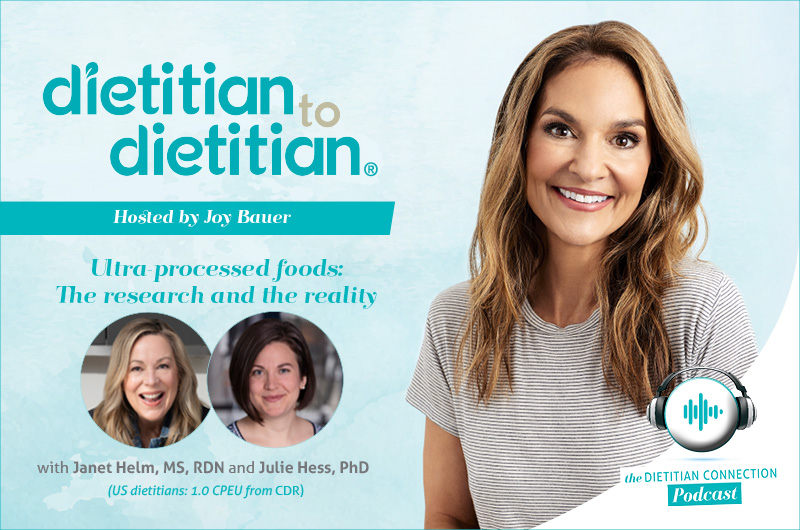
  • UPF: Research & reality | Dietitian Connection

    UPF: Research & reality | Dietitian Connection


    With growing concerns about the impact of ultra-processed foods on health, it is essential for dietitians to stay informed on the complexities of this heavily publicized topic. In this episode of Dietitian to Dietitian, Joy Bauer of NBC’s Today Show along with Julie Hess, PhDand Janet Helm, MS, RDN discuss the research on ultra-processed foods, the intersection of food processing and nutrient density, and how to combat misinformation in the media.

    Biographies

    Julie Hess, PhD, is a Research Nutritionist at the Grand Forks Human Nutrition Research Center in Grand Forks, ND. Her research is centered on identifying and evaluating strategies to help Americans meet recommendations from the Dietary Guidelines for Americans. Her work involves investigating how American diets currently align with dietary guidance and recognizing and addressing barriers to following recommendations. She is also an adjunct assistant professor at the University of North Dakota. Dr. Hess received a BA in French and English from the University of Texas at Austin and earned a PhD in Human Nutrition from the University of Minnesota.


    is a registered dietitian and culinary professional with 20+ years’ agency experience working with food and beverage brands and agricultural commodity boards. As the former Chief Food and Nutrition Strategist for Weber Shandwick, a global PR agency, she’s helped clients intersect with food culture, tell their story and engage stakeholders. Janet recently started her own consultancy Food at the Helm. She is a sought-after speaker on food trends and has discussed the latest nutrition topics in the media, including segments on Good Morning America, Today and CNN. Her work has appeared in many national publications, including U.S. News & World Report, where she is a regular contributor.


    Joy Bauer, MS, RDN, CDN, one of America’s leading health authorities, is the nutrition and healthy lifestyle expert for NBC’s TODAY show. She also hosts her own Amazon Live weekly show, Health, Happiness, Joy, where she cooks up mouthwatering recipes, answers viewers’ questions in real-time, and shares her favorite products and kitchen hacks. In addition, Joy is the official nutritionist for the New York City Ballet, the creator of JoyBauer.com, and a #1 New York Times bestselling author with 14 bestsellers to her credit.



    In this episode, we discuss:

    • The Nova classification system for food processing and its’ complexities
    • What the research on ultra-processed foods tell us
    • The public discourse on ultra-processed foods and its impact on consumers
    • How the science can inform dietary guidelines around the world


    Additional resources

    You can find a handout with information about the Nova classification system and the speakers’ references here.

    Click here and here for Julie Hess’ research on ultra-processed foods.


    The content, products and/or services referred to in this podcast are intended for Health Care Professionals only and are not, and are not intended to be, medical advice, which should be tailored to your individual circumstances. The content is for your information only, and we advise that you exercise your own judgement before deciding to use the information provided. Professional medical advice should be obtained before taking action. The reference to particular products and/or services in this episode does not constitute any form of endorsement. Please see  here  for terms and conditions.


    Source link
  • The Science of Setting Goals: How to Make Your Dreams a Reality

    The Science of Setting Goals: How to Make Your Dreams a Reality

    The Science of Setting Goals: How to Make Your Dreams a Reality

    Setting goals is an essential part of achieving success in any area of life. Whether you want to improve your career, relationships, or personal development, having clear and specific objectives can help you stay focused and motivated. But how do you set goals that are achievable and effective? In this article, we’ll explore the science of setting goals and provide you with practical tips and strategies to help you make your dreams a reality.

    Understanding the Science of Goals

    Research has shown that specific, measurable, achievable, relevant, and time-bound (SMART) goals are most effective for achieving success. This concept, known as the SMART goal formula, was first introduced by management consultant Dr. Edwin Locke in the 1960s. SMART goals are designed to help individuals set clear and attainable objectives that are aligned with their values and priorities.

    Theories of Goal-Setting

    There are several theories related to goal-setting that have been identified in the field of psychology. One of the most well-known is the Theory of Goal-Setting, which suggests that specific and difficult goals lead to higher levels of performance and achievement. This theory also proposes that progress and feedback are important for goal-achievement.

    Another important theory is the Self-Efficacy Theory, which proposes that a person’s confidence in their ability to achieve a goal is a crucial factor in goal-achievement. This theory suggests that individuals with high levels of self-efficacy are more likely to set challenging goals and persist in the face of obstacles.

    How to Set Effective Goals

    So, how do you set effective goals? Here are some practical tips to get you started:

    1. Identify Your Values and Priorities

    The first step in setting effective goals is to identify your values and priorities. What are your most important goals and values? What is most important to you? Take some time to reflect on what you want to achieve, and what is most important to you.

    2. Make Your Goals SMART

    Use the SMART formula to make your goals specific, measurable, achievable, relevant, and time-bound. For example, instead of "I want to be healthier," a SMART goal would be "I will lose 10 pounds in the next 6 months by exercising for 30 minutes, 3 times a week and eating 5 servings of fruits and vegetables daily."

    3. Write Down Your Goals

    Write down your goals and keep them somewhere visible. This will help you stay focused and motivated. You can also use sticky notes, or a goal-setting app to help you stay on track.

    4. Break Down Big Goals into Smaller Ones

    Large goals can be overwhelming, so break them down into smaller, manageable tasks. This will make it easier to stay on track and make progress.

    5. Create an Action Plan

    Create an action plan for achieving your goals. This will help you stay focused and on track. Identify the steps you need to take, and prioritize them.

    Common Obstacles to Goal-Setting

    Despite the benefits of goal-setting, many people struggle to achieve their goals. Here are some common obstacles to overcome:

    • Fear of failure: The fear of failure can be a significant obstacle to goal-setting. It’s important to recognize that failure is a normal part of the learning process, and that it can be a valuable opportunity for growth and improvement.
    • Lack of motivation: Lack of motivation can be a major obstacle to goal-setting. It’s important to identify the reasons for your lack of motivation, and to find ways to boost your motivation and enthusiasm.
    • Procrastination: Procrastination can be a significant obstacle to goal-setting. It’s important to identify the reasons for your procrastination, and to find ways to overcome it.

    Conclusion

    Setting goals is an essential part of achieving success in any area of life. By understanding the science of goal-setting, and using the tips and strategies outlined in this article, you can set effective goals that will help you achieve your dreams. Remember to identify your values and priorities, make your goals SMART, write them down, break them down into smaller tasks, and create an action plan. By following these steps, you can overcome common obstacles and achieve success.

    FAQs

    Q: What is the difference between a goal and a wish?
    A: A goal is a specific, measurable, achievable, relevant, and time-bound objective, while a wish is a vague and often unrealistic hope or desire.

    Q: How do I know if my goals are SMART?
    A: Check if your goal is specific, measurable, achievable, relevant, and time-bound. For example, "I will run a marathon" is not a SMART goal, but "I will run 26.2 miles on March 15th" is.

    Q: How often should I review and adjust my goals?
    A: It’s a good idea to review and adjust your goals regularly, ideally every 3-6 months. This will help you stay on track and make adjustments as needed.

    Q: What if I miss a goal?
    A: Missing a goal is not the end of the world. Instead, it’s an opportunity to learn and improve. Reflect on what went wrong, and use that experience to make adjustments for next time.