Tag: Parenting

  • A Meditation on Working With Our Fear And Parenting From Love

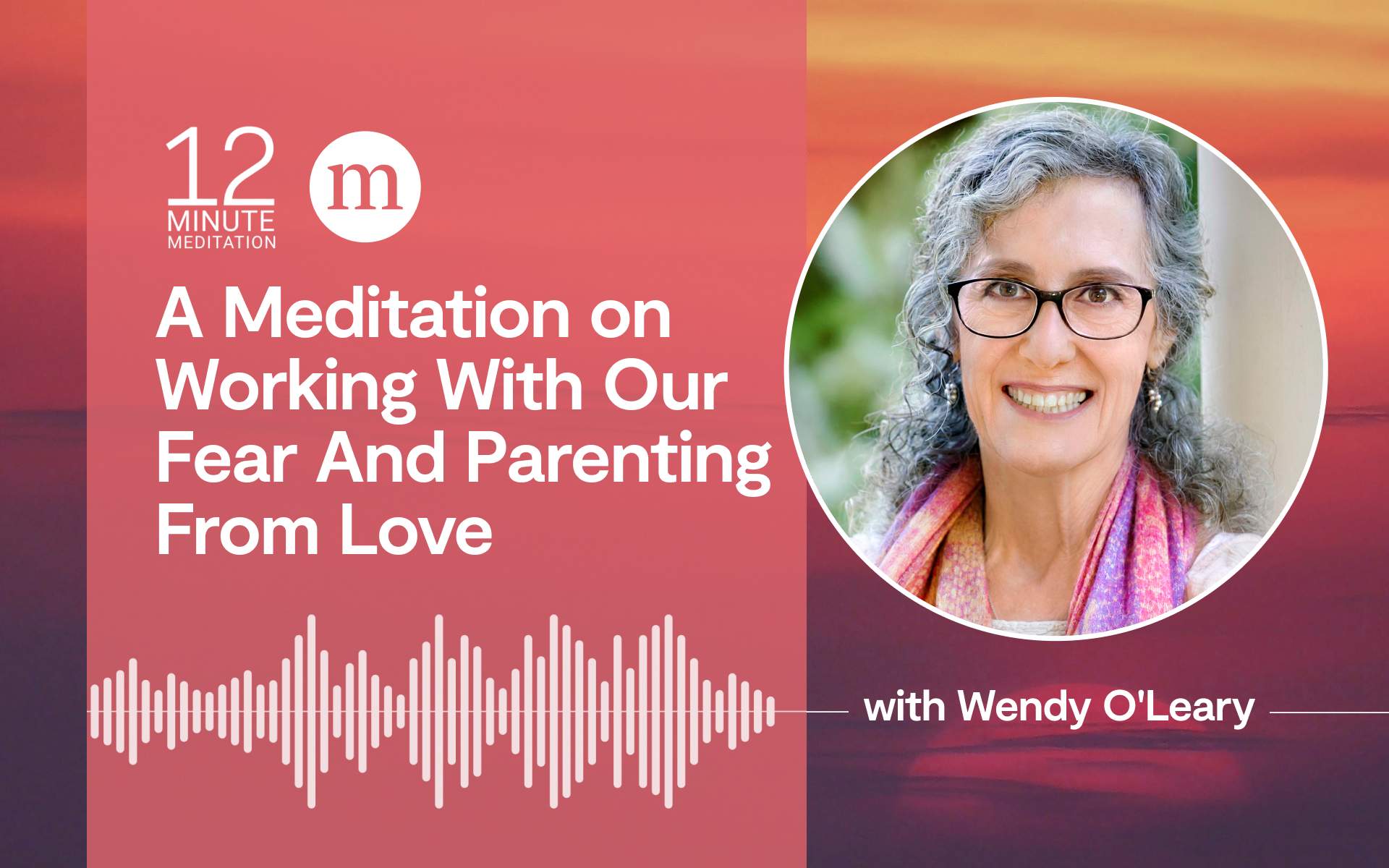
    A Meditation on Working With Our Fear And Parenting From Love

    Experiencing a season of struggle with your kid? You’re not alone. This gentle practice can help reconnect you with steadiness so you can keep parenting from love.

    In our concern for our children, sometimes we respond from a place of fear and worry. From time to time, we can even lose touch with the love that lies beneath that concern. 

    Reconnecting with the ground of our love and the wish for our children to be happy and well, especially in moments of difficulty, can be incredibly beneficial. 

    This practice from Wendy O’Leary offers a pause of support and encouragement that can bring you back to that core of compassionate wisdom—and you can return to it anytime you need help parenting from love.

    A Meditation on Working With Our Fear And Parenting From Love

    Read and practice the guided meditation script below, pausing after each paragraph. Or listen to the audio practice.

    1. Get into a comfortable seated position. You can close your eyes or gently look down and soften your gaze, whatever works best for you. 
    2. As we settle in here, bring your attention to your breath or feel the sensations of your body as it connects with the earth. Feet on the floor, backs of the legs on a chair or a cushion. Invite the attention to settle in a bit. Arrive in this moment by dropping into the body with the breath and the sensations of the contact points of the body. Gently settle in. 
    3. Now, I invite you to shift your attention to think about your child, maybe even picturing them in your imagination, calling to mind a time when you felt warm and loving feelings towards them. Notice what they were doing and remember how you felt in that moment. You might even imagine that someone has asked you, What do you love about your child? What words, phrases, images, or descriptions come to mind? 
    4. Gently check in and notice how you feel in your body, mind, and heart as you recall what you love about your child. You could even invite that feeling of love and connection to grow and expand in your body, gently resting here in this felt sense of love for your child. Let yourself marinate in this feeling of love and warmth and care. 
    5. Now, think of the time when your child was struggling. You don’t need to think of the most difficult struggle—instead, go with something that is a three or a four on a one to 10 scale. 
    6. As you allow the situation to more fully enter your awareness, check in again with your body. Often, when we are focused on a difficulty, especially when it’s related to our child, there can be a habitual tendency to contract and lean forward. Check it out and see if that’s true for you. To counteract this tendency, gently lean back just a little. This can be a physical leaning back or even an energetic settling back. Settle back and now invite the body to soften, even widen, creating space to hold whatever is there. We aren’t forcing anything here, it’s just a very gentle invitation to settle back and soften. Gently softening around the edges of any emotions we’re experiencing. 
    7. Now intentionally invite back that sense of love, holding the challenge in a spacious field of loving care and awareness. To help you do this, you might once again remind yourself of all the things you love about your child. You could even offer them some wishes of well-being and happiness as you picture them in your mind. May you be happy. May you well. May you safe. Or any wishes that feel true for you in this moment. 
    8. If the situation you’re calling to mind requires some response from you in some way, you might ask yourself, How would this love respond? You can also offer yourself a bit of care, because if your child is struggling, you are, too. So maybe place a gentle hand on the heart, or take a moment to remind yourself of our common humanity. You might say something to yourself like, Every parent struggles with their children sometimes. Every parent worries about their child at times. Or another phrase that might fit your situation. You could even say to yourself, This is hard, and I’m here for you, honey.  
    9. As you’re ready, you can open your eyes to close our formal practice. This practice can be a powerful way of reconnecting with feelings of love and cut through the worry and fears that we often experience as parents. It can be helpful to do the first part, remembering the love and care as a brief daily practice for a while, so you can more easily call up those feelings of love and connection in the midst of a challenging moment when you need the most help parenting from love. We want to acknowledge the hard stuff and not lose sight of the good and love that is underneath our worries and sometimes even our difficulties with our children. With my very best wishes, may you be happy and peaceful and move through life with ease and equanimity. Thank you for practicing with me.




    Source link

  • Parenting 101: Essential Tips for New Parents

    Parenting 101: Essential Tips for New Parents

    Introduction to Parenting 101

    Parenting is a journey that is both rewarding and challenging. As a new parent, it’s natural to feel overwhelmed by the sheer amount of information and advice available. However, with the right mindset and support, you can navigate the ups and downs of parenthood with confidence. In this article, we’ll cover the essential tips for new parents, from preparing for your baby’s arrival to establishing a daily routine, and everything in between.

    Preparing for Your Baby’s Arrival

    Before your baby arrives, it’s essential to prepare your home, your relationship, and yourself for the new addition. Here are some tips to get you started:

    • Create a safe sleep environment: Make sure your baby’s sleep space is safe and comfortable. This includes investing in a crib or bassinet that meets current safety standards, using a firm mattress, and keeping soft toys and blankets out of the crib.
    • Stock up on essentials: Diapers, onesies, and baby wipes are just a few of the many essentials you’ll need for your baby. Make a list and check it twice to ensure you have everything you need.
    • Take a parenting class: Parenting classes can provide you with valuable information and support as you prepare for your baby’s arrival. They can also give you the opportunity to connect with other expectant parents and build a community of support.
    • Prepare your relationship: Having a baby can put a strain on your relationship, so it’s essential to communicate with your partner and make time for each other. Schedule regular date nights and make an effort to stay connected.

    Establishing a Daily Routine

    Establishing a daily routine can help you and your baby feel more grounded and secure. Here are some tips for creating a daily routine:

    • Create a schedule: Plan out your day, including feeding times, nap times, and playtime. Be flexible, but also try to establish a consistent routine.
    • Prioritize self-care: Taking care of yourself is essential for being a good parent. Make time for activities that nourish your mind, body, and soul, such as exercise, meditation, or reading.
    • Get moving: Exercise is essential for both physical and mental health. Try to incorporate physical activity into your daily routine, such as taking a walk with your baby or doing a postnatal workout.
    • Ask for help: Don’t be afraid to ask for help when you need it. Whether it’s a family member, friend, or neighbor, having a support system can make all the difference.

    Feeding and Nutrition

    Feeding your baby can be a challenging but rewarding experience. Here are some tips for feeding and nutrition:

    • Breastfeeding: Breast milk is the best nutrition for your baby, and it’s essential to establish a good breastfeeding routine. If you’re having trouble breastfeeding, don’t hesitate to reach out to a lactation consultant for support.
    • Formula feeding: If you’re formula feeding, make sure to choose a high-quality formula that meets your baby’s nutritional needs. Always follow the instructions on the label, and never leave your baby alone with a bottle.
    • Solid foods: When introducing solid foods, start with single-ingredient purees and gradually introduce new foods. Always check with your pediatrician before introducing new foods, especially if your baby has a history of allergies.
    • Healthy snacks: As your baby gets older, it’s essential to provide healthy snacks to support their growth and development. Choose snacks that are low in sugar and salt, and high in nutrients.

    Sleep and Bedtime Routine

    Sleep is essential for both you and your baby. Here are some tips for establishing a bedtime routine:

    • Establish a bedtime routine: Develop a calming and predictable bedtime routine that includes activities like bath time, reading, and singing.
    • Create a sleep-friendly environment: Make sure your baby’s sleep space is dark, quiet, and at a comfortable temperature.
    • Watch for sleepy cues: Pay attention to your baby’s sleepy cues, such as yawning, rubbing their eyes, or becoming less active.
    • Avoid overstimulation: Avoid stimulating activities or exposing your baby to screens before bedtime, as this can interfere with their sleep.

    Baby Development and Milestones

    As your baby grows and develops, it’s essential to monitor their progress and celebrate their milestones. Here are some tips for tracking your baby’s development:

    • Keep a baby journal: Writing down your baby’s milestones and progress can help you track their development and identify any potential issues.
    • Schedule regular check-ups: Regular check-ups with your pediatrician can help you stay on top of your baby’s development and address any concerns.
    • Provide opportunities for learning: Provide your baby with opportunities for learning and exploration, such as reading, singing, and playing with toys.
    • Be patient: Every baby develops at their own pace, so be patient and don’t compare your baby to others.

    Safety and Emergency Preparedness

    As a parent, it’s essential to be prepared for emergencies and take steps to ensure your baby’s safety. Here are some tips for safety and emergency preparedness:

    • Install safety gates: Install safety gates at the top and bottom of stairs to prevent falls.
    • Secure furniture and appliances: Secure furniture and appliances to prevent tip-overs and other accidents.
    • Keep emergency numbers handy: Keep emergency numbers, such as the poison control hotline, handy in case of an emergency.
    • Take a first aid class: Take a first aid class to learn how to respond to common childhood injuries and illnesses.

    Building a Support Network

    As a new parent, it’s essential to build a support network of family, friends, and other parents. Here are some tips for building a support network:

    • Join a parenting group: Join a parenting group or online community to connect with other parents and get support.
    • Attend parenting classes: Attend parenting classes or workshops to learn new skills and connect with other parents.
    • Reach out to family and friends: Don’t be afraid to reach out to family and friends for support and help when you need it.
    • Take breaks: Take breaks and practice self-care to avoid burnout and maintain your mental health.

    Conclusion

    Parenting is a journey that is both rewarding and challenging. By following these essential tips, you can navigate the ups and downs of parenthood with confidence. Remember to prioritize self-care, build a support network, and stay flexible. With time and practice, you’ll become a confident and capable parent, and you’ll be able to provide your baby with the love, care, and support they need to thrive.

    FAQs

    Q: How often should I feed my baby?
    A: The frequency of feedings will depend on your baby’s age and individual needs. Generally, newborns need to be fed every 2-3 hours, while older babies can go longer between feedings.
    Q: How can I get my baby to sleep through the night?
    A: Establishing a bedtime routine, creating a sleep-friendly environment, and watching for sleepy cues can help your baby sleep through the night.
    Q: What are some common baby milestones?
    A: Common baby milestones include rolling over, sitting up, crawling, and walking. Every baby develops at their own pace, so be patient and don’t compare your baby to others.
    Q: How can I keep my baby safe?
    A: Installing safety gates, securing furniture and appliances, and keeping emergency numbers handy can help keep your baby safe.
    Q: How can I build a support network as a new parent?
    A: Joining a parenting group, attending parenting classes, and reaching out to family and friends can help you build a support network and get the help you need as a new parent.

  • The “About To” Moment: Teaching and Modeling Response vs. Reaction

    The “About To” Moment: Teaching and Modeling Response vs. Reaction

    Children learn largely by example. Susan Kaiser Greenland explains how the “about to” moment can foster awareness and compassion.

    Have you ever noticed a funny feeling in your body the split-second before doing something you later regret? Maybe the funny feeling is a tightening in your chest, or a flush of heat rushing to your face, or a sinking feeling in the pit of your stomach. These funny feelings can take place in what Western meditation teacher Joseph Goldstein calls the “about to” moment. This moment is the split-second before you speak or act.

    We can train ourselves to identify when the “about to” moment is occurring in our lives, and notice the internal signals that accompany it. By paying attention to the physical sensations that sometimes accompany an “about to” moment, we have an opportunity to pause before acting and reflect on what we’re about to do or say. This is a chance to ask ourselves critical questions, like:

    • “Why choose to act in this way?”
    • “How does it make me feel?”
    • “Will what I’m about to do or say lead me and my family closer to, or further away from, genuine happiness?”

    Parenting in the “About To” Moment

    The “about to” moment has special relevance to parenting because it is also the place and time where we choose (whether consciously or not) what we teach our children by example. It is a chance to shift direction if we recognize that our automatic reaction to a stressful situation is not consistent with our image of the parent we hope to be, or the adults we hope our children will become. Character development is a life-long process, happening through repeated actions both large and small. One place it happens is during the countless “about to” moments in our lives.

    In 2018, several prestigious universities published a study about the effect of spanking on three-year-old children. They reported that three-year-olds who had been spanked by their mothers more than twice in the month prior to the time they were assessed by researchers had an increased risk for higher levels of child aggression at age five than children who had not been spanked.

    Even though this finding is consistent with a well-established body of academic literature on the topic, and the American Academy of Pediatrics recommends that parents refrain from spanking entirely, the reporting of this study has been somewhat controversial. In the comment section of several blogs about the research, some people have taken offense. Perhaps because many parents continue to spank their kids, even those as young as three. According to the American Academy of Pediatrics, more than 90 per cent of families report having used spanking as a form of discipline.

    The “about to” moment, when a parent chooses to spank a child, is an opportunity for the parent to ask what he or she is trying to accomplish. Spanking is, at the very least, a stressful life experience for both parent and child, and it is well known that stressful life events can have a profound impact on brain development, especially in young children.

    In their book Born for Love: Why Empathy is Essential, Dr. Bruce Perry and Maia Szalavitz explain that when early childhood experiences are nurturing and empathetic, a child’s nervous system will wire up one way. If early childhood experiences are stressful, harsh and frightening, the same child’s brain wires up in a different way. “About to” moments can make learning and later relationships easier or more challenging. I doubt that any parent, upon reflection, hopes that his or her actions will make it more difficult for kids to learn and get along with others at school or home.

    Self-Reflection, Compassion, and Modeling

    The “about to” moment is also an opportunity to reflect on the quality that one is reinforcing within oneself and modeling for one’s kids. For example, is striking out in response to behavior that we disagree with/disapprove of a quality that we want to strengthen in ourselves? Is it one we want to model for our child? Will teaching children that it’s OK to hit other people help them become their best selves? Help them have an easier time on the playground? Lead them toward genuine happiness?

    The choices that we make in our “about to” moments determine who we are and who we will become. They also let our kids know loud and clear what’s important to us. Making the choice to exercise restraint, empathy, compassion and even-handedness time and time again is how these qualities become habitual in both parent and child. For example, when our kids see us being kind to others, we’re both practicing kindness ourselves and modeling it for them. When they watch us exercise patience while waiting our turn in the grocery line or when stuck in traffic, we’re both modeling patience to our kids and practicing it ourselves. When we find nonviolent ways to address inappropriate behavior we’re both modeling nonviolence and practicing it ourselves.

    To borrow from Ralph Waldo Emerson, “Character is higher than intellect.” It is the choices we make in the “about to” moments—choices we make over and over again all day every day—that determine our character and set an example for our children to follow.


    For more, watch Susan Kaiser Greenland’s video, Teach your kids awareness with an apple!


    Source link

  • Shifting Habits: Three Mindful Parenting Tips You Can Try Today

    Shifting Habits: Three Mindful Parenting Tips You Can Try Today

    Susan Kaiser Greenland offers three mindful parenting tips to help kids pause and reflect so they can identify and shift habits.

    We all have habits—some of them helpful or neutral, others that persistently create problems in our lives. It’s easier for kids to change habits than grown-ups. One way to start recognising your pattern of automatic behavior is to create external signals that will automatically show up throughout the day. These three mindful parenting tips can be interrupters that provide an opportunity to pause and reflect.

    1. Create mindfulness reminders

    I have seen kids tie a string around one finger, make mindfulness bracelets of ribbons or beads, or tape a colorful sticker to their cell phones. Whenever you see them, just pause to take in what’s happening in your mind and body.

    2. Implement breathing prompts

    Suggest to your children to practice breath awareness whenever they brush their teeth or put their socks on. Breathing prompts help kids recognise just how many things they do are on automatic pilot. By interrupting automatic behavior, kids have the time and mental space to make connections between what they’re doing, what they’re thinking, and how they’re feeling.

    3. Notice funny feelings

    Kids talk about having a funny feeling in the split second just before they do something that they later wish they hadn’t done, maybe a tightening in their chests, or a sinking feeling in their stomachs. That funny feeling occurs in the “about to” moment.

    By noticing their funny feelings, kids pause before they act to ask:

    • Why am I choosing to do this?
    • How does it make me feel?
    • Is my motivation friendly or unfriendly?

    If, upon reflection, the action doesn’t feel right, they can choose to act differently.

    Photo © flickr.com/Josh Kenzer


    Source link

  • General Parenting Advice

    General Parenting Advice

    General Parenting Advice: Navigating the Journey of Raising Children

    Understanding the Role of Parents in Child Development

    As parents, it is natural to feel overwhelmed and unsure of what to do when it comes to raising our children. Between the endless demands of school, extracurricular activities, and social media, it can be challenging to keep up. However, as parents, we have a vital role to play in shaping our children’s development, character, and future. In this article, we will explore general parenting advice to help guide you on this journey and provide you with tools to navigate the ups and downs of raising your little ones.

    Setting Boundaries and Establishing Discipline

    One of the most important aspects of general parenting advice is setting clear boundaries and establishing discipline. This can be a challenging task, especially when your child is still learning to navigate the world and assert their independence. It’s essential to set clear rules and consequences, while also being understanding and open to feedback. By doing so, you can help your child develop a sense of responsibility and respect for authority. Additionally, establishing discipline can also help to prevent misbehavior and create a sense of security for your child.

    Encouraging Emotional Intelligence and Empathy

    Emotional intelligence and empathy are vital skills for children to develop as they grow and mature. By teaching your child to recognize and understand their emotions, as well as those of others, you can help them build strong relationships and navigate social situations with ease. This can be done through open communication, active listening, and role-playing exercises. By doing so, you can help your child develop a more nuanced understanding of the world and the people in it.

    Fostering a Growth Mindset

    A growth mindset is essential for children to develop as they face challenges and setbacks throughout their lives. By teaching your child to view failures as opportunities for growth and learning, rather than as a reflection of their abilities, you can help them develop resilience, determination, and a desire to pursue their passions. This can be done by praising effort, rather than talent, and by encouraging your child to take calculated risks and step outside their comfort zone.

    Importance of Physical and Mental Health

    As parents, it’s easy to focus solely on our children’s academic and social development, but it’s essential to remember the importance of physical and mental health. By encouraging your child to engage in regular physical activity, eating a balanced diet, and practicing relaxation techniques, you can help them develop healthy habits that will last a lifetime. Additionally, by prioritizing your own physical and mental well-being, you can set a positive example for your child and create a healthier, happier home environment.

    Building a Support Network

    Raising children can be isolating, and it’s easy to feel like you’re shouldering the burden alone. However, it’s essential to build a support network of family, friends, and fellow parents who can offer guidance, encouragement, and a listening ear. By doing so, you can share the load, gain new perspectives, and learn from the experiences of others. Additionally, having a support network can help you feel more confident and empowered as a parent, allowing you to navigate the challenges of parenting with greater ease.

    Conclusion

    Raising children is a journey like no other, filled with its own unique set of challenges and opportunities. By following these general parenting advice, you can set yourself and your child up for a life of success, happiness, and fulfillment. Remember to prioritize physical and mental health, set clear boundaries and establish discipline, encourage emotional intelligence and empathy, and build a support network. With these tools in your arsenal, you can navigate the ups and downs of parenting with greater confidence and become the best parent you can be.

    FAQs

    Q: How do I discipline my child without being too strict or too lenient?
    A: Set clear rules and consequences, but also be open to feedback and willing to adapt to changing circumstances.

    Q: How can I encourage my child to develop a growth mindset?
    A: Praise effort, not talent, and encourage calculated risks and step outside their comfort zone.

    Q: How can I prioritize my own physical and mental well-being as a parent?
    A: Make time for self-care, prioritize exercise and healthy eating, and seek support from a therapist or support group.

    Q: How can I build a support network as a parent?
    A: Join online communities, attend local parent groups, and schedule regular playdates with other parents.

    By following these general parenting advice and taking the time to understand and implement these principles, you can become a more confident, empathetic, and effective parent. Remember, there is no one-size-fits-all approach to parenting, but by being flexible, open-minded, and committed to your child’s well-being, you can navigate the journey of raising children and build a strong, loving relationship with your child.