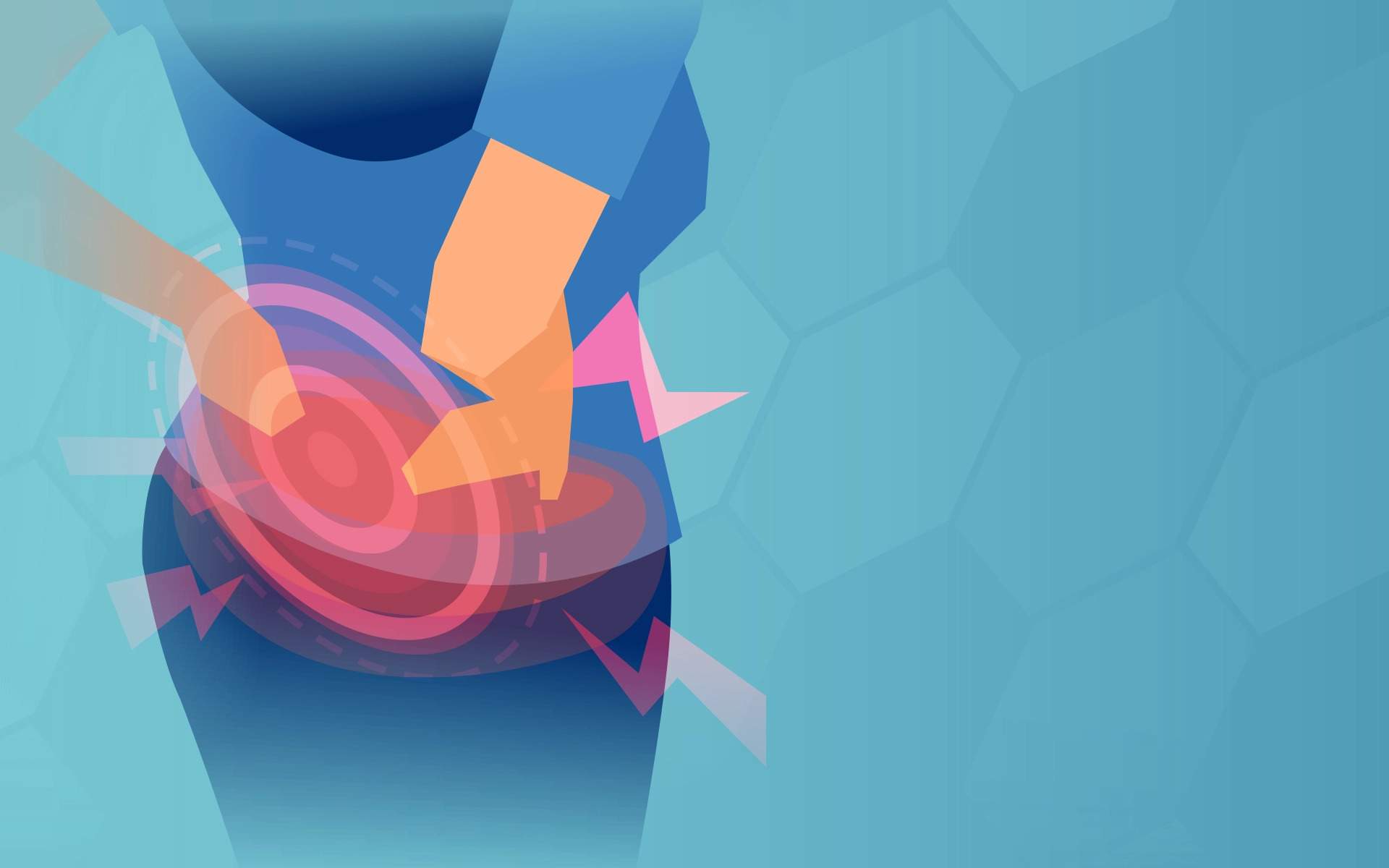
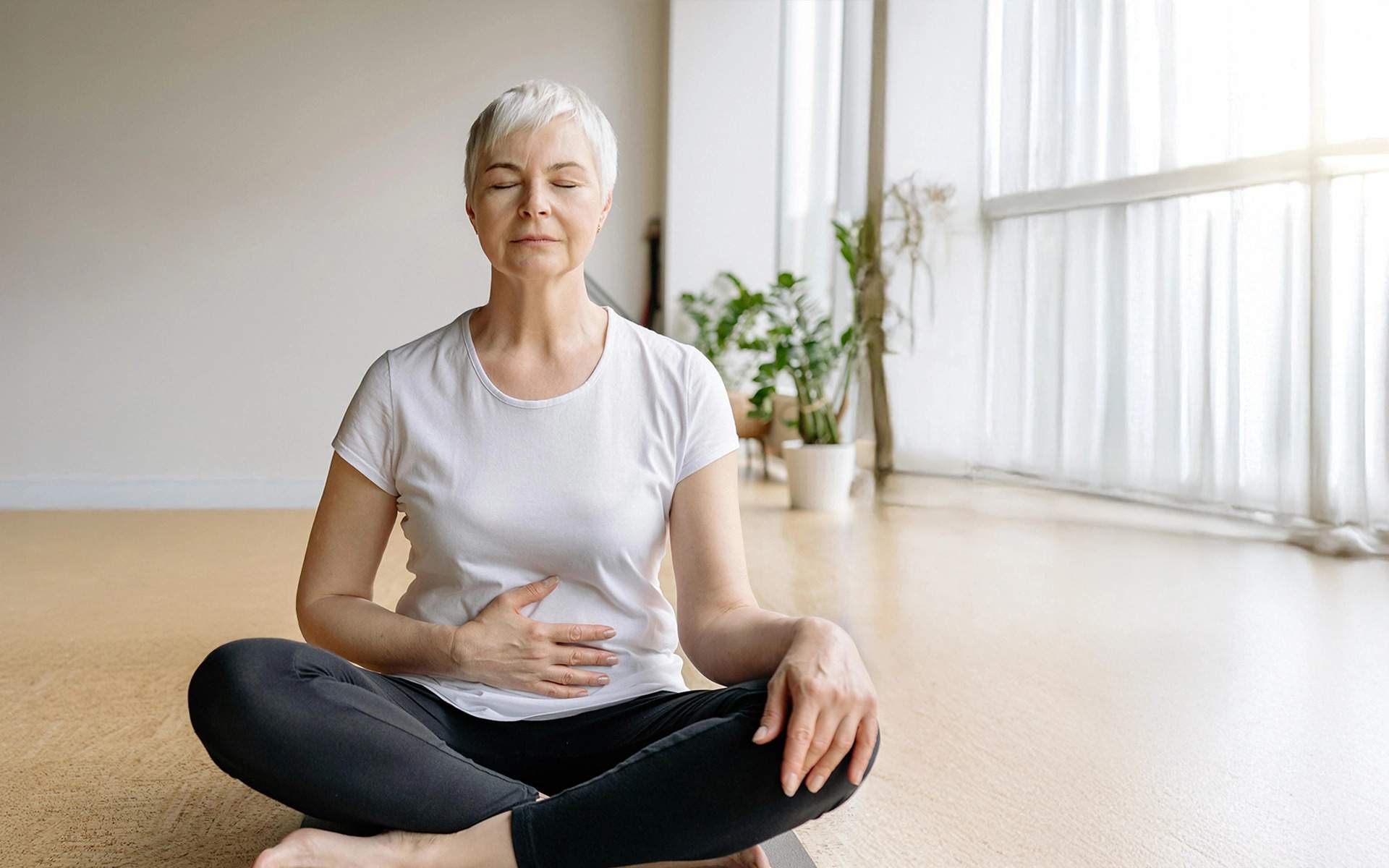
This week, mindfulness teacher Vanessa Hutchinson-Szekely shares a tender meditation for those in the middle of pain.
Sometimes seasons of intense suffering show up in our lives—no warning, no easy answers.
This week, mindfulness teacher Vanessa Hutchinson-Szekely shares a tender meditation for those experiencing pain. Based on her own experience with an extended episode of chronic back pain, she offers a moment of reprieve and caring attention to release tension and open to the possibility of joy.
A Meditation for Easing Pain and Inviting Joy
Read and practice the guided meditation script below, pausing after each paragraph. Or listen to the audio practice.
Take a moment to settle in wherever you are. You might be lying down, sitting comfortably, or even supported by pillows or blankets. Allow your body to find stillness. Allow your mind to arrive.
Take a deep breath in through your nose. And a long exhale through your mouth. Inhale slowly, feeling your body expand. Exhale, letting go of anything you’ve been holding on to today. A space to soften, to breathe, to be with yourself in kindness. Continue at your own pace to take a couple more deep breaths in through your nose, and then to exhale slowly through your mouth.
Notice how your body feels right now without judgment, without needing to fix anything. Maybe there’s a place that feels tight, inflamed or achy. Maybe you feel tired or heavy. Whatever it is, let it be here. We’re not fighting the pain, we’re meeting it with awareness.
Now with each inhale, imagine you’re breathing in a soft golden light. And with each exhale, you’re releasing tension like a mist gently leaving your body. Continue to breathe, picturing that golden light coming in and washing all over you, and with each breath out more and more tension is released. Now feel that golden light travel through your body. From the top of your head across your face, softening your eyes, your jaw, your neck. Let your shoulders drop away from your ears. Unclench the muscles across your back.
Now let the light move down your arms through your elbows, wrists, hands, and fingertips. Breathe into your chest. Feel your ribs expand, your heart open. Let your belly rise and fall gently, your breath like waves at the shore. Let that golden light move through your hips and down your legs through your knees, your calves, your ankles, and all the way to your toes. Your whole body is bathed in light, breathing, releasing, softening.
Now bring your attention to the area that’s been calling for care where the pain lives most strongly. Breathe gently into that space. Imagine the air reaching every cell that needs relief. You’re not trying to push the pain away, you’re surrounding it with love, with breath, with presence. Visualize a soft light, perhaps golden, perhaps warm rose or calming blue, cradling that part of your body. You might even whisper quietly to yourself, I’m here with you. You are safe. You are healing.
Now let’s shift our focus to sensations that bring joy. Think of something that makes your heart feel light. Maybe it’s a favorite place—the ocean, a mountain trail, a cafe, your cozy bed. Maybe it’s a sound—laughter, birds, a song that always lifts you up. Or perhaps it’s a taste, like warm bread, ripe berries, tea with honey.
Let one joyful image take center stage. See it clearly, feel it in your body, notice any warmth in your chest, a softening in your shoulders, a hint of a smile forming. That is joy. That’s your body remembering wellness. Now send that joy throughout your body to the places that feel good and the places that need healing. Let joy move through you like sunlight melting through ice. Repeat softly in your mind, I send love and light throughout my body. I am more than my pain. I am whole.
Take a deep breath in exhale fully. Now bring to mind one thing you feel grateful for today, big or small. Maybe your breath, maybe a friend, maybe the courage to press play on this meditation. As you breathe, let that gratitude expand, filling your body from the inside out. Feel that gratitude travel beyond your body, radiating out like ripples in a pond to your loved ones, your community, the world, and quietly repeat, May I be well. May others who are suffering find ease. May peace grow in me.
Now imagine your whole body surrounded by shimmering light, a cocoon of healing energy that holds you in safety. This light is gentle yet powerful. It’s recalibrating every part of your mind, body and heart. You are safe. You are loved, you are whole. Let your body soften into this knowing. Let yourself rest here for a few breaths.
As we close, take one final deep breath in through your nose and out through your mouth. Inhale love. Exhale gratitude. Inhale peace. Exhale tension. Inhale light. Exhale release. As you slowly bring your awareness back to the room, remember you are not your pain. You are the light that shines beneath it, and that light is always there, ready to guide you back to joy. Thank you for showing up for yourself today. May your body rest, may your heart be light. And may you walk forward in peace.
This year, for the first time in my life, I experienced intense chronic pain that turned everything upside down and lasted nearly four months. As someone who loves movement and lives a very active life, waking up one day with back pain that kept getting worse to the point where I couldn’t do simple daily tasks was one of the hardest experiences I’ve ever had.
Fortunately, I did get better. And from this horrible experience, I’m sharing four lessons I hope I’ll return to if something like this ever happens again.
How It Started
It all started in mid-January. One day I woke up feeling great, taught a yoga class, then taught my middle school PE students. The next morning, I woke up with strange discomfort and an inability to bend forward. Literally. I could not bend more than one inch. Try washing your face without bending forward and you’ll understand how disorienting it was. I assumed it was a minor strain that would disappear in a day or two. I’d never had back issues before.
But the pain didn’t go away. It got worse. Soon I couldn’t sleep in my bed. I moved to the floor. Then to my daughter’s room, thinking a firmer surface would help. When getting up caused violent back spasms that lasted 15 minutes or longer, I tried sleeping on a massage table so I could “slide off” and avoid spasms due to standing, but the narrow surface only led to more pain and sleep anxiety that I would somehow fall off. At one point I placed a folding table on top of my bed so I could sleep higher up on a wider surface. That didn’t work either.
Sleeping was terrible. Sitting was unbearable. Lying down on the couch was impossible. Every position triggered more pain instead of relief. I even tried wearing adult diapers one night so I wouldn’t have to get up to pee. Did it work? Absolutely not. Nothing was working.
I tried walking, because everyone says movement helps, but even that made little difference. I was taking Tylenol around the clock—1,000 mg every four hours, well above the recommended dose—because I didn’t know what else to do.
I saw doctors and specialists and even agreed to pay $4,800 to a chiropractor who confidently said he could fix me in a few months. When you are desperate, you will try almost anything. But that, like almost everything else, just led to more spasms, more pain, and eventually… depression.
Chronic pain isn’t just physical. It strips down your sense of self and disconnects you from the world around you.
After three to four months of hell, I did improve. I can move again. I can sleep in my own bed again. I’m off all pain meds. I got my life back. And now that I’m finally on the other side, here are the four biggest takeaways I want to remember, and offer to anyone else navigating something similar.
1. Meditation: A Lifeline in the Darkest Tunnel
I kept meditating throughout the whole experience. Looking back, I probably should have meditated even more. The science on meditation as a tool for pain management and healing is strong, but when you’re in the middle of pain and fear, it’s easy to forget that.
My mind was constantly spinning:
Will this ever stop?
Will I ever move normally again?
What if this is permanent?
That stress response only made things worse. When the body is in a near-constant state of fear, cortisol rises, inflammation rises, and the pain cycle deepens.
Meditation didn’t magically erase the pain, but it did give me something crucial: a sense of agency and grounding. It gave my nervous system micro-moments of rest when nothing else could. It helped me separate the physical sensation from the emotional storm on top of it, the fear, the frustration, the grief. Even when nothing else worked, meditation was something I could still do, and that alone gave me a small sense of power in a situation that felt completely out of my control.
I could not have gone through this alone. I needed help getting dressed. Putting on socks became the hardest task of the day. I couldn’t wash dishes, cook, or do basic errands. I had to lean on friends and family in ways that felt very vulnerable.
One of my coworkers started sticking medicated patches on my back every morning before class and hugging me while I cried. We had met only one month prior so this was truly something I’ll never forget. I didn’t expect that kind of intimacy or kindness, but I needed it.
Chronic pain is isolating. The world keeps spinning around you while you feel frozen in suffering. And even when people ask how you are, it can feel easier to say “I’m fine” than to repeat the pain story again. I worried I was unloading too much on people, or repeating myself, or boring them, or even boring myself. But pain takes over everything. It becomes the soundtrack of your life. Pretending you’re okay makes it worse.
Chronic pain is isolating. The world keeps spinning around you while you feel frozen in suffering.
Let people in. Accept help even if it feels uncomfortable. If someone you love were going through this, you would want to support them. Let others do the same for you.
3. Advocate Relentlessly for Yourself
I went into this experience genuinely trusting that the medical system would help me. It was eye-opening to realize how many times I was offered narcotics within minutes, while no one seemed that interested in actually diagnosing the cause of my pain.
I saw multiple doctors, but no one was connecting the dots. I had to push for every referral, every test, every possibility. In the end, I now strongly suspect there was a connection between my ulcerative colitis and this sudden, severe back pain. But no one suggested that. I had to piece it together myself. And it still isn’t officially confirmed, which leaves me with lingering anxiety that it could return.
Our medical system is often set up to treat symptoms, not root causes. If I hadn’t kept questioning, kept insisting, kept searching, I might still be stuck in that pain. You know your body better than anyone. So my encouragement is to keep asking. Keep digging. Keep pushing.
4. Treat Yourself
Managing pain can drain the joy from daily life, but that’s exactly when it becomes most important to find small and big ways to bring joy back in. It might be as simple as stocking your shower with your favorite soap (Jason’s Rose body wash for example!), listening to a beloved album (“Dehd” on repeat), or ordering Thai three nights in a row because it’s the only thing that brings comfort (giant garlicky noodles please!).
During my back ordeal, at one of the lowest points when I truly wondered if I’d ever feel like myself again, I made a promise: if I could move freely again, I would get my first tattoo. The design would be the mountain in the French Alps that my family’s home faces. I love that mountain with all my heart. Now it lives on my upper arm, and every time I see it, I’m reminded that I went through something hard, and grew because of it.
The author with her promised tattoo
The Road to Healing
My journey lasted almost 12 weeks. What a wild beginning to 2025 that was! I came out the other side with a deeper understanding of what it means to live inside a body in pain, and how to fight your way back. Now that I am pain-free, I am overflowing with gratitude for something I once took for granted: simply being able to move.
If you’re in your own battle with chronic pain, here is what I most want you to know:
Anchor yourself to something that brings even a moment of relief: meditation, breathwork, visualization, prayer, music.
Do not isolate. Let your people love you.
Be loud in the medical world. Keep pushing until someone listens.
Invite more sensorial pleasure into your daily rituals.
Pain can take so much from you. It can strip away identity, joy, confidence. But it can’t take away your ability to keep moving toward healing, even if that movement is invisible from the outside. One of my close friends offered me a metaphor that really shifted my perspective. She told me to imagine I was a diamond miner, digging and digging, exhausted, convinced I was still far from treasure. But in reality, the diamond might be just inches away, even if it feels miles out of reach. Her reminder was simple: don’t give up. Breakthroughs can happen suddenly, and everything can change for the better, even when it looks like nothing is working.
Pain can take so much from you. It can strip away identity, joy, confidence. But it can’t take away your ability to keep moving toward healing, even if that movement is invisible from the outside.
You are still here. Even in your darkest moment, there is still a way forward. So line that yellow brick path that is your life with treasure chests of joy-bursts along the way.
A Practice for When Pain Is Present
When back pain is flaring, or any kind of tension or ache feels alive in the body, this gentle meditation can help ease discomfort and open the door to reconnecting with joy.
Based out of the UK, Vidyamala Burch is an award-winning teacher whose courses and work in the field of mindfulness and pain management have been recognized for the measurable ways they have served the common good. She recently launched a new program, HEALS, which offers a comprehensive, holistic approach for managing and living with chronic pain and illness.
As a writer who loves interviewing, I came to my conversation with Burch with my list of questions and a healthy dose of journalistic curiosity. I felt a little starstruck to get to meet her.
If I’m honest, though, these weren’t the only things I brought, because this conversation also felt personal.
So many people I know, myself included, have had experiences living with chronic pain and illness. I was nearly 40 years old when I finally found healing from more than 20 years of recurring and increasingly debilitating low back issues. I have many friends, some just in their 30s or 40s, who deal with fibromyalgia, chronic fatigue syndrome, recurring migraines, and other adrenal and nervous-system challenges.
My mother survived polio as a young child and lived with relentless chronic conditions for her entire life as a result. She passed away suddenly a decade ago, at the young age of 67. Polio wasn’t technically the thing that killed her, but I knew from many conversations with her in her final years that the long slogging decades of complications, disability, and pain made her long for relief. I was with her when she took her last breath, and I felt the surrender in her body, finally.
To suffer ourselves, or to watch people we love suffer over long periods of time, often without real answers or effective treatments—the questions that bubble up aren’t academic. They sit close to the bone and the heart.
Why did this happen? Why did it go on for so long? Why does it feel so lonely? Where do these ailments come from, and why are they often so mysterious and so intractable, even in the face of intense medical interventions? Can practices like mindfulness reallyoffer anything meaningful into this complicated, messy world of living with chronic illness and pain?
Yes, I wanted to talk to Vidyamala, the expert on mindfulness and pain management. But I also didn’t want to waste the opportunity to talk to Vidyamala, the human being who has traveled this long road herself, and who understands intimately that the clinical ways we think and talk about physical suffering can’t meet us fully where we need to be met.
The clinical ways we think and talk about physical suffering can’t meet us fully where we need to be met.
Siri Myhrom: I’m curious about where the HEALS Program got its start for you. How do you see it as unique from and also working together with your other programs?
Vidyamala Burch: I developed Mindfulness for Health, which is our eight-week mindfulness program for people living with chronic pain and long-term health conditions. So the seeds for HEALS were way back in 2000, when I started running that [Mindfulness for Health] as an experimental course in 2001.
In my own experience as somebody who’s lived with chronic pain and disability for nearly 50 years now, mindfulness has been absolutely crucial to that journey because my life, my quality of life now, is really pretty good, notwithstanding my disability.
So mindfulness is foundational. And when I look at my own journey of reclaiming my quality of life, I realized that it was mindfulness-plus. So what I’ve done is I’ve worked on my nutrition. I’ve worked on how I move. I’ve looked at my sleep habits. I try to have time in nature. So if I looked at what’s worked for me, it was mindfulness plus these other dimensions. I felt that it would be really helpful to come up with an applied mindfulness program.
This is my vision, that people come through either doorway. You might come through the HEALS doorway or you might come through the Mindfulness for Health doorway. I see them as definitely complementary and as two doorways into the same room.
SM: Mindfulness talks a lot about awareness, and I have a question around that that’s maybe more personal. The people I know who live with chronic pain would likely say, I’m already very aware of my pain. I’m curious how you understand that word awareness, especially within a mindful context, and how does that serve to alleviate the suffering, rather than creating a focus on it?
VB: That’s an excellent question because it’s very counterintuitive. People might think, I’m very, very aware of it. And I don’t want to be more aware of it. And maybe people might think, The last thing I want to do is become aware of my body. My body is my tormentor. I want to just split off from my body.
So those are all very reasonable things to think about. What we do is right up front in both Mindfulness for Health and HEALS, we talk about how by using awareness, you can investigate this experience that you label pain. Investigate that and realize that it’s got two components. One component is your basic unpleasant sensations.
The other component is all things that you do to create extra suffering when you resist those basic unpleasant sensations. What most people call pain would be that whole set of sensations, plus resistance, plus depression, plus anxiety, plus secondary tension, plus breath holding, plus poor sleep.
Most people think that’s what their pain is. But actually, the only thing that’s a given in any moment are the unpleasant sensations. Everything else is added through our reactions. So you’re learning to accept the unpleasant sensations with kindliness, tenderness, to soften the resistance, and a lot of that secondary stuff can fall away. You’re just left with unpleasant sensations. People find that a very optimistic message.
We put that right up front in all our programs. Week one, we talk about primary and secondary suffering. The other thing about awareness that we really strongly emphasize— again, in week one—is that it’s awareness that gives us agency. If we’re aware, we have choices. If you’ve got no choices, you know, you’re just swept along by this thing that’s ruining your life as if it’s a kind of enemy.
Awareness doesn’t make it pleasant. I think this is one of the ways people misunderstand this: that if I’m mindful, I’m aware, then suddenly I’m going to love my pain. You probably aren’t, because your pain is unpleasant, but you’re going to learn to relate to the unpleasantness with much more spaciousness, much more kindliness, more acceptance.
One of the things I say is by coming closer and examining this experience, you realize it’s a process, not a thing. One of the ways I talk about that is to experience it as a river rather than a rock, because everything is changing all the time. Most people relate to their pain as a solid lump, like it’s a big boulder that’s kind of taken up residence. But it’s amazing to be able to experience it as a river rather than a rock. Just let it flow through the moments and then have this less-reactive mindset. That’s very liberating.
SM: Do you attract people who already have experience with mindfulness, or is it a mix of people?
VB: I iteratively develop my programs with potential audiences. The first one was a six-week program with people who know about mindfulness, who have a health condition and have worked with us before. I really wanted them to have a sense of co-creation. They gave me lots of feedback. Out of that, I made it longer, 10 weeks.
My second cohort was with people who didn’t know anything about mindfulness, but did have a health condition. It was people who were recruited from a cancer charity and a fibromyalgia charity, and that was very interesting as another test case. It went down very well with both those audiences.
Then the third pilot was with physicians from a primary care medical center. A lot of them didn’t know anything about meditation, didn’t have a health condition, but were trying it out for themselves, thinking about their patients. Again, very positive feedback. So I feel confident now that you don’t need to know anything about mindfulness to do this program.
SM: Where does HEALS fit into general medical care?
VB: I don’t know what it’s like in the States, but certainly over here there’s a crisis in our healthcare system—not enough money, aging population, multiple chronic health conditions.
Western medicine is particularly good with acute care. But with multiple chronic conditions all happening at the same time, Western healthcare isn’t brilliant. There’s more of a move towards a recognition that lifestyle has an enormous impact on our health and well-being, particularly with people being sedentary, eating a poor diet, scrolling on their phones late at night, not being able to sleep, all these kinds of things. There’s a whole field emerging of what’s called lifestyle medicine over here, which is called integrative care in the States. So we’re very well placed to be able to offer this program.
What’s unique about our program is that it’s got mindfulness as the foundation. I think a lot of people know what they should be doing for their health and well-being. They’ve got the information, but they don’t know how to make it stick. So my thesis is that mindful awareness is really crucial to that, because you have to know what you’re experiencing to have some facility and agency, instead of just being swept away by habitual behaviors. These people in general practice who tested the program said, “You’re absolutely on the right track. You’re ahead of the field. Keep going.”
SM: I notice, again relating to other people I’ve known with chronic conditions, that there’s an emphasis on tiny steps. Why is that effective?
VB: This has come out of my experience, and what I’ve observed is that a lot of people think you need to make big changes all at once—get another job, change your diet, change the way you exercise. When you do these big changes all at once, you don’t sustain any of them. You don’t know what’s affecting what because you’ve changed too many variables all at once. Very often you just need to change a tiny thing. In the program, I use a model called Tiny Habits, which is developed by B.J. Fogg. It’s a lovely model where you have a prompt, a behavior, and a celebration.
For example, for me to do a little bit more strengthening in my arms outside my office, I’ve got some straps. Every time I go in and out my office door, that’s the trigger. I go to my straps. It might be three to five movements, just a few. That’s the behavior. Then the congratulations, and you get a little dopamine hit, and then you’re going to want to do it again.
One of the things I’ve really learned from my own life, and this is a very important point, I think, is that you can bring about major transformation through tiny little nudges across a broad front for a long time. I always say to people that we won’t do any of these things perfectly, but if you’re doing all of them adequately, you’re going to experience change.
SM: It looks like the most recent cohort for HEALS is October 25th? Is that right?
VB: Yes, the first course booked out in 24 hours. That seems to be going very well. One of the things we’re doing in this program is using buddy groups testing. We divide into groups of four or five people based on geography. They decide for themselves how they want to keep in touch. Most of them are using WhatsApp. The idea is that they will contact each other daily, ideally so they can let people know how they’re getting on.
SM: Is the buddy system partly addressing the sense of isolation that can come with being in pain?
VB: Yes, I think so. Also, with these online programs, it helps to have something that’s more intimate, a daily reminder so that people are really forming connections. I think that’s very helpful in this tiny-habits method for behavior change.
SM: If someone came to you looking for help, but they were feeling skeptical, how would you describe this work in a way that would open up the possibility for them?
VB: We’ve used validated questionnaires in our three pilots and we’ve got hard data. Doing this work has measurable results. It makes people catastrophize about their pain less. It makes people able to function better in daily life. They’re less depressed, less anxious.
For people who live with chronic pain or health conditions, I say just try it and see what you think. You can have your pain and your illness and be miserable and have a very difficult life. Or you can have your pain and illness and be happier and have a more fulfilling life. So which one would you rather have?
By doing these very simple, evidence-based approaches, we know that it can help you reclaim your life. It doesn’t take long, 10-15 minutes a day, with a very supportive group for 11 weeks. We know that people are experiencing quite a strong improvement in quality of life. So it doesn’t seem like a big risk. It’s training and getting your mind working with you rather than against you. Most people don’t even realize that their mind is working against them. In the untrained mind, 75% of our thoughts are negative. It’s staggering. 95% of our thoughts, we’ve had before. We’ve got the same old undermining rubbish, just going around and around like the spin cycle on a washing machine, and you can do something about that. You can do something about it through these small changes across a broad front.
Would that be convincing to you if you were skeptical?
SM: Well, I dealt with chronic low back pain for about 25 years. I went to all kinds of different doctors. I tried all sorts of different modalities, and it was not an uncommon experience to go to an allopathic doctor and kind of feel like they don’t quite believe you. Especially in the US, there’s a tendency to prescribe opiates or recommend surgery, which I knew had a very low success rate.
For me, finding contemplative practice really did make a difference. But I think being able to speak to the exhaustion is important, because a lot of people who have been dealing with chronic issues, especially for a long time, it’s not that they want to give up. It’s that they’ve already tried 10 or 15 different things that haven’t worked.
VB: Yes, absolutely. Something we do at Breathworks is we believe people first, because I’m not interested in your diagnosis. I’m interested in your experience. With chronic health conditions, it’s sometimes hard to get a diagnosis. People are often not believed, and it’s awful. If someone says they’re suffering, I believe them. I think it’s really important that it’s an experience orientation rather than a diagnostic orientation.
We all have our habits of sort of resisting and fighting our experience. We can all learn to be more at peace with whatever’s happening. In my own case, you know, I’ve still got disability, I’ve still had all the surgeries, I’ve still got pain, but my overall pain has massively improved.
A lot has gradually fallen away over the years. My breathing is much more regulated, soft, and open. I’m fitter, I’m stronger. You get out of a downward spiral into a more opportunistic spiral.
You don’t have to be stuck with what you’ve got. There will be small changes you can make that will have an impact on your quality of life, because this quality of life is the thing that I think is most important, not whether you can walk or run. You know, I can’t walk and run, but I have a quality of life. I find that deeply, deeply moving. It’s unimaginably better than it was 30, 40 years ago.
SM: Yes, being with people who can just be with you and see you—that in itself is humane and tender and can initiate healing.
VB: Absolutely. One of the things that we hear again and again at Breathworks is that there’s a quality of lightness. One woman who came back the second week said, “I feel I’m learning to laugh again.”
She’d done awareness practice. She was in a lot of pain, had a difficult life, quite a lot of sadness, I think. It wasn’t like, Well, I’m becoming more aware. It was, I feel I’m ready to laugh.
I thought, that is so good, because we have a big group of people, many of them with really difficult circumstances. If we can help them find a way to bring some lightness into how they deal with their heaviness, they’re getting a great gift. I think particularly when one lives with difficulty, it is healing to find a way to relate to it in a more light, but not trivial way.
SM: In the process of discovering meditation and studying more deeply, did you have a moment where you thought, I really want to teach this to other people? Or did it happen in a more subtle way?
VB: I always go back to when I was 25 in intensive care in hospital, and I had this really big experience about the present moment, which changed my life. I knew that my pain was only happening one moment at a time and that most of my torment was about the future or the past.
That’s the very short version. I thought, I really, really want to figure out what it means to be present. How can I train in that, and how can I train my mind?
And interestingly that experience rose up out of hell. It was not an experience that happened in the bliss of a meditation retreat. No, it was an absolute existential kind of moment.
I had a social worker who was wonderful. She got me some tapes in the library, sort of beginning to meditate. I became a Buddhist a couple of years later, moved to England to live in a retreat center, and I was finding as I wasn’t really getting much guidance on how to meditate in the painful body. There weren’t many people around who seemed to know how to do that. I was always having to figure it all out for myself. People were very kind and very helpful, but the specifics of, how do you meditate when your back is absolutely screaming? It was a really hard thing to do.
Gradually I worked out how to do that with the help of Jon Kabat-Zinn. Actually, when I came across his book Full Catastrophe Living, that was massively helpful. I realized that I needed to learn to tend towards my experience and soften around it and release all this kind of extra suffering that I’m bringing through my evasion and my craving, really in my grasping for a different experience and my aversion to this experience.
With those two things together, I figured something out here, painfully and slowly over decades. And there’s going to be lots of other people like that young woman in hospital in intensive care, not knowing what the hell to do. There wasn’t any medical solution for my spine at that point. It was just like, we’re going to have to learn to live with it.
That’s why I wanted to teach, because I wanted to offer these to other people who were in the situation I was in so they didn’t have to have this 15 years of long, lonely journey. I was surrounded by incredible friends, and people couldn’t have been more supportive—but the specifics of how to meditate with pain, I wasn’t getting much.
When I started, I just wanted to help people. Now, 25 years later, I just want to help people. It’s a very, very simple motivation. And if I can help one person suffer less, that’s my journey.
When I started, I just wanted to help people. Now, 25 years later, I just want to help people. It’s a very, very simple motivation. And if I can help one person suffer less, that’s my journey.
SM: And it seems like it’s working. The response is there.
VB: It’s just very meaningful. It reframes all my suffering. More importantly, it helps others.
And what I really love about Breathworks and the HEALS program is, it’s not rocket science. It’s not some sort of advanced, metaphysical, complicated teaching. It’s: Be present. Know what’s happening. Let go of aversion and clinging. Release into the flow of love. Breathe and breathe out. And relax your bum. That’s my highest teaching now: Relax your bum.
That’s the whole. That’s it. You don’t really need much more than that. It’s very practical, very pragmatic. You don’t meditate to have a good meditation. You meditate so that you can cope with the moments in your daily life with a little bit more ease and grace and kindness and connection with others.
You don’t meditate to have a good meditation. You meditate so that you can cope with the moments in your daily life with a little bit more ease and grace and kindness and connection with others.
People quite rightly say, It saved my life, and I know it saved mine.