Tag: mindful practices

  • Looking Honestly at the Challenges of Mindfulness Practices

    Looking Honestly at the Challenges of Mindfulness Practices

    While the challenges of mindfulness practices are real, research confirms that mindfulness can also be helpful in preventing relapses into depression and reduce healthcare visits.

    Willoughby Britton, a psychiatrist and mindfulness practitioner, has researched what he terms the “difficult or challenging mind states” among advanced meditators and scholars that can occur as a result of intense meditation practice.

    The challenges of mindfulness are real. The truth is, meditation is not all calm and peace. Mental material can come up that can be uncomfortable or need to be addressed.

    Britton spoke generally with Mindful about how mindfulness has been marketed in this country as a “warm bath,” when in actuality, you have to deal with whatever comes up in the mind.

    “A lot of psychological material is going to come up and be processed. Old resentments, wounds, that kind of thing,” says Britton, “But also some traumatic material if people have a trauma history, it can come up and need additional support or even therapy.”

    Halliwell asks: “Does something beneficial have to be delivered perfectly—and to bring about a perfect world—before we will accept it as worthwhile?”

    Ed Halliwell, mindfulness teacher and author of The Mindful Manifesto, admits that meditation can be an emotional rollercoaster. “Mindfulness has a great many benefits,” Halliwell writes, but he takes issue with mindfulness being touted as a cure-all. At the same time, there’s an all-or-nothing mentality brewing around the adoption of mindfulness practices, and Halliwell asks: “Does something beneficial have to be delivered perfectly—and to bring about a perfect world—before we will accept it as worthwhile?”

    Elisha Goldstein, clinical psychologist and mindfulness teacher, noted that it’s not a question of whether mindfulness is harmful or not. When we’re assessing the challenges of mindfulness practices, the better question is where you’re getting that mindfulness training from. “It comes down to an education on mindfulness (and a variety of factors that it represents) and finding an experienced teacher as a guide to meet the practitioner where they are at.”

    Research is ongoing

    Research on mindfulness and depression is still preliminary, but there are promising indicators.

    Scientific American surveyed findings and some of the key controversies regarding the application of mindfulness for depression and anxiety, and concluded:

    When it comes to treating diagnosed mental disorders, the evidence that mindfulness helps is mixed, with the strongest data pointing toward its ability to reduce clinical depression and prevent relapses.

    In particular, new research has emerged indicating that an 8-week mindfulness-based cognitive therapy (MBCT) program might reduce the risk of relapses into depression. Study authors identified that mindfulness helped in the following ways:

    • MBCT allowed people to be more intentionally aware of the present moment, which gave them space to pause before reacting automatically to others.
    • Bringing mindful awareness to uncomfortable experiences helped people to approach situations that they would previously avoid, which fostered self-confidence and assertiveness.
    • Study participants also described having more energy, feeling less overwhelmed by negative emotion, and being in a better position to cope with and support others.

    Another piece of research reported that frequent health service users who received MBCT therapy showed a significant reduction in non-mental health care visits over a one-year period.

    “We speculate that mindfulness-based cognitive therapy has elements that could help people who are high health-care utilizers manage their distress without needing to go to a doctor,” says Dr. Paul Kurdyak, lead author and Director of Health Systems Research at Centre for Addiction and Mental Health (CAMH) and Lead of the Mental Health and Addictions Research Program at the Institute for Clinical Evaluative Sciences (ICES).


    Source link

  • Henna as Mindfulness: A Creative Practice for Calm and Connection

    Henna as Mindfulness: A Creative Practice for Calm and Connection

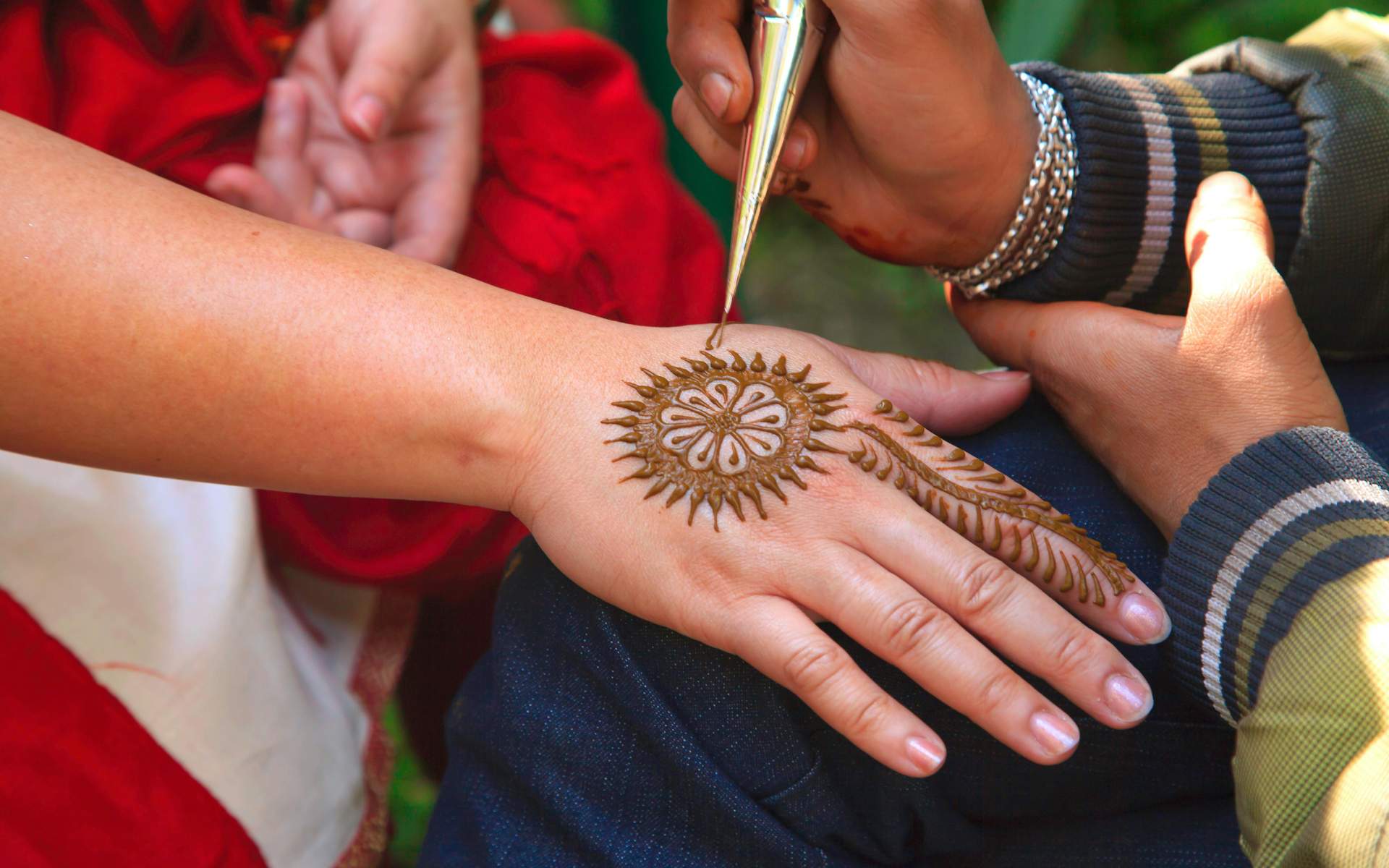
    In this practice, mindful teacher Rose Felix Cratsley invites kids and caregivers to explore henna as an art form and as a gentle mindfulness activity that nurtures stillness, creativity, and cultural appreciation.

    A Mindful Ritual at Your Fingertips

    Children are naturally drawn to creative expression. The process of making and applying henna slows us down, encouraging presence, sensory awareness, and loving connection through touch and design.

    Rooted in South Asian, Middle Eastern, and African cultures, henna (or mehndi) is a sacred ritual of celebration, storytelling, and connection. This practice invites us into mindful moments: as we mix the paste, trace the lines, feel the coolness on our skin, and observe our thoughts. Whether it’s a quiet moment shared between caregiver and child, or at a community gathering rich with color and conversation, henna becomes a living reminder: we are here, together, in this moment.

    Henna Mindfulness Practice

    1. Begin with Breath

    Invite your child or group to take three slow, deep breaths. Feel the belly rise and fall. Notice how your body begins to soften. You might say: “We are here, we are calm, we are ready to create together.”

    2. Mix with Intention

    Mix 2 tablespoons of natural henna powder with lemon juice until a smooth paste forms. Optionally add a drop of essential oil and a pinch of sugar. Stir slowly and notice the texture and scent. As you mix, set a quiet intention: peace, joy, strength—whatever quality you want to hold in your design.

    3. Trace the Moment

    Before applying henna on the skin, practice simple shapes on paper. Spirals, dots, leaves, hearts—anything your child imagines. Encourage slowing down: 

    • How does it feel to trace that line?
    • What happens to your breath as you move your hand?

    4. Apply with Care

    Using a cone or small brush, apply a simple design to the hand or wrist. Notice the sensation of the cool paste, the stillness of the body, and the breath anchoring the experience.

    *Caregivers can gently apply henna to children’s hands, offering this as a moment of love, bonding, and grounding.

    5. Rest and Reflect

    Once the design is complete, let it dry naturally. Use this time for quiet reflection or journaling. Invite conversation:

    • What story does your henna design tell?
    • How did it feel to go slowly and focus?
    • What do you want to remember and cherish from this moment?

    6. Close with Gratitude and intention

    As the henna sets and your breath softens, invite a final moment of stillness. You might say together:

    “We are present. We are creative. We are calm. We welcome peace.”

    Let these words settle into your heart, mind, and body, like the design resting on your skin. This simple affirmation becomes a living mantra, carrying the essence of the practice forward: grounded in mindfulness, rich with cultural meaning, and full of possibility.

    While henna fades in time, the peace we create through these practices becomes cherished memories.

    Its Significance

    Henna, as a mindfulness practice, invites children into their senses, their heritage, their bodies, and their relationships with care. For caregivers, it’s an opportunity to share calm and culture in one breath.

    Rooted in tradition and adaptable for all ages, this ritual offers connection across generations—where stories, symbols, and emotions can live on the skin and in the heart.


    Source link

  • Self-Care Is an Act of Resistance

    Self-Care Is an Act of Resistance

    Grass-roots meditation activist Shelly Tygielski offers 3 ways to practice self-care so we can recharge, refresh, and rewire for action.

    This article was originally published in November, 2018.


    The day after the 2018 US midterms, after a bitter election season with hard-fought victories, severely-close losses, and some horrific violence in its wake, I found myself thinking back to a program I put together for the Women’s Convention the previous October in Detroit for thousands of impassioned, powerful women. We were all embarking on a journey we knew would be long and hard.

    I called my talk Self-Care Is an Act of Resistance: Shifting the Fight-or-Flight Response to Empathy-or-Action Response and here’s why.

    The main idea is that neither “fighting” nor “fleeing” are sustainable. More than that, they are responses we can move away from, we can evolve beyond. We often hear that our brains are hard-wired for fight-or-flight, that “we evolved this way,” but we know now that we continue to evolve. Our brains can be rewired.

    How can we evolve beyond fight-or-flight? By choosing to move towards two new responses: empathy and action. And I believe this starts with self-care.

    The Power of Empathy and Action

    I woke up the morning after the election to find over 100 messages in my inbox and via text with such a tone of despair. We had all worked hard, but so much more work remains.

    I started to respond, one by one, to the messages reminding everyone that they have PERMISSION to feel this way. It is okay to cry. To be sad. Disappointed. Tired. And in order to not add a secondary layer of emotion to everything we’re feeling— namely, guilt—we all have permission to pause, to reset, to breathe.

    It may feel inappropriate to take time to rest, or to seek out pleasure, or even indulge in some positivity in the midst of our heated social, political, and environmental climate. But I want you all to know that it’s crucial for us to acknowledge the importance of our own self-care and to act upon it. Self-care is not frivolous; self-care is a radical act of love.

    Yes, there is still work to be done. A lot of work to be done. But we don’t need to do it today. Today we can rest. Tomorrow we can rest. And then the next day and the next. We can pre-game for the holidays and think about all that we have to be grateful for, personally, and collectively. And then, those who are ready can rise up, dust off, unravel and lift up the rest of us.

    Self-care is a movement in and of itself.

    It’s a movement of love amidst defeat, of kindness in the face of loss as well as victory. It’s declaring yourself as self-deserving of emotional agency. Self-care is an act of resistance.

    Here are 3 ways to practice self-care today:

    1. Allow yourself to (finally) unplug from the news and social media for a few days. Turn off your alerts and push motivations, turn off the TV and don’t access social media. If you must access it for work or otherwise, limit your time and do not engage or comment on posts. It’s not forever—it’s a few days of peace and being off the grid. 
    2. Recognize when you are in need of self-care and then respond to that need. Sometimes taking time for self-care may impact the lives of those around you (for example, you need to take the day off from work or ask for someone to watch the kids). Inform those around you that you are responding to a personal need but do not feel the need to ask for permission. 
    3.  Have a self-care checklist ready that has dozens of options tailored just for you.  These self-care options can range from scheduling a mid-day call with a friend to drawing a bubble bath. Having this list ready is important because when you are on the verge of burnout, you may not have the capacity to come up with the options in that moment.


    Source link