Explore this loving-kindness practice variation to cultivate more ease and openness within the moment-to-moment unfolding of life.
One of the hardest parts of life for me, and I think for everyone I know, is that it’s always changing—and sometimes in unpleasant, unpredictable, and unplanned ways. And when changes happen like this, things that we don’t want to happen—someone we love dies or we have a breakup or a divorce, maybe an injury or an illness of ourselves or others, or even getting fired—then we struggle not only from the pain of this loss, but from the unexpected nature of it. Part of the reason for this upset is because so little is in our control.
One of the hardest parts of life for me, and I think for everyone I know, is that it’s always changing—and sometimes in unpleasant, unpredictable, and unplanned ways.
Everything is impermanent. It’s always changing, coming together and falling apart. And it’s frustrating to not be able to make things go our way. But paradoxically, when we can accept that everything is not up to us, and we stop trying to control what we can’t change or trying to predict what we can’t predict, then we can feel a lot more at ease and more open to the moment-to-moment unfolding of our lives. By accepting change, we can bring kindness to our experience, even if it’s painful and sad at times, and we can feel more at peace with changes in life.
Key Summary
Benefits of Acceptance:
Reduces suffering caused by resistance to inevitable change
Builds resilience for navigating life transitions
Develops psychological flexibility
Creates space for new possibilities to emerge
Key Principles:
Distinguishing between acceptance and resignation
Working with impermanence as a natural law
Cultivating an open attitude toward uncertainty
Practicing letting go as an active, compassionate choice
Application: Particularly helpful during major life transitions, loss, relationship changes, and when facing situations beyond our control.
Guided Meditation: Let Go and Accept Change
First, find a place where you can just sit down and be still. Turn off your devices, close your eyes, and just take a few breaths. Noticing your feet, your seat, your belly. Bringing your attention to your forehead, your cheeks, your jaw, allowing sound to enter your ears, allowing taste to enter your mouth.
Put your hand on your belly. Just notice how you feel your belly inflates as you inhale and how it contracts when you exhale.
Call to mind someone you know who’s struggling right now. You could maybe imagine that they’re here with you, visualize them, or just have a sense of their presence. If you like, put your hand on your heart and silently offer them this phrase: May you be at peace with the changes in life. May you be at peace with the changes in life. May you be at peace with the changes in life. Continuing silently repeating this, as though you’re giving a gift to this struggling being.
Notice: Where is your attention? If you’ve lost the connection with this struggling being, reconnect, begin again. May you be at peace with the changes in life.
Let go of this connection with this other being. Noticing your feet, feeling your seat, relaxing your shoulder blades, bringing your attention to your breath, to the light entering through your eyelids.
Next, put your hand on your heart and connect with yourself. You can imagine that you’re looking in the mirror, imagine yourself as a child, or just connect with your beautiful presence. Give yourself the same wisdom: May I be at peace with the changes in life. And continue here just for a minute or two, giving yourself this compassion and wisdom.
Notice where your attention is. If you’ve lost your connection to yourself, and gently come back, reconnecting. May I be at peace with the changes in life. Just for one more minute, giving yourself this kindness. May I be at peace with the changes in life.
Keep this connection with yourself, and now include that first being and perhaps everyone that you know and love. May we be at peace with the changes in life. May we be at peace with the changes in life.
Expand the phrase to include all of the beings. All of the living creatures in this ecosystem we call Earth. All of us struggle with change, with loss, with impermanence. Giving your wisdom and your kindness and your good heart to all of us, including yourself. May we all be at peace with the changes in life. May everyone be at peace with the changes in life.
When you’re ready, conclude your meditation. You can close your practice by thanking yourself for your good intention, for your beautiful heart, for these joyful efforts.
Remember that you can practice in this way whenever you need to. Stop, feel your feet, put your hand on your heart, and say to yourself, May I be at peace with the changes in life. If you’re struggling with an unexpected loss, be sure to be patient and kind with yourself, and check in with your good heart as often as possible.
By drawing our attention to endings and our developed habits about the way we meet endings, we can learn how to step fully into our lives with appreciation and gratitude, says Frank Ostaseski. Read More
The Walk for Peace has been, in many ways, easy to miss. There are no slogans, no signs held up, no calls to action.
Instead, there is just walking. One step, then another. Breath moving in and out. Bodies moving steadily through places designed for speed.
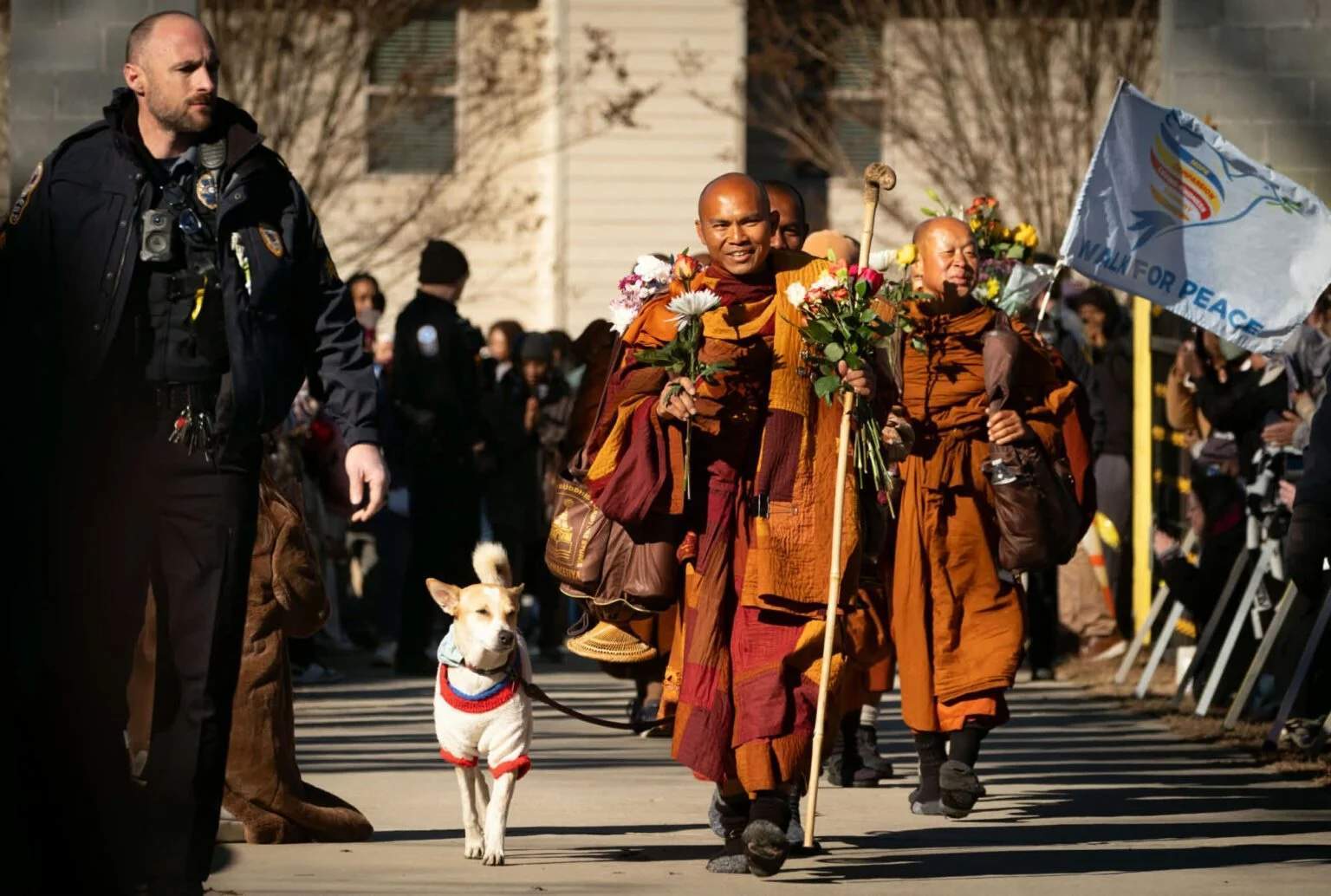
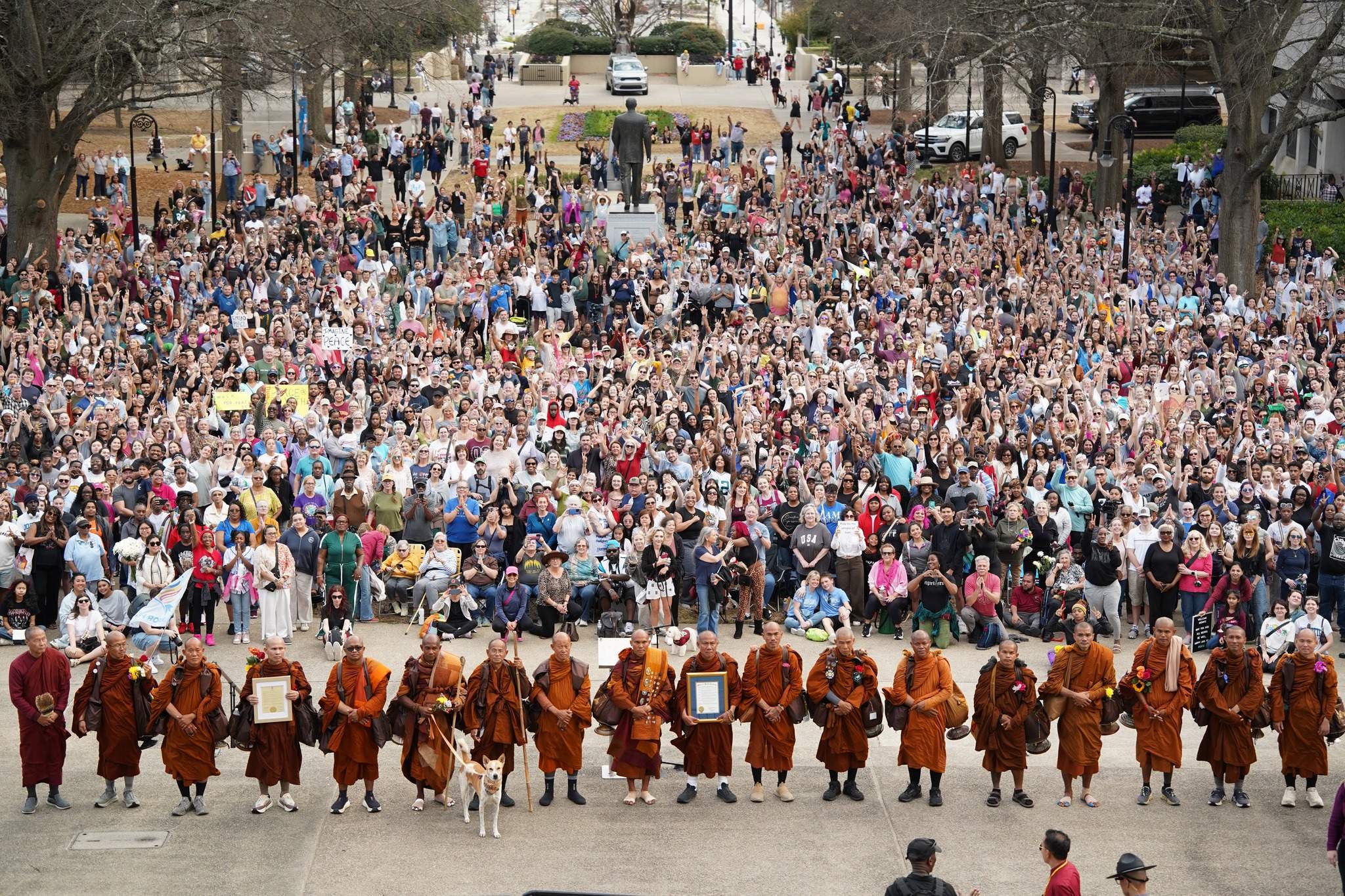
After 108 days and over 2,300 miles, the Buddhist monks and their beloved dog Aloka have arrived at their destination in Washington, D.C. On February 11, 2026—Day 109—they will host a global loving-kindness meditation at 4:30pm EST.
Our current culture is shaped by loud, frantic things: urgency, outrage, and constant stimulation. This long-distance pilgrimage across the United States offers something distinctly countercultural. It is quiet, steady, unassuming, and attentive.
It’s a (sometimes uncomfortable) reminder that our ideas about peace are often future-oriented and externalized. We imagine a time that’s not-now, where the horrors that plague us are gone, and we can finally feel okay.
I live in Minneapolis, right in the city. It is not peaceful here right now. We’re surrounded daily by realities that are destabilizing, uncertain, and frightening. Smack in the middle of that, people here are also quietly nurturing a web of care that extends to neighbors and strangers alike, that is stubbornly insistent on the possibility that we belong to each other.
What I notice is that we are starved for gentleness in a world that glorifies dominance and control. We ache for compassion in a world that keeps telling us that softness makes us weak and defective.
This past month, I’ve found myself multiple times a week checking in with the Walk for Peace. I watch videos of such tender interactions as people go to watch these monks pass by, sometimes offering flowers or just an encouraging hello. They spontaneously weep, and I do, too.
What I notice is that we are starved for gentleness in a world that glorifies dominance and control. We ache for compassion in a world that keeps telling us that softness makes us weak and defective.
It’s difficult, but also strangely empowering, to sit with the truth that the monks are embodying. Something shifts in me when I begin to think of peace, not as something “out there,” but as a thing that starts as a tiny kernel in each of us—something we tend like an ember, ignite with our own breath and attention, and then intentionally carry and share with others—moment by moment, step by step.
What Is the Walk for Peace?
The Walk for Peace is a long-distance walking journey across the United States, led by a small group of Buddhist monks and supported by volunteers and community members along the way. The route of the walk has stretched over 2,000 miles, beginning in Fort Worth, Texas, and ending in Washington, D.C., crossing ten states along the way.
While it draws from contemplative Buddhist traditions, the walk itself is not a religious event. It is a lived experiment in mindfulness, compassion, and nonviolence—expressed through the simple act of walking.
At its core, the walk is a moving mindfulness practice. The participants walk attentively, often in silence, allowing each step to re-anchor them to the present moment. For observers and those who join briefly, the experience can feel unexpectedly grounding. There is nothing to argue with, nothing to agree or disagree with. It’s just people moving through space with care, which is on the surface completely unremarkable—but somehow it feels like the most revolutionary thing.
By walking attentively through public spaces, the participants model an alternative way of being—one that does not require agreement, belief, or affiliation. With each step, they seem to be simply saying, Notice your breath, notice your pace, notice the people around you.
Unlike marches designed to persuade or protest—and of course those also have their place—the Walk for Peace makes no demands. It invites reflection rather than reaction. Many who encounter it describe a sense of calm or curiosity. It’s a noteworthy pause in the usual mental clutter of daily life.
Rather than addressing specific political outcomes, the walk focuses on something more foundational: how people relate to themselves and one another in everyday life.
As an intentional mindfulness practice, the walk has highlighted several key principles:
Slowing down in a culture that rewards speed
Embodied awareness, using movement as an anchor to the present moment in a culture that often uses distraction and numbing
Compassion, practiced through respectful presence rather than persuasion
Nonviolence, not only as the absence of harm, but as an intentional orientation toward care
By walking attentively through public spaces, the participants model an alternative way of being—one that does not require agreement, belief, or affiliation. With each step, they seem to be simply saying, Notice your breath, notice your pace, notice the people around you.
Peace, in this context, is not an end point, but a capacity that grows with practice.
The monks have been accompanied by Aloka, a stray who found them in India on another peace pilgrimage. Photo credit: Aloka the Peace Dog
The First Steps
Walking has long been associated with reflection and insight. It naturally regulates the nervous system, invites awareness of breath and sensation, and brings attention out of abstraction and into the body. By choosing walking as their medium, the organizers grounded their response in something universally human.
The Walk for Peace began with a simple question: How do we respond to a world marked by division, stress, and suffering without adding more noise?
In an informational ecosystem shaped by influencers and social media, we’re accustomed to slogans and sound bites, having people talk at us, trying to shape our thinking and feeling. But these monks aren’t delivering a message to people; they’re living out a practice among them.
Instead of issuing statements or organizing events, they chose to walk—slowly, visibly, and consistently—through the very communities shaped by the pressures and pains of modern life.
Portions of the walk, through places like Selma and Montgomery, Alabama, were tracing steps taken by leaders of the Civil Rights movement.
What is it like for us, generations on, to watch humble people radiating compassion and healing over so much painful ground, to watch them bear witness to realities and tend to wounds that we, collectively, still haven’t fully contended with?
The steady gaze, pace, and breath of people like the monks remind me [that] no one person is bearing all of this alone. They’re carrying and surrendering, rejoicing and connecting, witnessing and walking, together.
I drive through Minneapolis and see in real time the trauma of racialized violence: weary but resolute people holding signs on street corners, begging for mercy and humanity; “closed” signs in business windows where workers have been taken; a car parked askew on the road, driver’s side window smashed, door still open. Did someone see it happen at least so that the owner’s loved ones can be notified?
It is so painful to witness, to look this moment in the eyes. I want to turn away. In my chest, it feels like I’m drowning. But the steady gaze, pace, and breath of people like the monks remind me of two important things.
First, the longer we resist offering our attention to these unhealed places, the more we will keep living through the reverberating echoes of those same wounds over and over and over again. Different possible futures are only made possible by first giving our loving awareness to what’s happening right now—even (maybe especially) when it surfaces sorrow, hopelessness, or anger that we’re not sure we can handle in the moment.
Second, no one person is bearing all of this alone. There’s no hero doing all the work. They’re carrying and surrendering, rejoicing and connecting, witnessing and walking, together.
In many communities, people have gathered along the route—sometimes in the hundreds, sometimes in the thousands—drawn less by promotion than by word of mouth and curiosity.
Some offer food or encouragement. Some walk quietly for a stretch, or just stand and watch.
Online, the walk has attracted millions of followers. Photos and short videos of monks walking through rain, heat, and traffic circulate widely, often accompanied by comments describing a sense of calm or inspiration.
Some people express skepticism, questioning whether walking can have any real impact in a world facing complex systemic challenges.
This tension is familiar within mindfulness circles, as well. Practices that emphasize inner awareness are sometimes dismissed as passive or insufficient. I understand that skepticism, even as research and lived experience increasingly suggest that attention, regulation, and compassion are not luxuries—they are necessary for wise action.
Many people who encounter the walk haven’t reported dramatic transformations. They describe something smaller and maybe more sustainable—a softened interaction, an experience of being deeply seen, a reminder to slow down. Again: we so often come looking for drama because we’re conditioned for it—but perhaps what heals us shows up in a thousand quiet, un-social-media-worthy moments.
Being Peace When Peace Feels Absent
The Walk for Peace does not claim to solve global problems. It does not promise immediate results.
What it offers instead is a living question: What changes when we choose to move through the world with awareness and care?
Peace is not something we wait for, hoping for external conditions to improve, but something we practice within the conditions we have.
Mindfulness practice is rooted in such elemental things—the breath, the body, the next moment. The mind wanders, as it always does, to other things. I think these days of my neighbors, my friends, my worry and anger, the work that needs to be done, what will become of my city, my country.
My practice has never been fancy, and even over years now, I have always been more earnest than skilled. Tears sometimes spill over, and my practice is like a cool hand on my forehead, like a reassuring mother, calling me home.
The walk has embodied this return home on a collective scale. It suggests that peace is not something we wait for, hoping for external conditions to improve, but something we practice within the conditions we have.
I know the walk is coming to its end. In all honesty, I’m going to miss the images and the videos. They have been a kind of nourishment over these long, dark weeks.
I also know that something real has passed between real people. Maybe for the first time in a long while, we’ve had a glimpse of what happens when we just stop, even for a few moments, and notice one another. On the surface, it’s so tiny it’s almost nothing, just a breath or a blink or a step—but I swear I can sense that spark of compassion leap from one person to another. I’ve felt it here, and I know it matters.
This classic loving-kindness meditation can help you to awaken to how connected we all are. You don’t have to like everybody, or agree with everything they do—but you can open up to the possibility of caring for them, because our lives are inextricably linked.
This classic loving-kindness meditation can help you to awaken to how connected we all are. You don’t have to like everybody, or agree with everything they do—but you can open up to the possibility of caring for them, because our lives are inextricably linked.
A Meditation to Connect With Loving-Kindness (Even When It’s Hard)
Read and practice the guided meditation script below, pausing after each paragraph. Or listen to the audio practice.
1. Begin by thinking about someone who has helped you; maybe they’ve been directly generous or kind, or have inspired you though you’ve never met them. When you think of them, they make you smile. Bring an image of the person to mind, or feel their presence as if they’re right in front of you. Say their name to yourself, and silently offer these phrases to them, focusing on one phrase at a time.
May you live in safety.
May you have mental happiness (peace, joy).
May you have physical happiness (health, freedom from pain).
May you live with ease.
Don’t struggle to fabricate a feeling or sentiment. If your mind wanders, simply begin again.
2. After a few minutes, move on to a friend. Start with a friend who’s doing well right now, then switch to someone who is experiencing difficulty, loss, pain, or unhappiness.
3. Offer loving-kindness to a neutral person who you don’t feel a strong liking or disliking for: a cashier at the supermarket, a bank teller, a dry cleaner. When you offer loving-kindness to a neutral person, you are offering it to them simply because they exist—you are not indebted to or challenged by them.
4. Offer loving-kindness toward a person with whom you have difficulty. Start with someone mildly difficult, and slowly work toward someone who has hurt you more grievously. It’s common to feel resentment and anger, and it’s important not to judge yourself for that. Rather, recognize that anger burns within your heart and causes suffering, so out of the greatest respect and compassion for yourself, practice letting go and offering loving-kindness.
5. Finish by offering loving-kindness to anyone who comes to mind: people, animals, those you like, those you don’t, in an adventurous expansion of your own power of kindness.
Loving-kindness offers us a profound sense of connection, guiding us to live our lives with greater intention and compassion. In this online course from Mindful, Sharon Salzberg—one of the world’s leading loving-kindness meditation teachers—offers us her distinctive approach to loving-kindness practice. Learn more and sign up today!
Our free newsletter delivers updates on the science of mindfulness, guided mindfulness meditation practices from leading teachers, special offers, and rich content to support your mindful growth.
Shift from a “fix it” mindset to more kindness and acceptance with these practices to get back in touch with your body.
One thing I’ve noticed in my classes and retreats recently is people are struggling—not just with their minds during meditation, but their bodies. It’s a conflicted relationship.
Mindfulness teaches us to keep coming back to the present moment as we experience it in the body, like the breath in the mindfulness of breathing meditation. It’s good to remember that the body is always in the present moment.
In a recent yoga class I attended, the teacher, when she moved us through the poses, used the term “today’s body.” She didn’t’ say your body or even the body, but today’s body. I liked the unexpected playfulness of that expression. Immediately it made my body feel more acceptable, less personal, and at the same time more connected with the other people in the room—and their bodies. We all have a “today’s body.”
So many of us struggle with our body: the way it looks, the way it is built, the way it “performs,”—or doesn’t. I see that all the time in the classes I teach. “I’m not flexible” or “I’m too fat”, “I’m too old,” “too sick,” “too ugly” “too clumsy,” “too messed up,” “too…”. We are not doing so great with appreciating—or at least accepting—the body.
Let Go of the Inner Critic
When we give up the identification of “I, me, mine” with our body for even just moments at a time, something miraculous can happen. We can relax. We can ease up. If the body is not personal, not “mine,” then I can release the idea that it’s entirely in my hands to change what I don’t like about it. Then my body is not “my fault” and I can release for a moment the felt responsibility to fix it. As soon as I can let go of that, I can open up and my body awareness and perception can change significantly.
But, you might say, the term “today’s body” is too impersonal and makes the body into an object. Don’t we want to try to love our body more and be more in tandem with this body?
Yes, absolutely. And yes, the idea of “today’s body” is impersonal. That is actually the point. Think about it this way: What happens to my experience when I take it so personally? If I love my body, that’s not really an issue. But what if I don’t? That can make me feel like a failure, that I can’t change whatever is bothersome in this moment. It can be as simple as not being able to do a forward bend in a way that the other people in the class can do or as difficult as having a chronic health challenge or simply hating one’s body or certain body parts.
Even if my body hasn’t changed one bit by tomorrow, the flow of body sensations and my mood will have. They never stay exactly the same.
I can take care of “today’s body” with a lot more tenderness and forgiveness. Or at the very least I can tolerate it being the way it is. And since it’s only “today’s body” and not “forever’s body” I can practice just for today. I can practice body awareness just for this moment and not worry so much about how it might be tomorrow or next week or what my mind happens to think about my “forever body.”
When we use the element of time in our experience we open up to the truth that perceptions change. The way I feel right now is probably not the same as I felt yesterday or I will feel tomorrow. Maybe not even like I felt 10 minutes ago. Even if my body hasn’t changed one bit by tomorrow, the flow of body sensations and my mood will have. They never stay exactly the same.
As we practice mindfully with the idea of today’s body we can see more clearly that everybody has “today’s body.” We all share that. And that might make us feel more connected with the other people around us.
Mindfulness Practices for Loving Your Body
You can do these practices for “today’s body” sitting or lying in a relaxed way or as part of your regular meditation. These practices can greatly change the way you experience your body and may even lead to serious body love. Give it a try!
Awareness: This is “today’s body.” Feel into the body as it is right now. What’s that like?
Reflection: Every human being has a body (and so does every animal). This is what it feels like to have a human body. Or a male or female body. Or a gender fluid body.
Loving-Kindness: Use a sentence or two that resonate with you. For example: “May this body be happy and at ease” or “May these legs be happy and at ease”.
Gentle touch: Try touching the body with kindness, like simply putting a hand on the body part you are practicing with. We are hard-wired for supportive touch and often that can get the message of kindness and support over like nothing else.
Close your eyes. Sit comfortably with your feet flat on the floor and your spine straight. Relax your whole body. Keep your eyes closed throughout the whole visualization and bring your awareness inward. Without straining or concentrating, just relax and gently follow the instructions.
Take a deep breath in. And breathe out.
Bring Your Attention To The Warmth of Your Heart
Keeping your eyes closed, think of a person close to you who loves you very much. It could be someone from the past or the present; someone still in life or who has passed; it could be a spiritual teacher or guide. Imagine that person standing on your right side, sending you their love. That person is sending you wishes for your safety, for your well-being and happiness. Feel the warm wishes and love coming from that person towards you.
Now bring to mind the same person or another person who cherishes you deeply. Imagine that person standing on your left side, sending you wishes for your wellness, for your health and happiness. Feel the kindness and warmth coming to you from that person.
Now imagine that you are surrounded on all sides by all the people who love you and have loved you. Picture all of your friends and loved ones surrounding you. They are standing sending you wishes for your happiness, well-being, and health. Bask in the warm wishes and love coming from all sides. You are filled, and overflowing with warmth and love.
Send Loving-Kindness to Loved Ones
Now bring your awareness back to the person standing on your right side. Begin to send the love that you feel back to that person. You and this person are similar. Just like you, this person wishes to be happy. Send all your love and warm wishes to that person.
Repeat the following phrases, silently:
May you live with ease, may you be happy, may you be free from pain. May you live with ease, may you be happy, may you be free from pain. May you live with ease, may you be happy, may you be free from pain.
Now focus your awareness on the person standing on your left side. Begin to direct the love within you to that person. Send all your love and warmth to that person. That person and you are alike. Just like you, that person wishes to have a good life.
Repeat the following phrases, silently:
Just as I wish to, may you be safe, may you be healthy, may you live with ease and happiness. Just as I wish to, may you be safe, may you be healthy, may you live with ease and happiness. Just as I wish to, may you be safe, may you be healthy, may you live with ease and happiness.
Now picture another person that you love, perhaps a relative or a friend. This person, like you, wishes to have a happy life. Send warm wishes to that person.
Repeat the following phrases, silently:
May your life be filled with happiness, health, and well-being. May your life be filled with happiness, health, and well-being. May your life be filled with happiness, health, and well-being.
Send Loving-Kindness to Neutral People
Now think of an acquaintance, someone you don’t know very well and toward whom you do not have any particular feeling. You and this person are alike in your wish to have a good life.
Send all your wishes for well-being to that person, repeating the following phrases, silently:
Just as I wish to, may you also live with ease and happiness. Just as I wish to, may you also live with ease and happiness. Just as I wish to, may you also live with ease and happiness.
Now bring to mind another acquaintance toward whom you feel neutral. It could be a neighbor, or a colleague, or someone else that you see around but do not know very well. Like you, this person wishes to experience joy and well-being in his or her life.
Send all your good wishes to that person, repeating the following phrases, silently:
May you be happy, may you be healthy, may you be free from all pain. May you be happy, may you be healthy, may you be free from all pain. May you be happy, may you be healthy, may you be free from all pain.
Send Loving-Kindness to All Living Beings
Now expand your awareness and picture the whole globe in front of you as a little ball.
Send warm wishes to all living beings on the globe, who, like you, want to be happy:
Just as I wish to, may you live with ease, happiness, and good health. Just as I wish to, may you live with ease, happiness, and good health. Just as I wish to, may you live with ease, happiness, and good health.
Take a deep breath in. And breathe out. And another deep breath in and let it go. Notice the state of your mind and how you feel after this meditation.
Wise engagement starts with caring for yourself through loving, patient attention.
Staying present with your difficult emotions is a form of wise engagement that changes how you relate to your pain.
Engaging wisely with the truth that everything changes can give our actions more wisdom and clarity, helping to benefit others.
What should you do when you feel helpless, hostile, or outraged? Maybe your spouse betrayed your trust, a friend criticized you behind your back, or your child refuses to listen. Or maybe, like many of us today, you’re heartbroken and angry about the actions of political leaders, corporations, or governments—especially when they cause harm to people, animals, or the planet.
You’re not morally wrong and you’re not a bad person to feel the way you do, but your emotions aren’t hurting the people causing harm. They’re hurting you. They cloud your mind, contract your heart, and make it harder to act with the wisdom and clarity the world so badly needs right now.
That’s why it’s essential to take care of yourself—not by checking out or pretending things are okay, but by meeting your pain with loving attention, patience, and kindness. This is the practice of non-hatred—the profound and deeply wise choice to relate to suffering without fueling the fires of rage, despair, or blame.
Choosing Presence and Acceptance
Taking care of your difficult emotions means staying present with your body, heart, and mind, even when it’s painful. You might put your hand on your heart or belly and bring your attention to the sensations, thoughts, and energies arising in you. You can gently say to yourself, “I’m here for you,” or use Thich Nhat Hanh’s powerful words: “I see you, [name the feeling], and I’m not going to leave you.” This simple act of acknowledgment softens the edges of emotional pain. You’re not trying to get rid of it—you’re learning to relate to it with openness, understanding, and tenderness. That’s how healing begins and wisdom arises.
You’re learning to relate to emotional pain with openness, understanding, and tenderness. That’s how healing begins and wisdom arises.
It also arises through metta, or loving-kindness. In the Buddhist tradition, this quality is sometimes translated as “non-hatred.” When you’re feeling hurt or upset with people or policies, you might not be able to wish them well. But you can choose to not wish them ill. Non-hatred doesn’t mean approving of harm. It means not letting malice or aggression take root in your own heart. It’s the wisdom of protecting yourself from the corrosive effects of hostility and ill-will while still taking meaningful action.
Non-hatred includes compassion for your own distress and for those who are suffering. It’s rooted in the recognition that sustained anger clouds judgment, causes deep inner pain, and often leads us to act in ways that perpetuate harm rather than stop it. Choosing non-hatred allows us to respond—rather than react—with steadiness, strength, and clarity.
Choosing non-hatred allows us to respond—rather than react—with steadiness, strength, and clarity.
Contrary to current cultural messages, responding in this way isn’t weakness. It’s strength guided by wisdom. It means we stop harm when we can, but we do it from an undisturbed mind and a compassionate heart.
Taking Comfort in Change
You can also ground yourself and steady your upset with the truth of change.
Nothing exists in isolation, and nothing stays the same forever. Even a simple wooden table is the result of countless factors: the tree, the soil, the weather, the lumber mill, the delivery system, the craftsman. Each of those conditions has its own causes.
The same is true for suffering—personal, cultural, and global. Everything harmful or broken exists because of specific conditions. That’s good news, because if we can change the conditions, we can change the outcomes.
Everything harmful or broken exists because of specific conditions—and if we can change the conditions, we can change the outcomes.
That’s why your actions matter. What you think, say, and do shapes the world. Even small acts—motivated by wisdom, compassion, and non-harming—contribute to the conditions necessary for unity, generosity, and harmony. When your actions arise from steadiness and goodwill rather than reactivity, they’re far more effective. Calm, clear, and courageous responses don’t just feel better—they do better.
You may not be able to control the actions of others or the circumstances of the world, but you can always choose to respond with wisdom and clarity.
You begin by turning toward your distress with openness and gentleness. Then you cultivate the practice of non-hatred. And finally, you commit to using your thoughts, words, and actions to contribute to the conditions that bring benefit and avoid causing harm. You make a choice to participate in the creation of a more just, generous, and loving world—for yourself, your friends and family, and all living beings.
Relationships of all kinds are dynamic. There are ups and downs, seasons of flourishing, and seasons that feel frustrating and dry. Whether romantic, familial, or platonic, they all require care, attention, and intention to thrive.
Our days are so filled with obligations, pressures, and distractions. It’s easy to slip into autopilot, where communication becomes transactional, and moments of connection feel few and far between.
Before we know it, we’re just not connecting in the ways we need the most. Communication might feel tense or rushed. Resentment can build up. Where we long to feel trust and easy intimacy, we might feel distance.
When connection feels thin, there’s usually a main culprit: We’ve forgotten how to be fully present with this person we care about so much. If we’re wrapped up in the past, holding on to frustrations or grievances, we’re more likely to miss moments of potential gratitude, closeness, and support. If we’re caught up in worry about the future, we’re more likely to miss the goodness that abounds in the here and now.
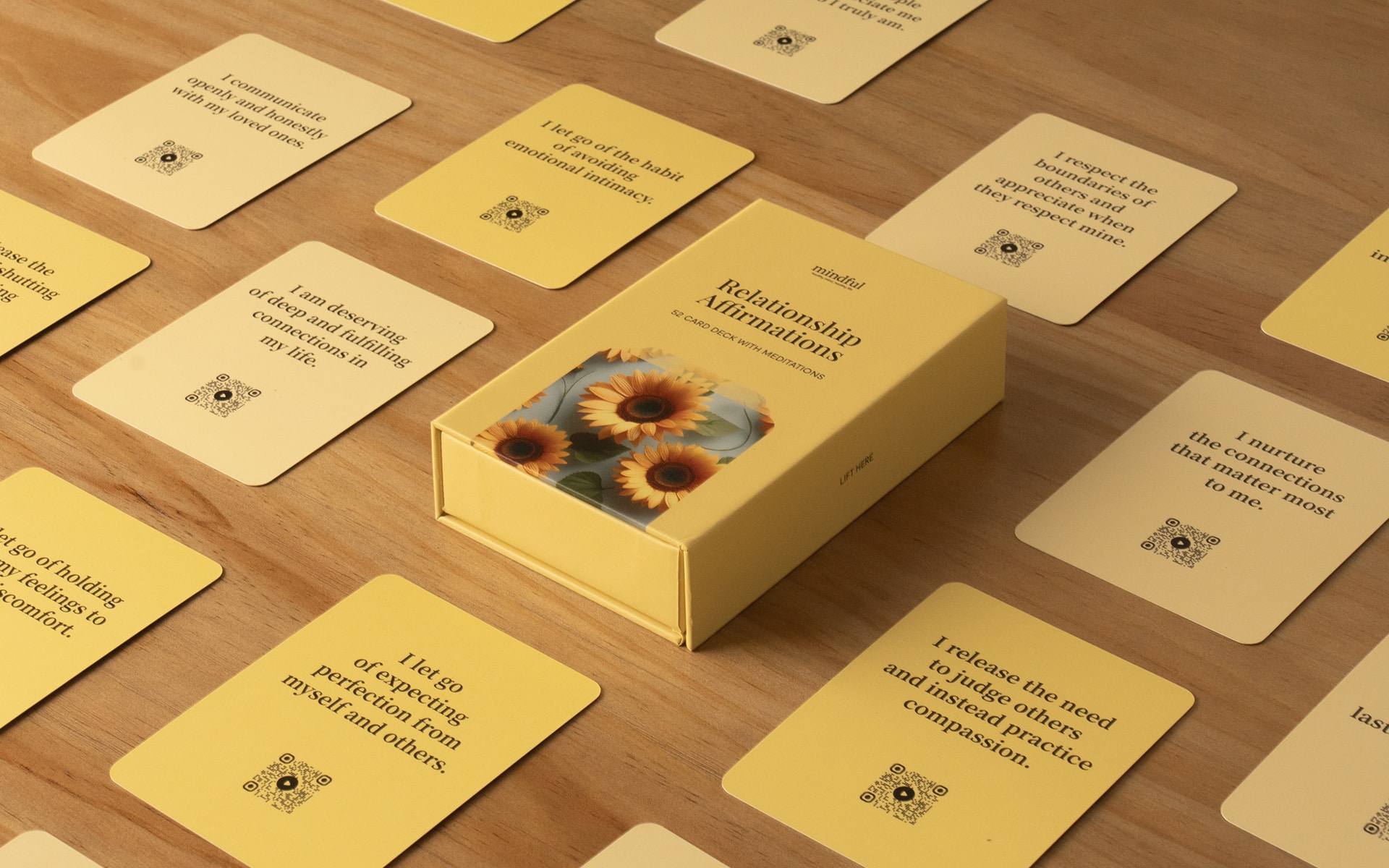
The newly launched Relationship Affirmations Deck explores the many ways in which mindfulness offers a powerful antidote to this disconnect. By incorporating mindfulness into our relationships, we can cultivate deeper understanding, empathy, playfulness, and appreciation for those we hold dear.
4 Simple, Mindful Practices to Nourish Relationships
Whether you’re looking to reconnect after a period of distance, or you just want to build on what you already have, mindful relationship practices can help. Let’s look at four mindful ways to nourish connection in your relationships, helping them grow stronger and more fulfilling over time.
1. Practice Active Listening
Here’s a question to gently ask yourself: How often do I truly listen to others without planning a response, letting my thoughts wander, or interrupting? It’s more challenging than you might think.
Active listening is a cornerstone of mindfulness in relationships, requiring full presence and an open heart.
What is active listening?
Active listening involves giving your undivided attention to the speaker, genuinely seeking to understand their perspective. This means suspending judgment, refraining from offering solutions unless asked, and showing that you value their words.
How to incorporate active listening into your relationship
Here are three ways you can boost your active listening skills.
Don’t let distraction get the upper hand. Put away devices like phones or laptops. Face the person you’re speaking with, maintain eye contact, and let them know they have your attention.
Use verbal and nonverbal cues. Nod, lean in, smile, or say things like, “I hear you,” or “Tell me more.” These small gestures show engagement and encouragement.
Reflect and validate. When your conversation partner is done talking, it can help to summarize what they’ve said to confirm you understand. For example: “It sounds like you felt hurt when that happened. Is that right?” Remember, validation doesn’t mean agreeing; it simply acknowledges their feelings as real and understandable.
By practicing active listening, you create a reliable space for your partner or loved one to share openly, which strengthens trust and intimacy.
2. Be Intentional About Gratitude and Appreciation
In long-term relationships, it’s easy to take the other person for granted. Over time, we may focus more on what’s lacking or on minor annoyances than on the things we admire about our partner, family members, or close friends.
Why gratitude matters in relationships
Gratitude shifts attention to the positive aspects of your relationship, reminding you of the qualities and experiences you cherish. When expressed regularly, appreciation fosters feelings of being seen, valued, and loved.
At first it can feel awkward to be intentional about gratitude. Calling out specific examples might even feel a little silly. But this practice has been shown again and again to shift our perspective, to sharpen our awareness of all the goodness around us and all the ways we’re held up and supported. All of this makes us better friends, partners, parents, and co-workers, deepening the bonds we share.
How to practice gratitude together
If you want to boost your experience of gratitude and aren’t sure where to begin, here are three simple strategies that can get you started.
Start a daily gratitude practice. This does not have to be complicated or drawn out! Each day, share one thing you’re grateful for about your partner or your relationship. It could be something small, like how they made you coffee, or something significant, like their support during a tough time.
Write thank-you or love notes. Leave a heartfelt note expressing appreciation for something specific they’ve done. Over time, these little gestures build a reservoir of positive feelings.
Celebrate the small wins. Acknowledge and celebrate each other’s achievements, no matter how minor. Recognizing effort strengthens your bond and boosts mutual respect.
When gratitude becomes a habit, it acts as a glue that holds your relationship together through ups and downs. Over time, noticing what’s working becomes the default. When frustrations or disappointments occur—which they inevitably will in our imperfect human relationships—you’ll have this large bank of truthful, positive reminders to draw from.
3. Be Present for Shared Experiences
Relationships thrive on shared experiences, but the depth of connection depends on how present you are in those moments. Whether it’s a dinner date, a weekend hike, or simply watching a movie together, mindfulness can transform routine activities into meaningful bonding opportunities.
What is shared presence and why does it matter?
It’s easy to assume that spending time together automatically equals connection. But proximity isn’t the same as presence. You can sit next to someone for hours and still feel a million miles apart. What transforms time into connection is being fully there.
“Being present” is a phrase you’ll see a lot in mindful spaces. While it can sound a little vague and New Agey, in reality, it’s a very practical approach to investing in our ordinary, everyday lives.
When we talk about being fully present, what we mean is that we’re marshaling our attention on purpose. That looks like putting our focus on the person we’re with, opening our ears and our hearts to them. It also involves being in our bodies—noticing sights, sounds, smells, and sensations—instead of always stuck in our heads and the stories we get hooked on. We’re not getting caught up in something that happened earlier or something that’s going to happen later. When our attention drifts, which it will, we just gently bring it back.
When you’re fully present, even mundane moments become an opportunity for connection. Presence fosters intimacy, as it shows the person you’re with that they are worth your undivided attention.
Ideas for mindful shared experiences
There are so many fun and creative ways to build shared experiences. Here are just a few ideas you can try:
Mindful meals. Shared meals used to be a cornerstone of cultural connection, and in some places, people are trying to bring them back to combat the epidemic of loneliness that has seeped into Western culture. A mindful meal is simply a meal without distractions. It doesn’t have to be fancy at all. The focus is on savoring the flavors, enjoying the ambiance, and engaging in conversation.
Digital detox dates. Set aside time to disconnect from screens and connect with each other. Use this time to talk, play a game, or try something new together.
Explore something new. Novelty and spontaneity strengthen bonds by creating new, positive associations. Take a dance class, cook a new recipe, or visit a place neither of you has been before.
Practice mindfulness together. Meditate, do yoga, or simply sit quietly and breathe together. Shared mindfulness practices can deepen your emotional connection and align your energies.
One additional benefit of intentional presence? We remember things more vividly. By being fully present during shared experiences, you create memories that are rich in connection and joy.
4. Practice Compassion and Forgiveness
No relationship is immune to conflict or mistakes. In these moments, the way we respond determines whether we drift apart or grow closer. Practicing compassion and forgiveness is a mindful approach to navigating challenges while strengthening the bond between you.
Why compassion and forgiveness are so crucial to connection
Compassion involves understanding and caring for your partner’s feelings, even when you disagree or feel hurt. It’s about recognizing their humanity and approaching difficulties with kindness rather than judgment.
Forgiveness is an emotionally-complicated and often-misunderstood concept. People sometimes fear that forgiveness is the same as saying what happened was okay, or that it means we “forget” or pretend it never happened. That isn’t the case with healthy forgiveness.
Holding onto resentment creates barriers to intimacy. Forgiveness doesn’t mean condoning hurtful behavior, but rather letting go of the emotional weight it carries, so you can move forward together.
How to practice compassion and forgiveness
Studies have shown that a regular mindfulness practice makes forgiveness easier, in part because it expands our compassion and makes seeing another perspective less difficult. Here are five habits that foster real, healthy compassion and forgiveness.
Pause before reacting. When emotions flare, take a breath. That pause can be the difference between a response that builds connection and one that tears it down.
Include yourself. Often the person we are hardest on is ourselves. The more we practice taming our ferocious inner critic, the more likely we are to be able to extend that same grace to others.
Seek understanding. Ask yourself: What might they be feeling or fearing? What’s beneath their words or actions?
Apologize and accept apologies. A sincere “I’m sorry” can be healing. So can saying, “I forgive you.” Neither one erases the hurt, but both open the door to repair.
Let go of what no longer serves you. Resentment is heavy. Releasing it—through mindfulness, journaling, or therapy—creates space for something lighter.
Compassion and forgiveness aren’t always easy. Some might say that these can be the most challenging part of a mindfulness journey, but they are what allows relationships to grow through challenges rather than crumble beneath them.
Building a Relationship That Feels Alive
Mindfulness in relationships isn’t about perfection. It’s about presence—about showing up, over and over, in small but meaningful ways. When we listen deeply, express gratitude, share moments with presence, and choose compassion, we create a relationship that feels alive, tender, and worth tending to.
And here’s the beautiful thing: every moment is a chance to begin again. So, whether you’re navigating a tough season or just looking to strengthen what’s already good, start small. Start today. The relationships that matter most are worth it.
Put the Focus Back On Connection with Relationship Affirmations
If you’re looking for a wonderful companion product that can support your journey to mindful, meaningful connection, you’ll love our new Relationship Affirmations card deck.
52 beautifully designed, high-quality cards, each featuring a unique mindful phrase.
A simple wooden holder to display each day’s card. A QR code on the back of each card that links to 25 bonus premium digital practices, like coaching and guided meditations.
This deck provides a simple reminder that brings your attention back to gratitude, compassion, honest communication, and healthy interactions. Whether used alone or with a loved one, these cards can provide the gentle structure and support to help you grow your relationships with care and intention.
When we dislike someone, it’s much harder to recognize their humanity. This guided meditation supports us in releasing tension in the body and cultivating compassion, even for a difficult person.
No matter whether we seek to get along with everyone, or have been known to cherish a grudge or two, we all know of a person whom we disagree with or who challenges us in some way. When you bring this person to mind, what do you notice? You may feel physical tension, anxiety, or other unpleasant sensations in the body.
In this meditation, Anu Gupta guides us in simple phrases of compassion and loving-kindness that allow us to remember: Just like me, this person is also human. Just like me, they have their own joys, desires, and struggles. Offering kind wishes to someone difficult is a powerful way to expand our circle of compassion. We don’t have to like them, but we can cultivate compassion for them by softening our resistance and acknowledging their humanity.
A Guided Meditation for Sending Compassion to a Difficult Person
Begin by settling into a comfortable seated posture, either on a cushion or a chair. Rest your feet on the ground below you. Place your hands on your knees or in your lap. Let your shoulders relax, your spine straight and relaxed, keep your chin parallel to the ground below you, and bring your eyes to a gentle close.
Bring your attention to your breath. Notice your inhales and your exhales. The breath is oftentimes a reflection of the mind. It’s just bringing awareness to the breath to settle the mind.
Notice if you’re holding any tension in any part of the body. Bring that to awareness and gently ask that body part to relax. Whether it’s your tongue, your shoulders, or your feet. Relax. Relax. Relax.
As you breathe in and you breathe out, bring to mind a person you’ve had some difficulty with. It doesn’t have to be the worst person you know, or someone who’s caused you a lot of harm, but someone you dislike. Someone who’s challenging. Someone that brings up some sort of resistance in your body. It could be a public figure. It could be someone you know.
Let yourself feel what it’s like to be in that person’s presence. Bring to attention any tension, dislike, or disgust that may arise because you’ve brought this person’s image in your mind. Just notice it, noticing these unpleasant sensations. But also remember that just like you, this person is also a human. Just like you, this person was also a baby at some point. Just like you, this person is also subject to sickness, to old age and to death.
Now, imagine this person as a baby. And now offer this difficult person some words of kindness. Just like me, you’re human. May you be safe. May you be peaceful. May you be healthy. May you live with ease. May you be safe. May you be peaceful. May you be healthy. May you live with ease. May you be safe. May you be peaceful. May you be healthy. May you live with ease.
Repeat these phrases of compassion for this difficult person over and over again. Notice the discomfort if it arises. Notice the resistance. And then say to the resistance, Just like me, you’re human. Just like me, you’re human. May you be safe. May you be peaceful. May you be healthy. May you live with ease. Keep repeating these phrases for as long as you like.
After your next exhale, bring your chin to your chest, stretching the back of your neck. Thank you for your practice today.
A fun fact about hummingbirds is that they are wary of loud noises. Barking dogs and loud music can scare the tiny creatures away because they don’t feel safe in noisy environments. People respond to unsafe environments like hummingbirds. We avoid situations that don’t feel safe, and when we find ourselves in one, we don’t stay long. But here’s where people differ from hummingbirds: safety issues can confuse us. Sometimes, we don’t recognize that the reason we’re uncomfortable is because we don’t feel safe, and other times we think we feel uncomfortable because we’re not safe, even though that’s not the reason.
What do you need to be safe and take care of yourself ? The answer may not be as straightforward as it seems. Safety depends, at least in part, on whom you’re with, where you are, and how you feel. When I was in my twenties and thirties, living in New York City on my own, I regularly assessed whether riding the subway at a particular hour or in a certain neighborhood was safe. Later, living in Los Angeles with young children, I made a judgment call on whether their climbing on the high bars of a rickety jungle gym was safe. When they got older, I balanced their wish to be with friends against whether their driving a long distance at night was safe. As an empty nester, my focus shifted back to my husband Seth and me, and whether choices like getting a walk-up apartment rather than one in an elevator building made sense since our ability to climb stairs carrying luggage or groceries would change as we grew older. The answers to these questions hinged on physical safety and the odds of someone getting hurt.
I don’t think about safety in such literal terms anymore. I now see safety as more nuanced and recognize the ways that my reactions spring from an evolutionary survival mechanism designed to keep me alive to pass my genes on to future generations, rather than critical thinking. We’re hardwired for survival. None of the ideas or takeaways I describe are scary. Still, some might carry you outside your comfort zone and trigger the survival mechanisms that run automatically when you’re in physical danger.
When we feel safe, we’re in our comfort zones, where we perform well, set appropriate boundaries, rest, recharge, and reflect. It feels good when we’re in our comfort zones, but it’s not where we take risks or where much growth takes place. Development takes place when we’re on the far edge of our comfort zones, stretching existing skills and abilities. When a stretch is in reach, but we feel unsafe anyway, one of our innate survival mechanisms can switch into gear and shut us down. Then, a mechanism designed to protect us short-circuits our growth and gets in the way of reaching our goals. This tendency can be mitigated in several ways, but for now, I’ll mention one: kindness.
As far back as Charles Darwin, scientists, philosophers, artists, and poets have drawn a straight line between our warmhearted urge to respond to suffering with kindness and the likelihood that we’ll survive, even thrive.
As far back as Charles Darwin, scientists, philosophers, artists, and poets have drawn a straight line between our warmhearted urge to respond to suffering with kindness and the likelihood that we’ll survive, even thrive. To borrow from the preface of Dacher Keltner’s excellent book, Born to Be Good: “[S]urvival of the kindest may be just as fitting a description of our origins as survival of the fittest.”
Navigating Sorrow With Kindness
I was introduced to the poem “Kindness” from Naomi Shihab Nye’s first poetry collection when I heard it recited by Jon Kabat-Zinn, the founder of Mindfulness-Based Stress Reduction (MBSR). Kabat-Zinn and his teaching partner Saki Santorelli (at the time, executive director of the Center for Mindfulness at the University of Massachusetts medical school) were international rock stars in the secular mindfulness world, and I was primed to listen. It was early morning, midway through a weeklong MBSR retreat/training in the late 1990s at the Mount Madonna retreat center in Northern California. Light streamed through the floor-to-ceiling windows in the meditation hall to backlight Kabat-Zinn, who was sitting cross-legged on a meditation cushion, up on a dais. The golden early morning light gave him and the entire session an otherworldly quality. He recited the poem from memory to a room full of meditators sitting around him in a semicircle, most of whom were also sitting cross-legged on cushions. One of the images in the poem stood out then and has remained with me since:
You must wake up with sorrow. You must speak to it till your voice catches the thread of all sorrows and you see the size of the cloth.
I’m struck by how often I’ve remembered this image of the enormity of sorrow in the world since I first heard it. The phrase has come back to me when someone I love has fallen ill or has died and when the loved ones of people close to me have struggled with illness or death. The size of the cloth hit me at an even greater level of magnitude as I watched news coverage of the Twin Towers coming down on 9/11 in New York City. The size of the cloth was almost unimaginable when I saw footage of the refrigerated trailers parked in front of hospitals in New York City functioning as temporary morgues during the early days of the pandemic. Maybe the theme of Shihab Nye’s poem that “it’s only kindness that makes sense anymore” resonated with me because it echoed rabbinic sage Hillel the Elder’s call to action: “If not now, when? If not me, who?”
Discomfort is one way our bodies ask us to listen.
Scientists have long suspected that kindness in response to other people’s pain is a survival mechanism that’s wired into our nervous systems. What’s often harder for people to remember is that kindness in response to our own sorrow is also a survival mechanism. For many of us, being kind to ourselves is more of a leap than being kind to others. It was for me. I thought kindness was the Golden Rule we teach young children—do unto others as you would have them do unto you. It didn’t occur to me to apply the Golden Rule to myself. I wanted to be a good mother, a good partner with Seth in providing for our family, and to make a difference in the world. I was one of the lucky ones and wanted to pay it forward. There was no room for me to take it easy. The harder I tried to do good and be good, the more of a toll it took on me. Still, it didn’t register that the pace at which I was working was unkind to my family and me. I had to burn myself out emotionally and physically a few times before I could internalize the commonsense truth that discomfort is one way our bodies ask us to listen. Just as it took me a while to develop a more nuanced stance toward safety, it took me time to adopt a more expansive idea of kindness that included being kind to myself.
Exploring What Safety and Kindness Feel Like
The following practices and activity-based takeaways are designed for you to integrate into daily life easily. Doing them shouldn’t be a heavy lift and tax you, but sometimes, mindfulness and meditation bring up big feelings that are painful to confront. Please be kind to yourself. Take a break if you feel overwhelmed or if discomfort becomes too much to manage easily. Time is your friend when it comes to inner discovery, and you have plenty of room to allow the process to unfold at its own pace.
Practice: Reflect on What You Need to Feel Safe
Identifying your safety needs and factoring them into your choices are a meaningful and effective way to be kind to yourself. Ask yourself, “What do I need to feel safe?” “Are my safety needs being met?” “How?” If they aren’t being met, “Why not?” Remember that whether you feel safe depends on various factors, including if you’re tired, hungry, or stressed. When safety and inclusion needs are unacknowledged and unmet, our nervous systems are ripe to become hijacked by one of our innate survival mechanisms.
Reflecting on safety needs can seem like a waste of time. When you’re in your comfort zone, it’s easy to miss the point of looking at what it takes to feel safe. Here’s why you should do it anyway: If you identify your safety needs up front, while you’re in your comfort zone, you can better take care of yourself later when you are outside of it.
Find a comfortable place where you won’t be interrupted. Close your eyes or softly gaze ahead or downward.
A few breaths later, listen for the loudest sound. When you are ready, listen for the quietest sound. Don’t chase a sound that’s hard to hear; relax and let it come to you. Let your mind be open and rest in the whole soundscape.
Ask yourself, “What does it take to feel safe and welcome in a new situation?” Hold the question in mind and listen to the answers that emerge.
When you’re ready, open your eyes if they are closed and jot down your insights.
Then, draw three concentric circles on a blank piece of paper. Prioritize your insights by writing the most important ones in the inner circle. Write those that are the least important in the outer circle. Write what’s left on your list in the circle in between. All your insights matter, but doublecheck to ensure the essential items are in the inner circle.
Review the diagram and consider ways to increase the odds that, in a new situation, you will feel safe and included.
Takeaway: How might connecting with playfulness, attention, balance, and compassion help you feel safer and more welcome?
Practice: Let Yourself Be Immersed in Self-Compassion
Throughout our evolutionary history, humans have relied on kindness to survive. Strong social bonds, effective communication, and meaningful collaboration create a supportive external environment that allows us to thrive in diverse situations and overcome challenges. Similarly, we create a supportive internal environment when we are kind to ourselves, one where we become more emotionally resilient. Kindness is a self-reinforcing behavior. By being kind to ourselves, we can better support and care for those around us. By being kind to others, we build trust, strengthen relationships, and create a sense of social support and belonging that helps us cope with stress and navigate adversity.
I first learned about the following self-compassion practice reading Zen priest Edward Espe Brown’s book No Recipe: Cooking as a Spiritual Practice where he writes: “[I]n the early ’80s, when Thich Nhat Hanh was giving a talk prior to departing from the San Francisco Zen Center where I was living, he said he had a goodbye present for us. We could, he said, open and use it anytime, and if we did not find it useful, we could simply set it aside. Then he proceeded to explain that, ‘As you inhale, let your heart fill with compassion, and as you exhale, pour the compassion over your head.’”
Imagine you are in a sweltering but beautiful jungle, holding a coconut shell in one hand. Can you feel the rough shell against the palm of your hand? Picture a wooden barrel filled with cool rainwater on the ground next to you. Can you see your reflection in the sparkling water?
Imagine the rainwater is a nectar of compassion that soothes busy minds and big feelings. As you breathe in, imagine filling the coconut shell with compassionate rainwater. As you breathe out, imagine pouring the nectar of compassion over the crown of your head.
Let go of the images of the bucket and coconut shell to focus on sensation. Imagine what it would feel like for a nectar of compassion to wash over you and soothe your body from head to toe.
Starting at the crown of your head, feel the compassion rinse slowly over your face and head, then over your neck, shoulders, chest, upper arms, lower arms, and hands.
Move your attention to your torso and imagine feeling a nectar of compassion wash slowly over your torso, pelvis, upper legs, knees, lower legs, and feet.
When you’re ready, lightly rest your attention on your outbreath. If thoughts and emotions arise, don’t fight them. With no goal or purpose, allow your mind to be open and rest.
Takeaway: Find at least one way to be kind to yourself today, then see if there’s a ripple effect.