Tag: Linked

  • Are Nuts and Peanut Butter Linked to a Longer Life?

    Are Nuts and Peanut Butter Linked to a Longer Life?

    Why are nuts associated with decreased mortality, but not peanut butter?

    According to the largest study of risk factors for death in human history, a poor diet causes more deaths than anything. Cigarettes only kill about 8 million people a year, whereas humanity’s diet kills millions more, as you can see below and at 0:20 in my video Do the Health Benefits of Peanut Butter Include Longevity?.What are the worst aspects of our diet? Processed meat? Twinkies? Soda? No, the five deadliest things about our diet are: not enough fruit, not enough whole grains, not enough vegetables, too much salt, and not enough nuts and seeds, as shown here and at 0:42 in my video.

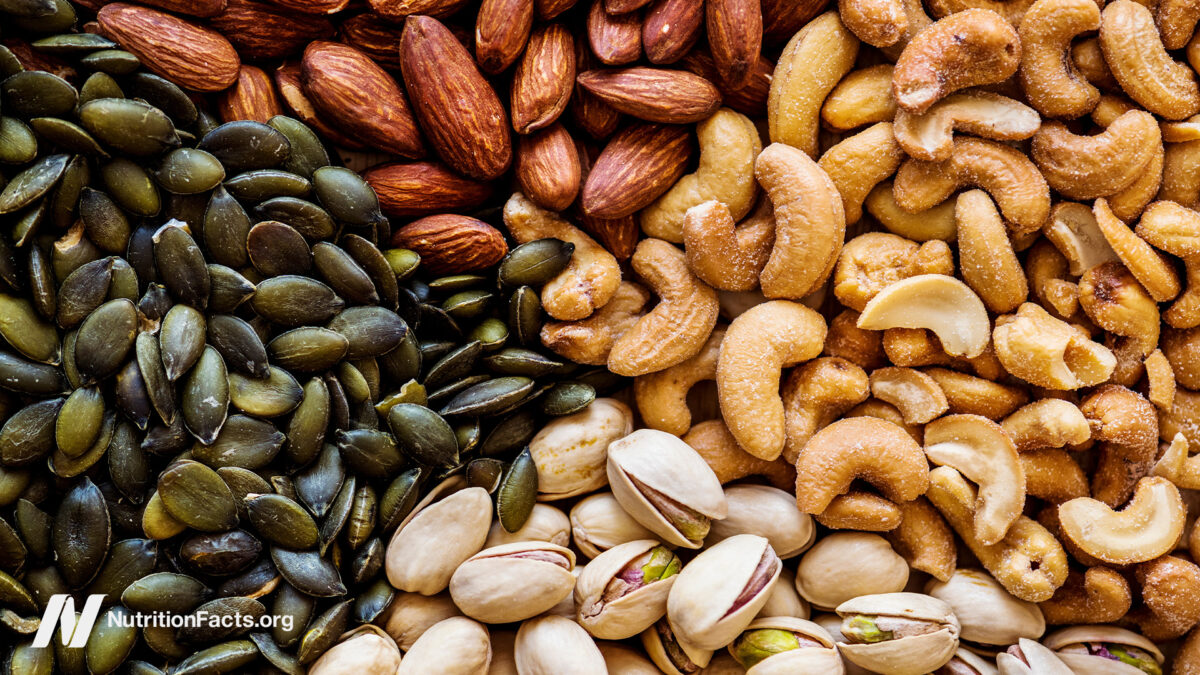
    Nuts should come as no surprise since interventional trials have shown that eating nuts improves artery function, and arterial diseases like heart disease are among our leading killers. But that’s not all nuts can do. They may also improve blood sugar control, lower cholesterol, suppress inflammation, reduce oxidative stress, and feed our friendly gut flora. Do all nuts do that, or just tree nuts?

    What about peanuts and peanut butter? About half of peanut consumption in the United States is from peanut butter, but the link between peanut butter consumption and mortality has not been evaluated thoroughly. To get that specific, we can call on the National Institutes of Health-AARP study, the largest prospective health and diet study in history that followed more than half a million people since the 1990s.

    Researchers found that nut consumption in general appeared to protect against all-cause mortality, meaning nut-eaters live—on average—longer lives. Specifically, they are less likely to die from cancer, cardiovascular disease, liver disease, respiratory disease, kidney disease, and infectious causes (so, maybe nuts help immunity as well). However, no such associations were found for peanut butter. So, when it comes to living longer, peanut butter doesn’t seem to count. Why?

    Well, we know peanut butter consumers tend to eat more meat, smoke cigarettes, and are less likely to exercise, but the researchers controlled for all those factors, as well as their alcohol consumption, fruit and veggie intake, education, and more. So, it’s not like the peanut butter eaters were just eating more white bread sandwiches or something. (The researchers didn’t control for sugar, though, so it’s possible they could have been eating more sugary jelly.)

    Another explanation: It could be the processing that goes into making peanut butter—the added trans fat, oil, salt, and sugar. But regular nuts are also often eaten with added oil, sugar, and salt.

    Could it just be the peanuts themselves? Technically, they aren’t nuts, so maybe they don’t have the same benefits. But no, a meta-analysis of all such studies found the same nut-like benefits for whole peanuts, but not peanut butter.

    Well, one thing missing from even no-salt, oil-free, sugar-free nut and seed butters is intact cellular structure. As I noted in How Not to Diet, no matter how well we chew whole or chopped nuts, some of the nutrients remain trapped in tiny particles that deliver a bounty of prebiotic goodness to our friendly gut flora. That makes me wonder if there would have been any difference between chunky and smooth peanut butter.

    Meanwhile, there is “compelling evidence” to recommend eating nuts (preferably raw nuts over salted or toasted, and whole or chopped nuts rather than nut butters) at least three times a week to maximize our chance of living a longer and healthier life.

    Doctor’s Note

    The healthiest nut may be walnuts. See Walnuts and Artery Function.

    Won’t nuts make you fat, though? See Nuts and Obesity: The Weight of Evidence.

    I mentioned my book, How Not to Diet, which you can read more about here. (All proceeds from my books are donated to charity.)


    Source link

  • Colorectal Cancer Before 50 Linked To Common, Often-Missed Condition Affecting Millions Of Americans

    Colorectal Cancer Before 50 Linked To Common, Often-Missed Condition Affecting Millions Of Americans

    Colorectal cancer cases are spiking, especially among younger adults, leaving scientists racing to uncover the hidden culprits behind this troubling trend. While poor diets, sedentary lifestyles, and environmental factors have long been in the spotlight, a new study reveals a surprising contributor, a condition that is both widespread and frequently missed.

    Researchers have identified a striking link between non-alcoholic fatty liver disease (NAFLD), a silent condition that affects an estimated one in four people globally and millions of Americans, and a significantly increased risk of early-onset colorectal cancer (diagnosed before the age of 50). Despite its prevalence, NAFLD often goes undetected in routine medical care and progresses without obvious symptoms.

    To understand the link between NAFLD and early-onset colorectal cancer, researchers conducted a large-scale, population-based cohort study using data from the Korean National Health Insurance Service involving over 4.6 million adults.

    The participants were between the ages of 20 and 49 who underwent routine health checkups in 2009, with health outcomes tracked through 2019. NAFLD was identified using a validated measure known as the Fatty Liver Index (FLI), with scores of 60 or higher indicating the presence of NAFLD.

    Participants were then grouped based on their FLI scores: those with NAFLD (FLI ≥ 60), borderline NAFLD (FLI between 30 and 59), and no NAFLD (FLI

    Researchers noted that individuals with NAFLD had a 24% higher risk of developing early-onset colorectal cancer compared to those without fatty liver, while those in the borderline NAFLD category had a 12% increased risk.

    Interestingly, the study also found a dose–response relationship between the severity of fatty liver and cancer risk in cancers, in those located in the left colon and rectum. The association was particularly strong among males, younger individuals aged 20–29, and those without diabetes, highlighting the need for targeted early screening and liver health monitoring in these higher-risk populations.

    “These findings highlight the need for multifaceted preventive strategies, including lifestyle interventions and expanded screening for younger populations with NAFLD,” the researchers wrote in the study published in the journal Clinical Gastroenterology and Hepatology.

    Source link

  • Man Hospitalized With Fever, Recurrent Falls Diagnosed With Rare Infection Linked To Lake Swimming In Iowa

    Man Hospitalized With Fever, Recurrent Falls Diagnosed With Rare Infection Linked To Lake Swimming In Iowa

    A 77-year-old man’s mysterious symptoms, fever, and frequent falls due to fatigue left doctors puzzled for days until they diagnosed him with a potentially fatal Legionnaires’ disease, linked to his vacation swimming in an Iowa lake.

    According to the case published in CMAJ, the unidentified patient was admitted to a Winnipeg hospital with fever, cough, and multiple sudden falls due to fatigue. Tests showed an elevated blood cell count, indicating an infection, along with high levels of creatine kinase, suggesting potential kidney damage. Further testing revealed that the patient had developed severe pneumonia.

    The patient was initially treated for five days with antibiotics piperacillin-tazobactam, a broad-spectrum antibiotics for pneumonia but his condition did not improve. Doctors then performed a bronchoscopy but could not identify the specific bacteria from the sample.

    Although doctors initially requested Legionella testing of the bronchoalveolar lavage culture, the laboratory declined due to a lack of clinical justification. However, after the doctors highlighted the patient’s risk factors including recent travel, exposure to stagnant water, and pneumonia unresponsive to standard antibiotics, the lab proceeded with the test.

    While the bronchoalveolar lavage culture tested negative, a urine test confirmed the presence of Legionella. The negative culture result was likely due to recent antibiotic use.

    Once Legionnaires’ disease was confirmed, doctors prescribed a 10-day course of antibiotics levofloxacin (750 mg daily). By the fourth day of treatment, the patient had improved significantly and no longer needed supplemental oxygen, allowing him to be discharged from the hospital to continue his recovery at home.

    Legionnaires’ disease develops within 10 days after exposure to Legionella bacteria, which enters the body through inhalation from water or soil. Outbreaks have been linked to various water sources, including hot tubs, whirlpools, cooling towers in air conditioning systems, hot water tanks, heaters, decorative fountains, swimming pools, birthing pools, and drinking water.

    The initial signs of the infection include headache, muscle aches, and a high fever. Within three days, additional signs may appear, including cough, shortness of breath, chest pain, gastrointestinal issues, and confusion. Though it primarily affects the lungs, it can sometimes lead to infections in other parts of the body, such as wounds or the heart. If left untreated it can lead to life-threatening complications including septic shock, and lung and kidney failure.

    A milder form of the infection from the same bacteria causes Pontiac fever, with similar symptoms but doesn’t affect the lungs and generally resolves in a few days.

    Source link

  • Study Finds Two Common Gynecological Disorders Linked To Increased Risk Of Early Death

    Study Finds Two Common Gynecological Disorders Linked To Increased Risk Of Early Death

    History of two common gynecological disorders, endometriosis and uterine fibroids, is linked to an increased risk of early death, a recent study revealed.

    Endometriosis is a chronic reproductive disorder that affects about 10% of women of reproductive age. It occurs when tissue similar to the uterine lining grows outside the uterus, causing symptoms such as severe period pain, chronic pelvic pain, bloating, nausea, fatigue, and infertility. There is no permanent cure for the condition, so treatment involves managing symptoms.

    Fibroids are noncancerous growths on uterine walls that can cause symptoms such as heavy menstrual bleeding, back pain, and frequent urination. Around 40% to 80% of women have uterine fibroids.

    In a large-scale study, researchers analyzed 110,091 women from the Nurses’ Health Study II, aged 25-42 in 1989. The participants had no prior hysterectomy, cardiovascular diseases, or cancer. Diagnoses of endometriosis (via laparoscopy) and fibroids (via ultrasound or hysterectomy) were self-reported every two years from 1993.

    Over 30 years, there were 4,356 premature deaths, including 1,459 from cancer and 304 from cardiovascular diseases.

    The all-cause premature death rate for women with confirmed endometriosis was 2 per 1,000 person-years, compared to 1.4 per 1,000 for those without. After accounting for factors such as age, weight, diet quality, physical activity, and smoking status, individuals with endometriosis were 31% more likely to die prematurely (before age 70) compared to those without these disorders. The majority of these deaths were attributed to gynecological cancers.

    Although uterine fibroids were not linked to all-cause premature death, the condition elevated the risk of death due to gynecological cancers.

    “Women with a history of endometriosis and uterine fibroids might have an increased long-term risk of premature mortality extending beyond their reproductive lifespan,” the researchers concluded.

    “These conditions were also associated with an increased risk of death due to gynecological cancers. Endometriosis was associated with a greater risk of non-cancer mortality. These findings highlight the importance for primary care providers to consider these gynecological disorders in their assessment of women’s health,” they wrote in the study published in the journal BMJ.

    The researchers caution that since it is an observational study relying on self-reported data, it can be prone to errors. Also, as the participants were predominantly white healthcare workers, the findings may not be generalizable to other populations.

    Source link

  • Excessive Daytime Sleepiness In Elderly Might Be Linked To Pre-Dementia Syndrome

    Excessive Daytime Sleepiness In Elderly Might Be Linked To Pre-Dementia Syndrome

    Struggling to sleep or feeling overly sleepy during the day may be more than just a sign of fatigue; they could indicate serious health risks. A recent study revealed that elderly adults who have excessive daytime sleepiness are at risk of developing motoric cognitive risk syndrome that can lead to dementia.

    Motoric cognitive risk syndrome can be considered a precursor of dementia marked by slow gait or memory issues, two characteristic features of dementia but not fully developed mobility disability or dementia. Individuals diagnosed with motoric cognitive risk syndrome might need to undergo a treatment plan that includes dietary changes, lifestyle interventions, and medications to slow cognitive decline.

    The researchers of the latest study found that older people with excessive daytime sleepiness and a lack of enthusiasm to get things done were more likely to develop the syndrome compared to those who do have sleep issues.

    “Our findings emphasize the need for screening for sleep issues. There’s potential that people could get help with their sleep issues and prevent cognitive decline later in life,” said study author Dr. Victoire Leroy in a news release.

    To understand the link, the researchers followed up 445 people with an average age of 76 who did not have dementia at the start of the study. Through questionnaires, they assessed sleep patterns, including difficulties falling asleep, waking during the night, and daytime sleepiness. The questions also addressed the participants’ enthusiasm levels and memory problems. The researchers assessed the participants’ walking speed using a treadmill at the beginning of the study and annually for an average of three years.

    Analysis showed that 35.5% of people who have excessive daytime sleepiness and lack of enthusiasm developed the syndrome, compared to 6.7% of the people who did not have these conditions.

    After adjusting for other factors that could influence the risk of the syndrome, researchers found that individuals with excessive daytime sleepiness and a lack of enthusiasm were more than three times as likely to develop motoric cognitive risk syndrome compared to those without these sleep-related issues.

    “More research needs to be done to look at the relationship between sleep issues and cognitive decline and the role played by motoric cognitive risk syndrome. We also need studies to explain the mechanisms that link these sleep disturbances to motoric cognitive risk syndrome and cognitive decline,” Leroy said.

    Source link

  • Vitamin D During Pregnancy Linked To Better Bone Health In Children At Age 7: Study

    Vitamin D During Pregnancy Linked To Better Bone Health In Children At Age 7: Study

    Vitamin D is essential for maintaining healthy bones, and a recent study reveals that supplementing with this vitamin during pregnancy can have a lasting impact on children’s bone health, keeping them strong into mid-childhood.

    Researchers found that children have greater bone mineral density at age 7 when expectant mothers had taken vitamin D supplements during pregnancy.

    “Our findings show that the benefits of vitamin D supplementation during pregnancy persist into mid-childhood. This early intervention represents an important public health strategy. It strengthens children’s bones and reduces the risk of conditions like osteoporosis and fractures in later life,” said Dr. Rebecca Moon, lead investigator of the study in a news release.

    The researchers began the MAVIDOS study in 2009, enlisting over 1,000 pregnant women in England to explore the potential effects of vitamin D on child bone health. During the trial, the women were randomly divided into two groups: one received an additional 1,000 International Units of vitamin D daily, while the other took a placebo. The participants and healthcare providers who attended them did not know which group they belonged to.

    As part of the study’s first phase, researchers assessed the bone mass of the children at age four using detailed bone scans. The results showed that children born to mothers who received vitamin D supplements during pregnancy had greater bone mass compared to those whose mothers had taken a placebo.

    In the latest phase of the study, researchers examined whether the benefits of prenatal vitamin D would extend into mid-childhood. They conducted follow-up bone scans on 454 children between the ages of six and seven, finding that those whose mothers had received vitamin D supplements continued to show stronger bone density at age seven.

    “These findings suggest that pregnancy vitamin D supplementation may represent a population health strategy to improve bone health, although further work is needed to demonstrate the persistence of this effect into adulthood, together with, ideally replication in additional studies,” the researchers wrote in the study published in The American Journal of Clinical Nutrition.

    Although vitamin D deficiency during pregnancy remains a significant concern, the U.S. dietary recommendations for vitamin D intake in pregnant women remain conservative. It is primarily due to concerns over potential toxicity. However, current evidence suggests that a daily intake of 4,000 IU of vitamin D3 is both safe and necessary to meet the needs of all pregnant women, with no adverse effects reported.

    Since the effects and harms of vitamin D supplementation on maternal and infant health are not yet fully understood, WHO does not recommend vitamin D supplementation as part of standard prenatal care.

    Source link

  • COVID-19 Vaccine Linked To Elevated Risk Of Facial Palsy: Study

    COVID-19 Vaccine Linked To Elevated Risk Of Facial Palsy: Study

    Researchers have found that COVID-19 vaccination is linked to an elevated risk of facial palsy, with the risk particularly high within 28 days of taking the shot.

    Facial palsy, also known as Bell’s palsy, leads to temporary weakness or paralysis of the facial muscles, resulting in drooping on one side of the face and difficulty making facial expressions. Although the exact cause of the condition is not known, experts believe that certain viral infections, autoimmune mechanisms, or vaccination can be potential triggers.

    Although the pivotal clinical trials during the development of COVID-19 vaccines revealed no severe safety concerns, there has been an imbalance in the incidence of facial palsy among vaccinated individuals compared to the general population. This prompted the researchers to conduct a large-scale study involving over 44 million patients in South Korea to investigate the risk of facial palsy among individuals vaccinated against COVID-19.

    The researchers examined a national health information database of individuals who received more than one dose of the COVID-19 vaccine and were then diagnosed with facial palsy within 240 days post-vaccination.

    When the incidence of facial palsy within 1–28 post-vaccination was compared to a control window (the remainder of the 240-day observation period), the researchers noted that there were 5,211 cases within the risk window and 10,531 cases within the control window.

    The study revealed a 12% increase in the risk of facial palsy within 1 to 28 days after any COVID-19 vaccine dose. The researchers also noted that the risk increased regardless of whether individuals received homologous or heterologous vaccines.

    While the second dose showed a 7% higher risk, the combination of the first and second doses indicated an 8% increase. However, no increased risk was associated with the third dose.

    “Facial Palsy (FP) risk increased within 28 days postvaccination, primarily after first and second doses, and was observed for both mRNA and viral vaccines. Clinicians should carefully assess the FP risk-benefit profile associated with the COVID-19 vaccines and monitor neurologic signs after vaccination,” the researchers wrote in a news release.

    While the exact reason for facial palsy after vaccination is unclear, researchers suggest possible explanations.

    One explanation is that mRNA vaccines use lipid nanoparticles to deliver SARS-CoV-2 spike antigen which triggers an immune response that can lead to the release of proinflammatory cytokines. This response may damage the myelin sheath and potentially result in facial palsy.

    In the case of viral vector vaccines, they are designed to make antibodies against the virus’s proteins. Since these antibodies are similar to proteins in the nerves, they may mistakenly attack the myelin resulting in nerve damage.

    Researchers also noted that COVID-19 infection is associated with a higher risk of facial palsy. Recent studies suggest that this increased risk may be due to nerve compression resulting from inflammation triggered by the virus.

    Source link

  • Childhood Fitness Linked To Lower Stress And Depression In Teen Years

    Childhood Fitness Linked To Lower Stress And Depression In Teen Years

    Encourage your child to stay active. Swapping tablets for running shoes can make a real difference to their mental well-being. A recent study revealed that maintaining good physical fitness from childhood to adolescence is associated with reduced stress and depression during the teenage years.

    Mental health in adolescence is becoming an increasing concern, with more teenagers facing challenges like depression, stress, and anxiety. It is estimated to affect around 25%–30% of young people.

    The new study published in Sports Medicine emphasizes the importance of stepping away from screens and encouraging physical activity.

    To explore the connection between childhood fitness and adolescent mental health, researchers followed up with 241 participants over eight years. Their findings reveal that better cardiorespiratory fitness and improvements in physical activity during this time were linked to reduced symptoms of stress and depression in the teenage years.

    The researchers also noted that better motor fitness, including skills like agility, coordination, and balance during childhood, was linked to improved cognitive abilities and reduced stress and depression in adolescence. However, the connection between motor fitness and depression was not as strong as the link between cardiorespiratory fitness and depression.

    “Our findings highlight the importance of assessing several indices of physical fitness to quantify its role in cognition and mental health in research among children and adolescents. These results also suggest that promoting a variety of physical activities and reducing recreational screen time, thereby improving physical fitness, should be used as one option to improve cognition and mental health in youth,” the researchers wrote in the study.

    The researchers also noted that screen time during adolescence played a role in understanding how cardiorespiratory fitness and motor fitness affected mental health.

    “Our results should encourage policymakers as well as parents and guardians to see the significance of physical fitness more holistically, as poor physical fitness can increase mental health challenges and impair cognitive skills needed for learning,” said Eero Haapala, study author in a news release.

    “The whole of society should support physical fitness development in children and adolescents by increasing physical activity participation at school, during leisure time, and in hobbies,” Haapala added.

    Source link