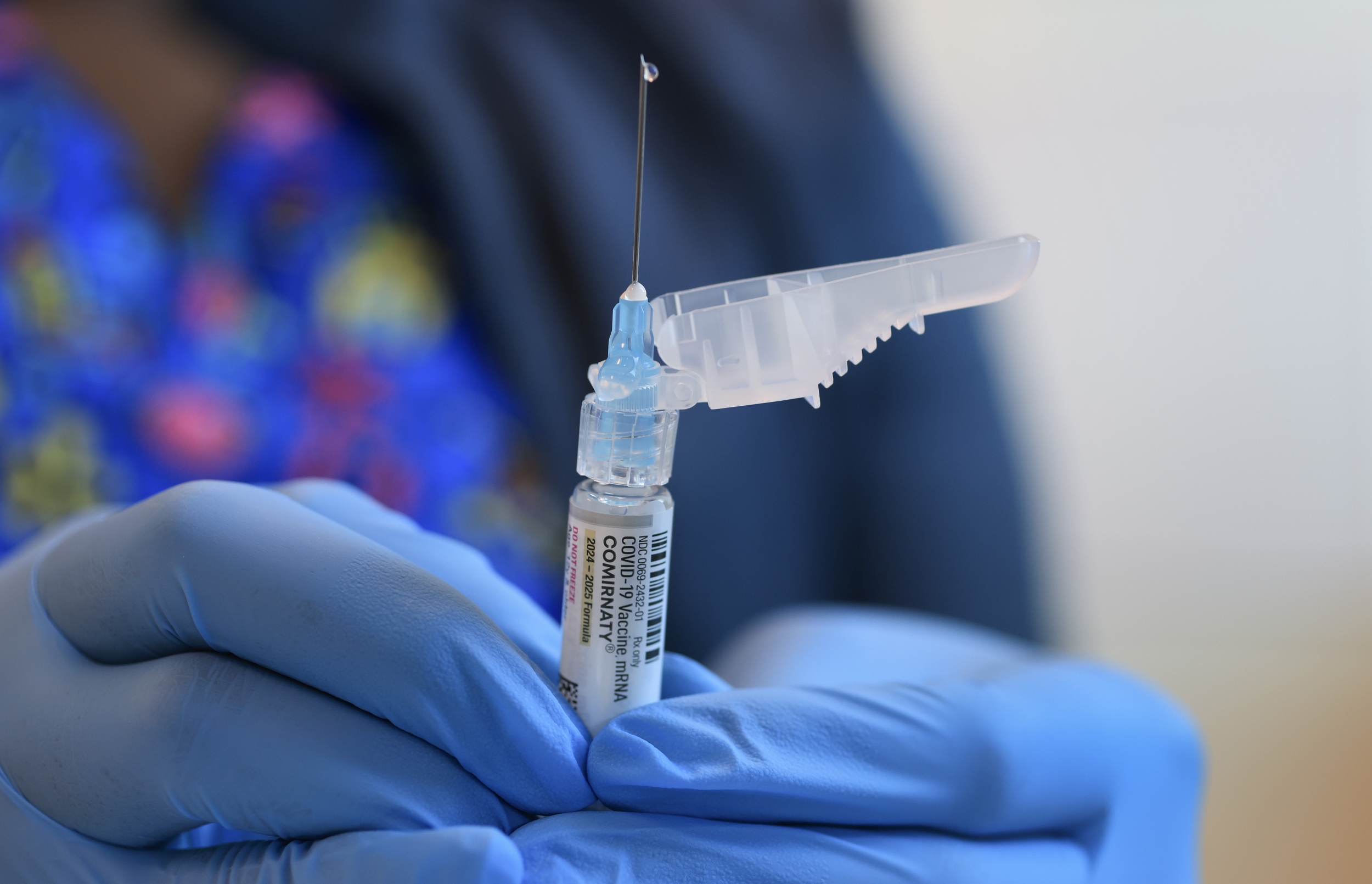
A Summer Wave Is Taking Shape
COVID-19 has not gone away. A new subvariant has taken over as the dominant circulating strain in the United States, emergency department visits are rising across all age groups, and federal epidemic models now show infections growing or likely growing in at least 27 states as of mid-July 2026.
The variant, known as NB.1.8.1 and informally called “Nimbus,” accounted for an estimated 43% of sequenced COVID cases in the U.S. during the two-week period ending late June 2026, according to CDC genomic surveillance data, surpassing all other circulating strains to become the dominant U.S. lineage. It is a descendant of the JN.1 Omicron lineage, first detected globally in early 2025 and identified in the United States through airport screening programs in March 2026.
This variant drove earlier surges in China, Singapore, and parts of Southeast Asia before establishing itself in the U.S. — a pattern that health officials have been watching as a leading indicator of domestic wave dynamics.
Why This Matters
For most healthy, vaccinated adults, the Nimbus variant appears to cause illness consistent with other recent Omicron descendants: upper respiratory symptoms, sore throat, fatigue, and fever. WHO and CDC have not found evidence of vaccine escape sufficient to cause widespread serious illness in vaccinated populations. It does not appear to cause a higher rate of severe illness, hospitalization, or death compared to LP.8.1 and other recent Omicron strains.
But transmissibility — not just severity — drives surge dynamics. In Singapore, NB.1.8.1 spread at approximately 60% weekly growth rates before becoming dominant, and a variant capable of infecting large numbers of people simultaneously always poses an elevated risk to those who are most vulnerable: older adults, immunocompromised people, and those who have not updated their COVID vaccination.
Rising emergency department visits are now visible across all age groups — a pattern that appeared before national clinical case counts reflected the underlying trend, consistent with how COVID summer waves have developed in prior years.
What We Know So Far
CDC forecasting models as of July 15, 2026 estimate that COVID infections are currently growing or likely growing in at least 27 states, based on the most recent epidemiological trend modeling.
As of July 12, 2026, COVID test positivity nationally stood at 4.8%, up 1.1% from the previous week. Emergency department visits are also rising across all age groups, according to the CDC’s respiratory illness surveillance data.
Nine states are currently reporting moderate to very high COVID viral levels in wastewater: California, Florida, Hawaii, Idaho, Louisiana, Nevada, Oregon, South Carolina, and Texas. Wastewater surveillance detects COVID viral particles in sewage before those infections show up in clinical test counts or hospital admissions — typically providing one to two weeks of early warning of rising community transmission.
WastewaterSCAN, which independently monitors diseases through municipal wastewater systems, reported national COVID levels in the “high” category as of its most recent available data — a more aggressive characterization than the CDC’s current “low” national wastewater reading, reflecting different measurement methodologies.
Where the Risk Is Highest
The geographic pattern of elevated wastewater activity — concentrated in the South and West — is consistent with the CDC’s 2026 Summer Outlook, which identified these regions as most likely to see early COVID activity this summer, citing lower recent immunity in populations that had limited COVID exposure last winter.
Among the states with current high or very high wastewater activity, the most populous are California, Florida, and Texas — states whose combined populations exceed 90 million people. Louisiana and South Carolina, also on the elevated list, have historically had higher rates of chronic conditions that increase COVID severity risk.
Nimbus has been detected in sequences across multiple U.S. states, with a wide geographic spread already established. The CDC has not published a detailed regional breakdown of variant proportions due to current limitations in sequencing coverage, but the 27-state growth model reflects national-level epidemiological trends.
What Experts Say
The Nimbus variant first demonstrated its capacity for rapid spread in Asia, where it drove surges in China, Singapore, and parts of Southeast Asia before being identified in the U.S. through airport monitoring. The pattern from those earlier waves — high transmissibility, widespread community spread, manageable severity in vaccinated populations, but significant risk for the immunocompromised and unvaccinated — is what U.S. health officials are using to calibrate their summer expectations.
The CDC’s 2026 Summer Outlook identified the South and West as the most likely regions for early summer COVID activity. The current wastewater data is confirming that pattern. Health officials are urging high-risk individuals to verify their vaccination status before exposure opportunities increase with summer travel and large indoor gatherings.
The current 2025–2026 updated COVID vaccines target the LP.8.1 variant. Health authorities are monitoring whether an NB.1.8.1-specific update to the vaccine formulation will be needed for the fall 2026 vaccine cycle, though no announcement on that question has been made as of mid-July 2026.
What the Evidence Shows and What It Does Not
MedicalDaily Evidence Check
- Variant proportion data: 43% of sequenced cases attributed to NB.1.8.1 as of late June 2026. The CDC notes that its precision in variant proportion reporting is currently “low” due to limited sequencing data; the exact proportion may shift as more samples are processed. The dominant status of the variant is well-established.
- Severity: Available data from WHO, ECDC, and U.S. surveillance do not show increased severe disease, hospitalization rates, or case fatality compared to recent prior variants. This may change as the wave develops and more clinical data accumulates.
- Vaccine protection: Current vaccines are expected to retain meaningful protection against severe illness and hospitalization, though their effectiveness against infection with NB.1.8.1 specifically is still being assessed.
- What is not yet known: U.S.-specific clinical severity data for NB.1.8.1 is still accumulating. The peak of the current wave has not yet been reached in most affected states.
Who Faces the Greatest Risk?
COVID continues to cause serious illness and death primarily in specific vulnerable populations:
- Adults 65 and older, who account for a disproportionate share of COVID hospitalizations and deaths in every recent wave
- People who are immunocompromised — including those receiving cancer chemotherapy, organ transplant recipients, people with HIV, and those on biologics or corticosteroids
- People who have not received an updated COVID vaccine in the past year
- Individuals with multiple chronic conditions — particularly heart disease, diabetes, chronic kidney disease, and obesity
- Pregnant people, who face elevated risk from respiratory infections
- People in high-density settings — nursing facilities, group homes, correctional facilities — where transmission risk is amplified
For younger, healthy, vaccinated adults, the current evidence suggests the Nimbus variant causes illness that is unpleasant but rarely severe.
Symptoms and Warning Signs to Watch For
Nimbus appears to cause symptoms consistent with other recent Omicron subvariants. Some patients have reported a more pronounced sore throat — described in some accounts as a “razor blade” sensation — as a notable early symptom. Other common presentations include:
- Sore throat and upper respiratory congestion
- Fatigue and body aches
- Fever or chills
- Headache
- Runny nose or cough
Symptoms that warrant prompt medical attention, particularly in high-risk individuals:
- Shortness of breath or difficulty breathing
- Persistent chest pain or pressure
- Confusion or inability to stay awake
- Bluish lips or face
- Oxygen saturation below 94% if monitored at home
What You Can Do Now
- Check whether you are up to date on your COVID vaccination. The 2025–2026 updated vaccine is available at most pharmacies and health department clinics, many at no cost. Use vaccines.gov to find a location near you.
- If you are immunocompromised or in a high-risk category, ask your provider whether you qualify for COVID pre-exposure prophylaxis or treatment options like Paxlovid, should you test positive.
- Use a high-quality mask — N95 or KN95 — in crowded indoor settings if you are at high risk, particularly in airports, public transit, or large indoor gatherings.
- If you test positive, isolate to protect others and contact your provider immediately if you are in a high-risk category to discuss whether antiviral treatment is appropriate. Paxlovid is most effective when started within five days of symptom onset.
- Monitor CDC COVID Data Tracker and your state health department for updated local wastewater and clinical trend data.
Cost and Access: What Patients Should Know
Updated COVID vaccines are available at no cost at most pharmacy chains — including CVS, Walgreens, Rite Aid, and Walmart pharmacy — for people with Medicare, Medicaid, or private insurance. For uninsured patients, the CDC’s Bridge Access Program and state vaccination programs provide vaccines at no out-of-pocket cost at participating locations.
Paxlovid, the antiviral treatment for COVID-19, requires a prescription. It is covered under most insurance plans for eligible patients with COVID-19 who are at high risk of severe illness. Patients without insurance can ask their provider or pharmacist about the Pfizer patient assistance program.
At-home COVID tests remain available at pharmacies and continue to detect the Nimbus variant, though their sensitivity may be lower early in infection than at 48 to 72 hours after symptom onset.
What Happens Next
The summer COVID wave is expected to develop through July and into August in the states currently showing elevated wastewater signals. The CDC updates its COVID epidemic trend forecasts weekly; MedicalDaily will report on significant changes in wave dynamics, vaccination guidance, or variant severity data as they emerge.
The WHO and FDA are monitoring whether the fall 2026 COVID vaccine formulation should target NB.1.8.1 or a newer variant; decisions on the fall vaccine strain typically come in late summer.
The Bottom Line
The Nimbus variant has made COVID the dominant public health story of midsummer 2026, with infections growing in 27 states and ER visits rising nationally. For most vaccinated, healthy adults, this wave is likely to produce an uncomfortable but manageable illness. For older adults, immunocompromised people, and those without updated vaccinations, this summer presents a genuine and preventable risk. Get vaccinated, monitor your local wastewater data, and know how to access antiviral treatment quickly if you are in a high-risk group.