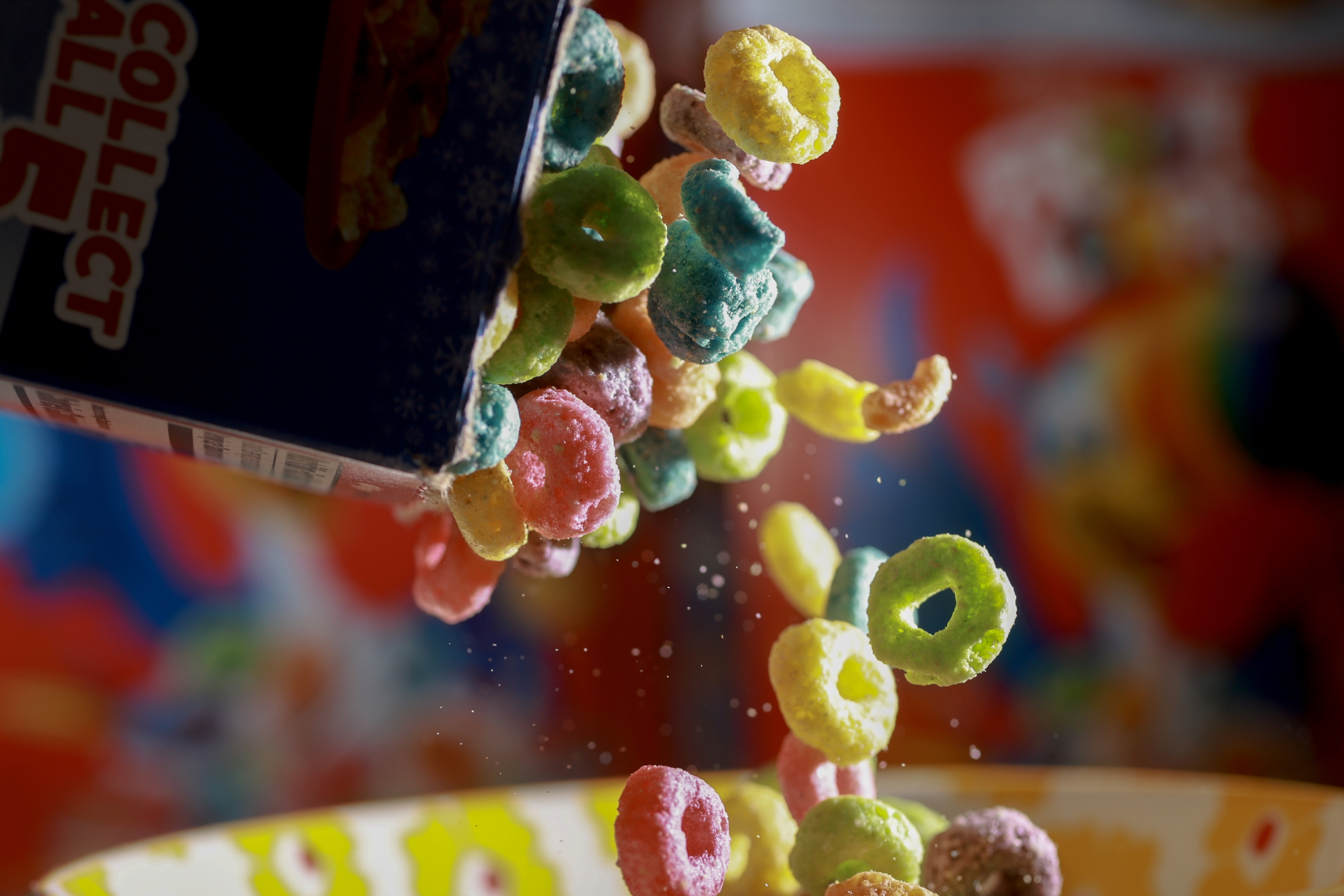
WK Kellogg says it will eliminate artificial colors and the preservative BHT from its entire cereal portfolio and cereal packaging by the end of 2026, a full year ahead of the timeline the company set last year.
The Battle Creek, Michigan company said production of reformulated recipes, including Froot Loops and Apple Jacks, begins later this year, with product shipping to retailers before year’s end. Replacement colors will come from fruit and vegetable juices and other plant-based ingredients, and the company said it has invested in its manufacturing facilities to make the switch at scale.
For households that buy these cereals weekly, the change is concrete and near-term. What it means for children’s health is a more complicated question than either critics or defenders of synthetic dyes usually acknowledge.
The Commitment and How It Moved Up
The company announced the accelerated schedule on August 6. Chief Operating Officer Jean-Baptiste Santoul said the team reached the milestone “a full year ahead of our original timeline,” and the company cited work across product development, manufacturing, ingredient sourcing and marketing.
Groundwork was already in place. WK Kellogg had reformulated cereals served in schools to be free of artificial colors and stopped launching new products containing them beginning in January, according to Food Processing. The company also said it is ahead of schedule on removing BHT, a synthetic antioxidant preservative, from the small amount of cereal packaging that still contains it.
The commercial pressure has been building from several directions at once. The company signed an agreement with the Texas attorney general to remove artificial colorings from its cereals by 2027, matching what had been its national plan. Consumer campaigns preceded that, including a 2024 rally at the company’s headquarters that delivered petitions with 400,000 signatures. Federal health officials have separately pressed food companies to phase out petroleum-based dyes, and the Department of Health and Human Services said last year that a substantial share of the industry had committed to doing so. WK Kellogg is now owned by Italy-based Ferrero Group.
The Evidence on Dyes and Children’s Behavior Is Genuinely Split
This is where careful reading matters, because the science does not support the strongest claims on either side.
The Food and Drug Administration has maintained for years that a causal relationship between consumption of synthetic color additives and behavioral effects has not been established for the general population. An FDA advisory committee reviewing the question in 2011 concluded there was not a sufficient basis for a ban, while acknowledging that some susceptible children may be affected.
California state scientists reached a different conclusion. A report published in April 2021 by the state’s Office of Environmental Health Hazard Assessment concluded that the evidence supports a relationship between food dye exposure and adverse behavioral outcomes in children, both with and without pre-existing behavioral disorders. That review contributed to California’s 2024 law barring six dyes from food served in public schools.
A frequently cited 2007 study in The Lancet reported increased hyperactivity in children in the general population following consumption of mixtures containing artificial colors or sodium benzoate.
The honest summary is that some children appear sensitive, average effects across whole populations are modest, and no United States regulator has concluded that dyes cause behavioral disorders. Separately, the FDA revoked authorization for FD&C Red No. 3 in food and ingested drugs in January 2025, on a different evidentiary basis. That decision followed data showing the dye caused cancer in male laboratory rats through a hormonal mechanism, and the agency stated there is no evidence it causes cancer in humans. The Delaney Clause required revocation regardless. Food manufacturers have until January 2027 to reformulate.
Natural Replacements Are Not Automatically Neutral
Removing a synthetic dye means adding something else, and the substitutes carry their own considerations rather than none. Reformulation can also change taste, texture and shelf life, and consumers who notice differences are not imagining it.
Colors derived from fruit and vegetable sources are generally regarded as lower-concern, but they are not inert. Carmine, also known as cochineal extract, and to a lesser degree annatto, are associated with allergic reactions in a small number of people, and anyone with a known sensitivity should read labels after reformulation rather than assuming a natural color is a safer choice for them personally. Research from a large French cohort has also raised questions about certain natural colorants and metabolic outcomes, findings that are preliminary and require replication before they change anything.
The Nutrition Question Color Does Not Answer
None of this changes the larger nutritional picture. A brightly colored cereal reformulated with vegetable juice colors is still a sweetened breakfast cereal. Parents concerned about their children’s diets will get more from attention to added sugar, fiber and portion size than from color sourcing. Families should discuss individualized dietary decisions with a pediatrician or registered dietitian rather than adjusting a child’s diet based on ingredient news alone. A reformulation is an ingredient change, not a nutritional upgrade, and it should not be read as one.
The reformulated products are not yet on shelves, and existing inventory with current recipes will continue selling through. Consumers who want to check what they are buying now can read the ingredient panel, where synthetic colors appear by name, such as Red 40, Yellow 5, Yellow 6, Blue 1 and Blue 2, and BHT appears among listed preservatives. Shoppers who avoid these ingredients for a child with a documented sensitivity should keep checking labels through the transition, because boxes with old and new recipes will sit side by side on shelves for a period.
What happens next is largely a matter of watching shelves and labels. Production begins later this year, with shipments to retailers before year-end, as The Hill reported. Whether other cereal makers accelerate similar commitments, and whether the FDA takes further action on remaining approved dyes, remain open. MedicalDaily will report on additional reformulation announcements and regulatory decisions.
Key Questions Answered
What did WK Kellogg announce? The company said it will eliminate all artificial colors and the preservative BHT across its full cereal portfolio and cereal packaging by the end of 2026, a year earlier than its original commitment.
When will reformulated cereals reach stores? Production of new recipes begins later this year, with shipping to retailers before the end of 2026. Boxes will reach shelves as existing inventory with current recipes sells through.
Do artificial dyes cause hyperactivity in children? The FDA has said a causal relationship has not been established in the general population, while acknowledging some susceptible children may be affected. California state scientists concluded in 2021 that evidence supports a relationship with adverse behavioral outcomes. The question remains contested.
Are natural colors automatically safer? Not automatically. Carmine and, to a lesser extent, annatto are associated with allergic reactions in some people, and research on certain natural colorants and metabolic outcomes is ongoing. Anyone with a known sensitivity should read labels after reformulation.
Does this make these cereals healthier overall? Color sourcing does not change added sugar, fiber or portion size. Families weighing children’s diets should discuss individualized decisions with a pediatrician or registered dietitian.
How can a shopper tell what is in a box today? Synthetic colors appear by name on the ingredient panel, including Red 40, Yellow 5, Yellow 6, Blue 1 and Blue 2. BHT appears among listed preservatives.
Are other companies doing the same? Several food manufacturers have announced dye removal timelines, and federal health officials have said a substantial share of the industry has committed to phasing out petroleum-based colors.