Tag: Joy

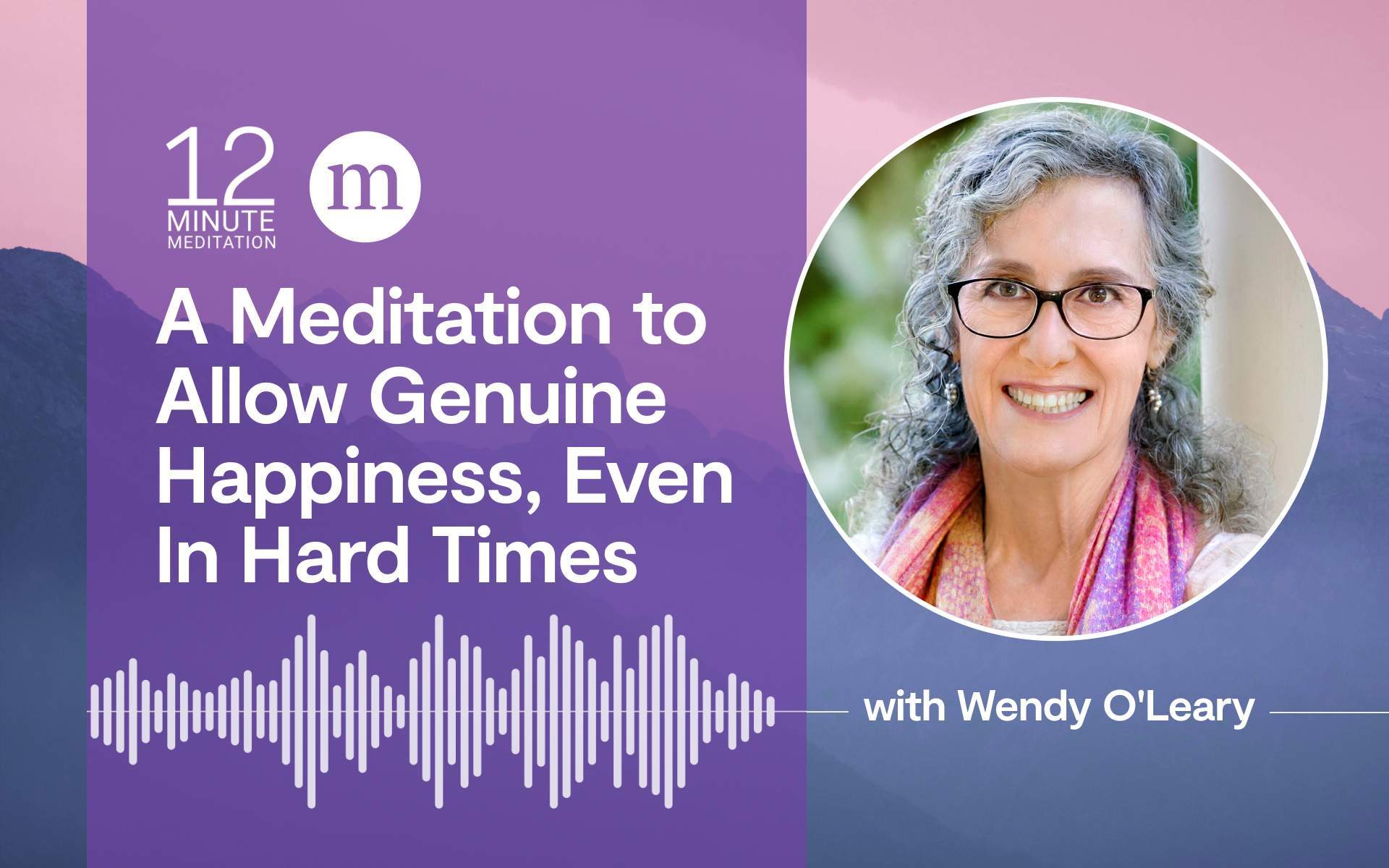
  • A Meditation to Allow Genuine Happiness, Even In Hard Times

    A Meditation to Allow Genuine Happiness, Even In Hard Times

    Accessing real happiness when we are struggling can feel impossible—but it’s also a key to our recovery, healing, and well-being.

    When we are going through a difficult season personally, or we are bearing witness to the pain of others, our relationship to genuine joy or happiness can get complicated and confusing. Happiness can feel out of reach, or it can feel like a betrayal, like it’s something we don’t “deserve” in hard times.

    But strengthening our ability to notice and soak in moments of beauty, tenderness, connection, and gratitude can actually have a fortifying effect on us. It can help us build resilience and fill our empty emotional tanks—which can foster our own healing and make it possible for us to show up in healing ways for others.

    Teacher Wendy O’Leary shares a guided practice to tune our attention to the reality that shimmers right alongside our genuine seasons of struggle.

    A Meditation to Allow Genuine Happiness, Even In Hard Times

    Read and practice the guided meditation script below, pausing after each paragraph. Or listen to the audio practice.

    Maybe, like so many, you have wondered, How can I even think about being happy when I’m having such a hard time right now? 

    Or, How can I be happy when there is so much suffering in the world? 

    And yet, happiness is not just accessible once basic needs are met, but also essential for our well-being and resilience. We need that resilience both for ourselves when we are struggling and to support others when they are. Both can be true. 

    Things can be hard and we might also be able to touch some happiness in life. It can’t be forced, so this practice is not an encouragement to push down the hard stuff. Instead, it is a very gentle invitation to also make a little space for the good as you’re able to enhance capacity and wellbeing. 

    This practice is adapted from Rick Hansen’s practice of taking in the good. 

    1. Let’s begin by settling into a comfortable position. If it works for you, I invite you to close your eyes. 
    2. Gently direct your attention to the felt experience of your body. You might feel your feet on the floor, the backs of your legs on a chair or cushion, or where your hands are touching. Direct your attention to wherever you can most easily connect with the experience of the body sitting. 
    3. Now, gently widen your attention to feel the sensations of the whole body sitting, including the sensations of the body breathing. The invitation here is for a wide, soft and receptive awareness of the body sitting and the body breathing. 
    4. If difficult emotions or thoughts arise, it’s not a problem. There’s no need to push them aside. Gently acknowledge their presence, maybe even saying to yourself, Oh, unpleasant thoughts or emotions. Then let them drift to the background as you focus on the foreground of the experience of the whole body as we settle in here for a minute. 
    5. Now, call to mind a time when you felt really happy. It could be a time you felt peaceful or calm, or maybe you felt a sense of contentment, or it could even be a joyful time. If there are a few experiences that are vying for your attention, just pick one for our practice together. There’s no right or wrong choice here. 
    6. Notice where you are during that experience and who you’re with. Look around and notice what else you see as you remember this experience. You might notice what sounds you hear. Were there any tastes or smells? Just be curious. And what about physical sensations, like the sun on the skin or the feet in sand or even movement, like the body rocking or dancing? Just notice any physical sensations connected to this experience. Take it in with all your senses. 
    7. Now, let go of the specific experience and just check out for yourself. How does my body feel when you’re happy, peaceful, content or joyful? What’s that like in the body? What’s that like in the mind? What’s like in your heart? You could even say to yourself, Oh, happy is like this. 
    8. Imagine letting that feeling expand throughout your body. Basking in the experience of happy, letting that grow and expand. You might even say to yourself, This feeling is worth keeping to help your brain remember and access this feeling more easily. Oh, happy is like this and this is worth keeping. Bask in the experience, growing the experience and reminding yourself that it’s worth keeping. Happy feels like this
    9. Remember that happiness isn’t in that specific experience you remembered. It’s in you, and it is accessible. You just have to take a moment to call it up and lean into the felt sense of happiness. Happiness is like this. 
    10. Before we close, let’s offer some well wishes. May we and all beings be safe. May we and all beings be healthy in body, mind, and heart. May we and all beings be happy, truly happy, peaceful, content, and free. May our practice be of benefit to all beings. 
    11. As you go through your day, you could set an intention to notice the little moments of happiness, peace, and connection. Stop for at least three breaths to take them in, noticing them with all your senses. Notice how the body feels when experiencing happiness and invite that felt sense of happiness to stick around and even expand in the body, mind and heart. 

    Thank you for practicing with me.


    Source link

  • Unplugged and Unapologetic: The Joy of a Digital Detox

    Unplugged and Unapologetic: The Joy of a Digital Detox

    In today’s world, it’s easy to get caught up in the hustle and bustle of our digital lives. We’re constantly connected to our devices, scrolling through social media, checking emails, and texting friends and family. While technology has made our lives easier in many ways, it’s also important to take a step back and disconnect from the digital world every now and then. This is where the concept of a digital detox comes in. A digital detox is a period of time where you abstain from using digital devices, such as smartphones, computers, and televisions, in order to focus on the world around you and recharge your mental and physical batteries.

    What is a Digital Detox?

    A digital detox can be as short or as long as you want it to be, depending on your needs and goals. Some people choose to do a digital detox for a few hours, while others may choose to do it for a few days or even weeks. The idea is to give yourself time to relax, reflect, and rejuvenate without the constant distraction of digital devices. During a digital detox, you can focus on activities such as reading, hiking, meditation, or spending time with friends and family.

    Benefits of a Digital Detox

    There are many benefits to doing a digital detox. For one, it can help reduce stress and anxiety. When we’re constantly connected to our devices, we can feel overwhelmed and anxious about the constant stream of information and notifications. By taking a break from our devices, we can give ourselves time to relax and unwind. A digital detox can also help improve our sleep. The blue light emitted from our devices can interfere with our sleep patterns, making it difficult to fall asleep and stay asleep. By avoiding screens before bedtime, we can improve the quality of our sleep.

    How to Plan a Digital Detox

    Planning a digital detox can be simple. First, decide how long you want your digital detox to last. This will help you plan your activities and make any necessary arrangements. Next, choose a location for your digital detox. This could be your home, a nearby park, or a retreat center. Make sure the location is free from digital distractions and has plenty of opportunities for relaxation and recreation. You should also let your friends and family know that you’ll be unavailable during your digital detox, so they don’t try to contact you.

    Preparing for a Digital Detox

    Before you start your digital detox, there are a few things you can do to prepare. First, make sure you have all the necessary supplies, such as food, water, and any medications you may need. You should also plan out your activities and schedule for the duration of your digital detox. This could include things like exercise, reading, or spending time in nature. It’s also a good idea to set boundaries with your friends and family, so they know not to contact you during your digital detox.

    Activities to Do During a Digital Detox

    There are many activities you can do during a digital detox. One of the best things to do is to get outside and enjoy nature. This could include hiking, camping, or simply taking a walk around your neighborhood. You could also try reading a book, practicing yoga or meditation, or learning a new skill or hobby. The goal is to focus on the world around you and engage in activities that bring you joy and relaxation.

    Overcoming Challenges During a Digital Detox

    While a digital detox can be incredibly beneficial, it’s not always easy. One of the biggest challenges is the temptation to check your devices. This is especially true if you’re used to constantly being connected. To overcome this, try to find healthy ways to cope with the urge to check your devices, such as going for a walk or practicing deep breathing exercises. You could also try to find a digital detox buddy, someone who can support and encourage you throughout the process.

    Conclusion

    In conclusion, a digital detox can be a great way to reduce stress and anxiety, improve your sleep, and increase your productivity. By taking a break from digital devices, you can focus on the world around you and recharge your mental and physical batteries. Whether you choose to do a digital detox for a few hours or a few weeks, the benefits can be significant. So why not give it a try? Take a step back from the digital world and see what you’ve been missing.

    FAQs

    Q: What is a digital detox?
    A: A digital detox is a period of time where you abstain from using digital devices, such as smartphones, computers, and televisions, in order to focus on the world around you and recharge your mental and physical batteries.
    Q: How long should a digital detox last?
    A: A digital detox can be as short or as long as you want it to be, depending on your needs and goals. Some people choose to do a digital detox for a few hours, while others may choose to do it for a few days or even weeks.
    Q: What are the benefits of a digital detox?
    A: The benefits of a digital detox include reduced stress and anxiety, improved sleep, and increased productivity.
    Q: How do I plan a digital detox?
    A: To plan a digital detox, decide how long you want it to last, choose a location, and make any necessary arrangements. Let your friends and family know that you’ll be unavailable during your digital detox, and plan out your activities and schedule.
    Q: What activities can I do during a digital detox?
    A: There are many activities you can do during a digital detox, including getting outside and enjoying nature, reading a book, practicing yoga or meditation, or learning a new skill or hobby.
    Q: How do I overcome the temptation to check my devices during a digital detox?
    A: To overcome the temptation to check your devices, try to find healthy ways to cope with the urge, such as going for a walk or practicing deep breathing exercises. You could also try to find a digital detox buddy, someone who can support and encourage you throughout the process.

  • A Meditation for Easing Pain and Inviting Joy

    A Meditation for Easing Pain and Inviting Joy

    This week, mindfulness teacher Vanessa Hutchinson-Szekely shares a tender meditation for those in the middle of pain.

    Sometimes seasons of intense suffering show up in our lives—no warning, no easy answers. 

    This week, mindfulness teacher Vanessa Hutchinson-Szekely shares a tender meditation for those experiencing pain. Based on her own experience with an extended episode of chronic back pain, she offers a moment of reprieve and caring attention to release tension and open to the possibility of joy.

    A Meditation for Easing Pain and Inviting Joy

    Read and practice the guided meditation script below, pausing after each paragraph. Or listen to the audio practice.

    1. Take a moment to settle in wherever you are. You might be lying down, sitting comfortably, or even supported by pillows or blankets. Allow your body to find stillness. Allow your mind to arrive.
    2. Take a deep breath in through your nose. And a long exhale through your mouth. Inhale slowly, feeling your body expand. Exhale, letting go of anything you’ve been holding on to today. A space to soften, to breathe, to be with yourself in kindness. Continue at your own pace to take a couple more deep breaths in through your nose, and then to exhale slowly through your mouth.
    3. Notice how your body feels right now without judgment, without needing to fix anything. Maybe there’s a place that feels tight, inflamed or achy. Maybe you feel tired or heavy. Whatever it is, let it be here. We’re not fighting the pain, we’re meeting it with awareness.
    4. Now with each inhale, imagine you’re breathing in a soft golden light. And with each exhale, you’re releasing tension like a mist gently leaving your body. Continue to breathe, picturing that golden light coming in and washing all over you, and with each breath out more and more tension is released. Now feel that golden light travel through your body. From the top of your head across your face, softening your eyes, your jaw, your neck. Let your shoulders drop away from your ears. Unclench the muscles across your back.
    5. Now let the light move down your arms through your elbows, wrists, hands, and fingertips. Breathe into your chest. Feel your ribs expand, your heart open. Let your belly rise and fall gently, your breath like waves at the shore. Let that golden light move through your hips and down your legs through your knees, your calves, your ankles, and all the way to your toes. Your whole body is bathed in light, breathing, releasing, softening.
    6. Now bring your attention to the area that’s been calling for care where the pain lives most strongly. Breathe gently into that space. Imagine the air reaching every cell that needs relief. You’re not trying to push the pain away, you’re surrounding it with love, with breath, with presence. Visualize a soft light, perhaps golden, perhaps warm rose or calming blue, cradling that part of your body. You might even whisper quietly to yourself, I’m here with you. You are safe. You are healing.
    7. Now let’s shift our focus to sensations that bring joy. Think of something that makes your heart feel light. Maybe it’s a favorite place—the ocean, a mountain trail, a cafe, your cozy bed. Maybe it’s a sound—laughter, birds, a song that always lifts you up. Or perhaps it’s a taste, like warm bread, ripe berries, tea with honey. 
    8. Let one joyful image take center stage. See it clearly, feel it in your body, notice any warmth in your chest, a softening in your shoulders, a hint of a smile forming. That is joy. That’s your body remembering wellness. Now send that joy throughout your body to the places that feel good and the places that need healing. Let joy move through you like sunlight melting through ice. Repeat softly in your mind, I send love and light throughout my body. I am more than my pain. I am whole.
    9. Take a deep breath in exhale fully. Now bring to mind one thing you feel grateful for today, big or small. Maybe your breath, maybe a friend, maybe the courage to press play on this meditation. As you breathe, let that gratitude expand, filling your body from the inside out. Feel that gratitude travel beyond your body, radiating out like ripples in a pond to your loved ones, your community, the world, and quietly repeat, May I be well. May others who are suffering find ease. May peace grow in me.
    10. Now imagine your whole body surrounded by shimmering light, a cocoon of healing energy that holds you in safety. This light is gentle yet powerful. It’s recalibrating every part of your mind, body and heart. You are safe. You are loved, you are whole. Let your body soften into this knowing. Let yourself rest here for a few breaths. 
    11. As we close, take one final deep breath in through your nose and out through your mouth. Inhale love. Exhale gratitude. Inhale peace. Exhale tension. Inhale light. Exhale release. As you slowly bring your awareness back to the room, remember you are not your pain. You are the light that shines beneath it, and that light is always there, ready to guide you back to joy. Thank you for showing up for yourself today. May your body rest, may your heart be light. And may you walk forward in peace.


    Source link

  • The Simple Joy of Writing by Hand

    The Simple Joy of Writing by Hand

    Have you noticed that we are writing by hand less and less these days? Sometimes it’s just a signature with a blunt stylus at the grocery store, or your finger signing crudely on a credit card pay screen. Handwriting certainly looks like a dying form, as we type away merrily on our keyboards, responding to emails that fly off in all directions.

    Is this withering away of handwriting a problem? Or is it the inevitable unfolding of language forms evolving over the centuries, from oral to written to printed, and now electronic? Before we dash headlong forward, let’s slow down for a moment and consider the role that writing by hand plays.

    An Art Form Worth Reviving

    I believe that handwriting still serves a deep purpose in our lives and that letting it fade away will be a loss to our spirit. Precisely because it is no longer essential for communication, handwriting can now be free to express its true nature as an embodied practice of creative expression, a synchronization of mind and body. Handwriting need not fold up and die. It can rise again as the original artistic act, unique to each of us, available to all, and really close at hand.

    Before writing, humans made marks. They were drawn in the sand, painted on cave walls, carved on rocks. The making of these marks grew out of a deep desire to connect with the power of the world. By drawing the tree, the bison, the moon, an understanding occurred, an energy touched. (Anyone who draws is familiar with this.)

    Our alphabet evolved out of these drawings—of an ox, a fish, a hand, a hook, a house, a cave. These forms were passed along, the original images becoming simplified in the handling. By 1200 BCE, an alphabet of 22 letters emerged with the Phoenician traders and evolved over time into the Roman letters. This syllabic system was efficient for commerce. It also remained a magical portal linking the inner voice with the outer world, bringing thoughts into form through the movement of the hand and stylus on the page.

    Our Brains Like It When We Write By Hand

    A recent article in the New York Times (“What’s Lost as Handwriting Fades”) described a study at Indiana University where children who had not yet learned to read or write were asked to draw a letter freehand, then trace it from a dotted outline, and then press the correct key on the computer. The researchers were amazed to see that the brain activity from the freehand drawing action was stronger, firing off in three different areas, while the tracing and typing motions barely stimulated the brain at all.

    The article went on say that apparently children who handwrite are able to generate ideas more easily, and that older students seem to retain information better when they take lecture notes by hand. There is something about the messiness of writing, its variable nature, that wakes us up, fires the synapses, brings us to the task at hand. That ancient way of understanding the world through drawing is still at work in the process of writing by hand. It turns out it’s the imperfection and changeableness of how we write that sparks our creative flow.

    Writing By Hand as a Mindfulness Practice

    Whether you enjoy your handwriting, or are embarrassed and uncomfortable with it, getting on the page each day with some “slow writing” can open your channels of creativity and keep them humming.

    This is a practice of seeing ourselves through how we write, allowing our handwriting, and ourselves, to be unique, quirky, imperfect—and appreciated.

    This is not about improving your handwriting, anymore than meditation is about improving your character (though both may happen as a side benefit!). It’s a practice of seeing ourselves through how we write, allowing our handwriting, and ourselves, to be unique, quirky, imperfect—and appreciated.

    When I write by hand, I come under the spell of the forms and the magic and mystery of who I am and how I show up in this world—the confused, shaky self, the graceful easy moments, or the part that doesn’t know what to say next. The letters are the marks left behind, the tracks of my inner journey through this life.

    When I write by hand, the familiar shapes tumble out and make new combinations. But it is something about the physical act—the holding of the hand and pen—that is meditative, bringing me into the present. The body sensations are the foundation—the ache, the touch, the softness of the paper. The moving line is the breath that keeps flowing along. And the words that show up on the page are the thoughts taking shape, the weather appearing on the horizon.

    It is this physical aspect of writing—the sitting down and listening through the body, the hand, the pen—that can bring forth something substantial and true. Each shape, each word, is an expression of how the world is living in me. When I write by hand, I keep going all the way to the end of the page, enjoying the sensual touch of it all, the way the letters link and dance and skip along, my fingers waiting expectantly for the next pulse, the next wave, the next thought showing up, ready to be described. Handwriting is the reporter, giving form to it all, grounded in the past, amazed and present to this moment.

    Embracing Both Old and New

    I’m not suggesting we abandon our computers and return to pen and paper. (Though taking the time to write a thoughtful handwritten letter can be a really nourishing activity.) I’m as involved as anyone with the ever-expanding world of online information.

    What I am proposing is that handwriting can become a contemplative practice, a generator of insight, a deepening down activity that counterbalances the vast, rapidly moving electronic world we’re bathed in. Handwriting is a powerfully simple way to bring natural creativity and connection back into our lives. It is an act of wholeness.


    Practice: Put Pen to Paper

    Sit down with a couple sheets of paper in front of you and a pen that you like to write with. Feel your body, your fingers holding the pen, your hand resting on the paper, your arm ready to guide, your feet on the floor or your back resting on the seat.

    At the top of the page write the words, “When I write by hand,” and then notice what shows up in your mind next. It could be a memory from childhood of learning to write—or an aching in your fingers in this moment—or something about the sound of the pen touching, pausing, moving along on the page. Describe whatever it is, following the associations until you come to a pause in your thoughts.

    Write the prompt again, “When I write by hand . . . ” and head off, letting the words tumble out, not concerned with making full sentences or perfect punctuation or spelling. Sit stable. Let your writing slow down. See how the forms change with this shift of speed. Notice how you’re feeling.

    Fill up two sheets of paper, or write for 10 minutes, then read what has come through. Where did you start? Where did you end up? You’re involved in an age-old act of bringing the loftiness of thought—what the ancient Chinese called “heaven”—down to the practicality of “earth.” Joining “heaven and earth” through human expression is the essence of art.

    This featured practice appeared in the June 2016 issue of Mindful magazine


    Source link

  • Summer Meditation Retreat: 6 Mindfulness Practices for Self-Care

    Summer Meditation Retreat: 6 Mindfulness Practices for Self-Care

    Summary

    • During the summer mindfulness can become an invitation to savor things more completely.
    • Rather than only appreciating the best experiences, savoring every aspect of life allows us to discover the gifts that often hide within unwelcome or challenging moments.
    • Savor the summer with a free collection of 6 guided meditations from expert mindfulness teachers.

    The word “savoring” crops up a lot in instructions for mindful eating, but why stop there? Inspired by that notion, I decided to challenge myself to a week of savoring things. As I started out, I began to see that I was automatically leaving lots of things out—things that were, well, unsavory—so the challenge had to undergo some immediate reengineering. It would have to become about savoring everything. Yikes.

    If I was going to savor the unsavory I would have to be thankful somehow for whatever came my way.

    That immediately led me to the understanding that if I was going to savor the unsavory I would have to be thankful somehow for whatever came my way. I would have to embrace the artificially sweetened (but still valuable) “attitude of gratitude.” It was a bit of a revelation. What I was prepared for was taking time to really enjoy things, in the present moment. What I wasn’t prepared for was how much it would challenge underlying attitudes and assumptions. When the week was over, I came to some conclusions about how savoring can reach into every area of life.

    6 Ways to Savor the Moment

    By Barry Boyce

    1) When things are good…savor the joy

    When things are good, it should be easy to savor them. But it took more effort to savor something I already appreciated than I would have imagined. Joy came in the sudden realization that the body is always in the present, no matter where my thoughts take me, and I can always return to that.

    2) When it’s every kind of bad…savor the resilience

    I can glimpse the fact that pain, whether physical or emotional, is something that lets us know we are alive. And as we try to manage it as best we can, we are humbled, we are vulnerable, we seek help. We find a way. We bounce back. And, as we savor the equanimity, we learn to take the good and the bad.

    3) When it’s boring…savor the freedom

    As we all keep discovering in meditation, we don’t really need to keep ourselves occupied with extra thoughts. It’s peaceful to take a break from that. My savoring challenge helped me learn (once again) to savor the freedom from the need to entertain myself every minute of the day.

    4) When it’s unwieldy…savor the laughter

    When things go haywire, the same tendency we have with hassles—to indulge in some “why me?” time—can easily take over. But, I’m starting to really appreciate the antidote that a meditation teacher friend of mine told me about: Just say “Why not me?”

    5) When you’re alone…savor the space

    In the right doses, being by ourselves can be deeply restorative. It can help us discover a deep reservoir of contentment that does not need to be chased after. That kind of space—a space of awe and wonder and simplicity—is well worth savoring. It may be the most savory treat of all.

    6) When you’re with others…savor the companionship

    The sheer joy of a shared laugh. The moments of listening when you need to be heard. The shoulder to cry on. Someone to share ups and downs, without caring which it is. I’m blessed with friends all over the world, people I can connect with within minutes no matter how long it’s been. Other human beings…what’s not to savor?

    Summer Meditation Retreat: 6 Mindfulness Practices for Self-Care

    Day 1: Connect With Presence

    By Sharon Salzberg

    If we can practice savoring the present moment when we’re sitting in formal meditation, we can also practice while standing in line at the grocery store, sitting anxiously in a doctor’s waiting room, or sitting down for a meal in good company. A portable exercise in meditation is focusing on the sensations of the in- and out-breath. If the breath is not a comfortable place for you, choose another object of attention like the sensation of your hands touching your knees.

    A 10-Minute Breathing Meditation

    This variation of breath meditation can be especially supportive if you feel restless or bored. Savor the freedom to simply let your mind be. It doesn’t matter how many times your attention wanders or how long you may dwell in distraction during this summer meditation. The practice is gently letting go and, with kindness toward yourself, beginning again.

    1. Sit comfortably and relax. Let your attention settle on the feeling of the breath at the nostrils, chest, or abdomen. As you breathe in make the silent mental note “in,” and as you breathe out you can count “one.” This becomes inhale “in,” exhale “one,” inhale “in,” exhale “two,” all the way up to ten. When you get to ten you can begin again.
    2. If your mind becomes distracted, and you lose touch with the breath—that’s OK. You can begin again. Stay connected to the rhythm of the breath with the mental note and the number.
    3. See if your awareness of the breath can be full and complete. Your attention is wholehearted with “in, five,” “in, six,” “in, seven,” all the way through to ten. Each breath is full and complete on its own—with the counting there to support you.
    4. When you feel ready, you can move into the rest of your day.

    A 7-Minute Meditation to Rest Your Attention

    Our habitual tendency is to grasp a thought or a feeling, to build an entire world around it, or push it away and struggle against it. It can be helpful to instead note what is painful, pleasant, or otherwise. Here we stay even, balanced, and calm, as we recognize what arises and bring our attention back, one breath at a time.

    1. Sit comfortably or lie down. Settle in to a comfortable position.
    2. Center your attention on the sensations of the in- and out-breath, at the nostrils, chest, or abdomen. As you feel the sensations of the breath, you can make a mental note of “breath” with the in-breath and then again with the out-breath.
    3. When a thought or feeling arises that’s strong enough to take your attention away from the breath, note it silently as “not breath.” You don’t have to judge yourself; you don’t have to get lost in a thought or elaborate it. Recognize that it’s simply not the breath.
    4. Bring your attention back to the sensations of the breath. Some of your thoughts or feelings may be tender, caring, cruel, or hurtful, but they’re not the breath. You can recognize them, let them go, and bring your attention back to the sensations of the breath.
    5. When you feel ready, come back to your surroundings.

    Day 2: Connect With Yourself

    By Sebene Selassie

    Belonging is the sense of ease and joy we can savor when we are truly present. Often we don’t feel like we belong because we’re caught in feelings of loneliness, anxiety, and doubt. Feelings of not belonging are learned over time and lead us to think that there’s something wrong with us, that we’re not enough, that we don’t belong—but we do. By the very nature of our existence, we belong. Mindfulness helps us remember this by allowing us to experience belonging in any moment.

    A 9-Minute Meditation to Listen to Your Body

    Meditation can help us be more present to life, and mindfulness of body and breath help ground that presence. It’s only when we’re present with each moment that we can savor our experience. This summer meditation invites you to try grounding yourself throughout the day, feeling the body and using the inquiry, “What’s happening in my body right now?”

    1. Find a comfortable posture. You don’t have to do anything special, just make sure that you’re relaxed and alert. Lower your gaze and give yourself the opportunity to go inward.
    2. Bring awareness to the sensations you notice while sitting. It can take some time and practice to feel sensations in the body rather than think about them. Is there a sensation in the body that’s particularly strong or clamoring for attention? It’s OK if you don’t notice anything. Just recognize your experience as it is and see if you can bring a sense of curiosity to it. You can ask yourself, “What’s happening in my body right now?”
    3. Whatever is happening, continue this inquiry. Notice the sensations that are present. When the mind starts to wander, gently bring your awareness back to the body. Again, ask yourself, “What’s happening in my body right now?”
    4. Bring the same curiosity to your breath. If the breath is not a comfortable place for you, continue grounding in sensations of the body. Otherwise, take a moment to connect to the natural rhythm of your breath. Notice your belly rising and falling. You can always ask yourself, “What’s happening in my body right now?”
    5. Know that you can come back to the body at any moment, as you come back to the space around you.

    A 7-Minute Meditation to Welcome Open Awareness

    Open awareness meditation is often associated with the metaphor of the mind being like an open sky. We can observe thoughts, sensations, sounds, but they simply pass like clouds in the sky, or they can flow like a river savor the space between you and what drifts past. The sky is not bothered, the river is not changed, everything is carried by the current of awareness.

    1. Find a comfortable posture. If you like you can gaze down softly at a point in front of you. Allow your body to soften and rest. Feel the connection between your body and the floor or the chair beneath you.
    2. Bring your awareness to the sensations of being right here, right now. Begin to listen to the play of sounds around you. You can notice sounds that are loud or soft, far or near—just listening. You don’t need to name the sound, or follow the sound, just listen in a relaxed and open way. Notice how all sounds arise and vanish as you listen.
    3. Sense that your awareness is expanding to be like the sky—open, clear, vast. Allow your awareness to extend in every direction. Sounds come and go, moving through the sky of your awareness, appearing and disappearing as you rest in this open awareness. You might notice that thoughts and images also arise and vanish. You can let them come and go without resistance or grasping.
    4. Allow the breath or sensations in the body to move like a breeze in this open sky of awareness. Notice that this awareness is naturally clear and spacious. Allow all sounds, thoughts, and sensations, feeling that spaciousness.
    5. As you lift your gaze, pause for a moment to reorient to the space around you.

    Day 3: Connect With Everything

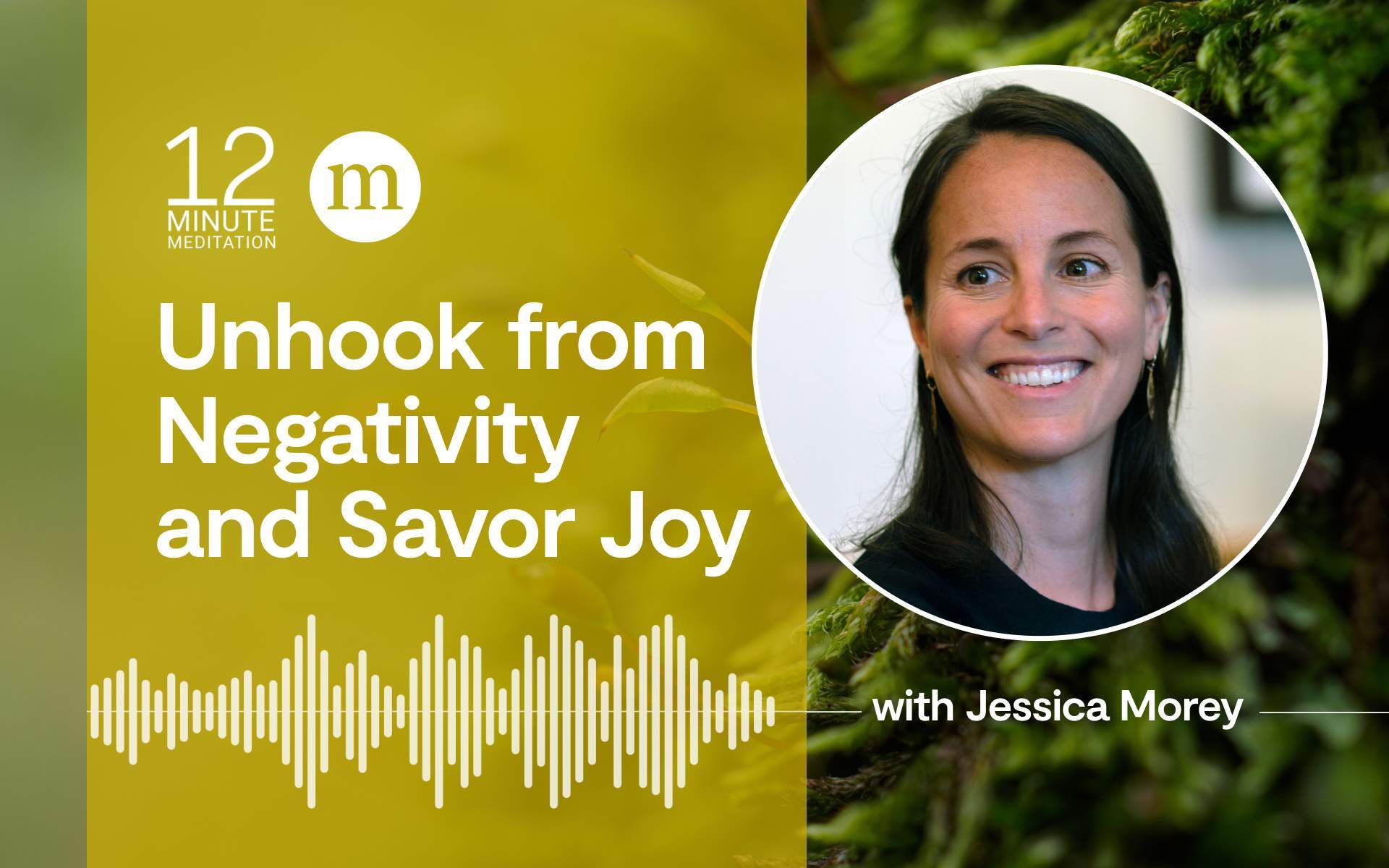
    By Jessica Morey

    We tend to focus our minds on what is wrong or threatening or what could harm us so that we might be better protected through the vagaries of life. But if we allow that bias to run rampant, we risk missing out on what’s beautiful, joyful, and nourishing in our lives. Not to mention, we grow less equipped to cultivate beauty and joy and nourishment in ourselves.

    A 14-Minute Summer Meditation to Appreciate Joy

    Perhaps it seems strange to investigate what we consider to be a positive emotion, but we often miss joy. We don’t pay a lot of attention to it and let it slip by without much notice. The good news is, there are practices to cultivate joy. It can be sparked by something enjoyable, or we can attend to and support joy in our felt experience. One of the great ways to do that is to savor—really stop and savor—what’s beautiful and good in life.

    1. Take a seat or lie down if you’re in a place where you can do that. Take a few deep breaths, lengthening your inhale and your exhale. During these opening breaths, notice how you’re feeling. If you’re feeling tired or drowsy, emphasize the inhale. If you’re feeling agitated or restless, emphasize the exhale. Then allow your breath to come to its natural rhythm.
    2. Now bring to mind recent joyful moments. Alternatively, you could reflect on things you’re grateful for in your life. Choose a few moments of joy and gratitude to focus on.
    3. Reflect on receiving the joy of these experiences. Bring your attention into your body. Notice how you experience joy in this moment. Where do you feel it in your body? The chest, the belly, the throat, the face? What do you notice? Is there a temperature to the joy? Is there a flow or movement to the energy of joy in your body?
    4. If you lose that felt sense of connection, just recall the images, people, or situations that bring you joy. Then return to savoring the felt sense of joy in your body. Breathe into it.
    5. Take a moment to reflect on the people, places, or situations that bring you joy. What were the things that really inspired a felt sense of joy for you? How can you bring more of that into your life?
    6. When you’re ready, bring your attention back to your environment. Take a deep breath. Orient yourself to the space around you and notice how you feel right now.

    A 14-Minute Meditation to Explore What’s True

    Longing is a vulnerable emotion, but it’s also very important. It directs us toward what we want in the world—where we want to go, what we value, what we want to create. When we can stay with the emotion and get to know it on a deeper level, there’s a great deal of wisdom at our disposal. If we can feel into it, be with it, and notice what’s underneath and inside of it, we can then better decide how we want to respond next.

    1. Settle into a comfortable position. You may be seated, or you’re welcome to lie down. Wherever you are, take a few deep breaths. You can cast your gaze down and ahead.
    2. Feel into your body and ask yourself: Is there anything I need right now? Is there anything I’m longing for in this moment? You may want something to be different, or you may be longing for a particular experience. Ask yourself: What do I want? What do I need?
    3. If nothing is emerging for you, bring to mind a recent experience when you really wanted something. Maybe you wanted to be seen or acknowledged; maybe you wanted to connect with a certain person, or you wanted someone to call you or attend to you. Identify a recent experience you had of longing and consider the situation, the people, the place.
    4. Turn your attention toward the felt sense of the wanting. Hold this feeling of wanting, and as you do, see if you can identify what it is that you want—below the particularities. What universal need are you touching upon? Maybe you want respect, ease, joy, or connection.
    5. Consider this question: How could I meet this need? Take a few moments to explore the creative ways this need could be met.
    6. Take a few deep breaths. Feel your body on the chair or on the ground. When you’re ready, lift your gaze.


    Source link

  • The Ultimate Home Organization Guide: Tips and Tricks to Spark Joy

    The Ultimate Home Organization Guide: Tips and Tricks to Spark Joy

    The Ultimate Home Organization Guide: Tips and Tricks to Spark Joy

    Getting Started: Understanding the Benefits of Home Organization

    Home organization is not just about decluttering and tidying up; it’s about creating a space that sparks joy and boosts your well-being. A well-organized home can reduce stress, improve focus, and increase productivity. It’s essential to understand the benefits of home organization before diving into the process.

    Assessing Your Space: Identifying Clutter and Disorganization

    Before you can start organizing, it’s crucial to assess your space and identify areas of clutter and disorganization. Take a walk-through of your home, room by room, and make note of the following:

    • What areas of your home are disorganized?
    • What items are cluttering your space?
    • What areas are causing you the most stress or frustration?

    Decluttering: The First Step to Home Organization

    Decluttering is the first step in achieving a well-organized home. Get rid of items that are:

    • Broken or damaged beyond repair
    • No longer useful or functional
    • Takes up too much space
    • Causes more harm than good

    Be ruthless – if you haven’t used it in the past year, it’s probably safe to let it go.

    Categorizing and Grouping: Creating a System for Success

    Once you’ve decluttered, it’s time to categorize and group similar items together. This will help you create a system for organizing your belongings. Consider the following:

    • Categorize items by type (e.g., books, kitchen utensils, linens)
    • Group similar items together (e.g., all cleaning supplies in one area, all art supplies in another)
    • Use labels and signs to identify each category and group

    Assigning a Home: Creating a Designated Space for Everything

    Assigning a home for each item is crucial for maintaining organization. This ensures that everything has a designated spot, making it easier to find what you need and reducing clutter. Consider the following:

    • Designate a specific spot for each item or category (e.g., a specific shelf for books, a specific drawer for kitchen utensils)
    • Use dividers, bins, and baskets to create separate compartments
    • Consider using vertical space by installing shelves or storage units

    Implementing a Maintenance Routine: Staying Organized in the Long-Term

    To maintain your newly organized space, create a routine for yourself. Set aside time each week to:

    • Clean and tidy up
    • Put away items after use
    • Check in on your organized spaces to ensure they’re staying clutter-free

    Tips and Tricks for a Smoother Ride

    • Start small: Begin with one area or room at a time to avoid feeling overwhelmed.
    • Schedule it in: Treat organization as a non-negotiable part of your daily or weekly routine.
    • Don’t forget the "hidden" areas: Don’t forget to organize areas like your garage, attic, or shed, which can be easily overlooked.
    • Use technology to your advantage: Take advantage of apps and tools that help you stay organized, such as task lists or home inventory apps.
    • Make it a family affair: Involve your family members in the organization process to create a sense of teamwork and responsibility.
    • Don’t get too attached: Be willing to let go of items that no longer serve you, even if it’s hard to part with them.

    Conclusion

    Home organization is a journey, not a one-time task. By following these tips and tricks, you’ll be well on your way to achieving a space that sparks joy and boosts your overall well-being. Remember to start small, be intentional, and don’t be afraid to ask for help when you need it.

    Frequently Asked Questions

    Q: How do I get started with home organization?
    A: Start by assessing your space, identifying areas of clutter and disorganization, and creating a plan for decluttering and organizing.

    Q: What are some common areas to focus on when organizing?
    A: Common areas to focus on include the living room, kitchen, bedroom, and closet.

    Q: What are some tips for maintaining my newly organized space?
    A: Schedule regular cleanups, put away items after use, and check in on your organized spaces regularly to ensure they stay clutter-free.

    Q: How do I make organization a habit?
    A: Make organization a part of your daily or weekly routine, and schedule it in your calendar.

    Q: Can I still declutter and organize as a busy person?
    A: Yes! Start small, prioritize the most important areas, and set realistic goals. You can also batch organizing tasks with similar tasks or delegate tasks to family members.

    Q: What are some common mistakes to avoid when organizing?
    A: Common mistakes include not categorizing and grouping similar items, not assigning a home for each item, and not maintaining the space.

  • The Danish Secret to Joy: How Hygge Can Improve Your Mental Health

    The Danish Secret to Joy: How Hygge Can Improve Your Mental Health

    The Danish Secret to Joy: How Hygge Can Improve Your Mental Health

    In a world that is increasingly fast-paced and stressful, it’s no wonder that many of us are feeling overwhelmed and burnt out. But what if there was a way to cultivate a sense of joy and contentment, even in the midst of chaos? Enter hygge, the Danish concept that is taking the world by storm.

    What is Hygge?

    Hygge (pronounced hoo-gah) is a Danish word that is difficult to translate, but roughly means a sense of coziness, comfort, and contentment. It’s a feeling of warmth and togetherness that is often associated with candlelit dinners, crackling fires, and snuggled-up blankets. But hygge is more than just a feeling – it’s a way of life.

    The Science Behind Hygge

    Research has shown that hygge can have a profound impact on our mental health. In a study published in the Journal of Positive Psychology, researchers found that participants who practiced hygge activities, such as lighting candles and drinking hot chocolate, experienced a significant reduction in stress and anxiety. Another study published in the Journal of Happiness Studies found that people who reported higher levels of hygge also reported higher levels of life satisfaction and happiness.

    How to Practice Hygge

    So, how can you incorporate hygge into your daily life? Here are a few tips:

    • Lighting: Light candles, use soft lighting, and avoid harsh overhead lights.
    • Textiles: Use soft, cozy blankets and throw pillows to create a sense of warmth and comfort.
    • Food and Drink: Enjoy warm, comforting foods and drinks, such as soup, hot chocolate, and tea.
    • Company: Spend time with loved ones, whether it’s a family dinner or a cozy night in with friends.
    • Nature: Take time to appreciate the beauty of nature, whether it’s a walk in the park or a simple moment of observation.

    The Benefits of Hygge

    So, what are the benefits of practicing hygge? Here are a few:

    • Reduced Stress: Hygge has been shown to reduce stress and anxiety by promoting relaxation and calmness.
    • Improved Mood: The cozy, comforting atmosphere of hygge can boost your mood and reduce symptoms of depression.
    • Increased Social Connection: Hygge is often practiced with others, which can help to strengthen social bonds and reduce feelings of loneliness.
    • Improved Sleep: The relaxing atmosphere of hygge can help to improve sleep quality and duration.

    Hygge in Everyday Life

    So, how can you incorporate hygge into your everyday life? Here are a few ideas:

    • Start a hygge routine: Set aside time each day to practice hygge, whether it’s reading a book by candlelight or enjoying a warm bath.
    • Create a hygge space: Designate a cozy space in your home as a hygge haven, complete with soft lighting, comfortable seating, and warm textiles.
    • Practice hygge with others: Invite friends and family over for a hygge night, complete with hot chocolate and cozy blankets.

    Conclusion

    Hygge is more than just a feeling – it’s a way of life. By incorporating hygge into your daily routine, you can reduce stress and anxiety, improve your mood, and increase social connection. So, why not give it a try? Light some candles, grab a blanket, and snuggle up with a good book. You never know – you might just find your own sense of hygge.

    FAQs

    Q: What is the difference between hygge and coziness?
    A: While both hygge and coziness refer to a sense of warmth and comfort, hygge is a more specific concept that is deeply rooted in Danish culture and tradition.

    Q: Can I practice hygge alone?
    A: Absolutely! While hygge is often practiced with others, it’s also perfectly fine to practice alone. In fact, many people find that hygge is a great way to relax and unwind after a long day.

    Q: Is hygge only for winter?
    A: No! While hygge is often associated with winter and the holiday season, it can be practiced at any time of year. In fact, many people find that hygge is a great way to beat the summer heat and relax on a warm summer evening.

    Q: Can I practice hygge with my pets?
    A: Yes! Many people find that hygge is a great way to bond with their pets, whether it’s snuggling up on the couch or taking a walk together.