
Tag: Hype

  • What Really Works According to Evidence-Based Nutrition (and What’s Just Marketing Hype)

    What Really Works According to Evidence-Based Nutrition (and What’s Just Marketing Hype)

    In a world filled with wellness trends and social media “superfoods,” it’s easy to believe that certain products can give your body an instant shield against illness.

    Many brands use terms like immune-boosting foods or super supplements to attract health-conscious consumers, but what truly supports the immune system comes down to evidence-based nutrition. Understanding the line between science and marketing claims is essential for building real, lasting health.

    What Are Immune-Boosting Foods, Really?

    When people search for immune-boosting foods, they often picture colorful fruits, smoothies, or exotic herbs that promise to “fortify” the body.

    However, rather than “boosting” the immune system beyond normal function, certain foods actually help it run properly. The immune system is a complex network of cells, tissues, and organs; food provides the vitamins, minerals, and nutrients these systems need to work efficiently.

    Scientific studies show that a diet rich in whole fruits, vegetables, whole grains, lean proteins, and healthy fats helps maintain immune balance. For example, foods like citrus fruits, bell peppers, and broccoli supply vitamin C, a nutrient linked to white blood cell production and immune defense.

    Zinc, found in legumes, seeds, and shellfish, supports immune cell growth and wound healing. Meanwhile, fermented foods such as yogurt and kimchi provide probiotics that aid gut health, an important part of overall immune strength.

    The idea of “boosting” immunity should be reframed to “supporting” or “nourishing” it. The body doesn’t need a sudden surge of activity; it needs consistent nutritional care that promotes proper immune function.

    The Science Behind Evidence-Based Nutrition

    The foundation of evidence-based nutrition rests on scientific studies rather than marketing claims. Researchers consistently find that whole, nutrient-dense foods promote immune resilience, while overly processed products can hinder it. Instead of focusing on single ingredients, nutrition experts emphasize dietary patterns.

    Some key evidence-backed nutrients include:

    • Vitamin C: Found in citrus fruits, kiwi, peppers, and tomatoes; contributes to normal immune cell activity.
    • Vitamin D: Sourced from sunlight, fortified milk, and fatty fish; regulates immune responses and inflammation.
    • Zinc: Present in legumes, seeds, and shellfish; essential for wound healing and immune enzyme activity.
    • Probiotics: Offered by yogurt, kefir, kimchi, and sauerkraut; improve gut flora balance, which influences immunity.

    Whole diets such as the Mediterranean diet, rich in fruits, vegetables, fish, olive oil, and nuts, have been linked to reduced inflammation and improved immune markers. This broader approach reflects how nutrition works in synergy rather than isolation.

    Drinking one glass of orange juice won’t prevent a cold, but a steady pattern of balanced eating can make the body more resilient overall.

    Common Immune Health Myths Debunked

    Misinformation surrounding immune health myths spreads quickly, especially online. Many brands and influencers present immunity as something that can be “supercharged” overnight, often with pricey supplements or quick-fix cleanses, according to the World Health Organization.

    Here are a few widespread myths worth clarifying:

    • Myth 1: You can boost your immunity instantly.
      The immune system cannot be strengthened overnight. It adapts over time based on overall health, lifestyle, and consistent nutrition.
    • Myth 2: The more vitamins you take, the better.
      Nutrients like vitamin C and zinc have upper intake limits. Excessive consumption offers no added benefit and can even be harmful.
    • Myth 3: Detox products can cleanse the immune system.
      The liver, kidneys, and lymphatic system already perform detoxification naturally. No juice cleanse or tea replicates this complex biological process.

    In many cases, myths thrive because they promise fast results, something the human body simply doesn’t work that way. Sustainable immune support relies on gradual, evidence-based habits.

    The Vitamin and Supplement Hype

    The vitamin and supplement hype is a thriving part of the wellness industry, often fueled by marketing narratives rather than medical evidence. Supplements claiming to “supercharge immune strength” contribute to a multibillion-dollar global market.

    While some people may benefit from supplements, for example, those with nutritional deficiencies, older adults, or individuals in low-sunlight environments, most can meet their nutritional needs through nutrient-rich foods.

    Clinical research indicates that supplements like vitamin C or zinc can shorten the duration of colds slightly when taken at the first sign of symptoms.

    However, over-the-counter “immune booster” blends usually offer limited value for healthy individuals. Many contain high doses or unproven herbal ingredients marketed as miracle solutions.

    Healthcare professionals often recommend focusing on diet first, using supplements only when tests reveal deficiencies. A balanced diet with diverse whole foods remains the most reliable way to maintain immune health, and it doesn’t require expensive pills or powders.

    Food vs Marketing Claims

    Navigating food vs marketing claims can be confusing, especially with appealing buzzwords printed on labels. Marketers use phrases like “immune-boosting,” “functional,” or “superfood” to imply scientifically supported results, even when evidence is weak or nonexistent.

    Consumers can protect themselves by evaluating sources critically. When a product boasts immune-strengthening benefits, check for reliable references such as peer-reviewed studies or government health guidelines. If the label avoids specifics or relies on vague health promises, that’s a red flag.

    For instance, fortified juices may advertise added vitamins, but they often contain high amounts of sugar, counteracting the benefits. Similarly, trendy superfoods like goji berries or spirulina offer nutrients but aren’t uniquely superior to more accessible foods like berries or leafy greens.

    A simple rule applies: real food usually doesn’t need loud claims. An orange, spinach salad, or bowl of lentils can support the immune system as effectively as any packaged product promoted as a “functional health booster,” as per Harvard Health.

    Building Long-Term Immune Strength Through Lifestyle

    Beyond nutrition, immune resilience depends on lifestyle factors working hand in hand with diet. Adequate sleep (7–9 hours per night) allows immune cells to regenerate.

    Regular physical activity enhances circulation and immune surveillance. Stress management, through meditation, breathing exercises, or leisure time, prevents chronic inflammation, which can weaken immune defenses.

    Hydration and moderate exposure to sunlight also play roles in maintaining vitamin D levels and supporting mucosal barriers. Together, these habits create the environment the immune system needs to perform consistently rather than erratically.

    For most individuals, true immune “boosting” is about steady maintenance through sustainable living, not extreme interventions. Combine whole foods with rest and movement, and the body’s defense systems naturally function at their best.

    Smart Nutrition for Lasting Immune Health

    Understanding the genuine connection between immune-boosting foods and evidence-based nutrition empowers consumers to make informed choices. Real immune health doesn’t come from expensive powders or trendy products, it comes from daily habits rooted in science.

    By debunking immune health myths, looking beyond vitamin and supplement hype, and learning to separate food vs marketing claims, people can prioritize what truly matters: balanced, nutritionally varied meals and a consistent lifestyle that supports the body’s natural defenses.

    The best immune support isn’t found in a supplement aisle, it’s built over time, one mindful meal and healthy choice at a time.

    Frequently Asked Questions

    1. Can eating the same “immune-boosting” foods every day make your immune system stronger?

    No. Variety is key, rotating different fruits, vegetables, and proteins provides a broader range of nutrients that support immune balance more effectively.

    2. Is it better to get immune-supporting nutrients from food or supplements?

    Food is generally preferred since it provides nutrients in their natural form alongside fiber and antioxidants; supplements should only fill genuine gaps.

    3. Do processed or packaged “immune drinks” actually work?

    Most offer limited benefits. While they may contain vitamins, they’re often high in sugar or lack the balanced nutrition whole foods deliver.

    4. Can dehydration affect your immune system?

    Yes. When the body lacks enough fluids, immune cells can’t circulate efficiently, weakening the ability to fight infections.


    Source link

  • Progress on added sugar, protein hype, saturated fat contradictions • The Nutrition Source

    Progress on added sugar, protein hype, saturated fat contradictions • The Nutrition Source

    The 2025–2030 Dietary Guidelines for Americans (DGAs) were released this week with the tagline “eat real food,” and a stronger stance on limiting added sugars and highly processed foods. 

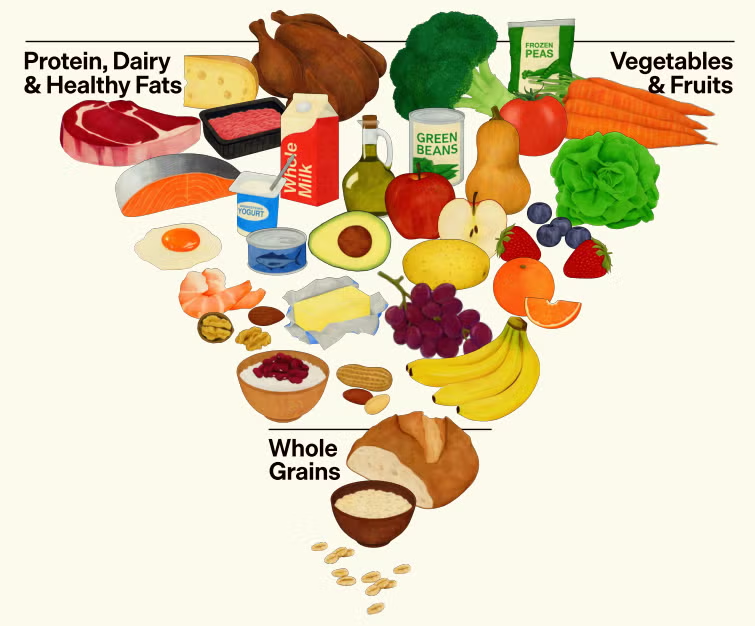
    Dietary Guidelines for Americans 2025-2030 New Food Pyramid

    But it also brought the return of a pyramid-like graphic—this time flipped on its head, emphasizing foods like steak, full-fat milk, and butter. The visual prominence of such options might have you thinking saturated fat limits were tossed out with the MyPlate graphic, but the actual Guidelines retain the longstanding upper limit of 10% of total daily calories. 

    “I think the new Guidelines move in the right direction by reinforcing the importance of reducing added sugars and cutting back on refined grains and other highly processed foods,” said Frank Hu, professor of nutrition and epidemiology and chair of the Department of Nutrition at the Harvard T.H. Chan School of Public Health. “However, there appear to be several contradictions within the DGAs and between the DGAs and the new pyramid. The mixed messages surrounding saturated-fat-rich foods such as red meat, butter, and beef tallow may lead to confusion and potentially higher intake of saturated fat and increased LDL cholesterol and cardiovascular risk.” 

    While the other largest section of the pyramid is sensibly composed of vegetables and fruits, Dr. Hu did flag the relatively smaller depiction of whole grains in the pyramid despite the Guidelines’ recommendation of 2-4 servings per day.  

    These details matter, as images and taglines may be more memorable than the nuanced details and underlying text. It’s one of the reasons why we created our Healthy Eating Plate (and the Healthy Eating Pyramid before that).  

    Below we unpack some key changes in this newest edition of the DGAs, considering both its written guidance and the “New Food Pyramid.”  

    Calling out “highly processed” foods 

    While previous DGAs have emphasized whole foods while minimizing added sugar and sodium, this edition is the first to call out a broader category of “highly processed foods.” Although this terminology is somewhat vague on the surface (food processing is a spectrum after all), the text recommends avoiding sugar-sweetened beverages as well as salty or sweet packaged snacks and ready-to-eat foods (even the illustrated yogurt container in the pyramid specifies “unsweetened”). The guidance on grains prioritizes whole, fiber-rich options while calling for a significant reduction in highly processed, refined carbohydrates, such as white bread. 

    Further reductions on added sugar 

    The new DGAs take an overall strict position on sweets, noting that “no amount of added sugars or non-nutritive sweeteners is recommended or considered part of a healthy or nutritious diet.” In practice, it recommends no one meal should contain more than 10 grams of added sugars (although meals aren’t generally how people track added sugar in their diet). This is reduction from the previous DGAs’ limit of 10% of daily calories (e.g., 50 grams of added sugar each day in a 2,000-calorie diet). It also now calls for children to avoid added sugars until age 10—a jump from age 2. The DGAs are clear on avoiding added sugar, but far less clear on how these recommendations can be implemented in everyday life. 

    Contradictory guidance on healthy fats

    When it comes to dietary fat and long-term health outcomes, what’s most important is the type of fat you eat—reducing saturated fat and replacing it with sources of unsaturated fat. As mentioned, the DGAs maintained existing consensus that saturated fat consumption should not exceed 10% of total daily calories.  

    What’s confusing is that the “healthy fat” guidance groups animal-based foods higher in saturated fat—such as meats and full-fat dairy—with plant-based foods lower in saturated fat. There is no mention as to which of these foods should be chosen more or less often to help stay within the upper limit. And on the pyramid, steak, cheese, whole milk, and butter seem to play a prominent role.  

    Saturated fat math

    What does this guidance look like in daily practice? Let’s take a 2,000-calorie diet where the 10% limit equates to roughly 22 grams of saturated fat. In the DGAs’ guidance on daily servings by calorie level, 3 servings of dairy are recommended daily. If full fat versions are selected for the examples given [one 8-oz cup of whole milk (5 grams saturated fat); ¾ cup of full-fat Greek yogurt (6 grams); 1 ounce of cheddar cheese (6 grams)], you are already at 17 grams of saturated fat. If you were to add a single tablespoon of butter (7 grams) or beef tallow (6 grams)—both suggested cooking fat options—you’re over the limit. And this isn’t even considering other foods consumed throughout the day, including some of the recommended protein options (more on that below).

    While olive oil is visualized in the pyramid and suggested as a healthy fat, it is referenced as an option with “essential fatty acids.” While olive oil is a healthy choice lower in saturated fat (2 grams per tablespoon), Dr. Hu explains how there are better sources when consuming essential fatty acids is the goal:  

    “Olive oil contains mostly oleic acid, but relatively small amounts of essential fatty acids such as alpha-linolenic acid and linoleic acid compared with other oils that are rich sources of these fatty acids, such as soybean oil and canola oil. Importantly, all these plant oils have been shown to lower LDL cholesterol and cardiovascular risk compared with animal fats such as butter or tropical fats such as coconut oil and palm oil.” 

    Hype around protein quantity 

    The new DGAs suggest that adults consume 1.2 to 1.6 grams of protein per kilogram of body weight per day, 50-100% more than what was previously recommended for minimum intake. Certainly, protein needs are highly variable—and wider ranges have been set by groups like the National Academy of Medicines—but these needs are best determined by a healthcare provider or a registered dietitian, as consuming excess protein can still be converted to fat in the body and lead to weight gain. What’s also missing from the Guidelines is clarity on the quality of different protein foods, especially when many in the U.S. are consuming more than enough protein

    “Substantially raising overall protein intake without distinguishing between different protein sources may have unintended long-term health implications,” says Dr. Hu. “Evidence continues to suggest that plant-based proteins and fish are associated with more favorable health outcomes than diets high in red meat.” 

    When we eat foods for protein, we also eat everything that comes alongside it: the different fats, fiber, sodium, and more. It’s this protein “package” that’s likely to make a difference for health. While the Guidelines recommend a “variety of protein foods” from both animal and plant sources, there’s no clear messaging about which options should be chosen more regularly. Given the DGAs’ stated saturated fat limits, this is an important consideration depending on what other foods are consumed throughout the day. For example: 

    • A 4-ounce broiled sirloin steak is a significant source of protein—about 33 grams worth. But it also delivers about 5 grams of saturated fat. 
    • A cup of cooked lentils provides about 18 grams of protein and 15 grams of fiber, and it has virtually no saturated fat.  

    “Less” Alcohol

    On alcohol, the DGAs offer a vague message to “consume less alcohol for better health,” Without concrete limits, it’s hard for people to know what “less” actually means.

    Still no consideration of environmental impacts 

    Another concern is that the DGAs do not consider the environmental and socioeconomic impact of dietary recommendations. This omission is problematic because food choices significantly affect the environment, and in turn are strongly shaped by socioeconomic and cultural factors

    Bottom line 

    Despite stronger positions on added sugars and highly processed foods, and technical alignment with the scientific consensus on saturated fat limits, certain aspects of the 2025 Guidelines send mixed signals. The New Food Pyramid graphic itself is particularly puzzling, given the visual emphasis on animal products high in saturated fat. Although DGAs are typically launched as policy documents, this edition appears more consumer-friendly, given its shorter length, associated graphics, and interactive website. Historically, research finds that Americans do not follow the dietary guidelines, so it remains to be seen if this edition will be any different. However, if you find yourself confused by some of the conflicting messaging, we recommend checking out the Healthy Eating Plate, or consulting a registered dietitian for more personalized guidance.  

    Related: A different road to this year’s DGAs

    Every five years, the DGAs are updated by the U.S. Departments of Agriculture (USDA) and Health and Human Services (HHS) for use by federal nutrition program operators, policy makers, and healthcare providers. But first, the Dietary Guidelines Advisory Committee—an independent group of nutrition science experts—summarizes the current state of nutrition science without influence from government or food industry. Members are vetted through extensive background checks, undergo ethics training, and scientific committee meetings are livestreamed. The public is also given opportunities to submit comments. After two years of evidence review and synthesis, the Committee released their Scientific Report to USDA and HHS.  

    But this time around, the Committee’s report was ultimately rejected by the current administration. Instead, a supplemental scientific analysis was conducted by a group of individuals selected through a “federal contracting process.” Although the supplemental document notes that “evidence was evaluated based solely on scientific rigor” and underwent “internal quality checks” with external peer review, some have raised concern over the lack of transparency in their process. In an Q&A with Harvard Chan News, Deirdre Tobias, assistant professor in the Department of Nutrition who served on the 2025-2030 Dietary Guidelines Advisory Committee, noted: 

    “As of today, there has not been transparency in who wrote the new DGAs. Although there are documents included in the appendices by named scientists, there is no transparency in the methodology and rigor that was employed, or why certain topics were selected to be relitigated. The reviews themselves, as well as their overall presentation and integration, deviate significantly from the rigorous process that the HHS developed for the DGAs to ensure the evidence base and its committees’ conclusions were replicable, unbiased, transparent, and free from non-scientific influences.” 

    Others have also flagged reviewers’ financial ties to the beef and dairy industries (which is disclosed in the supplemental analysis), given the prime placement of meat and dairy products in the DGAs.

    Source link