
Tag: Helping

  • Attention! How Mindfulness Training Is Helping People Reclaim Their Ability to Focus

    Attention! How Mindfulness Training Is Helping People Reclaim Their Ability to Focus

    It seems that distraction is the oxygen we breathe nowadays, with infinite bits of information at our restless fingertips. Each time I open my Edge browser, captivating news headlines and flashy images assault me. Half the time, I forget where I was headed!

    Is the effort to maintain control of our attention a fool’s errand? Nicholas Carr, in his best-seller, The Shallows: What the Internet Is Doing to Our Brains, notes that more than a few top journalists have stopped reading books because 1) they can easily find the information they need at Wikipedia and other online sources, and 2) their attention spans have withered.

    Mindfulness meditation nudges us in the opposite direction. Rather than surround ourselves with endless options, we simplify. The practice has us paying attention to this present moment, with curiosity, kindness, and nonjudgment. In place of multitasking and busyness, we discover present-moment attentiveness free from the relentless push to look for more. Mindfulness serves as a counterbalance—a grounding influence that keeps us very much here, on the spot.

    Mindfulness serves as a counterbalance—a grounding influence that keeps us very much here, on the spot.

    What Attention Training for ADHD Can Teach Neurotypical Practitioners

    For people living with attention deficit hyperactivity disorder (ADHD), the need for attention training might be more pointed. In the winter and spring of 2025, two groups completed my six-week “Mindfulness for ADHD” workshop series, with the option to extend to nine weeks. 

    I wanted to track if and how these techniques were making a difference for workshop attendees. Participants completed a 19-question evaluation at the beginning and end of the program, and data was analyzed for those who completed both: 5 participants from the 6-week program, and 3 from the 9-week program.

    One evaluation statement read, “I get distracted easily, and have a hard time refocusing on a task.” With these negatively worded statements, greater disagreement shows improvement. The totals for both groups were pre: 14 and post: 20—a 43% increase.

    Henry, one of the participants, offered this reflection: “I realize the benefits from feeling more grounded and able to recognize when distractions are impacting me and how to handle them in order to get on with things that are most important.”

    One common misunderstanding of mindfulness is that we are cultivating a particular state of mind, like calm or bliss, and anything that interrupts this process (“monkey mind”) is a detriment. People who subscribe to this perfectionist view tend to become discouraged when their ideal doesn’t materialize. They often quit, concluding that mindfulness is not for them. 

    One common misunderstanding of mindfulness is that we are cultivating a particular state of mind, like calm or bliss, and anything that interrupts this process (“monkey mind”) is a detriment.

    The effort in mindfulness practice is not to exert oneself to keep the mind focused on a particular object, such as the breath. Rather, the aim is to recognize the wandering mind and return our attention to a stable anchor of awareness—such as our breath, or feet on the floor. This exercise develops attention, and builds resiliency. You might as well be falling down and getting back up again, over and over. 

    Starting With Simple Intentions

    In one of the weekly sessions, participants were asked to set their intention in the beginning of the day, on arising. They identify a priority, such as cleaning the living room, and then keep reminding themselves of this during the day when they get involved in other activities—an active application of the meditation technique.

    “I saw how often my mind drifted from the intention,” wrote Casey, a longtime mindfulness practitioner. “By the end of the series, I had a good grip on it and was able to take on the task of painting my bathroom using this approach, and now it’s finished. I was so used to not getting things done in the past!”

    The Multitasking Myth

    Our modern culture is wedded to multitasking: the belief that we need to be dextrous at paying attention to a bunch of things at the same time. Research, however, has dismantled this myth, as neuroscientists have shown that the human brain is best suited to paying attention to one task at a time. Any more than this creates stress, increases errors, and begins to erode productivity.

    The main dealbreaker is that when we shift our attention, say, from reading an article to looking up a website, our brain has to reorient to the new context, and then when we go back to the article, we have to reorient again. This chews up precious cognitive resources, a process that researchers refer to as “switch costs.”

    Replacing multitasking with mindfulness resonated with a third group of four “Mindfulness for ADHD” participants when they responded to the statement, “Multitasking is a great way to get a lot done.” 40% of them agreed starting out, and at the end of the program, 75% disagreed/strongly disagreed.

    The people living with ADHD in these three groups were relieved to hear that simplifying to one thing at a time conserves cognitive resources and reduces stress, while preserving attention. And this message strikes a chord with the general population as well. In a 10-week Workplace Mindfulness training conducted with 10 police officers, their response to: “Multitasking enables me to accomplish more” showed a major change of mind (significant disagreement) in the post evaluation.

    The “Mindfulness for ADHD” program included a pausing practice that we call “head and shoulders.” It’s a way to take an immediate break from a challenging situation—overwhelm, frustration, stress—connect with the big picture (open space), and then revisit the challenge with a spacious frame of mind. “Learning to pause before reacting and to stay present with one task at a time,” says Gloria, “has been especially helpful.” The group with four participants showed strong improvement  with regard to the evaluation statement, “I tend to be impulsive, taking action, and then regretting it later,” progressing from 75% agree/strongly agree (pre) to 50% disagree (post).

    Anxiety and stress are common in connection with attention difficulties. The evaluation statement that showed the greatest improvement with the first two ADHD groups was:

    “I get stuck with the storylines that can make me feel anxious or stressed, and I don’t know how to pause or interrupt this pattern.” 

    In the first two groups, disagreement increased by 70% (Total scores: pre: 17; post: 29). The third group progressed from 75% strongly agree/agree (pre) to 50% disagree (post).

    Mindfulness isn’t like a vending machine where you simply put in a coin and out pops a bag of chips. There isn’t a one-to-one relationship between the practice and outcomes, which derives from the non-goal orientation of the practice. Of course, we’d like to get something out of it, but at the same time we are encouraged to check our ambition at the door. That way, we can be present with the actual practice, following the instructions as best we can, without hankering for something outside this moment.

    When we’re stuck on storylines, it’s like our thoughts are amplified by loudspeakers, glued to our ears. Mindfulness practice has us noticing when this is happening, acknowledging that these are thoughts which come and go.  We don’t have to “fix” anything. We just return our attention to this world here. Some mindfulness folks see this back and forth activity as exercising a mental muscle. We learn that, through awareness, we can radically change how we relate to our thoughts, ranging from being mesmerized and trapped, to objective discernment.

    Noticing Thoughts Without Judging Them

    Relating to our thoughts without judgment is key. 

    Getting stuck understandably makes people feel anxious or stressed. When we’re trapped in a whirlwind of thoughts, stress and anxiety are not far behind. Their impact on the brain affects working memory, which is closely related to attention.

    “Research has shown that rapidly changing circumstances, worry, and anxiety can all have a significant impact on your ability to focus,” writes Kate Morgan in the BBC’s “How Anxiety Affects Your Focus.” It stands to reason that learning how mindfulness tools can help deal with anxiety can assist us in regaining attention capacity.

    Mindfulness is not about getting rid of stress and anxiety, but relating to them with openness and curiosity—seeing them as they are, without the varnish of habitual patterns, bias, and aversion.

    People’s sense of powerlessness often arises from the fact that they don’t know how to pause or interrupt this looping cycle of distraction, anxiety, compromised focus, and judgmental thoughts. That momentary pause to be with our self-critical thoughts in a new way seems like it might not do much, but it’s actually doing a lot of work. Since it’s so easy to habitually get drawn in, putting a pin in it and taking a mental step back, even just for a breath, becomes a game-changer.

    Attention Training Matters In a Distracted World

    The mindfulness elements of grounding, present-moment orientation, kindness towards oneself, and developing awareness, attention, and nonjudgment are of course not restricted to people with ADHD. In fact, a key reason for the growing widespread interest in mindfulness is the crying need for balance and well-being in the midst of our techno-addled consumerist-driven world. 

    These skills take time to develop, and the process isn’t linear. But a growing body of research is showing that these mindfulness practices work to strengthen our attentional capacity, reduce the attendant stress of constant distractability, and enhance our sense of personal agency in a noisy world that’s relentlessly trying to pull us out of the present moment.


    Source link

  • Why Mindfulness Helps Us Feel Good About Helping

    Why Mindfulness Helps Us Feel Good About Helping

    People often use the words empathy and compassion interchangeably—and certainly they share important qualities. But there is a subtle difference between empathy and compassion, and studies show that mindful attention might be key to making sure that our efforts to help are coming from a healthy, aligned place. Here’s a deeper look at how mindful qualities like present-moment attention can help us genuinely be of greater service to others, and how mindfulness can help us feel good about helping.

    People naturally tend to empathize with others, report C. Daryl Cameron and Barbara Fredrickson in the January issue of the journal Mindfulness. But empathy can go wrong when it leads to distress. We might help out of guilt, obligation, or co-dependence. Or, the help might cause resentment, which could lead us to avoid helping people in the future. Or sometimes, in the absence of strong boundaries, we might unknowingly absorb the feelings of someone in trouble, and if we can’t deal with those feelings of suffering, we might turn away altogether.

    There is another possible response: compassion, which leads people to try to alleviate distress in others.

    The Way to Healthier Helping

    As the authors speculate, “Helping should be most common among people who are able to maximize compassion while minimizing distress.” Previous research has found that cultivating mindfulness—the moment-to-moment awareness of thoughts, feelings, and surroundings—can lead to greater compassion. But what specific components of mindfulness predict real-world helping behavior? In other words, what skills could we develop that would make us more likely to help each other out?

    The study examined two mindful traits—a focus on the present moment (aka, “present-focused attention”) and a non-judgmental acceptance of thoughts and experiences (“non-judgmental acceptance”). Cameron and Fredrickson assessed the mindfulness of 313 adults, asking if, for example, they “pay attention to how my emotions affect my thoughts and behaviors” or often criticize themselves “for having irrational or inappropriate emotions.”

    The researchers confirmed their hypothesis: Present-focused attention and non-judgmental acceptance both predicted more helping behavior … Mindful participants were more likely to experience emotions like compassion, joy, or elevation while giving help. That could mean that they just felt better when helping others, which could lead them to engage in more helping behavior in general.

    Next, the survey asked if they had recently helped someone out. If they had, participants answered questions about how they felt while helping. Did they feel positive emotions like gratitude, hopefulness, inspiration, or joy? Or did they have negative ones, like irritation, contempt, disgust, distaste, guilt, or nervousness?

    In analyzing the answers, the researchers found that 85 percent of participants had engaged in some kind of helping behavior during the previous week, like listening to a friend’s problems, babysitting, giving someone a car ride, donating to charity, or volunteering. In the process, they uncovered some incidental but interesting facts:

    • Men were marginally less likely than women to report engaging in helping behavior;
    • Age did not predict helping; and
    • Participants with higher income were more likely to report helping others.

    However, the biggest predictor of helping behavior had nothing to do with these demographic traits. In fact, the researchers confirmed their hypothesis: Present-focused attention and non-judgmental acceptance both predicted more helping behavior. This link between mindfulness and helping might be traced to the fact that the mindful participants were more likely to experience emotions like compassion, joy, or elevation while giving help. That could mean that they just felt better when helping others, which could lead them to engage in more helping behavior in general.

    What Makes Us Want to Keep On Helping?

    The study also revealed a scientifically important nuance: Participants who scored higher in present-focused attention were more likely to experience positive emotions—and participants high in non-judgmental acceptance experienced fewer negative emotions, like stress, but weren’t necessarily more likely to experience more positive emotions. In other words, acceptance may only clear the way for helping; it’s the present-focus that could actually make the helping an emotionally rewarding experience. Together, the takeaway seems to be that approaching these situations with mindfulness helps us feel good, or at least better, about extending ourselves in service.

    Insights from this study have obvious practical implications for teaching helping behavior to children. This line of research could also help people in helping professions who are at risk for burnout, or people whose mental illnesses make it hard for them to connect with others.

    The study also carries hugely helpful implications for the rest of us, because anyone can feel worn down by helping other people. There’s an invitation to look at our motivations for stepping in, our boundaries and limitations and need for real rest. And there’s an opportunity to enter into opportunities for service with deeper compassionate attention and an open heart. Isn’t it nice to know there are ways we can help ourselves feel better when we do something nice for someone else?


    A version of this article originally appeared on Greater Good, the online magazine of UC Berkeley’s Greater Good Science Center, one of Mindful’s partners. To view the original article, click here.


    Source link

  • Helping Employees Navigate High Deductibles With Smarter Prescription Options

    Helping Employees Navigate High Deductibles With Smarter Prescription Options

    High-deductible healthcare plans have become a common benefits option, especially among smaller businesses, because they help reduce monthly premium costs for the employer. However, these plans often shift more financial responsibility onto employees, leading to significantly higher out-of-pocket expenses for prescriptions and other medical care. As a result, rising healthcare costs are placing increasing strain on household budgets.

    As deductibles increase alongside prescription medication costs, the associated financial challenges can significantly strain employees’ budgets. For employers, taking steps to ease these burdens is more than a gesture of goodwill — it’s a business strategy. Supporting employees with tools and benefits that make healthcare more affordable can improve retention, boost productivity and position the organization as an employer of choice in a competitive market. Companies strengthen workforce well-being and long-term business performance by providing employees with the resources to access and afford the care they need.

    As Matthew Herfield, co-founder and CEO of BuzzRx, a free prescription savings platform, explained during a recent conversation, employers can help their employees navigate high deductibles in various ways.

    Encourage the Use of Generic Drugs

    When it comes to prescriptions, Herfield advises that one of the most immediately impactful actions employers can take is to encourage the use of generic drugs. “Generic drugs cost an average of 80 to 85% less than the brand-name equivalent,” he explains.

    “The FDA still requires that generics have the same active ingredient, safety and effectiveness as the brand-name medication. When generics aren’t available, there are often biosimilar drugs that treat the same condition, but with a different active ingredient and at a much lower cost than the most expensive and well-known brands.”

    While generic alternatives aren’t available for every brand-name drug, employers can work with their pharmacy benefit manager (PBM) to create a formulary that prioritizes generics. Plans could also use step therapy, which requires the use of the generic drug before switching to a more expensive brand-name version.

    Utilize Prescription Discount Programs

    Herfield also notes that prescription discount programs, such as those offered by BuzzRx, can further reduce prescription drug costs for employees. “Our prescription discount program is completely free, and can be used by employees to fill gaps in insurance coverage and provide additional cost savings,” he explains.

    “Depending on the medication, the negotiated discount rate that your employees would pay at the pharmacy with BuzzRx could be less than what they would pay with their insurance copayment or coinsurance. This is especially true of high-deductible plans, which can have higher out-of-pocket costs for higher-tiered medications. By providing a free and easy-to-use prescription discount card, employees are given another helpful opportunity to save on their healthcare costs.”

    According to Herfield, BuzzRx users can save up to 80% off the retail price of prescription medications when they present their card at one of over 60,000 participating pharmacies nationwide. Using either insurance or the discount card ensures that employees can always get the best available price.

    Encourage HSA Contributions

    Employees in high-deductible plans often have another resource available: health savings accounts (HSAs). As Herfield explains, these accounts can be a valuable way to save on medical expenses.

    “With an HSA, the money you contribute to the savings account isn’t taxed, nor is the interest it earns while in the account. As long as you use it for a qualified medical expense, which includes prescription drugs, you won’t pay any taxes when funds are withdrawn,” Herfield says.

    “This essentially allows employees to keep more of their take-home pay that would get used for medical expenses, rather than having it taxed before they pay for medical care. Best of all, unused funds roll over, and employees can keep their contributions even if they change jobs.”

    Employers who offer HSA-eligible high-deductible health plans should offer resources to help their employees set up an HSA for their out-of-pocket expenses. Many employers allow for direct contributions through payroll deduction to simplify the process, and some even offer matching contributions.

    Incentivize Employee Wellness

    Finally, Herfield recommends that employers incentivize a variety of employee wellness initiatives. “Giving access to different wellness programs, from gym memberships and weight management support to mental health counseling and stress management, can go a long way in improving employee physical, mental and emotional health,” he explains.

    “A proactive approach to employee wellness not only helps individuals better manage chronic conditions and reduce their risk of illness or injury, but also lowers healthcare costs while driving higher productivity, engagement and lower absenteeism in the workplace.”

    In addition to programs designed to directly influence employee health, Herfield also recommends that employers offer educational resources to help employees better manage costs within their healthcare plan. For example, knowing when to visit urgent care rather than the ER or understanding the value of generic prescription drugs can have a big impact on employees with high-deductible plans.

    Employers can tailor their programs to improve financial, physical and mental health by taking a holistic approach that focuses on maximizing the benefit for their workforce.

    You Can Help Employees Manage Costs

    High medical costs are a complex issue that likely won’t be truly resolved anytime soon. However, employers can ensure better health and financial outcomes by taking steps to help employees navigate high deductibles, particularly when it comes to prescription medications.

    Source link

  • Texas Doctor Forced to Delete TikTok Helping Undocumented Immigrants Get Healthcare After Governor Threatens to Defund Children’s Hospital

    Texas Doctor Forced to Delete TikTok Helping Undocumented Immigrants Get Healthcare After Governor Threatens to Defund Children’s Hospital

    A Texas doctor was forced to delete their TikTok about helping undocumented immigrants get healthcare after the state’s governor threatened to defund a children’s hospital.

    In the now-deleted video, Dr. Tony Pastor told viewers that they did not have to disclose their citizenship status to medical professionals when receiving care, as reported by Chron.

    The viral TikTok came following Gov. Greg Abbott’s executive order which requires public Texas hospitals receiving funding for Medicaid or the Children’s Health Insurance Program to report on health care for undocumented patients, as reported by the Austin-American Statesman.

    In the deleted TikTok, Pastor, who works as a cardiologist at Texas Children’s Hospital, said, “It has made all of us physicians and providers super uncomfortable.” He added, “No one has told us what people are going to do with this information,” as reported by HuffPost.

    It is unclear whether Pastor took the video down by his own choice or if the hospital or Baylor College of Medicine, where he also works as an assistant professor, required him to. Texas Children’s Hospital declined to give a statement to Chron.

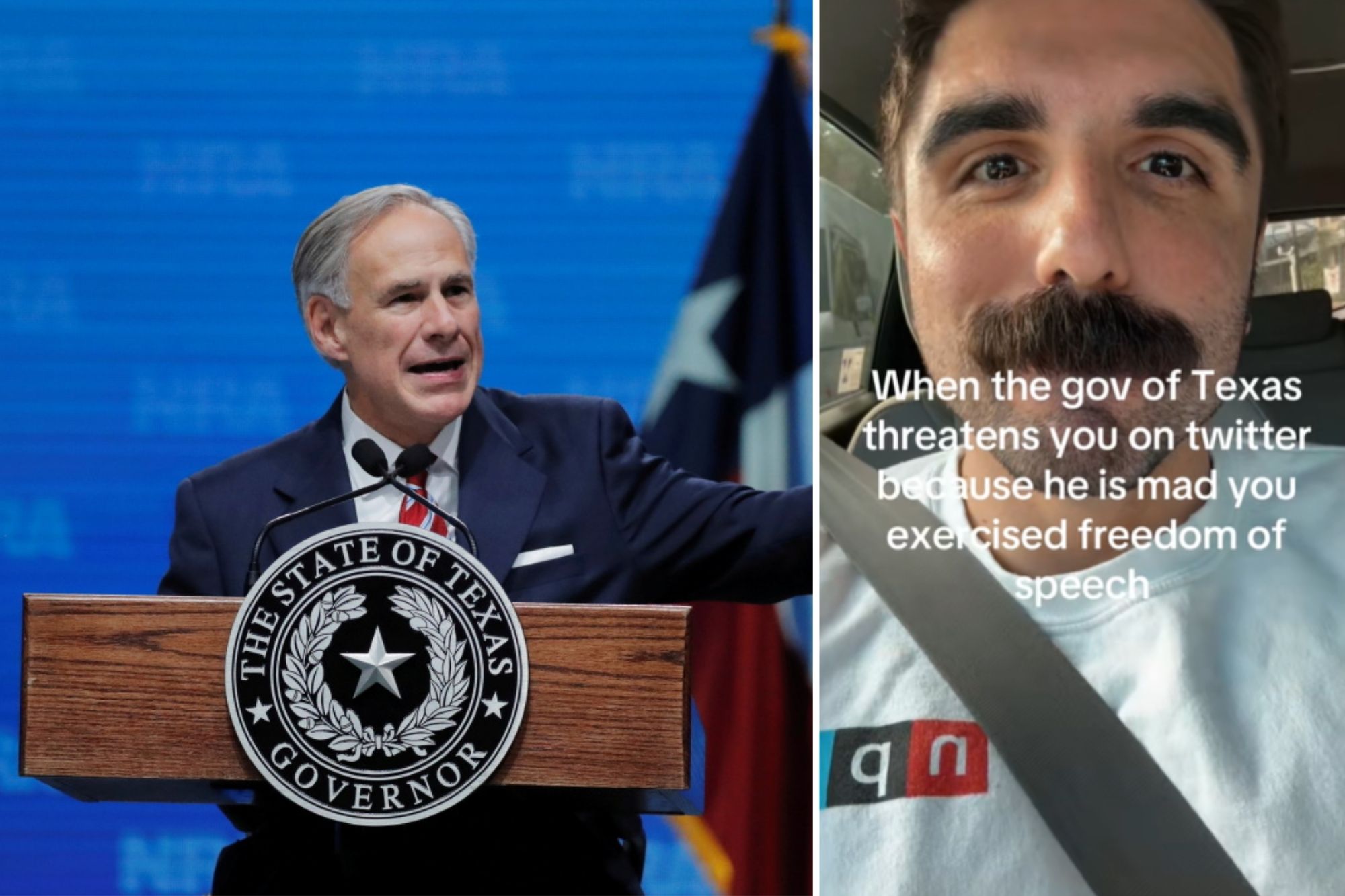
    After the November TikTok went viral, Abbott made a post to X appearing to threaten funding for the hospital Pastor works at.


    “Hey, Texas Children’s Hospital & Baylor College of Medicine this doctor is putting your Medicaid & Medicare funding at risk. You better think twice & have crystal clear records. There will be consequences for failing to follow the law in the order,” Abbott tweeted.

    Texas Children’s Hospital said in a statement obtained by MedPage Today that it “fully supports Governor Abbott’s new executive order and is in full compliance.”

    “While we recognize that individuals working at Texas Children’s hold their own personal views on many topics, those opinions do not necessarily reflect the official position of Texas Children’s Hospital,” the statement continued.


    Following the governor’s tweet, Pastor made another TikTok. Text reading, “When the gov of Texas threatens you on X because he is mad you exercised freedom of speech,” plays over the video of Pastor while the song “Popular” from the movie “Wicked” plays in the background.

    Pastor has not made any additional posts or comments surrounding the executive order.

    Originally published by Latin Times.


    Source link