Harvard Chan alum Marty Makary chosen to lead FDA
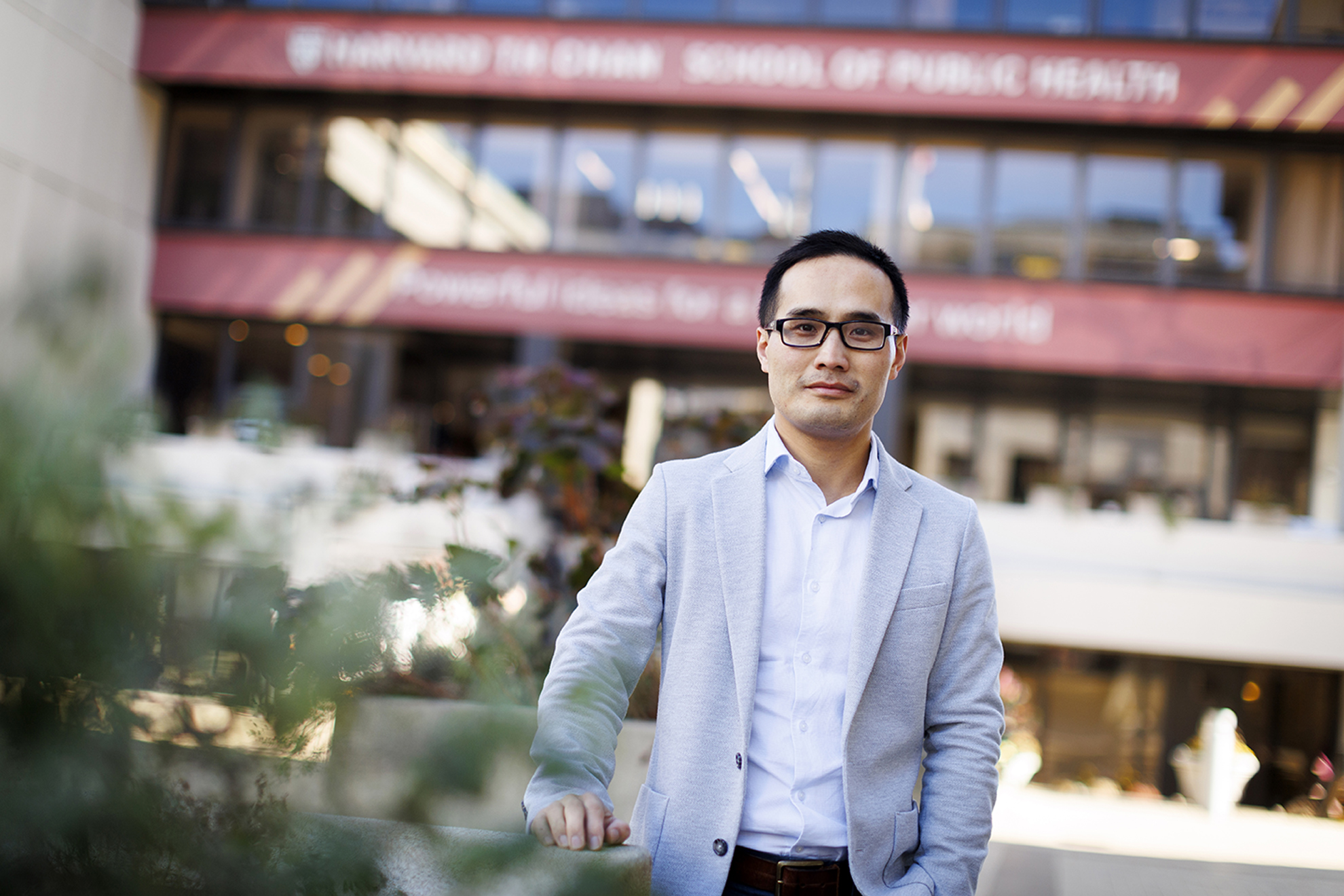
Martin “Marty” Makary, MPH ’98, will be nominated by President-elect Donald Trump to be commissioner of the Food and Drug Administration. If confirmed by the Senate, Makary would lead the agency responsible for regulating the nation’s food supply, vaccines, medicines and medical devices, cosmetics, tobacco, and biologics. Makary is a physician who specializes in surgical oncology and currently serves as chief of islet transplant surgery at the Johns Hopkins School of Medicine. He’s also a member of the National Academy of Medicine; a former leader of the World Health Organization Patient Safety Program; a medical and health policy researcher who has published more than 250 peer-reviewed articles; and an author who has written three New York Times best-selling books on health care. Read more
Alumni win re-election to U.S., Iowa House seats
Two alumni were re-elected to their seats in November: U.S. Rep. Raul Ruiz, MPH’07, of California’s District 25 and State Rep. Megan Srinivas, MPH ’15, of Iowa’s District 30.
If you know of other alumni who ran in this election, please let us know.
Epidemiology Alumni Q&A: Raymond Neutra
Raymond Neutra, MPH ’69, DrPH ’74, has had a public health career in environmental medicine and epidemiology and has held leadership roles in academia and the public sector. Currently he is the president of the Neutra Institute for Survival Through Design, which promotes creative research and design that benefits people and the planet. He spoke with the Department of Epidemiology about his time as a graduate student and offered advice to current students.
Disentangling complex medical outcomes
Biostats alumna Linda Valeri, PhD ’13, was recently profiled by Harvard Catalyst about the pilot funding that was critical to her research career. Valeri is an assistant professor in biostatistics at the Columbia University Mailman School of Public Health.
Serving the community
Deborah Cook Kaliel,SM ’06, recently spoke with The Amherst Student about her work with the U.S. Agency for International Development building sustainable HIV programs across the world.
Alumni notes
1980
Jane Newburger, MPH, associate chair for academic affairs in the department of cardiology at Boston Children’s Hospital and Commonwealth Professor of Pediatrics at Harvard Medical School, received the 2024 Eugene Braunwald Academic Mentorship Award at the American Heart Association’s Scientific Sessions 2024 in November.
1992
Friday Okonofua, Takemi Fellow, was elected to the National Academy of Medicine in October. Okonofua is the leader of the Center of Excellence in Reproductive Health Innovation, University of Benin, in Nigeria. He has led research on maternal mortality prevention, with impact on policies and programming in African countries.
1994
Christine Sang, MPH, was named to the Clinical Advisory Board of Allay Therapeutics in October. She is associate professor of anesthesia at Harvard Medical School and the founding director of the Translational Pain Research program at Brigham and Women’s Hospital.
1999
Jessica Kahn, MPH, became the senior associate dean for clinical and translational research and director of the Block Institute for Clinical and Translational Research at Albert Einstein College of Medicine in October. She previously served as co-director of the Center for Clinical and Translational Science and Training and professor of pediatrics at the University of Cincinnati and as the founding associate chair of academic affairs and career development at Cincinnati Children’s.
2002
Lu Tian, SD, presented this year’s Lagakos Distinguished Alumni Award on “Adaptive Prediction Strategy with Individualized Variable Selection” in October. He is professor of biomedical data science at Harvard Medical School.
2004
Ashwin Vasan, SM, who led New York City through the COVID-19 pandemic as its 44th Health Commissioner, was named the James McCune Smith Distinguished Fellow for the School of Global Health at Meharry Medical College in October.
Kaja LeWinn, SM, SD ’07, professor of psychiatry and behavioral sciences at the University of California, San Francisco, received the Trinity College President’s Award for Science and Innovation in October. LeWinn’s research focuses on children’s neurodevelopment and mental health.
2012
Alisa Stephens-Shields,PhD, associate professor of biostatistics at the University of Pennsylvania Perelman School of Medicine, was the recipient of the 2024 Myrto Lefkopoulou Distinguished Lectureship in September. Stephens-Shields was recognized for her great capacity as both a methodologic and collaborative biostatistician and as a leader impacting health, statistical education, and inclusion in the field.
2017
Huda Zoghbi, SD, was invested as a member of the American Academy of Sciences and Letters in October. She is distinguished service professor at Baylor College of Medicine, an investigator with the Howard Hughes Medical Institute, and founding director of the Jan and Dan Duncan Neurological Research Institute at Texas Children’s Hospital.
2021
Irina Degtiar, PhD, received both the 2024 ASA Outstanding Statistical Application Award and the Manning Memorial Award for the Best Research in Health Econometrics for her dissertation paper. She currently is a statistician at Mathematica Research.
2024
Esias Bedingar, was selected to join WHO’s Global Action for Measurement of Adolescent Health (GAMA) Advisory Group. As a part of this 20-member group, he will help advise WHO and UN partners on research priorities and strategies to improve adolescent health measurement.
Wedding
Anup Kanodia, MPH ’08,married Rupal Ramesh Shah in June 2023 in Columbus, Ohio. Several Harvard Chan School classmates attended the ceremony, which incorporated America, Indian, and African traditions. Kanodia runs a medical practice in the Columbus area. See a photo feature on the wedding that ran in the Columbus Dispatch.
In memoriam
Evelyn Benson, MPH ’55, died on October 20 at 100. She was a rural public health nurse in Ohio and a community gerontological nurse in Chester, Penn. She later taught at Widener College and Temple University and was assistant dean of the School of Nursing at LaSalle University when she retired in 1994. She co-authored the textbook Community Health and Nursing Practice and wrote dozens of articles on public health nursing, international nursing, and nursing history. Read her obituary.
Ralph Hoover, MPH ’62, died June 9 at 92. He was a physician and public health officer in Waterloo, Iowa, and in retirement went back to school to become a lawyer. He founded a law firm specializing in health care law. Read his obituary.
David Wheeler, MPH ’09, died June 29 at 51. He was an internationally recognized biostatistician with a focus on spatial, cancer, and environmental epidemiology. He joined the Biostatistics Department at the School of Medicine at Virginia Commonwealth University in 2011 and was promoted to a full professorship in 2023. Read his obituary.
DrPH alumni news
Read alumni news from the DrPH program.
Harvard Chan School alumni in action
Tell us about your life since Harvard Chan School.