A parasitic illness is spreading across the United States this summer, and after weeks of investigation, federal health officials still cannot identify the specific food responsible for making people sick. The frustrating lack of a recall announcement is not a failure of urgency — it is a reflection of how uniquely difficult this particular parasite is to track.
The Centers for Disease Control and Prevention has confirmed 145 domestically acquired cases of Cyclospora cayetanensis infection in 17 states, with illness onset dates from May 1 through June 7, 2026. Three people have been hospitalized. No deaths have been reported. But the case count is almost certainly a substantial undercount, and the absence of a specific food recall does not mean the outbreak is over.
Why This Matters
Cyclospora is not a pathogen that clinicians or patients typically think about first when gastrointestinal illness strikes. It requires a specific test that most clinical labs do not routinely run. It has an incubation period of 1 to 2 weeks — long enough that by the time patients seek care, they may not clearly remember what they ate that could have been contaminated. And it contaminates at the farm or irrigation level, not during processing, making the traceback chain longer and harder to follow.
The result is predictable: most infected people are never diagnosed, the food source takes weeks or months to identify, and even after the source is found, the implicated product has often already moved through the supply chain and been consumed. Summer is the peak season for Cyclospora in the United States, meaning the number of cases is expected to grow before it peaks.
What We Know So Far
From CDC’s Cyclospora surveillance data current as of June 16, 2026, and FDA outbreak investigation table:
- 145 confirmed U.S.-acquired cases in 17 states
- 20 hospitalizations confirmed among cases with information available
- No deaths reported
- Illness onset dates: May 1 through June 7, 2026; median onset May 19
- Median patient age: 43 years; 62 percent female
- 45 travel-associated cases confirmed separately (patients ill while outside the United States)
- Only 45 of the 145 domestic cases involve people who reported recent international travel — confirming a domestic food source is responsible
- Michigan: More than 150 cases in 7 counties reported by state health officials — a count not yet included in the CDC’s 17-state national total
- New York leads confirmed state counts at approximately 80 cases; Texas and Illinois each report up to 30
- Food source: Not yet identified. No recall has been issued.
Where the Risk Is Highest
Cyclospora illness has been reported in 17 states, with no single geographic cluster that would suggest a local exposure. That distribution is consistent with contaminated produce distributed nationally — a pattern seen in every major Cyclospora outbreak in the United States since the 1990s.
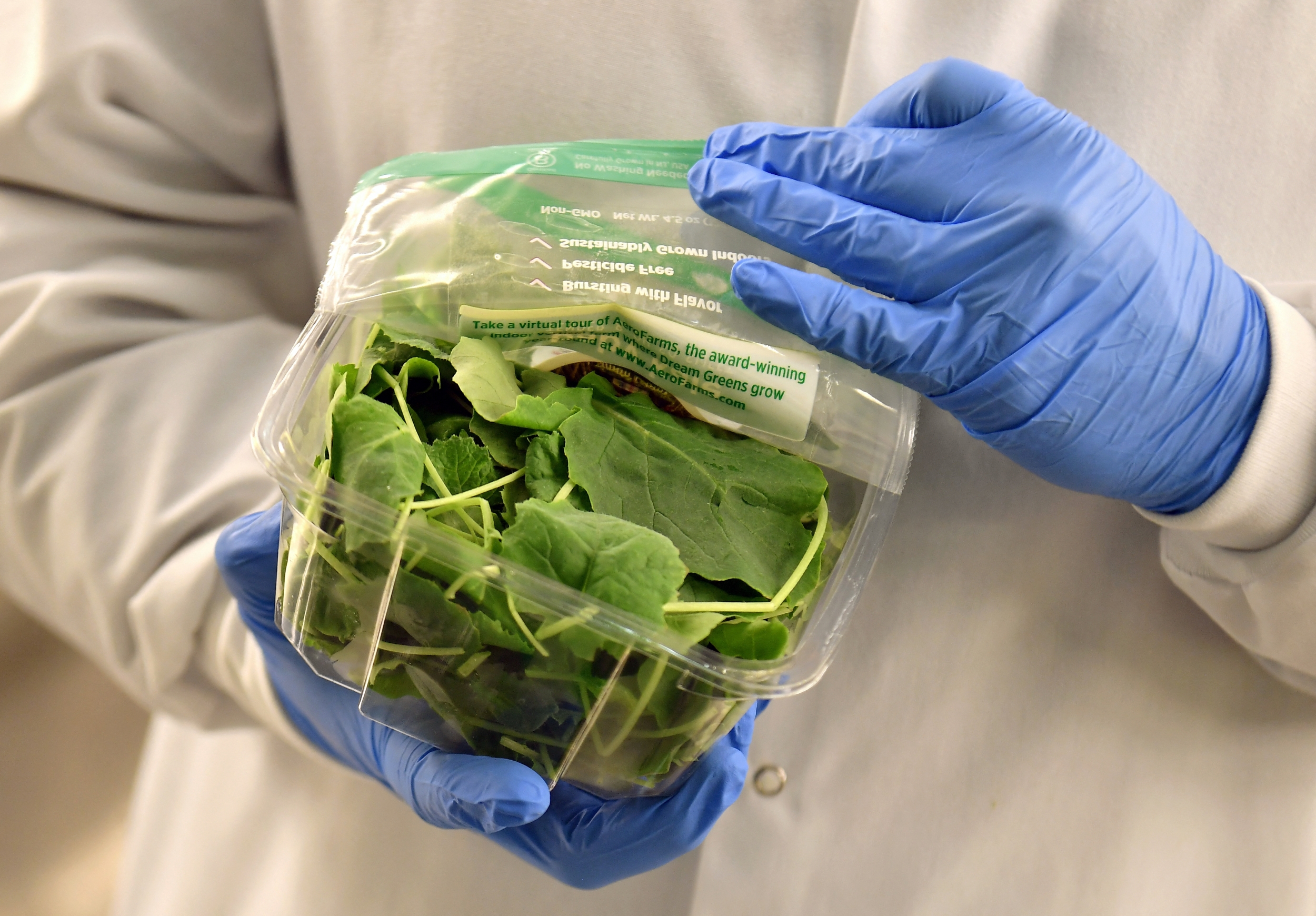
Prior outbreaks have repeatedly linked to fresh produce from Mexico and Central America, particularly cilantro, basil, fresh leafy greens, arugula, and bagged salad kits. The 2018 Cyclospora outbreak sickened more than 511 people across the Midwest and was linked to a fast-food chain’s salad mix. In 2020, fresh cilantro from a Texas distributor sourcing from Mexico was implicated in an Alabama cluster.
Until a specific product is identified in this investigation, no targeted recall can be issued — and public health guidance must remain general: exercise caution with fresh herbs and leafy greens, particularly those imported from high-risk regions during the summer months.
The Three Reasons Cyclospora Is So Difficult to Trace
1. The incubation period makes exposure memory unreliable. Cyclospora has a 1-to-2-week incubation period between exposure and symptom onset. By the time a person seeks medical care, they typically cannot accurately recall every meal from the past 10 to 14 days. This makes dietary recall interviews — the primary tool for identifying contaminated foods — less reliable than in outbreaks caused by faster-acting pathogens like Salmonella, where the exposure meal is typically more recent.
2. The parasite is not detected by standard stool testing. Standard clinical stool cultures do not include Cyclospora testing. A physician must specifically order a modified acid-fast stain or a direct fluorescence assay for Cyclospora, or a PCR-based test in clinical labs that offer it. Most primary care physicians and emergency physicians seeing a patient with prolonged diarrhea in the summer do not reflexively order Cyclospora testing — because most GI illness is caused by something else. This means the majority of Cyclospora cases go undiagnosed, and those that are diagnosed often experience significant delays.
3. The contamination occurs at the farm or irrigation level, not during processing. Unlike foodborne bacterial contamination that can often be traced to a specific processing step or facility, Cyclospora contamination of produce typically occurs when irrigation water contaminated with human feces contacts crops in the field. This farm-level contamination makes traceback investigations far more complex — and means that the same contaminated irrigation source may affect multiple products from the same farm, complicating identification of a single “suspect” item.
What Doctors and Experts Say
The CDC’s clinical guidance for Cyclospora explicitly notes that health care providers should specifically request Cyclospora testing when they see patients with prolonged or recurring watery diarrhea, particularly from May through August.
“Cyclospora is one of those infections that really tests physicians’ diagnostic instincts,” infectious disease specialists have noted in public health communications. The infection is treatable — a full course of trimethoprim-sulfamethoxazole (Bactrim) typically resolves illness — but the window in which to catch it relies on knowing to order the right test.
What the Evidence Shows — and What It Does Not
The CDC has explicitly stated there is no evidence of a single, unified nationwide Cyclospora outbreak. The 145 confirmed cases reflect a surveillance count of domestically acquired infections across the United States during the summer peak season, with multiple clusters currently under separate traceback investigation.
MedicalDaily Evidence Check
- Investigation status: Active multistate investigation, multiple clusters
- Confirmed U.S. cases: 145 in 17 states (as of June 16, 2026); true total likely substantially higher
- Food source: Not yet identified; no recall issued
- What the data show: Domestic food exposure is confirmed as the primary driver (only 45 of 145 cases involve recent international travel)
- What remains unknown: Specific implicated product or supplier
- What readers should know: Cyclospora requires a specific lab test not included in standard stool cultures; prolonged diarrhea lasting more than a week warrants evaluation and explicit testing for this parasite
Who Faces the Greatest Risk?
Anyone who has consumed fresh produce — particularly leafy greens, fresh herbs like cilantro and basil, or bagged salad mixes — since May 1, 2026, could potentially have been exposed. However, certain groups are more likely to develop prolonged or serious illness:
- Immunocompromised individuals, including organ transplant recipients, people with HIV, and cancer patients on chemotherapy, who may develop severe or prolonged disease
- Adults who consume large quantities of fresh herbs and leafy greens regularly
- Older adults, in whom infection can last longer and cause more significant weight loss and dehydration
Symptoms and Warning Signs to Watch For
The hallmark symptom of Cyclospora infection is:
- Frequent, watery, sometimes explosive diarrhea that waxes and wanes over days to weeks
- Cramping and bloating
- Nausea and decreased appetite
- Fatigue and muscle aches
- Low-grade fever
Without treatment, symptoms can last weeks and frequently return in cycles. If you have had persistent, recurring watery diarrhea lasting more than a week — especially if standard tests have come back negative — ask your doctor specifically about Cyclospora testing. Standard stool cultures do not detect this parasite unless specifically requested.
What You Can Do Now
- If you have prolonged or recurring diarrhea, see a clinician and specifically ask about Cyclospora testing. Use the words: “I want to be tested for Cyclospora, not just a standard stool culture.”
- Do not self-treat with over-the-counter antidiarrheal medications as a substitute for diagnosis. If the cause is Cyclospora, antibiotic treatment is needed.
- Wash all fresh produce thoroughly under running water before eating. While washing does not kill Cyclospora (the parasite resists standard disinfection), it reduces other surface contamination.
- Exercise caution with fresh herbs — particularly cilantro, basil, and arugula purchased in bulk or from salad bars — until a food source is identified.
- If you are immunocompromised, discuss your risk level with your physician.
Cost and Access: What Patients Should Know
Testing for Cyclospora requires a specific physician order for a modified acid-fast stain or PCR Cyclospora test. Treatment with generic trimethoprim-sulfamethoxazole (Bactrim) is inexpensive — often under $10 with a GoodRx discount at most pharmacies.
For patients without a primary care provider, urgent care clinics and community health centers can order Cyclospora-specific stool testing. People experiencing severe dehydration, blood in the stool, or inability to keep fluids down should seek emergency care.
What Happens Next
The FDA and CDC are continuing traceback investigations into multiple clusters. New case data will be posted at CDC’s Cyclospora surveillance page as the investigation progresses. When a food source is identified, the FDA will issue a public advisory and, if a specific product is implicated, initiate or request a recall.
MedicalDaily will report immediately when a food source is confirmed or a recall is issued.
The Bottom Line
The absence of a Cyclospora food recall is not reassurance — it is a reflection of how difficult this parasite is to trace. The investigation is active, the case count is almost certainly higher than reported, and summer is the peak exposure period. If you have had prolonged, waxing-and-waning diarrhea since May and standard tests have not identified a cause, ask specifically for Cyclospora testing. Treatment is effective once the correct diagnosis is made.