
Tag: Hands

  • Dr. Robin Miller is On a Mission to Put Prevention Back into Individuals’ Hands

    Dr. Robin Miller is On a Mission to Put Prevention Back into Individuals’ Hands

    The last half-century has brought major leaps in medical technology. Sophisticated scans, cutting-edge tests, and an ever-expanding menu of supplements have transformed how illness is detected and treated. Yet, paradoxically, many argue that the ‘art’ of medicine, the attentive listening, the focus on whole-body wellness, has slipped into the shadows. For countless patients, technology now speaks louder than the human touch.

    Dr. Robin H. Miller, an integrative medicine physician and author, believes that this imbalance has come at a cost. “Our medical system is broken,” she says. “It was flawed before the pandemic and only grew worse after COVID. Too many patients have fallen through the cracks.” Her conclusion is simple, but urgent: individuals must become their own partners in health. Doctors and hospitals are critical when crises strike, but prevention and daily wellness rest in each person’s hands.

    It is this conviction that people themselves hold the power to stay well that drives Miller’s work today. And it is the reason she decided to do something unconventional: create a series of books that makes medicine accessible, relatable, and even enjoyable.

    Miller’s path to this mission began in the halls of a hospital, where she trained in preventative cardiology. Helping families break cycles of heart disease inspired her, but a move to Oregon and the realities of standard practice soon tempered that optimism. Ten-minute appointments, rushed conversations, and quick fixes left her questioning whether she was truly helping people.

    So she pivoted. Miller pursued an integrative medicine fellowship and launched Triune Integrative Medicine, a clinic centered on hour-long visits, deep listening, and wellness-focused care. The results spoke for themselves. “Most of the time, patients will tell you what’s wrong if you listen,” she explains. That philosophy not only improved outcomes but also rekindled her passion for medicine.

    Her work extended beyond the clinic. As host of NBC5’s Focus on Health, she reached thousands each week. She also developed a course, The Scientific Guide to Health and Happiness. And even turned to writing, first traditional guides, and later a creative series.

    Miller knew from experience that patients often tune out traditional medical advice. “Adults don’t always listen to their doctors. They listen to friends, family, or social media,” she says. To bridge that gap, she returned to a childhood classic: Dick and Jane.

    Her new series, ‘A Healthy Journey with Dick and Jane,’ translates complex health concepts into simple, illustrated stories. Using humor, bite-sized explanations, and even AI-generated visuals, the books invite readers to explore topics like heart health, gut health, brain function, and more, without the intimidation of jargon or the pressure of clinical authority.

    The series includes Mind Your Health, The Beat Goes On, Gut Instinct, Solid Ground, Skin Health, and Health 101: A Healthy Journey with Dick and Jane. The upcoming one will be on menopause, demystifying one of the most misunderstood stages of women’s health.

    By weaving evidence-based advice into the familiar rhythms of Dick and Jane storytelling, Miller lowers the barrier to entry. “Health isn’t complicated,” she insists. “But you have to do it. You have to be motivated, and sometimes that means making it fun.”

    The wellness industry is booming, but Miller sees danger in the noise. Every online search brings conflicting answers. Every company promises a miracle supplement or device. The overload leaves people confused, frustrated, and often paralyzed.

    Miller’s counterpoint is clarity. Her books focus on timeless basics, moving your body, eating a Mediterranean-style diet, prioritizing sleep, reducing stress, and cultivating community. No fad diets. No magic pills. Just sustainable habits that empower individuals to prevent disease before it starts.

    And importantly, her approach emphasizes individuality. “Everyone is unique. What works for one person may not work for another,” she says. “The goal is to give people options and help them discover their own path.”

    For Miller, the book series is not the final word, but the beginning of a movement. It is a way of changing the mindset from dependency on a faltering system to personal agency in health. She sees it as a model for how society at large can approach not just medicine, but any area where institutional trust is eroding.

    In a time when medicine often feels more mechanical than human, Miller’s message is refreshingly direct: “We already have the tools to heal, we just need to use them.”

    Source link

  • Calming Hands: A Mindfulness Practice for Kids to Ease Difficult Emotions

    Calming Hands: A Mindfulness Practice for Kids to Ease Difficult Emotions

    Try this creative, calming mindfulness practice for kids and families, designed to help ease difficult emotions and manage stress.

    Key Points:

    • When children feel anxious or overwhelmed, mindful breathing and counting can help them feel safe and calm.
    • Engaging in mindful activities together as a family strengthens connections and boosts emotional resilience.
    • Try this Calming Hands activity to help your child soothe strong emotions through breathing, counting, and making handprint art.

    Mindfulness can be fun, simple, and hands-on—literally! The Calming Hands practice, created and shared by Rose Felix Cratsley at Ivy Child International, introduces young children to mindful breathing through art and counting. This activity is perfect for caregivers and educators who want to help kids cultivate calm and focus playfully.

    Exploring this practice helps us connect with our bodies, our breath, and the calming energy of our hands. When we feel anxious, stressed, upset or overwhelmed, our hands can be a tool for bringing peace and relaxation. This practice can help you feel safe and calm, no matter what you’re going through.

    Scroll down to follow along with the guided audio of this practice!

    How to Adapt for Kids with Sensory Needs

    Children are encouraged to explore different textures such as soft fabric, smooth stones etc. while practicing the calming hands technique, allowing them to engage with their senses.

    Parental Hack

    This practice is most effective when caregivers model by practicing alongside children, reinforcing the idea that mindfulness is a family activity and ritual. This can help both kids and parents bond while building emotional resilience and their psychological immune system, together.

    Highlights and Benefits:

    • Introduction: Guides children to notice the sensations in their hands and introduces the concept of hands as calming tools.
    • Breathing Practice: Uses finger-by-finger breathing, teaching kids to inhale and exhale deeply while counting from 1 to 10.
    • Reflection: Encourages kids to observe how their hands and bodies feel after the practice, reinforcing self-awareness and relaxation.

    Calm and Creative: Make Art With Your Handprint

    The Calming Hands practice is best paired with an engaging art activity where kids trace or do handprints, decorate, and personalize their calming hands. By integrating creativity with this simple and engaging mindfulness practice, this activity becomes a lasting tool for emotional regulation and relaxation.

    What You’ll Need:

    • Paper (large enough for a handprint)
    • Non-toxic markers, crayons, or paint

    How to Practice Calming Hands:

    1. Make the Handprint: Invite your child to trace their hand onto the paper or create a painted handprint. Let them have fun choosing colors or decorating their hand outline—it’s part of the creative mindfulness process!
    2. Number the Fingers: Together, write numbers from 1 to 10 on the fingers, starting at the thumb and moving outward.
    3. Begin Mindful Breathing:
      • Encourage the child to place their real hand on top of their handprint.
      • Start at the thumb (1) and breathe in deeply, then exhale as you count out loud.
      • Move to the next finger (2), breathing in and out again.
      • Continue until all 10 fingers are complete.
    4. Repeat if Needed: If the child enjoys the exercise, they can trace back through the numbers or start again.

    Children and families can turn this mindfulness practice into a creative keepsake by tracing their hands, numbering their fingers, and decorating the artwork. This hands-on activity teaches kids to ease difficult emotions by providing a visual and tactile reminder of the breathing practice, making it easy for them to return to in stressful moments. Calming hands can be mounted on the fridge, bedroom door or even in the car as a tool to remind us all to count and breathe.

    Audio Practice: Use Your Hands to Explore Mindful Breathing

    By Rose Felix Cratsley

    Before starting the practice, find a blank piece of paper and something to draw with, like a marker or pencil.

    1. Step 1: Get Comfortable. Find a comfortable seat, either on the floor or in a chair, and sit tall like a strong tree. You can rest your hands gently on your lap, or place them in front of you. Let your shoulders relax, and your body feel soft. You are in a safe place.
    2. Step 2: Notice Your Hands. Take a moment to notice your hands. How do they feel? Are they warm or cool? Do they feel heavy or light? If you’re feeling nervous or anxious, that’s okay—just notice what’s happening in your hands without judgment. If you feel tense, give your hands a little shake and let the tension fall away.
    3. Step 3: Trace Your Hands. Now, we’re going to trace our hands to create a picture of calm. Place your hand on a piece of paper and trace around it with a pencil or marker. While you trace, feel your fingers, the palm of your hand, and the space between your fingers. Let each stroke of the marker be a reminder that you are safe and in control.

      As you trace your hands, know that you’re building something special. Your hands are your own calming tool, always available when you need to relax and feel grounded.

    4. Step 4: Breathe with Your Hands. Now that your hands are traced, we’re going to use them to help us breathe deeply. Each finger will guide us through one breath. We will count from 1 to 10, one number for each finger. With each number, we’ll take a slow, deep breath in and out.

      Start with your pinky and breathe in as you count “1.” Feel your chest and belly rise. Now, breathe out as you count “2.” Let the air flow out slowly and feel your body soften. Keep breathing slowly, one number for each finger. As you breathe in, feel your hands fill with calm. As you breathe out, feel your hands and body relax even more.

    5. Step 5: Focus on the Sensation. As you go through each number, pay close attention to how your hands feel. Do they feel warm, soft, or tingly? Notice any changes as you breathe. Imagine your breath flowing through your hands, bringing calmness to every part of your body.

      As your mind wanders, simply bring your attention back to your hands and your breath. Take your time, enjoying each breath as an opportunity to slow down and find peace.

    6. Step 6: Feel Grounded and Safe. Take a moment to reflect on how your body feels now. Does your body feel more relaxed? Do your hands feel more calm and steady? Remember, this practice helps us feel grounded—like our feet are firmly planted in the earth, and we are in control of our breath and emotions. Your hands can always be a source of calm. If you ever feel anxious or upset, you can come back to this practice, take a deep breath, and find peace through your hands.
    7. When you feel ready, come back to your day.  Take one more deep breath in, and gently breathe out. Slowly bring your awareness back to the space around you. You are calm, centered, and ready to face whatever comes next. You can always return to your calming hands whenever you need them.


    Source link

  • Man’s Hands Seemingly Turn Yellow After Only Eating Butter, Cheese and Meat in Viral ‘Carnivore Diet’

    Man’s Hands Seemingly Turn Yellow After Only Eating Butter, Cheese and Meat in Viral ‘Carnivore Diet’

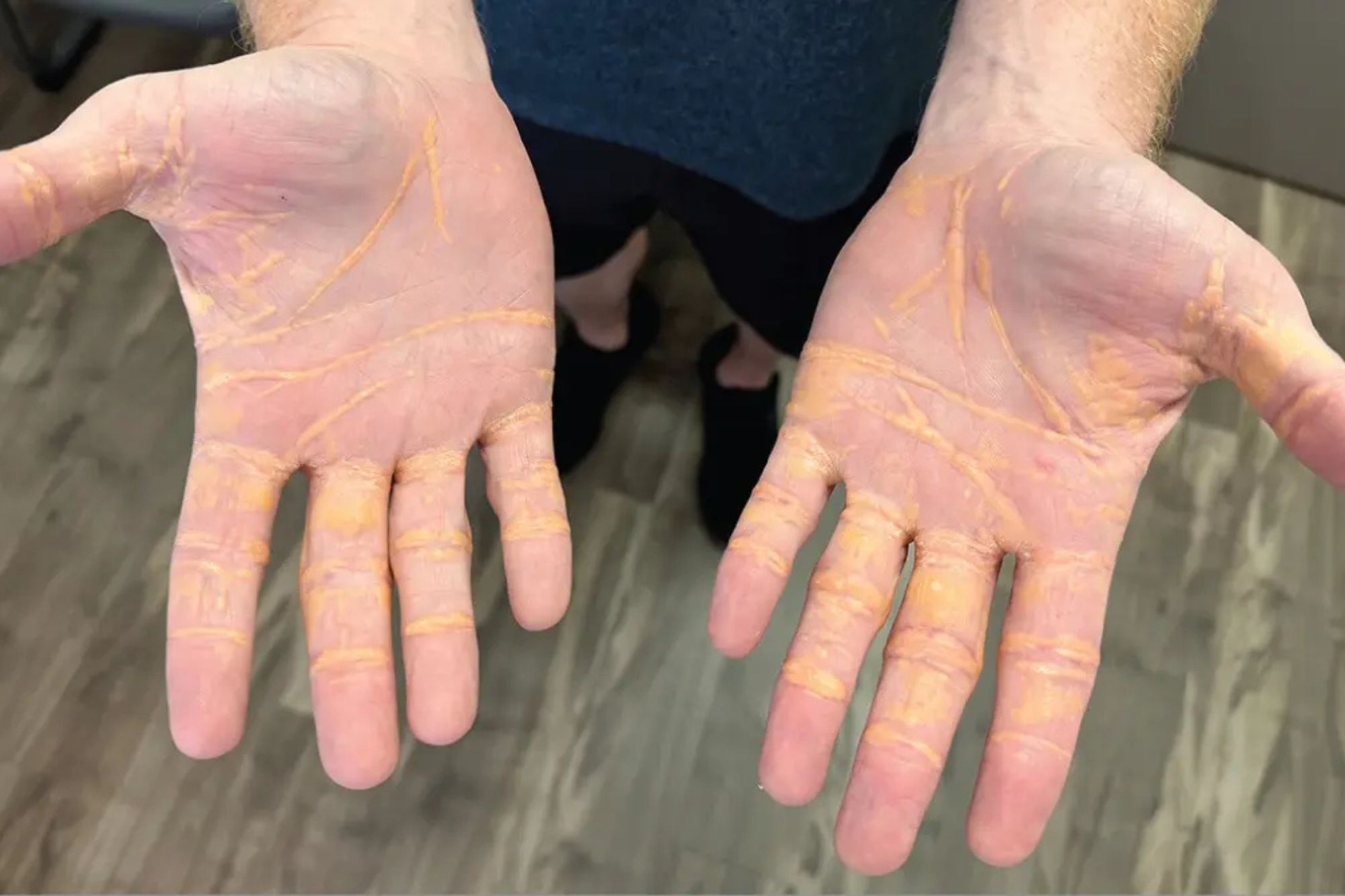
    A Florida man had to be treated for yellow nodules in his skin which were emanating ooze following eight months of being on a “carnivore diet” where he exclusively ate meat and dairy.

    The man in his mid-40s checked himself into a Tampa hospital after yellowish nodules on the palms of his hands, elbows and the soles of his feet began oozing liquid. He continued to explain to doctors that he had been following a “carnivore diet” for the past eight months, consuming entire sticks of butter, 6-9 pounds of cheese and hamburger patties daily.

    “A diagnosis of xanthelasma was made. This case highlights the impact of dietary patterns on lipid levels and the importance of managing hypercholesterolemia to prevent complications,” says the case report published in JAMA Network.

    The carnivore diet encourages followers to consume only animal products, including meat, dairy and eggs. The man insisted that the diet had improved his health, allowing him to lose weight and improving his energy levels. However, the man’s cholesterol levels were incredibly high, at 1,000 mg/dL. Normal cholesterol levels are at under 200mg/dL.

    The authors of the study noted that the case “highlights the impact of dietary patterns on lipid levels and the importance of managing hypercholesterolemia to prevent complications.”

    Originally published by Latin Times.

    Source link