Tag: Gratitude

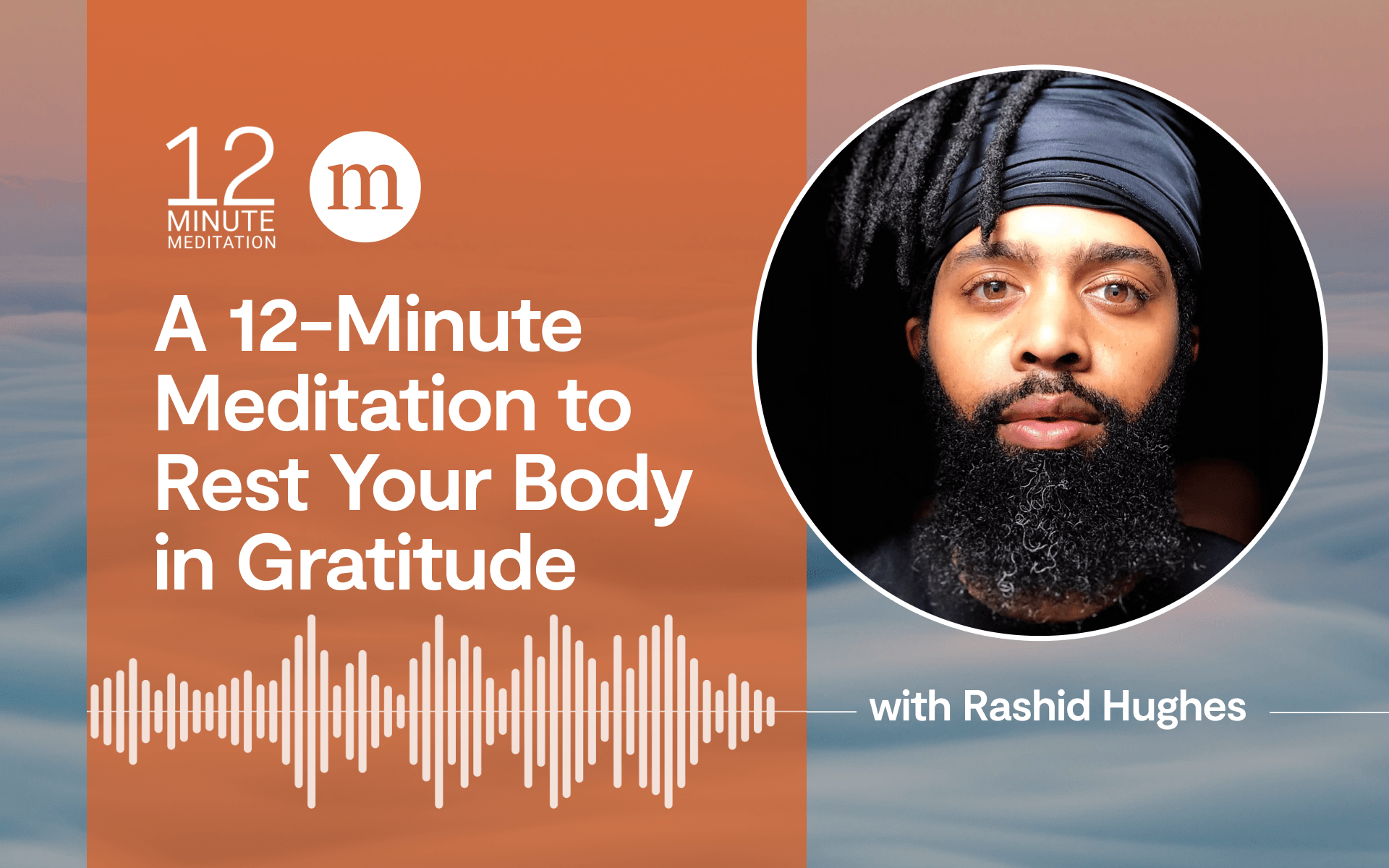
  • Rest Your Body In Gratitude With A 12-Minute Meditation

    Rest Your Body In Gratitude With A 12-Minute Meditation

    Take a restorative moment to release tension and feel deeply into gratitude for your hard-working body. 

    Taking a moment to pause with the intention to simply allow our bodies to rest in awareness can bring about a great sense of restoration and renewal to the heart. Our bodies are so overworked and often ignored. This guided awareness practice will allow us to feel a sense of gratitude for our body, in all of its beauty and mystery. 

    A 12-Minute Meditation to Rest Your Body in Gratitude

    Read and practice the guided meditation script below, pausing after each paragraph. Or listen to the audio practice.

    1. Starting off, find the posture that feels comfortable for you in this moment. There are many different postures that we can choose from. Check in with your body to sense into what posture is best for me right now?
    2. Once you’ve found that posture, just begin to notice and feel your body here and present in this moment, not trying to fix anything or to change anything about the body. Oftentimes, the body can be used just for the purpose of working, striving, and achieving, but in this moment, we’re inviting our bodies to just rest naturally. 
    3. Take a few moments to feel what it means to be alive in your body right now. With attention resting lightly on the body, just notice: How is my body expressing its aliveness in this moment? Maybe that’s with lots of sensation, maybe the body just feels relaxed and at ease, or maybe there’s energy moving through some of our bodies. Whatever is true for your body right now, allow this aliveness to be what you sense into in this moment. This is my body and I’m grateful for my body.
    4. Now, allow your attention to lightly rest on the sensations associated with the body touching whatever is supporting it. Maybe it’s the floor or a cushion, or a bed or couch. Allowing your attention to lightly rest, feel the liveness of the body touching and being supported by whatever is under you. This is my body resting, supported by what’s under me at this moment and I’m grateful for this body and for this support and this moment to rest. Resting just like a newborn rests in the arms of a parent or caregiver. Allow your body to rest, letting the support, the stability, and the comfort of having something holding you really infuse your body and your awareness. In this moment, I’m being held and supported and this support is stable, and unconditional, and I am grateful.  Continue to feel the connection and the support of whatever is holding you in this moment, remaining connected to that experience. 
    5. We’re going to begin to invite our bodies to rest in the feeling of the space around the body. So, we’re really just allowing our attention to rest on the skin of the body. And with each exhale, let your attention begin to relax and expand out beyond the skin, just going out a few inches around the skin, resting in this space. Rather than focusing entirely on the physicality of the body, now we’re inviting the energy in the body—the tingling, the sensations—to actually rest in the space around us. You might use your imagination a little bit to imagine that, with every exhalation, you begin to sense your body being held by the vastness of the space surrounding the body.  
    6. It may be helpful to start with your back, inviting the back to rest. Just let go into the space behind you. And shifting to one side of the body, feeling that side, feeling the skin, and then inviting that side of the body to just let go. To relax into the space around that side of the body. And then going to the front of the body: feeling the skin, the body sensations, and the aliveness, and just allowing the front of the body to be held and to rest into the space in front. And lastly, arriving at the other side of the body, sensing the skin of the body, then letting your attention relax into the space around that side of the body. 
    7. For a few moments, as you’re breathing in and out naturally, allow your attention to rest as the body is resting, in the space around the body. The body can let go now. Breathing in, feeling the body held in our awareness. Breathing out, we’re grateful for the space around the body. It allows the body to relax.
    8. As we bring this practice to a close, the invitation is for you to place a hand on your heart, feeling a sense of gratitude and appreciation for the body, the space around the body, and this moment of resting. And remember that gratitude for the body is a way that we can always reconnect with this sense of rest, presence, and ease.


    Source link

  • From Stress to Serenity: How Gratitude Practice Can Reduce Anxiety and Burnout

    From Stress to Serenity: How Gratitude Practice Can Reduce Anxiety and Burnout

    Introduction to Gratitude Practice

    In today’s fast-paced world, stress and anxiety have become an unfortunate norm for many individuals. The constant pressure to perform, the fear of not meeting expectations, and the overwhelming amount of information we are exposed to daily can lead to feelings of burnout and exhaustion. However, there is a powerful tool that can help alleviate these negative emotions and cultivate a sense of serenity: gratitude practice. By focusing on the things we are thankful for, we can shift our perspective, calm our minds, and improve our overall well-being.

    The Science Behind Gratitude

    Gratitude is more than just a feeling; it’s a practice that can have a profound impact on our mental and physical health. Research has shown that practicing gratitude can increase the production of neurotransmitters such as dopamine, serotonin, and endorphins, which are associated with feelings of happiness, relaxation, and reduced stress. Additionally, gratitude has been linked to lower levels of cortisol, the hormone responsible for stress and anxiety. By incorporating gratitude into our daily routine, we can literally change our brain chemistry and develop a more positive outlook on life.

    How Gratitude Reduces Anxiety and Burnout

    So, how exactly does gratitude practice reduce anxiety and burnout? When we focus on the things we are grateful for, we begin to shift our attention away from negative thoughts and worries. This helps to calm the mind and reduce rumination, which is a common symptom of anxiety. By acknowledging the good things in our lives, we also begin to develop a sense of perspective, realizing that our problems are not the only things that exist. This can help us feel more grounded and centered, even in the midst of chaos. Furthermore, gratitude practice can help us develop a sense of resilience, allowing us to bounce back from adversity and navigate challenging situations with greater ease.

    Simple Ways to Incorporate Gratitude into Your Daily Life

    Incorporating gratitude into your daily life is easier than you think. Here are a few simple ways to get started:

    • Keep a gratitude journal: Take a few minutes each day to write down three things you are thankful for.
    • Share gratitude with a friend or family member: Express your appreciation for someone in your life, whether it’s a kind word, a text message, or a small gift.
    • Practice mindfulness: Take a few minutes each day to focus on the present moment, without judgment, and acknowledge the good things that are happening right now.
    • Create a gratitude ritual: Develop a daily or weekly ritual, such as lighting a candle or saying a prayer, to help you focus on the things you are grateful for.

    The Benefits of Gratitude Practice

    The benefits of gratitude practice are numerous and well-documented. Some of the most significant advantages include:

    • Improved mental health: Gratitude has been shown to reduce symptoms of anxiety and depression, and even help alleviate symptoms of post-traumatic stress disorder (PTSD).
    • Better sleep: Practicing gratitude before bed can help improve sleep quality and duration.
    • Stronger relationships: Expressing gratitude towards others can strengthen relationships and build stronger bonds.
    • Increased resilience: Gratitude can help us develop a sense of resilience, allowing us to navigate challenging situations with greater ease.
    • Improved physical health: Studies have shown that gratitude is linked to lower blood pressure, a healthier weight, and a stronger immune system.

    Overcoming Obstacles to Gratitude Practice

    While gratitude practice can be incredibly beneficial, it’s not always easy to get started. Here are a few common obstacles to gratitude practice, and some tips for overcoming them:

    • Difficulty finding things to be grateful for: Start small, and focus on the little things, such as a good cup of coffee or a beautiful sunset.
    • Feeling like you don’t have time: Incorporate gratitude into your daily routine, such as right before bed or during your morning commute.
    • Struggling with negative thoughts: Practice mindfulness and acknowledge your negative thoughts, but also make an effort to focus on the positive aspects of your life.

    Gratitude in the Workplace

    Gratitude is not just limited to our personal lives; it can also have a profound impact on our professional well-being. When we practice gratitude in the workplace, we can:

    • Improve our relationships with colleagues and supervisors
    • Increase our sense of job satisfaction and engagement
    • Develop a more positive and resilient attitude towards challenges and setbacks
    • Improve our communication and collaboration skills
    • Enhance our overall well-being and reduce burnout

    Cultivating Gratitude in Children

    Teaching children the practice of gratitude can have a lasting impact on their mental and emotional well-being. Here are a few ways to cultivate gratitude in children:

    • Model gratitude yourself: Children learn by example, so make sure to express gratitude in front of them.
    • Create a gratitude ritual: Develop a daily or weekly ritual, such as sharing three things you are grateful for at dinner time.
    • Encourage gratitude journaling: Help your child start a gratitude journal, and encourage them to write or draw something they are thankful for each day.
    • Practice mindfulness: Teach your child mindfulness techniques, such as deep breathing and meditation, to help them focus on the present moment.

    Conclusion

    In conclusion, gratitude practice is a powerful tool that can help reduce anxiety and burnout, and cultivate a sense of serenity in our lives. By incorporating gratitude into our daily routine, we can shift our perspective, calm our minds, and improve our overall well-being. Whether it’s through journaling, mindfulness, or simply sharing gratitude with others, there are many ways to make gratitude a part of our lives. So why not give it a try? Take a few minutes each day to focus on the things you are thankful for, and watch your life transform in amazing ways.

    FAQs

    Q: What is gratitude practice, and how does it work?
    A: Gratitude practice is the act of focusing on the things you are thankful for, and it can have a profound impact on our mental and physical health. By practicing gratitude, we can shift our perspective, calm our minds, and improve our overall well-being.
    Q: How can I incorporate gratitude into my daily life?
    A: There are many ways to incorporate gratitude into your daily life, including keeping a gratitude journal, sharing gratitude with a friend or family member, practicing mindfulness, and creating a gratitude ritual.
    Q: What are the benefits of gratitude practice?
    A: The benefits of gratitude practice include improved mental health, better sleep, stronger relationships, increased resilience, and improved physical health.
    Q: Can gratitude practice really reduce anxiety and burnout?
    A: Yes, gratitude practice has been shown to reduce symptoms of anxiety and depression, and even help alleviate symptoms of post-traumatic stress disorder (PTSD).
    Q: How can I teach my child to practice gratitude?
    A: You can teach your child to practice gratitude by modeling gratitude yourself, creating a gratitude ritual, encouraging gratitude journaling, and practicing mindfulness.
    Q: Is gratitude practice a replacement for therapy or medication?
    A: No, gratitude practice is not a replacement for therapy or medication. While it can be a powerful tool for improving mental health, it should be used in conjunction with other forms of treatment, under the guidance of a healthcare professional.

  • 7 Creative Family Gratitude Practices That Make Appreciation Meaningful and Accessible

    7 Creative Family Gratitude Practices That Make Appreciation Meaningful and Accessible

    You’re sitting around the dinner table with your family after a long day. Homework is scattered across one end, someone’s still chewing the last bite of dinner, and you ask the question… 

    “What are you grateful for today?”

    Without even looking up, your oldest mumbles something about video games. Your youngest shrugs. The silence stretches just long enough to feel awkward before someone asks to be excused.

    Children need to see gratitude in action to really grasp the idea. They need to experience it with us. Only then does gratitude become real for our kids—when we live it together.

    We can’t expect our children to understand gratitude just because we ask them about it. The question itself falls flat because it’s abstract and repetitive. Kids end up saying the same things over and over (“my family,” “our house,” and “my dog”), and what could be a meaningful practice becomes just another item to check off before leaving the table. 

    Children need to see gratitude in action to really grasp the idea. They need to experience it with us. Only then does gratitude become real for our kids—when we live it together.

    Why Starting Family Gratitude Practices Early Matters

    There’s something powerful about introducing gratitude when children are young. Their minds are like sponges, absorbing everything around them—the good, the challenging, and everything in between. When we weave gratitude into their early years, we’re creating neural pathways that support resilience and emotional well-being throughout their lives.

    Early gratitude practice can shape how children see the world. It teaches them to notice the good alongside the hard, to appreciate the helpers in their lives, and to find joy in small moments. Research shows that gratitude contributes substantially to individual well-being, strengthens relationships, and helps people navigate adversity with greater resilience.

    And children are naturally receptive to new practices. While adults might struggle to shift ingrained patterns of thinking, kids can more easily develop habits that become second nature, especially when those activities are  fun, engaging, and done together as a family.

    The Power of Practicing Gratitude Together

    Kids learn by watching us. When we model appreciation (not just talking about it but actually living it) our children see what gratitude looks like in real life. Practicing gratitude together means actively engaging with each other, noticing the good in our lives, and celebrating it as a family. 

    By doing so, we’re building individual resilience in each family member while simultaneously deepening our relationships with one another. We develop a shared language of appreciation that helps our family navigate challenges, stress, and uncertainty as a team.

    The good news? This change doesn’t require hours of practice or complicated strategies. It just requires showing up together with intention and a willingness to notice the good.

    7 Creative Family Gratitude Practices

    So how do we move beyond the abstract question of “What are you grateful for?” and into practices that actually resonate with kids? The key is making gratitude something families do together rather than just talk about.

    Look for practices that are:

    • Part of daily life: Focus on real people, moments, and experiences that fill your days.
    • Concrete and tangible: Kids can see, touch, or create something related to their gratitude.
    • Fun and engaging: When practices feel playful, children (and parents!) want to do them.
    • Quick and simple: Keep it to five minutes or less, because who has endless time?
    • Varied and interesting: Different practices keep gratitude fresh and exciting.

    Each of the following seven practices focus on a different aspect of appreciation, from celebrating the people in our lives to noticing everyday comforts we often overlook. Try one that resonates with your family or rotate through them to mix things up!

    1. Family Appreciation Photo Walk

    Take a brief weekly walk together where each family member takes “mental photos” of things that remind them of someone they love. Maybe a certain flower reminds your daughter of Grandma’s garden, or a basketball hoop makes your son think of his best friend. As you walk, use your hands like a camera viewfinder and say, “Click!” to capture the moment in your mind. When you return home or gather for dinner, share your mental photos and explain the connections.

    Tip: Want to extend the practice? Bring a real camera along so you can capture and share actual photos later, talking about why each image reminded you of someone special.

    2. Helper Hero Cards

    Invite your kids to create simple thank-you cards for people who helped them during the week. These might be teachers, bus drivers, siblings, neighbors, or anyone who lent a hand. Include drawings, stickers, or just a few heartfelt words. Then deliver them together. This practice makes gratitude tangible and teaches children to notice helpful actions in their daily lives. 

    Tip: Keep a stack of blank cards or paper readily available so kids can create these spontaneously in the moment when a feeling of gratitude strikes.

    3. Mirror Moments

    This thirty-second daily practice is simple but powerful. Have your child look in the mirror and say one thing they’re proud of about themselves. It might be, “I was kind to my sister today” or, “I tried really hard in soccer practice.” The key? Parents should model this, too. Kids love (and need) to see adults appreciate themselves. This builds self-compassion, self-esteem, and confidence—for the whole family. 

    Tip: Make it part of your family’s routine by doing it right before or after everyone brushes their teeth in the morning or at bedtime.

    4. Memory Jar Magic

    Keep a jar in a common area of your home along with small pieces of paper and pens. Encourage family members to write down a favorite moment and drop it in the jar each day. These might be big moments (“Dad came to my recital!”) or tiny ones (“The dog made a funny face”). On tough weeks or at the end of each month, read them together and re-live the joy. This creates anticipation for good moments and helps families hold on to happiness during stressful times. 

    Tip: Decorate your jar together to make it special or use different colored papers for each family member.

    Make it a family practice to genuinely acknowledge and thank the community helpers you encounter during your regular routines. When you’re out running errands together, pause to thank the grocery store cashier, wave to the mail carrier, or say good morning to the crossing guard. The key is doing this together as a family so kids see you modeling appreciation and learn that gratitude can be woven into everyday moments. At dinner, share who you thanked that day and why their work matters.

    Tip: Challenge younger kids to remember one helper they want to thank on your next outing. Make it a game to spot and appreciate people who make your community work.

    6. Nature Gratitude Ritual

    Step outside together into your backyard or a nearby park, or even just look out a window. Each person should try to find one thing in nature they appreciate right now. Maybe it’s the way sunlight filters through leaves, a bird’s song, or the smell of fresh air. Share your discoveries without phones or distractions. Stay fully present with each other and the natural world. This practice works in any season and any weather! 

    Tip: Younger children might enjoy collecting their gratitude finds (a special rock, interesting leaf, or pinecone) to keep as a reminder of their appreciation for nature.

    7. Gratitude Detective Game

    Turn gratitude into a playful detective game where everyone searches for everyday things we usually overlook. Challenge your family: “I spy with my grateful eye… something that keeps us warm!” (blankets, the heater, or cozy sweaters). Take turns being the detective who gives clues about everyday comforts while others guess. Play during dinner, car rides, or before bed. This helps families appreciate the invisible infrastructure of daily life, such as running water, electricity, safe roads, and working appliances—in a fun, engaging way.

    Tip: Keep score if your kids are competitive or make it collaborative by seeing how many “gratitude clues” your family can come up with together in five minutes.

    Starting Your Family’s Gratitude Journey 

    Building gratitude practices when children are young gives them tools for lifelong resilience and emotional well-being. It shows them how to notice goodness even during challenging times, how to appreciate the people and moments that make life rich, and how to stay connected to what matters most.

    When families practice gratitude together, we create shared experiences that strengthen our bonds and help us navigate life’s inevitable ups and downs as a team. Remember, the goal here is connection, not perfection. You don’t need to do all seven practices, or even multiple practices. Even one practice done regularly makes a real difference. 

    Start with whichever one resonates most with your family right now. Try it for a week or two and see what happens! Through this simple act of practicing gratitude together, you’re shaping how your children see the world. That perspective will serve them throughout their entire lives!

    And that’s worth celebrating.


    Source link

  • Get It Done With Mindfulness: How to Be Productive with Attention, Kindness, and Wisdom

    Get It Done With Mindfulness: How to Be Productive with Attention, Kindness, and Wisdom

    Last spring, I struggled to finish my most recent book, Happy Relationships: 25 Buddhist Practices to Transform Your Connection with Your Partner, Family, and Friends. I missed two deadlines and spent many anxious nights lying awake, worried I might not finish the book at all—or that I would ruin it completely. Even though I was working hard, I constantly felt I wasn’t writing fast enough or well enough. I doubted my talent, questioned my worth, and procrastinated, all while criticizing myself harshly.

    In the past, I’d pushed myself through projects using force, pressure and fear. But this time, that approach wasn’t working. I knew I needed something different to genuinely be productive—something kinder and softer. So I turned to the tools and teachings of my Buddhist training: mindfulness, lovingkindness, and wisdom. As I began practicing them, my relationship to my work quickly shifted, and I felt less overwhelmed and more at ease, and it became easier and felt more natural to write. In a few weeks, I finally finished my book.

    Mindful Care Makes It Easier to Be Productive

    You can use these same practices to support your own work. They’re simple and accessible, and all they require is that you bring gentle attention to your body, mind, and heart. You don’t need to use every tool or follow them in a specific order. Just start with Mindful Listening, and then turn to the others as needed. The more you use them, the easier they become—and the more they can help steady, encourage, and support you and your work.

    Start with Mindful Listening

    When you feel overwhelmed or stuck, pause. Sit quietly and listen inwardly. Notice your body. Observe your thoughts. Acknowledge your emotions without trying to fix or judge them. You might realize that your procrastination isn’t due to laziness, but to something deeper—perhaps fear or a sense of being overwhelmed. Underneath your procrastination is often a tender part of you that needs care, not pressure.

    This practice of listening is the foundation of wise action. It helps you respond with understanding instead of reactivity. It reminds you that you can begin again, not by changing yourself, but by meeting yourself with compassion.

    Reconnect with Joyful Effort

    One of the most useful qualities you can cultivate is what Buddhists call “virya”—a Sanskrit term translated as energy, diligence, or effort. “Virya” doesn’t mean pushing or grinding – rather it refers to our wholehearted, joyful energy that we can direct toward what is beneficial, useful, and good.

    If you’ve been treating your work like a burden or obligation, pause and reconnect with your original intention. Your work—whatever it is—can be a meaningful offering, an expression of your values. When you remember why it matters, you can let it guide you, and use virya instead of force to create the words, the progress, or the result. You’ll be surprised at the power of gentleness and sincerity to drive your process instead.

    If you’ve been treating your work like a burden or obligation, pause and reconnect with your original intention.

    Build Confidence Through Wisdom

    Buddhism understands that it’s wise to understand the result of past actions, so recall other difficult tasks or projects that you’ve completed. Remember that you’ve met deadlines, kept commitments, and followed through even when it was hard. Buddhist wisdom teaches that confidence doesn’t come from perfection—it comes from recognizing and respecting your own experience. Keeping this in mind helps you know that you’ll complete this, too—not because you’re perfect, but because you’re reliable, trustworthy, and consistent.

    Cultivate Gratitude

    Throughout your work day, practice gratitude—not just for your own effort, but for the countless visible and invisible beings that make your life and work possible. Thank yourself for showing up. Remember your friends, mentors, loved ones, and even the workers who make sure you have electricity, water, food, and shelter. This sense of interconnection can help ground you in appreciation. It reminds you that you’re not alone—and that your work can benefit others, too.

    Work in Small, Steady Steps

    Rather than aiming for long hours or big breakthroughs, create a steady, manageable routine. If possible, try working for an hour or two each morning and then take a break. Let go of the need to hit a word count or finish a full chapter. Just begin.

    When worry arises, meet it with mindful attention. Don’t try to silence it or push it away, but don’t follow it into catastrophic thinking, either. Let the thoughts come and go. Remind yourself that fear doesn’t need to be conquered—it needs to be met with patience, kindness, and presence.

    Rest When You Need To

    As deadlines approach, you might notice old habits returning—the urge to push harder, to avoid rest. When that happens, pause. Close your laptop, put your hand on your heart, and take a few slow breaths. You may notice a long-held belief that resting is dangerous or irresponsible. Notice your own stories around what it means to “be productive.” Gently acknowledge this, then place a hand on your heart and say to yourself, “I’m here for you.” Repeat this lovingkindness meditation to yourself for at least a few minutes. Offer yourself your whole-hearted presence, right here in the midst of your stress. You may find—like I did—that rest doesn’t slow you down at all. In fact, it usually restores your heart and mind and enables you to return to your work with better focus and more clarity.

    Need Help Practicing? Try This Meditation.

    Next time you’re feeling overwhelmed and need a break, try this calming meditation. You might be surprised how just a simple pause can return you to yourself and help you be productive in a way that feels much more aligned and natural. 


    Source link

  • Thanks for the Stuff that Isn’t Just Stuff and Gratitude for What Matters Most

    Thanks for the Stuff that Isn’t Just Stuff and Gratitude for What Matters Most

    Barry Boyce, Mindful’s founder, reflects on the ravages of Hurricane Sandy in 2012, and is thankful for people who remember what matters most, especially in trying circumstances. 

    Something I’ve always loved about Thanksgiving is that we’re mostly thankful for the people (and some good food) and not for “the stuff.” Even with the attendant commercialization that marks the official beginning of The Holiday Season, this brief pause seems to focus on what matters most. 

    For a seemingly increasing number of people the blessed four-day weekend at this time does seem to involve some retail hysteria, but for many families I talk to, it’s still a few days that are focused on the most basic of values. One of my most favorite Thanksgivings was two years ago when I found myself alone with my mother at her nursing home. In a conventional sense, there may have been little for either of us to be thankful for. Her circumstances were reduced, the food could hardly be described as tasty, and other family members were in far flung places having their own Thanksgivings. 

    And yet, we were thankful. Thankful for the company, and just to be breathing air together. We took a long ride in the countryside and my mother opened up and talked about her own mortality in a way she had not before. That too was a thankful moment. We can give thanks for those times when we can be open with someone else about fears and thoughts that by custom we’re not supposed to reveal. Shortly after the next Thanksgiving, my mother did indeed die. I’m ever grateful for that last Thanksgiving with her and the frankness of the conversation 

    This year, I’m particularly inspired by the example of the clothing designer Eileen Fisher and the response of her company to the predations of Hurricane Sandy. Fisher, who launched her business in Tribeca in 1984, made a quality-of-life move upriver to the lovely, un-hectic bedroom community of Irvington in 1992. Known for being a values-conscious retailer and employer (and a mindfulness meditator), by all accounts Fisher has treated her people well, kept her eye on environmental values, and been very community conscious. Her spacious riverfront headquarters includes a second-floor space for yoga and whatnot and a ground floor space where a meditation group has been gathering during off-hours for a few years. 

    On the Monday morning Sandy hit, Fisher’s headquarters filled with water to the height of two file cabinet drawers in some places, her facilities manager told the New York Times. The large plate glass window of her nearby retail store and community gathering space were shattered by the storm. A strikingly beautiful red couch went floating freely and relocated itself to another part of the store. Mud was everywhere in headquarters and store alike. The company’s New Jersey warehouse was shuttered, as was the Manhattan design center, power was spotty, transportation was hampered by gas shortages, shipments were frozen. 

    Twelve dumpster-loads and eight mobile storage units of goods were damaged, to the tune of $1.5 million. And yet Ms. Fisher told the Times, “It was just stuff.” 

    Her composure and equanimity are inspiring, not to say that of her staff, who mobilized on all fronts, to make sure not only that a cleanup could begin quickly and the engine of commerce set in motion again, but also that employees could be paid and offered interest-free loans or advances if they needed cash during the crisis. With few desks to inhabit, they cadged meeting space where they could and car-pooled to save on gas. While everything is far from in full working order weeks after the storm, Eileen Fisher is back in business.

    As Stephanie Clifford wrote in the Times, there was “an almost out-of-body detachment on executives’ part to see past the emotion of sewage-soaked shirts and stained rolls of fabric to the prize of reopening a ravaged business.” That’s a great description of resilience. We might say it’s only a business, but businesses put food on the table and make life for communities. And when a business has a human face, even in crisis, that’s worth being thankful for.


    Source link

  • Thanksgiving All Year Long: 5 Simple Gratitude Practices for Daily Life

    Thanksgiving All Year Long: 5 Simple Gratitude Practices for Daily Life

    5 Simple Gratitude Practices for Daily Life

    1) Begin with Gratitude for Your Body—Elaine Smookler

    Some days I wake up and notice that my spring has already sprung and each movement has a kind of creaking quality. After years of practicing mindfulness, it makes me smile. Whatever experience I’m having—good, bad, pleasant, unpleasant—I will never pass this way again. 

    This is an invitation to explore the experience of the present moment in all its gory glory. You can do this practice sitting, standing, upside down or whatever way you find the present moment. 

    1. Let’s start by taking three nice big breaths. Breathe in for a count of three and out for a count of five. Do you notice? You’re alive. It’s actually kind of amazing. Can you bring your attention to the jaw-dropping wonder that is the human body?
    2. Let’s start with the toes, bringing attention to your feet touching the ground. You may be amazed by how many sensations there are to experience, whether it’s tingling, pulsing, restlessness, hot, cool, moist, dry, ticklish, itchy, numb, neutral. What do you notice about paying attention to these small experiences? Is it possible that they could help you cultivate gratitude for this body that’s going to accompany you through your life?
    3. As you move up the legs, what do you feel? Whenever I feel anything uncomfortable, I notice how much I want to make meaning out of it. Instead, I invite us all to just feel what’s here without making any meaning of it at all. It’s all so interesting. So this is what’s happening now
    4. Moving up the land of pelvis, I notice clenching the moment I go to explore sensations in my bladder. Do I dare? Again, reminding myself that it’s not about trying to relax or make anything easier or better. I use these moments of awareness to widen the palette of colors available to experience what it is to be a human. When you do this, what do you notice? 
    5. Continuing the journey up the body, eventually we encounter the beautiful belly filled with so many stories. Loss, longing, yearning, wanting. Can you be grateful for all that it’s experienced and send it love and appreciation? 
    6. Moving up through the torso, this luscious landscape which houses heart and lungs, you may picture an inner river pumping and flowing, bringing juicy life through the body.
    7. When you reach your shoulders, you can lay gentle hands on yourself, massaging some of the day’s stress away. Taking a moment to be grateful for all that our shoulders shoulder. Swooping down through arms to fingers, I thank them for allowing me to be independent in so many ways. Can you offer appreciation to your hands and arms that work so hard? 
    8. We visit the neck and face. Are lips dry or moist? Are your teeth clenched? What about the jaw? Can you feel the air moving in and out of your nostrils? Can you notice your eyeballs, top of head, back of head, side of head, and ears?
    9. On an out-breath, let go of focused awareness. On an in-breath, expand your attention around the entire body, noticing all the sensations reminding you that you are alive right now. What do you notice when you bring the spirit of gratitude into every precious moment that you and your body share together?

    2) Allow Gratitude to Connect You to All Living Things—Shauna Shapiro

    Mindfulness, self-compassion, gratitude, and the practices that emerge from them help free us from the prison of isolation and the delusion of separation. These practices open our minds, awaken our hearts, and deepen our sense of connection with ourselves, each other, and our world. We begin to realize that we are never just practicing for ourselves. Transforming ourselves creates echoes in the universe, because as we heal ourselves, we heal each other, and our world. As renowned author Arianna Huffington beautifully puts it, “Living in a state of gratitude is the gateway to grace.” 

    1. Begin by settling the mind and body, taking a seat on a chair, on the floor, or wherever you can sit comfortably upright. Allow a soft smile to rest on your lips, not as a way to paper over how you are feeling, but simply to invite in rest and ease.
    1. Bring your awareness to the simple sensations of breathing. Feel how the breath is supporting you, oxygenating the body with each inhale, releasing stress and toxins with each exhale. Begin to sense the beating of your heart. Become aware of how the heart is supporting you, sending blood carrying oxygen and nutrients to all the trillions of cells in your body. Invite in a feeling of gratitude and kindness toward your breath, your heart, your body.
    1. Begin to feel your body in your seat, and let your awareness expand to include the earth below you, supporting you. Allow yourself to rest into the Earth, to feel held by the Earth. Feel how there is nothing more you need to do in this moment.
    1. Reflect on how the Earth is supporting all beings equally, and that gravity is keeping all beings tethered to the Earth. Reflect on how this planet is connected to a solar system and a vast universe. And that all things—all humans, all animals, the Earth, the sun, and the stars—are composed of the same matter, the same basic particles. We are literally all made of stardust.
    1. Feel the web of life into which we are born, from which we can never fall. Feel how you are part of this web. Nothing is separate.
    1. Feel yourself resting with gratitude in the heart of the universe. Begin to send your good wishes to all beings, gently and silently repeating, “May all beings be peaceful. May all beings be safe and protected. May all beings be happy. May all beings be filled with love and kindness.”
    1. And then recognize that you are contained within the good wishes for all beings. Rest your attention once again on this one being sitting here, and silently direct the good wishes to yourself: “May I be peaceful. May I be safe and protected. May I be happy. May I be filled with love and kindness.”
    1. As you breathe in, you are breathing in this loving-kindness, and as you breathe out, you are sending this loving-kindness out. May all beings here and everywhere dwell with peace. May the Earth dwell in peace. And close by offering: May this practice be of benefit for all beings.

    Excerpted from Good Morning, I Love You:  Mindfulness and Self-Compassion Practices to Rewire Your Brain for Calm, Clarity and Joy by Shauna Shapiro, PhD. Sounds True, June 2022.  Reprinted with permission.

    3) Awaken the Flow of Gratitude in Nature—Georgina Miranda

    Regardless of where I am experiencing nature—at a local city park, perched up high on mountain tops, or swimming in the sea—I’ve found it is always a good time to pause and be present with the gratitude I feel for our inherent connectedness to nature. Our breath is an anchor that can always bring us home. A few deep breaths, connecting with the space we are in, bring home a knowing that there is no separation between us. We need our Grand Mother, the Earth—her air to fill our lungs, her living things to feed us, her awe to keep our souls warm. She needs us too—to look after her, to shift our day-to-day ways of living, to treat her as one of our dearest friends.

    Next time you are in nature, see if you can shift from a state of doing into a state of being. The key difference between exercise and movement is that when you move with the intention of exercise, you quickly enter a state of doing. Movement is free-flowing and allows you to enter a state of being. The benefits are vast when you allow yourself to be one with the nature you choose, connecting and moving with gratitude.

    1. Give yourself permission to be. Go into nature without an agenda or expectations and just to be with it and move with it. If you are struggling with stress, anxiety, depression, or sluggishness, let movement outside help ignite an internal shift. 
    1. Breathe and pay attention. Bring all the attention to your breath, its rhythm, its ability to inspire a reset with each inhale and exhale. Notice the air you are breathing in, the smells, the temperature, the freshness. Let each inhale be an opportunity to connect you deeper with the nature you are in. Let each exhale be an opportunity to let go of anything that is not needed at this moment. 
    1. Breathe and feel deeper. When you’re connected to your breath, what else do you feel? As you take each step, what flows through your body? How does the sun, wind, snow, or rain feel on your skin? What can you hear? While you notice each breath you take, can you start to unite with the space you are in, versus be separate from it? Can you notice you are one with the earth, the air, the water, around you? 
    1. Breathe and open up to gratitude. Look around, and while staying connected to your breath, let your heart open to any gratitude that’s arising in this moment. Gratitude for the pause in the busyness of life and existence…to your body for its willingness to move freely…to this natural setting and the natural gifts from Mother Earth to you…for this moment of well-being…for knowing that this type of movement, state of awareness, and pause all in one is always available to you. 
    1. Surrender. Surrender completely with the help of the beautiful nature around you. Become one with it, one with your breath. Just be and soak in the feeling of liberation that can come from the present moment. 

    4) Counteract Resentment—Barry Boyce

    To begin this gratitude practice, I’d like to start by considering one of the biggest obstacles to gratitude: resentment. We can dress up our resentment with a sophisticated storyline about how others—one, or many, or multitudes—are doing us wrong, but what it simply boils down to is being upset because we’re not getting what we want.

    The world is too complex and multifaceted for us to continually get our way. It’s good to aspire for the best for ourselves and others, while nonetheless remaining committed to the journey more than the satisfaction of achieving a fixed outcome. If everyone gets their way, we can’t have a cooperative world. From time to time, we need to undercut our own perspective and see things from the other side—maybe even from all sides. Gratitude is a practice that can work with the tendency to cling to fixed outcomes and to feel resentful when we don’t get our way. 

    1. Bring to mind something that seems unlikely to change and that you do not accept. Perhaps it’s something that’s happened to you or it’s something that’s going on with a loved one or in the world at large. It can be big or small.
    2. Counter-intuitively say thank you for that. You’re not being thankful for the thing itself, you’re being thankful for the opportunity to let go. To accept how things unfold doesn’t mean we condone bad behavior or indulge in pessimism or martyrdom. Rather, the point is to use gratitude to undercut our resistance to working creatively with difficult situations. 
    3. For about 3 minutes, keep imagining things you resent, that you’re irritated about, things that you have trouble accepting or allowing.Try having an attitude that says, “Thank you for the opportunity to work with this.” When we open to deep gratitude for the opportunity to let go of our grasping to outcomes, we can foster a kind of embryonic openness that can lead to other more outward kinds of gratitude. 
    4. In this next step, let’s be grateful in concentric circles, moving out from our immediate situation, with prompts like the following: I’m grateful to have the necessities of life. I’m grateful to have people to love and to share love with. I’m grateful for friends and the companionship they offer. I’m grateful for the people who serve my needs, who pick up the garbage, take care of the roads, or fix my bicycle. I’m grateful for the people who provide energy and take care of the vast infrastructure that supports society and life. Thank you to the people who sell me food. I’m grateful to health care workers. I’m grateful to the people who are dedicated to keeping me safe. Finally, I’m grateful for the need to encounter those who mean harm, who are tormented by mental and physical pain that causes them to act badly or even violently. While I do not condone purposefully harmful actions, I am grateful that there is a spark of compassion available for those who do harm, and for all of us when we do harm, and the possibility of beneficial change emerging in time. Thank you very much. I’m grateful to share this with you.

    5) Nurture a Felt Sense of Gratitude—Gina Rollo White

    In this practice, we will be connecting ideas and thoughts with bodily sensations. I’ll walk you through all of it. Follow along and do what works for you.

    1. Choose a posture that’s comfortable for you: standing, sitting, or lying down. If you want to close your eyes, you can. Know that at any point, if you feel uncomfortable, you can always open them. If you are standing, sometimes closing your eyes can make you a little wobbly, so you can open them, adjust, and close them again. 
    1. Before we begin, take a nice big inhale. So inhale…and exhale. In this practice, we will be connecting ideas and thoughts with bodily sensations. I’ll walk you through all of it. Follow along and do what works for you. 
    1. Begin by noticing the length of your body. Just noticing the entire length of your body, from your feet all the way up to the top of your head. And bring to mind this idea of length, but also this idea of strength and pride. Feel yourself, standing tall or lengthening long, and connect with the sensation of your feet all the way up to the top of your head, so the entire length of your body is connected with the idea of strength and pride and length. 
    1. Now we’ll move to the back of our body. See if you can imagine what the back of your body looks like—the back of your head, your back, your seat, the back of your feet—and connect that with the idea of the past. Everything that’s behind you, your entire past, is connected with the backs of your shoulder blades, your seat. Maybe you can notice the space in between your shirt and your body, or the space in between your shoulder blades. Just bring to mind the back of your body, and connect it with the past. 
    1. Next, we move to the sides of our body. See if you can imagine the sides of your body from shoulder to shoulder, hip to hip, outside edges of your feet, maybe ear to ear. Think of that as connecting with the outside world, connecting with community. Even raise your arms up and see if you can create a little circle around yourself. Connect the sides of your body with this idea of protecting yourself, so you can create boundaries. But also, if you can, open up and reach your arms really wide, reaching out to your community, to those around you. Notice how you can reach really far and feel connected with those around you, but also create the safety of boundaries, connecting with the sides of your body, your shoulders, your hips, the outside of your feet. 
    1. Take a moment to continue connecting with community by sending thoughts of love and kindness and gratitude toward others. Bring to mind someone or something, maybe a pet, that you have an uncomplicated relationship with, who you feel safe with. As you bring to mind someone who creates safety or something that creates safety, imagine sending these words to them: May you feel love and kindness. May you feel safe and secure. May you feel healthy and strong. 
    1. And now, broaden those kind thoughts to your inner circle or your local community or neighborhood. Bringing to mind your community, send thoughts of love and gratitude: May you feel love and kindness. Imagining. All those people. May you feel safe and secure. 
    1. Continue opening your arms and your circle of love and gratitude. Broadening your arms even more, maybe continuing it out to your nation, to your continent. Imagine all the people and beings on your continent, and then even further out, to the entire world: May you all feel love and kindness. May everyone, every being, every animal feel safe and secure. May you all feel healthy and strong. 
    1. And now, bring your arms in closer to your body. Making that circle smaller and smaller, you can come back to our neighborhood, your community, all the way back to that first person or animal that makes you feel safe and secure. Connect with the outside of your body, the outside of your feet, your hips and shoulders. 
    1. Bring your focus now to your internal world. What’s occurring inside of your body? Notice your heartbeat, your stomach digesting, your lungs as you inhale and exhale. Connect that with the idea of present-moment awareness. What’s occurring right now, in this moment? Your breath. Your heartbeat. And also yourself, connecting your awareness with all that you are. Take a moment to send yourself gratitude and love and kindness. If it’s available to you, put your hands over your heart. 
    1. Think to yourself as you’re standing here in this present moment: May I feel love and kindness. May I feel safe and secure. May I be healthy and strong. May I be happy. Place your hands by your side, and move from the internal once again to the external. From the front of your body, the tips of your toes to your belly, to the outside of your chest, the outside of your shoulders, your face. Connect the front of your body with the idea of forward movement, and with the idea of all that is before you. 
    1. Picture your entire body, connecting all the parts. The front of your body, the sides of your body, the back of your body, internal head to toe. Bringing it all into one thought, one image, and take a moment to send yourself some gratitude. You might say to yourself, Great job. Great job for practicing today. Maybe even put your hands over your heart again and saying, Thank you.
    1. Place your arms by your side, and then if you can, as you inhale, reach your arms up really high, all the way up. As you exhale, lower your arms. If your eyes were closed, you can open them. Just take a moment to look around and take in the colors, the sights, maybe even the sounds. 
    1. Get curious about what you feel right now. What is the quality you feel right now? And then as you close this practice, give yourself one final moment of gratitude, saying to yourself, Thank you. Great job.
    How to Practice Gratitude 

    Practicing gratitude has incredible effects, from improving our mental health to boosting our relationships with others. Explore ways you can be more appreciative in our mindful guide to gratitude.
    Read More 

    • Mindful Staff
    • September 21, 2023

    The Science of Gratitude 

    Research shows gratitude isn’t just a pleasant feeling—being grateful can also support greater health, happiness, and wisdom in ourselves and our communities.
    Read More 

    • Misty Pratt
    • February 17, 2022


    Source link

  • A 10-Minute Gratitude Practice to Notice, Shift, and Rewire Your Brain

    A 10-Minute Gratitude Practice to Notice, Shift, and Rewire Your Brain

    When things don’t go according to plan, it’s easy to spot all the ways things have gone wrong. This gratitude practice is designed to change that.

    When we find ourselves in a rut, it becomes easier to focus on what’s wrong and minimize what’s right. This gratitude practice is designed to change that; its aim is to amplify the experience of optimism. Hundreds of studies show that this simple shift leads to enhanced mood, better relationships, and even enhanced physical health. 

    A 10-Minute Gratitude Practice to Notice, Shift, and Rewire

    Audio recorded by Priti Patel.

    1. Begin by finding a comfortable seat, your eyes can either be closed or open with a soft gaze for this practice. Be sure that you’re sitting comfortably and to the best of your ability, see if you can sit with a straight spine. To find that perfect point of balance, you might sway back and forth as well as side to side until you find your ideal seat. Feel your body settle.

    2. Now, take a few slow breaths. Let go of any attempt to control or shape the breath. Let it move in and out naturally. Allow yourself to relax and let go of any tension or stress. Feel a sense of relaxed alertness, grounded yet present.

    3. Start by noticing. Notice your current state of mind. What’s the current tone of mood? How are you feeling right now in this moment? See if you can simply notice with no judgments of good or bad.

    4. Now, let’s shift by taking an inventory of all that you have in your life to be grateful for. Feel gratitude for the people and circumstances that led you to this moment here today. Offer gratitude to your parents and your grandparents. Feel gratitude for the opportunities you’ve had in life, education, travel and work experience.

    5. Consider the health of your mind and body. Offer gratitude for the health of your body. Feel grateful for your mind and intellect. Feel your appreciation for the talents and skills you have. Now, consider your gratitude for the people in your life. Offer your gratitude to your immediate family members. Feel gratitude for your extended family. Feel appreciation for your coworkers and friends. Extend gratitude toward the mentors in your life who helped you grow into the person you are today.

    6. Now, consider your gratitude for the earth. For water. Food. And the air that you breathe in every single day. And now, simply choose the one thing that you feel most grateful for in this moment. Relax every muscle in your body.

    7. Let’s go deeper into the experience of gratitude through a short visualization. Begin by bringing to mind someone in your life who you care for deeply. A parent. A spouse. A child. Or a close friend. Imagine them in your mind’s eye. And recall a moment when you felt a particularly strong sense of connection with this person. This moment could be recent or in the distant past. Allow your mind to go back to this sacred moment of connection. Remember where you were. Picture the scene, the location, the people, the time of day, anything else that you see.

    8. See if you can go back to what you were feeling in that moment. Love presence,  contentment, or true connection. Notice any sensations or emotions that arise in your mind and body. And see if you can let go of any judgments. Good or bad. Try not to analyze. Simply allowing whatever you are feeling to come and go.

    9. Focus on one aspect of this moment that you feel particularly grateful for. The person. The setting. Your emotional state. And let this experience of gratitude flood your entire mind and body. Take just a few more breaths. Continue to focus on this one quality of gratitude.

    10. Let’s rewire the benefits of this practice. Savor this experience of gratitude for just 15 seconds. Really let it sink in. When you’re ready, open your eyes fully. Slowly come back into the room. Move any parts of your body that might feel stiff.

    11. And as you go through the rest of your day, consider expressing your appreciation for the person you chose in this practice, it could be a text, an email, a card or simply a mental wish for them. Then notice how this expression of gratitude changes your day.

    How to Practice Gratitude 

    Practicing gratitude has incredible effects, from improving our mental health to boosting our relationships with others. Explore ways you can be more appreciative in our mindful guide to gratitude.
    Read More 

    • Mindful Staff
    • September 21, 2023


    Source link

  • The Gratitude Advantage: How Focusing on the Good Can Give You an Edge in Life

    The Gratitude Advantage: How Focusing on the Good Can Give You an Edge in Life

    Introduction to The Gratitude Advantage

    The concept of gratitude has been widely recognized as a powerful tool for improving one’s quality of life. Focusing on the good things in life, no matter how small they may seem, can have a profound impact on both mental and physical well-being. This approach is often referred to as the gratitude advantage, where cultivating a sense of gratitude gives individuals an edge in life, helping them navigate challenges with greater ease and achieve their goals more effectively. In this article, we will explore the benefits of gratitude, how it can be practiced, and the advantages it offers in various aspects of life.

    Understanding Gratitude

    Gratitude is the feeling of appreciation or thanks for something. It involves recognizing and appreciating the good things in life, whether they are big or small, tangible or intangible. This mindset can be developed and strengthened over time through conscious effort and practice. Unlike other positive emotions that are often linked to achieving something or succeeding at an endeavor, gratitude can be felt regardless of one’s circumstances. It’s about shifting the focus from what’s lacking to what’s already present and good.

    The Science Behind Gratitude

    Research in psychology has shown that practicing gratitude can lead to significant improvements in mental health, relationships, and overall life satisfaction. Studies have found that individuals who regularly practice gratitude tend to have lower levels of stress and anxiety, better sleep quality, and a stronger immune system. The neurological basis of gratitude suggests that it activates areas of the brain associated with moral and social cognition, which can lead to increased feelings of empathy, altruism, and social bonding.

    Practices for Cultivating Gratitude

    Cultivating gratitude is a personal and ongoing process that can be achieved through various practices. One of the most common methods is keeping a gratitude journal, where individuals write down things they are thankful for each day. This could range from good health, supportive relationships, to simple pleasures like a beautiful sunset or a good cup of coffee. Other practices include sharing gratitude with others, whether through verbal appreciation or acts of kindness, and meditation or prayer focused on gratitude.

    The Gratitude Advantage in Personal Life

    In personal life, the gratitude advantage can manifest in several ways. It can improve relationships by fostering a sense of appreciation and respect for others, leading to stronger, more meaningful connections. Gratitude can also enhance personal growth by helping individuals focus on their strengths and the opportunities available to them, rather than their weaknesses and limitations. Furthermore, a gratitude mindset can increase resilience, helping people cope better with adversity and bounce back from challenges.

    The Gratitude Advantage in Professional Life

    The benefits of gratitude are not limited to personal life; they also extend into professional settings. A culture of gratitude in the workplace can boost employee morale, encourage teamwork, and increase productivity. When employees feel valued and appreciated, they are more likely to be engaged, motivated, and committed to their work. Gratitude can also enhance professional relationships, building trust and respect among colleagues and between employees and management. Additionally, it can lead to better decision-making, as a positive and appreciative mindset can broaden one’s perspective and foster creative problem-solving.

    Overcoming Challenges to Gratitude

    Despite its benefits, cultivating gratitude can be challenging, especially in difficult circumstances. Negative emotions and thoughts can overwhelm the ability to feel grateful, and it’s easy to get caught up in focusing on what’s going wrong rather than what’s going right. To overcome these challenges, it’s essential to start small, focusing on even the smallest blessings. Consistency is also key; making gratitude a daily habit can help shift one’s perspective over time. Moreover, seeking support from others, whether through gratitude groups or sharing gratitude practices with friends and family, can provide motivation and encouragement.

    Conclusion

    The gratitude advantage is a powerful concept that can significantly improve one’s life by focusing on the good, cultivating a positive mindset, and appreciating the present moment. Through practices such as journaling, sharing gratitude, and meditation, individuals can develop a stronger sense of gratitude, leading to better mental and physical health, stronger relationships, and greater success in both personal and professional life. By embracing gratitude and making it a part of daily life, individuals can gain an edge, navigating life’s challenges with greater ease, resilience, and joy.

    FAQs

    1. What is the gratitude advantage?

      • The gratitude advantage refers to the benefits and positive outcomes that individuals experience when they cultivate and practice gratitude in their daily lives.

    2. How can I start practicing gratitude?

      • You can start practicing gratitude by keeping a gratitude journal, sharing your gratitude with others, or incorporating gratitude into your meditation or prayer.

    3. Can gratitude really improve my mental health?

      • Yes, numerous studies have shown that practicing gratitude can lead to lower levels of stress and anxiety, improved mood, and better overall mental health.

    4. How does gratitude affect relationships?

      • Gratitude can strengthen relationships by fostering appreciation, respect, and empathy towards others, leading to more meaningful and lasting connections.

    5. Is it possible to feel grateful even in difficult times?

      • Yes, while it may be more challenging, it’s possible to find aspects to be grateful for even in hard times. Focusing on the smallest blessings and practicing consistency can help.

    6. Can gratitude be beneficial in a professional setting?

      • Absolutely, cultivating a culture of gratitude in the workplace can improve morale, encourage teamwork, increase productivity, and lead to better professional relationships and decision-making.

    7. How long does it take to see the benefits of gratitude?

      • The benefits of gratitude can be experienced almost immediately, but like any practice, the more consistent and long-term the effort, the more profound and lasting the advantages will be.

    8. Do I need to buy any special materials to practice gratitude?

      • No, while tools like gratitude journals can be helpful, they are not necessary. What’s most important is the intention and effort to cultivate gratitude in your daily life.

    9. Can children practice gratitude?

      • Yes, teaching children to practice gratitude can help them develop a positive outlook on life, stronger relationships, and better coping mechanisms from an early age.

    10. Is gratitude a replacement for seeking help when needed?

      • No, while gratitude can improve mental and emotional well-being, it is not a substitute for professional help when dealing with serious mental health issues or significant life challenges.
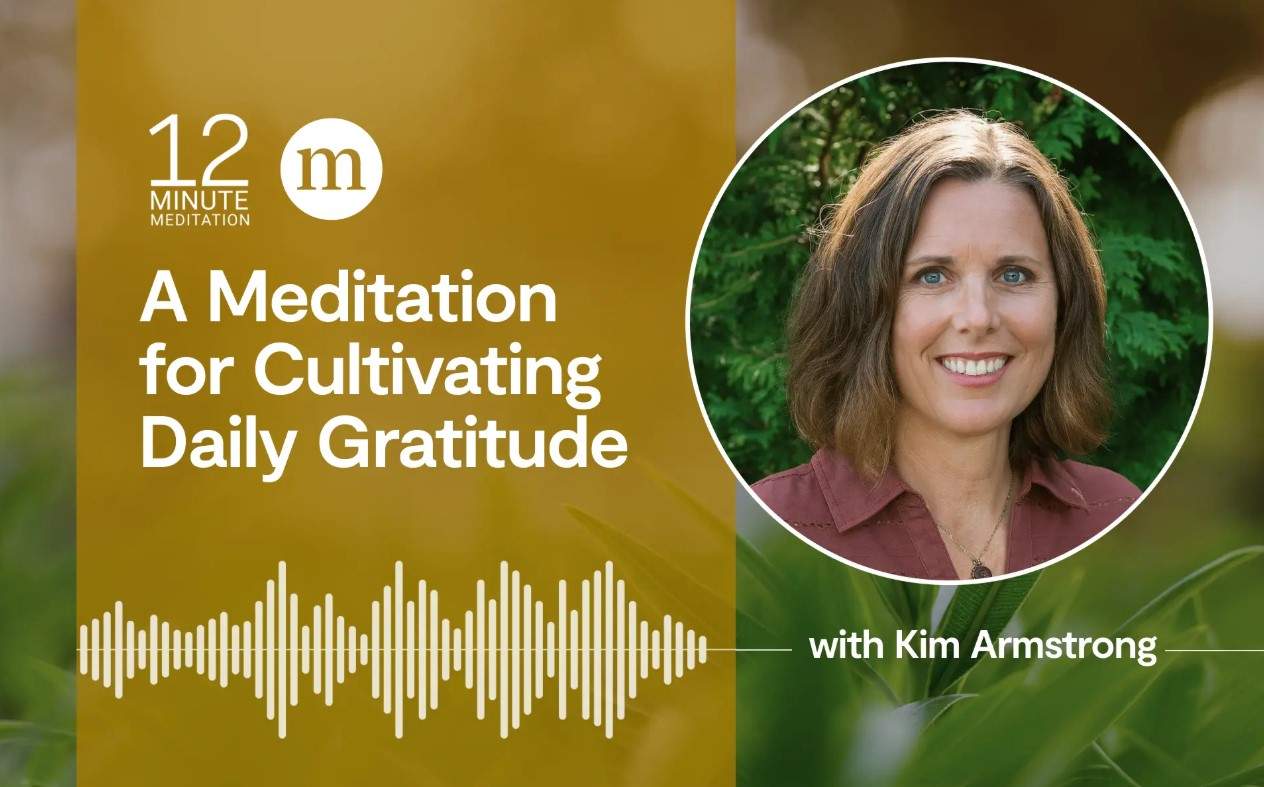
  • A 12-Minute Meditation for Cultivating Daily Gratitude

    A 12-Minute Meditation for Cultivating Daily Gratitude

    In this guided meditation, Kim Armstrong walks you through a simple practice to expand your capacity for gratitude in the everyday moments of life.

    We often think about gratitude as happening in response to “good” things, especially if those moments or events are also significant—a new job, a windfall, an amazing vacation. While these high points can easily spark positive emotion, a daily gratitude practice can go much deeper.

    For instance, what about moments that aren’t grand or overtly happy, but are small and emotionally neutral? What does it feel like to notice, take in, and consciously appreciate even the basic things we do every single day?

    This week, join Kim Armstrong as she leads a gratitude visualization practice. This gentle meditation invites you to shift your gaze inward and discover the often-overlooked moments of joy and contentment that punctuate your day. Kim guides us to visualize the warm embrace of our morning coffee, the soft light of dawn, or the comfort of a familiar smile. By focusing on these simple yet profound experiences, we grow our capacity for gratitude, because we begin to realize we can appreciate everything from the mundane to the magnificent.

    A Meditation for Cultivating Daily Gratitude

    1. This practice can be done in the evenings before bed. You can also do it in the mornings, looking back at the day before.
    2. Begin by finding a comfortable posture of your choice. You can do this practice while sitting, standing, or lying down. Shift your body to find what’s comfortable. 
    3. Whenever you feel ready, take three breaths. Breathe in through your nose, and exhale through your nose or your mouth.  
    4. Take a few relaxing breaths. Close your mouth and breathe in slowly through your nose. Then let it out through either your nose or your mouth.
    5. First, tune in to a moment this morning, or yesterday morning, when you first woke up. Note one or two things that you appreciate or are thankful for about that moment. Maybe it was your warm bed, or the pet or the partner sleeping next to you.
    6. Next, move to the moment right after you woke up. It can be anything that springs to mind—putting on your slippers, making a little stretch, brushing your teeth. Note this and say it to yourself, even out loud if you wish. 
    7. Now, keep moving through the morning, taking note of things you remember. For example, the sounds of loved ones, the delicious taste of your coffee or your tea, your cozy robe or your favorite outfit or socks. They can be very small things. 
    8. Next, consider that transition between home life and work life, noticing something you appreciate, something you’re grateful for from that moment.
    9. Keep moving to the next phase of your day—when you were digging into work, school, or caregiving. Take note of something you appreciated in an interaction with a colleague or loved one: a little bit of humor, a little laughter, a little lightness or ease.
    10. Move on to midday, and again, just flag with gratitude some simple moments. This could be the tastes and smells of your lunch, intentionally focusing on all the steps and people involved in bringing you this meal.  
    11. Continue on in this same way, going through the rest of your day: gratitude for the purpose you served that day, for leaving work and arriving home, for moments in your evening as you wound down from the day, a pleasant meal or conversation, a favorite TV show, a comforting beverage. This could be placing your hand on your heart, or giving yourself a hug—whatever would feel soothing and reassuring. 
    12. Remember, these moments do not have to be grand. For this exercise, it’s perfect if they’re small or emotionally neutral, moments you’d usually pass right over and not notice at all. You can say Thank you, in your head or even out loud.
    13. Notice how it feels in your body to go over your day like this. What’s happening? What is the experience like for you?
    14. Close with a breath. In through the nose, out through the mouth. 
    15. Thank you for joining me today. I hope you enjoyed this gratitude practice.

    Never Miss a Meditation

    Enter your email below to get new podcast episodes delivered straight to your inbox! You’ll also get insights from expert mindfulness teachers and exclusive deals on Mindful Shop products, events, and more.


    Source link

  • Practicing Gratitude: A Simple yet Powerful Way to Improve Your Mental Health

    Practicing Gratitude: A Simple yet Powerful Way to Improve Your Mental Health

    Introduction to Practicing Gratitude

    Practicing gratitude is a simple yet powerful way to improve your mental health. In today’s fast-paced world, it’s easy to get caught up in negative thoughts and emotions, but focusing on what you’re grateful for can have a profound impact on your well-being. By incorporating gratitude into your daily life, you can reduce stress, anxiety, and depression, and cultivate a more positive outlook.

    What is Gratitude?

    Gratitude is the act of acknowledging and appreciating the good things in your life. It’s about recognizing the people, experiences, and things that bring you joy and make your life richer. Practicing gratitude doesn’t mean ignoring the challenges and difficulties you face, but rather choosing to focus on the positive aspects of your life. By doing so, you can shift your perspective and develop a more optimistic mindset.

    The Science Behind Gratitude

    Research has shown that practicing gratitude can have a significant impact on both physical and mental health. Studies have found that people who practice gratitude on a regular basis tend to have lower levels of stress, anxiety, and depression, and are more likely to experience positive emotions such as happiness and well-being. This is because gratitude has been shown to activate the brain’s reward system, releasing feel-good chemicals such as dopamine and serotonin.

    How to Practice Gratitude

    So, how can you start practicing gratitude in your daily life? Here are a few simple yet effective ways to get started:

    • Keep a Gratitude Journal: Take a few minutes each day to write down three things you’re grateful for. This can be anything from a good cup of coffee to a beautiful sunset.
    • Share Your Gratitude with Others: Express your gratitude to someone you appreciate, whether it’s a kind word, a thank-you note, or a small gift.
    • Practice Mindfulness: Take a few minutes each day to focus on the present moment, paying attention to your breath and the sensations in your body.
    • Reflect on Your Day: Take a few minutes each day to reflect on your experiences, identifying the things that went well and the things you’re grateful for.

    The Benefits of Practicing Gratitude

    The benefits of practicing gratitude are numerous and well-documented. Some of the most significant advantages include:

    • Reduced Stress and Anxiety: Practicing gratitude has been shown to reduce stress and anxiety by shifting your focus away from negative thoughts and emotions.
    • Improved Mood: Focusing on the things you’re grateful for can help improve your mood and reduce symptoms of depression.
    • Better Sleep: Practicing gratitude before bed can help improve sleep quality and duration.
    • Stronger Relationships: Expressing gratitude towards others can help build stronger, more meaningful relationships.

    Overcoming Challenges to Practicing Gratitude

    While practicing gratitude can be simple, it’s not always easy. Here are a few common challenges people face, along with some tips for overcoming them:

    • Finding Time: Try incorporating gratitude into your daily routine, such as first thing in the morning or before bed.
    • Feeling Ungrateful: Start small, focusing on the tiny things you’re grateful for, such as a good cup of coffee or a beautiful sunset.
    • Difficulty Shifting Your Focus: Practice mindfulness and meditation to help shift your focus away from negative thoughts and emotions.

    Conclusion

    Practicing gratitude is a simple yet powerful way to improve your mental health and well-being. By incorporating gratitude into your daily life, you can reduce stress, anxiety, and depression, and cultivate a more positive outlook. Whether you choose to keep a gratitude journal, share your gratitude with others, or practice mindfulness, the benefits of gratitude are numerous and well-documented. So, why not give it a try? Take a few minutes each day to focus on the things you’re grateful for, and see the positive impact it can have on your life.

    FAQs

    1. What is the best way to practice gratitude if I’m feeling overwhelmed or stressed?

      • Try taking a few deep breaths and focusing on the present moment. You can also start small, identifying one or two things you’re grateful for, such as a good cup of coffee or a beautiful sunset.
    2. Can I practice gratitude if I’m not feeling grateful?

      • Yes, you can still practice gratitude even if you’re not feeling it. Start by identifying small things you’re grateful for, such as a warm bed or a good meal. As you continue to practice, you may find that your feelings of gratitude grow.
    3. How long does it take to see the benefits of practicing gratitude?

      • The benefits of practicing gratitude can be immediate, but they can also take time to develop. Consistency is key, so try to incorporate gratitude into your daily routine and be patient with yourself as you see the positive impact it can have on your life.
    4. Can I practice gratitude with others?

      • Yes, practicing gratitude with others can be a great way to build stronger, more meaningful relationships. Try sharing your gratitude with a friend or family member, or participating in a gratitude group or community.