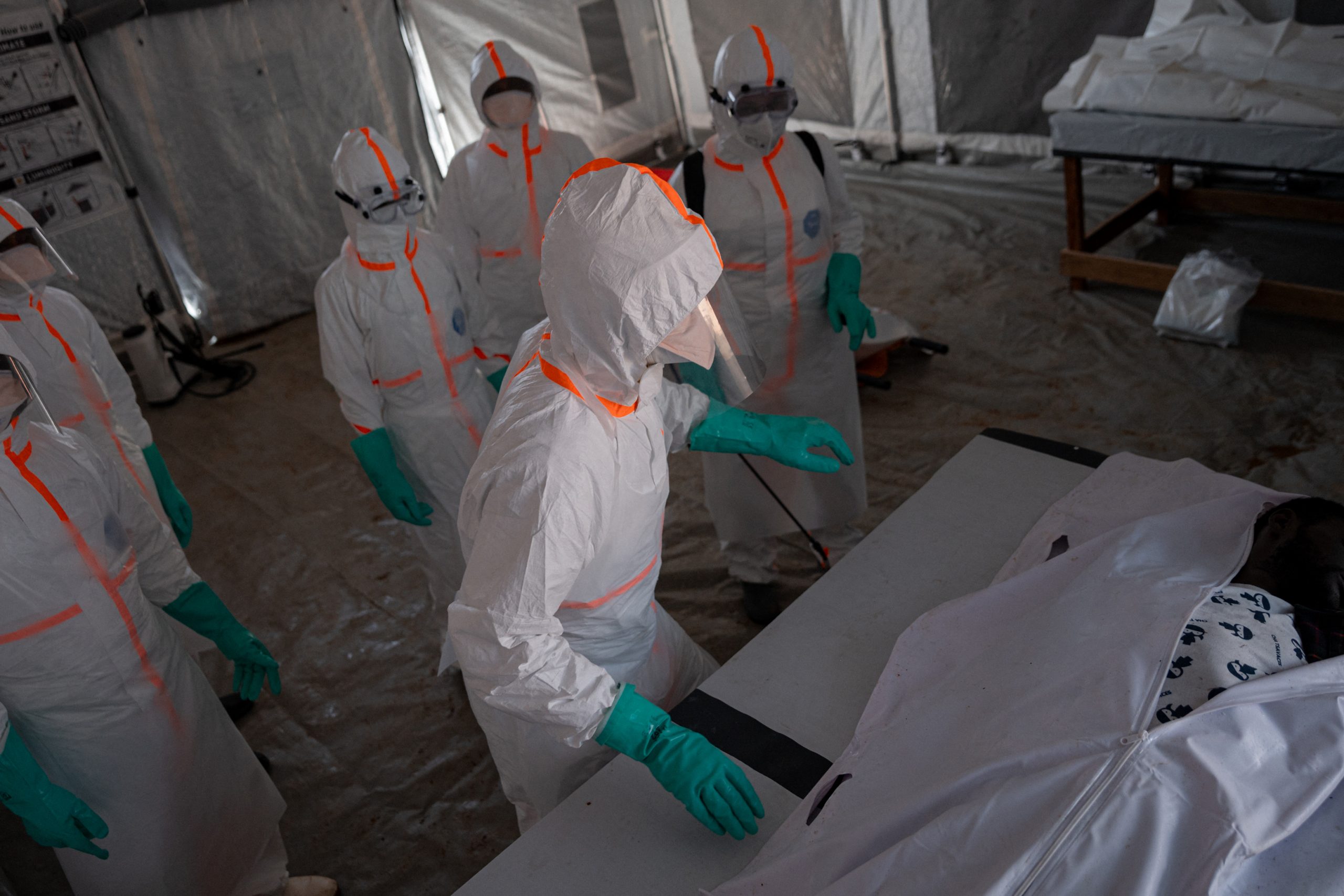
The World Health Organization has kept its highest emergency designation in place for the Ebola outbreak in the Democratic Republic of the Congo, following a second meeting of the expert committee that reviews it.
Director-General Tedros Adhanom Ghebreyesus told the committee on Tuesday that the epidemic is spreading at “unprecedented speed” and that the locations where people are dying show transmission chains that nobody has yet identified. The outbreak is now the second-largest ever recorded and is expanding faster than any previous one.
The number that shapes what happens next is not only the case count. Africa CDC says more than $450 million has been mobilized for the response and has called on partners to fill the remaining financial gap, at a point when officials say they most need to expand community surveillance.
Inside the Emergency Committee’s Second Review
The committee convened under the International Health Regulations, which give WHO the authority to declare and periodically reassess a public health emergency of international concern. The Director-General characterized the situation that way on May 17, two days after Congolese authorities declared the outbreak. Tuesday’s review was the second, and the designation stands.
Africa CDC data published Wednesday put the outbreak at 5,021 confirmed cases and 2,378 deaths, figures reflecting national totals as of Sunday, for a case fatality rate near 47%. That makes it the deadliest outbreak in the country’s history, exceeding the 2,299 deaths recorded during the 2018 to 2020 epidemic in eastern Congo, which involved 3,381 confirmed cases.
The outbreak has now reached a sixth province. A WHO outbreak notice records one confirmed case in the Buta health zone of Bas-Uele, in a patient with travel history to Haut-Uele, joining Ituri, North Kivu, South Kivu, Haut-Uele, and Tshopo. Ituri remains by far the most affected. Tshopo and its capital, Kisangani, worry officials because road, river and air links there run toward Kinshasa, and screening along river routes has been stepped up.
MedicalDaily reported earlier this week on the milestone at which this became the country’s deadliest outbreak. What has changed since is not principally the arithmetic. It is that the formal international emergency machinery has now reviewed the situation a second time and concluded that the emergency continues.
A Response Still Short of the Money It Needs
Money is the least dramatic element of an outbreak story and often the most determinative. Surveillance teams, burial teams, laboratory capacity, and treatment beds are all recurring costs. A joint continental preparedness and response plan launched by Africa CDC and WHO in June sought $518 million, and Congolese officials have pressed partners to disclose what has been received and where it has gone.
The European Union announced on Tuesday that it is purchasing diagnostic tests worth 2.5 million euros, roughly $2.9 million, to be donated to Africa CDC. That is a targeted contribution against a specific bottleneck rather than a solution to the wider gap.
Africa CDC described the obstacle in operational terms, stating that “difficulties persist, including refusals of testing and resistance in some communities,” which it said hinders surveillance and control activities. Supplying test kits does not resolve a situation in which people decline to be tested.
Tedros pointed to population movement along roads, rivers, and mining routes, combined with insecurity and displacement, as forces driving the epidemic. The WHO response page describes a remote, densely populated setting layered with a humanitarian crisis.
Motorbike Riders Move Patients, Bodies, and the Virus
The most specific new element of the response is unusual enough to be worth stating plainly.
Thierno Balde, who manages WHO’s incident response for the outbreak, told reporters that motorbike taxi riders have become a core focus. In much of eastern Congo, they are the transport system, carrying sick patients toward care and sometimes carrying the bodies of people who have died. That places them at the exact point where the virus moves between households and health facilities.
Balde said handwashing stations and disinfectant have been made available, and that the newer objective is to recruit riders as surveillance and response officers rather than treat them only as a transmission risk.
That follows from what WHO calls the central problem. Many deaths occur at home, outside treatment centers, and outside known contact lists. Each one indicates a transmission chain nobody mapped, and riders often reach those households before the health system does. Attacks on health workers and ambulances have compounded the difficulty.
Practical Meaning for American Travelers and Aid Workers
For most people in the United States, the direct personal risk remains low, and that assessment has not changed. Bundibugyo virus spreads through direct contact with the blood or bodily fluids of an infected or recently deceased person. It does not spread through the air as measles does, and no cases have been reported in the United States during this outbreak.
The population with a concrete stake is narrow and real: humanitarian workers, medical missionaries, journalists, and anyone with family or travel ties to the affected provinces. Americans working in Congo have been infected, including a US citizen with a humanitarian organization who was medically evacuated to Germany. MedicalDaily has reported on the federal entry order affecting arrivals from the region, which has been renewed repeatedly and routes travelers through designated airports for screening.
Anyone planning travel to the affected provinces should consult their organization’s medical advisory and current CDC travel health notices before departure and should expect screening on return. Nobody should interpret a global emergency designation as a reason to change medical care at home.
The strain remains the underlying constraint. There is no approved vaccine or specific treatment for the Bundibugyo virus, and the licensed Ebola vaccines target the Zaire species. Clinical trials of candidate vaccines and therapies are underway, and WHO has said early supportive care saves lives. Trial results, not this week’s committee decision, are what would change the medical picture.
Reported totals are widely understood to undercount an epidemic spreading where responders cannot reliably reach, and no date has been set for the next review.
Key Questions Answered
What did WHO decide this week? Its Emergency Committee met for a second review and the outbreak retains public health emergency of international concern status, the agency’s highest designation.
How many cases and deaths are confirmed? Africa CDC published 5,021 confirmed cases and 2,378 deaths on Wednesday, reflecting national totals as of Sunday. Officials say the real figures are higher.
Why does the funding gap matter? Surveillance, burial teams, and treatment capacity are recurring costs. Africa CDC says more than $450 million has been mobilized against a joint continental plan that sought $518 million, and it has asked partners for more.
Is there a vaccine? Not for this strain. The licensed Ebola vaccines target the Zaire species. Candidate vaccines and treatments are in clinical trials.
Why are deaths in the community significant? They indicate transmission chains that nobody has identified, and burial practices involving contact with the body can spread the virus further.
What is the risk to people in the United States? Low. No cases have been reported within the US during this outbreak. The virus requires direct contact with bodily fluids and does not spread through the air.
Who should take specific precautions? Aid workers, medical missionaries and travelers to affected provinces. Consult CDC travel health notices and organizational medical advisories, and expect entry screening on return.