
Tag: Function

  • How to Stay Mentally Sharp: Tips for Maintaining Cognitive Function

    How to Stay Mentally Sharp: Tips for Maintaining Cognitive Function

    As we age, it’s natural to experience a decline in cognitive function. However, there are several strategies that can help maintain mental sharpness and reduce the risk of age-related cognitive decline. In this article, we will discuss tips for maintaining cognitive function and staying mentally sharp.

    h2: Understanding Cognitive Function

    Cognitive function refers to the brain’s ability to process information, perceive, remember, and respond to the environment. It encompasses various aspects, including attention, memory, language, problem-solving, and executive functions. Maintaining cognitive function is essential for daily life, as it enables us to learn, work, and engage in social activities.

    h2: Factors That Affect Cognitive Function

    Several factors can affect cognitive function, including genetics, lifestyle, and environmental factors. For example, a family history of dementia or Alzheimer’s disease can increase the risk of cognitive decline. Lifestyle factors, such as a sedentary lifestyle, poor diet, and lack of sleep, can also negatively impact cognitive function. Environmental factors, such as exposure to toxins and stress, can also contribute to cognitive decline.

    h2: Tips for Maintaining Cognitive Function

    There are several strategies that can help maintain cognitive function and reduce the risk of age-related cognitive decline. These include:

    • Engaging in Regular Exercise: Regular exercise has been shown to improve cognitive function and reduce the risk of dementia. Exercise promotes blood flow to the brain, which helps to keep brain cells healthy.
    • Eating a Healthy Diet: A healthy diet rich in fruits, vegetables, and whole grains can help maintain cognitive function. Foods high in antioxidants, such as berries and leafy greens, are particularly beneficial.
    • Getting Enough Sleep: Getting enough sleep is essential for cognitive function. During sleep, the brain consolidates memories and clears out toxins that can damage brain cells.
    • Staying Mentally Active: Engaging in mentally stimulating activities, such as reading, puzzles, and learning new skills, can help maintain cognitive function.
    • Managing Stress: Chronic stress can negatively impact cognitive function. Engaging in stress-reducing activities, such as meditation and yoga, can help mitigate the effects of stress.

    h2: Cognitive Training and Stimulation

    Cognitive training and stimulation can also help maintain cognitive function. This can include activities such as:

    • Brain Games and Puzzles: Engaging in brain games and puzzles, such as crosswords, Sudoku, and chess, can help improve cognitive function.
    • Learning New Skills: Learning new skills, such as a new language or a musical instrument, can help build cognitive reserve and reduce the risk of cognitive decline.
    • Social Engagement: Social engagement, such as volunteering or participating in group activities, can help maintain cognitive function and reduce the risk of loneliness and isolation.

    h2: Nutritional Supplements and Cognitive Function

    Certain nutritional supplements, such as omega-3 fatty acids, vitamin D, and magnesium, may also help maintain cognitive function. However, it’s essential to consult with a healthcare professional before taking any supplements, as they can interact with medications and have adverse effects in certain individuals.


    h2: Mental Health and Cognitive Function

    Mental health is also closely linked to cognitive function. Conditions such as depression and anxiety can negatively impact cognitive function, while maintaining good mental health can help reduce the risk of cognitive decline.

    h2: Conclusion

    Maintaining cognitive function is essential for daily life, and there are several strategies that can help reduce the risk of age-related cognitive decline. By engaging in regular exercise, eating a healthy diet, getting enough sleep, staying mentally active, managing stress, and seeking cognitive training and stimulation, individuals can help maintain cognitive function and stay mentally sharp.

    FAQs

    1. What are the early signs of cognitive decline?

      • Early signs of cognitive decline can include memory loss, confusion, difficulty with communication, and mood changes.

    2. Can cognitive decline be reversed?

      • While some forms of cognitive decline, such as those caused by vitamin deficiencies or certain medications, can be reversed, others, such as Alzheimer’s disease, cannot be reversed. However, there are several strategies that can help slow down cognitive decline and improve cognitive function.

    3. How can I improve my memory?

      • Improving memory involves a combination of lifestyle changes, such as regular exercise, healthy diet, and sufficient sleep, as well as cognitive training and stimulation, such as brain games and puzzles.

    4. What is the relationship between exercise and cognitive function?

      • Regular exercise has been shown to improve cognitive function and reduce the risk of dementia. Exercise promotes blood flow to the brain, which helps to keep brain cells healthy.

    5. Can nutritional supplements improve cognitive function?

      • Certain nutritional supplements, such as omega-3 fatty acids, vitamin D, and magnesium, may help improve cognitive function. However, it’s essential to consult with a healthcare professional before taking any supplements, as they can interact with medications and have adverse effects in certain individuals.
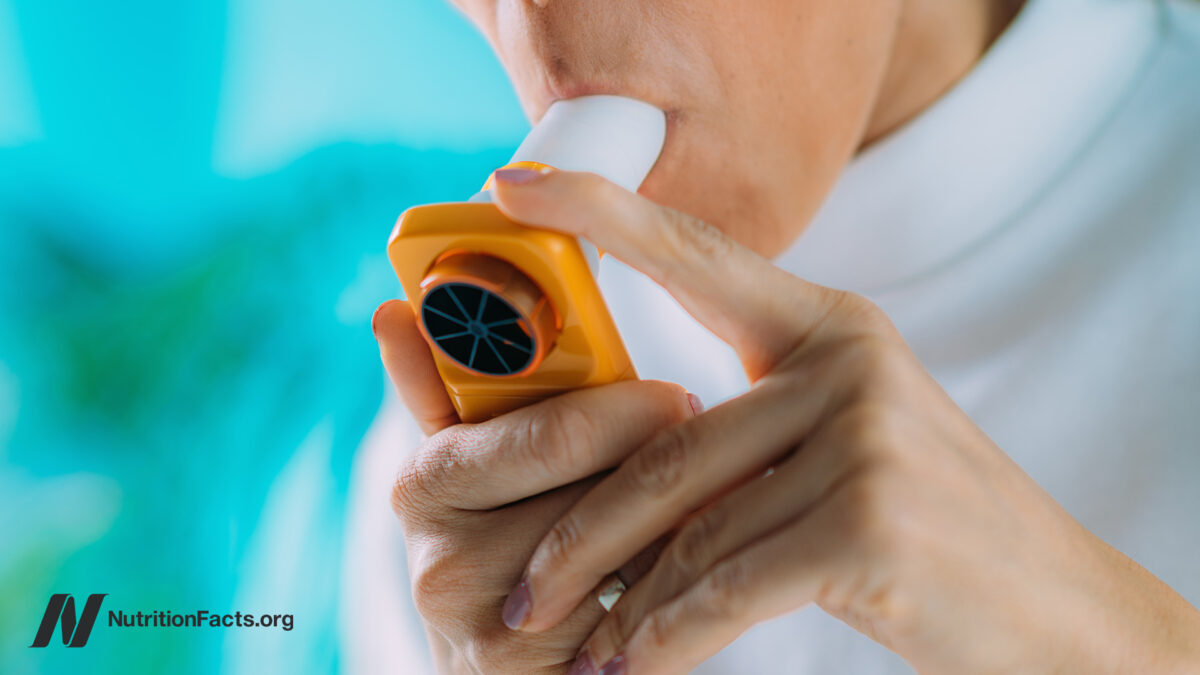
  • Cleaning Products, Air Fresheners, and Lung Function 

    Cleaning Products, Air Fresheners, and Lung Function 

    There is a reason the U.S. Centers for Disease Control and Prevention prohibits not only smoking but also scented or fragranced products in its buildings.

    In a recent review entitled “Damaging Effects of Household Cleaning Products on the Lungs,” researchers noted: “Adverse respiratory effects of cleaning products were first observed in populations experiencing high levels of exposure at the workplace, such as cleaners and health-care workers, with a primary focus on asthma.” Occupational use of disinfectants has also been linked to a higher risk of developing chronic obstructive pulmonary disease, such as emphysema.

    As I discuss in my video Friday Favorites: The Effects of Cleaning Products and Air Fresheners on Lung Function, we now know that, in addition to workplace exposures, “exposure to household cleaning products has also emerged as a risk factor for respiratory disorders in childhood,” as well potentially being “an important risk factor for adult asthma.” Common household cleaning spray use accounts for as many as one in seven adult asthma cases. The thought is that inhaling chemical irritants may cause injury to the airways, leading to oxidative stress and inflammation. What can we do about it?

    Well, it may be limited to sprays. Researchers found that cleaning products that were not sprayed were not associated with asthma. It’s also possible that environmentally friendly cleaning products “may represent a safer alternative,” though they may still present some risk.

    Ideally, safer cleaning products should be available. Unfortunately, the research suggesting harm has “seldom been heeded by manufacturers, vendors, and commercial cleaning companies.” I wonder how much of that is because “most of the workers exposed to cleaning products are women”—both occupationally and, perhaps, domestically.

    One of the problems may be the fragrance chemicals. One in three Americans surveyed “reported health problems, such as migraine headaches and respiratory difficulties, when exposed to fragranced products.” And, for about half of them, the problems were so bad they actually lost work over it, either “workdays or a job due to fragranced product exposure in the workplace.”

    “Results from this study reveal that over one-third of Americans suffer adverse health effects, such as respiratory difficulties and migraine headaches, from exposure to fragranced products. Of those individuals, half reported that the effects can be disabling. Yet over 99% of Americans are exposed to fragranced products at least once a week, from their own or others’ use.”

    The effect on asthmatics may be even worse, affecting closer to two-thirds of Americans. One compound that may be of particular concern is called 1,4-dichlorobenzene, also known as para-dichlorobenzene, which is found in many air fresheners, toilet bowl deodorants, and mothballs. It breaks down in the body into a compound called 2,5-dichlorophenol, which we pee out, giving researchers a reliable measure of our dichlorobenzene exposure. Not only may it make respiratory problems worse for those already suffering from compromised airways, but exposure to dichlorobenzene “at [blood] levels found in the U.S. general population, may result in reduced pulmonary [lung] function” in people who start out with normal breathing. What’s worse, higher exposures “were associated with greater prevalence of CVD [cardiovascular disease] and all cancers combined,” another reason to avoid it. We’d better read labels, right?

    Surprisingly, “no law in the US requires the disclosure of all ingredients in fragranced consumer products.” In fact, for laundry supplies, cleaning products, and air fresheners, manufacturers “do not need to list the presence of a ‘fragrance’ on either the label or MSDS,” the material safety data sheet. We won’t know until we smell it.

    I support the U.S. Centers for Disease Control and Prevention’s ban. Not only is “the use of tobacco products (including cigarettes, cigars, pipes, smokeless tobacco, or other tobacco products)…prohibited at all times,” but “scented or fragranced products are prohibited at all times in all interior space owned, rented, or leased by CDC.” I wish rideshare services like Uber and Lyft would have a similar policy. I’d even be happy with just a fragrance-free option. About one in five of more than a thousand Americans surveyed said they “would enter a business but then leave as quickly as possible if they smelled air fresheners or some fragranced product,” so it’s in the best interest of businesses, too. “Over 50% of the population would prefer that workplaces, health care facilities and professionals, hotels, and airplanes were fragrance-free.”


    Source link

  • Simple Supplement May Boost Brain Function And Memory In Elderly

    Simple Supplement May Boost Brain Function And Memory In Elderly

    Experiencing memory issues and declining brain function is often seen as a natural part of aging, and it can also be an early warning sign of Alzheimer’s disease. But what if boosting memory was not as complicated as it seems? Research suggests that the key may lie in an unexpected place—the gut.

    Adding more evidence to the fascinating connection between gut health and brain function, a recent study published in Nature Communications, suggests that a daily prebiotic supplement could sharpen memory and boost cognitive performance in adults over 60.

    To investigate whether two inexpensive and widely available plant fiber supplements: inulin and fructooligosaccharides (FOS), could enhance brain function, researchers conducted a rigorous double-blind trial involving 36 pairs of twins over the age of 60. Since genetics play a significant role in cognitive health, using twins allowed the researchers to control for inherited differences, ensuring that any observed improvements in memory and brain function were more likely due to the supplements rather than genetic factors.

    During the trial, the participants either received a placebo or the supplement daily for 12 weeks. At the end of the trial, researchers observed significant changes in the gut microbiome of participants who took the fiber supplement, particularly an increase in Bifidobacterium, a beneficial bacteria linked to gut and brain health.

    By comparing the cognitive abilities of identical siblings using questionnaires and cognitive tests, the researchers found that after the end of the trial, the participants who took inulin or FOS consistently outperformed their sibling.

    “We are excited to see these changes in just 12 weeks. This holds huge promise for enhancing brain health and memory in our aging population. Unlocking the secrets of the gut-brain axis could offer new approaches for living more healthily for longer,” said first author Dr. Mary Ni Lochlainn from the Department of Twin Research in a news release.

    “These plant fibers, which are cheap and available over the counter, could benefit a wide group of people in these cash-strapped times. They are safe and acceptable too. Our next task is to see whether these effects are sustained over longer periods and in larger groups of people,” added senior author Professor Claire Steves, professor of aging and health.

    Source link

  • Does Processed Meat Affect Our Lung Function? 

    Does Processed Meat Affect Our Lung Function? 

    If the nitrites in foods like ham and bacon cause lung damage, what about “uncured” meat with “no nitrites added”?

    “Recently, the World Health Organization (WHO) classified processed meat as carcinogenic to humans.” Also known as cured meat, such as bacon, ham, hot dogs, lunch meat, and sausage, processed meat is definitively cancer-causing. What’s more, “high processed meat consumption has also been associated with increased risk of all-cause mortality”—that is, dying prematurely from all causes put together—“and is a risk factor for several major chronic diseases, such as type 2 diabetes, coronary heart disease, and stroke.” What about lung issues like asthma?

    As I discuss in my video Does Processed Meat Affect Our Lung Function?, nitrites are added to processed meats as preservatives to preserve their pink hue (so the meat products don’t turn gray), keep them less rancid-tasting, and prevent the growth of diseases like botulism. But, if that same sodium nitrite is put into the drinking water of lab animals, they develop emphysema. Nearly all of them develop emphysema. That was the extent of the scientific knowledge we had on the subject going into 2007, then this study was published: “Cured Meat Consumption, Lung Function, and Chronic Obstructive Pulmonary Disease Among United States Adults.” It found that frequent consumption of cured meat is associated with an increased risk of people developing diseases like emphysema, a form of chronic obstructive pulmonary disease (COPD). As you can see below and at 1:32 in my video, eating it every other day appeared to triple the odds of severe COPD. 

    Since it was a snapshot-in-time study, we don’t know which came first, the sausage or the COPD. For that, we need prospective studies that follow people over time, and the big twin Harvard studies in women and men both found that “the risk of newly diagnosed COPD increased with a greater consumption of cured meats after adjustment for many important confounders.” 

    We now have studies involving hundreds of thousands of people showing that higher consumption of processed meat is associated with a 40 percent increased risk of COPD. It comes out to about an 8 percent higher risk of COPD for each hot dog eaten in a week or each weekly breakfast link sausage. What is going on?

    Yes, there are advanced glycation end-products (AGEs), so-called glycotoxins that “occur naturally in meat and are formed through heat processing,” that may be pro-inflammatory, as well as saturated fat that can also trigger inflammation in the airways. And there’s the high salt content that can present a potential risk for lung inflammation, and the suggestion that processed meat intake may increase systemic inflammation in general. However, the reason attention has focused on the nitrites is because nitrites themselves may be “one of the mechanisms by which tobacco smoke causes COPD” and other diseases like emphysema. “Cured meats are the principal source of dietary nitrites,” but “nitrites are also byproducts of tobacco smoke.” One of the main constituents in cigarettes, besides carbon monoxide and nicotine, are nitrogen oxides that are converted in the lungs to nitrites.

    The way nitrites appear to cause lung damage is by affecting connective tissue proteins like collagen and elastin, which are what help keep the airspaces in our lungs open. But nitrite can modify these proteins in ways that “mimic age-related damage, including elastin fragmentation.”

    With that much lung injury, it’s logical to assume that processed meat consumption could also exacerbate the disease of those who already have it. And, indeed, cured meat consumption increases the risk of people with COPD ending back in the hospital; those eating more cured meat on average have about twice the risk of readmission. It appears the more you eat, the worse it is, as seen here and at 3:56 in my video.

    “Regarding lung health, processed meat intake has been associated with a likely increased risk of lung cancer, decline in lung function and chronic obstructive pulmonary diseases (COPD),” but what about asthma? High consumption of processed meat has also been “associated with higher asthma symptoms.” 

    We know that “higher maternal intake of meat before pregnancy may increase the risk of wheezing” in her children later on, based on a study of more than a thousand mother-child pairs. (And we aren’t talking about aspirating meat into our lungs and getting misdiagnosed with asthma.) In fact, “those who ate the most cured meats were 76% more likely to experience worsening asthma than those who ate the least.” Since obesity is a likely risk factor for asthma, might meat’s influence be indirect, by contributing to weight gain? That may be a small part of it, but the main effect appears to be direct, “suggesting a deleterious role of cured meat independent of BMI,” body mass index, a weight measurement. Put all the studies together, and “processed meat intake appears to be an important target for primary prevention of adult asthma.”

    Even if you don’t have any lung issues, processed meat consumption was negatively associated with measures of normal lung function, while fruit and vegetable consumption and dietary total antioxidant capacity were associated with better lung function.

    Can we just eat all-natural, uncured hot dogs, with “NO NITRATES OR NITRITES ADDED,” like these see here and at 5:35 in my video

    If you use a magnifying glass and peer at the small print, it says “except those naturally occurring in sea salt and cultured celery juice.”

    See, to avoid saying “added nitrites,” food manufacturers may add something that has a lot of nitrates, like celery, and also bacteria, “a starter culture to convert the nitrate to nitrite.” So, nitrites are being added and consumers are being duped.

    The European Union doesn’t allow this kind of consumer fraud and “considers the use of plant extracts containing high levels of nitrate with an intended technological purpose of preservation to be a deliberate use of a food additive,” and manufacturers must explicitly label their products as “containing nitrate or nitrite.” You can’t even call it natural. “In the European Union, ‘natural’ claims are also not permitted….”

    When Consumer Reports put it to the test, it found the nitrite levels in all the products were essentially the same, so “‘no nitrites’ doesn’t mean no nitrites.” Consumer Reports and the Center for Science in the Public Interest have petitioned the U.S. Food Safety and Inspection Service of the Department of Agriculture to stop this misleading practice. Nitrites are nitrites, and “their chemical composition is absolutely the same, and so are the health effects.”

    Yes, processed meat is a known carcinogen, but How Much Cancer Does Lunch Meat Cause? 

    I have many videos on both nitrites and nitrates. I know it can be confusing, so be sure to check them out. 


    Source link

  • How Is Natural Killer Cell Function Boosted by Forest Bathing? 

    How Is Natural Killer Cell Function Boosted by Forest Bathing? 

    Can the aroma of wood essential oils replicate the immune-boosting effects of walking in a forest?

    Studies on the effects of “forest bathing,” or shinrin-yoku in Japanese, “a traditional practice characterized by visiting a forest and breathing its air,” have found it “can induce a significant increase in the number and activity of natural killer (NK) cells” that can last as long as a month. And because natural killer cells are one of the ways our body fights cancer by killing off tumor cells, the “findings suggest that visiting forest parks may have a preventive effect on cancer generation and progression.” How? “Why did the forest environment increase human NK activity? What kind of factors in the forest environment activated human NK cells?” What is it about the forest environment?

    One thought is that the boost may be related to a reduction in stress. If you measure the amount of adrenaline flowing through people’s systems, did spending time in a forest—but not in a city—lower adrenaline levels? Yes, as you can see at 0:58 in my video Why Does Forest Bathing Boost Natural Killer Cell Function?

    However, if you drip some adrenaline on human blood cells in a petri dish, there does not appear to be any effect on NK cells. The stress hormone cortisol, on the other hand, dramatically suppresses natural killer cell activity, as shown below and at 1:09 in my video. So, might being in the forest lead to less stress and less cortisol, which releases the natural killer cells under its thumb, giving us a boost?

    We know being surrounded by nature can decrease levels of cortisol in our saliva, but what about our bloodstream? Researchers found a significant drop in the stress hormone after a single-day trip to the forest. A week later, cortisol was normalizing, as you can see here and at 1:30 in my video, but the forest’s effects sometimes appeared to last an entire month. Anything else that could cause a longer-term immune system change?

    Maybe we’ve been missing some of our “Old Friends.” If you sample outdoor air, you can pick up an abundance of microorganisms from the soil and water that float around—but are absent from indoor air. (Indoor air is dominated by organisms that either live on us or try to attack us.) So, on a day-to-day basis, in terms of keeping our immune system on ready alert, it “might not be sufficient to encounter only the biased microbiota of the modern synthetic indoor environment that lacks some of the Old Friends and probably bears little resemblance to the microbiota we encountered throughout our evolutionary history,” the microbes we evolved to live with over millions of years.

    Or perhaps it’s the plants themselves. Maybe it’s the aroma of the forest. Trees produce aromatic volatile compounds called phytoncides, like pinene, which we can breathe into our lungs when we’re in the forest. Do these compounds actually get into our bloodstream? Indeed, after spending one hour in the woods, we get about a sixfold increase in pinene levels circulating throughout our system. To fully connect all the dots, phytoncides like pinene—those essential oils from wood—would then have to induce human natural killer cell activity. And guess what? The study title gives it away: “Phytoncides (Wood Essential Oils) Induce Human Natural Killer Cell Activity.” If you put natural killer cells in a petri dish with leukemia cells, our NK cells can wipe out some of the cancer cells. But, if you add a whiff of cypress, white cedar, eucalyptus, or pine, the cancer cells don’t stand a chance, as shown below and at 3:14 in my video

    A combination of wood aromas improved the recovery of mice put through the wringer, but this is the study I was looking for: “Effect of Phytoncide from Trees on Human Natural Killer Cell Function.” If we want to know if the magic ingredient is the fragrance of the forest, then let’s see if we can get that same boost in natural killer cell activity by just vaporizing some essential oil from one of the trees into a hotel room overnight. It worked! There was a significant boost in natural killer cell activity, as seen here, and a 3:40 in my video.

    Only NK activity was boosted, though, rather than the number of the natural killer cells, and being in an actual forest can elevate both. So, perhaps it’s a combination of the tree fragrance and the lower cortisol levels working together.

    Ironically, these phytoncide compounds are part of the tree’s own immune system, which we may be able to commandeer. As you can see at 4:05 in my video, researchers speculate that these compounds may be playing a role in the fact that more heavily forested regions in Japan appear to have lower death rates from breast cancer and prostate cancer. Indeed, being in nature has been found to be an “important coping strategy among cancer patients,” but it may help us cope better, thanks to the fragrance of trees. 

    Spending time in a forest significantly increases NK cell activity. In my previous blog, I discussed Boosting Anticancer Immunity with Forest Bathing.

    You may recall that I’ve touched on this topic before. See Are There Health Benefits of Spending Time in Nature?.

    For more on aromatherapy, check out the related posts below.


    Source link