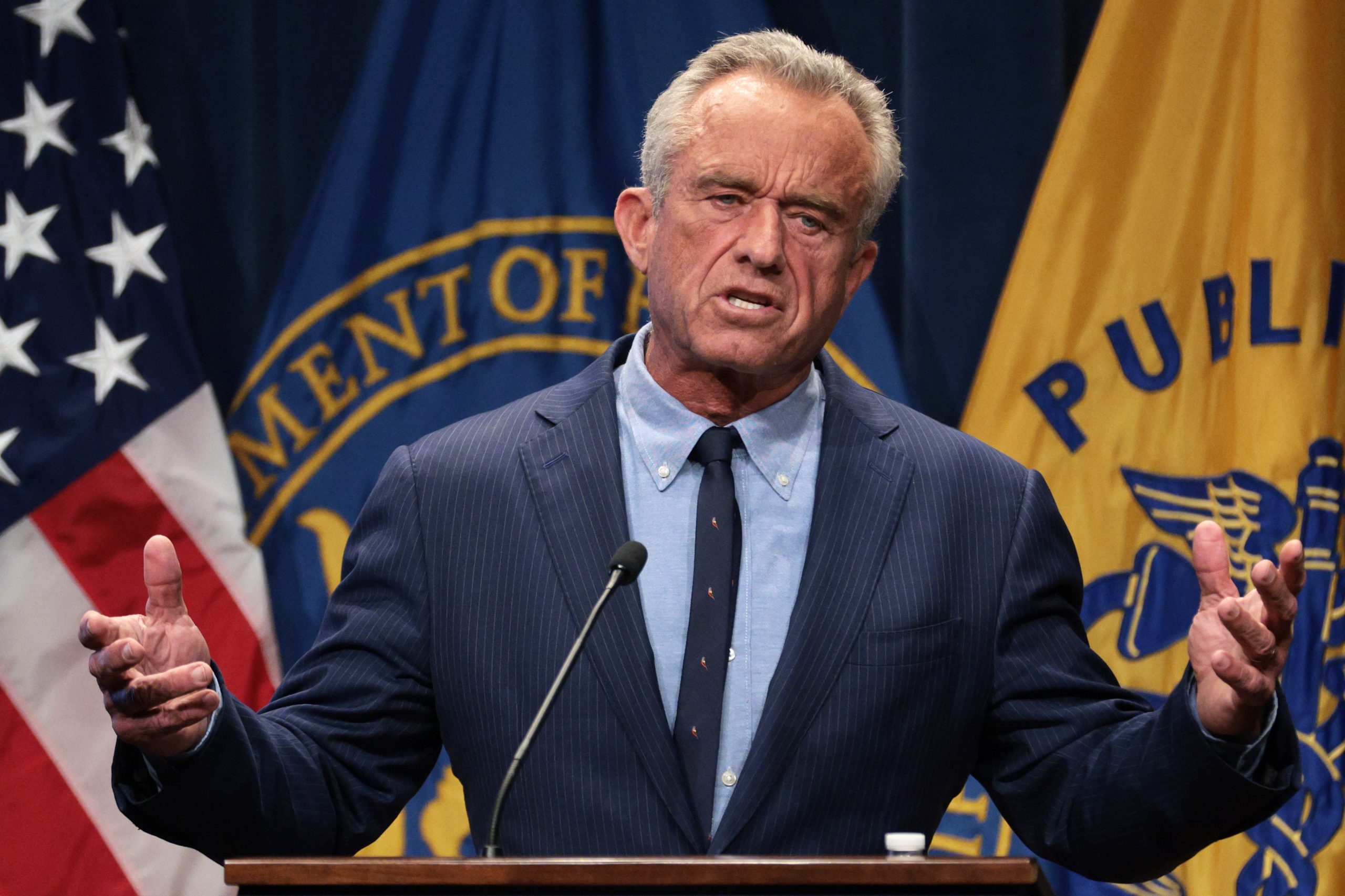
Heath Secretary Robert F. Kennedy Jr. was forced to walk back his words after he accused a Democratic lawmaker of accepting millions from the pharmaceutical industry, and claimed that those contributions affected his ability to do his job.
The request for RFK Jr. to do so came after a heated exchange with New Jersey Rep. Frank Pallone, where the lawmaker questioned him over the recent firing of a vaccine advisory committee.
“You have made a number of major decisions about vaccines, and there’s been no public comment process or public accountability on that either. What are you afraid of? With regard to vaccines, are you just afraid to receive public comments on proposals?” Pallone asked.
PALLONE: With regard to vaccines, are you just afraid to receive public comments on proposals? There’s been no public process
RFK JR: We have a public process for regulating vaccines. It’s called the ACIP committee.
“We have a public process for regulating vaccines. It’s called the ACIP committee and it’s a public meeting—” RFK Jr. responded before Pallone cut him off.
“You fired the committee,” he stated. The health secretary let go of all 17 members of the Advisory Committee on Immunization Practices earlier this month. At the time, Kennedy defended the decision, saying that the Trump administration would not have been able to appoint most new members until 2028.
During the Tuesday hearing, RFK Jr. stated that he “fired people who had conflicts with the pharmaceutical industry.” He claimed that the “committee has been a template for medical malpractice for years.”
Pallone went on to accuse Kennedy of being “anti-science and anti-vaccine.”
The health secretary later appeared to accuse Pallone of letting political donations impact his work and stances, particularly on issues having to do with the pharmaceutical industry.
“Fifteen years ago, [when] you and I met, you were at that time a champion for people who had suffered injuries from vaccines. You were very adamant about it, you were the leading member of Congress on that issue,” Kennedy said.
RFK Jr is so mad at Pallone for criticizing him that he smears him as corrupt, prompting DeGette to jump in and force RFK Jr to retract his words pic.twitter.com/uwyuAKFEKe
“Since then you’ve accepted $2 million dollars from pharmaceutical companies in contribution — more than any other member of this committee. Your enthusiasm for supporting the old ACIP committee, which was completely rife and pervasive with pharmaceutical conflicts, seems to be an outcome of those conflicts,” he continued.
Kennedy’s assertion prompted Colorado Rep. Diana DeGette to jump in and ask him to retract the statement.
“The secretary implied that Mr. Pallone would not fight for vaccine victims because he took money from the pharmaceutical industry. He needs to take back those words,” she said.
RFK Jr. then agreed to “retract those words” following a request from the chairman of the Health Subcommittee for the Committee on Energy and Commerce.
Are you getting enough healthy sleep? If you’re like many of us, your answer is no. All day it’s go, go, go, then at night, when we mean to shut down, it’s not so easy. Eventually, the paradox of sleep worry kicks in: Thinking about sleep gets in the way of sleep. And not getting the rest we crave can be quite painful and can exacerbate other health problems.
As with pretty much anything health-related, we may know better, but we don’t stick to what we’d tell our best friend: Keep to a regular bedtime and a consistent routine, and avoid whatever disrupts sleep, like caffeine, alcohol, and screens. Not that complicated, but what’s often hardest is what’s frustratingly out of our full control. Even following solid advice, sometimes we suffer through rotten nights, feeling anxious or struggling to settle ourselves.
We have nothing but empathy for a friend with insomnia, yet as we lie awake in the dark we may not give ourselves the same degree of care. A good place to start, then, might be an adapted version of Kristin Neff’s self-compassion practice: Breathing in, say to yourself, My trouble falling asleep is a moment of suffering. Breathing out, All people have moments of suffering. And then, This is how things are right now. May I find peace and ease and a night’s rest.
Since staying awake while we’re meditating is often a big challenge, it’s no surprise that mindfulness has been shown to promote healthy sleep.
Since staying awake while we’re meditating is often a big challenge, it’s no surprise that mindfulness has been shown to promote healthy sleep. It’s not all that exciting to sit quietly and breathe. It can be downright boring, not to mention calming. But that’s not the whole story. Mindfulness practice encourages nonjudgmental awareness—seeing things exactly as they are, with openness and curiosity. If we accept the basic facts outlined above about what tends to lead to healthy sleep, and it contradicts how we live, it might be time to patiently explore what stands between us and change. With sleep, as with meditation practice, intentions are easier said than done. Here’s a little reflection and inventory list that may help.
4 Sleep Routine Questions to Ask Yourself:
1) Objectively consider your pre-bedtime routine—anything to change? A consistent bedtime, a quiet room, and a focus on settling down go a long way toward better sleep.
2) Is it time to see a doctor? It may be unsettling visiting a doctor to find out if you have a sleep disorder, but it’s a good idea. For example, any amount of chronic snoring can disrupt sleep. Aging affects sleep too, which may be worth discussing with your physician.
3) Are there routines other than bedtime that may help you settle? Notice your habits with screens, alcohol, or caffeine. How do you manage stress? How consistently do you exercise? Remember to have self-compassion: Don’t judge yourself for your habits, but take firm action when ready.
4) Are you pushing yourself too hard and taking that into bed? Consider practicing non-striving while in bed. By not trying to sleep, sleep quite often arrives. Focus on the breath or the body. Notice the thoughts swirling: It’s happening again; if I don’t fall asleep soon I’ll be so tired tomorrow. Notice it all, and breathe. Maybe there’s nothing at all to do tonight except that, and to gently let go of thinking about (the) rest.
Neither sleep routines nor mindfulness practice responds well to a heavy hand. If you set out to force yourself into sleep, you’re less likely to get a healthy sleep. If you strain for some picture-perfect mindset when meditating, you’ll create more stress and uncertainty. If you set yourself up with clear-sighted planning and patient resolve— intentionally but unforced—healthy sleep and mindfulness are both more to likely follow.
A Guided Meditation for Healthy Sleep
To allow you to fully experience this meditation, we recommend that you listen to the audio version. However, you can also simply read the text below. If you choose to do so, read through the entire script first to familiarize yourself with the practice, then do the practice, referring back to the text as needed and pausing briefly after each paragraph. Take about twenty minutes for the practice. You can do this practice in a seated position.
In considering any meditation related to sleep, recognize that there’s nothing to force, and nothing to make happen. Since striving makes healthy sleep more challenging, set out to practice without specific expectations or goals. We cannot make ourselves sleep, but perhaps, by aiming to stay settled and getting less caught up in our thoughts, we fall asleep anyway.
For the meditation that follows, there will be no ending bell or instruction. At the end, continue to practice if you like, or hopefully enjoy a good night’s rest instead.
Start while lying down, allowing your legs to rest in a comfortable posture, hip-width apart. You can place your arms by your side or your hands on your belly.
Begin by noticing your breath. Pay attention, as best as you’re able to the physical movement related to breathing, such as your belly rising and falling. Or, if you prefer, focus your attention more closely on the air moving in and out of your nose and mouth.
It’s normal, expected even, to have thoughts — lots of them. Your mind rehashes the day or gets caught up in worrying about tomorrow. Recognize those habits, and then practice letting them be. Label whatever grabs your attention, and come back again to noticing the breath. Breathing in… and breathing out.
Notice if you get caught up in effort, or frustration, or fear, with compassion for yourself. Catch thoughts of self-criticism or frustration, and come back to just one breath, one more time. Thoughts are only thoughts. Breathing in… breathing out. There’s nothing you need to fix or change right now in this moment. Notice where your thoughts go, and label them “thoughts.” Come back to one next breath, over, and over again.
Shift attention to sensations in your body. Start by moving your awareness to physical sensations in your feet. You don’t need to wiggle your toes or move your feet, just notice them — the temperature or the pressure of your heel against the blanket or the mat beneath you.
From your feet, move your attention into your lower legs, noticing whatever there is to see. Letting go of a sense of effort or needing to make anything happen. And then from your lower legs, through your knees, and into your upper legs. If you feel any sense of stress or tension, aim to relax and let go.
Then through your buttocks and pelvis, and into your belly and abdomen. You might notice a sense of your breath moving up and down, or other physical sensations, or sometimes even reflection of emotion (perhaps an emotion like fear or anger reflects in the stomach in the form of tension or tightness). And as you move from your belly and now into your chest, note each time your mind gets caught up in thoughts of discomfort or distraction. And then gently and with patience, guiding it back one more time.
Move around into your back, certainly a place many of us hold tension in different ways, relaxing your muscles as best as you’re able, lowering your shoulders from your ears. If you feel a need to make an adjustment, allow that to happen with intention, pausing and choosing your next action. Shift your attention into your hands and lower arms, again without actively needing to move or change anything, observing and letting go.
Then moving through your neck and into the muscles of your face, perhaps noticing any locations of tightness or pinching, and then with gentleness, as best as you’re able, relaxing those muscles. And then for a few moments, have a general awareness of physical sensations throughout your body.
And now, if you’re still awake, bring your attention back to the breath, each time the mind wanders into the past or into the future, or wherever it chooses to go. If it’s a useful anchor for your attention, you can count breaths, breathing in, one, breathing out, one, breathing in, two, breathing out, two… When you reach ten, start at one again.
If counting becomes a distraction, then just stay with the sensation of breathing — wherever you feel the breath entering or leaving your body, or the rising or falling of your belly and chest. Continue on your own now, counting breaths up to ten, patiently returning your attention whenever you become distracted. If you lose track of counting, that’s fine. Start over wherever you last remember.
Sufficient sleep heals our bodies and minds, but for many reasons sleep doesn’t always come easily. Mindfulness practices and habits can help us fall asleep and stay asleep. Consult our guide to find tips for meditation, movement, and mindfulness practices to ease into sleep. Read More
What started as a small burn on his thumb while cooking dinner during a camping trip turned into a life-threatening ordeal for a 40-year-old Colorado man. After developing a severe sepsis infection, he was put in a coma and forced to amputate both of his legs.
The unexpected tragedy unfolded for Max Armstrong from Franktown during a hunting trip with friends in Kiowa in December 2024. While cooking dinner during the camping, he burned his thumb on a skillet. Armstrong, who was used to small cuts and bruises while living outdoors for most of his life, ignored the little burn, continued with his dinner, and later bandaged it.
However, things escalated quickly. Within just a few days, a strep infection that had entered the body through the burn wound spread rapidly. His left leg began swelling, and his toenails turned purple. Only six days after the burn, he was rushed to an emergency room, where his condition rapidly worsened, and his eyes rolled back in his head.
“At this point, the burn on my thumb had become pretty ugly, it had turned black and looked like it was eating away at my thumb. The doctors were asking me lots of questions, but my eyes started rolling back in my head and I started talking nonsense. They concluded that I had sepsis and put me into a medically induced coma,” Armstrong said.
By the time Armstrong recovered from the coma six days later, his feet were completely black from the severe strep infection that led to sepsis. Sepsis is a life threatening situation that damages the vital organs. Doctors then advised amputating both his legs to prevent the infection from spreading. Armstrong underwent the life-saving surgery on December 23, 2024, which ultimately left him in a wheelchair for the rest of his life.
“Initially when I woke up, I thought my legs were still there and then I came to realize that they weren’t. I felt down my leg and realized that my legs weren’t there, I asked the nurse and she confirmed that I had my legs amputated,” Armstrong said. He is now focusing on rehabilitation exercises to improve his mobility.
A Virginia woman who lost her hand in a shark attack is now turning to the public for help after her insurance company refused to cover the cost of a prosthetic device recommended by her medical team.
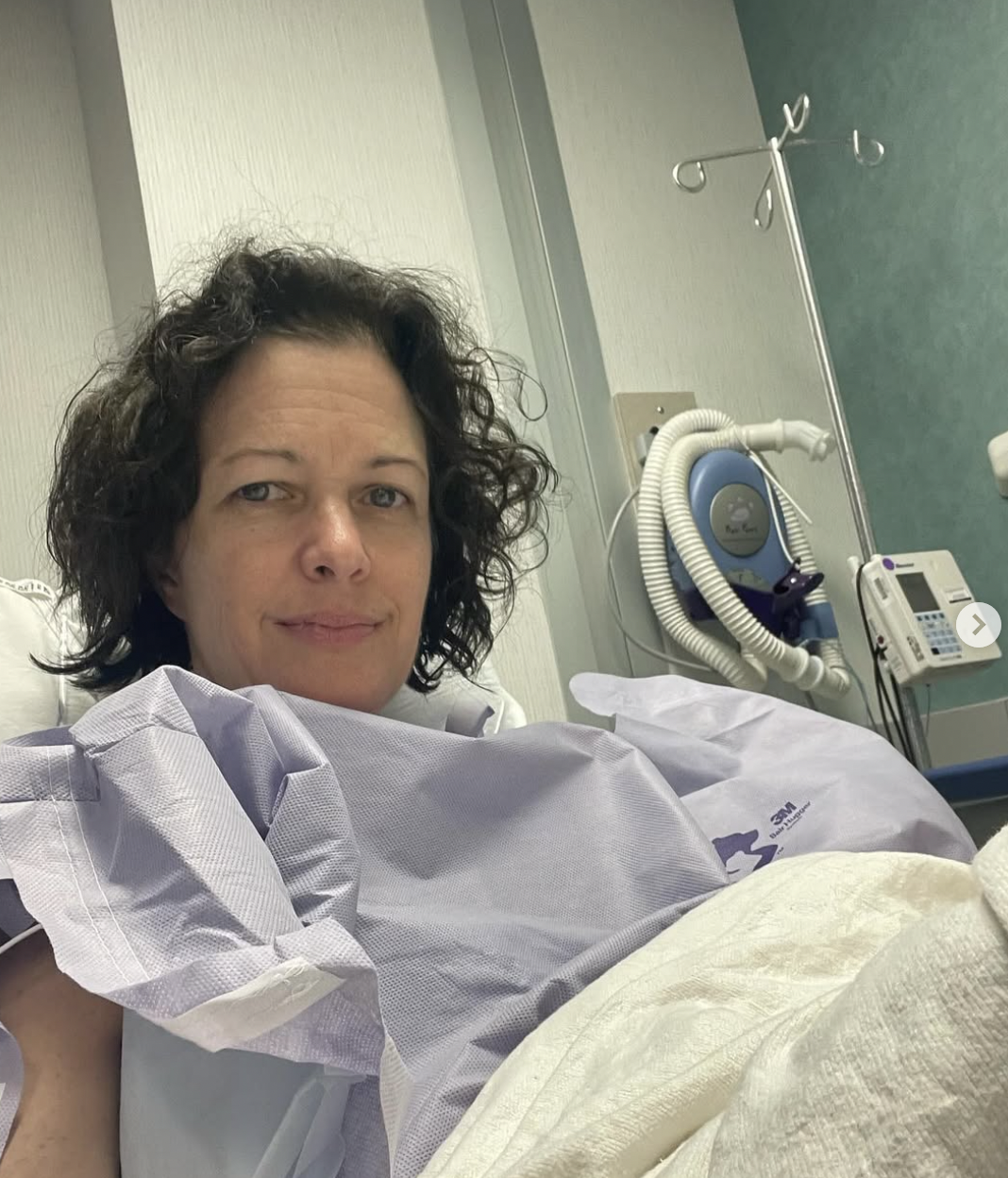
Elisabeth Foley, a 45-year-old mother of three, was bitten by a shark in June while vacationing in Florida. She was one of three people attacked within 90 minutes that day. Foley’s injuries were devastating, leading to the loss of her left hand and severe damage to her midsection. Her recovery involved 60 days in the hospital, where she endured multiple surgeries, including nerve and laser procedures, according to WWBT.
Despite these challenges, Foley has made remarkable progress. Now, her doctors recommend a myoelectric prosthetic hand, an advanced device that uses residual muscle signals in the arm to control its movements.
This prosthetic would dramatically improve her mobility and independence, according to her GoFundMe page.
Without it, Foley claims she faces “a diminished quality of life,” marked by limited mobility. Her insurance company has declined to cover the $73,000 prosthetic, deeming it “not medically necessary,” her fundraiser explains.
The device would enable her to regain some normalcy and tackle tasks many take for granted.
As of Thursday, Foley’s GoFundMe campaign had raised over $60,000.
Her journey and updates on her recovery are also documented on her Instagram, where she has received an outpouring of support.
Foley’s struggle for a prosthetic comes amid a national reckoning over frustrations with the healthcare system prioritizing profits over people. The killing of UnitedHealthcare CEO Brian Thompson has sparked a wave of support for the suspect, Luigi Mangione, with many applauding him as a symbol of growing frustration and anger toward the insurance industry.
A Texas doctor was forced to delete their TikTok about helping undocumented immigrants get healthcare after the state’s governor threatened to defund a children’s hospital.
In the now-deleted video, Dr. Tony Pastor told viewers that they did not have to disclose their citizenship status to medical professionals when receiving care, as reported by Chron.
The viral TikTok came following Gov. Greg Abbott’s executive order which requires public Texas hospitals receiving funding for Medicaid or the Children’s Health Insurance Program to report on health care for undocumented patients, as reported by the Austin-American Statesman.
In the deleted TikTok, Pastor, who works as a cardiologist at Texas Children’s Hospital, said, “It has made all of us physicians and providers super uncomfortable.” He added, “No one has told us what people are going to do with this information,” as reported by HuffPost.
It is unclear whether Pastor took the video down by his own choice or if the hospital or Baylor College of Medicine, where he also works as an assistant professor, required him to. Texas Children’s Hospital declined to give a statement to Chron.
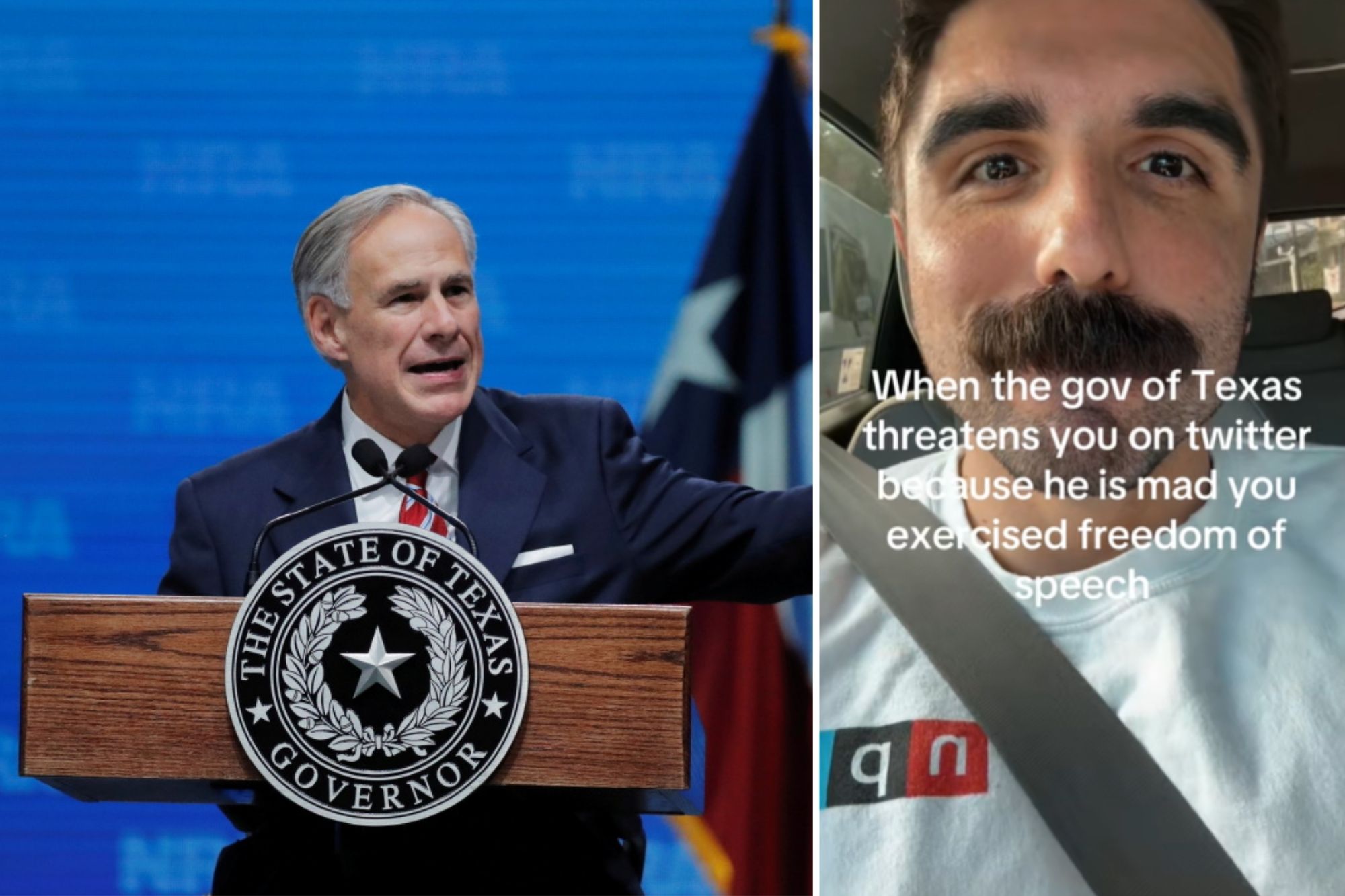
After the November TikTok went viral, Abbott made a post to X appearing to threaten funding for the hospital Pastor works at.
Hey Texas Children’s Hospital & Baylor College of Medicine this doctor is putting your Medicaid & Medicare funding at risk. ou better think twice & have crystal clear records. There will be consequences for failing to follow the law in the Order. https://t.co/g11ot8genv
“Hey, Texas Children’s Hospital & Baylor College of Medicine this doctor is putting your Medicaid & Medicare funding at risk. You better think twice & have crystal clear records. There will be consequences for failing to follow the law in the order,” Abbott tweeted.
Texas Children’s Hospital said in a statement obtained by MedPage Today that it “fully supports Governor Abbott’s new executive order and is in full compliance.”
“While we recognize that individuals working at Texas Children’s hold their own personal views on many topics, those opinions do not necessarily reflect the official position of Texas Children’s Hospital,” the statement continued.
Following the governor’s tweet, Pastor made another TikTok. Text reading, “When the gov of Texas threatens you on X because he is mad you exercised freedom of speech,” plays over the video of Pastor while the song “Popular” from the movie “Wicked” plays in the background.
Pastor has not made any additional posts or comments surrounding the executive order.
A woman in Texas reportedly died from a preventable infection because doctors “had to wait until there was no heartbeat,” according to state law, before treating her for a miscarriage at 17 weeks. She left behind a husband and 1-year-old daughter.
At 17 weeks pregnant, Josseli Barnica was taken to a Houston hospital where doctors told her it was “inevitable” that she would miscarry her son. However, according to ProPublica, they had to wait 40 hours to remove the fetus, leaving her uterus exposed to infection, until there was no heartbeat due to the state’s abortion ban.
During that time, Barnica prayed she would make it home to her 1-year-old “princess,” but she died the next day with her husband by her side, leaving him to raise his daughter as a single father while most of their family remained in Honduras.
More than a dozen medical experts, including maternal-fetal medicine specialists, OB-GYNs, and researchers, said Barnica’s death was “preventable.” They also labeled her case as “horrific,” “astounding,” and “egregious,” ProPublica reported.
Barnica died at HCA Houston Healthcare Northwest, which would not comment directly on her case to ProPublica, but HCA Healthcare stated, “Our responsibility is to be in compliance with applicable state and federal laws and regulations,” adding that physicians exercise their independent judgment.