Tag: Flow

  • Clubbell Training Flow Combines Mill Movements and Indian Clubs to Create Functional Rotational Power

    Clubbell Training Flow Combines Mill Movements and Indian Clubs to Create Functional Rotational Power

    Clubbell training flow has become an essential approach in functional strength and mobility training. This method promotes full-body coordination through controlled circular patterns, improving endurance, strength, and joint integrity.

    Influenced by the ancient practice of swinging Indian clubs, clubbell training focuses on rotational power, one of the most fundamental forms of human movement. Each exercise teaches the body to handle torque efficiently while developing balance and fluidity in motion.

    What is Clubbell Training Flow?

    Clubbell training flow refers to the continuous sequence of movements using weighted clubs to improve strength and mobility. Unlike linear resistance exercises, these flows rely on circular and rotational movements that mirror many natural human motions.

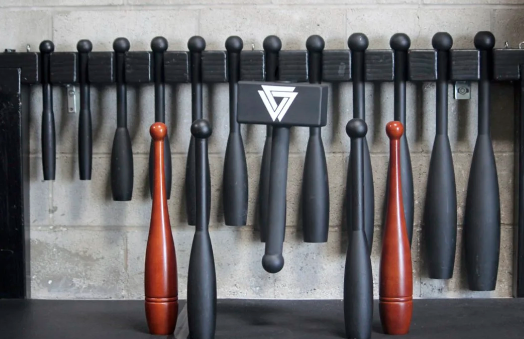
    Clubbells may look similar to Indian clubs or macebells, but they differ in size, weight, and design, allowing a broader range of dynamic movements.

    This style emphasizes rhythm and continuity rather than isolated repetitions. In a flow, movements transition smoothly from one pattern to another, which trains the nervous system to adapt and stabilize. Practitioners often describe it as movement meditation combined with functional strength work.

    How Does Clubbell Training Build Circular Strength?

    Circular strength refers to the body’s ability to generate, transfer, and control force through rotational or curved pathways rather than straight lines.

    In clubbell training flow, every swing, arc, and rotation teaches the body to manage torque from multiple angles. When a clubbell moves in an arc, the shoulder stabilizers, core musculature, and grip all engage simultaneously.

    Mill movements, a foundational clubbell exercise, demonstrate this concept clearly. As the club travels around the body in a controlled circle, it strengthens the connective tissues, tendons, and small stabilizing muscles.

    Over time, this develops a balanced kind of strength that enhances performance in sports, martial arts, and daily movement patterns.

    What Are the Benefits of Clubbell Flows?

    Clubbell flows train the body to move efficiently and powerfully. By developing rotational power, they enhance performance in any activity that requires twisting or turning, from throwing and striking to lifting and bending. Unlike conventional gym routines that isolate muscles, clubbell sequences engage multiple muscle chains at once.

    Other key benefits include:

    • Enhanced mobility in the shoulders, hips, and spine
    • Increased grip and forearm endurance
    • Strengthened joint integrity through dynamic load distribution
    • Improved coordination and proprioception
    • Mental clarity from rhythmic, flow-based practice

    Because clubbell work integrates strength and movement, it also improves recovery and balance across the body, helping prevent overuse injuries.

    How Do You Start a Clubbell Mobility Patterning Flow?

    Beginners are encouraged to start with light Indian clubs or lightweight clubbells to focus on precision and control before adding heavier resistance. A proper warm-up is essential, typically using joint rotations and pendulum swings to prepare the shoulders, elbows, and wrists.

    Foundational movements include the front pendulum, shield cast, and basic mill variations. These build the skill to manage rotational momentum safely, according to F3 Wellness Connections.

    Once the body adapts, the practitioner can progress to combination patterns, linking movements into continuous flows that challenge endurance and coordination. Visualizing the club’s circular path helps maintain consistency and rhythm throughout the session.

    What Are Mill Movements in Clubbell Training?

    “Mill movements” represent a cornerstone of clubbell training flow and are derived from traditional Indian club practices. The mill involves moving the club in a continuous circular path around the shoulder, typically in three main versions: inside mill, outside mill, and reverse mill.

    Each variation emphasizes control, timing, and precision. The inside mill guides the club inward across the body; the outside mill follows an outward path; the reverse mill retraces the pattern backward, requiring refined coordination. Performing these movements correctly creates powerful rotational tension across the shoulders, chest, lats, and core, directly enhancing rotational power.

    Common challenges include overextending the elbow or using momentum instead of muscle control. Starting slow and focusing on smooth arcs ensures the technique develops strength safely and effectively.

    How to Design a Clubbell Flow Routine

    A structured clubbell training flow sequence typically includes three phases: preparation, flow, and recovery.

    1. Preparation: Begin with joint mobility and light warm-up swings using Indian clubs to activate the shoulders and core.
    2. Flow Sequence: Choose a combination of three to five patterns, such as the pendulum, shield cast, and inside mill. Transition smoothly between movements to encourage coordination and rhythm.
    3. Recovery and Reset: After completing several rounds, practice slower movements or isometric holds to bring the heart rate down and reinforce body awareness.

    The key is fluidity rather than speed. Instead of counting repetitions, practitioners measure progress by how smoothly one movement transitions into the next. Over time, the flow can include more complex combinations or added weight to intensify resistance and improve adaptability.

    Example beginner combination: front pendulum → shield cast → inside mill → reverse mill → back to pendulum.

    Indian Clubs vs. Clubbells: What’s the Difference?

    While Indian clubs and clubbells share historical and mechanical similarities, they serve slightly different purposes. Indian clubs are typically lighter and shorter, designed primarily for coordination, mobility, and warm-ups. They trace back to ancient South Asian and Persian training systems used for combat preparation and rehabilitation.

    Clubbells, introduced in modern fitness contexts, feature a denser weight distribution toward the end of the handle. This design increases torque, making them ideal for building rotational power and functional strength rather than just mobility.

    Because they handle greater loads, clubbells challenge stabilizer muscles deeply within the joints, promoting durability and resilience, as per Physical Living.

    Many athletes use both tools complementarily: Indian clubs for mobility patterning, and clubbells for strength and endurance flow work.

    Tips for Safe and Effective Clubbell Training

    Safety and precision are essential in circular training. Here are key guidelines:

    • Maintain a firm yet relaxed grip to prevent excess tension.
    • Keep the spine tall and engage the core to control rotation.
    • Practice in open space to allow full range of motion.
    • Start with lighter weights and master the technique before progressing.
    • Focus on controlled breathing to maintain rhythm and focus.

    Avoid jerky or rushed movements, as fluid coordination is the foundation of strength in flow training. Filming practice sessions or working under supervision can help correct alignment and ensure safe progression.

    Building Lifelong Mobility Through Clubbell Training Flow

    Regular clubbell training flow practice cultivates a type of strength that extends beyond aesthetics, it supports functional movement, body awareness, and longevity.

    Through mill movements, rotational drills, and patterned sequences, the body learns to generate and absorb torque efficiently. These rotational skills translate to nearly every athletic and daily activity, from lifting and running to martial arts and dance.

    The influence of Indian clubs underscores the continuity between ancient movement traditions and modern fitness evolution. Both highlight the principle that strength should be fluid, adaptable, and resilient.

    Practicing clubbell flows develops not only muscular endurance but also mental clarity, encouraging a meditative focus on movement quality.

    By mastering the art of controlled rotation, practitioners strengthen connective tissues, increase joint range, and build functional rotational power that supports movement across all planes.

    In this way, clubbell training flow becomes more than an exercise, it’s a dynamic approach to sustaining mobility, strength, and harmony within the body over time.

    Frequently Asked Questions

    1. Can clubbell training flow help improve posture?

    Yes. The rotational and circular patterns strengthen the shoulders, back, and core, encouraging better alignment and reducing the tendency to slouch.

    2. How heavy should a beginner clubbell be?

    Most beginners start with a 5 to 10-pound clubbell to master technique and control before progressing to heavier options.

    3. Is clubbell training flow suitable for rehabilitation?

    It can be, when performed under professional guidance. The low-impact, circular strength patterns promote joint mobility and gentle tissue strengthening.

    4. How often should Clubbell Training be practiced?

    Practicing two to three times a week is ideal for developing flow, coordination, and endurance without overtraining.

    Source link

  • From Stuck to Unstoppable: Overcoming Creative Blocks and Regaining Your Flow

    From Stuck to Unstoppable: Overcoming Creative Blocks and Regaining Your Flow

    Introduction to Creative Blocks

    Creative blocks are a common phenomenon that can affect anyone, regardless of their profession or level of expertise. It’s that feeling of being stuck, unable to think of new ideas, or struggling to make progress on a project. Creative blocks can be frustrating, demotivating, and even affect one’s self-esteem. However, the good news is that they are not permanent and can be overcome. In this article, we will explore the concept of creative blocks, their causes, and most importantly, how to overcome them and regain your flow.

    Understanding Creative Blocks

    Creative blocks are a state of mind where an individual feels unable to access their creative potential. It’s as if the mind is blank, and no matter how hard they try, they cannot come up with new ideas or solutions. Creative blocks can manifest in different forms, such as writer’s block, artist’s block, or even a lack of inspiration in everyday life. They can be caused by various factors, including stress, fear of failure, perfectionism, and lack of motivation.

    Causes of Creative Blocks

    To overcome creative blocks, it’s essential to understand their causes. Some common causes of creative blocks include:

    • Fear of failure: The fear of not meeting expectations or failing to deliver can be a significant obstacle to creativity.
    • Perfectionism: The need to create something perfect can lead to analysis paralysis, making it difficult to start or continue working on a project.
    • Stress and burnout: High levels of stress and burnout can deplete creative energy, making it challenging to think outside the box.
    • Lack of motivation: A lack of motivation or interest in a project can lead to creative blocks.
    • Distractions: A distracting environment or lack of focus can hinder the creative process.

    Strategies for Overcoming Creative Blocks

    Fortunately, there are many strategies that can help overcome creative blocks and regain your flow. Some effective strategies include:

    • Taking breaks: Stepping away from a project and taking a break can help clear the mind and gain a fresh perspective.
    • Changing environments: A change of scenery can stimulate the mind and help overcome creative blocks.
    • Practicing self-care: Engaging in activities that promote physical and mental well-being, such as exercise, meditation, or spending time in nature, can help reduce stress and increase creativity.
    • Seeking inspiration: Exploring new sources of inspiration, such as books, movies, or conversations with others, can help stimulate the mind and overcome creative blocks.
    • Setting realistic goals: Breaking down large projects into smaller, manageable tasks can help reduce stress and increase motivation.

    The Power of Mindfulness

    Mindfulness is a powerful tool that can help overcome creative blocks. By being present in the moment and fully engaged in the creative process, individuals can tap into their inner sources of inspiration and imagination. Mindfulness practices, such as meditation and deep breathing, can help reduce stress and increase focus, making it easier to access the creative subconscious.

    Embracing Failure

    Embracing failure is another essential strategy for overcoming creative blocks. Rather than fearing failure, individuals can view it as an opportunity to learn and grow. By embracing failure, creatives can take risks, experiment with new ideas, and push the boundaries of their imagination. Remember, every failure is a stepping stone to success, and it’s often the mistakes that lead to the most innovative solutions.

    Building a Creative Routine

    Establishing a creative routine can help individuals stay focused and motivated. A daily or weekly routine that includes time for creative work, self-care, and inspiration can help maintain a sense of flow and reduce the likelihood of creative blocks. A creative routine can include activities such as journaling, drawing, or writing, and can be tailored to individual needs and preferences.

    The Importance of Community

    Having a supportive community can be a significant factor in overcoming creative blocks. Surrounding oneself with like-minded individuals who share similar interests and passions can provide a sense of belonging, motivation, and inspiration. Joining a creative group, attending workshops or conferences, or participating in online forums can help connect with others who understand the challenges and rewards of the creative process.

    Overcoming Procrastination

    Procrastination is a common obstacle to creativity, and overcoming it requires a combination of strategies. Breaking down large projects into smaller tasks, setting realistic goals, and creating a schedule can help individuals stay focused and motivated. Additionally, using techniques such as the Pomodoro Technique, which involves working in focused 25-minute increments, can help overcome procrastination and increase productivity.

    Conclusion

    Creative blocks are a natural part of the creative process, but they don’t have to be permanent. By understanding their causes, using strategies such as mindfulness, embracing failure, and building a creative routine, individuals can overcome creative blocks and regain their flow. Remember, creativity is a muscle that can be developed and strengthened with practice, patience, and persistence. With the right mindset and tools, anyone can overcome creative blocks and achieve their full potential.

    FAQs

    Q: What are creative blocks, and how do they affect individuals?
    A: Creative blocks are a state of mind where an individual feels unable to access their creative potential. They can affect anyone, regardless of their profession or level of expertise, and can manifest in different forms, such as writer’s block, artist’s block, or a lack of inspiration in everyday life.

    Q: What are the causes of creative blocks?
    A: Creative blocks can be caused by various factors, including fear of failure, perfectionism, stress and burnout, lack of motivation, and distractions.

    Q: How can I overcome creative blocks?
    A: Strategies for overcoming creative blocks include taking breaks, changing environments, practicing self-care, seeking inspiration, setting realistic goals, and embracing failure.

    Q: What is the role of mindfulness in overcoming creative blocks?
    A: Mindfulness is a powerful tool that can help overcome creative blocks by reducing stress, increasing focus, and accessing the creative subconscious.

    Q: How can I build a creative routine?
    A: Establishing a creative routine can include activities such as journaling, drawing, or writing, and can be tailored to individual needs and preferences. A daily or weekly routine that includes time for creative work, self-care, and inspiration can help maintain a sense of flow and reduce the likelihood of creative blocks.

    Q: What is the importance of community in overcoming creative blocks?
    A: Having a supportive community can provide a sense of belonging, motivation, and inspiration, and can help individuals stay focused and motivated. Joining a creative group, attending workshops or conferences, or participating in online forums can help connect with others who understand the challenges and rewards of the creative process.

    Q: How can I overcome procrastination?
    A: Overcoming procrastination requires a combination of strategies, including breaking down large projects into smaller tasks, setting realistic goals, creating a schedule, and using techniques such as the Pomodoro Technique.

  • Flow State: How to Get in the Zone

    Flow State: How to Get in the Zone

    As you have very likely experienced through mindfulness practice, our ordinary state is not one of flow, but of mind wandering—a state in which our attention drifts between the present moment and thoughts about past and future. When we practice presence, we begin regularly shifting our attention back to the present moment whenever our mind wanders.

    Turning attention into engagement is similar. Think of it as “directed presence” or as cultivating presence in the midst of the activities we engage in, whether it’s brainstorming with colleagues, working out, catching up with our partner, or putting our kids to bed. Psychologists have a name for this state of full engagement. They refer to it as “flow.”

    Mihaly Csikszentmihalyi, one of the first psychologists to carry out research on this experience, talks about it in his book Flow: The Psychology of Optimal Experience. He describes flow as “the state in which people are so involved in an activity that nothing else seems to matter; the experience itself is so enjoyable that people will do it even at great cost, for the sheer sake of doing it.”

    Linking Flow State and Mindfulness

    By definition, you can experience presence any time, anywhere: lying on the beach, walking to your car, or sitting in traffic. It can be either passive or active. Flow, on the other hand, is a purely active state that feels almost effortless. According to Csikszentmihalyi, the ideal conditions for flow arise when “both challenges and skills are high and equal to each other.”

    Many top athletes, artists, and intellectuals describe this experience. Greek tennis champion Stefanos Tsitsipas recently described the dramatic shift between when he’s playing normally, versus when he’s playing in a flow state: “It felt like I was in a cage and someone decided to unlock it. I suddenly felt free. Every decision I went for felt right,” he said. “It brings you to another level. You’re not playing with your skill any more, you’re playing with your soul.”

    Flow doesn’t always come naturally. We often have to resist the temptation of short-term pleasure to get there.

    Buster Williams, the legendary jazz bassist, recalls his experience playing with Miles Davis that led to a heightened state of engagement. “With Miles, it would get to the point where we followed the music rather than the music following us. We just followed the music wherever it wanted to go.”

    These descriptions might make flow sound mystical, but you don’t have to be a star tennis player or a legendary jazz bassist to experience a state of full engagement. Whether it’s on a challenging morning run, during an important PTA meeting, or while delivering a presentation at work, flow is something that everyone can access. For example, Csikszentmihalyi’s research found that full-time caregivers were just as likely to experience this state as athletes and musicians. One mother described a state of engagement happening as she worked with her daughter when she was discovering something new. “Her reading is one thing that she’s really into, and we read together. She reads to me, and I read to her, and that’s a time when I sort of lose touch with the rest of the world. I’m totally absorbed in what I am doing.”

    FOMO–The Flow of Missing Out?

    Csikszentmihalyi and fellow researcher Martin Seligman’s research illuminates the connection between flow and well-being. In one study, his team had 250 “high-flow” and 250 “low-flow” teenagers keep a record of their mood at specific times throughout the day. When the team examined the responses, the low-flow teens spent the bulk of their time in a state of disengagement, and were said to either be hanging out at the mall or watching television. The high-flow teens, by contrast, were more likely to spend their time developing hobbies, academic interests, and athletic abilities.

    How did these two groups score on measures of happiness? It turned out that the high-flow group outperformed the low-flow group on every measure of psychological well-being, except one. Seligman writes, “The exception is important: The high-flow kids think their low-flow peers are having more fun, and say they would rather be at the mall doing all those ‘fun’ things or watching television.”

    The only disadvantage of experiencing flow was the feeling of missing out on short-term pleasures. Pleasures that fail to produce long-term happiness. Two helpful conclusions can be drawn from this research.

    First, engagement is associated with an increase in happiness and well-being. The  more we live in the state of flow, the more we grow and  experience meaningful success. However, experiencing  mental health challenges like depression and anxiety may correlate to a reduced ability to access flow. In a 2022 study published in PLOS One, researchers examined 664 musicians (a population with high rates of anxiety) and the factors that made them more or less amenable to a flow state while performing. The researchers found that the more anxiety a musician reported, the less likely they  were to experience flow.

    Secondly, flow doesn’t always come naturally. We often have to resist the temptation of short-term pleasure to get there. When we do, we set the stage for this exquisite experience of total absorption in the task at hand.

    3 Essentials for Flow State

    As Csikszentmihalyi and subsequent flow researchers have identified, three main conditions are needed to experience flow:

    1. A clear and purposeful set of goals for your activity, which helps channel your attention.
    2. A subjective sense of balance between the challenging nature of the activity and your skill-level to navigate it, which leads to feeling absorbed in the activity.
    3. Clear, immediate feedback telling you how well you’re progressing and where you can improve.

    To create these ideal conditions for flow, reserve 10 minutes (or more) each day for engaged and purposeful work. Shut down or silence your phone, close your browser and email, and turn off the TV to eliminate digital distractions. Now, use those 10 minutes to focus on a project, task, or hobby you find difficult yet enjoyable. If you make a mistake or a result isn’t what you intended, instead of criticizing yourself, simply see it as feedback and adjust what you’re doing accordingly.

    You can also try alternating between periods of focused engagement and periods of rest and recovery. Notice when your thinking starts to slow down or when you’re no longer operating at peak levels of focus. Then shift your behavior by taking time to allow your mind to recharge: Walk around, stretch, or take a few deep breaths. Finally, rewire your brain to create this habit by savoring the feeling of giving your mind and body a well earned break. Neuroscientist Judson Brewer says it’s powerful when we start to notice: “What’s it like when I get caught up in thinking, compared to when I’m noticing these body sensations that are trying to tell us to do things, and just being with them? We just have to get out of our own way.”

    How to Get into a Flow State

    For some, flow comes almost naturally. Mozart started playing concerts at age six. Picasso painted his first masterpiece at eight. People like Mozart and Picasso don’t have to consciously train the skill of engagement. This experience of total absorption in the task at hand becomes a way of life early on.

    However, for most of us, discovering how to get into a flow state requires a bit more practice and reflection.

    The first step is to identify activities that offer the potential for flow. Here are three points to help you identify which activities, either at work or at home, may be conducive to a flow state for you: 

    1. Challenge: Remember that flow doesn’t arise when things are easy. It’s actually the opposite. Flow arises when we push our skills and abilities to their very limit. What are the activities that challenge you?
    2. Enthusiasm: Flow and lack of interest don’t go well together. You don’t have to love the activity that you are doing, but it helps if you choose something that brings you at least some level of enjoyment. What are the tasks you enjoy doing?
    3. Skill:  Flow requires a certain level of mastery. A beginner learning to play her first song on the piano is less likely to experience flow than a concert pianist with twenty years of experience. You don’t have to achieve complete mastery, but achieving a high level of skill is essential. What are your most highly developed or natural skills?

    Write your answers to these three questions on a sheet of paper. Then take some time to reflect on the activities in your life that allow you to experience these three qualities.

    Adapted from Start Here: Master the Lifelong Habit of Wellbeing by Eric Langshur and Nate Klemp, PhD.


    Source link

  • A Meditation to Get Into the Flow of Sensations

    A Meditation to Get Into the Flow of Sensations

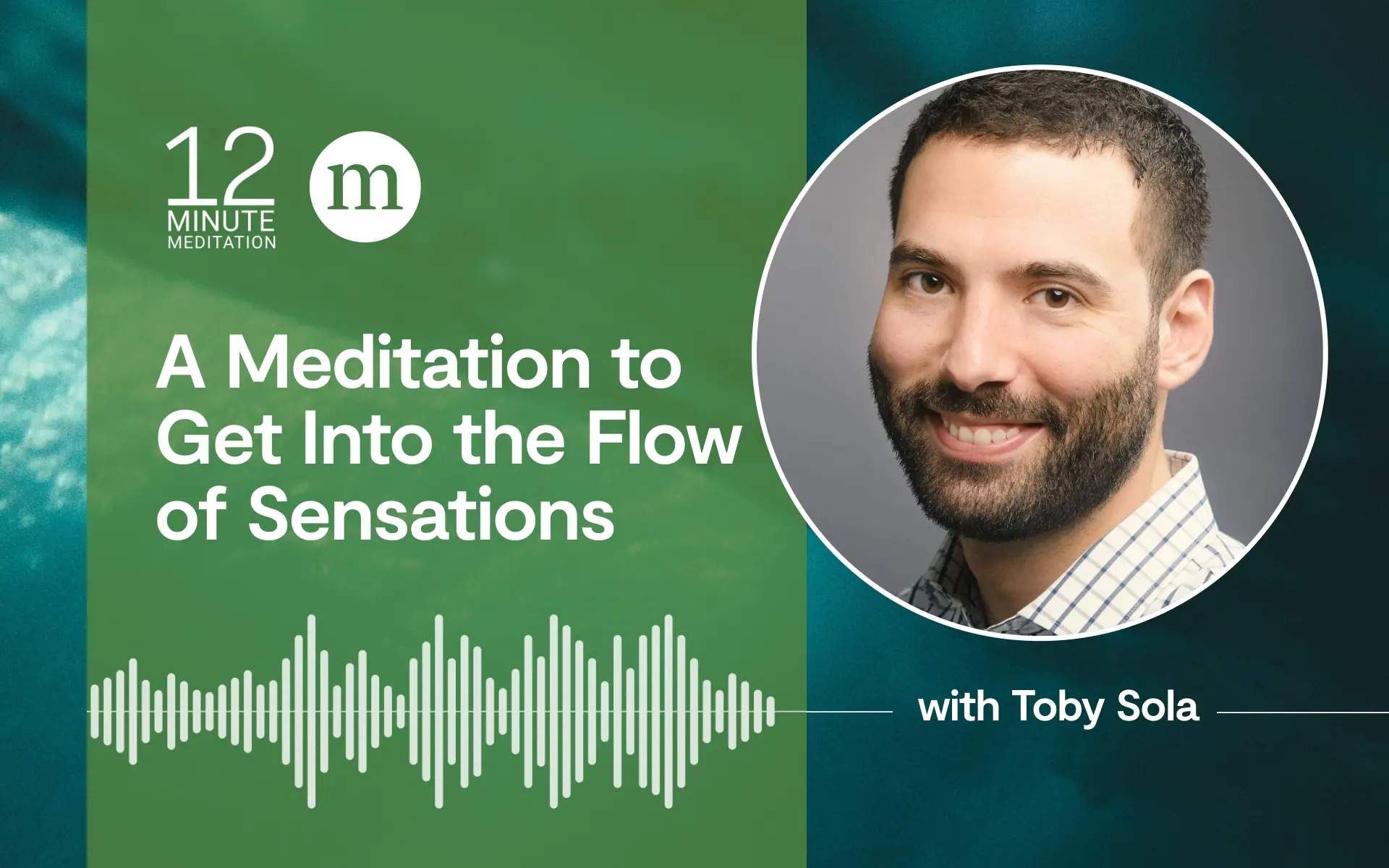
    This week, Toby Sola guides us through a practice to hone attention and tap into the effervescent joy of flow state.

    You may have heard of “impermanence” as an important theme in meditation practice. In this guided practice, Toby Sola introduces us to the ease of flow state with two simple but profound techniques: exploring impermanence directly by noticing changes in our body sensations, and using labels to hone concentration. 

    Note that this meditation includes long pauses of complete silence as part of the practice. If you want more time, feel free to pause the recording as you go.

    A Meditation to Get Into the Flow of Sensations

    Read and practice the guided meditation script below, pausing after each paragraph. Or listen to the audio practice.

    1. In this guided meditation, we’ll explore the theme of flow. Let your legs relax. Let your pelvis be heavy. Lengthen your spine and neck. Tuck in the chin a little. Relax the face. Relax the shoulders, arms, and hands. Relax the belly. 
    2. Next, bring your attention to any body sensations. Maybe you feel the touch of your clothes. The expansion and contraction of your chest as you breathe. Or an emotion in your belly. It’s all good, just bring your attention to whatever you’re feeling in the body. 
    3. If your attention is pulled to sounds, thoughts, or other experiences, that’s okay. The distractions don’t have to go away. Just let them come and go in the background of your awareness and bring the spotlight of your attention back to the body.
    4. As you focus on body sensations, see if you can notice any changes. For example, a body sensation beginning or ending. A body sensation getting more intense or less intense. A body sensation changing in size. A body sensation vibrating or undulating.
    5. Now, let’s add labels. A label is a word or phrase that briefly describes what you’re focusing on. There are many label systems, but here’s how we’ll use labels for this practice. As you focus on body sensations, if you’re noticing a change, say flow. And if you’re not noticing a change, say stable. You can say labels out loud or in your head. The pace should be steady and the tone should be calm and matter of fact. I’ll give an example of what it can sound like, and then give you a chance to try it for yourself. 
    6. If you’re spacing out a lot, speak the labels out loud. Spoken labels can help you keep concentration. Make sure to say either flow or stable about once every 15 seconds, depending on whether you’re noticing a change in your body sensations.
    7. Now, just keep practicing. Notice sensations, notice changes or sameness, and label them silently or out loud. (The audio for this meditation ends here.) 
    8. Continue noticing and labeling for another minute or two. Eventually, you should notice a sense of ease, like you’re bobbing gently in a flowing river of attention.
    9. When you’re ready, take a few breaths to conclude your practice, and gently return to your regular day.


    Source link

  • Steel Flow Pro – Presentation

    Steel Flow Pro – Presentation

    Product Name: Steel Flow Pro – Presentation

    Click here to get Steel Flow Pro – Presentation at discounted price while it’s still available…

    All orders are protected by SSL encryption – the highest industry standard for online security from trusted vendors.

    Steel Flow Pro – Presentation is backed with a 60 Day No Questions Asked Money Back Guarantee. If within the first 60 days of receipt you are not satisfied with Wake Up Lean™, you can request a refund by sending an email to the address given inside the product and we will immediately refund your entire purchase price, with no questions asked.

    (more…)