Tag: Find

  • 10 Best Yoga Poses for Stress Relief: Reduce Anxiety and Find Inner Peace (Target keywords: yoga poses for stress relief, reduce anxiety)

    10 Best Yoga Poses for Stress Relief: Reduce Anxiety and Find Inner Peace (Target keywords: yoga poses for stress relief, reduce anxiety)

    Stress and anxiety have become an integral part of modern life, affecting millions of people worldwide. The constant pressure to perform, the strain of daily responsibilities, and the uncertainty of the future can all take a toll on one’s mental and emotional well-being. Fortunately, there are many effective ways to manage stress and anxiety, and one of the most popular and beneficial methods is practicing yoga. Yoga poses for stress relief have been shown to reduce anxiety, promote relaxation, and improve overall mental health. In this article, we will explore the 10 best yoga poses for stress relief, and provide tips on how to incorporate them into your daily routine.

    Understanding the Benefits of Yoga Poses for Stress Relief

    Yoga is a ancient practice that combines physical postures, breathing techniques, and meditation to promote physical, mental, and emotional well-being. When it comes to reducing anxiety and stress, yoga poses for stress relief can be particularly effective. By practicing these poses, individuals can experience a range of benefits, including reduced muscle tension, improved mood, and enhanced cognitive function. Additionally, yoga poses for stress relief can help to slow down the heart rate, lower blood pressure, and promote relaxation, all of which can contribute to a sense of inner peace and calm.

    Top 10 Yoga Poses for Stress Relief

    1. Child’s Pose (Balasana): This pose is a great starting point for anyone looking to reduce anxiety and stress. By kneeling on the mat and stretching the arms out in front, individuals can release tension in the neck and back, and promote a sense of relaxation.
    2. Downward-Facing Dog (Adho Mukha Svanasana): This pose is a staple of yoga practice, and can help to reduce stress and anxiety by stretching the entire body, from the shoulders to the toes.
    3. Cobra Pose (Bhujangasana): This pose is a great way to open up the chest and shoulders, and can help to reduce tension and stress in the upper body.
    4. Cat-Cow Pose (Marjaryasana-Bitilasana): This pose is a gentle and flowing movement that can help to loosen up the spine and neck, and promote relaxation.
    5. Seated Forward Fold (Paschimottanasana): This pose is a great way to stretch the entire back side of the body, from the shoulders to the heels, and can help to reduce stress and anxiety.
    6. Plank Pose (Phalakasana): This pose is a great core strengthener, and can help to reduce stress and anxiety by engaging the entire body and promoting a sense of focus.
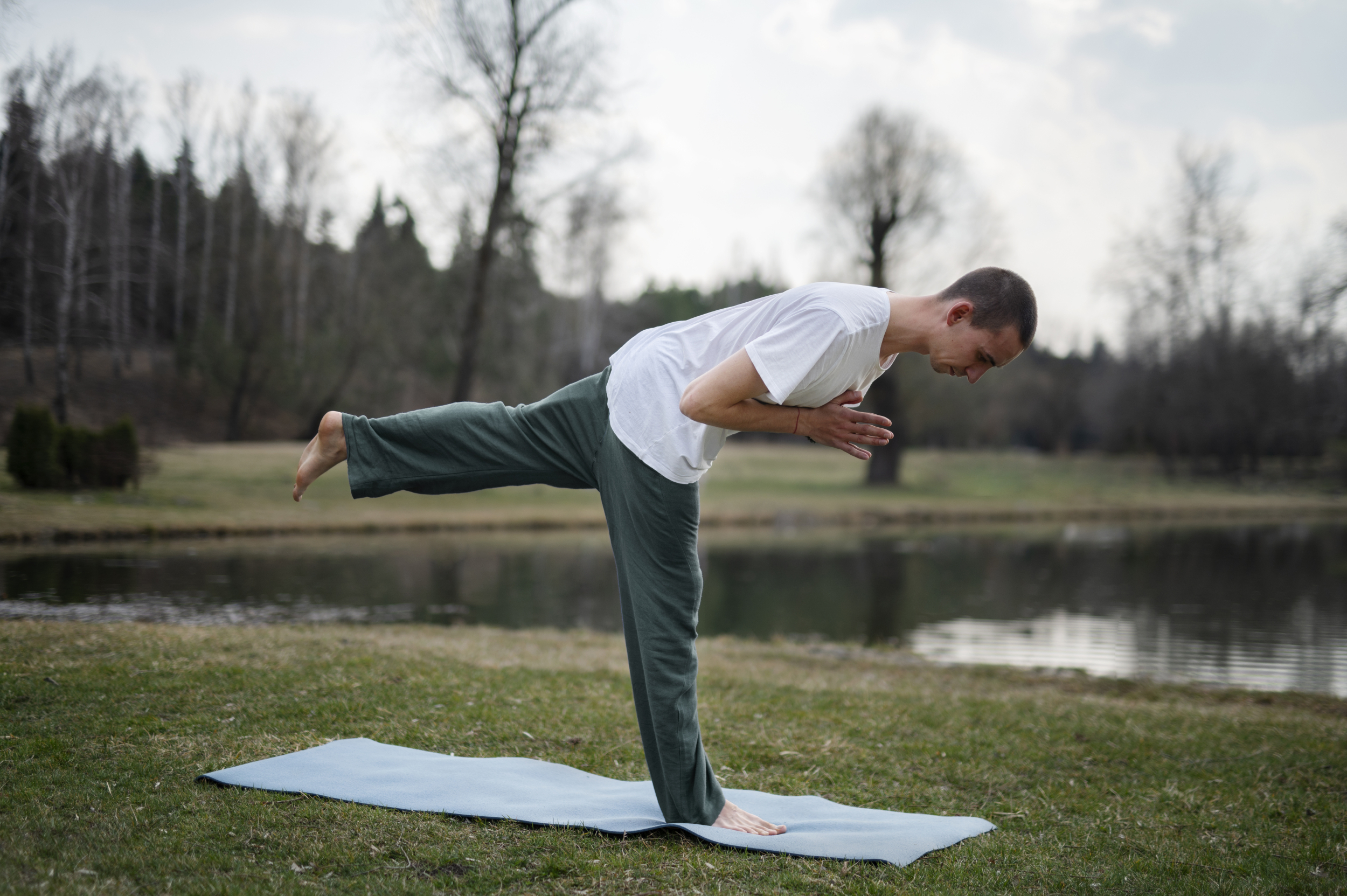
    7. Tree Pose (Vrksasana): This pose is a great way to improve balance and stability, and can help to reduce stress and anxiety by promoting a sense of grounding and calm.
    8. Seated Twist (Bharadvajasana): This pose is a great way to release tension in the spine and torso, and can help to reduce stress and anxiety by promoting a sense of relaxation.
    9. Legs Up The Wall Pose (Viparita Karani): This pose is a great way to invert the body and promote relaxation, and can help to reduce stress and anxiety by slowing down the heart rate and promoting a sense of calm.
    10. Savasana (Corpse Pose): This pose is a great way to end a yoga practice, and can help to reduce stress and anxiety by promoting a sense of deep relaxation and inner peace.

    Tips for Practicing Yoga Poses for Stress Relief

    When practicing yoga poses for stress relief, there are several tips to keep in mind. Firstly, it’s essential to listen to your body and only go as far as feels comfortable. secondly, try to focus on your breath and let go of any distracting thoughts or worries. thirdly, practice regularly, ideally at the same time each day, to experience the full benefits of yoga poses for stress relief. Lastly, consider incorporating other stress-reducing techniques, such as meditation or deep breathing, into your yoga practice to enhance the benefits.

    Reducing Anxiety with Yoga Poses for Stress Relief

    In addition to reducing stress, yoga poses for stress relief can also be highly effective in reducing anxiety. By practicing these poses, individuals can experience a range of benefits, including reduced symptoms of anxiety, improved mood, and enhanced cognitive function. Some of the most effective yoga poses for anxiety include Child’s Pose, Downward-Facing Dog, and Savasana, all of which can help to promote relaxation and reduce feelings of anxiety.

    Conclusion

    Yoga poses for stress relief are a powerful tool for reducing anxiety and promoting relaxation. By incorporating these poses into your daily routine, individuals can experience a range of benefits, including reduced muscle tension, improved mood, and enhanced cognitive function. Remember to listen to your body, focus on your breath, and practice regularly to experience the full benefits of yoga poses for stress relief. Whether you’re a beginner or an experienced yogi, these poses can help you to reduce anxiety, find inner peace, and improve your overall mental health.

    Frequently Asked Questions

    Q: What are the best yoga poses for stress relief?
    A: The 10 yoga poses outlined in this article, including Child’s Pose, Downward-Facing Dog, and Savasana, are all highly effective in reducing stress and anxiety.

    Q: How often should I practice yoga poses for stress relief?
    A: Ideally, practice yoga poses for stress relief at the same time each day, ideally 2-3 times per week, to experience the full benefits.

    Q: Can yoga poses for stress relief help with anxiety?
    A: Yes, yoga poses for stress relief can be highly effective in reducing anxiety, and can help to promote relaxation, improve mood, and enhance cognitive function.

    Q: Do I need to be flexible to practice yoga poses for stress relief?
    A: No, you don’t need to be flexible to practice yoga poses for stress relief. These poses are designed to be accessible to everyone, regardless of age or ability.

    Q: How long should I hold each pose?
    A: Hold each pose for 3-5 breaths, or as long as feels comfortable, to experience the full benefits of yoga poses for stress relief.

    Q: Can I practice yoga poses for stress relief at home?
    A: Yes, you can practice yoga poses for stress relief at home, using online tutorials or following along with a yoga video. However, it’s recommended to practice with a qualified yoga instructor to ensure proper alignment and technique.

    10-best-yoga-poses-for-stress-relief-reduce-anxiety-and-find-inner-peace-target-keywords-yoga-poses-for-stress-relief-reduce-anxiety

  • The Nature Remedy: Find Freedom from Tech Overload

    The Nature Remedy: Find Freedom from Tech Overload

    In the summer of 2014, I participated in the first-ever digital detox retreat, Camp Grounded in Northern California.

    My camp name was Momma Zen. Each morning, I led mindfulness practice to ease the adult campers’ edgy tech cravings, guiding them through simple breath work to settle their restless minds.

    I had also joined a songwriting “play-shop.” I’d never written a song, but how hard could it be?

    Under a majestic canopy of towering redwoods, I was awkwardly front and center on the roughly hewn wooden stage, moments from belting out my just-written song “Digital Distraction Brings NO Satisfaction.” (Yes, inspired by the Stones’ classic.)

    On that last night, everyone was gathered beneath those grand old trees for our closing celebration. Unexpectedly, the young crowd of Silicon Valley techies stamped their feet loudly and cheered wildly.

    I mumbled to the musicians, “Can you play some slow funk?” Honestly, I had no idea what that was. Fortunately, they did. Then we all sang together, belting out the words:

    Digital Distraction Brings … NO Satisfaction

    Why does life often feel so empty
    When your digital feed never ends?
    Why is the night so long and lonely
    When you’ve got five thousand “friends”?

    Isolated inside children; families gone astray
    All sadly disconnected
    Forgotten how to play

    Selfies, trolling, swiping, scrolling
    Hey my friends, hear what I say
    Endless digital distraction
    Brings NO true satisfaction.

    We are living, breathing humans
    Who long to be seen
    Truly connected … heart to heart
    Face to face … not on a screen!

    Here in the redwoods, happy just to be
    Playing like kids again
    Joyously screen-free!

    That night we celebrated being free from all those notifications, the pinging and buzzing of digital demands. We were simply present. And it was glorious.

    The Lure of Digital Distraction

    You’ve probably felt that pull, too, right?—the urge to check your phone, the compulsion to scroll endlessly, the creeping exhaustion that comes from too many hours in front of a screen. Digital overload is real, and it’s quietly seeping into every corner of our lives.

    Here’s some good news: If you are already a meditator, or interested in mindfulness, you have a distinct advantage in finding freedom from tech overload.

    Dr. Michael Rich is author of The Mediatrician’s Guide and a Harvard University pediatrician who directs the Digital Wellness Lab at Boston Children’s Hospital. He has spent years studying the effects of digital media on our well-being (and is a major contributor to my book, Less Screen More Green). Threaded through all of his robust research are two major recommendations.

    Digital overload is real, and it’s quietly seeping into every corner of our lives.

    Here’s some good news: If you are already a meditator, or interested in mindfulness, you have a distinct advantage in finding freedom from tech overload.

    Make Friends With Boredom

    Dr. Rich advises not to fill most of our waking hours with digital media:

    Bring back boredom! Perhaps the most difficult challenge to overcome in finding healthier alternatives to screens is our cultural aversion to boredom. Locked in our downward gaze, we no longer look at the world around us, or talk to each other. It’s easier to absorb the continuous feed of stimulus on our phones.”

    Balance screentime with more greentime

    “For many of us, our focus on screens has distanced us from the natural world. Albert Einstein said it well: ‘Look deep, deep into nature, and you will understand everything better.’ Time in nature is often prescribed by physicians aware of the many benefits to human health, and breaking free from tech overload. Research shows that even modest steps to spend more time outdoors can make a difference in our media use, and in our health and well-being.”

    When we keep these two maxims in mind—more boredom, more greentime—it’s easier to guide our choices as we take steps to bring more balance and sanity to our tech usage.

    Digital Detox, Made Fun: 4 Steps to Mindful Tech Use

    Dr. Rich offers four simple reminders for those moments when the pull of digital consumption feels intense or overwhelming:

    Be mindful. Use our powerful digital tools for what they do well and turn them off when they are not the best tool for the activity.

    Be balanced. Intentionally balance your screen use and non-screen activities.

    Be bored. Shake off the tendency to default to a screen and use the discomfort of nothing to do and the available space in your attentive mind to imagine the new.

    Be present. Consciously put down your devices so their near-infinite connectivity with strangers does not undermine our deep and sustaining connectedness with those we love.

    4 Practical Techniques for Freedom From Tech Overload

    1. Recognize the Early Warning Cues

    Just like we recognize hunger or thirst, we can learn to recognize the subtle (or not-so-subtle) signs of tech fatigue:

    • Eyes feeling dry or strained?
    • Headaches creeping in?
    • A vague sense of restlessness or irritability?
    • That odd, disoriented feeling when you finally look up from your screen?

    These are your body’s way of whispering, “Hey, I need a break.” Listen.

    2. Try the 20-20-20 Remedy

    One simple way to protect your eyes and refocus your mind is the 20-20-20 rule:

    Every 20 minutes, look at something 20 feet away for 20 seconds.

    Your eyes will thank you, and so will your nervous system.

    3. Savor the Nature Remedy

    If you take away nothing else from this article, take this: Less screen, more green.

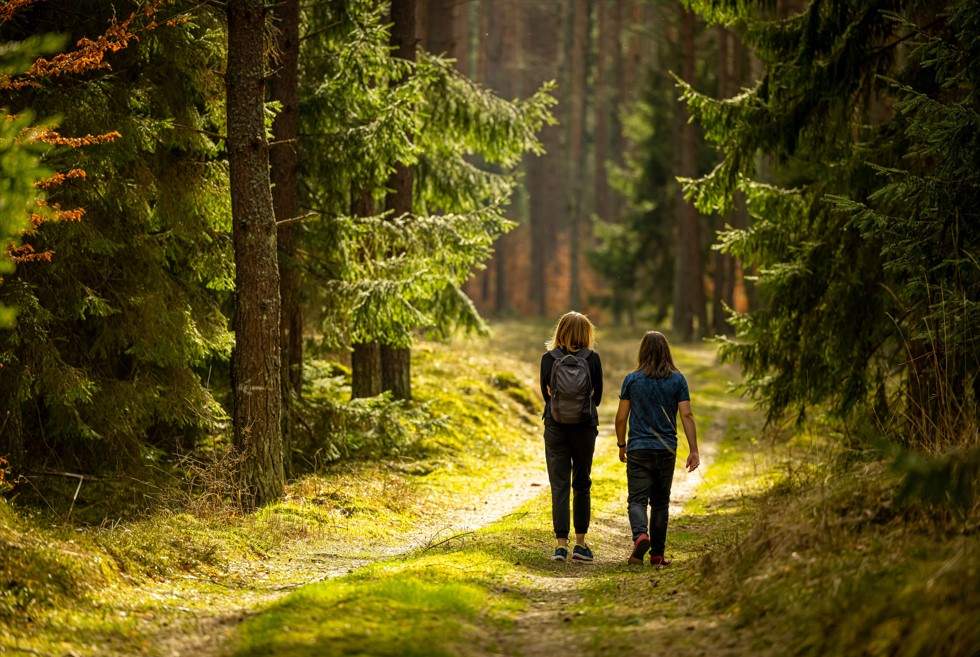
    Even if you live in the middle of a bustling city, find ways to step outside.

    • Drink your morning tea on the balcony.
    • Walk to a park on your lunch break.
    • Sit under a tree and just be.

    There’s something about fresh air, the movement of leaves, the simple act of looking at the sky—it resets us in a way that no digital escape ever can.

    4. Create Your Tech-Free Sanctuary

    Choose one place in your home to be completely screen-free. Maybe it’s your bedroom. Maybe it’s the dinner table. Maybe it’s that cozy corner where you like to read or meditate.

    Guard this space like a sacred garden, a refuge from the endless digital noise.

    Your Invitation to Healthier Tech Habits

    This isn’t about guilt. It’s not about demonizing technology or vowing to live like your great-grandparents. It’s about finding balance.

    Pick one of these steps and try it today. Just one.

    • Set a timer for the 20-20-20 rule.
    • Take five minutes to step outside.
    • Decide that, tonight, the phone stays out of the bedroom.

    And then, notice. Notice how you feel. Notice if you breathe a little easier. Notice if you see the people around you just a little more clearly.

    Notice how you feel. Notice if you breathe a little easier. Notice if you see the people around you just a little more clearly.

    If you do, I’d love to hear about it. Share your experience with us: What’s the hardest part of unplugging for you? What little changes have helped? Let’s start the conversation.

    And stay tuned for Part Two, where we’ll explore how to bring mindful tech habits into your workplace. Because if there’s one thing I know for sure, it’s that we can find freedom from tech overload. And it begins—always—with awareness.

    Excerpted with permission of the author from Less Screen More Green: Finding Freedom with The Mindful Tech Plans™ by Kerry Crofton, PhD. Revised and updated second edition (2025).


    Source link

  • 4 Ways Mindfulness Helps Us Find Our Way Through the Dark

    4 Ways Mindfulness Helps Us Find Our Way Through the Dark

    No matter what your political persuasion is, it’s hard to avoid the feeling that we’re living in a time of chaos, pain, and carnage—with many people saying it’s a “dark” time that has made them feel anxious and helpless. Many of us feel we want to do something, but we don’t know what to do on the larger stage and we’re not sure what to do for ourselves and those around us. Many people have raised the question of whether and how meditation, mindfulness, and awareness can help us right now. It can seem almost puny against such massive forces.

    If it couldn’t help us now, though, what good would it be?

    Before helping us with what to do, though, mindfulness first helps us with how to be. And it seems that’s where we need to start. When times are tough, we need to go back to square one.

    Before helping us with what to do, mindfulness first helps us with how to be. That’s where we need to start.

    4 Ways Mindfulness Can Help Us Right Now

    1. Be in the Body

    One of the first facets of mindfulness meditation practice to appreciate, especially in times of great stress and fear, is that it grounds us in our body. When we take in difficult news, either near at hand (a loved one dying of cancer) or from afar (such as news of war over the internet or on TV), our connection to our body can weaken. It can even feel like we leave our body. In such a condition, freed from the gravitational pull, our mind begins to race. We’re more influenced by what our mind projects than by our immediate perception of our surroundings. When our mind is galloping off, even just a little close attention to our breathing while feeling the weight of our body pulling us to earth can bring our mind back home.

    One of the phenomena that takes us away so easily, of course, is media. It’s worthwhile (as many of you probably already do) to go on a news diet. Oliver Burkeman, author of Meditations for Mortals—who explores the relationship between how we spend our time and our well-being—counsels us to pay close attention to the time we spend digesting “news.” News, often in the guise of social media nowadays, is designed to activate our emotions more than inform us of need-to-know information. When we start to leave our body in response to “news,” it’s worthwhile to return to the perception of our body, and to appreciate our surroundings. As we notice a bird alighting on a branch, we can absorb a different sense of time: the tree and the bird are not part of the next news cycle. In terms of keeping up with things, Burkeman counsels being “news-resilient” by returning the news to a place where it’s just something you dip into rather than wallow in, and keeping up with what’s going right as well as what’s going wrong. I would add to engage in mindful reading: searching out reading, listening, and viewing that is reflective and thoughtful, that can generate insight, not just fear and panic.

    2. Rest in Choiceless Awareness

    The grounding quality of mindfulness—noticing the details inside and out—opens us up to our innate awareness, a more panoramic view that’s not caught up in chasing down every stray thought. As a result, we can be less reactive, and take a bigger view of space and a longer view of time. This deep kind of awareness is said to be choiceless: we couldn’t be rid of it if we tried.

    Awareness sees our anxiety but is not itself anxious. It manifests a mountain-like settledness, as well as confidence or courage that knows that no matter what happens, awareness goes on. We can rest in it.

    Being grounded in awareness is not about being detached, unfeeling, and uncaring. In fact, it’s awareness that allows us to truly feel—to have a natural reaction to something unpleasant or off-putting, such as a raving egomaniac talking about taking chain saws or wood chippers to things that help vulnerable people—and yet have space and sense of humor around the feeling. Awareness sees our anxiety but is not itself anxious. It manifests a mountain-like settledness, as well as confidence or courage that knows that no matter what happens, awareness goes on. We can rest in it.

    3. Feel the Wonder of Not Knowing

    When we’re sure that we know something, our awareness becomes clouded. Fresh perceptions are filtered through our fixed knowledge. Instead, like the great Zen masters, artist Maira Kalman, one-time Mindful contributor and author most recently of Still Life with Remorse, abides in “not knowing.” It is the source of her artistic practice. As she said to me in an interview, “At the end of the day or the end of a life, everybody ends up saying, ‘I don’t know what I know.’” Rather than responding to “the noise we’re bombarded with every day by those who are trying to unnerve us for our money, forcing us to form reactions and opinions,” we can rest in not knowing. When we allow ourselves to question what we know, and shy away from clinging to fixed opinions, the inquisitive quality of our awareness takes over and we perceive the world more freshly. We can be awestruck by the world’s magic.

    4. Cultivate Compassion and Community

    We can also be awestruck by the world’s pain and horror, and this is where the doing part comes in. Precisely what we do and how we do it naturally varies greatly depending on circumstances. Just as awareness is inherent, so is the basic warmth of compassion, our fellow feeling. It can be obscured, but it’s there for us all.

    Just as awareness is inherent, so is the basic warmth of compassion, our fellow feeling. It can be obscured, but it’s there for us all.

    As we become grounded in our body and rest in awareness, touching in with that warmth can guide us to what we can actually do, where we might have some agency. Not knowing brings with it a humbleness that tells us we can’t fix everything. Since we can’t be sure how things will turn out, we don’t cling to certain outcomes. The great heroes who have championed the causes of the oppressed tend to come from this stance, willing to plant seeds in a garden whose harvest they may never see and committed to—as the popular African-American expression goes—Making a Way Out of No Way.

    Whatever we do, one thing we do know in the deep fiber of our being is that we’re connected unavoidably to others, so finding community is never a bad place to start.


    Source link

  • This Common Lifestyle Habit In Preteens May Trigger Manic Symptoms, Researchers Find

    This Common Lifestyle Habit In Preteens May Trigger Manic Symptoms, Researchers Find

    As screen time continues to surge, so do concerns about its effects on both physical and mental health. Although this lifestyle habit has adverse effects on people of all ages, a recent study has turned the spotlight on preteens, suggesting that excessive screen use through texting, watching videos, or playing video games could trigger manic symptoms in them.

    A recent large-scale study involving 9,243 children aged 10 and 11 has shed light on the potential mental health risks of excessive screen use. Published in Social Psychiatry and Psychiatric Epidemiology, the research explored how heavy engagement with social media, video games, texting, and video streaming impacts young minds.

    To better understand the link between screen time and mental health, researchers of the latest study analyzed data from the Adolescent Brain Cognitive Development (ABCD) study, the largest long-term study of brain development in the United States. They examined the typical screen habits of thousands of preteens, investigating whether excessive use of social media, video games, and texting was associated with manic or hypomanic symptoms.

    The results showed that those with excess screen time were at a greater chance of developing “inflated self-esteem, decreased need for sleep, distractibility, rapid speech, racing thoughts, and impulsivity – behaviors characteristic of manic episodes, a key feature of bipolar-spectrum disorders.”

    “Adolescence is a particularly vulnerable time for the development of bipolar-spectrum disorders. Given that earlier onset of symptoms is linked with more severe and chronic outcomes, it’s important to understand what might contribute to the onset or worsening of manic symptoms in teenagers,” said Dr. Jason Nagata, first author of the study in a news release.

    The researchers also noted that American adolescents now spend an average of over eight hours a day on screens, double the pre-pandemic average, coinciding with a rise in mental health concerns.

    “This study underscores the importance of cultivating healthy screen use habits early. Future research can help us better understand the behaviors and brain mechanisms linking screen use with manic symptoms to help inform prevention and intervention efforts,” said co-author Kyle Ganson.

    Although screen time offers educational benefits, Dr. Nagata cautions that parents should be mindful of potential risks and know the importance of balancing its use to protect mental health. “Families can develop a media plan which could include screen-free times before bedtime,” Dr. Nagata added.

    Source link

  • Feeling Groggy After A Full Night’s Sleep? A Doctor Explains Simple Math To Find Your Ideal Bedtime

    Feeling Groggy After A Full Night’s Sleep? A Doctor Explains Simple Math To Find Your Ideal Bedtime

    You get a full night’s sleep but still wake up feeling groggy, while a short nap leaves you feeling refreshed. Ever wondered why? It could be because your sleep schedule is disrupting your body’s natural rhythm, either by going to bed at the wrong time or waking up in the middle of a sleep cycle.

    It’s not just about going to bed earlier; it’s about syncing your sleep schedule with your body’s natural sleep cycle, suggests Dr. Charles Puza, a New York City dermatologist who shares sleep tips on Instagram.

    “Ever wake up from 8+ hours of sleep and still feel groggy? It’s because you’re going to bed and waking up at the wrong time. You should be timing your sleep to align with natural sleep cycles of around 90 minutes,” Dr. Puza wrote in a recent Instagram post.

    While getting eight hours of sleep is important, researchers also suggest that the timing of your bedtime and waking up after completing natural sleep cycles are key to feeling truly rested.

    Natural sleep cycles last around 90 minutes, and throughout a typical night’s sleep of 7.5 hours, we go through about five full cycles. Each cycle includes different stages, from light sleep to deep rest. To feel refreshed after a night’s sleep, a person needs to have complete undisturbed stages of these cycles.

    However, when you go to bed late and depend on an alarm to wake up at a set time, you might be interrupting the cycles, preventing you from reaching deep sleep stages, essential for feeling truly rested. This disruption results in fragmented sleep, which has been linked to a range of negative effects, from increased stress and mood swings to poor overall health and well-being.

    To avoid this, it’s crucial to understand your body’s ideal bedtime that aligns with the natural sleep cycle. Dr. Puza offers a simple formula for those looking to get a restful night’s sleep:

    “You need to decide if you need five cycles or six cycles of sleep overnight. Factor in about 15 minutes to fall asleep,” he said.

    For those wanting five cycles need to simply subtract 7h45m others or 9h15m from your wake-up time to find your ideal bedtime.


    Source link

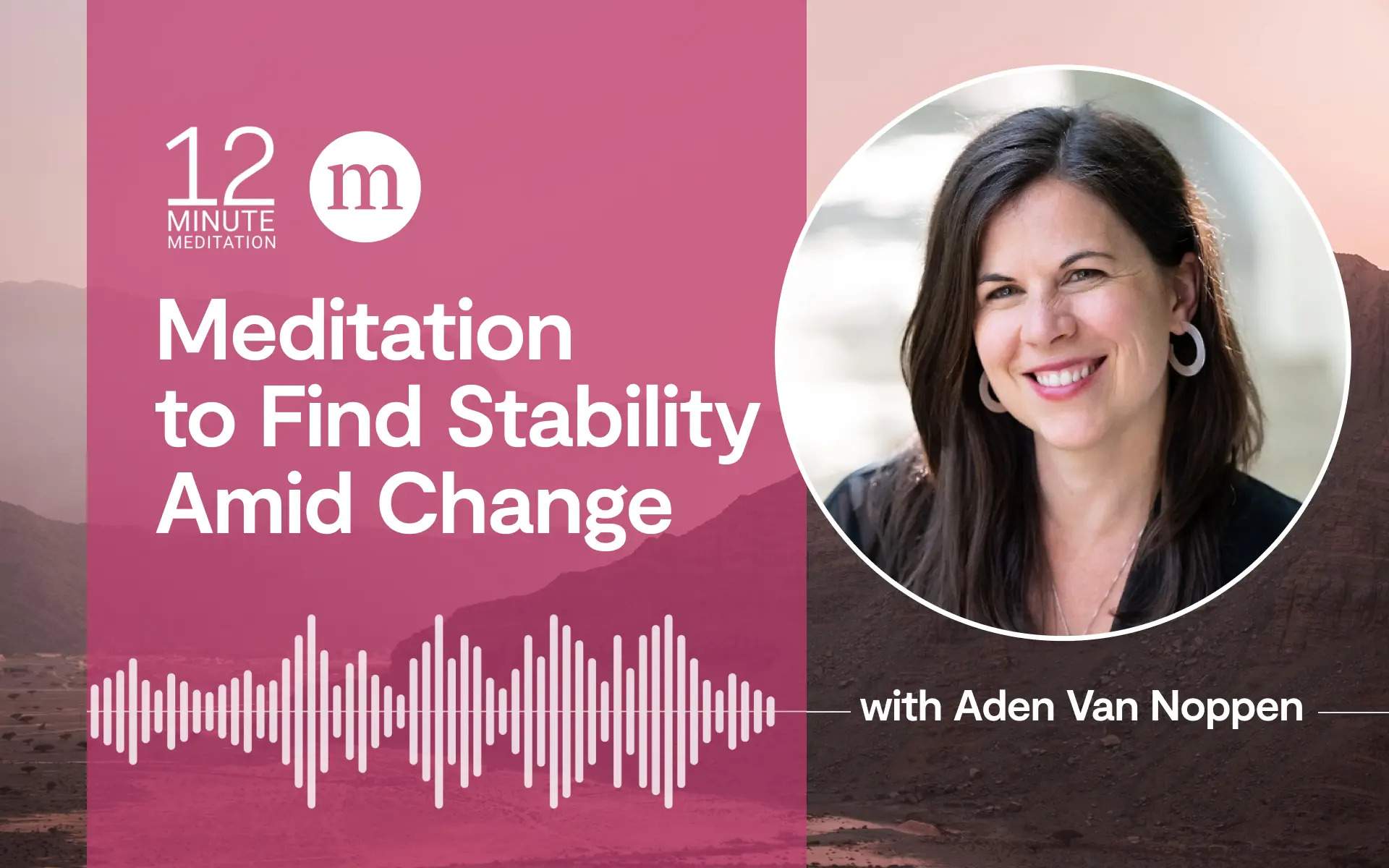
  • Find Stability Amid Change With A 12-Minute Meditation

    Find Stability Amid Change With A 12-Minute Meditation

    In this meditation on impermanence, Aden Van Noppen reminds us that when the outside world feels overwhelming, we can often find inner calm by coming back to the breath.

    We live in a world of constant change and this week, Aden Van Noppen invites us to find what roots us. Aden is the founder and executive director of Mobius, a collaboration between leading neuroscientists, meditation teachers, and technologists to work toward the creation of digital technology that enhances our individual and collective well-being. Aden is also one of the 10 powerful women of the mindfulness movement 2022, and here she guides a meditation on impermanence. 

    A 12-Minute Meditation to Find Stability Amid Change

    1. Let’s begin with a little grounding. Gently move your attention to the place where you are most rooted to the Earth. Whether that’s the bottom of your feet or where your body rests on a chair or a cushion, take a moment to just rest your attention there. Feeling the rootedness. Feeling the ground, the floor, the chair, the cushion holding you, holding your weight, grounding you. 
    2. Gently move your attention toward your breath. Take a relaxed breath, feeling the in- and out-breath like a wave. A wave of breath in and the wave as it moves out with your breath out. And just like the quality of a wave, it’s washing over you and through you. You don’t have to control it. In and out, without controlling it. 
    3. And just like a wave, no two breaths are the same. And just like every moment, no two moments are the same. Let this breath be a reminder of impermanence. As you breathe in, you can gently say to yourself, “This breath.” Each moment, each breath is a chance to begin again. “This breath.” Just like a wave. 
    4. As you take in your next breath, imagine the feeling of soaking up the nutrients of that breath, the life force of that breath, and with your out-breath, letting go. In—”Soaking up.” Out—”Letting go.” “Soaking up. Letting go.” Just as we do over and over in our lives. “Soaking up. Letting go. “ And combining them: “This breath. Letting go.” 
    5. As we transition to close this meditation, gently move your attention away from the wave of your breath and back to the rootedness of your seat, of your feet, wherever your weight is held most by the ground. 
    6. Even with the constant change, the moving in, the moving out, we always have this rootedness. It is always available to us, to remind us that we are held amid the change in our lives moment to moment. 
    7. When you’re ready, you can bring your attention back into the room and gently open your eyes. Thank you for sitting with me.  

    Never Miss a Meditation

    Enter your email below to get new podcast episodes delivered straight to your inbox! You’ll also get insights from expert mindfulness teachers and exclusive deals on Mindful Shop products, events, and more.

    The Power of Sustainable Self-Care 

    Shelly Tygielski explores how consistently showing up for yourself first lays the foundation for our life’s purpose—showing up for others—and how to create your own self-care practice.
    Read More 

    • Shelly Tygielski
    • June 17, 2022

    10 Powerful Women of the Mindfulness Movement: 2022 

    In our fourth annual focus on women leaders of the mindfulness movement, ten women share what they’ve learned about living a life of meaning and purpose and how cultivating happiness fits into the equation.
    Read More 

    • Amber Tucker, Ava Whitney-Coulter, Kylee Ross, Oyinda Lagunju, and Stephanie Domet
    • July 16, 2022


    Source link

  • How a Mindfulness Retreat for BIPOC Helped Me Find Hope

    How a Mindfulness Retreat for BIPOC Helped Me Find Hope

    When youth worker Troy Landrum struggled with burnout and imposter syndrome, a mindfulness retreat for educators that are Black, Indigenous, and People of Color helped him find his way back to himself and his community.

    A year ago, exhaustion decorated my bones like a graffiti-tattered wall. For 10 years I had worked in youth development and education, specifically focused on young people who were incarcerated or marginalized in another way. I had struggled with bouts of secondhand trauma, survivor’s guilt, and hopelessness for the future of our young folks. I had seen the struggles of these young people as they tried to survive a justice system and various institutions that are not made to meet their needs. All of this work had led to deep emotional wear and tear as I sacrificed myself to the point of burnout

    During that time, I advocated and supported young people and their families through the legal system, employment, education, and mentored them through hardship. At the time, I wasn’t ready to recognize that, just as their motivation and hope had to come from within them, my motivation and hope had to come from within me. That sense of hope moves us to seek out the help and support that we need, to be honest with others and ourselves about our personal struggles, to believe in the sense of community that will bring about healing, and to act on our plans for our futures. I knew my job was to remind young people that they are the captains of their ships and the writers of their own stories. It was vital for them to be surrounded by a village that would support them to believe this about themselves and help them live into that belief. I wasn’t ready to see that the same was true for me.

    I knew my job was to remind young people that they are the captains of their ships and the writers of their own stories. It was vital for them to be surrounded by a village that would support them to believe this about themselves and help them live into that belief. I wasn’t ready to see that the same was true for me.

    Then I went to my first meditation retreat for Black, Indigenous, and People of Color (BIPOC) educators with the non-profit Space Between, which supports schoolchildren by integrating mindfulness practices into school communities.

    Taking My Place at the Retreat

    As I prepared myself for the retreat and a full day of reconnecting to my body, I hoped I’d find a sense of optimism I’d lost to feel better prepared to continue the work of educating young people. At first, I questioned my right to take up space in a place for educators, a role that I felt to be sacred.

    I grew up in a family full of teachers and principals, so I understand the commitment of these roles. To me, an educator meant a teacher, professor, or an administrator—someone committed to specifically educating youth and preparing them for higher education. As a youth worker who went in and out of these young people’s lives—staying just long enough to get them out of trouble or to complete an internship—I felt like an imposter. From the stories I had heard from my mother and grandmother after full days in the classroom, I felt that my work didn’t compare. I was exhausted, but they had it worse.

    It was a place that I could instantly lay down whatever heaviness I had brought with me on the yoga mats and bean bags. I felt an instant peace.

    It was a Saturday morning when I walked into the retreat and was greeted by the smell of coffee and the smiles of some familiar faces. I felt a warmth that I think only BIPOC people could recognize, a silent language that gives a nod of recognition that we are in a similar fight to be seen as fully human in society. It was a place that I could instantly lay down whatever heaviness I had brought with me on the yoga mats and bean bags. I felt an instant peace.

    The facilitators gave us time to eat snacks, connect with other folks, and get situated for a day of connection with fellow sojourners, to ourselves, and to the present moment. We sat down in a big circle of about 10 people from all across the state of Washington and took turns introducing ourselves. I went last. As everyone presented their occupations, their exhaustion, their burdens,  the imposter syndrome rolled off of me like beads of sweat in a sauna.

    Reconnect With Love

    The time we spent together was a meditative rest for our souls, between the sweet rhythmic sounds of singing bowls, meditative walks, the connectedness of our weary voices through profound conversations. It turned out to be a place for those who self-identified or wanted to identify as lights in dark tunnels for others. Here, I understood that there are so many different contacts with young people, so many different ways of connecting oneself to education, so many ways of defining “educator.” The retreat wasn’t exclusionary; it was a place for those who needed to be reminded of the light that they had inside them.

    We had all come to the retreat exhausted, no matter our occupations or connection to educating young people. I’d worn that exhaustion like a badge of honor. Maybe it was to prove that I belonged, or maybe it was a symptom of the myriad injustices society has placed on BIPOC folks, to live our lives as the burden bearers of a system we never created. 

    What this time brought to me was revolutionary to my mind, body, and soul. That day whispered into my ears and said, “Rest and bring all of who you are, no matter who you are. Live out this day and the rest of your days loving yourself, nurturing yourself, listening to yourself so that you may love others just as you love yourself and serve as a reminder of that love for those around you.”


    Source link

  • Curious About Your Aging? Here’s A Simple Test To Find Out

    Curious About Your Aging? Here’s A Simple Test To Find Out

    The speed at which a person walks and their muscle strength may indicate how well they are aging. However, researchers now say there’s an even simpler and more effective test for assessing aging: standing on one leg.

    According to the latest study published in the journal PLOS ONE, balance is a better measure of biological aging than muscle strength or gait.

    In the study, researchers tested 40 healthy individuals aged over 50 to assess various aspects of aging. The participants were divided into two equal groups: those under 65 and those 65 and older.

    Participants took walking, balance, grip strength, and knee strength tests. For the balance assessments, they stood on force plates under different conditions: with both feet on the ground and their eyes open or closed, and on one leg (dominant and non-dominant) with their eyes open. During each balance test that lasted 30 seconds, the participants were allowed to position the lifted leg as they wished.

    The researchers noted that out of all the tests, the balance test, especially tested with the nondominant leg showed the highest rate of decline with age.

    There were no age-related declines in strength tests that were specific to sex, indicating that participants’ grip and knee strength declined at a similar rate regardless of gender. Also, the gait and balance test showed no significant difference in the sexes.

    “Balance is an important measure because, in addition to muscle strength, it requires input from vision, the vestibular system and the somatosensory systems. Changes in balance are noteworthy. If you have poor balance, you’re at risk of falling, whether or not you’re moving. Falls are a severe health risk with serious consequences,” explained Kenton Kaufman, senior author of the study in a news release.

    The good news is that even for the elderly, balance is something that can be improved with constant practice. “If you can stand on one leg for 30 seconds, you are doing well. If you don’t use it, you lose it. If you use it, you maintain it. It’s easy to do. It doesn’t require special equipment, and you can do it every day,” Kaufman said.

    Source link

  • Defining Your Personal Style: How to Find Your Signature Look

    Defining Your Personal Style: How to Find Your Signature Look

    Finding your personal style is a journey that can be both exciting and intimidating. With so many fashion trends and styles to choose from, it can be overwhelming to figure out what works best for you. But don’t worry, with a little self-reflection and experimentation, you can discover your signature look and rock it with confidence.

    Understanding Your Personal Style

    Before you start searching for your personal style, it’s essential to understand what it means. Personal style is not just about the clothes you wear, but also about the way you carry yourself, your attitude, and your overall aesthetic. It’s a reflection of your personality, values, and lifestyle.

    Identifying Your Style Influences

    To find your personal style, you need to identify what inspires you. Look at your favorite celebrities, influencers, or fashion icons. Analyze what you like about their style – is it their sense of humor, their confidence, or their ability to pull off bold looks? Take note of the common threads that run through your style influences and think about how you can incorporate those elements into your own look.

    Experimenting with Different Styles

    The best way to find your personal style is to experiment with different styles. Try on different outfits, accessories, and hairstyles to see what works for you. Don’t be afraid to step out of your comfort zone and try something new. You might be surprised at what you discover.

    Paying Attention to Your Body Type

    Your body type plays a significant role in finding your personal style. Understanding your body shape and proportions can help you determine what styles flatter you best. For example, if you have an hourglass figure, you may look great in fitted tops and skirts that accentuate your curves.

    Considering Your Lifestyle

    Your lifestyle also plays a crucial role in defining your personal style. If you have a busy schedule, you may prefer comfortable and practical clothing. If you work in a creative field, you may want to express yourself through bold and eclectic outfits.

    Creating a Personal Style Statement

    Once you have a sense of what you like and what works for you, it’s time to create a personal style statement. This is a statement that summarizes your style philosophy and what you’re trying to achieve with your fashion choices. For example, "I’m a classic girl with a touch of whimsy" or "I’m a minimalist with a love for statement pieces."

    Building Your Wardrobe

    Now that you have a sense of your personal style, it’s time to build your wardrobe. Start by investing in timeless pieces that fit well and reflect your style. Don’t be afraid to splurge on a few statement pieces that make you feel confident and stylish.

    Styling Tips and Tricks

    Here are a few styling tips and tricks to help you elevate your personal style:

    • Accessories matter: Accessories can make or break an outfit. Experiment with different hats, scarves, and jewelry to find what works best for you.
    • Mix and match: Don’t be afraid to mix and match different patterns, textures, and colors. This can add depth and interest to your outfits.
    • Invest in quality: Invest in high-quality pieces that fit well and are made from good materials. This will ensure that your outfits look great and last for a long time.
    • Don’t be afraid to take risks: Fashion is all about taking risks and trying new things. Don’t be afraid to step out of your comfort zone and try something new.

    Conclusion

    Finding your personal style is a journey that requires self-reflection, experimentation, and patience. By understanding your style influences, experimenting with different styles, paying attention to your body type, and considering your lifestyle, you can create a personal style statement that reflects your unique aesthetic. Remember to build your wardrobe with timeless pieces, invest in quality, and don’t be afraid to take risks. With time and practice, you’ll develop a signature look that makes you feel confident and stylish.

    FAQs

    Q: How do I know if I’m stuck in a style rut?
    A: If you find yourself wearing the same outfits over and over again, or if you’re feeling uninspired by your wardrobe, it may be time to shake things up and try something new.

    Q: How do I know what styles flatter my body type?
    A: Research different body types and styles that are flattering for your shape. You can also consult with a stylist or fashion expert for personalized advice.

    Q: How do I balance my personal style with my lifestyle?
    A: Consider your daily activities and what you need to wear for them. For example, if you work in an office, you may want to prioritize professional attire. If you’re an artist, you may want to prioritize comfort and practicality.

    Q: How do I know if I’m ready to invest in high-quality pieces?
    A: If you’re willing to invest in pieces that fit well and are made from good materials, and if you’re willing to take care of them, then you’re ready to invest in high-quality pieces.

    Q: How do I know if I’m taking risks with my fashion choices?
    A: If you’re feeling nervous or unsure about trying something new, but you’re willing to take the leap and try it, then you’re taking a risk. Remember, fashion is all about experimentation and having fun!

  • Find Your Path: The Benefits of Hiring a Life Coach

    Find Your Path: The Benefits of Hiring a Life Coach

    Find Your Path: The Benefits of Hiring a Life Coach

    Are you feeling stuck in your life? Do you feel like you’re not living up to your full potential? You’re not alone. Many people struggle to find their way in life, and it can be a daunting and overwhelming experience. That’s where a life coach can come in. A life coach is a trained professional who can help you identify and achieve your goals, overcome obstacles, and find your path in life.

    What is a Life Coach?

    A life coach is a trained professional who helps individuals like you to identify and achieve their goals, overcome obstacles, and find their path in life. Life coaches are trained to listen actively, ask powerful questions, and provide support and guidance to help you make positive changes in your life. They can help you to clarify your values, identify your strengths and weaknesses, and develop a plan to achieve your goals.

    Benefits of Hiring a Life Coach

    There are many benefits to hiring a life coach. Here are just a few:

    Increased Clarity and Direction

    A life coach can help you to clarify your values, goals, and priorities, and provide you with a clear direction and focus. This can help you to make better decisions, and feel more confident and in control of your life.

    Improved Self-Awareness

    A life coach can help you to develop a greater understanding of yourself, including your strengths, weaknesses, and motivations. This can help you to make positive changes in your life, and develop a more positive self-image.

    Increased Confidence and Self-Esteem

    A life coach can help you to develop greater confidence and self-esteem by helping you to identify and build on your strengths, and develop strategies to overcome your weaknesses.

    Better Time Management and Prioritization

    A life coach can help you to develop better time management and prioritization skills, which can help you to achieve your goals and feel more in control of your life.

    Improved Relationships

    A life coach can help you to develop better relationships with others by teaching you effective communication skills, conflict resolution strategies, and how to set healthy boundaries.

    Increased Resilience and Coping Skills

    A life coach can help you to develop greater resilience and coping skills, which can help you to deal with setbacks and challenges more effectively.

    Accountability and Support

    A life coach can provide you with accountability and support, which can help you to stay on track and motivated to achieve your goals.

    How to Find a Life Coach

    If you’re interested in hiring a life coach, here are a few tips to help you get started:

    Ask for Referrals

    Ask friends, family members, or colleagues if they know of any good life coaches. Personal recommendations can be a great way to find a coach who is a good fit for you.

    Check Online Directories

    Check online directories such as the International Coach Federation (ICF) or the Professional Association of Coaching (PAC) to find a coach in your area.

    Research and Interview Coaches

    Research different coaches and interview a few to find one who is a good fit for you. Ask questions such as what their coaching style is, what their experience is, and what their approach to coaching is.

    Conclusion

    Finding your path in life can be a challenging and overwhelming experience, but with the help of a life coach, you can achieve your goals and live a more fulfilling life. A life coach can provide you with the support, guidance, and accountability you need to make positive changes in your life. Whether you’re looking to improve your relationships, achieve your goals, or simply find more joy and fulfillment in your life, a life coach can help you to get there.

    Frequently Asked Questions

    Q: What is the difference between a life coach and a therapist?

    A: A life coach is trained to help you achieve your goals and make positive changes in your life, whereas a therapist is trained to help you work through past traumas or mental health issues.

    Q: How long does it take to see results from working with a life coach?

    A: The amount of time it takes to see results from working with a life coach can vary depending on the individual and the goals they are working to achieve. Some people may see results quickly, while others may take longer.

    Q: How often will I need to meet with my life coach?

    A: The frequency of meetings with a life coach can vary depending on the individual and their goals. Some people may meet with their coach weekly, while others may meet less frequently.

    Q: How much does it cost to work with a life coach?

    A: The cost of working with a life coach can vary depending on the coach and the services they offer. Some coaches may charge by the hour, while others may charge a flat fee for a package of sessions.

    Q: Is working with a life coach confidential?

    A: Yes, working with a life coach is confidential. Coaches are trained to maintain confidentiality and respect the boundaries of their clients.