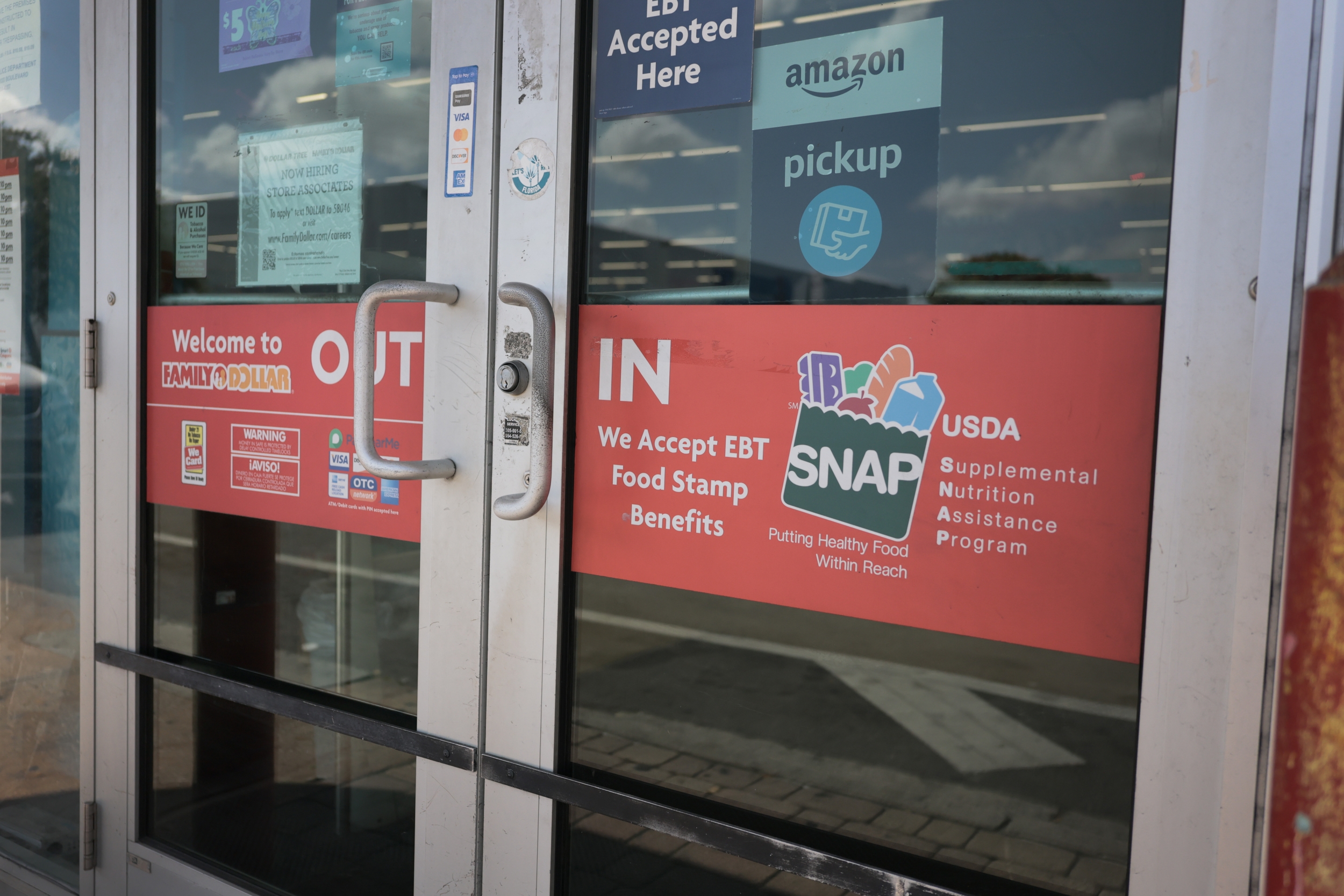
For the first time in the more than 50-year history of the Supplemental Nutrition Assistance Program, states are now financially on the hook for how accurately they manage food benefit payments, and the data being collected right now will determine how much they owe.
The USDA released its annual SNAP payment error rate report on June 24, 2026, revealing a national average error rate of 10.62 percent for fiscal year 2025 — far above the 6 percent threshold that the One Big Beautiful Bill Act (OBBBA) set as the trigger for financial penalties. Beginning October 1, 2027, states with error rates at or above that threshold will be required to cover a portion of their own SNAP benefit costs — from 5 percent for states with rates between 6 and 8 percent, to 15 percent for states above 10 percent.
Only nine states had payment error rates below 6 percent in fiscal year 2025, allowing them to avoid the new cost-sharing requirement. The remaining 41 states and the District of Columbia face financial consequences unless they reduce their error rates before the penalty calculation is finalized.
Critically, states can choose to use either their fiscal year 2025 or fiscal year 2026 error rate — whichever is lower — to calculate what they owe. That means the data being generated right now, through the end of fiscal year 2026 in September 2026, still matters. States that act aggressively in the next several months to reduce errors may be able to lower their financial exposure.
Why This Matters
SNAP — the Supplemental Nutrition Assistance Program — provides grocery assistance to approximately 42 million Americans, including children, elderly adults, people with disabilities, and low-income working families. For the entirety of its history, SNAP benefits have been paid entirely by the federal government. The OBBBA ended that guarantee.
The practical consequences are large. Using fiscal year 2025 error rates, the Center on Budget and Policy Priorities estimates states collectively could owe roughly $9 billion in SNAP cost-sharing. For individual states with already-strained budgets — many of which are also absorbing Medicaid cost shifts from the same legislation — the new SNAP obligations arrive at a particularly difficult fiscal moment.
The accountability logic behind the policy is straightforward: states that miscalculate eligibility or benefit amounts generate either overpayments (giving recipients more than they should receive) or underpayments (giving them less). SNAP payment error rates measure how often and by how much those miscalculations occur. But advocacy groups and many state officials note that error rates are not a measure of fraud — they reflect administrative and systems errors, many of which occur when complex federal and state rules interact with limited state administrative capacity.
What We Know So Far
The USDA’s June 24 release established the FY 2025 error rate as the first benchmark that will be used to calculate potential cost-sharing obligations. Under the law, states may elect to use either the FY 2025 or FY 2026 error rate — whichever produces a lower obligation.
The penalty structure, as described by Grocery Dive and confirmed by the USDA press release:
- States with error rates between 6% and 8%: responsible for 5% of their SNAP benefit costs
- States with error rates between 8% and 10%: responsible for 10%
- States with error rates above 10%: responsible for 15%
One important carve-out: states with error rates above 13.32 percent in FY 2025 qualify for a two-year delay in the cost-sharing requirement. Alaska (23.15%), Oregon (14.14%), Illinois (14.67%), Georgia (15.21%), Delaware (16%), and New Mexico (16.81%), as well as the District of Columbia (18.66%), qualify for this delay— meaning they will not face penalties until fiscal year 2030.
Perversely, this created an incentive problem. Maryland dropped its error rate from 13.64 to 13.08 percent — an improvement — but in doing so, fell just below the 13.33 percent threshold that would have qualified it for the two-year delay. The states that made less progress are being shielded from near-term consequences, while Maryland faces an earlier and larger financial burden for having improved.
Where the Impact Is Highest
Maryland’s situation is among the most closely watched. State analysts project Maryland could be on the hook for at least $240 million just for the new cost-sharing requirements in fiscal year 2027, with more exposure expected in subsequent years from other OBBBA provisions. The state’s current error rate of 13.08 percent places it in the 15 percent cost-sharing tier — the maximum penalty level.
Maryland’s Acting Secretary for Human Services Stacy L. Rodgers told Maryland Matters that the agency is “laser-focused” on bringing the error rate down and that the notion of qualifying for a delay by maintaining a high error rate has not been the agenda. But she acknowledged that FY 2026 data will not be released until June 2027 — months after the Maryland General Assembly finalizes the state budget — creating a structural planning problem.
Oklahoma’s situation illustrates the scale in other states: with an error rate of 11.04 percent, Oklahoma projects it could owe approximately $250 million in SNAP benefit costs. California, at a lower 5 percent bracket, is projected to face over $627 million in additional spending.
Some states are acting quickly. Arkansas is investing in AI tools to improve eligibility systems and has allocated $5 million in its FY 2027 budget to the state inspector general’s office to detect vulnerabilities. Minnesota allocated $90 million to replace 35-year-old county software used for SNAP processing. These technology investments may reduce error rates before the penalty-determining data closes.
What Officials and Experts Say
Agriculture Secretary Brooke Rollins, in announcing the FY 2025 data, said the payment error rates are further proof that state accountability is severely lacking in SNAP, and urged other states to prioritize needy families and the American taxpayer over politics.
Maryland’s Stacy Rodgers offered a sharply different framing. She told WYPR that Maryland has led the nation in reducing its error rate over the past three years — from 35.56 percent in fiscal year 2022 to 13.08 percent today — but is still being penalized for a rate that remains above the threshold. She said there was simply no runway for states to drive the error rate down to 6 percent given the structural complexity of SNAP administration.
Carolyn Vega, associate director of policy analysis for No Kid Hungry, told Maryland Matters the penalty structure creates a “really perverse incentive” — a state has almost an incentive to do worse, since dropping below 13.33 percent removes the protection of the two-year delay.
Brookings Institution researchers warned that the combination of SNAP benefit cost-shifting, Medicaid reductions, and other OBBBA provisions could lead some states to drop out of the SNAP program entirely — an outcome that would eliminate food assistance for all participants in those states. Analysts across the political spectrum have described this as the single most significant structural change to SNAP in the program’s history.
What the Evidence Shows and What It Does Not
MedicalDaily Policy Check
- Policy source: One Big Beautiful Bill Act (OBBBA), signed July 4, 2025
- USDA data release: FY 2025 SNAP payment error rates, June 24, 2026
- National average FY 2025 error rate: 10.62%
- Total FY 2025 improper payments: $10.1 billion (per USDA)
- Cost-sharing effective date: October 1, 2027 (federal fiscal year 2028)
- States below 6% (exempt): 9 states
- States with delay (above 13.32%): Alaska, Oregon, Illinois, Georgia, Delaware, New Mexico, DC — delay until FY 2030
- Key option: States may choose FY 2025 or FY 2026 error rate, whichever produces a lower obligation — FY 2026 data collection is ongoing through September 2026
- What this policy does not constitute: A measure of SNAP fraud — error rates measure administrative accuracy, including both overpayments and underpayments, often caused by eligibility or calculation mistakes
Who Is Most Affected?
The financial impact of the new SNAP cost-sharing rules will fall on several groups:
- State SNAP administrators and human services agencies, who must reduce error rates under extreme time pressure with limited resources
- State legislators and budget directors, who must now plan for large new obligations that were not anticipated in recent state budgets
- Advocacy organizations that serve SNAP recipients, who are concerned that states facing financial pressure may tighten eligibility or create bureaucratic barriers to enrollment
- SNAP recipients themselves — particularly in states where budget pressure from SNAP cost-sharing leads to service reductions, staffing cuts, or changes to how applications and renewals are processed
- Residents of states with the highest error rates: Maryland (13.08%), Hawaii (10.92%), Oklahoma (11.04%), and many others where the cost-sharing obligation will be highest
What You Can Do Now
- If you receive SNAP benefits, respond promptly to any renewal requests, verification requests, or correspondence from your state’s human services agency. Delayed or incomplete responses are a common source of administrative errors that inflate error rates and may affect your own benefit accuracy.
- If you are a state resident concerned about SNAP funding in your state, contact your state legislators — particularly those on budget and human services committees — to ask how the state is planning to manage new cost-sharing obligations.
- Advocacy organizations tracking this issue include the Food Research and Action Center, the Center on Budget and Policy Priorities, and No Kid Hungry. All publish state-specific data and advocacy resources.
- If your state has announced changes to SNAP administration or access in response to budget pressure, contact the USDA’s Food and Nutrition Service or a legal aid organization if you believe your SNAP benefits have been incorrectly reduced or terminated.
Cost and Access: What Families Should Know
SNAP error rates measure administrative accuracy — not whether eligible families are being helped. But the financial consequences of this policy will inevitably affect how states administer the program. States may respond by hiring more caseworkers, investing in technology, tightening verification processes, or — advocates fear — creating administrative barriers that make it harder for eligible families to receive benefits.
If you believe you are eligible for SNAP and have been denied or had benefits reduced, you have the right to request a fair hearing through your state’s human services agency. The USDA’s Food and Nutrition Service maintains state-level contact information and complaint procedures. For families in financial crisis, local food banks remain a parallel resource — find one near you at feedingamerica.org.
What Happens Next
FY 2026 error rate data — the second data point states can use to calculate their obligation — will not be released until June 2027. That timing creates a difficult planning window: states will not know their final FY 2026 number until after most state legislatures have finalized their fiscal year 2027 budgets.
Maryland’s Stacy Rodgers is banking on the National Governors Association successfully lobbying Congress to delay the penalty deadline. That lobbying effort is ongoing. Some states are filing Corrective Action Plans with USDA as required for states above the 6 percent threshold. The outcome of those plans and any Congressional action on the deadline will significantly shape how this policy ultimately affects both state budgets and SNAP recipients.
MedicalDaily will continue tracking state error rate developments, Congressional responses, and the downstream effects on SNAP access as the October 2027 implementation date approaches.
The Bottom Line
The USDA’s FY 2025 SNAP error rate data revealed that 41 states and the District of Columbia exceed the threshold that will trigger financial penalties starting October 2027 — a deadline that is 15 months away. For Maryland, the potential liability exceeds $240 million. For California, it exceeds $627 million. For Oklahoma, it approaches $250 million. The data being collected right now — through September 2026 — will shape those final numbers. States that invest in better eligibility systems, caseworker capacity, and technology in the next several months may reduce their exposure. Those that do not may find themselves choosing between cutting other services, raising taxes, or creating barriers that effectively push eligible families off SNAP assistance.