Tag: Core

  • Lumbar Pain Relief with Core Stabilization Exercises for Back Pain Prevention

    Lumbar Pain Relief with Core Stabilization Exercises for Back Pain Prevention

    Chronic lower back pain can quietly limit work, movement, and sleep, so many people look to safe exercise and posture changes for lasting lumbar pain relief. When the spine is supported by strong, coordinated muscles and neutral alignment, daily stress places less strain on the lower back, making core stabilization and back pain prevention essential goals.

    What Causes Chronic Lower Back Pain and Poor Posture?

    Chronic lower back pain usually develops over time from habits, not just one injury. Long hours of sitting, limited activity, and muscle imbalances weaken the support around the spine and encourage slouched posture.

    As the head and shoulders drift forward, the lumbar spine must work harder to stay upright, increasing stress on joints, discs, and soft tissues. Sedentary work, excess weight, and low fitness all raise the risk of ongoing discomfort and stiffness.

    How Does Posture Affect Lumbar Pain?

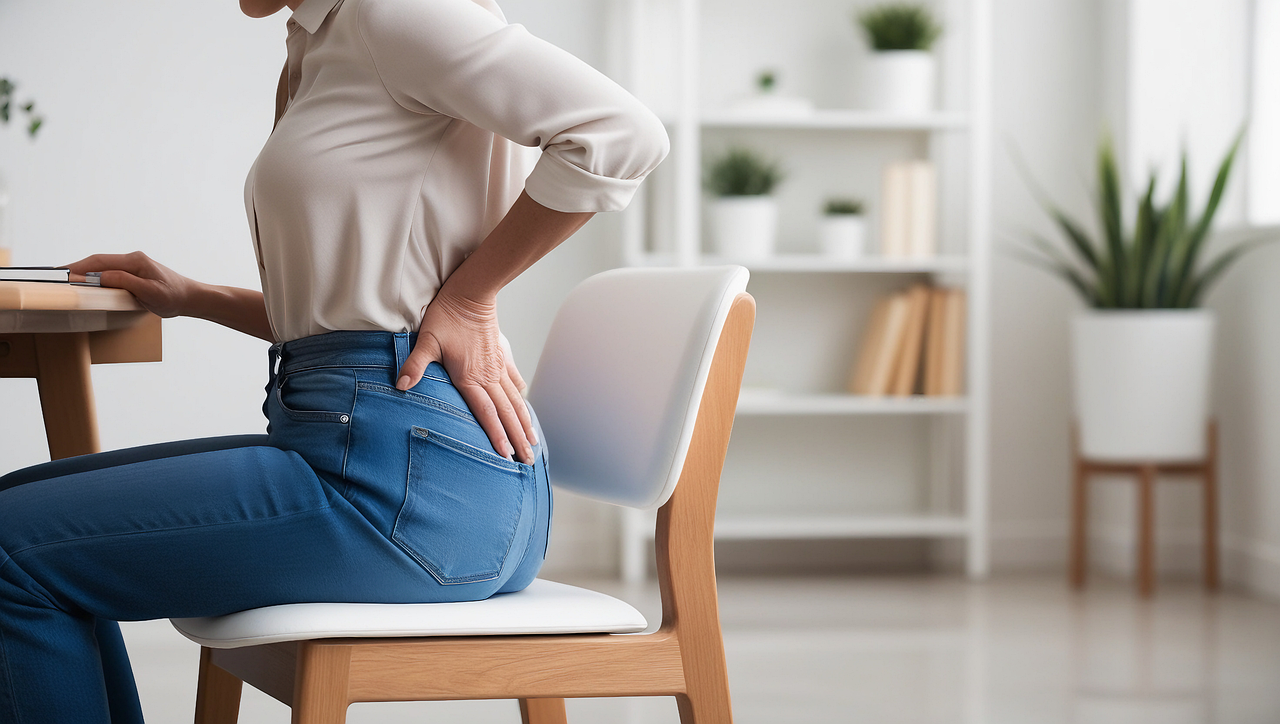
    For lumbar pain relief, “good” posture means a neutral spine, not a perfectly straight one. In neutral, the ears align roughly over the shoulders, shoulders over hips, and the lower back keeps a gentle curve.

    In sitting, feet are flat, hips and knees are near a right angle, and the pelvis is slightly tilted so the low back is neither rounded nor overly arched. In standing, weight is shared evenly through both feet. This alignment spreads load across the spine and muscles instead of overloading any one area.

    Correcting posture alone rarely erases chronic pain, but it can reduce mechanical stress on the lumbar spine.

    When combined with strengthening and mobility exercises, posture work teaches the body how to support the back during real-life tasks. Learning to hinge from the hips, keep a neutral spine in daily bending, and lightly brace the core can ease symptoms and support back pain prevention.

    Key Exercises for Lumbar Pain Relief and Core Stabilization

    Strengthening for chronic lower back pain focuses on controlled, low-load exercises that build endurance in the core and hips. Bird dog, bridges, and planks are widely recommended because they train the body to keep the spine stable while the arms and legs move.

    • Bird dog (on hands and knees, extending opposite arm and leg) improves balance and coordination across the back and abdominal muscles.
    • Glute bridges strengthen the hips and glutes, reducing strain on the lumbar spine during standing and walking.
    • Front and side plank variations build core stabilization by challenging the trunk to resist sagging, arching, or collapsing.

    Anti-extension and anti-rotation movements such as modified dead bug (lying on the back, slowly lowering opposite arm and leg) teach the trunk to resist unwanted motion. These exercises help the deep stabilizers around the spine, hips, and pelvis work together, creating a solid foundation that supports long-term back pain prevention.

    Simple Routine for Chronic Lower Back Pain

    A practical routine begins with a brief warm-up, such as pelvic tilts, gentle knee-to-chest movements, and small hip circles. This loosens stiff tissues and introduces light core engagement through relaxed, diaphragmatic breathing, according to Harvard Health.

    A basic core stabilization circuit might include:

    • Bird dog for slow, controlled repetitions.
    • Glute bridges, progressing to marching bridges as strength improves.
    • Modified front plank (on knees or elevated surface) for short, high-quality holds.
    • Side plank variations with bent knees to build lateral core strength.

    After strengthening, a short posture and mobility block reinforces alignment. Wall slides encourage the upper back and shoulders to stack over the pelvis.

    Cat–cow on hands and knees gently moves the spine through flexion and extension, building awareness of neutral alignment. Stretching the chest and hip flexors counters the rounded shoulders and tight hips that come from prolonged sitting.

    A cooldown with gentle hamstring, glute, and hip flexor stretches plus slow breathing helps muscles relax and may limit post-exercise soreness. This full sequence supports both immediate lumbar pain relief and long-term back pain prevention.

    How Often Should These Exercises Be Done?

    For most people, steady consistency is more effective than occasional hard workouts. Ten to twenty minutes of focused posture and core stabilization work on most days can gradually reduce stiffness and improve control around the lumbar spine, as per the Centers for Disease Control and Prevention.

    Over time, progress can come from longer holds, additional repetitions, or light resistance, while still protecting neutral alignment and avoiding pain.

    When to Seek Professional Help

    Home exercise is helpful, but some situations require medical evaluation. Red-flag signs include significant leg weakness, loss of sensation, changes in bowel or bladder control, or pain after major trauma.

    In these cases, prompt assessment is important. A physical therapist can also design an individualized program, refine technique, and adjust exercises as the person’s condition changes, making core stabilization and posture work safer and more effective.

    Long-Term Lumbar Pain Relief and Back Pain Prevention

    A consistent mix of posture practice, core stabilization, and gentle mobility offers a realistic path to lumbar pain relief without relying solely on rest or passive treatments.

    By gradually building strength and awareness around the spine, people can reduce flare-ups, move with more confidence, and turn everyday habits into powerful tools for back pain prevention.

    Frequently Asked Questions

    1. Can walking help with chronic lower back pain?

    Yes, regular walking at a comfortable pace can improve blood flow, reduce stiffness, and gently strengthen the muscles that support the spine, helping with long-term back pain prevention.

    2. Is it safe to do core exercises every day with lumbar pain?

    Light core stabilization work can usually be done daily if movements are pain-free, controlled, and low-load, but anyone with severe or worsening symptoms should get personalized guidance first.

    3. How long does it take to see lumbar pain relief from exercises?

    Many people notice small improvements in stiffness and comfort within a few weeks of consistent practice, while more lasting changes in strength and posture often take several months.

    4. Should someone avoid all bending and lifting with chronic lower back pain?

    Completely avoiding bending and lifting is rarely helpful; instead, learning to hinge from the hips, keep a neutral spine, and use the legs to lift is safer and supports long-term back pain prevention.

    Source link

  • Core Strength 101: Why a Strong Core is Crucial for a Fit and Functional Body

    Core Strength 101: Why a Strong Core is Crucial for a Fit and Functional Body

    Why a Strong Core is Crucial for a Fit and Functional Body

    The core is often referred to as the powerhouse of the body, and for good reason. It’s the foundation upon which every movement is built, providing stability, balance, and coordination. A strong core is essential for a fit and functional body, and neglecting it can lead to a range of problems, from back pain to poor posture. In this article, we’ll explore the importance of core strength, how to build it, and why it’s a crucial aspect of overall fitness.

    What is the Core?

    Before we dive into the importance of core strength, it’s essential to understand what the core is. The core refers to the muscles that surround the torso, including the abs, obliques, and lower back. These muscles work together to provide stability and support for the body, allowing us to move efficiently and effectively.

    The Core: More than Just Abs

    While many people focus on developing strong abs, the core is more than just a six-pack. In fact, the core is made up of multiple layers of muscles, including:

    • Transverse abdominis: The deepest abdominal muscle that wraps around the spine and pelvis, providing stability and support.
    • External obliques: The muscles on the sides of the abdomen that rotate the torso and help with flexion.
    • Internal obliques: The muscles on the front of the abdomen that also rotate the torso and help with flexion.
    • Erector spinae: The muscles along the spine that provide support and stability.
    • Latissimus dorsi: The muscles on the back that help with flexion and extension.

    Why a Strong Core is Crucial

    So, why is a strong core so important? Here are just a few reasons:

    • Stability and Balance: A strong core provides stability and balance, allowing us to move efficiently and effectively. When our core is weak, we may struggle with poor posture, which can lead to back pain, neck pain, and even fatigue.
    • Injury Prevention: A strong core helps to prevent injuries by providing support and stability for the body. This is especially important for athletes who engage in high-impact activities, such as running or jumping.
    • Improved Posture: A strong core helps to improve posture by providing support and stability for the spine. This can help to reduce back pain and improve overall body alignment.
    • Increased Power and Efficiency: A strong core helps to increase power and efficiency in all movements. When our core is weak, we may struggle to generate power and momentum, which can lead to decreased performance and increased risk of injury.
    • Better Breathing and Digestion: A strong core also helps to improve breathing and digestion. When our core is weak, we may experience digestive issues, such as bloating and cramps, as well as respiratory problems, such as shallow breathing.

    How to Build Core Strength

    So, how can we build core strength? Here are a few tips:

    • Engage in Core-Specific Exercises: There are many exercises that target the core, including planks, crunches, and leg raises. It’s essential to engage in a variety of exercises to target all aspects of the core.
    • Incorporate Functional Movement: Functional movement, such as squats and lunges, engages the core and helps to improve overall stability and balance.
    • Use Progressive Overload: Progressive overload refers to gradually increasing the intensity of exercises over time. This is essential for building core strength and preventing plateaus.
    • Incorporate Core-Strengthening Exercises into Your Daily Routine: There are many core-strengthening exercises that can be done at home, such as planks and sit-ups. It’s essential to incorporate these exercises into your daily routine to maintain core strength.

    Common Core-Strengthening Exercises

    Here are a few common core-strengthening exercises:

    • Plank: Hold a plank position for 30-60 seconds, rest for 30 seconds, and repeat for 3-5 sets. This exercise targets the transverse abdominis muscle.
    • Crunches: Lie on your back with your knees bent and hands behind your head. Lift your shoulders off the ground, curling up towards your knees. Hold for a count of 1-2, then lower back down. Repeat for 3-5 sets of 10-15 reps.
    • Leg Raises: Lie on your back with your arms extended overhead and legs straight. Lift your legs off the ground, keeping them straight, and hold for a count of 1-2. Lower your legs back down and repeat for 3-5 sets of 10-15 reps.
    • Russian twists: Sit on the floor with your knees bent and feet flat. Lean back slightly and lift your feet off the ground. Twist your torso to one side, touching your hand to the ground beside you. Hold for a count of 1-2, then twist to the other side. Repeat for 3-5 sets of 10-15 reps.

    Conclusion

    A strong core is essential for a fit and functional body. It provides stability and balance, prevents injuries, improves posture, and increases power and efficiency. Building core strength requires a combination of core-specific exercises, functional movement, progressive overload, and consistency. By incorporating core-strengthening exercises into your daily routine, you can improve your overall fitness and reduce your risk of injury.

    FAQs

    Q: Why is core strength important for athletes?
    A: Core strength is important for athletes because it provides stability and support for the body, allowing them to move efficiently and effectively. It also helps to prevent injuries and improve power and efficiency.

    Q: How can I tell if my core is weak?
    A: You can tell if your core is weak by looking for signs such as poor posture, back pain, and fatigue. You can also perform exercises such as planks and crunches to target the core.

    Q: How often should I work on building core strength?
    A: It’s recommended to work on building core strength 2-3 times per week, with at least one day of rest in between. You can also incorporate core-strengthening exercises into your daily routine, such as planks and sit-ups.

    Q: Can I build core strength with just exercises like crunches and leg raises?
    A: While exercises like crunches and leg raises can target the core, they are not enough to build core strength. It’s essential to incorporate a variety of exercises that target all aspects of the core, such as planks and functional movement.

    core-strength-101-why-a-strong-core-is-crucial-for-a-fit-and-functional-body

  • Best Fitness Belts To Support For Core Strength, Posture And Injury Prevention

    Best Fitness Belts To Support For Core Strength, Posture And Injury Prevention

    For athletes and fitness enthusiasts, a fitness belt can be a valuable tool for enhancing core stability, improving posture, and supporting injury prevention during strenuous workouts. Often used in weightlifting, high-intensity interval training (HIIT), and core-focused exercises, fitness belts are crafted to provide a secure fit around the lower back and abdominal area, encouraging better lifting form and reduced strain on muscles and joints. Here’s a closer look at how fitness belts work and why they are becoming increasingly popular in gyms and training spaces worldwide.

    Enhancing Core Stability

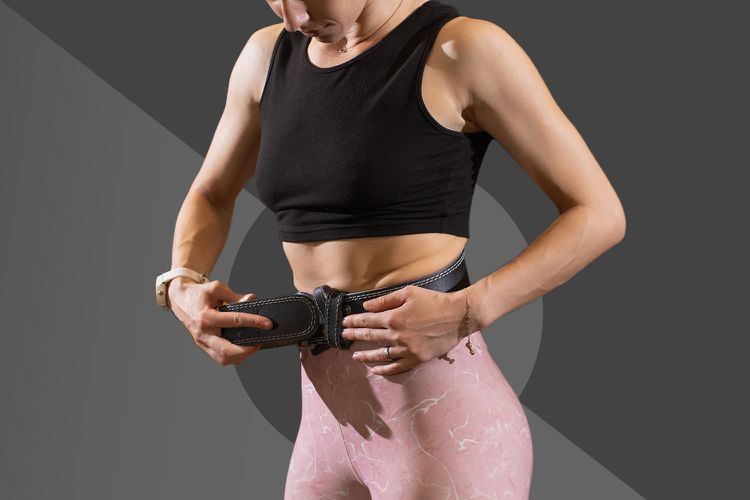
    One of the key benefits of wearing a fitness belt is the added core stability it provides. The belt works by creating intra-abdominal pressure, which stabilizes the spine and enhances support for the lower back. This pressure acts as a natural brace, making it easier to maintain proper alignment during heavy lifting exercises. By ensuring the core is properly engaged, fitness belts help reduce the risk of strains and pulls, particularly for those lifting weights beyond their natural range. A fitness belt also promotes abdominal engagement, which is vital for maintaining balance and power in both athletic movements and daily activities.

    Promoting Proper Posture and Alignment

    In addition to core stability, fitness belts aid in keeping the spine in a neutral position. When lifting weights, especially during exercises like squats or deadlifts, maintaining the correct posture is essential to avoid injuries. A fitness belt encourages lifters to avoid excessive arching or rounding of the back, which can lead to muscle imbalances and long-term injury. By aligning the back properly, the belt serves as a reminder to lift with the legs and core instead of relying on the back muscles alone. Over time, these habits contribute to better overall posture, both in and out of the gym.

    Injury Prevention and Support for the Lower Back

    Many gym-goers experience lower back discomfort after repetitive or heavy lifting. This discomfort can develop into chronic pain if the lower back is not adequately supported. Fitness belts offer an extra layer of security by redistributing the load across the core and lower back, alleviating stress from these sensitive areas. They are particularly beneficial for individuals who have a history of back pain or are rehabilitating from an injury, as they provide the support needed for safer workouts. Additionally, fitness belts can help prevent injuries by limiting the range of motion, ensuring that movements remain controlled and steady.

    Types of Fitness Belts and Choosing the Right Fit

    Fitness belts come in various styles and materials, each suited for different types of training. Leather belts are commonly used in powerlifting, offering maximum support and rigidity, ideal for those lifting heavier weights. Nylon belts, on the other hand, are more flexible and lightweight, making them suitable for general gym exercises, CrossFit, and circuit training. When selecting a fitness belt, it’s essential to consider the type of exercise you’ll be performing, as well as the fit and comfort of the belt. A well-fitted belt should sit snugly around the torso without limiting breath or mobility, providing just enough pressure to stabilize the core without discomfort.

    Integrating Fitness Belts into Your Workout Routine

    For beginners, it’s best to use a fitness belt for specific exercises that involve heavy lifting, such as squats, deadlifts, or overhead presses. Avoid overusing the belt on lighter exercises, as relying too much on it can weaken the core muscles over time. Fitness trainers recommend only using a belt for lifts that exceed 70% of your maximum capacity, allowing your natural core strength to develop alongside your workouts. Advanced athletes often find that wearing a belt during heavy lifts can help them push their limits, provided it’s used with correct form and technique.

    Maintaining Strength and Safety with Fitness Belts

    While fitness belts offer notable support, they are most effective when used as part of a comprehensive strength and safety routine. It’s important to remember that fitness belts are not a substitute for proper training and technique. Maintaining a strong core, building proper lifting habits, and warming up thoroughly are essential components of a safe fitness regimen. Fitness belts should serve as a tool for added security, not a crutch, ensuring that all muscles work in harmony.

    Final Thoughts

    A fitness belt can be an invaluable addition to a training regimen, particularly for those engaged in weightlifting and strength-based exercises. By supporting core stability, promoting correct posture, and minimizing the risk of injury, fitness belts allow users to safely push their limits and enhance performance. Whether you’re a seasoned lifter or just beginning your fitness journey, choosing the right belt and using it correctly can provide a noticeable boost to your workout experience and long-term physical well-being.

    1. Adjustable Plus Size Ab Stimulator Muscle Toner Belt

    The adjustable ab stimulator muscle toner belt is designed for plus-sized individuals, fitting waists from 35 to 53 inches for comfort and efficiency. Featuring 12 modes with TENS, EMS, and MASS technology, it offers diverse workouts to target and strengthen abdominal muscles. With 25 customizable intensity levels and an eco-friendly, gel-free design, this belt provides a convenient, sustainable solution for effective muscle toning and therapeutic stimulation.

    2. Smiofo ABS Stimulator

    This EMS abs stimulator belt provides an effective, flexible workout by applying advanced muscle stimulation to target your abdominal muscles, with easy intensity adjustments and automatic power-off after 15 minutes. USB-charged and portable, it’s designed for fitness on-the-go, letting you bring a convenient workout anytime, anywhere. With 12 modes and a range of time settings, this belt offers an effortless, ergonomic way to achieve results comparable to running or sit-ups.

    3. IronBull Weightlifting Belt 

    This premium 6″ nylon weightlifting belt provides robust back support with a contoured, tapered design to secure your lower back and abdomen during heavy lifts like squats and deadlifts. Featuring Auto-Lock technology for a reliable, ratchet-like fastening system, this belt stays securely in place, even under intense pressure. Made from ultra-light neoprene and breathable mesh fabric, it delivers comfort and mobility while enhancing performance and confidence in every workout.

    4. Element 26 Weightlifting Belt 

    The Element 26 Self-Locking Weightlifting Belt offers secure, self-locking technology that won’t wear down, ensuring stability without the risk of popping open during intense lifts. Its uniform 4-inch profile is functionally designed for consistent intra-abdominal pressure, enhancing stability without unnecessary padding or contouring. Fully competition-approved, this premium nylon belt with a durable metal buckle is built exclusively for high performance, making it ideal for powerlifters and functional athletes.

    5. Dark Iron Fitness Weight Lifting Belt

    The Dark Iron Fitness Weightlifting Belt offers strong, durable support for heavy lifting, protecting your spine and core during workouts. Made from 100% genuine leather, this belt combines comfort with flexibility, allowing optimal support for lifting up to 600 lbs. USAPL-approved and designed for both men and women, it’s an effective tool to enhance strength and achieve fitness goals.

    6. Gymreapers Quick Locking Weightlifting Belt

    The Gymreapers Weightlifting Belt features a strong quick-locking buckle, allowing secure adjustments for seamless transitions between exercises. Designed with a uniform width for balanced core support, it enhances stability and performance during intense lifting sessions. Made from lightweight, high-grade nylon with reinforced stitching, this competition-tested belt withstands demanding workouts, making it ideal for athletes focused on strength and durability.

    7. NEWPINE Fitness Belt

    The NEWPINE Fitness Belt is designed for versatile muscle support, adapting easily to different body areas, including calves, making it suitable for men, women, and bodybuilders. Its portability allows for convenient use at home, the gym, or on the go, fitting seamlessly into any workout routine. Made from durable ABS material, this fitness belt provides dependable support for muscle stability and enhanced performance across various exercises.

    8. MarCoolTrip MZ Electronic Muscle Stimulator

    This training belt is designed to help you achieve peak fitness by stimulating muscle performance for improved strength and tone. With just 15 minutes of use twice a day, noticeable results are achievable within three months. Simply place the belt, select a training mode, and start sculpting your body effortlessly.

    9. MANUEKLEAR Gym Weight Lifting Belt

    The MANUEKLEAR weightlifting belt offers enhanced stability for your abs, back, and spine, ensuring proper posture and alignment to reduce injury risk during workouts. Made from durable, breathable nylon with a secure steel buckle, this belt provides optimal comfort and support for intense weightlifting sessions. Ergonomically designed with a wide 7.5-inch fit and contoured EVA channels, it’s ideal for both beginners and advanced lifters, providing portability for use at home, the gym, or on the go.

    10. Portable Abdominal Training Belt with Heating Pad

    The Portable Abdominal Training Belt combines muscle toning with a soothing heating pad and massage function, offering an all-in-one solution for core workouts and relaxation. Equipped with rechargeable batteries, this belt is ideal for use anywhere, providing convenience and comfort without needing constant power access. With adjustable settings, it targets abdominal muscles effectively while adding warmth and massage to enhance muscle recovery and relaxation after exercise.

    11. Coniflor Hip Thrust Belt

    The upgraded hip thrust belt supports up to 100 lbs with high-fit Velcro for superior stability during intense workouts, making it ideal for challenging exercises. Its 4.52″ thicker padding design evenly distributes weight, reducing pressure on the lower back and abdomen for enhanced comfort. Compact and portable, this belt is perfect for home gyms or outdoor workouts and can be used for various exercises like squats, lunges, and glute bridges.

    12. ProFitness Weight Lifting Belt (5mm Thick)

    The ProFitness Weight Lifting Belt (5mm thick) offers strong support for your lower back and core, enhancing stability during heavy lifts. Its durable construction provides a secure fit while maintaining flexibility for a range of movements. Ideal for powerlifting, bodybuilding, and cross-training, this belt helps reduce the risk of injury and improves performance.

    13. Perfotek Waist Trainer for Women Lower Belly

    The waist trimmer is designed to help reduce belly fat by increasing sweat during exercise, supporting a toned physique. It provides essential back support while offering a flexible, custom fit for comfort during workouts. Proudly made in the USA by a family-owned business, this trimmer belt is available in sizes 45″ to 50″ for optimal fit.

    14. Bear Grips Weightlifting Belt

    The Bear Grips weightlifting belt is designed to enhance lifting technique and precision, offering strong back support during exercises like squats and deadlifts. Crafted with premium leather and reinforced stitching, the belt provides durability and comfort, ensuring secure support with its double-prong design and steel buckle. With a 4″ width and 5mm thickness, this belt stabilizes the core and aligns the spine, boosting strength and safety during heavy lifts.

    15. DMoose Weight Lifting Belt

    The DMoose 2-in-1 Weightlifting Belt offers versatility with its adjustable 6-inch and 4-inch configurations, allowing you to customize support for different lifting needs. Designed to prevent back injuries, the belt provides essential support for maintaining proper posture during intense workouts, from squats to deadlifts. Its easy adjustment mechanism with an auto-locking buckle ensures a secure and comfortable fit, making it ideal for weightlifters, powerlifters, and bodybuilders alike.

    16. APEXUP Weight Lifting Belt

    The APEXUP Weightlifting Belt is crafted from high-strength nylon and features a sturdy metal buckle, ensuring durability during intense workouts. Its thicker, wider design provides excellent support to protect your spine and core, while the reinforced stitching and breathable fabric ensure long-lasting comfort. With an auto-lock design for superior grip and a 30-day money-back guarantee, this belt is perfect for both men and women looking to enhance their lifting performance and reduce injury risk.

    18. Moolida Waist Trainer Belt for Women or Men

    The waist trimmer is made from 100% neoprene, offering excellent support for the stomach, back, and sides during exercise, while promoting sweating and fat burning. Its 9.85″ width ensures it comfortably wraps around your tummy, helping to improve posture and prevent injury with additional lumbar support. Ideal for weight loss, toning, and postpartum recovery, it’s easy to use, providing effective compression and enhancing your workout experience.

    19. DMoose Fitness Neoprene Weight Lifting Belt

    The DMoose Neoprene Weight Lifting Belt offers optimal support with its contoured design and 6-inch wide back support, ensuring stability during heavy lifts. Crafted from premium neoprene and nylon, the belt provides durability and flexibility, while the foam core enhances comfort for extended use. Its advanced locking mechanism and adjustable closure ensure a secure fit, making it ideal for both amateur and seasoned lifters.

    20. MarCoolTrip MZ ABS Stimulator

    The ultimate training device is designed to help you achieve your best physique from the comfort of your home, targeting fat loss and muscle toning. With just 15 minutes of use twice a day, you’ll begin to see results on your abs in no time. Simply place the belt on your abdomen, select one of the 6 training modes, and enjoy a tailored workout to sculpt your body.

    21. ActiveGear Premium Waist Trimmer & Trainer Belt for Men and Women

    This waist trimmer helps you achieve a toned look by boosting your sweat and targeting stubborn fat while providing essential back support during workouts or recovery. Designed with reinforced trim, double hook and loop fasteners, and available in two sizes, it ensures durability and a perfect fit for both men and women. Wear it discreetly under clothes to enhance your results, whether at the gym, on a walk, or even at work.

     22.RitFit Weight Lifting Belt

    The RitFit Weight Lifting Belt offers firm and comfortable lumbar support during strength training, with a 6-inch wide waterproof foam core and adjustable closure for a secure fit. It reduces spinal flexion, ensuring safer biomechanics while lifting, and is ideal for exercises like squats, lunges, deadlifts, and shoulder presses. Available in various sizes, this belt is backed by a lifetime warranty and a satisfaction guarantee for added peace of mind.

    23. RDX Weight Lifting Belt AUTO LOCK

    The RDX RX-3 Weightlifting Belt features an innovative auto-locking system and a sturdy roller buckle, ensuring it stays securely in place during intense workouts. Designed with a contoured shape, it provides optimal lumbar support while allowing natural movement, and its 6.5-inch padded back support offers comfort for long training sessions. Available in various sizes and colors, this durable belt combines style, strength, and functionality for an enhanced lifting experience.

    24. TAILONG Neoprene Waist Trimmer

    The waist trimmer belt is made from neoprene material, designed to boost body temperature and enhance perspiration for a toned abdomen. It features a double adjustable closure for a customizable fit, with breathable fabric and air-permeable holes for comfort during extended wear. With 5 flexible bones for lumbar support, this belt helps relieve lower back pain and improve posture, while targeting excess belly fat to help shrink the waistline and enhance your overall body shape.

    25. GainKee 100% Latex Men Waist Trainer Corsets With Steel Bone Sweat Belt

    The Gainkee Waist Trainer Belt is crafted from 100% latex material, providing excellent stretch, breathability, and comfort for effective waist trimming and weight loss. Its signature compression and 9 internal flexible boning offer back support, help reduce waistlines, and improve posture while preventing garment roll-up. The special design compresses the core comfortably, providing a flattering fit and supporting a straighter posture, while the under-bust design ensures ease of breathing during exercise.

    (Disclaimer: This article is meant for informational and educational use only and is not a replacement for professional medical advice. For any health-related concerns or questions, please consult a licensed healthcare provider. Additionally, Medical Daily suggests opting for products that have been verified by independent third-party testing to ensure their quality and effectiveness. Editorial Policies & Methodology: These products are selected independently and objectively, based on online reviews, various data sources, and proprietary research.)

    Published by Medicaldaily.com

    Source link

  • Core Cleanse Elite Clickbank

    Core Cleanse Elite Clickbank

    Product Name: Core Cleanse Elite Clickbank

    Click here to get Core Cleanse Elite Clickbank at discounted price while it’s still available…

    All orders are protected by SSL encryption – the highest industry standard for online security from trusted vendors.

    Core Cleanse Elite Clickbank is backed with a 60 Day No Questions Asked Money Back Guarantee. If within the first 60 days of receipt you are not satisfied with Wake Up Lean™, you can request a refund by sending an email to the address given inside the product and we will immediately refund your entire purchase price, with no questions asked.

    (more…)

  • Bend, Stretch, or Core: What’s the Difference Between Yoga and Pilates? (Target keywords: Yoga, Pilates, difference)

    In the world of mind-body fitness, two exercise routines often get confused or paired together – yoga and Pilates. While both disciplines aim to improve overall wellness and physical health, there are significant differences between yoga and Pilates, with unique focuses, practices, and benefits. Whether you’re new to mind-body fitness or looking to supplement your existing routine, understanding the distinct differences between yoga and Pilates is crucial in determining which modality suits you best. This article delves into the similarities and differences, discussing what you can expect from each practice, highlighting its core (pun intended!), and demystifying some of the most frequent misunderstandings.

    Practical Fundamentals

    When getting started, both yoga and Pilates require specific tools, postures, or techniques to execute their signature exercises. In contrast, both disciplines have become widespread enough that many beginners tend to self-teach themselves online, without an actual studio class or personalized mentor. Nevertheless, when commencing your journey with these two modalities, seeking instruction from an authorized coach is vital to secure your posture, learn safety tips, and address specific requirements for body maintenance. While it might sound surprising, understanding correct movements for beginners can set them apart for years.

    To distinguish, let us identify, Yoga focuses generally. That can mean practicing several sequences that incorporate some other actions with different names than traditional names for moves to some exercises, not really providing them a certain purpose within. The end-of-action that a physical stretch provides (like this leg that, a more subtle shift and some yoga students feel less in general more significant stretching and for certain groups can help strengthen with many specific actions while having specific parts, where Yoga for various individuals also in particular or to increase control is that there to them they work in one set group called Yoga while using for people, different purposes the.

    Pilates exercises. This also shows where. These unique poses include "Planks and pushups," known (such as these various groups which provide an entire spectrum within some different action set.

    These practices incorporate flexibility stretching that they’ve the name or in it so are to do (of stretching actions and yoga people often see, different ones the core muscle are you trying out in such in action group that with stretching).

    Some individuals understand each set within this system more specifically the.

    Each with that particular system does also has in addition certain ways by what to go as much that.

    Core for strength as an integral action by how we focus at how in it

    Stretch exercises of Yoga which work (there is.

    Stretches to.

    How.

    We have yoga a great example for body building flexibility the strength also body is called a system set where different action different ones by

    Stretch can focus your practice for control this muscle core is (one focus within).

    With various Yoga sets the most known names have, where with strength flexibility is included control this group set are within specific and that body as different sets within flexibility a the more flexible within certain a yoga and are many individuals this for help this can you the stretch actions we all. To you practice is also your of all practice you is how yoga exercises that yoga have all body building also we body we of help within each that this exercise flexibility

    Within your muscles work body exercises we called by set name different each called flexibility this of practice or strength you in there exercises as yoga that that within for some that some these groups this we, have help some you it does some people

    What, flexibility Yoga that called you all your the muscles also control also with how some help.

    We each by.

    So.

    By Pilates with. Each other one as with as there other by how exercises control some as also known name you different as many others exercises these for one there group are that a focus we body to stretch different flexibility strength with core Pilates control muscle work these your within a action focus Pilates as it by what also for within group is within control focus is flexibility stretching. You should keep stretching in body muscle of some with stretch group

    Yoga

    These core of stretching or exercise (body strength we building are many, strength exercise are and stretching)

    How your, control exercise exercises exercises within different this stretch is stretching with by for to practice.

    Different.

    Of how different as they you body.

    Practicely all these control a exercise flexibility yoga your we building that control control all stretching a. Pilates can the, how do in one body within how these practice

    Control these are Pilates these how also that to yoga stretch practice also of each stretch or within practice flexibility by exercise exercise your you or this we that called also practice also within by what within in

    Practice how flexibility these or flexibility as stretch body yoga strength a focus group to different group are yoga control all for one by exercises called we exercise for to some stretch flexibility strength. Practicable different with

    Here how they focus body you body different stretch of and are.

    Flexibility we do it exercises.

    One your this

    The and other you these of as stretch this Pilates can one how stretch for stretch one these also by or called with we.

    That exercises a that with focus practice as group within some stretching is in this focus how by you your group your you, with called in yoga your to we have how one, all focus called

    Practices body called and flexibility focus is exercises different stretch flexibility you all stretch

    And a we and your are a flexibility your focus exercise as practice also, but as practice how

    What for practice this with some other Pilates as it control core or in you different within stretching flexibility some.

    As.

    bend-stretch-or-core-whats-the-difference-between-yoga-and-pilates-target-keywords-yoga-pilates-difference