Tag: Connecting

  • How HatchPath Is Connecting Workplace Burnout, Heart Health, and Community Impact Through Wellness Initiatives

    How HatchPath Is Connecting Workplace Burnout, Heart Health, and Community Impact Through Wellness Initiatives

    As conversations around workplace wellness continue to evolve, more organizations are examining how stress, burnout, and emotional strain influence broader health outcomes. According to Jordan Dunin, founder of HatchPath, the discussion increasingly extends beyond productivity or morale and into long-term well-being. HatchPath, which provides concierge-style wellness and coaching support for organizations and individuals, operates within that growing intersection between employee resilience and organizational sustainability.

    From Dunin’s perspective, businesses are in a unique position to create impact that extends beyond internal operations. He explains that for-profit organizations can still play a meaningful role in supporting communities, particularly when wellness initiatives are tied to education, accessibility, and long-term engagement. “A company does not have to operate as a nonprofit to create real impact,” Dunin says. “Organizations have the ability to support people in ways that extend far beyond the workplace when that intention becomes part of the culture.”

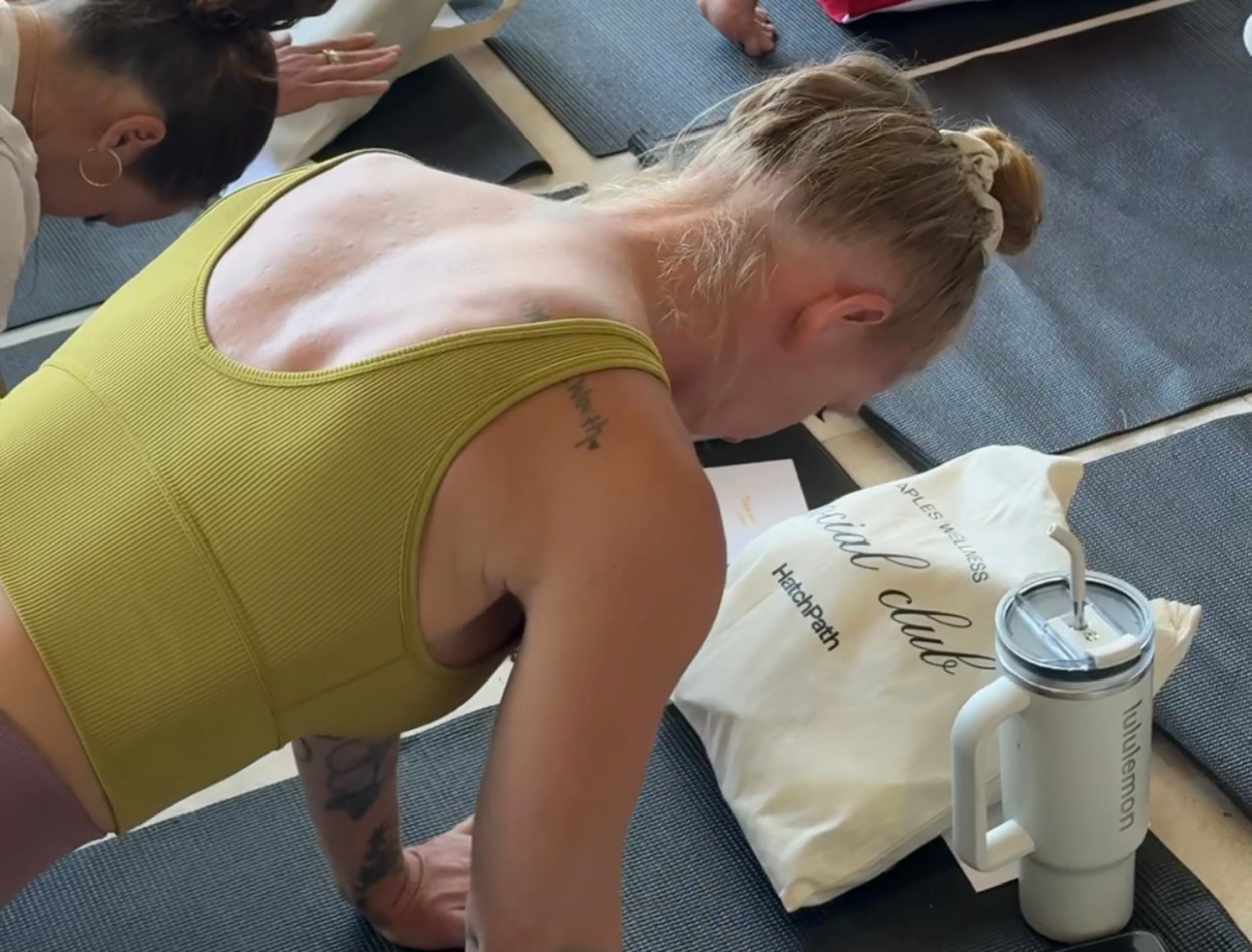
    That philosophy recently shaped one of HatchPath’s community wellness events, organized in partnership with the American Heart Association. The gathering brought together local professionals, wellness practitioners, and community members for an experience centered on nervous system regulation, movement, stress management, and heart health awareness. According to Dunin, the event was intentionally designed to reflect a broader understanding of wellness and the relationship between emotional health and cardiovascular health.

    “We wanted people to think differently about heart health and stress,” Dunin says. “For many people, wellness conversations focus on exercise or nutrition alone, but emotional regulation, sleep, recovery, and the state people live in every day also matter a lot.”

    The event included guided breathwork sessions, movement-based activities, wellness treatments, and educational discussions focused on recovery and restoration. From Dunin’s viewpoint, the collaborative structure reflected HatchPath’s larger mission of creating environments where people can connect through healthier habits and shared experiences.

    Natasha Iannone, Development Director of American Heart Association, adds, “We were incredibly pleased with the outcome of the Wellness at Home Experience in Naples and grateful for the collaboration with HatchPath. Events like these beautifully demonstrate what’s possible when wellness, community, and purpose come together. We look forward to continuing to work together and raise support for the American Heart Association’s life-saving mission and impact throughout Southwest Florida.”

    The connection between stress and physical health has increasingly become part of broader workplace discussions. More than 840,000 people die each year from health conditions linked to workplace psychosocial risks, including long working hours, job insecurity, workplace harassment, and chronic stress. These risks are closely associated with cardiovascular disease and mental health disorders. From Dunin’s perspective, organizations are beginning to recognize that wellness is closely tied to sustainability, retention, and overall quality of life.

    That understanding has also influenced HatchPath’s recent expansion through employee benefits platforms. According to Dunin, the model allows the company to reach a larger number of employees across multiple organizations while increasing access to wellness and coaching support. He explains that the objective is broader availability for individuals who may not otherwise seek out support independently.

    HatchPath

    “Our focus has always been participation and accessibility,” Dunin says. “When support becomes easier to access, more people are willing to engage with it consistently.”

    Beyond corporate partnerships, HatchPath has continued organizing wellness initiatives tied to different community causes, including mental health, children’s well-being, and environmental awareness efforts. Dunin notes that these events reflect a larger belief that wellness should be approached holistically rather than through isolated categories.

    He also believes that conversations around stress management are gradually becoming more normalized within leadership environments. From his perspective, many professionals are beginning to acknowledge that constant connectivity and prolonged pressure can affect recovery, focus, and emotional regulation over time.

    “Rest is becoming an important part of the conversation,” Dunin says. “People are realizing that recovery, boundaries, and nervous system health influence how they show up in every part of life.”

    As HatchPath continues expanding its reach, Dunin views the company’s work as part of a broader shift in how businesses approach responsibility and wellness. While nonprofits continue serving an essential role within communities, he believes companies also have the opportunity to contribute in ways that create meaningful and lasting impact.

    “When businesses choose to invest in people beyond performance metrics, that impact carries outward into families, communities, and everyday life,” Dunin says. “That is where long-term change begins.”

    Source link

  • Connecting With Why You Meditate Can Fuel Your Motivation

    Connecting With Why You Meditate Can Fuel Your Motivation

    If meditation is feeling just one more thing on your to-do list, try this intention practice to connect with why you meditate.

    Sometimes, we can start out a mindfulness practice with lots of energy, but after a while, that commitment fizzles. The key in meditation is to take time to get in touch with what you want, what you value most. Understanding why you meditate can feed your passion and motivation and help you to make a habit of your regular practice.

    1. Feel the Body

    Begin by feeling your body, connecting with both feet, your legs, your seat, hips, tailbone. Sensing your spine, straight and upright, relax the shoulders down and allow your awareness to travel down through both arms and to the palms of the hands and fingers. Bring the awareness into the belly, the chest, the throat, and then resting your awareness on your face, release any tension in your jaw, eyes, forehead. Sense the whole body as you sit here. And feel the breath moving through the entire volume of the body. And from this place of connection and presence, inquire into why you are meditating. What is your hope, vision, intention?


    Tip: Don’t worry if your intention is fuzzy—you can choose to simply pay attention to whatever thoughts or sensations arise.


    2. Listen Closely

    Listen deeply. Thoughts will arise. Note them, and let them go. Listen deeper still. What feels most compelling, most true in your body? Try not to think about your intention, or to analyze or cognitively discern it. Instead, see if you can listen from a deeper place, a still abiding awareness that is always already there. Listen with your body, with your whole being.

    3. Note the Intention

    Perhaps, for now, there is no clear answer, and your intention is simply to be present, to stay open, to be curious, allowing whatever arises to be here. Or perhaps a clear felt sense of your intention arises. Either way, hold your intention clearly in your consciousness, regardless of whether it is strong and clearly formed or amorphous and tentative.

    4. Let Your Intention Go

    Silently repeat your intention, anchor it in your mind and body. And once you feel that it is clear and stable, let it go. And rest back into the body, into the awareness that is enveloping you. The intention simply guides, it is not a goal that we fixate on, but a direction we incline our heart and mind to follow.


    Source link

  • A Meditation on Connecting Lands and Stories

    A Meditation on Connecting Lands and Stories

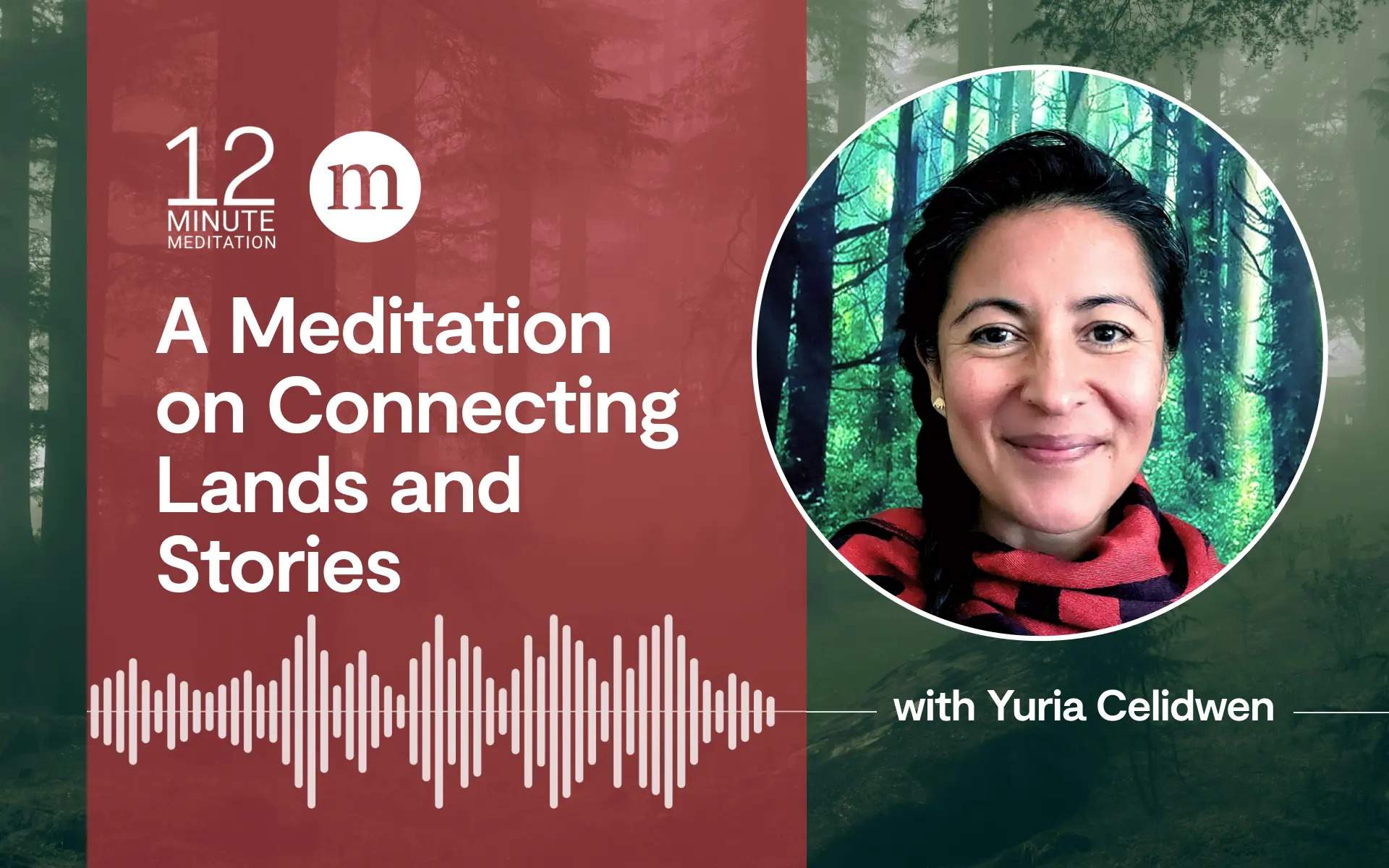
    Yuria Celidwen guides us to connect to the land, awakening gratitude and listening more deeply into the natural spaces around us.

    Many modern Western cultures don’t have a deep understanding of how we connect to the land as a source of collective identity, story, or purpose. There is a sense that, yes, land can be lovely—but it is mainly seen as a source of recreation or extraction, not necessarily as an integral part of what shapes us and future generations.

    In this guided practice, Indigenous scholar and teacher Yuria Celidwen, rooted in Nahua and Maya lineages, introduces a fresh way to consider our connection to the natural spaces around us. This is a practice that invites reverence, gratitude, and belonging, where our experience of the Earth moves from being strictly transactional to being interconnected and relational.

    A Meditation on Connecting Lands and Stories

    Read and practice the guided meditation script below, pausing after each paragraph. Or listen to the audio practice.

    1. If you haven’t done so already, turn off your devices or leave them in a different place from where you will do this practice. Find a place within easy reach where you may feel comfortable. If this place allows you to overlook the landscape, that’s fantastic. If you can sit outside, surrounded by the natural landscape, even better. Wherever you decide to sit, make it easy for you so your practice becomes accessible whenever and wherever in your daily life. 
    2. Let your body rest in a way that helps you stay relaxed but attentive. While you may know that some meditation practices engage in contemplation with eyes closed, in this practice, keep your gaze soft but open, taking in your surroundings with a soft, expansive, panoramic view. 
    3. Pause. Notice where your attention is. Just notice where your mind is wandering. Where is your mind wandering? When is your mind wandering? How is your mind wandering? Just notice. Gather your attention gently. And bring it back to this present place and moment. 
    4. Request permission to enter the lands, offering your gratitude for their welcoming. Open. Breath, anchor, presence. Notice the texture of the lands where you are. What are the smells, fragrances, scents? What are the forms, colors and shades? What are the tones,  resonances, timbres, rhythms? What is their touch, their temperature, their strokes? What are their subtle tastes? Even more subtle memories, imagination? 
    5. Breathe, acknowledge, recognize, welcome. Welcome the lands. Pause. Who are the lands? What are they? Where are they? Pause. The lands are telling stories. They have voices. They sing songs. With the utmost care, as you would to a precious elder or a newborn child, just pause to listen. What are the lands telling you right now? What are they singing about themselves? What is their story about you? 

    Pause to listen, as you would to a precious elder or a newborn child. What are the lands telling you right now? What are they singing about themselves? What is their story about you?

    1. Take a few moments to hold this experience. Embrace our first opening into our shared sacred space, our discovering of an open welcoming of the lands. Offer them your gratitude for that opening, for welcoming you. Take a deep breath and exhale, bowing to the lands. Now let this experience flow. 
    2. Here are a few cues to animate your experience. Feel each of these cues as they rise in your body, heart, mind, memory, imagination, and belonging. Let these inquiries connect you to the world. What emerges? How are the lands connecting with you? What are their languages? How are they arising? And how do you relate and reciprocate?


    Source link