Clubbell training flow has become an essential approach in functional strength and mobility training. This method promotes full-body coordination through controlled circular patterns, improving endurance, strength, and joint integrity.
Influenced by the ancient practice of swinging Indian clubs, clubbell training focuses on rotational power, one of the most fundamental forms of human movement. Each exercise teaches the body to handle torque efficiently while developing balance and fluidity in motion.
What is Clubbell Training Flow?
Clubbell training flow refers to the continuous sequence of movements using weighted clubs to improve strength and mobility. Unlike linear resistance exercises, these flows rely on circular and rotational movements that mirror many natural human motions.
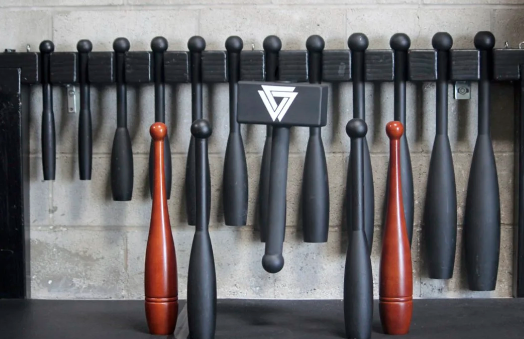
Clubbells may look similar to Indian clubs or macebells, but they differ in size, weight, and design, allowing a broader range of dynamic movements.
This style emphasizes rhythm and continuity rather than isolated repetitions. In a flow, movements transition smoothly from one pattern to another, which trains the nervous system to adapt and stabilize. Practitioners often describe it as movement meditation combined with functional strength work.
How Does Clubbell Training Build Circular Strength?
Circular strength refers to the body’s ability to generate, transfer, and control force through rotational or curved pathways rather than straight lines.
In clubbell training flow, every swing, arc, and rotation teaches the body to manage torque from multiple angles. When a clubbell moves in an arc, the shoulder stabilizers, core musculature, and grip all engage simultaneously.
Mill movements, a foundational clubbell exercise, demonstrate this concept clearly. As the club travels around the body in a controlled circle, it strengthens the connective tissues, tendons, and small stabilizing muscles.
Over time, this develops a balanced kind of strength that enhances performance in sports, martial arts, and daily movement patterns.
What Are the Benefits of Clubbell Flows?
Clubbell flows train the body to move efficiently and powerfully. By developing rotational power, they enhance performance in any activity that requires twisting or turning, from throwing and striking to lifting and bending. Unlike conventional gym routines that isolate muscles, clubbell sequences engage multiple muscle chains at once.
Other key benefits include:
- Enhanced mobility in the shoulders, hips, and spine
- Increased grip and forearm endurance
- Strengthened joint integrity through dynamic load distribution
- Improved coordination and proprioception
- Mental clarity from rhythmic, flow-based practice
Because clubbell work integrates strength and movement, it also improves recovery and balance across the body, helping prevent overuse injuries.
How Do You Start a Clubbell Mobility Patterning Flow?
Beginners are encouraged to start with light Indian clubs or lightweight clubbells to focus on precision and control before adding heavier resistance. A proper warm-up is essential, typically using joint rotations and pendulum swings to prepare the shoulders, elbows, and wrists.
Foundational movements include the front pendulum, shield cast, and basic mill variations. These build the skill to manage rotational momentum safely, according to F3 Wellness Connections.
Once the body adapts, the practitioner can progress to combination patterns, linking movements into continuous flows that challenge endurance and coordination. Visualizing the club’s circular path helps maintain consistency and rhythm throughout the session.
What Are Mill Movements in Clubbell Training?
“Mill movements” represent a cornerstone of clubbell training flow and are derived from traditional Indian club practices. The mill involves moving the club in a continuous circular path around the shoulder, typically in three main versions: inside mill, outside mill, and reverse mill.
Each variation emphasizes control, timing, and precision. The inside mill guides the club inward across the body; the outside mill follows an outward path; the reverse mill retraces the pattern backward, requiring refined coordination. Performing these movements correctly creates powerful rotational tension across the shoulders, chest, lats, and core, directly enhancing rotational power.
Common challenges include overextending the elbow or using momentum instead of muscle control. Starting slow and focusing on smooth arcs ensures the technique develops strength safely and effectively.
How to Design a Clubbell Flow Routine
A structured clubbell training flow sequence typically includes three phases: preparation, flow, and recovery.
- Preparation: Begin with joint mobility and light warm-up swings using Indian clubs to activate the shoulders and core.
- Flow Sequence: Choose a combination of three to five patterns, such as the pendulum, shield cast, and inside mill. Transition smoothly between movements to encourage coordination and rhythm.
- Recovery and Reset: After completing several rounds, practice slower movements or isometric holds to bring the heart rate down and reinforce body awareness.
The key is fluidity rather than speed. Instead of counting repetitions, practitioners measure progress by how smoothly one movement transitions into the next. Over time, the flow can include more complex combinations or added weight to intensify resistance and improve adaptability.
Example beginner combination: front pendulum → shield cast → inside mill → reverse mill → back to pendulum.
Indian Clubs vs. Clubbells: What’s the Difference?
While Indian clubs and clubbells share historical and mechanical similarities, they serve slightly different purposes. Indian clubs are typically lighter and shorter, designed primarily for coordination, mobility, and warm-ups. They trace back to ancient South Asian and Persian training systems used for combat preparation and rehabilitation.
Clubbells, introduced in modern fitness contexts, feature a denser weight distribution toward the end of the handle. This design increases torque, making them ideal for building rotational power and functional strength rather than just mobility.
Because they handle greater loads, clubbells challenge stabilizer muscles deeply within the joints, promoting durability and resilience, as per Physical Living.
Many athletes use both tools complementarily: Indian clubs for mobility patterning, and clubbells for strength and endurance flow work.
Tips for Safe and Effective Clubbell Training
Safety and precision are essential in circular training. Here are key guidelines:
- Maintain a firm yet relaxed grip to prevent excess tension.
- Keep the spine tall and engage the core to control rotation.
- Practice in open space to allow full range of motion.
- Start with lighter weights and master the technique before progressing.
- Focus on controlled breathing to maintain rhythm and focus.
Avoid jerky or rushed movements, as fluid coordination is the foundation of strength in flow training. Filming practice sessions or working under supervision can help correct alignment and ensure safe progression.
Building Lifelong Mobility Through Clubbell Training Flow
Regular clubbell training flow practice cultivates a type of strength that extends beyond aesthetics, it supports functional movement, body awareness, and longevity.
Through mill movements, rotational drills, and patterned sequences, the body learns to generate and absorb torque efficiently. These rotational skills translate to nearly every athletic and daily activity, from lifting and running to martial arts and dance.
The influence of Indian clubs underscores the continuity between ancient movement traditions and modern fitness evolution. Both highlight the principle that strength should be fluid, adaptable, and resilient.
Practicing clubbell flows develops not only muscular endurance but also mental clarity, encouraging a meditative focus on movement quality.
By mastering the art of controlled rotation, practitioners strengthen connective tissues, increase joint range, and build functional rotational power that supports movement across all planes.
In this way, clubbell training flow becomes more than an exercise, it’s a dynamic approach to sustaining mobility, strength, and harmony within the body over time.
Frequently Asked Questions
1. Can clubbell training flow help improve posture?
Yes. The rotational and circular patterns strengthen the shoulders, back, and core, encouraging better alignment and reducing the tendency to slouch.
2. How heavy should a beginner clubbell be?
Most beginners start with a 5 to 10-pound clubbell to master technique and control before progressing to heavier options.
3. Is clubbell training flow suitable for rehabilitation?
It can be, when performed under professional guidance. The low-impact, circular strength patterns promote joint mobility and gentle tissue strengthening.
4. How often should Clubbell Training be practiced?
Practicing two to three times a week is ideal for developing flow, coordination, and endurance without overtraining.