Tag: Clinical

  • Aligning Procurement with Clinical Risk Awareness

    Aligning Procurement with Clinical Risk Awareness

    Innovel Medical, a London-based developer of clinically focused medical technologies funded by Pentland Medical, presents a perspective that airway safety outcomes may be influenced by how procurement decisions are made. This consideration becomes particularly relevant when cost factors are prioritized over purpose-built securement solutions intended to support patient safety, infection control, and tube stability.

    “In operating rooms and critical care settings, airway securement is an important part of patient care that doesn’t always receive the same level of attention,” Stewart Munro, Managing Director of Innovel, states. “Clinicians recognize its role in maintaining stability during anesthesia and ventilation, though the approaches used in practice can vary.”

    The implications of this variability are increasingly supported by emerging data. According to a study, unplanned extubation (UE) remains a measurable and persistent safety concern, even as structured airway safety programs demonstrate the ability to reduce its incidence. These findings, Munro argues, point to a broader opportunity for consistency in airway management practices, particularly in how devices are selected and applied.

    “In many areas of medicine, practice evolves as evidence accumulates, yet airway securement has often relied on methods that were never originally designed for the task. There’s an opportunity to revisit these conventions with a more intentional lens,” he explains. Munro believes that unplanned extubation is preventable and encourages standardized securement approaches supported by reliable tools and protocols.

    Within clinical settings, Munro notes that the challenges associated with non-purpose-built securement methods can present in several ways. Clinicians may encounter variability in adhesive performance, which can affect tube stability during procedures involving movement or prolonged positioning. Skin integrity can also become a consideration, particularly among pediatric and older adult patients, where repeated application and removal of general-use tape can affect the skin barrier. These factors, while often managed at the bedside, contribute to a broader picture of cumulative clinical and operational impact.

    Research into ventilator-associated pneumonia (VAP) further illustrates the importance of secure airway management. A pneumonia surveillance guidance highlights the role of tube movement and micro-aspiration in bacterial contamination of the lower airway. A meta-analysis, encompassing more than 16,000 patients, found that re-intubation increased the risk of VAP by more than fivefold. Such findings, Munro stresses, reinforce the connection between airway stability and infection risk, underscoring the value of securement methods that can maintain consistency throughout the duration of care.

    Munro offers an additional perspective on how these clinical realities intersect with procurement practices. “When decisions are made primarily at the unit-cost level, it can be difficult to fully account for the downstream clinical considerations that follow. Expanding the lens to include total care impact allows for a more balanced evaluation,” he remarks. This viewpoint reflects a growing conversation among healthcare leaders and procurement teams about how to align purchasing decisions with broader patient safety and system efficiency goals.

    Innovel’s response to these insights is reflected in the development of LeaFix, a purpose-built airway securement device designed specifically for endotracheal applications. Engineered with a focus on both stability and skin compatibility, LeaFix incorporates a structured adhesive design that distributes pressure across anatomical anchor points, supporting consistent tube positioning. Its CE marking under the EU Medical Device Regulation (MDR) reflects adherence to stringent regulatory standards, providing an additional layer of assurance for healthcare providers seeking validated solutions and providing Innovel with real-world clinical evidence to improve its solution.

    Beyond its technical features, Innovel observes that LeaFix may reflect a growing recognition of airway securement as a distinct area within clinical practice. Munro states, “In other areas of care, purpose-built devices have often been introduced over time as understanding of clinical requirements and performance expectations has developed.”

    Within this context, Innovel’s broader portfolio, including complementary solutions such as packaging both eye and airway securement solutions together, is part of its ongoing focus on helping related needs across the airway management pathway. Another innovative solution from Innovel is the Vacuderm, which is a smart tourniquet with an aim to not only identify potential invisible veins, but also facilitate easier cannulation.

    The conversation around airway securement is also extending into professional forums and educational initiatives. Innovel has supported a recent webinar, where clinical experts shared insights into airway-related risks and emerging best practices. Such platforms, as Munro notes, can contribute to raising awareness and fostering dialogue among clinicians, hospital leaders, and policymakers.

    As healthcare systems continue to refine their approaches to patient safety, airway securement presents an opportunity for alignment between clinical insight, regulatory standards, and procurement strategy. Munro states, “Progress usually begins with recognizing areas that have remained unchanged for a long time. From there, meaningful improvements can be introduced through collaboration and thoughtful design.”

    A forward path emerges through a more integrated approach to decision-making, where procurement teams consider not only immediate cost but also clinical performance, patient experience, and long-term system impact. By supporting the adoption of purpose-built, regulated solutions, healthcare organizations can move toward greater consistency in airway management, contributing to improved outcomes across diverse care settings.

    Source link

  • Dr. Rahul Bansal’s Journey from Clinical Care Provider to CEO in Redefining Child and Adolescent Mental Health Care

    Dr. Rahul Bansal’s Journey from Clinical Care Provider to CEO in Redefining Child and Adolescent Mental Health Care

    When Dr. Rahul Bansal left India to continue his research at one of the universities in Pittsburgh, he carried with him not only a passion for medicine but also a deep desire to make a positive impact in the world. That commitment has shaped his career as a respected child and adolescent psychiatrist and inspired him to create MindWeal, a company aiming to redefine how America responds to the growing mental health crisis.

    Dr. Bansal’s path has been rooted in both scholarship and service. Over the years, he has treated patients from diverse backgrounds. He has also worked at some of the nation’s leading hospitals. His wide-ranging experience across inpatient, outpatient, intensive outpatient, and residential care settings gave him unique insight into the systemic gaps in mental health delivery.

    “Everywhere I practiced, I saw the same problem: demand for child psychiatry was overwhelming, and supply was painfully limited,” Dr. Bansal explained. “We cannot bridge the gap unless we empower mid-level providers with the right training and tools.”

    That conviction became the foundation of MindWeal. Founded in 2020, the organization was born from Dr. Bansal’s earlier outpatient practice, BanCAPs, and has since evolved into a comprehensive platform that blends technology, training, and clinical care. At its core is the 1300-touch-point diagnostic tool designed to help nurse practitioners achieve the same level of diagnostic accuracy as psychiatrists. The tool has been used in clinical settings and has shown promising results in improving diagnostic consistency.

    But for Dr. Bansal, innovation is not just about numbers; it’s about people. “Families don’t come to me asking about the latest treatment trend,” he said. “They come asking what’s wrong with their child. Diagnosis is the first and most important step, and we built a tool to get it right.”

    Beyond technology, Dr. Bansal has also prioritized education and training. Recognizing that nurse practitioners often receive limited exposure to child psychiatry during their schooling, MindWeal developed structured rotations and mentorship programs. Providers are supported in learning how to use the tool and in developing confidence around prescribing, managing medications, and engaging with families in meaningful ways.

    “You cannot build a sustainable system without empowering providers,” Dr. Bansal emphasized. “Mid-level providers are the backbone of mental health care. By giving them the right resources, we give children and families better outcomes.”

    Dr. Bansal’s influence extends beyond the clinic. He has authored multiple papers in psychiatry and is known for his research in autism and developmental disorders. His academic background continues to inform his vision for MindWeal, where evidence-based practice is a guiding principle.

    Under his leadership, MindWeal has grown into four practices across Illinois and Missouri, with plans to expand nationally. The company offers in-person, hybrid, and virtual care, balancing local trust with scalability. Patients and families have responded positively to MindWeal’s approach.

    Despite his success, Dr. Bansal remains grounded in his mission. “My inspiration is simple, I want to make a positive difference every day,” he reflected. “If we can bring clarity to families, empower providers, and create better outcomes for children, then we are doing something that truly matters.”

    Colleagues and collaborators echo his impact. Dr. Bansal’s efforts have begun to draw interest from healthcare systems and insurers, who see the potential of the new tool and MindWeal’s ecosystem to transform psychiatric care delivery at scale.

    Looking ahead, Dr. Bansal is focused not only on expanding MindWeal’s reach but also on shaping the national conversation about mental health. He is a vocal advocate for closing the gap between traditional psychiatric care and the innovative solutions emerging from technology and training. “The system is fragmented,” he said. “But we have the opportunity to rebuild it in a way that prioritizes accuracy, accessibility, and compassion.”

    From his early days training in child psychiatry in Michigan to his current role as CEO and thought leader, Dr. Rahul Bansal’s journey has been defined by vision, perseverance, and a relentless commitment to children’s well-being. With MindWeal, he is demonstrating how individual determination can contribute to broader change, and that the future of mental health care can be both innovative and deeply human.

    Source link

  • DK Klinik Develops Hair Donor Index After Thousands of Clinical Cases

    DK Klinik Develops Hair Donor Index After Thousands of Clinical Cases

    In a study conducted by an internationally recognised association of hair restoration surgeons, doctors specialising in hair transplantation reported that 6 out of every 100 procedures are corrective surgeries for transplants previously conducted at black market clinics.

    Considering that not every individual who underwent a transplant at a black market clinic seeks a second operation, the actual rate of hair transplants performed in black market clinics appears to be significantly higher.

    This situation highlights an evaluation process that is far from scientific standards and lacks transparency.

    In an effort to improve transparency and scientific structure in hair transplantation, DK Klinik has introduced a new clinical evaluation system: the Hair Donor Index.

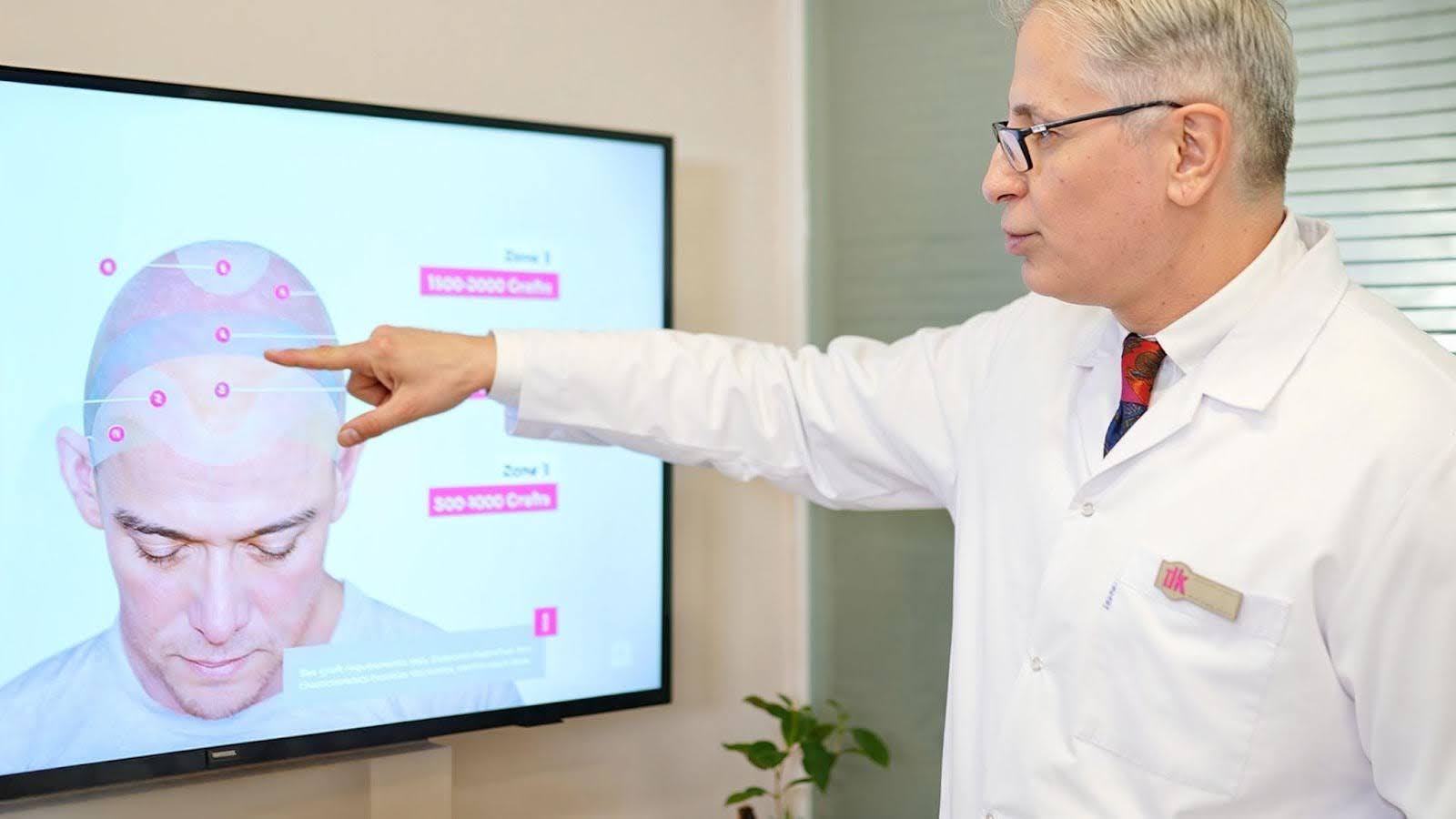
    The Hair Donor Index, created by analysing thousands of hair transplantation cases performed at the clinic over the years, was developed by DK Klinik—operating in the field of dermatology and hair transplantation in Turkey for 23 years—to grade the donor area quality of patients in preparation for hair transplantation.

    Unlike traditional approaches that often rely heavily on subjective visual inspection, DK Klinik’s Hair Donor Index scores the donor area based on four critical parameters: follicular density, donor area size, follicular unit distribution, and hair thickness.

    Each factor has a different level of influence on donor site suitability. Therefore, each score is multiplied by a specific weight, and the patient’s donor area is ultimately scored between 20 and 100 based on the weighted results.

    ‘Many hair transplant evaluations focus on how much area needs to be covered, but they rarely assess whether the donor area can sustainably provide enough grafts,’ said Prof. Dr. Ümit Kemal Şentürk, a senior executive at DK Klinik and added:

    ‘While the Norwood-Hamilton classification helps estimate how many grafts may be needed to restore coverage, it does not measure whether the donor area can supply them without risk. There has been no standardised methodology for evaluating donor sufficiency — until now. Our Hair Donor Index addresses this critical gap with a structured, data-based system.

    We have long used the Hair Donor Index to classify patient candidates in our internal case evaluations, and it has been highly beneficial. However, I believe it is important to note that this methodology is only semi-standardised, as in some cases, individual patient factors can override the four main parameters we consider.’

    Another persistent challenge for hair transplant candidates is inconsistent graft number estimations between clinics.

    While traditional scales can approximate the recipient area’s needs, the donor area’s capacity has primarily been left to subjective interpretation. This often leads to exaggerated promises and a confusing environment where clinics compete over inflated graft numbers. The Hair Donor Index aims to replace guesswork with measurable, realistic evaluations.

    Raising Global Standards

    Hair transplantation has grown increasingly global, with countries like Turkey becoming major destinations for affordable, high-quality procedures. As more patients seek multiple opinions across clinics, tools like the Hair Donor Index provide a critical layer of transparency, helping patients avoid misleading promises and make better-informed decisions.

    DK Klinik’s initiative not only sets a new benchmark for donor area evaluation but also reinforces its long-standing commitment to patient-centred, evidence-based care.

    Source link

  • Clinical dietetics to aged care leadership

    Clinical dietetics to aged care leadership


    Charlene Grosse is a WA-based dietitian whose impressive career journey has taken her from clinical roles to senior leadership in aged care. Now, as General Manager of Residential Care, Charlene is focused on improving the quality of care in aged care settings, with expertise in service development, team leadership and regulatory compliance. In this episode, she shares her career evolution, the challenges of stepping into leadership, and and how she sees the recent aged care reforms affecting the day-to-day role of dietitians in this space. Whether you’re considering a career change or looking to navigate the evolving aged care landscape, Charlene’s story will offer plenty of inspiration and practical takeaways.

    Hosted by Rebecca Sparrowhawk

    Biography

    Charlene Grosse is a dedicated healthcare leader who has an impressive path in the health sector since her graduation as a dietitian in 2001. Beginning her career in clinical dietetics within a large private hospital, Charlene quickly advanced to allied health service development overseeing a variety of allied health services. With a wealth of leadership and management experience, she has successfully built and led high-performing teams, navigated complex health funding structures, managed patient length-of-stay, and ensured compliance with quality accreditation standards. Charlene holds a Master’s in Healthcare Management and is nearing completion of her PhD research, focusing on inflammatory bowel disease (IBD). Recently, she took on a new challenge as General Manager in residential aged care, where her commitment to growth and development, driving positive change, and making a difference in the lives of others reflects her dedication to quality care.


    In this episode, we discuss:

    • The key skills that have supported Charlene’s transition into senior roles
    • How transitioning from hospitals to aged care shifted Charlene’s approach to patient care
    • Insights into the latest aged care reforms and how they will impact dietitians​​


    The content, products and/or services referred to in this podcast are intended for Health Care Professionals only and are not, and are not intended to be, medical advice, which should be tailored to your individual circumstances. The content is for your information only, and we advise that you exercise your own judgement before deciding to use the information provided. Professional medical advice should be obtained before taking action. The reference to particular products and/or services in this episode does not constitute any form of endorsement. Please see  here  for terms and conditions.


    Source link
  • The leap from clinical to private practice

    The leap from clinical to private practice


    Jodie Sheraton started her dietetics career with a $2000 loan from her parents, a printed ad in the Yellow Pages and a ‘can-do’ attitude. Seventeen years later, she has not one, but three successful businesses under her belt, and splits her time between running her multiple-clinic private practices and helping other dietitians increase their impact and income. In this episode, Jodie explains how her willingness to say ‘yes’ has contributed to her many successes. Jodie also shares her three pillars for building a sustainable business, while shining the spotlight on the importance of a life-long commitment to learning and why you should always back yourself.

    Hosted by Brooke Delfino

    Biography

    Jodie Sheraton is the founder of Elevated Dietetics, where she helps clinic-based private practice dietitian business owners increase their impact, influence and income. Jodie’s journey from a new graduate dietitian working in a hospital to a successful private practice owner is nothing short of inspiring. She has not only grown her business, Optimum Intake Dietitians, to a large team of dietitians, but also founded Myrtle Oak Clinic, a specialised eating disorder clinic. And now she’s using her wealth of knowledge and experience to provide coaching and support to fellow dietitian private practice owners to grow their businesses and teams.

    In this episode, we discuss:

    • Why stepping out of your comfort zone is essential for growth
    • The importance of collaborating with people whose values match your own
    • Getting comfortable talking about money
    • The many rewards and challenges that come with being a business owner


    Additional resources

    Connect with Jodie at elevateddietetics.com.au, on LinkedIn or Instagram @elevated_dietetics


    The content, products and/or services referred to in this episode are intended for Health Care Professionals only and are not, and are not intended to be, medical advice, which should be tailored to your individual circumstances. The content is for your information only, and we advise that you exercise your own judgement before deciding to use the information provided. Professional medical advice should be obtained before taking action. The reference to particular products and/or services in this episode does not constitute any form of endorsement. Please see here for terms and conditions.


    Source link