Tag: CHANGE

  • How Hormones Change Across the Day: Cortisol, Melatonin, and Energy Slumps

    How Hormones Change Across the Day: Cortisol, Melatonin, and Energy Slumps

    Hormones play a central role in shaping how the body feels and functions from morning to night. From the moment a person wakes up to the time they fall asleep, hormones like cortisol and melatonin follow a predictable pattern tied to the circadian rhythm.

    These natural fluctuations influence alertness, focus, and even the familiar experience of daily energy slumps. Understanding how hormones shift across the day can help explain why energy rises and falls, and what can be done to stay balanced.

    Understanding the Circadian Rhythm and Hormones

    The circadian rhythm is the body’s internal 24-hour clock that regulates sleep, wakefulness, and hormone production. It is controlled by a small region in the brain called the suprachiasmatic nucleus, which responds primarily to light and darkness.

    Hormones such as cortisol and melatonin are tightly linked to this rhythm. When the eyes detect light in the morning, signals are sent to reduce melatonin production and increase cortisol levels. As daylight fades, the process reverses. This cycle ensures that the body stays aligned with environmental cues, supporting consistent energy levels and sleep quality.

    What Is the Circadian Rhythm and Why Is It Important?

    The circadian rhythm is essential because it synchronizes biological processes, including hormone release, digestion, and body temperature. When this rhythm is disrupted, by irregular sleep or excessive screen time, it can lead to fatigue, poor focus, and more frequent daily energy slumps.

    Morning Hormones: The Cortisol Awakening Response

    Cortisol, often referred to as the “stress hormone,” plays a key role in waking the body up. In healthy individuals, cortisol levels rise sharply within the first 30 to 45 minutes after waking. This is known as the cortisol awakening response.

    This hormone boost increases alertness, sharpens focus, and prepares the body for the day ahead. It also helps regulate metabolism and blood sugar levels, ensuring that energy is readily available.

    Why Is Cortisol Highest in the Morning?

    Cortisol peaks in the morning because the circadian rhythm signals the body to transition from rest to activity. This rise supports mental clarity and physical readiness, making it easier to start the day productively.

    Midday Balance: Sustaining Energy Through Hormones

    As the morning progresses, cortisol levels gradually stabilize rather than remain elevated. During this period, other hormones such as insulin and dopamine contribute to maintaining steady energy and motivation, according to Harvard Health.

    This balance often explains why many people experience peak productivity in the late morning hours. The body is fully awake, hormone levels are stable, and cognitive performance tends to be at its best.

    Why Do People Feel Most Productive in the Morning?

    Morning productivity is often linked to optimal hormone balance. Cortisol is still relatively elevated, supporting alertness, while distractions and fatigue have not yet accumulated. This creates an ideal window for focused work.

    Afternoon Energy Slumps and Hormonal Shifts

    Many people notice a dip in energy during the early to mid-afternoon. These daily energy slumps are not simply the result of a heavy lunch, they are also influenced by the circadian rhythm.

    During this time, cortisol levels decline slightly, and the body experiences a natural lull in alertness. Blood sugar fluctuations after eating can further contribute to feelings of sleepiness.

    Why Do People Feel Sleepy in the Afternoon?

    Afternoon fatigue is partly driven by the body’s internal clock. The circadian rhythm includes a natural dip in energy, typically between 1 PM and 3 PM. Combined with digestion and lower cortisol levels, this creates the perfect conditions for a temporary slowdown.

    Evening Transition: Melatonin and Hormones

    As the day winds down, the body begins preparing for rest. Cortisol levels continue to drop, while melatonin production gradually increases in response to reduced light exposure.

    Melatonin is often called the “sleep hormone” because it signals to the body that it is time to wind down. This shift helps reduce alertness and promotes relaxation.

    What Time Does Melatonin Peak?

    Melatonin levels typically begin rising in the evening and peak during the night, usually between 2 AM and 4 AM. This peak supports deep, restorative sleep and aligns with the body’s natural circadian rhythm, as per Cleveland Clinic.

    Nighttime Hormones and Sleep Quality

    During sleep, melatonin works alongside other hormones to support recovery and repair. Growth hormone, for example, is released during deep sleep stages, helping with tissue repair and muscle growth.

    Exposure to artificial light, especially blue light from screens, can interfere with melatonin production. This disruption can delay sleep onset and reduce overall sleep quality.

    How Does Melatonin Affect Sleep Quality?

    Melatonin helps regulate the timing of sleep and ensures that the body enters deeper sleep stages. When melatonin levels are suppressed, falling asleep becomes more difficult, and sleep may feel less restorative.

    What Disrupts Hormones and the Circadian Rhythm?

    Modern lifestyles can easily interfere with natural hormone cycles. Several common factors can disrupt the circadian rhythm and contribute to daily energy slumps:

    • Irregular sleep schedules that confuse the body’s internal clock
    • Excessive exposure to blue light at night
    • High stress levels that keep cortisol elevated
    • Poor diet and inconsistent meal timing
    • Overuse of caffeine, especially in the afternoon

    What Throws Off the Circadian Rhythm?

    Anything that alters light exposure or sleep timing can disrupt the circadian rhythm. Even small shifts, like staying up late on weekends, can affect hormone balance and energy levels during the week.

    Supporting Healthy Hormones Throughout the Day

    Maintaining balanced hormones does not require drastic changes. Small, consistent habits can reinforce a healthy circadian rhythm and reduce daily energy slumps:

    • Get natural sunlight in the morning to support cortisol regulation
    • Maintain a consistent sleep and wake schedule
    • Eat balanced meals to stabilize blood sugar
    • Limit caffeine intake after midday
    • Reduce screen exposure in the evening to protect melatonin production

    How Can the Circadian Rhythm Be Reset Naturally?

    Resetting the circadian rhythm involves aligning daily habits with natural light cycles. Morning sunlight, regular sleep patterns, and minimizing nighttime light exposure are among the most effective strategies.

    How Hormones Shape Energy From Morning to Night

    Hormones such as cortisol and melatonin follow a predictable daily pattern that directly influences energy, focus, and sleep.

    Guided by the circadian rhythm, these hormonal shifts explain why mornings feel energizing, afternoons bring daily energy slumps, and evenings encourage rest. By understanding how hormones change across the day, it becomes easier to support consistent energy levels and improve overall well-being.

    Frequently Asked Questions

    1. Can changing meal timing improve daily energy slumps?

    Yes. Spacing meals evenly, including protein and fiber, and avoiding very heavy lunches can smooth blood sugar swings, which often worsen mid-afternoon energy dips.

    2. Do naps affect cortisol, melatonin, or the circadian rhythm?

    Short naps of 20, 30 minutes usually do not disrupt hormones or the circadian rhythm, but long or late-afternoon naps can delay nighttime melatonin rise and make it harder to fall asleep.

    3. How does shift work affect hormones like cortisol and melatonin?

    Rotating or night shifts can desynchronize cortisol and melatonin from the natural light, dark cycle, leading to misaligned energy peaks, more pronounced daily energy slumps, and poorer sleep quality.

    4. Can exercise help regulate hormones and daily energy?

    Regular daytime exercise can strengthen the circadian rhythm, support healthy cortisol patterns, and improve nighttime melatonin release, which often leads to more stable energy across the day.




    Source link

  • Being Courageous About Change: Mindful Guidance on the Proactive Pivot

    Being Courageous About Change: Mindful Guidance on the Proactive Pivot

    Being Proactive

    Proactive pivoting is one of the hardest things, because it implies that we’re making a change before we absolutely have to make a change.

    We really don’t like change. We’re creatures of habit. We like our routines, and we like the familiar. When it comes to proactive pivoting, we need to conjure up a certain amount of strength, and faith that what we’re about to do will work out for us.

    Proactive pivoting is about getting ahead of change, seeing that change needs to come, and mustering the courage and the strength to make that change.

    We’re often more accustomed to crisis pivoting. This is when we have to pivot—when things happen legally, medically, relationally, or vocationally that require our immediate, all-hands-on-deck attention.

    Proactive pivoting is different. It is about getting ahead of change, seeing that change needs to come, and mustering the courage and the strength to make that change.

    Loss Aversion

    There are a few fears and obstacles that can get in the way when we’re thinking about pivoting. We all have our go-to place when it’s time for a change—the uncertainty, or the fear of failure, the unknown. Whatever those fears are, we all have them.

    The science of loss aversion shows that even if the change will bring us something equal to, or even a little better than what we currently have, we still resist.

    There’s also something that can get in our way called loss aversion. It turns out that even if the change will bring us something equal to, or even a little better than what we currently have, we still resist.

    The science indicates that in order to make a change, we need to perceive that what we’re going into is twice as positive as what we currently experience. Keeping in mind that experiencing this loss aversion can be very helpful to us in times of pivoting—just knowing that is a phenomenon, and being aware of it, can help us to face it.

    A Personal Example of Proactive Pivoting

    Here’s a personal example of a proactive pivot that occurred in my family.

    My mom was living in Janesville, Wisconsin, where she was born and where she had lived her entire life. She was 85, and she decided to move to Dallas, Texas.

    She was in perfectly fine health and has four children. I’m the oldest of four, and she decided to move before anything happened in her life that would force her to make a change. She was very familiar with her community—she knew her neighbor, she had grown up there, she was driving a car, and she had a very nice life there. But she was able to muster the strength to make a big change at her age. Now four years later, she’s still very healthy and is very grateful that years earlier had made that change.

    Deciding Not to Pivot is Okay, Too

    Sometimes change is genuinely not the right choice in a given moment, and that’s okay.

    We can become present with what our current situation is, assess it, and maybe determine that in the grander scheme of things, it’s not the time for us to pivot.

    In these moments, we don’t have to feel regret or guilt because we actually didn’t go through with it.

    The key is that we consider pivoting when things in our life indicate that would be best for our well-being, and if it’s not, then we can gently surrender.

    We are generally more skilled at crisis pivoting than proactive pivoting, so it isn’t always easy to know what the right thing to do is in the moment. Being compassionately present with ourselves in the process is key—including in the moments that we decide not to make a change, or in the moments when we decide to stay or move on, and we’re not sure.

    Mindfully Reflecting on Your Own Actions

    Think about a time in your life when you did proactively pivot.

    • What brought on the moment when you knew you had to consider change?
    • What did you do to prepare?
    • What helped you make your decision?
    • How did you feel about the change after you made it?
    • What were you most grateful for? What did you learn?

    Life is change, and change is constant. Mindfulness builds our courage, because it helps us pay more attention to our real lives as they’re happening—and that, in turn, helps us to discern when it’s time to change directions.


    Source link

  • America’s Doctor Shortage Isn’t a Training Problem — It’s a Retention Problem. RM GME Is Driving Change.

    America’s Doctor Shortage Isn’t a Training Problem — It’s a Retention Problem. RM GME Is Driving Change.

    For years, the national conversation around America’s physician shortage has focused on expansion. More medical school seats. More residency slots. A larger training pipeline. Yet increasing volume alone has not translated into equitable access to care.

    The deeper issue may not be how many physicians the country trains, but where they ultimately choose to practice and whether they remain there.

    The Association of American Medical Colleges projects a shortage of up to 86,000 physicians by 2036. As of September 2024, nearly two-thirds of primary care Health Professional Shortage Areas were concentrated in rural communities. The challenge is not only supply. It is distribution and retention.

    Without structural intervention, expanding training capacity risks reinforcing existing geographic imbalances.

    Residents Medical Center of Graduate Medical Excellence, known as RM GME, was built around that premise.

    Reframing Workforce Strategy

    RM GME develops and sponsors graduate medical education programs in partnership with hospitals and healthcare systems, with a strategic focus on rural and safety-net institutions. In 2024, the organization achieved accreditation as an ACGME sponsoring institution, allowing it to oversee residency programs under its own institutional framework.

    “We recently became an ACGME-accredited sponsoring institution. Our first independently sponsored residency program launches in California, and our intention is to replicate that model in underserved markets nationwide — Dr. Michael Everest, founder of RM GME.

    The organization positions itself not as a placement intermediary, but as a graduate medical education infrastructure model designed to align training with long-term community workforce needs.

    The Overlooked Variable: Residency Churn

    A persistent but under-addressed dynamic in healthcare workforce policy is residency churn. Physicians frequently train in underserved environments, only to relocate to larger metropolitan systems after graduation. Hospitals that invested in their development face renewed shortages. Communities lose continuity of care.

    Research published in Health Affairs and the Journal of Rural Health has consistently shown that physicians are more likely to practice in the type of community where they complete their residency. Training location influences practice location. Yet many residency programs remain concentrated in already saturated urban centers.

    “Workforce stability begins during training. If we want physicians to practice in underserved communities long term, we have to build programs that are rooted in those communities from the outset. — Dr. Everest”

    RM GME-supported programs emphasize continuity through a guiding principle of post-training community engagement. Residents are encouraged to continue practicing in the same region for a period of at least three years following graduation, reflecting the program’s long-term community investment philosophy.

    “This is not about coercion or compliance. It reflects institutional values and strategic intent. When a community invests in training physicians, the goal is lasting impact. — Dr. Everest”

    Rather than relying on contractual retention mechanisms, the model focuses on designing programs where long-term practice aligns naturally with professional growth and community integration.

    Infrastructure That Supports Sustainability

    Retention is not secured by philosophy alone. Physicians training in rural and safety-net settings often operate with fewer academic resources than their counterparts in large academic medical centers. To address this gap, RM GME integrates AI-supported educational tools that provide adaptive knowledge assessment, conversational academic support, and personalized exam preparation.

    For residents balancing demanding clinical schedules, structured academic reinforcement can influence confidence, performance, and long-term professional satisfaction. In RM GME’s framework, educational infrastructure is part of the workforce strategy.

    If physicians feel supported during training, the likelihood of sustained engagement increases.

    A Model That Tests a Larger Hypothesis

    Loan forgiveness initiatives and financial incentives have attempted to address geographic disparities for decades. While they have produced incremental improvements, rural shortages persist.

    RM GME’s approach tests a different hypothesis. Durable workforce reform may depend on embedding graduate medical education directly within underserved communities and aligning institutional design with continuity from the beginning.

    “Our focus is long-term workforce alignment. Training physicians is essential. Ensuring they remain where they are most needed is what ultimately determines impact. — Dr. Everest”

    If the physician shortage is fundamentally a distribution crisis, the future of workforce reform may depend less on expanding seats and more on rethinking where those seats are placed.

    As RM GME scales its ACGME-accredited sponsorship model, its community-rooted approach will serve as a case study in whether structural GME design can influence where America’s physicians choose to build their careers.

    Source link

  • GAD Drug Development Has Stalled for 16 Years. iNGENu CRO Is Building the Trial Framework to Change That.

    GAD Drug Development Has Stalled for 16 Years. iNGENu CRO Is Building the Trial Framework to Change That.

    The FDA has not approved a new generalized anxiety disorder treatment since 2009. With a high placebo effect, complex neurobiology, and a long list of failed candidates, GAD represents one of psychiatry’s most persistent clinical challenges. Here is what the data shows, and how precision trial design is finally shifting the odds.

    The Gap in the Market

    Generalized Anxiety Disorder affects an estimated 6.8 million adults in the United States alone, yet the last drug to receive FDA approval specifically for the condition was pregabalin, cleared in 2009. Since then, psychiatry has cycled through a series of promising candidates that ultimately could not clear the regulatory bar, leaving clinicians relying on a toolkit that is now a decade and a half old.

    The treatment gap is not for lack of scientific interest. It reflects a specific set of structural challenges: GAD’s biological complexity, the outsized placebo response typical of anxiety trials, and the rigorous endpoint standards that the FDA has maintained. For US biotech firms eyeing this space, the challenge is real, and so is the opportunity.

    The last FDA-approved GAD therapy was cleared in 2009. The biology has not changed. The trial methodology has.

    What Makes Gad Difficult to Treat

    GAD is characterized by persistent, excessive worry about everyday matters that causes measurable functional impairment. Unlike discrete phobias or panic disorder, it is diffuse, chronic, and deeply intertwined with both neurobiological and psychological systems.

    The neurochemical picture is complex. GAD is associated with dysregulation across multiple transmitter systems, including serotonin, norepinephrine, and gamma-aminobutyric acid (GABA). Early drug development concentrated heavily on GABA-targeting compounds. The results were largely disappointing, reinforcing what researchers now recognize: single-pathway interventions tend to fall short in a condition this multifactorial.

    Genetics plays a partial role. Heritability estimates for GAD sit around 30%, a figure high enough to justify genetic research targets, but low enough to confirm that environmental and psychological factors remain significant contributors. That complexity creates both a challenge for trial design and an argument for individualized treatment approaches.

    The diagnostic framework has evolved. Under DSM-5 (code 300.02 / F41.1), GAD requires excessive anxiety and worry occurring more days than not for at least six months, with the individual finding the worry difficult to control. The ICD-11 (code 6A71) similarly emphasizes persistent, excessive worry across multiple activities. For trial sponsors, precision in patient selection using these criteria is not just a clinical formality; it directly affects outcome data.

    The Six FDA-Approved Treatments: A Historical Snapshot

    Six drugs have received FDA approval for the treatment of GAD. The timeline tells a story about where science has concentrated and where it has plateaued.

    Drug FDA Approval Mechanism / Notes
    Buspirone 1986 Anxiolytic targeting serotonin receptors; distinct from benzodiazepines
    Paroxetine 2001 SSRI; commonly prescribed where depression co-occurs with GAD
    Escitalopram 2002 SSRI with demonstrated efficacy across GAD and major depressive disorder
    Duloxetine 2007 SNRI; covers GAD, major depressive disorder, and neuropathic pain
    Venlafaxine 2008 SNRI; used across GAD, depression, and panic disorder
    Pregabalin 2009 Originally an anticonvulsant; adopted for GAD based on CNS calming effects

    The six approved agents cluster around SSRIs and SNRIs, with buspirone representing the only serotonin-specific anxiolytic and pregabalin the lone anticonvulsant-class entry. No novel mechanism has made it to approval in the 16 years since. The reasons lie partly in the drugs that did not make it.

    Lessons from the Failures: Five Candidates That Could Not Cross the Line

    Analyzing failed drug development is as instructive as studying successes. The last decade of GAD trials has produced a consistent set of failure patterns that inform how new trials should be designed.

    Candidate Primary Failure Mode Detail
    Tofisopam Limited Efficacy Failed to outperform placebo in large-scale trials
    Esmirtazapine Discontinued Development halted on strategic grounds despite promising early data
    Gepirone ER Insufficient Efficacy Did not meet primary efficacy endpoints
    Fasoracetam Inconclusive Lacked a clear efficacy signal in GAD-specific trials
    PF-06372865 Safety & Efficacy Development halted over safety concerns and insufficient trial performance

    Several themes recur across these failures. Limited sample sizes produced underpowered results. Short trial durations missed the chronic nature of GAD’s trajectory. And the placebo response in anxiety studies is structurally higher than in most other therapeutic areas, which means that even moderately effective compounds can appear statistically indistinguishable from inactive controls if the trial is not designed to account for it.

    There is also a financial dimension. The cost and risk profile of CNS drug development has led multiple pharma organizations to redirect resources toward indications with clearer regulatory pathways. That dynamic has left an opening for lean, well-organized biotech firms to move into GAD with more focused programs and lower overhead structures.

    The placebo response in anxiety trials is structurally higher than in most other therapeutic areas. A trial not designed to account for this will produce misleading results regardless of the compound’s actual efficacy.

    What High-Quality Gad Trial Design Actually Requires

    The FDA’s standards for GAD are not ambiguous. What has proven difficult is executing against them consistently. Based on the available evidence from failed candidates, successful trial design in this indication requires attention to five interconnected variables.

    Patient selection precision. Rigorous application of DSM-5 and ICD-11 criteria at enrollment is foundational. Trials that use loose inclusion criteria or fail to screen out comorbid conditions with overlapping symptom profiles inflate variance and obscure the treatment signal.

    Appropriate outcome measures. The Hamilton Anxiety Rating Scale (HAM-A) remains the primary FDA-recognized endpoint for GAD, but it functions best when paired with secondary measures that capture patient-reported experience. Reliance on a single endpoint has contributed to approval failures even when a partial clinical benefit was observable.

    Managing the placebo effect. GAD trials consistently show placebo response rates that make separation from active treatment difficult to demonstrate. Strategies including optimized rater training, centralized assessment protocols, and blinding procedures are not optional enhancements; they are structural requirements for generating reliable efficacy data.

    Safety monitoring infrastructure. Several failed candidates ran into safety signals that might have been identified and managed earlier with more granular pharmacovigilance protocols. Real-time safety oversight reduces the risk of late-stage discontinuation.

    Regulatory alignment from day one. FDA engagement during trial design, not after data collection, is one of the most consistent differentiators between programs that advance and those that do not. Pre-IND consultation, alignment on endpoint selection, and documented regulatory strategy significantly reduce the probability of a complete response letter.

    The iNGENu CRO Approach to Gad Research

    iNGENu CRO is an Australian-headquartered clinical research organization built specifically to support early-to-mid-stage biotech firms pursuing FDA approval. In GAD and broader psychiatric indications, the organization brings several structural advantages that address the failure patterns described above.

    FDA-compliant data from non-US trials. iNGENu’s Australian trial infrastructure generates data under 21 CFR 312.120 compliance, meaning results from Asia-Pacific trials can be submitted directly to the FDA without the need for a US IND at the early-phase stage. This shortens start-up timelines to as little as eight to twelve weeks for Phase 1 and 2 programs.

    Physician-led trial execution. Sponsors engage directly with iNGENu’s medical and scientific leadership, including its Chief Executive Officer and PhD scientists, from the start of the engagement. This reduces the communication overhead that leads to protocol drift in larger CRO structures.

    Cost structure aligned with biotech economics. Through the Australian Government’s 43.5% R&D Tax Incentive, eligible sponsors can recover a significant portion of trial expenditure as a direct cash refund. iNGENu reports that more than 99% of its clients qualify for this program. For early-stage firms managing tight capital structures, the cost differential can be decisive.

    Validated psychiatric trial infrastructure. iNGENu operates dedicated clinical capabilities in psychiatric disorder research, with assessment instruments, rater training protocols, and patient-centered design features suited to the specific demands of GAD and related anxiety conditions. This infrastructure directly addresses the endpoint measurement and placebo management challenges that have historically contributed to trial failures in this space.

    Sponsors engage directly with iNGENu’s medical and scientific leadership from the start of the engagement. This structure reduces the communication overhead that causes protocol drift.

    The Market Case for Moving Now

    The commercial argument for GAD drug development is straightforward. Prevalence is high, existing treatments have significant tolerability and efficacy limitations, and there has been no new approved mechanism in the indication since 2009. For a US biotech capable of demonstrating meaningful separation from placebo on validated endpoints, the market entry would be entering largely uncrowded territory.

    The parallel shift toward personalized medicine approaches in psychiatry also creates an opening for novel mechanisms. Multi-target drugs, biomarker-stratified patient selection, and next-generation pharmacological approaches are all areas where early-stage investment today could translate to a differentiated regulatory position within a realistic development timeline.

    iNGENu CRO’s whitepaper on generalized anxiety disorder clinical endpoints, FDA approvals, and trial enhancements maps this landscape in detail for sponsors actively evaluating GAD as a program priority. The document is available directly through iNGENu CRO and covers diagnostic criteria, clinical endpoints, historical approval and failure analysis, and the firm’s approach to trial design.

    Conclusion

    GAD drug development has not stalled because the patient’s need is unclear. It has stalled because the trial execution demands are high and the consequences of methodological shortcuts are severe. The programs most likely to succeed in this space will be those that approach the design phase with the same rigor they bring to the molecule itself.

    With the FDA’s endpoint standards well established, the biological rationale for novel mechanisms documented in the literature, and a cost-accessible clinical infrastructure available through Australia’s regulatory pathway, the conditions for a new wave of GAD approvals are better than they have been in years. The question for sponsors is whether their trial architecture is capable of delivering on the opportunity.

    BOOK A DISCOVERY CALL WITH iNGENu CRO

    iNGENu CRO provides high-quality, FDA-compliant clinical research for innovative biotech firms. To discuss your GAD or psychiatric clinical trial program, contact the team directly:
    Email: hello@ingenucro.com
    Website: www.ingenucro.com

    Source link

  • A Meditation to Help You Let Go and Accept Change

    A Meditation to Help You Let Go and Accept Change

    Explore this loving-kindness practice variation to cultivate more ease and openness within the moment-to-moment unfolding of life.

    One of the hardest parts of life for me, and I think for everyone I know, is that it’s always changing—and sometimes in unpleasant, unpredictable, and unplanned ways. And when changes happen like this, things that we don’t want to happen—someone we love dies or we have a breakup or a divorce, maybe an injury or an illness of ourselves or others, or even getting fired—then we struggle not only from the pain of this loss, but from the unexpected nature of it. Part of the reason for this upset is because so little is in our control. 

    One of the hardest parts of life for me, and I think for everyone I know, is that it’s always changing—and sometimes in unpleasant, unpredictable, and unplanned ways.

    Everything is impermanent. It’s always changing, coming together and falling apart. And it’s frustrating to not be able to make things go our way. But paradoxically, when we can accept that everything is not up to us, and we stop trying to control what we can’t change or trying to predict what we can’t predict, then we can feel a lot more at ease and more open to the moment-to-moment unfolding of our lives. By accepting change, we can bring kindness to our experience, even if it’s painful and sad at times, and we can feel more at peace with changes in life. 

    Key Summary

    Benefits of Acceptance:

    • Reduces suffering caused by resistance to inevitable change
    • Builds resilience for navigating life transitions
    • Develops psychological flexibility
    • Creates space for new possibilities to emerge

    Key Principles:

    • Distinguishing between acceptance and resignation
    • Working with impermanence as a natural law
    • Cultivating an open attitude toward uncertainty
    • Practicing letting go as an active, compassionate choice

    Application: Particularly helpful during major life transitions, loss, relationship changes, and when facing situations beyond our control.

    Guided Meditation: Let Go and Accept Change

    1. First, find a place where you can just sit down and be still. Turn off your devices, close your eyes, and just take a few breaths. Noticing your feet, your seat, your belly. Bringing your attention to your forehead, your cheeks, your jaw, allowing sound to enter your ears, allowing taste to enter your mouth. 
    2. Put your hand on your belly. Just notice how you feel your belly inflates as you inhale and how it contracts when you exhale. 
    3. Call to mind someone you know who’s struggling right now. You could maybe imagine that they’re here with you, visualize them, or just have a sense of their presence. If you like, put your hand on your heart and silently offer them this phrase: May you be at peace with the changes in life. May you be at peace with the changes in life. May you be at peace with the changes in life. Continuing silently repeating this, as though you’re giving a gift to this struggling being. 
    4. Notice: Where is your attention? If you’ve lost the connection with this struggling being, reconnect, begin again. May you be at peace with the changes in life. 
    5. Let go of this connection with this other being. Noticing your feet, feeling your seat, relaxing your shoulder blades, bringing your attention to your breath, to the light entering through your eyelids. 
    6. Next, put your hand on your heart and connect with yourself. You can imagine that you’re looking in the mirror, imagine yourself as a child, or just connect with your beautiful presence. Give yourself the same wisdom: May I be at peace with the changes in life. And continue here just for a minute or two, giving yourself this compassion and wisdom. 
    7. Notice where your attention is. If you’ve lost your connection to yourself, and gently come back, reconnecting. May I be at peace with the changes in life. Just for one more minute, giving yourself this kindness. May I be at peace with the changes in life. 
    8. Keep this connection with yourself, and now include that first being and perhaps everyone that you know and love. May we be at peace with the changes in life. May we be at peace with the changes in life. 
    9. Expand the phrase to include all of the beings. All of the living creatures in this ecosystem we call Earth. All of us struggle with change, with loss, with impermanence. Giving your wisdom and your kindness and your good heart to all of us, including yourself. May we all be at peace with the changes in life. May everyone be at peace with the changes in life. 
    10. When you’re ready, conclude your meditation. You can close your practice by thanking yourself for your good intention, for your beautiful heart, for these joyful efforts. 

    Remember that you can practice in this way whenever you need to. Stop, feel your feet, put your hand on your heart, and say to yourself, May I be at peace with the changes in life. If you’re struggling with an unexpected loss, be sure to be patient and kind with yourself, and check in with your good heart as often as possible. 

    A Meditation on Endings 

    By drawing our attention to endings and our developed habits about the way we meet endings, we can learn how to step fully into our lives with appreciation and gratitude, says Frank Ostaseski. Read More 

    • Frank Ostaseski
    • January 6, 2026


    Source link

  • Finding Peace in Challenging Times with Sharon Salzberg

    Finding Peace in Challenging Times with Sharon Salzberg

    Get the latest on everything mindfulness


    Our free newsletter delivers updates on the science of mindfulness, guided mindfulness meditation practices from leading teachers, special offers, and rich content to support your mindful growth.


    Source link

  • Republican Senator Express ‘Concern’ Over Potential Change

    Republican Senator Express ‘Concern’ Over Potential Change

    Republican Sen. Bill Cassidy of Louisiana expressed his “concern” for the potential change to the hepatitis B vaccine schedule for infants in the United States.

    The lawmaker’s concern comes as Health and Human Services Secretary Robert F. Kennedy Jr.’s panel of federal vaccine advisers will come together to talk about and potentially vote on a change to the vaccine schedule when they meet for the next time on Dec. 4.

    Bill Cassidy on Hepatitis B Vaccine Schedule

    Cassidy said that his skepticism of the change is because the hepatitis B vaccine and its ingredients, which include aluminum, have been “shown to be safe.” He argued that this is a policy made by people who do not understand the epidemiology of hepatitis B or who have become comfortable with long-term success with the current recommendation.

    A Federal Register notice showed that the agenda for the Centers for Disease Control and Prevention’s (CDC) Advisory Committee on Immunization Practices will include talks on “vaccine safety, the childhood and adolescent immunization schedule, and hepatitis B vaccines, according to The Hill.

    The idea of removing aluminum, or even issuing a warning about its use, would significantly affect some of the most important childhood shots across the United States. These include those for DTaP, hepatitis A and B, HPV, pneumococcal, and meningitis.

    Other than hepatitis B, it is not yet clear what other possible changes the panel could talk about in the upcoming meeting. However, United States President Donald Trump’s administration has long been advocating for breaking up the combined measles-mumps-rubella shot that is given to children and turning it into three shots.

    The Benefits of Current Recommendations

    Cassidy, who chairs the Senate Committee on Health, Education, Labor and Pensions, said that, as a doctor, he has seen people die from vaccine-preventable diseases. He added that he wants to make America healthy, and argued that this does not start by stopping recommendations that have made people “substantially healthier,” CBS News reported.

    The Republican senator, who is a physician whose medical practice focused on hepatitis B, noted that the recommended vaccine, which is given at birth, has decreased the incidence of chronic hepatitis B by 20,000 people over the last two decades.

    Data showed that since the recommendation that infants receive their first hepatitis B vaccine dose within 24 hours after being born, which was implemented in 1991, it has given various benefits. These include the prevention of more than 500,000 childhood infections and the reduction of infant hepatitis B cases by 95 percent, among other things, as per NFID.


    Originally published on parentherald.com

    © {{Year}} ParentHerald.com All rights reserved. Do not reproduce without permission.

    Source link

  • Fewer Children are Having Peanut Allergies in Recent Years Following a Change in Guidelines, Study Shows

    Fewer Children are Having Peanut Allergies in Recent Years Following a Change in Guidelines, Study Shows

    Fewer children are being found with peanut allergies in the last few years, a study shows, which is believed to be due to a change in policy regarding early exposure.

    This began when experts recommended that parents should avoid having their infants exposed to common allergens as a means to curb rising food allergy rates. However, a 2015 landmark trial found that feeding peanuts to babies could actually decrease their chances of developing an allergy by more than 80 percent.

    Peanut Allergies in Children

    In 2017, the National Institute of Allergy and Infectious Diseases formally recommended that parents use the early-introduction approach and issued national guidelines. A new study that was published on Monday found that food allergy rates in kids under three have fallen following those changes.

    The data showed that the numbers dropped to 0.93 percent between 2017 and 2020, from 1.46 percent between 2012 and 2015. Comparing these statistics shows a 36 percent reduction in all food allergies, which is largely driven by a 43 percent drop in peanut allergies, according to the New York Times.

    Additionally, the study found that eggs overtook peanuts as the No. 1 food allergen in young children. However, the researchers did not examine what infants ate, which means the study does not show that the guidelines directly caused the decline.

    A pediatrician at Columbia University Irving Medical Center in New York, Dr. Edith Bracho-Sanchez, said that the data is still promising as it relates to the prevention of a potentially deadly and life-changing diagnosis.

    One of the researchers of the latest study, co-author Sanislaw Gabryszewski, MD, PhD, said that their observations provide real-world evidence that public health efforts that promote early allergen introduction in infancy are making an impact, AJMC reported.

    A Change in National Guidelines

    The finding comes as roughly four percent of kids are affected by a food allergy that is mediated by IgE, which includes food like eggs, nuts, milk, wheat, and peanuts. These can then cause immediate reactions that can threaten the children’s lives, including difficulty breathing and swelling.

    Another researcher involved in the new study, Dr. David Hill, said that their findings were “remarkable.” He and his colleagues analyzed electronic health records from dozens of pediatric practices so they could track diagnoses of food allergies in young kids before, during, and after the guidelines were issued.

    Despite this, the effort has not yet resulted in a reduction in the overall increase in food allergies in the United States in the past few years, as per LMT Online.


    Originally published on parentherald.com

    © {{Year}} ParentHerald.com All rights reserved. Do not reproduce without permission.

    Source link

  • ‘Change Dramatically’ or Fed Scientists Will Publish Elsewhere

    ‘Change Dramatically’ or Fed Scientists Will Publish Elsewhere

    Health and Human Services Secretary Robert F. Kennedy Jr. threatened leading medical journals during a podcast appearance Tuesday, warning that government scientists could be barred from publishing in what he called “corrupt” publications.

    During an appearance on the “Ultimate Human” podcast, Kennedy targeted the New England Journal of Medicine (NEJM), the Journal of the American Medical Association (JAMA), and The Lancet, accusing them of publishing studies aligned with pharmaceutical industry interests.


    “Unless those journals change dramatically, we are going to stop NIH scientists from publishing in them and we’re going to create our own journals in-house,” Kennedy said, referencing the National Institutes of Health.

    Kennedy’s remarks follow the release of a White House-backed report he led, warning that pharmaceutical overreach, overprescribed medications, and institutional fear may be contributing to rising rates of chronic illness in children. The report claims industry influence has discouraged open scientific inquiry into underlying health issues.

    Kennedy went on to claim that even the editors of the publications agreed with him.

    He accused NEJM editor-in-chief Marcia Angell of saying, in Kennedy’s words, “‘We are no longer a science journal, we are a vessel for pharmaceutical propaganda.'” In 2009, Angell actually said: “It is simply no longer possible to believe much of the clinical research that is published.”

    The former presidential candidate also took liberty paraphrasing a 2015 quote from Lancet editor, Richard Horton. “‘We are not longer science journals, we are about promoting pharmaceutical products and that is what we do,'” Kennedy claimed Horton said.

    “Much of the scientific literature, perhaps half, may simply be untrue,” Horton said, acknowledging that published research is, “Afflicted by studies with small sample sizes, tiny effects, invalid exploratory analyses, and flagrant conflicts of interest.”

    The journals cited by Kennedy have not yet offered a response to his comments.

    Meanwhile, NIH director, Jay Bhattacharya and FDA Commissioner Marty Makary have launched their own alternative journal, The Journal of the Academy of Public Health.

    Originally published on Latin Times


    Source link

  • Navigating behaviour change with confidence

    Navigating behaviour change with confidence


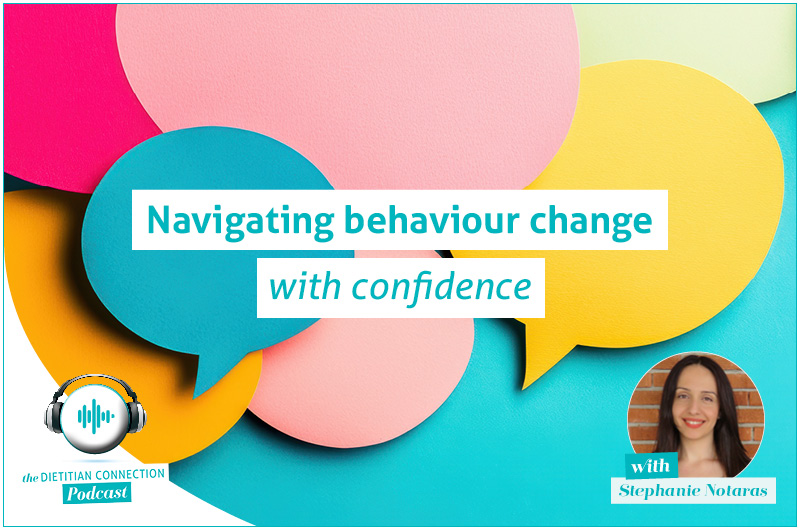
    What if the key to lasting behaviour change isn’t just what you teach your clients—but how you connect and communicate with them? In this episode of The Dietitian Connection Podcast, we sit down with Stephanie Notaras, a dietitian and expert in counselling and communication, to explore how clear and confident communication can help overcome barriers to change.

    Hosted by Brooke Delfino 

    Biography

    Stephanie Notaras is an APD, a PhD Candidate, the host of the Nutrition Counselling Corner podcast, a published author and the owner of the Dietitian Counselling Skills practice helping dietitians improve their counselling skills for better client retention, outcomes and revenue in their practice. She has a master’s in counselling and has developed and published a counselling framework for dietetic practice. Stephanie was awarded Dietitian of the Year 2024 at the Australian Allied Health Awards.


    In this episode, we discuss:

    • Why communication is just as crucial as nutrition knowledge
    • The difference between coaching and counselling in dietetic practice
    • How to use the Stages of Change Model to guide client progress
    • Strategies to compassionately challenge clients and move them toward action
    • How strong counselling skills improve client retention and outcomes


    Additional resources


    Click here to listen to the Nutrition Counselling Corner podcast (on Apple Podcasts and Spotify)

    Click here to join the Dietitians: Counselling Skills Community Facebook Group

    Connect with Stephanie Notaras at stephanienotaras.com or in Instagram @dietitiancounsellingskills

    Click here for Dietitians Unite 2025 tickets in Melbourne on 30 May


    The content, products and/or services referred to in this podcast are intended for Health Care Professionals only and are not, and are not intended to be, medical advice, which should be tailored to your individual circumstances. The content is for your information only, and we advise that you exercise your own judgement before deciding to use the information provided. Professional medical advice should be obtained before taking action. The reference to particular products and/or services in this episode does not constitute any form of endorsement. Please see  here  for terms and conditions.


    Source link