In today’s fast-paced world, achieving balance in life has become a daunting task. With increasing demands from work, family, and social obligations, it’s easy to feel overwhelmed and succumb to burnout. Burnout is a state of emotional, mental, and physical exhaustion caused by excessive and prolonged stress. It can lead to decreased productivity, strained relationships, and poor physical and mental health. However, by incorporating productivity hacks into your daily routine, you can take control of your day, reduce stress, and achieve a better balance between work and personal life.
Understanding Burnout
Burnout is not just a result of working too much; it’s a complex issue that arises from chronic stress, lack of control, lack of social support, lack of recognition or reward, and poor work-life balance. Recognizing the signs of burnout is crucial to addressing it. These signs include chronic fatigue, cynicism and detachment, reduced performance, and physical symptoms such as headaches and sleep disturbances.
Identifying Your Productivity Style
Before implementing productivity hacks, it’s essential to understand your productivity style. Everyone has a unique approach to how they work best. Some people are morning larks, while others are night owls. Understanding your energy levels, focus, and creativity patterns can help you schedule your tasks more effectively. Additionally, identifying whether you’re a planner, a prioritizer, or a predictor can help you choose the productivity systems that suit you best.
Setting Clear Goals and Priorities
Setting clear goals and priorities is fundamental to achieving balance and reducing burnout. Start by setting SMART (Specific, Measurable, Achievable, Relevant, Time-bound) goals for both your professional and personal life. Then, prioritize these goals based on their importance and urgency. This will help you focus on what needs to be done and eliminate non-essential tasks that can derail your progress.
Using Productivity Hacks
Productivity hacks are simple strategies that can significantly boost your efficiency and reduce burnout. Here are several hacks you can incorporate into your daily routine:
Pomodoro Technique: Work in focused 25-minute increments, followed by a 5-minute break. This technique can help you stay focused and avoid burnout.
Time Blocking: Schedule large blocks of uninterrupted time to focus on important tasks. This can help you make significant progress on critical tasks.
The Eisenhower Matrix: Prioritize tasks based on their urgency and importance. This matrix helps you decide which tasks to do first, which to delegate, and which to eliminate or defer.
Batching Similar Tasks: Group similar tasks together and complete them in one session. For example, check and respond to all your emails at once instead of constantly throughout the day.
Learning to Say No: Be mindful of taking on too much. Learn to say no to tasks that are not aligned with your goals or that interfere with self-care.
Managing Distractions
Distractions are a significant productivity killer. Managing distractions requires discipline and the right strategies. Here are a few tips:
Turn Off Notifications: Silence notifications for non-essential apps during work hours to minimize interruptions.
Create a Conducive Work Environment: Ensure your workspace is comfortable, well-lit, and organized. A cluttered space can contribute to a cluttered mind.
Use Focus-Enhancing Tools: Tools like website blockers can prevent you from accessing distracting websites during your work sessions.
Schedule Social Media and Email Checks: Designate specific times to check social media and emails to avoid constant checking throughout the day.
Practicing Self-Care
Achieving balance also involves taking care of your physical, emotional, and mental well-being. Self-care is not a luxury; it’s a necessity. Here are a few self-care practices to incorporate into your daily routine:
Regular Exercise: Engage in physical activities that you enjoy, such as walking, running, or yoga. Exercise can reduce stress and boost energy levels.
Mindfulness and Meditation: Practice mindfulness and meditation to reduce stress and improve focus.
Healthy Eating: Eat a balanced diet that includes plenty of fruits, vegetables, whole grains, and lean proteins. Avoid sugary and processed foods that can lead to energy crashes.
Adequate Sleep: Ensure you get enough sleep each night. Lack of sleep can significantly impair your productivity and increase stress levels.
Building a Support System
Having a support system is crucial for achieving and maintaining balance. This includes:
Colleagues and Friends: Build strong relationships with colleagues and friends who can offer support and understanding.
Family Support: Communicate your needs and boundaries clearly with your family to ensure they understand your situation.
Professional Help: Don’t hesitate to seek help from a therapist or counselor if you’re struggling with burnout or other mental health issues.
Conclusion
Burnout is a preventable condition that requires intentional effort to avoid. By understanding your productivity style, setting clear goals and priorities, using productivity hacks, managing distractions, practicing self-care, and building a support system, you can achieve a better balance in your life and reduce the risk of burnout. Remember, balance is not a static state; it’s dynamic and requires constant adjustment. Be patient, flexible, and kind to yourself as you work towards creating a more balanced and fulfilling life.
FAQs
Q: What are the early signs of burnout that I should look out for?
A: Early signs of burnout include chronic fatigue, reduced motivation, increased cynicism, and decreased performance. Physical symptoms like headaches and sleep disturbances can also be indicators.
Q: How can I avoid burnout if I have a demanding job?
A: To avoid burnout with a demanding job, prioritize self-care, set clear boundaries between your work and personal life, and use productivity hacks to manage your workload more efficiently.
Q: What role does technology play in preventing burnout?
A: Technology can both contribute to and prevent burnout. It can facilitate work-life balance by providing tools for time management and communication, but it can also blur the lines between work and personal life if not used mindfully.
Q: How often should I review and adjust my goals and priorities?
A: It’s a good practice to review and adjust your goals and priorities regularly, ideally on a quarterly basis, to ensure they remain relevant and aligned with your current situation and aspirations.
Q: What if I’m not sure where to start with implementing productivity hacks and self-care practices?
A: Start by identifying one area you’d like to improve, whether it’s your morning routine, task management, or self-care. Begin with small, achievable changes and gradually build upon them. Seek advice from professionals or online resources for tailored guidance.
As conversations around workplace wellness continue to evolve, more organizations are examining how stress, burnout, and emotional strain influence broader health outcomes. According to Jordan Dunin, founder of HatchPath, the discussion increasingly extends beyond productivity or morale and into long-term well-being. HatchPath, which provides concierge-style wellness and coaching support for organizations and individuals, operates within that growing intersection between employee resilience and organizational sustainability.
From Dunin’s perspective, businesses are in a unique position to create impact that extends beyond internal operations. He explains that for-profit organizations can still play a meaningful role in supporting communities, particularly when wellness initiatives are tied to education, accessibility, and long-term engagement. “A company does not have to operate as a nonprofit to create real impact,” Dunin says. “Organizations have the ability to support people in ways that extend far beyond the workplace when that intention becomes part of the culture.”
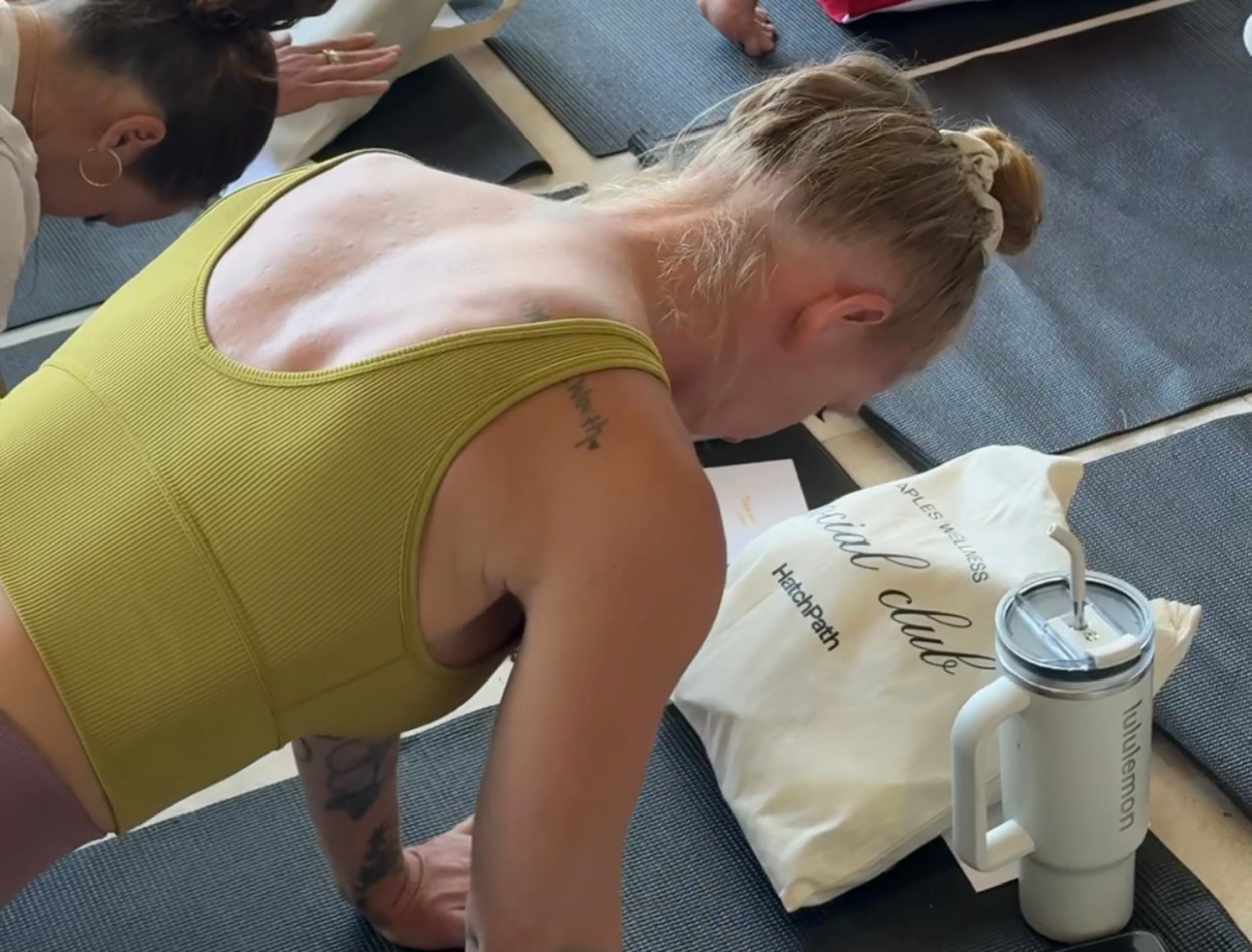
That philosophy recently shaped one of HatchPath’s community wellness events, organized in partnership with the American Heart Association. The gathering brought together local professionals, wellness practitioners, and community members for an experience centered on nervous system regulation, movement, stress management, and heart health awareness. According to Dunin, the event was intentionally designed to reflect a broader understanding of wellness and the relationship between emotional health and cardiovascular health.
“We wanted people to think differently about heart health and stress,” Dunin says. “For many people, wellness conversations focus on exercise or nutrition alone, but emotional regulation, sleep, recovery, and the state people live in every day also matter a lot.”
The event included guided breathwork sessions, movement-based activities, wellness treatments, and educational discussions focused on recovery and restoration. From Dunin’s viewpoint, the collaborative structure reflected HatchPath’s larger mission of creating environments where people can connect through healthier habits and shared experiences.
Natasha Iannone, Development Director of American Heart Association, adds, “We were incredibly pleased with the outcome of the Wellness at Home Experience in Naples and grateful for the collaboration with HatchPath. Events like these beautifully demonstrate what’s possible when wellness, community, and purpose come together. We look forward to continuing to work together and raise support for the American Heart Association’s life-saving mission and impact throughout Southwest Florida.”
The connection between stress and physical health has increasingly become part of broader workplace discussions. More than 840,000 people die each year from health conditions linked to workplace psychosocial risks, including long working hours, job insecurity, workplace harassment, and chronic stress. These risks are closely associated with cardiovascular disease and mental health disorders. From Dunin’s perspective, organizations are beginning to recognize that wellness is closely tied to sustainability, retention, and overall quality of life.
That understanding has also influenced HatchPath’s recent expansion through employee benefits platforms. According to Dunin, the model allows the company to reach a larger number of employees across multiple organizations while increasing access to wellness and coaching support. He explains that the objective is broader availability for individuals who may not otherwise seek out support independently.
HatchPath
“Our focus has always been participation and accessibility,” Dunin says. “When support becomes easier to access, more people are willing to engage with it consistently.”
Beyond corporate partnerships, HatchPath has continued organizing wellness initiatives tied to different community causes, including mental health, children’s well-being, and environmental awareness efforts. Dunin notes that these events reflect a larger belief that wellness should be approached holistically rather than through isolated categories.
He also believes that conversations around stress management are gradually becoming more normalized within leadership environments. From his perspective, many professionals are beginning to acknowledge that constant connectivity and prolonged pressure can affect recovery, focus, and emotional regulation over time.
“Rest is becoming an important part of the conversation,” Dunin says. “People are realizing that recovery, boundaries, and nervous system health influence how they show up in every part of life.”
As HatchPath continues expanding its reach, Dunin views the company’s work as part of a broader shift in how businesses approach responsibility and wellness. While nonprofits continue serving an essential role within communities, he believes companies also have the opportunity to contribute in ways that create meaningful and lasting impact.
“When businesses choose to invest in people beyond performance metrics, that impact carries outward into families, communities, and everyday life,” Dunin says. “That is where long-term change begins.”
Going slow has always been accompanied by an air of wisdom. “Adopt the pace of nature,” advised Ralph Waldo Emerson. “Her secret is patience.” A couple millennia and change before that, Lao Tzu said something similar: “Nature does not hurry, yet everything is accomplished.”
Yet these days, paeans to slowness have taken on a slightly more urgent tone. “We are on a bus speeding faster and faster toward a cliff, and we celebrate every added mile per hour as progress,” wrote the French economist Timothée Parrique in Slow Down or Die, published last May. “It’s madness. Maximizing growth is like stepping on the accelerator with the absolute certainty of dying in a social and ecological collapse.”
The Japanese philosopher and economist Kohei Saito covered similar territory in Slow Down, his 2024 degrowth manifesto. Our obsession with GDPs is contributing not only to our collective suffering but to our eventual demise. After all, economic growth might be seen as the societal manifestation of individual craving—we want, therefore we buy.
In the age of AI, when the average person consumes more information in a day than someone in the 15th century would have in their entire lifetime, one can see why slowness feels essential. People are caught up in the rat race, leading stressful, overly connected lives. Yet it is one thing to slow down at a systemic level, and quite another to slow down as an individual.
In the age of AI, when the average person consumes more information in a day than someone in the 15th century would have in their entire lifetime, one can see why slowness feels essential.
Can mindfulness help us take our foot off the accelerator? And can a personal practice have a meaningful impact on the speed at which society moves?
Doing Mode to Being Mode
“Mindfulness practice is certainly a tangible way of slowing down,” says mindfulness scholar Andrew Olendzki. “If only for a brief session, one deliberately drops out of ‘doing’ mode to linger in ‘being’ mode.”
Lingering in being mode has a tangible impact on our internal speedometer. “Mindfulness practice is a way of re-training oneself to slow down in every way, and the rate of breathing is the most accessible way of doing this,” says Olendzki.
Indeed, research shows that long-term meditators display slower respiratory rates than non-meditators. Being able to slow down physiologically when one is operating at a higher register might bring a degree of deliberateness to “fast-paced” endeavors. It can help us embody the tortoise despite the prevalence of so many hares.
Being able to slow down physiologically when one is operating at a higher register might bring a degree of deliberateness to “fast-paced” endeavors. It can help us embody the tortoise despite the prevalence of so many hares.
When this deliberateness pervades the body, it can extend to the mind, providing a countercurrent to the speed at which modern life moves. It can teach us not just to slow down during common contemplative practices, like meditation or journaling or yoga, but to access a lower gear in the midst of the everyday, which is when we most feel the pressure to maintain forward momentum.
“For most people today, the speed comes from external engagements: busy schedules, phones set to notify every incoming message, and the basic tendency to ‘do a lot’ in the modern lifestyle,” says Olendzki. “I think the pace at which one lives one’s life is a matter of habit, and like all habits is learned. Much in our society encourages moving fast, and I like to think we still have some choice in how much we participate in this.”
Unlearning Our Addiction to Speed
In some respects, then, slowing down involves a type of unlearning. We are so used to moving at the speed of information that we don’t realize that we don’t have to respond to every notification that vibrates in our pockets. The anthropologist Thomas Hylland Eriksen distinguished between “fast time”—writing an email or completing a report, and “slow time”—leisure activities like creating art or sitting still. He noted that when fast time and slow time meet—deadline pressure versus writing poetry—fast time always wins. But when we notice this imbalance we can choose to prioritize slow time.
Mindfulness might support our efforts to slow down insofar as it reorients us toward the rhythm of the breath, the pace of nature, and the workability of the mind.
We may need support in making this choice. Perhaps this is why the past couple of years have seen books about Slow Birding, Slow Productivity, Slow Pleasure, and Slow Seasons—a guide to reconnecting with nature. In an age of abundance those of us in privileged positions are not thirsty for more but for less.
In this sense, Lao Tzu, Emerson, and Weller may be on to something when they advise us to take a cue from natural rhythms. In his book Weller recalled his mentor, Clarke Berry, placing his hand on a rock and indicating that he operates at geologic speed:
Geologic speed—the rhythm of eons, of millennia—is etched deep in our bones. When we grant ourselves the time and pace of stone, we come into a deep memory of who we are, where we belong and what is sacred. We remember the values associated with this ancient cadence, among them patience, restraint, and reciprocity.
Mindfulness might support our efforts to slow down insofar as it reorients us toward the rhythm of the breath, the pace of nature, and the workability of the mind. Whether or not that can address the political and economic issues that plague society is questionable, but individuals that can achieve respite may help shape systems that prioritize it. After all, mindfulness isn’t about getting anywhere, or getting ahead, or even getting it.
“Be as mindful as you can of the pace you inhabit in any given day,” wrote Weller. “Try to notice what happens when you slow down and enter the stream of connection with the daylight, the wind, the sounds of the city, birdsong, cricket, or silence.”
Life may be terminal, but our velocity doesn’t have to be.
Three weeks ago, I ended up in the emergency room convinced I was having a heart attack.
The chest pain had started days earlier—a tightness that wouldn’t release, difficulty taking a full breath, pain radiating down my left shoulder. I told myself it was nothing. Maybe I’d overdone it at the gym. Maybe I’d slept wrong.
I kept meditating. I kept teaching. I kept holding space for others.
I tried to breathe my way through it, the way I’ve taught thousands of people to do. But on Sunday, when my doctor’s office was closed and the pain refused to let up, my husband said gently but firmly, We’re going to the ER.
After five hours of tests and long stretches of waiting, the cardiologist came back with relief in his voice: my heart was fine.
I should have felt grateful—and I did. But I was also confused.
If my heart was healthy, what was my body trying to tell me?
Recognition: The Role of Vicarious Trauma In Bearing Witness Without Choice
If you have been paying attention to the world around you over the past months, you may be carrying more than you realize.
Images of devastation in Gaza. Israeli families living with constant fear of attack. Political violence and ICE shootings at home. Rising Islamophobia and antisemitism fracturing communities, relationships, and public life. The countless Black, Indigenous, and other people of color whose deaths rarely make headlines, whose names we never learn. And the ongoing humanitarian crises in places like Sudan, Yemen, and Iran—where suffering continues largely outside the frame of sustained media attention.
If you find yourself feeling unusually tense, exhausted, reactive, numb, or unable to turn away—even when you want to—it may not be a personal failing. It may be a natural response to prolonged exposure to suffering.
For many of us, this witnessing is relentless. Each morning brings new stories, new images, new reasons to feel alarmed or heartbroken. Even when we are not directly affected, our nervous systems are taking it in.
If you find yourself feeling unusually tense, exhausted, reactive, numb, or unable to turn away—even when you want to—it may not be a personal failing. It may be a natural response to prolonged exposure to suffering.
There is a name for this: vicarious trauma.
Vicarious trauma refers to the psychological and physiological impact of sustained empathic engagement with others’ pain. Our bodies and minds do not clearly distinguish between what we experience directly and what we absorb through continuous media exposure, graphic imagery, and ongoing moral urgency.
For others, the constant stream of suffering can feel overwhelming or futile, leading to disengagement instead. We scroll past headlines, turn off the news, or tell ourselves we need to focus on our own lives. At times, this discernment is necessary. Rest, boundaries, and self-care matter. But when disconnection becomes our primary response to vicarious trauma, something else quietly erodes.
Many people turn away not because they don’t care, but because they feel powerless. What difference could I possibly make? In the face of global crises, individual action can seem insignificant, even naïve. Shutting down can feel like the only way to survive.
Yet we live in an interconnected world where complete disconnection is an illusion. And when we disengage for too long, we don’t just lose information—we lose contact. Contact with what is happening. Contact with our own values. Contact with the small but meaningful ways care can move through us. What begins as self-protection can quietly become a loss of agency and connection.
Vicarious trauma doesn’t just make us sad or tired. It reshapes how we see the world.
Research shows that it disrupts core beliefs about safety, trust, control, intimacy, and meaning. It shows up cognitively, emotionally, physically, and behaviorally.
People experiencing vicarious trauma often report:
Brain fog and difficulty concentrating
Heightened anger, anxiety, or emotional numbness
Sleep disturbances and chronic exhaustion
Hypervigilance—always bracing for the next blow
Physical symptoms like headaches, gastrointestinal issues, and chest pain
And yes—ER visits.
But there is something more essential that is lost when we burn out or shut down.
Vicarious trauma explains the cost to our nervous systems. But underneath that is something more subtle—and more consequential: a loss of contact with our capacity to respond.
What gets lost when we engage on default—whether by over-consuming information about suffering or withdrawing from it—is not just nervous system regulation.
We lose contact.
Contact with the body as a source of intelligence. Contact with our felt sense of what is actually needed now. Contact with our agency, beyond outrage or withdrawal. Contact with our capacity to sense where our care is most skillful. Contact with our ability to stay human without hardening.
This isn’t just trauma.
It’s a disconnect from our humanness.
Oppressive systems don’t need to silence us when exhaustion and reactivity will do the job for them.
We find ourselves caught in cycles of constant witnessing or reactive outrage, or else turning away and numbing out.
And when contact is lost, connection suffers.
Connection with others. Connection with purpose. Connection with the part of ourselves that knows how to respond wisely.
Vicarious trauma explains the cost to our nervous systems. But underneath that is something more subtle—and more consequential: a loss of contact with our capacity to respond.
When we’re dysregulated:
We confuse intensity with impact
We lose the ability to imagine creative responses
We default to attack, despair, or withdrawal
What’s at stake isn’t just our well-being. It’s our capacity to imagine—and enact—responses that actually reduce suffering.
Oppressive systems don’t need to silence us when exhaustion and reactivity will do the job for them.
Collective Capacity: How Not to Lose Each Other
When this loss of contact happens at scale, movements fracture. Allies turn on one another. Nuance feels like betrayal. Strategic thinking gives way to moral reflex. The very capacities required for sustained change—discernment, patience, relational trust—begin to erode.
When we are no longer in touch with our discernment, everyone can start to look like a threat. The act of listening itself can feel like moral failure. We confuse intensity with impact, and urgency with wisdom.
This loss of contact doesn’t just exhaust us personally. It diminishes our ability to work together.
When we are no longer in touch with our discernment, everyone can start to look like a threat. The act of listening itself can feel like moral failure. We confuse intensity with impact, and urgency with wisdom.
I’ve seen this up close.
At one point, someone was publicly attacking me online—not because we disagreed about the need to end suffering, but because I was trying to hold complexity rather than take a single side. I was called complicit. My integrity was questioned. Moral failure was assumed.
Instead of reacting, I practiced inner calm, compassion, and equanimity—not to bypass harm, but to stay in contact with my own values of deep listening and seeking to understand. The next day, that same person reached out to say: “I’m sorry to have misjudged you so harshly. I’ve been exhausted, and I lashed out.”
This person wasn’t malicious. They were overwhelmed. I recognized that feeling immediately—that same overwhelm is what had landed me in the ER. The suffering they had been witnessing was real. The vicarious trauma is real. Without tools to return to contact, that pain had nowhere to go but outward.
I’ve witnessed this pattern repeatedly.
When I had tried to draft a Town Council resolution that called for ending violence while also acknowledging security concerns on all sides, it was rejected—not because people disagreed with the facts, but because in the midst of collective disconnection, holding both-and felt impossible.
This is how movements lose their strength—not through genuine disagreement about goals, but through operating from disconnection rather than from our deepest wisdom that comes from listening with care and seeking solutions that include all.
Sustained change requires more than passion. It requires capacity: the ability to engage and retreat, to stay open without collapsing, to remain connected to one another even when the work is hard.
When we lose that capacity, we don’t just lose effectiveness. We lose each other.
Recently, I was invited to a friend’s house for dinner. Simple food. Easy conversation. Board games. And yet, as I sat there, I felt a wave of guilt. How could I be laughing when so many are suffering? I noticed a flash of irritation toward the others at the table—why didn’t they seem as affected as I was? Didn’t they care?
Then I caught myself.
This guilt, this judgment—it wasn’t skillful. It wasn’t making me more effective or more compassionate. It was simply isolating me, pulling me away from the people right in front of me.
Rest is not what we do when the work is finished. It is what makes sustained engagement possible. When we gather, we are restoring contact with the aliveness that oppressive systems rely on extinguishing.
So I made a choice. I allowed myself to be there. To taste the food. To play the game badly and laugh at myself. To let the warmth of friendship soften something that had gone rigid inside me.
It was quietly liberating.
The next day, I returned to my work with more energy, clarity, and steadiness—not because anything had been solved, but because I had remembered what it feels like to be human alongside other humans.
This is not escape. This is restoration.
Rest is not what we do when the work is finished. It is what makes sustained engagement possible. When we gather with like-minded people—not to organize or persuade, but simply to cook together, laugh, play, or enjoy one another’s company—we are not avoiding the work. We are restoring contact with the aliveness that oppressive systems rely on extinguishing.
Sometimes, what returns us to contact isn’t a formal practice at all. It’s a shared meal. Music, art, or movement that reminds us we are alive. A walk where we remember that trees still grow and birds still sing—even now.
These moments are not indulgent. They are essential.
From this restored place, certain skills can help us stay in contact when we re-engage with difficulty.
Skills: Returning to Contact in Real Life
Over years of teaching and research, I came to see that mindfulness as it’s often taught—focusing primarily on meditation and non-judging awareness—is necessary but insufficient for times like these.
Calming the nervous system with meditation is only the first step. Once we re-engage, our default habits return. Without skill, we slide back into reactivity. Even if we can return to a calm, non-judging awareness, it is not enough to navigate nuanced, complex situations, often involving competing needs and worldviews.
Through my study of early Buddhist teachings and contemporary psychology, I began to understand mindfulness as a set of trainable skills—skills that help us stay in contact with what’s alive, even in the midst of suffering. They disrupt our default reactions and help us discern what is needed to respond skillfully.
Three skills become especially essential when we are bearing witness to ongoing crisis:
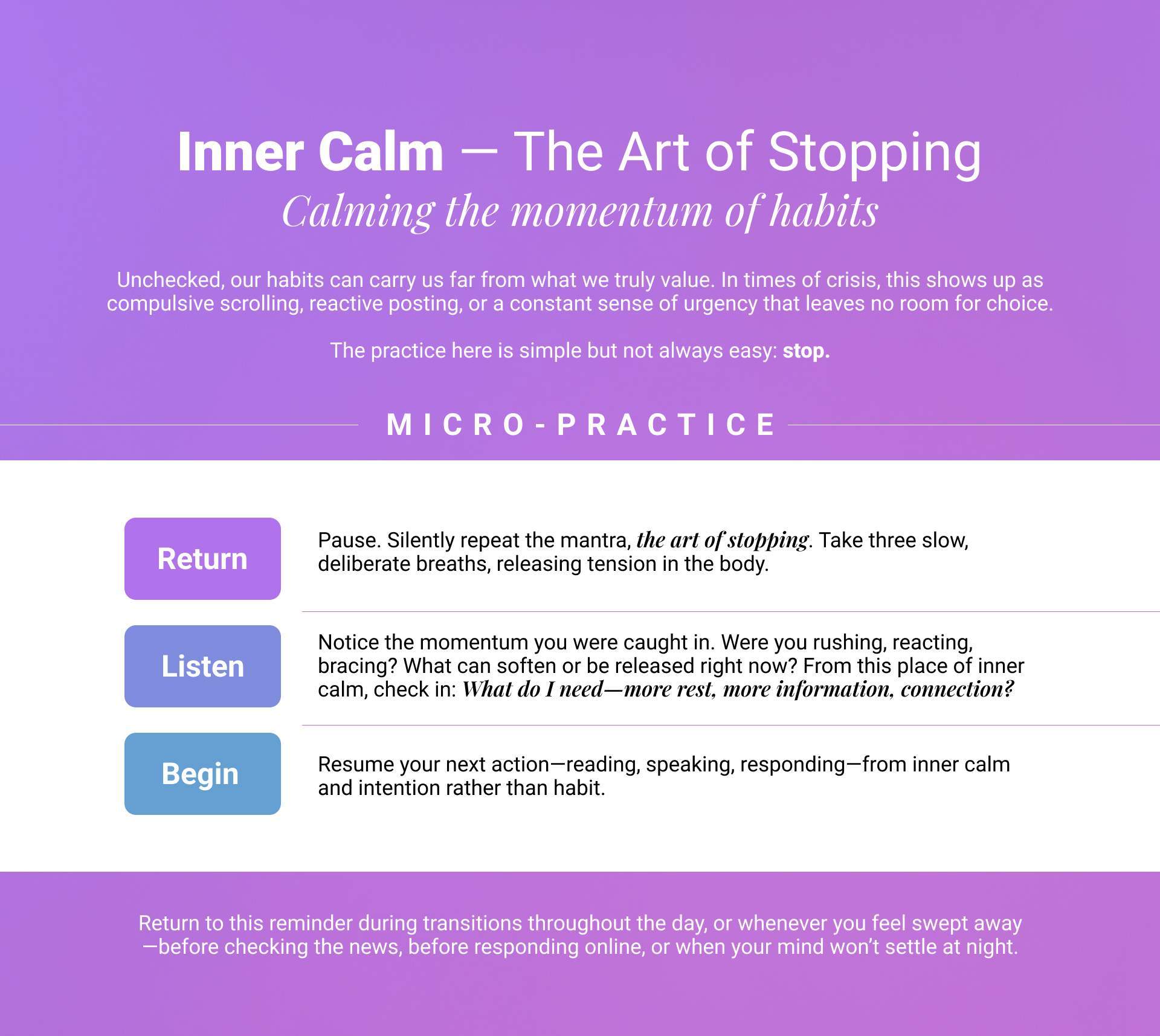
Inner Calm — Creating Space Without Disengaging
Inner calm is the art of stopping, looking, and letting go for purposes of healing and clarity. It softens the grip of our attachments to habitual hurrying, beliefs, and expectations that hinder our inner equilibrium.
Inner calm involves physical composure and mental tranquility, bringing ease to body and mind alike. In the body, composure is experienced in the muscles and as an overall feeling of ease. In the mind, inner calm creates the space to hold everything without attachment and resistance.
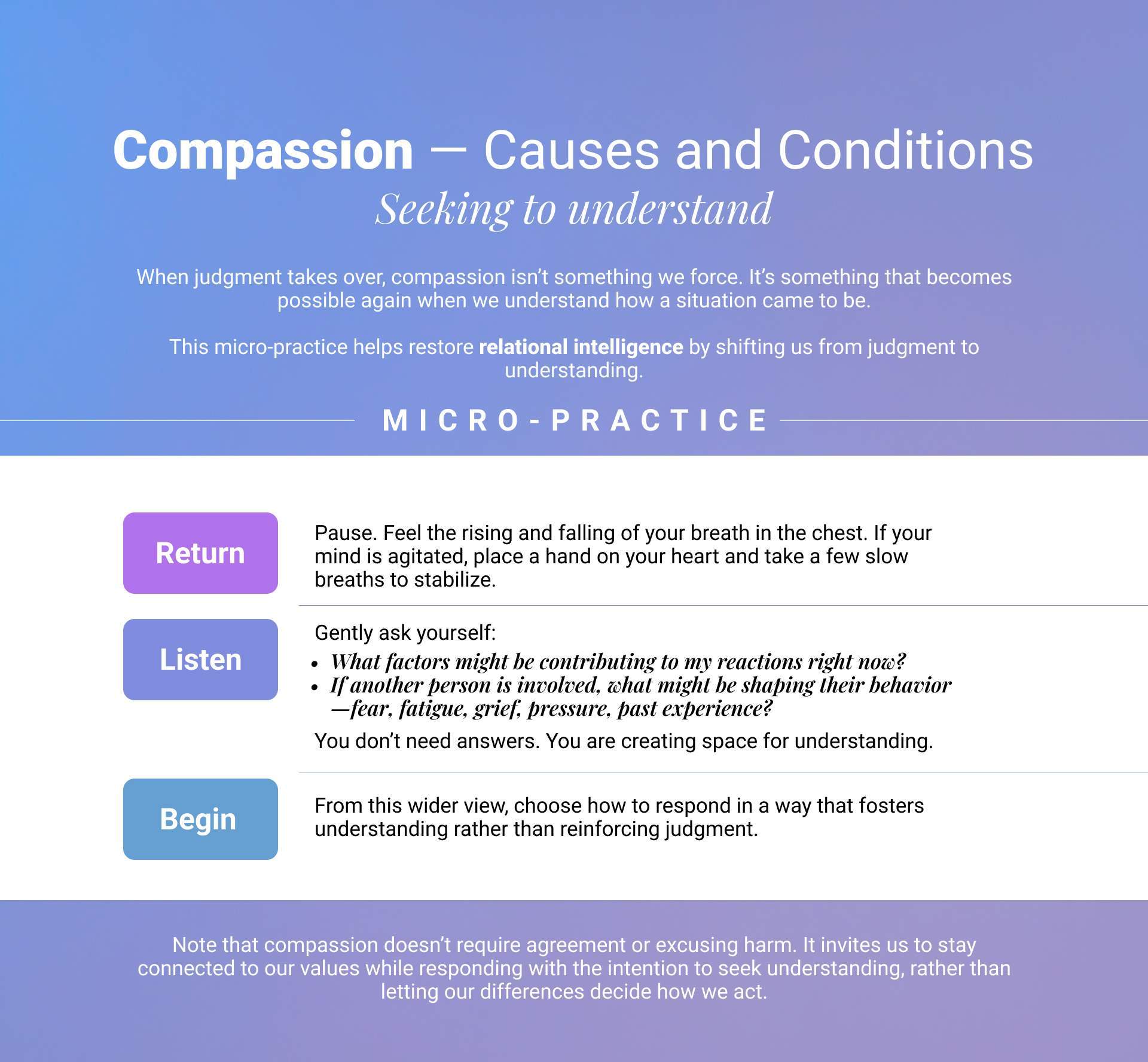
Compassion — Seeking to Understand
Compassion is our innate ability to feel, understand, and be motivated to alleviate suffering in ourselves and others. It disrupts our tendency to act on our automatic judgments about ourselves and others by seeking to understand.
When we lose compassion, we see enemies instead of fellow humans struggling. We attack allies for not being pure enough. We forget that we, too, are worthy of care. We lose our relational intelligence—the capacity to sense how we are affecting others and how to stay connected across differences.
Curiosity — Returning to Creative Capacity
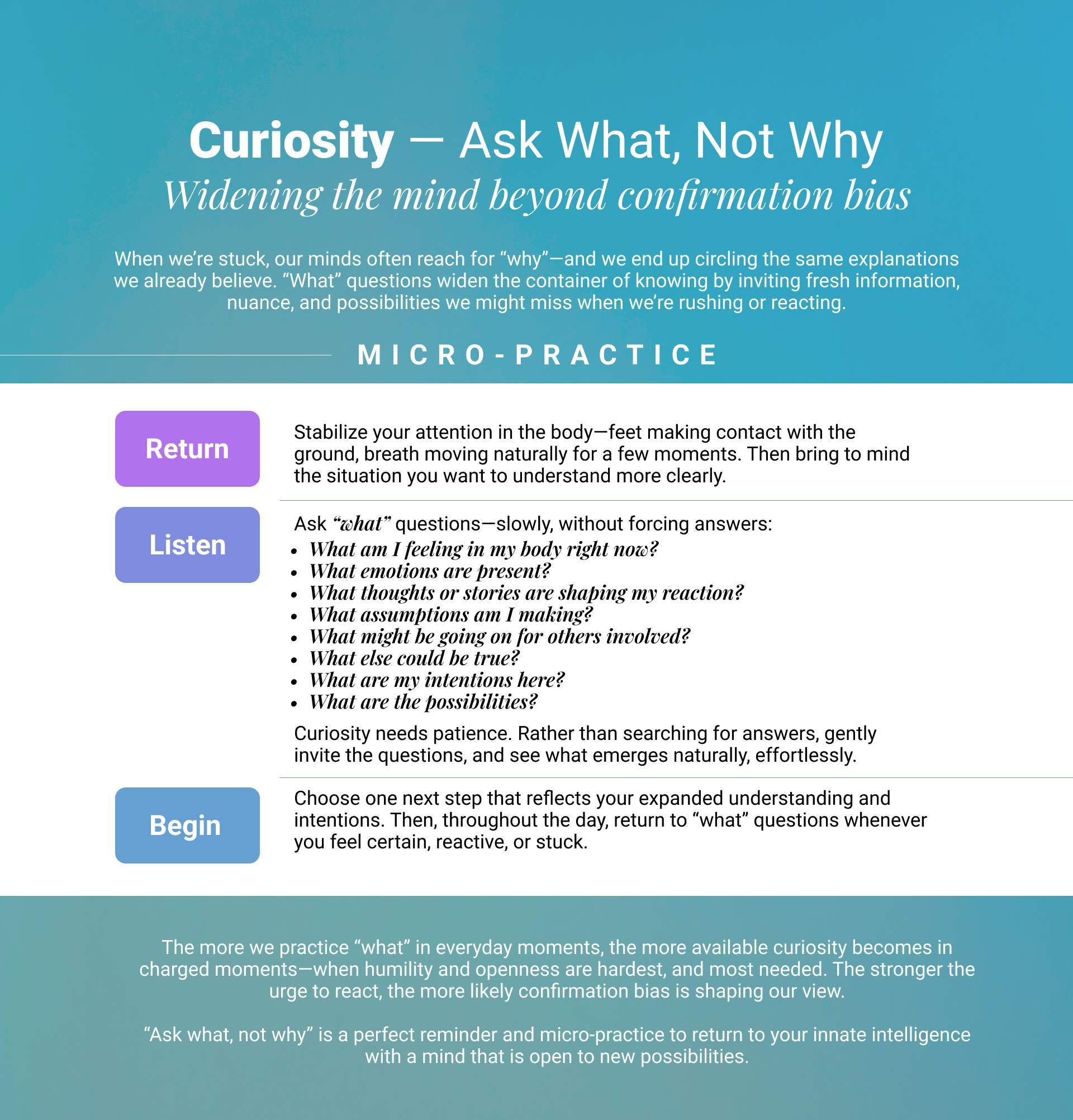
Curiosity is our ability to be genuinely interested and care with the purpose of understanding the situation, even when it’s challenging. It disrupts our confirmation bias by staying open and patient in the face of uncertainty and new information.
Curiosity widens the lens trauma narrows. It restores contact with complexity and helps us sense what might actually help. It’s not about being right. It is about being effective.
Together, these skills interrupt default patterns and reopen the channel between knowing what matters and being able to act on it.
Based on our resources, capacity, and unique gifts, what’s ours to do will be different. There isn’t one right way to meet the darkness. Only many necessary ones.
But here’s what practice has taught me: Skillful response doesn’t look the same for everyone.
Based on our resources, capacity, and unique gifts, what’s ours to do will be different. The parent raising children who can hold complexity. The artist creating work that helps others process grief. The organizer building coalitions. The healer tending to those on the front lines.
There isn’t one right way to meet the darkness. Only many necessary ones.
Reaching to Poetry As Another Anchor
I too have been learning to live with this question—how to stay engaged without collapsing. Sometimes the sifted language of poetry can speak to our deeper needs and longings. This poem by Michael Dubois captures this truth beautifully and resonates deeply.
When Things Feel Dark by Michael Dubois
When things feel dark, remember what the world needs: More healers, more helpers, more hate exorcisers. More artists and poets, more parents ruled by love. More cycle breakers, more radical resters, more warriors of peace. More gardeners who fall deeply in love with the earth beneath their feet. More meditators, more educators, more people willing to use failure as a tool to learn. More thinkers, more thankers, forgivers and apologizers. More builders of bridges and homes with open doors and minds.
The world needs you— because only the ones who see the darkness know the importance of turning on the light.
An Invitation to Practice: 3 Ways to Reconnect
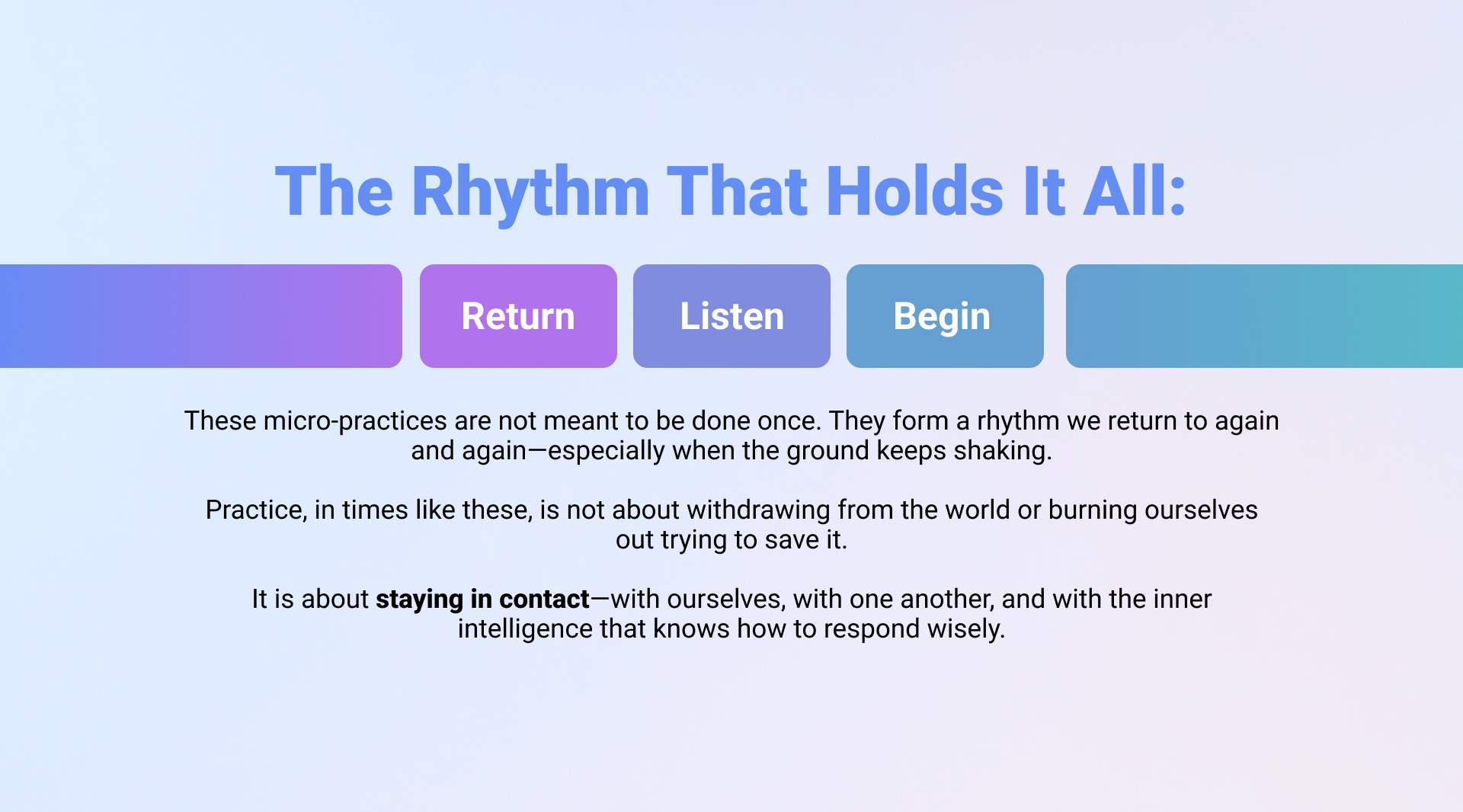
In times like these, practice is an invitation to return to what is already alive in us, and to offer that wisely.
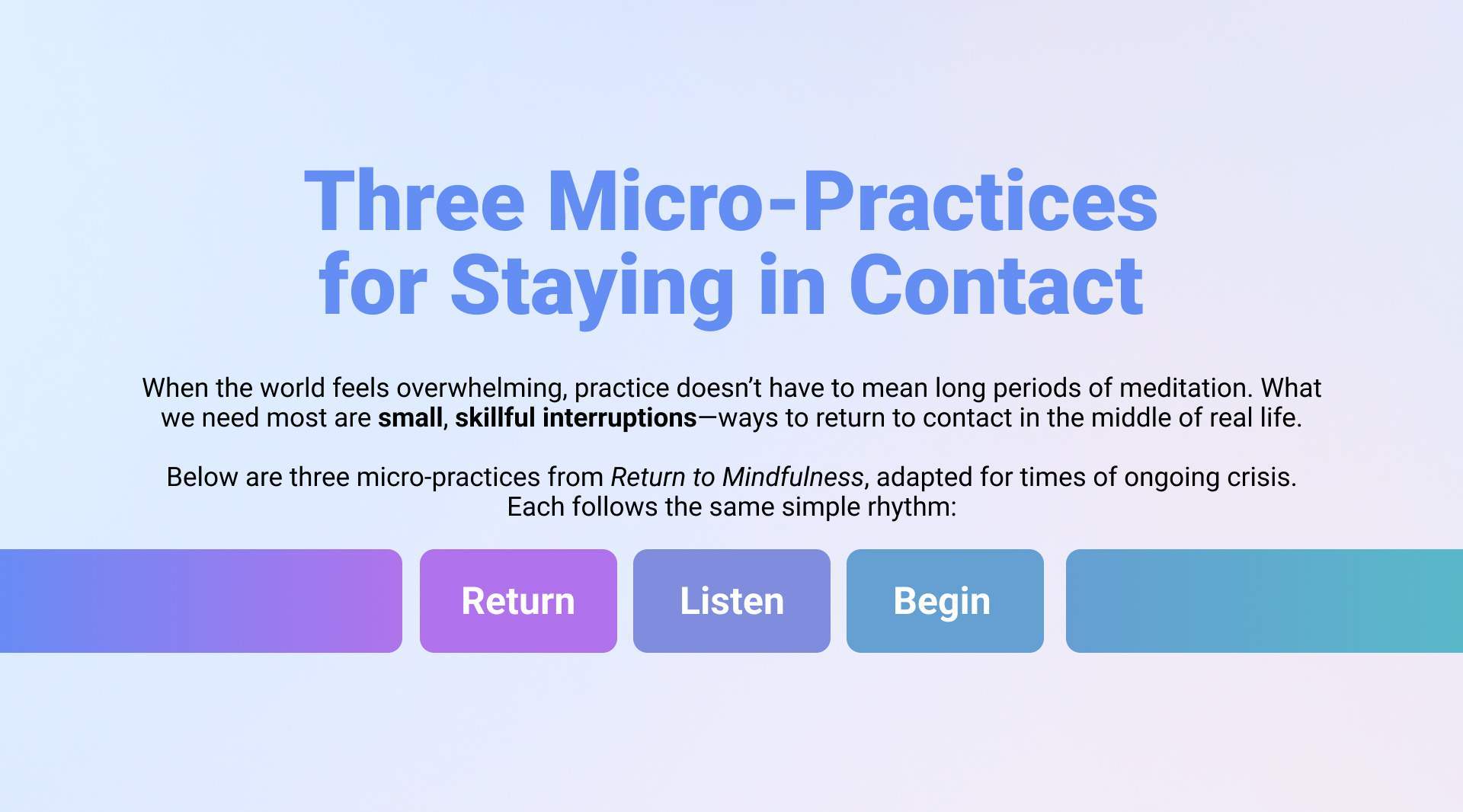
Below are three micro-practices from my book, Return to Mindfulness, to foster inner calm, compassion, and curiosity.
May we have the courage to notice when we’ve lost ourselves—and the skill to return. May we offer what is uniquely ours to give, trusting that the world needs exactly that. May our practice benefit us and all beings.
In today’s fast-paced world, stress and anxiety have become an unfortunate norm for many individuals. The constant pressure to perform, the fear of not meeting expectations, and the overwhelming amount of information we are exposed to daily can lead to feelings of burnout and exhaustion. However, there is a powerful tool that can help alleviate these negative emotions and cultivate a sense of serenity: gratitude practice. By focusing on the things we are thankful for, we can shift our perspective, calm our minds, and improve our overall well-being.
The Science Behind Gratitude
Gratitude is more than just a feeling; it’s a practice that can have a profound impact on our mental and physical health. Research has shown that practicing gratitude can increase the production of neurotransmitters such as dopamine, serotonin, and endorphins, which are associated with feelings of happiness, relaxation, and reduced stress. Additionally, gratitude has been linked to lower levels of cortisol, the hormone responsible for stress and anxiety. By incorporating gratitude into our daily routine, we can literally change our brain chemistry and develop a more positive outlook on life.
How Gratitude Reduces Anxiety and Burnout
So, how exactly does gratitude practice reduce anxiety and burnout? When we focus on the things we are grateful for, we begin to shift our attention away from negative thoughts and worries. This helps to calm the mind and reduce rumination, which is a common symptom of anxiety. By acknowledging the good things in our lives, we also begin to develop a sense of perspective, realizing that our problems are not the only things that exist. This can help us feel more grounded and centered, even in the midst of chaos. Furthermore, gratitude practice can help us develop a sense of resilience, allowing us to bounce back from adversity and navigate challenging situations with greater ease.
Simple Ways to Incorporate Gratitude into Your Daily Life
Incorporating gratitude into your daily life is easier than you think. Here are a few simple ways to get started:
Keep a gratitude journal: Take a few minutes each day to write down three things you are thankful for.
Share gratitude with a friend or family member: Express your appreciation for someone in your life, whether it’s a kind word, a text message, or a small gift.
Practice mindfulness: Take a few minutes each day to focus on the present moment, without judgment, and acknowledge the good things that are happening right now.
Create a gratitude ritual: Develop a daily or weekly ritual, such as lighting a candle or saying a prayer, to help you focus on the things you are grateful for.
The Benefits of Gratitude Practice
The benefits of gratitude practice are numerous and well-documented. Some of the most significant advantages include:
Improved mental health: Gratitude has been shown to reduce symptoms of anxiety and depression, and even help alleviate symptoms of post-traumatic stress disorder (PTSD).
Better sleep: Practicing gratitude before bed can help improve sleep quality and duration.
Stronger relationships: Expressing gratitude towards others can strengthen relationships and build stronger bonds.
Increased resilience: Gratitude can help us develop a sense of resilience, allowing us to navigate challenging situations with greater ease.
Improved physical health: Studies have shown that gratitude is linked to lower blood pressure, a healthier weight, and a stronger immune system.
Overcoming Obstacles to Gratitude Practice
While gratitude practice can be incredibly beneficial, it’s not always easy to get started. Here are a few common obstacles to gratitude practice, and some tips for overcoming them:
Difficulty finding things to be grateful for: Start small, and focus on the little things, such as a good cup of coffee or a beautiful sunset.
Feeling like you don’t have time: Incorporate gratitude into your daily routine, such as right before bed or during your morning commute.
Struggling with negative thoughts: Practice mindfulness and acknowledge your negative thoughts, but also make an effort to focus on the positive aspects of your life.
Gratitude in the Workplace
Gratitude is not just limited to our personal lives; it can also have a profound impact on our professional well-being. When we practice gratitude in the workplace, we can:
Improve our relationships with colleagues and supervisors
Increase our sense of job satisfaction and engagement
Develop a more positive and resilient attitude towards challenges and setbacks
Improve our communication and collaboration skills
Enhance our overall well-being and reduce burnout
Cultivating Gratitude in Children
Teaching children the practice of gratitude can have a lasting impact on their mental and emotional well-being. Here are a few ways to cultivate gratitude in children:
Model gratitude yourself: Children learn by example, so make sure to express gratitude in front of them.
Create a gratitude ritual: Develop a daily or weekly ritual, such as sharing three things you are grateful for at dinner time.
Encourage gratitude journaling: Help your child start a gratitude journal, and encourage them to write or draw something they are thankful for each day.
Practice mindfulness: Teach your child mindfulness techniques, such as deep breathing and meditation, to help them focus on the present moment.
Conclusion
In conclusion, gratitude practice is a powerful tool that can help reduce anxiety and burnout, and cultivate a sense of serenity in our lives. By incorporating gratitude into our daily routine, we can shift our perspective, calm our minds, and improve our overall well-being. Whether it’s through journaling, mindfulness, or simply sharing gratitude with others, there are many ways to make gratitude a part of our lives. So why not give it a try? Take a few minutes each day to focus on the things you are thankful for, and watch your life transform in amazing ways.
FAQs
Q: What is gratitude practice, and how does it work?
A: Gratitude practice is the act of focusing on the things you are thankful for, and it can have a profound impact on our mental and physical health. By practicing gratitude, we can shift our perspective, calm our minds, and improve our overall well-being.
Q: How can I incorporate gratitude into my daily life?
A: There are many ways to incorporate gratitude into your daily life, including keeping a gratitude journal, sharing gratitude with a friend or family member, practicing mindfulness, and creating a gratitude ritual.
Q: What are the benefits of gratitude practice?
A: The benefits of gratitude practice include improved mental health, better sleep, stronger relationships, increased resilience, and improved physical health.
Q: Can gratitude practice really reduce anxiety and burnout?
A: Yes, gratitude practice has been shown to reduce symptoms of anxiety and depression, and even help alleviate symptoms of post-traumatic stress disorder (PTSD).
Q: How can I teach my child to practice gratitude?
A: You can teach your child to practice gratitude by modeling gratitude yourself, creating a gratitude ritual, encouraging gratitude journaling, and practicing mindfulness.
Q: Is gratitude practice a replacement for therapy or medication?
A: No, gratitude practice is not a replacement for therapy or medication. While it can be a powerful tool for improving mental health, it should be used in conjunction with other forms of treatment, under the guidance of a healthcare professional.
Burnout is a state of emotional, mental, and physical exhaustion caused by prolonged stress, overwork, and lack of balance in life. It can lead to feelings of hopelessness, detachment, and cynicism, making it challenging to find meaning and purpose in our work and personal lives. Reclaiming our passion and finding our “why” is essential to overcoming burnout and living a fulfilling life. In this article, we will explore the concept of burnout, its causes and symptoms, and provide practical strategies for overcoming it and finding our purpose.
Understanding Burnout
Burnout is a common phenomenon that can affect anyone, regardless of their profession or position. It is characterized by three main dimensions: emotional exhaustion, depersonalization, and reduced performance. Emotional exhaustion refers to the feeling of being drained and depleted, while depersonalization involves detachment and cynicism towards work and others. Reduced performance is the result of burnout, leading to decreased productivity and efficiency.
The causes of burnout are varied and can include chronic stress, lack of control, poor work-life balance, lack of social support, and perceived lack of fairness. Prolonged stress can lead to burnout, as it depletes our physical and mental resources. Lack of control over our work and life can also contribute to burnout, as it can lead to feelings of powerlessness and hopelessness.
Identifying the Signs of Burnout
Identifying the signs of burnout is crucial to overcoming it. Some common symptoms of burnout include:
Chronic fatigue and exhaustion
Cynicism and detachment
Reduced productivity and performance
Lack of motivation and enthusiasm
Increased irritability and mood swings
Physical symptoms such as headaches and gastrointestinal problems
Sleep disturbances and insomnia
Lack of creativity and innovation
If you are experiencing some or all of these symptoms, it may be a sign that you are suffering from burnout.
The Importance of Finding Your Why
Finding our “why” is essential to overcoming burnout and living a fulfilling life. Our “why” refers to our purpose, passion, and meaning in life. When we are connected to our “why,” we are more motivated, inspired, and resilient. We are able to navigate challenges and setbacks with ease and confidence.
Finding our “why” involves exploring our values, passions, and strengths. It requires us to reflect on what matters most to us, what we stand for, and what we want to achieve in life. When we are connected to our “why,” we are more likely to experience flow, joy, and satisfaction in our work and personal lives.
Strategies for Overcoming Burnout
Overcoming burnout requires a comprehensive approach that addresses its physical, emotional, and mental dimensions. Here are some strategies for overcoming burnout:
Practice self-care: Self-care is essential to overcoming burnout. It involves taking care of our physical, emotional, and mental well-being. This can include exercise, meditation, and spending time in nature.
Set boundaries: Setting boundaries is crucial to maintaining a healthy work-life balance. It involves learning to say “no” to non-essential tasks and prioritizing our needs and well-being.
Seek social support: Social support is vital to overcoming burnout. It involves building a strong support network of friends, family, and colleagues.
Take breaks: Taking breaks is essential to reducing stress and preventing burnout. It involves taking time off from work and engaging in activities that bring us joy and relaxation.
Practice mindfulness: Mindfulness is a powerful tool for overcoming burnout. It involves being present in the moment, letting go of distractions, and focusing on our breath and body.
Reclaiming Your Passion
Reclaiming our passion is essential to overcoming burnout and finding our “why.” It involves exploring our interests, values, and strengths, and finding ways to incorporate them into our work and personal lives. Here are some strategies for reclaiming our passion:
Explore new interests: Exploring new interests can help us discover new passions and purposes. It involves trying new things, taking risks, and stepping out of our comfort zones.
Set goals: Setting goals is essential to reclaiming our passion. It involves identifying what we want to achieve and creating a plan to achieve it.
Find meaning: Finding meaning is crucial to reclaiming our passion. It involves reflecting on what matters most to us, what we stand for, and what we want to achieve in life.
Practice gratitude: Practicing gratitude is a powerful tool for reclaiming our passion. It involves focusing on what we are thankful for, rather than what is lacking in our lives.
The Power of Self-Reflection
Self-reflection is a powerful tool for overcoming burnout and finding our “why.” It involves taking time to reflect on our thoughts, feelings, and actions, and identifying areas for improvement. Self-reflection can help us:
Identify our values and passions
Recognize our strengths and weaknesses
Set goals and create a plan to achieve them
Develop a growth mindset and learn from our mistakes
Cultivate self-awareness and self-acceptance
Creating a Supportive Environment
Creating a supportive environment is essential to overcoming burnout and finding our “why.” It involves building a strong support network of friends, family, and colleagues, and creating a physical and emotional environment that promotes well-being and growth. Here are some strategies for creating a supportive environment:
Build a strong support network: Building a strong support network is crucial to overcoming burnout. It involves surrounding ourselves with people who support and encourage us.
Create a healthy work environment: Creating a healthy work environment is essential to overcoming burnout. It involves prioritizing our well-being, setting boundaries, and taking breaks.
Practice self-care: Practicing self-care is vital to creating a supportive environment. It involves taking care of our physical, emotional, and mental well-being.
Conclusion
Overcoming burnout and finding our “why” is a journey that requires patience, self-awareness, and courage. It involves exploring our values, passions, and strengths, and finding ways to incorporate them into our work and personal lives. By practicing self-care, setting boundaries, seeking social support, and reclaiming our passion, we can overcome burnout and live a fulfilling life. Remember, finding our “why” is a personal and ongoing process that requires reflection, exploration, and growth.
FAQs
Q: What is burnout, and how can I identify it?
A: Burnout is a state of emotional, mental, and physical exhaustion caused by prolonged stress, overwork, and lack of balance in life. Common symptoms of burnout include chronic fatigue, cynicism, and reduced productivity.
Q: How can I overcome burnout and find my “why”?
A: Overcoming burnout and finding your “why” involves practicing self-care, setting boundaries, seeking social support, and reclaiming your passion. It requires exploring your values, passions, and strengths, and finding ways to incorporate them into your work and personal life.
Q: What is the importance of finding my “why”?
A: Finding your “why” is essential to overcoming burnout and living a fulfilling life. It involves connecting with your purpose, passion, and meaning in life, and using it as a source of motivation, inspiration, and resilience.
Q: How can I create a supportive environment to overcome burnout?
A: Creating a supportive environment involves building a strong support network of friends, family, and colleagues, and creating a physical and emotional environment that promotes well-being and growth. It requires prioritizing your well-being, setting boundaries, and practicing self-care.
Q: What role does self-reflection play in overcoming burnout and finding my “why”?
A: Self-reflection is a powerful tool for overcoming burnout and finding your “why.” It involves taking time to reflect on your thoughts, feelings, and actions, and identifying areas for improvement. Self-reflection can help you identify your values and passions, recognize your strengths and weaknesses, and set goals and create a plan to achieve them.
In today’s fast-paced world, it’s easy to get caught up in the hustle and bustle of daily life. With constant demands on our time and energy, it’s no wonder that many of us are feeling burnt out, exhausted, and drained. But what if you could break free from the cycle of burnout and find a sense of bliss and fulfillment? In this article, we’ll explore the signs of burnout, the importance of self-care, and provide practical tips on how to recharge and revitalize your mind, body, and spirit.
Understanding Burnout
Burnout is a state of emotional, mental, and physical exhaustion caused by prolonged stress, overwork, and lack of balance in life. It can manifest in different ways, including feelings of hopelessness, detachment, and cynicism. If left unaddressed, burnout can lead to serious health problems, including depression, anxiety, and cardiovascular disease. It’s essential to recognize the signs of burnout and take action to prevent it.
The Importance of Self-Care
Self-care is the practice of taking care of one’s physical, emotional, and mental well-being. It’s essential for maintaining a healthy work-life balance and preventing burnout. Self-care activities can include exercise, meditation, reading, spending time in nature, and connecting with loved ones. By prioritizing self-care, you can reduce stress, increase energy, and improve your overall quality of life.
Recharging Your Mind
Recharging your mind is essential for maintaining mental clarity, focus, and productivity. Here are some tips to help you recharge your mind:
Practice mindfulness: Mindfulness is the practice of being present in the moment, without judgment. You can practice mindfulness through meditation, deep breathing, or simply paying attention to your thoughts and emotions.
Take breaks: Taking regular breaks can help you recharge and refocus. Try taking a short walk, doing some stretching, or practicing some deep breathing exercises.
Learn to say no: Learning to say no to non-essential tasks and commitments can help you free up time and energy for more important things.
Get enough sleep: Getting enough sleep is essential for mental clarity and focus. Aim for 7-9 hours of sleep per night and establish a consistent sleep routine.
Recharging Your Body
Recharging your body is essential for maintaining physical health and energy. Here are some tips to help you recharge your body:
Exercise regularly: Exercise is essential for physical health and energy. Aim for at least 30 minutes of moderate-intensity exercise per day, such as brisk walking, cycling, or swimming.
Eat a balanced diet: Eating a balanced diet that includes plenty of fruits, vegetables, whole grains, and lean protein can help you maintain energy and support overall health.
Stay hydrated: Staying hydrated is essential for physical health and energy. Aim to drink at least 8 glasses of water per day and limit sugary drinks.
Practice self-care activities: Self-care activities such as massage, yoga, and tai chi can help you relax and recharge your body.
Recharging Your Spirit
Recharging your spirit is essential for maintaining a sense of purpose, meaning, and fulfillment. Here are some tips to help you recharge your spirit:
Connect with nature: Spending time in nature can help you feel connected to something larger than yourself and recharge your spirit. Try taking a walk in the park, hiking, or simply spending time in your backyard.
Practice gratitude: Practicing gratitude can help you focus on the positive aspects of your life and recharge your spirit. Try keeping a gratitude journal or sharing three things you’re grateful for with a friend or family member each day.
Engage in activities that bring you joy: Engaging in activities that bring you joy and fulfillment can help you recharge your spirit. Whether it’s painting, playing music, or cooking, make time for activities that make you happy.
Connect with others: Connecting with others can help you feel supported, loved, and connected. Try reaching out to a friend or family member, joining a community group, or volunteering.
Creating a Self-Care Plan
Creating a self-care plan can help you prioritize your well-being and make self-care a habit. Here are some steps to help you create a self-care plan:
Identify your self-care needs: Take some time to reflect on what you need to feel happy, healthy, and fulfilled. Consider your physical, emotional, and spiritual needs.
Set self-care goals: Set specific, achievable self-care goals, such as exercising for 30 minutes per day or practicing meditation for 10 minutes per day.
Schedule self-care time: Schedule self-care time into your daily or weekly routine, just as you would any other important appointment.
Be consistent: Consistency is key when it comes to self-care. Try to stick to your self-care plan as much as possible, even when life gets busy.
Overcoming Obstacles to Self-Care
Despite the importance of self-care, many of us face obstacles that prevent us from prioritizing our well-being. Here are some common obstacles to self-care and tips for overcoming them:
Lack of time: If you’re struggling to find time for self-care, try scheduling it into your daily or weekly routine or breaking it down into smaller, manageable chunks.
Lack of motivation: If you’re struggling to motivate yourself to practice self-care, try finding a self-care buddy or accountability partner, or rewarding yourself for reaching self-care milestones.
Financial constraints: If you’re struggling to afford self-care activities, try finding free or low-cost alternatives, such as walking or practicing yoga at home.
Conclusion
Burnout is a common problem in today’s fast-paced world, but it’s not inevitable. By prioritizing self-care, recharging your mind, body, and spirit, and creating a self-care plan, you can break free from the cycle of burnout and find a sense of bliss and fulfillment. Remember, self-care is not a luxury, it’s a necessity. By taking care of yourself, you’ll be better equipped to handle the demands of daily life and live a happy, healthy, and fulfilling life.
FAQs
Q: What are the signs of burnout?
A: The signs of burnout include feelings of hopelessness, detachment, and cynicism, as well as physical symptoms such as fatigue, headaches, and insomnia.
Q: How can I prioritize self-care?
A: You can prioritize self-care by scheduling it into your daily or weekly routine, setting self-care goals, and being consistent.
Q: What are some free or low-cost self-care activities?
A: Some free or low-cost self-care activities include walking, practicing yoga at home, meditating, and connecting with nature.
Q: How can I overcome lack of motivation to practice self-care?
A: You can overcome lack of motivation to practice self-care by finding a self-care buddy or accountability partner, rewarding yourself for reaching self-care milestones, or finding activities that bring you joy and fulfillment.
Q: Is self-care a luxury or a necessity?
A: Self-care is a necessity, not a luxury. By taking care of yourself, you’ll be better equipped to handle the demands of daily life and live a happy, healthy, and fulfilling life.
It’s 3p.m., and you’ve been at your desk for all or most of the day. Maybe you even worked through lunch, hunched over your keyboard while eating a sandwich. If you paused and tuned into your body, would you notice how your eyes are burning, how your neck and shoulders are tense and achey? Swamped at work, trying to stay on deadline, can you remain focused and calm your frazzled mind—or do you struggle with staying on task?
Or how about when the workday is over? Maybe you crawl into bed, exhausted—but still can’t sleep through the night. And when you’re away from your office, how often do you remember to unplug and wander screen-free in healing green spaces?
All of these are extremely common symptoms and contributors to what we call screen-related stress, digital fatigue, and burnout—and they’re endemic in the workplace.
The good news is that you don’t have to keep living this way. We have the option to work more mindfully: by improving our computer station; learning on-the-spot de-stressing techniques; taking nature breaks to recharge; and establishing better tech habits.
When we get serious about Digital Wellness, we can create healthier workplaces, be kinder to our bodies and minds, and engage in activities that actually replenish our energy and combat burnout when we’re not at work.
Our Digital Wellness Best Practices: 4 Easy-to-Use Tips
I’ve been fortunate to work with Dr. Michael Rich, Director of Harvard University’s Digital Wellness Lab, in developing these research-backed strategies for greater digital wellness. Dr. Rich contributed to our book Less Screen More Green, and we were truly blessed to have the late Dr. Jane Goodall write the foreword.
The reality is, today’s digital workplace was not designed for our wellbeing, as you probably know all too well. It’s clear that we need to be intentional about fostering our wellbeing more than ever. Here are four essential places to start.
1. Check Your Workstation Ergonomics
How your workstation is set up has a significant impact on you and your work. Pamela Dempster, a Certified Professional Ergonomist and collaborator in our programs, cautions: “Laptops can be a health issue as they promote more neck bending/cervical flexing which should be avoided for extended periods of time. Also, poorly designed workstations, and the current trend of ‘hot desking’ [where workstations are continually rotated], significantly increase workplace stress.” So let’s look more closely at how a workstation should be set up to limit stress and promote better skeletal, muscular, nervous-system, and eye health.
First, a good chair with lumbar (lower back) support and a good armrest is key. Supportive armrests are critical for upper body/upper extremity health, and they’re best if padded with soft foam underlay. Your screen should be an arm’s length away and at eye level so you are looking straight ahead into the upper part of the screen, not looking down and straining your neck. Monitors at eye height promote neutral head/neck positioning. This promotes downward eye gazing which is healthier for our near-sighted visual system and its ability to focus better on what it’s reading.
As you probably know, staring at blue-lit screens and unhealthy tech habits, including poor ergonomics, increase our stress levels and our exhaustion. They drain our physical and mental fuel and contribute to burnout. To support eye health, invest in blue-light filtering glasses to ease eye strain, and keep lubricating eyedrops at your desk and remember to blink. (Yes, we “forget” to blink when we’re glued to screens!)
2. Do Regular Deskercises
It’s important to keep the body moving during the day, even when you’re right at your desk. This keeps us from developing muscle strain and repetitive injuries like “Tech Neck.” Regular gentle movement practices like Chi Gong, and intentional practices like mindfulness meditation and breathing exercises (yes, we “forget” to breathe, as well) help relax our bodies and calm and focus our minds. This not only increases ease and productivity at work, but also helps us sleep much better at night.
Turn away from your screen frequently to refocus your gaze and take some deep breaths for on-the-spot relaxation and recharging. One of the easiest deskercises we recommend is called 20-20-20: Set a timer, and every 20 minutes, shift your gaze away from your screen—even better if it’s out a window. Look at least 20 feet away, for at least 20 seconds, and do some deep breathing.
One of our Digital Wellness participants reported that since doing the Mindful Tech program, she’s rearranged her desk and computer setup, relieving tension in her neck and low back. She now also takes regular breaks to do the 20-20-20 practice and stand up and stretch. “It’s made me feel better with the amount of screen time in my work, and it’s non-negotiable.”
3. The Nature Remedy: A Daily Dose of Nearby Nature
In a world that is tech-obsessed, noisy, and chaotic, it’s so easy to forget that “nature” is not something out there in the woods. It’s not separate from us. We humans are part of nature! (Although this isn’t always evident by how recklessly we treat our environment.) Being in the forest, a city park, a patch of grass, or just pausing to turn inward for a moment and take some lungfuls of fresh air is coming home to our true selves, in some way.
We call this intentional practice The Nature Remedy, and it is the ground of our workplace wellness program.
Scientific evidence by researchers including Dr. Qing Li, the Scientific Advisor for The Forest Bathing Institute, supports the benefits of mindfulness in nature for many physical and mental health issues including: hypertension, anxiety, depression, empathy fatigue, and burnout. This Japanese practice of Shinrin Yoku is emerging as a key strategy for workplace wellness and is practiced by many eminent health professionals themselves.
Our co-author Dr. Rich is an advocate of the healing power of nature as a key aspect of workplace wellbeing and was surprised by the effect of Shinrin Yoku: “Recently, at a conference in Aspen, I had my first experience with Forest Bathing. Surprisingly, it may seem that nothing is happening; there we were under the canopy of trees just focusing on specific senses. Yet somehow it is everything as we paused, slowed down, and listened to the trees. Most of this digital generation are so used to being hyper-stimulated that it takes them time to ease into the quiet that is so key to their mental health. Gearing down, being in nature, without our phones, is truly beneficial for us all.”
Dr. Rich explains what is happening in this simple moment. Forest Bathing works, because when we shift from our habitually speedy and cluttered mind, this can have a profound impact on resetting our nervous system. We’re shifting from the sympathetic (stress) mode, to the parasympathetic (relaxation) mode. The mental health benefits are similar to clearing your mind in meditation. You’re connecting with an inner stillness that is usually drowned out by the noise of our highly urbanized workplaces.
Remember, it’s important to do this screen free. Screens disrupt our sense of connection to time and place and our bodies, which limits our ability to settle into the quietness.
We’ve found that this intentional reconnection with nature is resonating, even with people whose jobs require them to spend entire days on screens. One IT professional reported this experience after taking our Digital Wellness program and trying our Nearby Nature tip: “Instead of moaning about not being able to get out for a long hike, I take frequent breaks. Just walk around the block without checking my phone or listening to music. That’s a big change for me! I am seriously hooked, worse than my caffeine habit. Our boss is happy we’re taking fewer sick days. It’s a good reminder to do some of my mindfulness stuff outdoors when I can, without my phone.”
4. Sleep Strategies
The quality and duration of your sleep has an immense impact on your mental, emotional, and physical wellbeing. We need it for good immune function, to process thoughts and emotions, and to repair our bodies and balance our nervous system. But we don’t always make the connection between our daily screentime, digital fatigue, burnout, and our ability to get the very sleep we need to recover.
One of the most helpful things you can do is just unplug at least one hour before bedtime. Leave your phone powered off; get a battery alarm clock to use instead. As you may know, there’s scientific evidence that wireless radiation affects our sleep, so you will also sleep much better in this tech-free sanctuary if you also turn off your WiFi. Avoid all caffeine in the late afternoon and evening, and consider natural supplements such as calcium, magnesium and low-dose melatonin. When you can’t get to sleep, fussing about not sleeping generally tends to make things worse. Instead, doing a sleep meditation or deep breathing can often help you sink into a deep rest.
Reclaiming Our Right to Workplace Wellbeing
Inertia is a strange thing. It’s easy to assume, just because most workplaces, by default, encourage unhealthy daily routines and habits, that this is “just the way it is.” The truth is that it doesn’t have to be this way at all. We can reclaim our right to workplace wellbeing.
We’re also seeing positive signs every day that change is coming: A significant number of businesses and organizations are waking up to how crucial it is to have employees take care of themselves if they want workplaces that can actually function.
If you’re inspired to take action for your own wellness, please try these practices for yourself, and check out the resources we offer.
In today’s fast-paced world, it’s easy to get caught up in the hustle and bustle of daily life and neglect our mental health. Burnout, anxiety, and depression are just a few of the many mental health issues that can arise when we don’t prioritize self-care. However, by incorporating simple self-care habits into our daily routine, we can improve our mental health and transform our lives from burnout to bliss. In this article, we’ll explore the importance of self-care, discuss simple self-care habits that can improve mental health, and provide tips on how to incorporate these habits into our daily lives.
Understanding Burnout and Mental Health
Burnout is a state of emotional, mental, and physical exhaustion caused by prolonged stress, overwork, and lack of balance in life. It can lead to anxiety, depression, and a host of other mental health issues if left unchecked. Mental health is just as important as physical health, and neglecting it can have serious consequences. According to the World Health Organization (WHO), mental health is "a state of well-being in which an individual realizes their own abilities, can cope with the normal stresses of life, can work productively, and is able to make a contribution to their community." By prioritizing self-care, we can improve our mental health, increase our resilience, and live a more fulfilling life.
Simple Self-Care Habits to Improve Mental Health
Incorporating self-care habits into our daily routine can seem daunting, but it’s easier than we think. Here are some simple self-care habits that can improve our mental health:
Mindfulness and meditation: Practicing mindfulness and meditation can help reduce stress, anxiety, and depression. Even just a few minutes a day can make a big difference.
Exercise: Exercise is a natural mood booster and can help reduce symptoms of anxiety and depression. Find an activity you enjoy, whether it’s walking, running, or dancing, and make it a part of your daily routine.
Connect with nature: Spending time in nature can help reduce stress and improve mood. Take a walk in a park, go for a hike, or simply sit outside and enjoy the fresh air.
Journaling: Writing down our thoughts and feelings can help process and release emotions. Try journaling for just a few minutes each day to see the benefits for yourself.
Social connection: Connecting with others is essential for our mental health. Make time for friends and family, join a club or group that aligns with your interests, or volunteer in your community.
Prioritizing Self-Care
Prioritizing self-care is essential for improving our mental health. Here are some tips on how to prioritize self-care:
Schedule it in: Treat self-care as a non-negotiable part of your daily routine, just like brushing your teeth or taking a shower.
Start small: Don’t try to make too many changes at once. Start with small, achievable goals, such as taking a few minutes each day to practice mindfulness or going for a short walk.
Be kind to yourself: Remember that self-care is not a luxury, it’s a necessity. Be kind to yourself and prioritize your own needs.
Make it enjoyable: Choose self-care activities that bring you joy and make you feel good. Whether it’s reading a book, taking a bath, or listening to music, make time for activities that nourish your mind, body, and soul.
Overcoming Obstacles to Self-Care
Despite our best intentions, we often face obstacles that prevent us from prioritizing self-care. Here are some common obstacles and tips on how to overcome them:
Lack of time: We often feel like we don’t have enough time for self-care, but the truth is, we can’t afford not to prioritize it. Start small and find ways to incorporate self-care into your daily routine, such as taking a few deep breaths during your morning commute or doing a quick meditation session during your lunch break.
Self-care guilt: We often feel guilty taking time for ourselves, especially if we have others who depend on us. Remember that self-care is not selfish, it’s essential. By prioritizing your own needs, you’ll be better equipped to care for others.
Financial constraints: Self-care doesn’t have to break the bank. Find free or low-cost activities that bring you joy, such as going for a walk, practicing yoga at home, or reading a book from the library.
Building a Self-Care Routine
Building a self-care routine takes time and intention, but it’s worth it. Here are some tips on how to build a self-care routine that works for you:
Experiment and find what works: Try different self-care activities and find what works for you. Everyone is unique, and what works for one person may not work for another.
Be consistent: Consistency is key when it comes to self-care. Try to prioritize self-care at the same time each day, such as first thing in the morning or before bed.
Make it a habit: Make self-care a non-negotiable part of your daily routine, just like brushing your teeth or taking a shower.
Review and adjust: Regularly review your self-care routine and make adjustments as needed. Life is constantly changing, and our self-care needs may change too.
Conclusion
In conclusion, prioritizing self-care is essential for improving our mental health and transforming our lives from burnout to bliss. By incorporating simple self-care habits into our daily routine, such as mindfulness and meditation, exercise, and social connection, we can reduce stress, anxiety, and depression, and increase our resilience and overall well-being. Remember to prioritize self-care, overcome obstacles, and build a routine that works for you. By taking care of ourselves, we’ll be better equipped to take care of others and live a more fulfilling life.
FAQs
Q: What is self-care, and why is it important?
A: Self-care refers to the activities and practices that we engage in to take care of our physical, emotional, and mental health. Self-care is essential for improving our mental health, increasing our resilience, and living a more fulfilling life.
Q: How do I prioritize self-care when I’m feeling overwhelmed?
A: Start small and focus on one or two self-care activities that bring you joy and relaxation. Schedule self-care into your daily routine, and remember that it’s a non-negotiable part of taking care of yourself.
Q: What if I don’t have time for self-care?
A: Self-care doesn’t have to take a lot of time. Start with small, achievable goals, such as taking a few deep breaths during your morning commute or doing a quick meditation session during your lunch break.
Q: Can self-care really improve my mental health?
A: Yes, self-care can significantly improve our mental health. By reducing stress, anxiety, and depression, and increasing our resilience and overall well-being, self-care can transform our lives from burnout to bliss.
Q: How do I know what self-care activities are right for me?
A: Experiment and find what works for you. Try different self-care activities, such as mindfulness and meditation, exercise, and social connection, and pay attention to how they make you feel. Remember, everyone is unique, and what works for one person may not work for another.
These guided meditations can help us ease stress, get rest, and stay present when current events feel like too much to bear.
When the world feels unpredictable and out of our control, our natural response can be to try to shut it out. For example, it’s not uncommon to hear caring, thoughtful people admit that they no longer read or watch the news. It’s just too overwhelming, too dark, and they need to protect their mental health in order to be able to show up for day-to-day life with their families, their friends, and at work. That’s valid. No one can withstand a constant barrage of bad news. It’s essential to take breaks when you need them and to make sure that your life has pockets of joy, calm, and ease.
At the same time, tuning out completely isn’t the only answer. Practicing mindfulness and meditation can be a helpful framework to explore and work with our thoughts and emotions when hard things are happening to us and around us. It can also offer opportunities for deep rest and relaxation that give us the bandwidth to stay engaged. As mindfulness teacher Georgina Miranda says, just because there’s chaos around us doesn’t mean that there must be chaos within us. From a place of calm and groundedness, we’re better prepared to meet whatever comes next.
Here are 10 guided meditations from some of today’s leading mindfulness teachers to support you when current events feel like too much to bear.
While these meditations are divided into steps to offer a pathway, your path may look different and that’s OK. Take what you need when you need it.