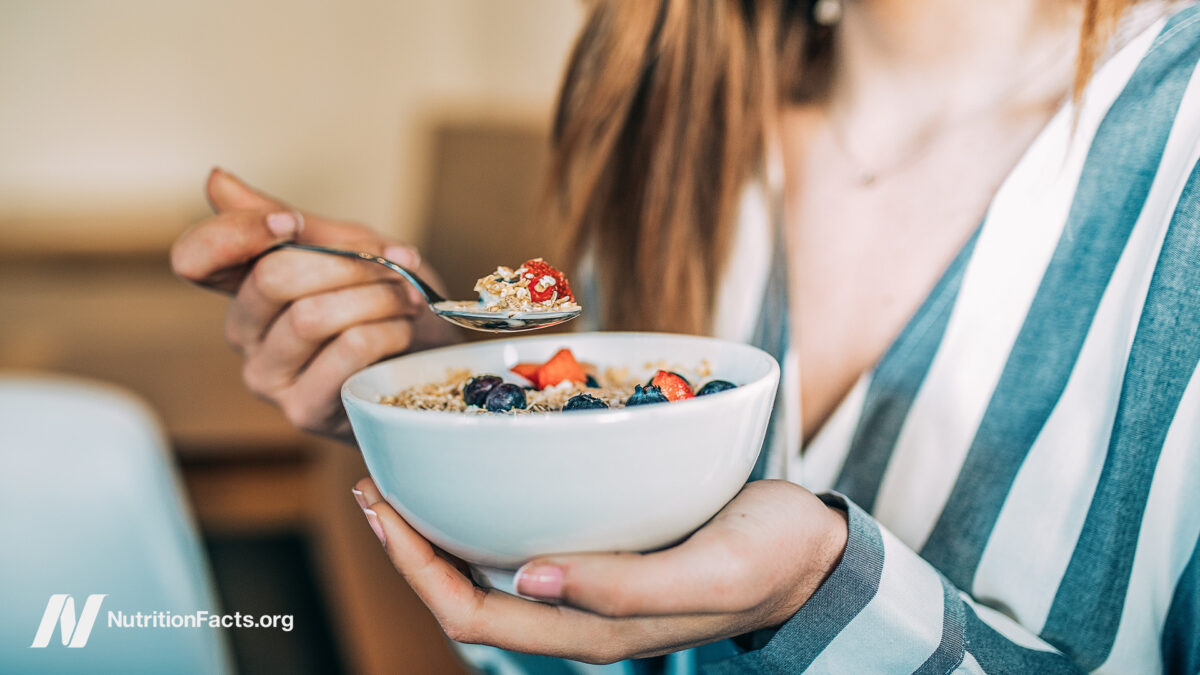
Tag: breakfast

  • Fungal Toxins for Breakfast?

    Fungal Toxins for Breakfast?

    One of the few food contaminants found at higher levels in those eating plant-based diets are mycotoxins, fungal toxins in moldy food ingredients, such as oats.

    In France, exposure to dietary contaminants was compared between vegetarians and meat-eaters, and the results showed that exposures to persistent organic pollutants like PCBs and dioxins were dramatically lower among those eating more plant-based foods. This was due to their avoidance of foods of animal origin, though they did have higher estimated exposure to some mycotoxins, fungal toxins present in moldy food.

    There are many types of mold on the planet, possibly millions, and the vast majority are harmless. However, over the last several years, certain mold toxins, such as aflatoxin and ochratoxin, have been popping up in breakfast cereals. Hundreds of samples were taken off store shelves, and about half were found to be contaminated with ochratoxin, but those store shelves were in Pakistan, which has a sub-tropical climate with monsoons and flash floods, leading to fungal propagation. Similar results have since popped up in Europe, in Serbia, for instance. They’ve also been found in Spain and seen in Portugal. Then, mycotoxins were discovered in breakfast cereals in Canada. What about breakfast cereals sold in the United States?

    Researchers collected 144 samples and, similar to other countries, found that about half contained ochratoxin, but only about 7% exceeded the maximum limit established by the European Commission. What is the significance of finding ochratoxin in U.S. breakfast cereals? In the largest study to date, which included nearly 500 samples of cereal off store shelves across the United States, overall detection rates were about 40%, though only 16 of the samples violated the European standards. All the cereals with ochratoxin were oat-based; however, about 1 in 13 of the oat-based cereal samples tested were contaminated.

    Ochratoxin has become increasingly regulated by many countries to minimize chronic exposure. Shown below and at 2:23 in my video Ochratoxin in Breakfast Cereals are the current regulations for mycotoxins in cereal-based baby foods, for example, worldwide.

    Some countries are very strict, like in the European Union; other countries are less so, and one country in particular has no standards at all. Ochratoxin is not currently regulated at all in the United States.

    What about sticking to organic products? One might expect them to be worse due to the fact that fungicides are not allowed in organic production. However, “mycotoxin concentrations are usually similar or reduced in organic compared with conventional products.” For example, in one of the breakfast cereal studies, researchers found similar contamination, and the same was found for infant foods. It cannot be concluded that organic is better than conventional from a mycotoxin perspective. “Despite no use of fungicides, an organic system appears generally able to maintain mycotoxin contamination at low levels.” But how much is that saying, given how widespread it is? How concerned should we be about the public health effects from “long-term exposure to this potent mycotoxin”?

    If you look at blood samples taken from populations going back decades, sometimes 100% of people turn up positive for ochratoxin circulating in their bloodstream. In some sense, mycotoxins “are unavoidable contaminants of food,” since they are not easy to detect and many of them can remain hidden. And, once foods have become contaminated, mycotoxins aren’t destroyed by cooking. So, are there some foods we should simply try to avoid due to a higher risk of contamination? That’s exactly the question I’m going to address next.

    Doctor’s Note

    This is the first video in a four-part series on mold toxins. Check related posts below for the other three.



    Source link

  • Breakfast Like a Boss: Delicious and Nutritious Mornings for a Happy and Healthy You

    Breakfast Like a Boss: Delicious and Nutritious Mornings for a Happy and Healthy You

    Breakfast is the most important meal of the day, setting the tone for a happy and healthy you. It’s the perfect opportunity to refuel after a night of sleep and provide your body with the necessary nutrients to tackle the day ahead. However, with increasingly busy lives, it’s easy to neglect this crucial meal or settle for a quick, unhealthy fix. In this article, we’ll explore the importance of breakfast, provide tips for making the most of your morning meal, and share delicious and nutritious breakfast ideas to help you start your day like a boss.

    Why Breakfast Matters

    Breakfast has been shown to have a significant impact on our overall health and wellbeing. Eating a nutritious breakfast has been linked to improved concentration and productivity, better weight management, and a reduced risk of chronic diseases such as heart disease and diabetes. Additionally, breakfast helps to jumpstart our metabolism, providing energy and helping to regulate our appetite throughout the day. Despite these benefits, many of us are guilty of skipping breakfast or relying on sugary cereals and pastries that provide little nutritional value.

    Benefits of a Nutritious Breakfast

    A nutritious breakfast should provide a balance of protein, healthy fats, and complex carbohydrates. This combination helps to keep us full and satisfied, providing sustained energy and supporting overall health. Some of the key benefits of a nutritious breakfast include:

    • Improved cognitive function and concentration
    • Better weight management
    • Reduced risk of chronic diseases
    • Improved mood and reduced stress
    • Increased energy and endurance

    Delicious and Nutritious Breakfast Ideas

    There are countless delicious and nutritious breakfast options to suit every taste and dietary requirement. Here are a few ideas to get you started:

    • Overnight oats: Mix rolled oats, milk, and your choice of nuts, seeds, or fruit, then refrigerate overnight and enjoy in the morning.
    • Avocado toast: Toast whole grain bread, mash avocado, and top with eggs, salt, and pepper.
    • Greek yogurt parfait: Layer Greek yogurt, granola, and your choice of fruit and nuts for a protein-packed breakfast.
    • Smoothie bowl: Blend your favorite fruits, yogurt, and milk, then top with granola, nuts, and seeds.
    • Breakfast burrito: Scramble eggs, add black beans, cheese, and your choice of vegetables, then wrap in a whole grain tortilla.

    Tips for a Stress-Free Morning

    Mornings can be chaotic, especially on weekdays when we’re rushing to get ready for work or school. Here are a few tips to help make your mornings less stressful and ensure you have time for a nutritious breakfast:

    • Prepare ahead: Prepare your breakfast the night before or make a batch of muffins or breakfast bars on the weekend to grab and go.
    • Keep it simple: Don’t feel like you need to make a complicated breakfast every morning. Keep things simple with toast, yogurt, or a piece of fruit.
    • Get the family involved: If you’re cooking for a family, get everyone involved in the breakfast process. Assign tasks such as setting the table or making toast to make mornings more manageable.
    • Prioritize: Make breakfast a priority and schedule it into your morning routine. Whether it’s 15 minutes or an hour, make time for a nutritious breakfast.

    Breakfast on-the-Go

    We’re not always able to sit down and enjoy a leisurely breakfast, especially on busy mornings. Here are a few ideas for breakfast on-the-go:

    • Muffins or breakfast bars: Bake a batch of muffins or breakfast bars on the weekend and store them in an airtight container for up to 3 days.
    • Yogurt or smoothie: Pack a container of yogurt or a smoothie in a thermos for a quick and easy breakfast.
    • Fruit or energy balls: Make a batch of energy balls using rolled oats, nuts, and dried fruit for a healthy and convenient breakfast.
    • Hard-boiled eggs: Boil a dozen eggs on the weekend and keep them in the fridge for a quick protein-packed breakfast.

    Breakfast for Special Diets

    Not everyone can enjoy a traditional breakfast due to dietary restrictions or preferences. Here are a few ideas for special diets:

    • Gluten-free: Try gluten-free cereals, bread, or muffins, or opt for naturally gluten-free foods like eggs, avocado, and fruit.
    • Vegan: Replace eggs with tofu or chickpea scramble, and opt for plant-based milk alternatives like almond or soy milk.
    • Dairy-free: Try dairy-free yogurt or milk alternatives, and opt for dairy-free cheese or nutritional yeast.
    • Low-carb: Focus on protein-rich foods like eggs, meat, and fish, and opt for low-carb vegetables like spinach and mushrooms.

    Conclusion

    Breakfast is a crucial meal that sets the tone for a happy and healthy day. By prioritizing a nutritious breakfast and making a few simple changes to our morning routine, we can improve our overall health and wellbeing. Whether you’re a fan of sweet or savory, there are countless delicious and nutritious breakfast options to suit every taste and dietary requirement. So, start your day like a boss and make breakfast a priority.

    FAQs

    Q: Why is breakfast the most important meal of the day?
    A: Breakfast helps to refuel our bodies after a night of sleep, providing energy and supporting overall health. It’s also been linked to improved concentration and productivity, better weight management, and a reduced risk of chronic diseases.
    Q: What are some healthy breakfast options?
    A: Some healthy breakfast options include overnight oats, avocado toast, Greek yogurt parfait, smoothie bowls, and breakfast burritos. Aim for a balance of protein, healthy fats, and complex carbohydrates.
    Q: How can I make mornings less stressful?
    A: Prepare ahead, keep things simple, get the family involved, and prioritize breakfast to make mornings less stressful.
    Q: What are some breakfast options for special diets?
    A: There are many breakfast options for special diets, including gluten-free, vegan, dairy-free, and low-carb. Try gluten-free cereals, replace eggs with tofu or chickpea scramble, opt for plant-based milk alternatives, and focus on protein-rich foods.
    Q: Can I still have a healthy breakfast if I’m short on time?
    A: Yes, there are many quick and easy breakfast options, including muffins or breakfast bars, yogurt or smoothies, fruit or energy balls, and hard-boiled eggs. Prepare ahead or keep things simple to make mornings more manageable.

  • Study Reveals Breakfast Item That May Boost Focus And Keep You Full

    Study Reveals Breakfast Item That May Boost Focus And Keep You Full

    Breakfast is a meal that often gets overlooked in a busy schedule. It’s not just enough that you don’t skip breakfast; the choice of your morning meal is equally important. New research has identified a specific breakfast item that not only boosts focus but also keeps you satisfied throughout the day.

    A recent study published in the Journal of Dairy Science explored how different breakfast choices affect satiety, concentration, and daily calorie intake in women. The findings revealed that a dairy-based high-protein diet is most effective for promoting fullness and boosting concentration compared to a carb-rich meal or skipping breakfast entirely.

    “Epidemiological studies clearly show that skipping breakfast is associated with a higher risk of being overweight, and other intervention studies note that several components in the diet—low contents of protein, fiber, and calcium—may have a detrimental effect on weight regulation. This suggested that the content of the breakfast may influence the health impact of the breakfast meal,” said lead investigator Mette Hansen in a news release.

    In the study, researchers tested if a high-protein, low-carbohydrate breakfast can help lower calorie intake later in the day and keep people feeling fuller for longer compared to skipping breakfast or eating a high-carbohydrate meal.

    The researchers conducted a randomized trial with 30 young women between the age of 18 to 30, who were overweight or obese. The participants followed a standardized diet and activity level the day before each test. During the study, they consumed either a protein-rich breakfast of skyr yogurt and oats or a low-protein, high-carbohydrate meal of whole grain bread with raspberry jam and apple juice. Both meals had similar energy content, fiber, and fat. Meanwhile, the control group skipped breakfast entirely, except for a glass of water.

    The researchers then calculated participants’ energy intake at lunch and throughout the day and measured their appetite between meals. They also took blood samples between breakfast and lunch to test for appetite-regulating hormones, insulin, and glucose levels.

    “The study results revealed that the young women participating felt more satiated and less hungry after a dairy-based, high-protein, low-carbohydrate breakfast compared with a low-protein, high-carbohydrate breakfast or no breakfast,” the researchers wrote.

    “However, this was not translated significantly to their gut hormones or overall calorie intake for the day, suggesting that a high-protein breakfast might not be a weight-loss solution on its own,” said Dr. Hansen.

    Source link