Tag: break

  • A Meditation for When You Need a Break

    A Meditation for When You Need a Break

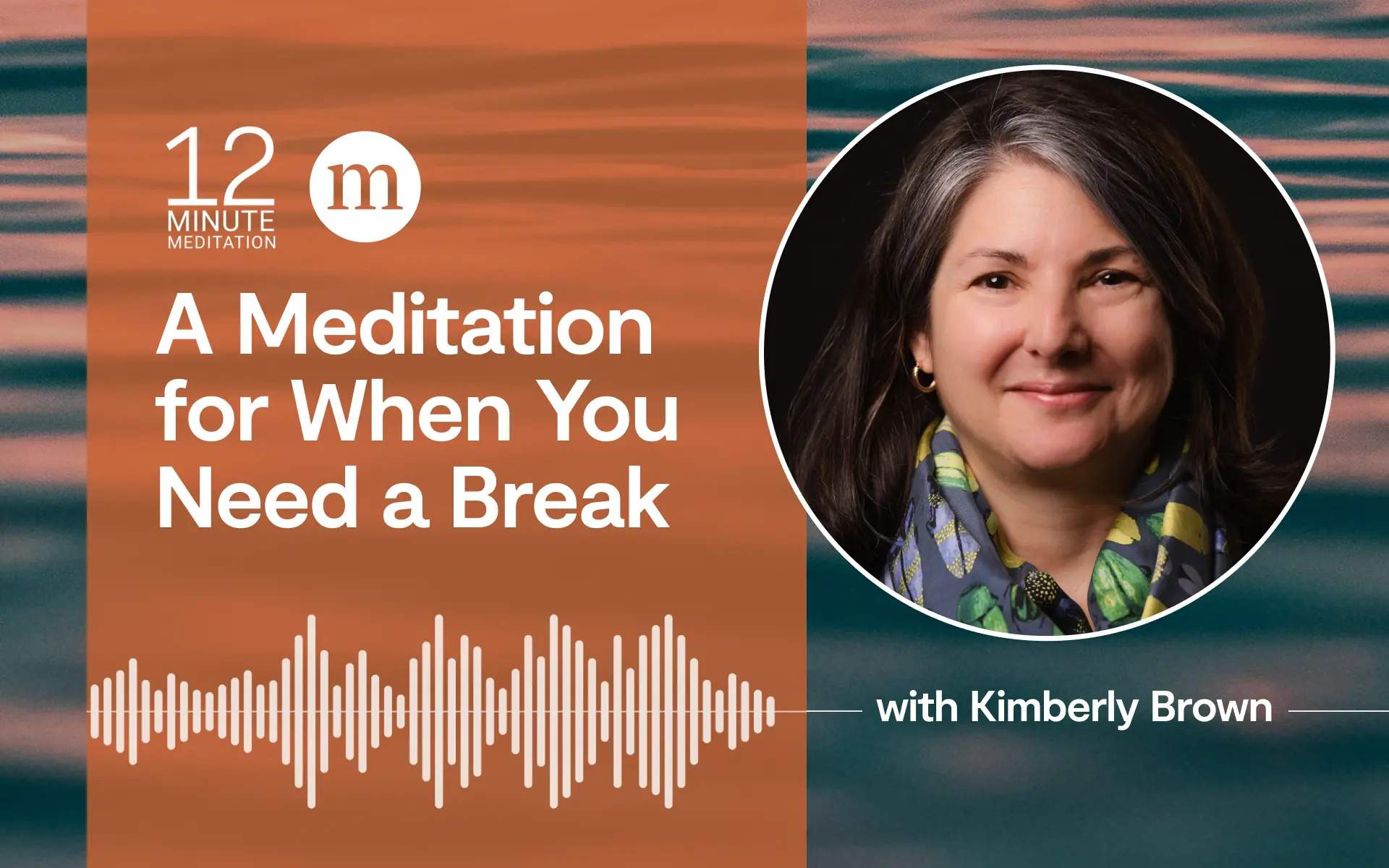
    Mindfulness teacher and author Kimberly Brown offers a relaxing practice for whenever you need a break. Take this moment to pause and reconnect with yourself.

    Sometimes, when we need a break, the best gift we can give ourselves is just a moment set aside for quiet, breath, and reminding ourselves of who we really are. 

    In this gentle guided practice, Kimberly Brown uses simple repeated phrases to ground attention and offer a place to rest and reset.

    A Meditation for When You Need a Break

    Read and practice the guided meditation script below, pausing after each paragraph. Or listen to the audio practice.

    Turn inward. You can say to yourself, Hello, I’m here. Hello, my beautiful self, I am here for you. Whatever is arising in me is welcome.

    Note that this practice includes longer pauses of complete silence for reflection and presence. If you want more time, feel free to pause the recording as you go.     

    1. To begin, remember that, for these few minutes, you don’t have to do anything. Make a decision and a commitment to yourself to shut off your devices, to stop talking, and to find a quiet place where you can be undisturbed. So if you need to, pause this recording and take a couple of minutes, find your spot, and then come back. Then, when you’re ready, get still.
    2. Take an attitude of welcoming. Say hello to yourself and whatever you’re experiencing right now. Put one hand on your heart and one hand on your belly and really turn the attention toward you. It’s very likely you’ve been looking out. Turn inward. You can say to yourself, Hello, I’m here. Hello, my beautiful self, I am here for you. Whatever is arising in me is welcome.
    3. Now gather all of your attention and bring it to your hands, feeling the tops of your hands, the palms of your hands, each finger as they are resting on your heart and on your belly. Connect through your palms with your breath. You can experience your body moving on each inhale and each exhale as you rest your attention on the tops of your hands and the palms of your hands and each finger. Just for a couple of moments, choose to keep your attention here, on your hands, feeling your breath. And when your attention moves away, gently but firmly bring it back, like a kind parent keeping a child safe.
    4. Where is your attention right now? Do you need to gently come back to the feelings of your breath, to your fingers and your palms? Just for one more minute, rest here.
    5. Now, with your attention gathered to your hand on your belly and your hand on your heart, imagine you’re with someone who loves you easily. This could be a dear old friend, an aunt, an uncle, a pet, a teacher. Imagine the two of you are in a place that’s meaningful to you, a place that is comfortable and safe to you. I’d like you to notice their face and their beautiful presence. And notice how you feel in their presence. Now, say to them and to you, May we stay connected to our true selves. May we be steady and brave. May we stay connected to our true selves. May we be steady and brave. For just a couple of minutes here, keep this visualization of the two of you, continuing to repeat these phrases like you’re giving a gift. May we stay connected to our true selves. May we be steady and brave.
    6. Have you lost your connection with the two of you? Are you planning or remembering? It’s okay. Gently come back, imagining you and this dear being, beginning again. May we stay connected to our true selves. May we be steady and brave. Just for another minute or so, repeating these phrases like you’re giving a gift. 
    7. Allow yourself to give this gift of kindness to this loved one. Just check in with yourself. If your attention has wandered from this dear one, reconnect. See their lovely face. Continue repeating, May you stay connected to your true self. May you be steady and open
    8. Keeping your hands on your heart and on your belly, you can let the visualization dissolve. Just be here in this moment with your presence, with your experience, with your beautiful self, and giving yourself the same wisdom. May I stay connected to my true self. May I be steady and open.
    9. I encourage you to continue practicing, even after this recording ends. Alternatively, you can conclude it now and practice it again and again when you feel that you need a break. Before you get up, open your eyes, re-engage with your life, your busy-ness—before you do that, thank yourself. Remember how valuable it is to get in touch with your compassion and your wisdom, your true nature. Thank yourself for this practice, and I thank you for your practice and your good heart.



    Source link

  • GOP Lawmaker Refuses to Read Their Own ‘Tanning Bed Tax Break’ Out Loud for Democrat in Congressional Hearing

    GOP Lawmaker Refuses to Read Their Own ‘Tanning Bed Tax Break’ Out Loud for Democrat in Congressional Hearing

    A Democratic lawmaker challenged Republicans on Capitol Hill over a provision in their sweeping budget bill that repeals the federal excise tax on indoor tanning services.

    When asked to read the line item during a public hearing Tuesday, Rep. Jason Smith (R-MO) refused.


    “So that the American public knows what this bill does… Would you please read page 901, line 20?” New Mexico Rep. Teresa Leger Fernandez asked Smith.

    “I think it’d be better if you read it,” Smith responded.

    “Oh, he doesn’t want to read it. This is in their bill. They don’t want to read a line from their own bill,” she said, as the back-and-forth continued. “This is amazing.”

    Rep. Gwen Moore (D-WI) eventually read the provision aloud: “Section 11106: Repeal of excise tax on indoor tanning services.”

    Leger Fernandez contrasted the provision incentivizing tanning bed-ownership with funding cuts to vital services in a critique of GOP priorities. “So if you have a tanning bed, you get a little bit of a tax break,” she said. “And if you need a hospital bed in rural America, I’m sorry, you’re out of luck.”

    In a more pointed jab, she alluded to President Donald Trump. “There are certain elected officials who appear to have a certain orange hue about them,” she quipped, “maybe they want to make sure tanning beds get a little bit of special credit.”

    “Really, we are prioritizing tanning beds over hospital beds in rural America,” Leger Fernandez emphasized.

    The tanning bed tax, originally enacted as part of the Affordable Care Act in 2010, was intended to both raise revenue and discourage use of ultraviolet tanning services due to health risks.

    The exchange underscored ongoing Democratic criticism that the Republican-led bill favors narrow interests and tax breaks for the wealthy over essential services like rural health care.

    Originally published on Latin Times


    Source link

  • The Power of Mindset: How Your Thoughts Can Make or Break Your Fitness Goals

    The Power of Mindset: How Your Thoughts Can Make or Break Your Fitness Goals

    The way we think about ourselves and our abilities has a profound impact on our ability to achieve our fitness goals. The power of mindset is a widely recognized concept that suggests that our thoughts and attitudes can either make or break our success. In the context of fitness, a positive mindset can be the difference between reaching our goals and giving up. In this article, we’ll explore the power of mindset and how it can affect our fitness journey.

    The Science Behind Mindset

    Research has shown that our thoughts and attitudes can have a significant impact on our physical performance. In one study, athletes who were told they were going to perform poorly actually performed worse than those who were told they were going to perform well. This is known as the "self-fulfilling prophecy" and it highlights the power of mindset in shaping our outcomes.

    Another study found that people who had a growth mindset, meaning they believed their abilities could be developed through hard work and dedication, were more likely to achieve their fitness goals than those with a fixed mindset, who believed their abilities were innate and couldn’t be changed.

    The Power of Positive Self-Talk

    Positive self-talk is a key component of a positive mindset. When we talk to ourselves in a positive and encouraging way, we can boost our confidence and motivation. This can be as simple as repeating affirmations to ourselves, such as "I can do this" or "I’m strong and capable".

    Positive self-talk can also help us to overcome self-doubt and negative thoughts. When we’re feeling discouraged or frustrated, it’s easy to get caught up in negative self-talk, such as "I’ll never be able to do this" or "I’m not good enough". However, by practicing positive self-talk, we can shift our focus away from negative thoughts and towards positive and empowering ones.

    The Impact of Negative Self-Talk

    On the other hand, negative self-talk can have a devastating impact on our fitness journey. When we’re constantly telling ourselves that we’re not good enough or that we’ll never reach our goals, we can become discouraged and demotivated. This can lead to a lack of effort and a lack of progress, ultimately causing us to give up on our goals.

    Negative self-talk can also affect our physical performance. When we’re feeling anxious or stressed, our bodies release stress hormones such as cortisol, which can cause us to feel tired and sluggish. This can make it harder to exercise and can even lead to injury.

    How to Develop a Positive Mindset

    So, how can we develop a positive mindset and achieve our fitness goals? Here are a few tips:

    • Practice Positive Self-Talk: As we mentioned earlier, positive self-talk is a key component of a positive mindset. Make an effort to talk to yourself in a positive and encouraging way, and try to avoid negative self-talk.
    • Focus on Progress: Instead of focusing on how far you have to go, focus on how far you’ve come. Celebrate your progress and accomplishments, no matter how small they may seem.
    • Reframe Negative Thoughts: When you catch yourself thinking negative thoughts, try to reframe them in a positive light. For example, instead of thinking "I’ll never be able to do this", try thinking "I’ll get there with hard work and dedication".
    • Surround Yourself with Positivity: The people we surround ourselves with can have a big impact on our mindset. Try to surround yourself with positive and supportive people who encourage and motivate you.

    The Importance of Mindfulness

    Mindfulness is another important component of a positive mindset. When we’re mindful, we’re able to focus on the present moment and let go of worries about the past or future. This can help us to stay motivated and focused on our goals.

    Mindfulness can also help us to develop a greater sense of self-awareness, which is essential for making positive changes in our lives. When we’re mindful, we’re able to tune in to our thoughts and emotions and make conscious choices about how we want to react to them.

    Conclusion

    The power of mindset is a powerful tool that can help us to achieve our fitness goals. By developing a positive mindset, we can boost our confidence and motivation, overcome self-doubt and negative thoughts, and stay focused on our goals. Remember to practice positive self-talk, focus on progress, reframe negative thoughts, and surround yourself with positivity. And don’t forget the importance of mindfulness in staying motivated and focused.

    FAQs

    Q: How can I develop a positive mindset if I’ve always been negative?
    A: Developing a positive mindset takes time and practice, but it’s definitely possible. Start by practicing positive self-talk and reframing negative thoughts. You can also try keeping a gratitude journal to focus on the positive things in your life.

    Q: How can I stay motivated and focused on my fitness goals?
    A: Staying motivated and focused requires a combination of positive self-talk, goal-setting, and accountability. Try setting small, achievable goals for yourself and celebrating your progress along the way. You can also find a workout buddy or accountability partner to help keep you motivated.

    Q: What if I have a setback or don’t see immediate results?
    A: Setbacks are a normal part of the fitness journey, and it’s essential to learn how to bounce back from them. Instead of getting discouraged, try to focus on what you can control and take things one step at a time. Remember that progress may not always be linear, and it’s okay to take things at your own pace.

    Q: How can I cultivate a growth mindset?
    A: Cultivating a growth mindset requires a willingness to learn and adapt. Try to focus on the process of getting better rather than the outcome, and be open to feedback and constructive criticism. You can also try to focus on the effort you’re putting in rather than the results you’re getting.

    the-power-of-mindset-how-your-thoughts-can-make-or-break-your-fitness-goals

  • Break Through the Barrier: 10 Effective Ways to Overcome a Fitness Plateau

    Break Through the Barrier: 10 Effective Ways to Overcome a Fitness Plateau

    Getting stuck in a fitness rut is a familiar tale for many of us. We start with grand ambitions, hitting the gym with enthusiasm and energy, only to find ourselves plateauing and struggling to make progress. It’s as if we’ve reached a wall, and no matter how hard we try, we can’t seem to break through. But fear not, for there are ways to overcome this hurdle and get back on track.

    The Consequences of a Fitness Plateau

    When we hit a plateau, it’s easy to feel discouraged, demotivated, and even abandon our fitness goals altogether. But here’s the thing: being stuck isn’t just a minor setback; it can have long-term effects on our mental and physical health. When we’re not making progress, we may experience:

    • Decreased self-confidence
    • Loss of motivation and enthusiasm
    • Slower metabolism and decreased muscle mass
    • Increased risk of injury or burnout

    Identifying the Culprits

    Before we can overcome the plateau, we need to identify the underlying causes. Common culprits include:

    • Overreliance on the same old routine
    • Lack of variation in workouts
    • Insufficient recovery time
    • Unrealistic expectations
    • Poor nutrition and hydration
    • Inadequate progressive overload (gradually increasing weight, resistance, or reps)

    Breaking Through the Barrier: 10 Effective Ways to Overcome a Fitness Plateau

    1. Mix It Up: Vary Your Workouts

      • Avoid doing the same workout routine for too long. Try new exercises, change the order, or incorporate different types of exercises, such as Pilates or yoga.
      • Switch up your environment: train outdoors, try online classes, or join a new gym.

    2. Progressive Overload: Gradually Increase the Challenge

      • Gradually increase weight, resistance, or reps over time to challenge your muscles and keep them growing.
      • Use different types of resistance, such as resistance bands or kettlebells, to mix things up.

    3. Listen to Your Body: Prioritize Recovery

      • Make sure to leave enough time for your body to recover between workouts. This can mean taking rest days, stretching, or incorporating gentle exercises like yoga.
      • Pay attention to your body and heed any signs of overexertion or injury.

    4. Get Creative with Nutrition

      • Shake up your diet by trying new recipes, exploring new cuisines, or incorporating different cooking methods.
      • Focus on whole foods, lean protein, and healthy fats, and consider consulting a nutritionist or registered dietitian for personalized guidance.

    5. Set Realistic Goals and Celebrate Small Wins

      • Break down large goals into smaller, achievable milestones, and celebrate your progress along the way.
      • Focus on the process, not just the end result.

    6. Find a Workout Buddy or Join a Fitness Community

      • Having a workout buddy or joining a fitness community can provide accountability, motivation, and support.

    7. Try Active Recovery Techniques

      • Incorporate techniques like foam rolling, self-myofascial release, or active isolated stretching into your routine.

    8. Incorporate High-Intensity Interval Training (HIIT)

      • HIIT can be an effective way to challenge your body and keep things interesting.

    9. Experiment with Meditation and Mindfulness

      • Mindfulness and meditation can help reduce stress and increase motivation.

    10. Seek Professional Guidance

      • Consult with a personal trainer, coach, or healthcare professional to create a customized plan tailored to your needs and goals.

    Conclusion

    Overcoming a fitness plateau requires a combination of mindset shifts, physical changes, and strategic planning. By identifying the underlying causes and implementing these 10 effective strategies, you can break through the barrier and get back on track to achieving your fitness goals. Remember to stay patient, flexible, and open to change – and don’t be afraid to seek help when you need it. The plateau is temporary, and with the right approach, you can blast through it and emerge stronger, more fit, and more confident than ever.

    Frequently Asked Questions (FAQs)

    Q: How long does it take to overcome a fitness plateau?
    A: The length of time it takes to overcome a fitness plateau varies from person to person. With consistent effort and progressive overload, you can start seeing results in as little as 4-6 weeks.

    Q: What are some common mistakes that can cause a fitness plateau?
    A: Common mistakes include not varying your workout routine, not giving your body adequate time to recover, and not setting realistic goals.

    Q: Can I still see progress if I’m not seeing muscle gain or weight loss?
    A: Yes! Progress isn’t always measured by physical changes alone. You can track progress by monitoring your overall health, energy levels, and mental well-being, as well as adjustments in your workouts and diet.

    Q: How often should I change my workout routine?
    A: It’s a good idea to change your workout routine every 4-6 weeks, or whenever you start to feel stagnant or unmotivated.

    Q: What’s the best way to get over a plateau on a tight budget?
    A: You don’t need to break the bank to overcome a fitness plateau. Try free workouts on YouTube, workout at home, or join a local park fitness class. Focus on progressive overload and prioritize recovery, and don’t be afraid to get creative with your workouts!

    break-through-the-barrier-10-effective-ways-to-overcome-a-fitness-plateau