Tag: Body Scan

  • Thanksgiving All Year Long: 5 Simple Gratitude Practices for Daily Life

    Thanksgiving All Year Long: 5 Simple Gratitude Practices for Daily Life

    5 Simple Gratitude Practices for Daily Life

    1) Begin with Gratitude for Your Body—Elaine Smookler

    Some days I wake up and notice that my spring has already sprung and each movement has a kind of creaking quality. After years of practicing mindfulness, it makes me smile. Whatever experience I’m having—good, bad, pleasant, unpleasant—I will never pass this way again. 

    This is an invitation to explore the experience of the present moment in all its gory glory. You can do this practice sitting, standing, upside down or whatever way you find the present moment. 

    1. Let’s start by taking three nice big breaths. Breathe in for a count of three and out for a count of five. Do you notice? You’re alive. It’s actually kind of amazing. Can you bring your attention to the jaw-dropping wonder that is the human body?
    2. Let’s start with the toes, bringing attention to your feet touching the ground. You may be amazed by how many sensations there are to experience, whether it’s tingling, pulsing, restlessness, hot, cool, moist, dry, ticklish, itchy, numb, neutral. What do you notice about paying attention to these small experiences? Is it possible that they could help you cultivate gratitude for this body that’s going to accompany you through your life?
    3. As you move up the legs, what do you feel? Whenever I feel anything uncomfortable, I notice how much I want to make meaning out of it. Instead, I invite us all to just feel what’s here without making any meaning of it at all. It’s all so interesting. So this is what’s happening now
    4. Moving up the land of pelvis, I notice clenching the moment I go to explore sensations in my bladder. Do I dare? Again, reminding myself that it’s not about trying to relax or make anything easier or better. I use these moments of awareness to widen the palette of colors available to experience what it is to be a human. When you do this, what do you notice? 
    5. Continuing the journey up the body, eventually we encounter the beautiful belly filled with so many stories. Loss, longing, yearning, wanting. Can you be grateful for all that it’s experienced and send it love and appreciation? 
    6. Moving up through the torso, this luscious landscape which houses heart and lungs, you may picture an inner river pumping and flowing, bringing juicy life through the body.
    7. When you reach your shoulders, you can lay gentle hands on yourself, massaging some of the day’s stress away. Taking a moment to be grateful for all that our shoulders shoulder. Swooping down through arms to fingers, I thank them for allowing me to be independent in so many ways. Can you offer appreciation to your hands and arms that work so hard? 
    8. We visit the neck and face. Are lips dry or moist? Are your teeth clenched? What about the jaw? Can you feel the air moving in and out of your nostrils? Can you notice your eyeballs, top of head, back of head, side of head, and ears?
    9. On an out-breath, let go of focused awareness. On an in-breath, expand your attention around the entire body, noticing all the sensations reminding you that you are alive right now. What do you notice when you bring the spirit of gratitude into every precious moment that you and your body share together?

    2) Allow Gratitude to Connect You to All Living Things—Shauna Shapiro

    Mindfulness, self-compassion, gratitude, and the practices that emerge from them help free us from the prison of isolation and the delusion of separation. These practices open our minds, awaken our hearts, and deepen our sense of connection with ourselves, each other, and our world. We begin to realize that we are never just practicing for ourselves. Transforming ourselves creates echoes in the universe, because as we heal ourselves, we heal each other, and our world. As renowned author Arianna Huffington beautifully puts it, “Living in a state of gratitude is the gateway to grace.” 

    1. Begin by settling the mind and body, taking a seat on a chair, on the floor, or wherever you can sit comfortably upright. Allow a soft smile to rest on your lips, not as a way to paper over how you are feeling, but simply to invite in rest and ease.
    1. Bring your awareness to the simple sensations of breathing. Feel how the breath is supporting you, oxygenating the body with each inhale, releasing stress and toxins with each exhale. Begin to sense the beating of your heart. Become aware of how the heart is supporting you, sending blood carrying oxygen and nutrients to all the trillions of cells in your body. Invite in a feeling of gratitude and kindness toward your breath, your heart, your body.
    1. Begin to feel your body in your seat, and let your awareness expand to include the earth below you, supporting you. Allow yourself to rest into the Earth, to feel held by the Earth. Feel how there is nothing more you need to do in this moment.
    1. Reflect on how the Earth is supporting all beings equally, and that gravity is keeping all beings tethered to the Earth. Reflect on how this planet is connected to a solar system and a vast universe. And that all things—all humans, all animals, the Earth, the sun, and the stars—are composed of the same matter, the same basic particles. We are literally all made of stardust.
    1. Feel the web of life into which we are born, from which we can never fall. Feel how you are part of this web. Nothing is separate.
    1. Feel yourself resting with gratitude in the heart of the universe. Begin to send your good wishes to all beings, gently and silently repeating, “May all beings be peaceful. May all beings be safe and protected. May all beings be happy. May all beings be filled with love and kindness.”
    1. And then recognize that you are contained within the good wishes for all beings. Rest your attention once again on this one being sitting here, and silently direct the good wishes to yourself: “May I be peaceful. May I be safe and protected. May I be happy. May I be filled with love and kindness.”
    1. As you breathe in, you are breathing in this loving-kindness, and as you breathe out, you are sending this loving-kindness out. May all beings here and everywhere dwell with peace. May the Earth dwell in peace. And close by offering: May this practice be of benefit for all beings.

    Excerpted from Good Morning, I Love You:  Mindfulness and Self-Compassion Practices to Rewire Your Brain for Calm, Clarity and Joy by Shauna Shapiro, PhD. Sounds True, June 2022.  Reprinted with permission.

    3) Awaken the Flow of Gratitude in Nature—Georgina Miranda

    Regardless of where I am experiencing nature—at a local city park, perched up high on mountain tops, or swimming in the sea—I’ve found it is always a good time to pause and be present with the gratitude I feel for our inherent connectedness to nature. Our breath is an anchor that can always bring us home. A few deep breaths, connecting with the space we are in, bring home a knowing that there is no separation between us. We need our Grand Mother, the Earth—her air to fill our lungs, her living things to feed us, her awe to keep our souls warm. She needs us too—to look after her, to shift our day-to-day ways of living, to treat her as one of our dearest friends.

    Next time you are in nature, see if you can shift from a state of doing into a state of being. The key difference between exercise and movement is that when you move with the intention of exercise, you quickly enter a state of doing. Movement is free-flowing and allows you to enter a state of being. The benefits are vast when you allow yourself to be one with the nature you choose, connecting and moving with gratitude.

    1. Give yourself permission to be. Go into nature without an agenda or expectations and just to be with it and move with it. If you are struggling with stress, anxiety, depression, or sluggishness, let movement outside help ignite an internal shift. 
    1. Breathe and pay attention. Bring all the attention to your breath, its rhythm, its ability to inspire a reset with each inhale and exhale. Notice the air you are breathing in, the smells, the temperature, the freshness. Let each inhale be an opportunity to connect you deeper with the nature you are in. Let each exhale be an opportunity to let go of anything that is not needed at this moment. 
    1. Breathe and feel deeper. When you’re connected to your breath, what else do you feel? As you take each step, what flows through your body? How does the sun, wind, snow, or rain feel on your skin? What can you hear? While you notice each breath you take, can you start to unite with the space you are in, versus be separate from it? Can you notice you are one with the earth, the air, the water, around you? 
    1. Breathe and open up to gratitude. Look around, and while staying connected to your breath, let your heart open to any gratitude that’s arising in this moment. Gratitude for the pause in the busyness of life and existence…to your body for its willingness to move freely…to this natural setting and the natural gifts from Mother Earth to you…for this moment of well-being…for knowing that this type of movement, state of awareness, and pause all in one is always available to you. 
    1. Surrender. Surrender completely with the help of the beautiful nature around you. Become one with it, one with your breath. Just be and soak in the feeling of liberation that can come from the present moment. 

    4) Counteract Resentment—Barry Boyce

    To begin this gratitude practice, I’d like to start by considering one of the biggest obstacles to gratitude: resentment. We can dress up our resentment with a sophisticated storyline about how others—one, or many, or multitudes—are doing us wrong, but what it simply boils down to is being upset because we’re not getting what we want.

    The world is too complex and multifaceted for us to continually get our way. It’s good to aspire for the best for ourselves and others, while nonetheless remaining committed to the journey more than the satisfaction of achieving a fixed outcome. If everyone gets their way, we can’t have a cooperative world. From time to time, we need to undercut our own perspective and see things from the other side—maybe even from all sides. Gratitude is a practice that can work with the tendency to cling to fixed outcomes and to feel resentful when we don’t get our way. 

    1. Bring to mind something that seems unlikely to change and that you do not accept. Perhaps it’s something that’s happened to you or it’s something that’s going on with a loved one or in the world at large. It can be big or small.
    2. Counter-intuitively say thank you for that. You’re not being thankful for the thing itself, you’re being thankful for the opportunity to let go. To accept how things unfold doesn’t mean we condone bad behavior or indulge in pessimism or martyrdom. Rather, the point is to use gratitude to undercut our resistance to working creatively with difficult situations. 
    3. For about 3 minutes, keep imagining things you resent, that you’re irritated about, things that you have trouble accepting or allowing.Try having an attitude that says, “Thank you for the opportunity to work with this.” When we open to deep gratitude for the opportunity to let go of our grasping to outcomes, we can foster a kind of embryonic openness that can lead to other more outward kinds of gratitude. 
    4. In this next step, let’s be grateful in concentric circles, moving out from our immediate situation, with prompts like the following: I’m grateful to have the necessities of life. I’m grateful to have people to love and to share love with. I’m grateful for friends and the companionship they offer. I’m grateful for the people who serve my needs, who pick up the garbage, take care of the roads, or fix my bicycle. I’m grateful for the people who provide energy and take care of the vast infrastructure that supports society and life. Thank you to the people who sell me food. I’m grateful to health care workers. I’m grateful to the people who are dedicated to keeping me safe. Finally, I’m grateful for the need to encounter those who mean harm, who are tormented by mental and physical pain that causes them to act badly or even violently. While I do not condone purposefully harmful actions, I am grateful that there is a spark of compassion available for those who do harm, and for all of us when we do harm, and the possibility of beneficial change emerging in time. Thank you very much. I’m grateful to share this with you.

    5) Nurture a Felt Sense of Gratitude—Gina Rollo White

    In this practice, we will be connecting ideas and thoughts with bodily sensations. I’ll walk you through all of it. Follow along and do what works for you.

    1. Choose a posture that’s comfortable for you: standing, sitting, or lying down. If you want to close your eyes, you can. Know that at any point, if you feel uncomfortable, you can always open them. If you are standing, sometimes closing your eyes can make you a little wobbly, so you can open them, adjust, and close them again. 
    1. Before we begin, take a nice big inhale. So inhale…and exhale. In this practice, we will be connecting ideas and thoughts with bodily sensations. I’ll walk you through all of it. Follow along and do what works for you. 
    1. Begin by noticing the length of your body. Just noticing the entire length of your body, from your feet all the way up to the top of your head. And bring to mind this idea of length, but also this idea of strength and pride. Feel yourself, standing tall or lengthening long, and connect with the sensation of your feet all the way up to the top of your head, so the entire length of your body is connected with the idea of strength and pride and length. 
    1. Now we’ll move to the back of our body. See if you can imagine what the back of your body looks like—the back of your head, your back, your seat, the back of your feet—and connect that with the idea of the past. Everything that’s behind you, your entire past, is connected with the backs of your shoulder blades, your seat. Maybe you can notice the space in between your shirt and your body, or the space in between your shoulder blades. Just bring to mind the back of your body, and connect it with the past. 
    1. Next, we move to the sides of our body. See if you can imagine the sides of your body from shoulder to shoulder, hip to hip, outside edges of your feet, maybe ear to ear. Think of that as connecting with the outside world, connecting with community. Even raise your arms up and see if you can create a little circle around yourself. Connect the sides of your body with this idea of protecting yourself, so you can create boundaries. But also, if you can, open up and reach your arms really wide, reaching out to your community, to those around you. Notice how you can reach really far and feel connected with those around you, but also create the safety of boundaries, connecting with the sides of your body, your shoulders, your hips, the outside of your feet. 
    1. Take a moment to continue connecting with community by sending thoughts of love and kindness and gratitude toward others. Bring to mind someone or something, maybe a pet, that you have an uncomplicated relationship with, who you feel safe with. As you bring to mind someone who creates safety or something that creates safety, imagine sending these words to them: May you feel love and kindness. May you feel safe and secure. May you feel healthy and strong. 
    1. And now, broaden those kind thoughts to your inner circle or your local community or neighborhood. Bringing to mind your community, send thoughts of love and gratitude: May you feel love and kindness. Imagining. All those people. May you feel safe and secure. 
    1. Continue opening your arms and your circle of love and gratitude. Broadening your arms even more, maybe continuing it out to your nation, to your continent. Imagine all the people and beings on your continent, and then even further out, to the entire world: May you all feel love and kindness. May everyone, every being, every animal feel safe and secure. May you all feel healthy and strong. 
    1. And now, bring your arms in closer to your body. Making that circle smaller and smaller, you can come back to our neighborhood, your community, all the way back to that first person or animal that makes you feel safe and secure. Connect with the outside of your body, the outside of your feet, your hips and shoulders. 
    1. Bring your focus now to your internal world. What’s occurring inside of your body? Notice your heartbeat, your stomach digesting, your lungs as you inhale and exhale. Connect that with the idea of present-moment awareness. What’s occurring right now, in this moment? Your breath. Your heartbeat. And also yourself, connecting your awareness with all that you are. Take a moment to send yourself gratitude and love and kindness. If it’s available to you, put your hands over your heart. 
    1. Think to yourself as you’re standing here in this present moment: May I feel love and kindness. May I feel safe and secure. May I be healthy and strong. May I be happy. Place your hands by your side, and move from the internal once again to the external. From the front of your body, the tips of your toes to your belly, to the outside of your chest, the outside of your shoulders, your face. Connect the front of your body with the idea of forward movement, and with the idea of all that is before you. 
    1. Picture your entire body, connecting all the parts. The front of your body, the sides of your body, the back of your body, internal head to toe. Bringing it all into one thought, one image, and take a moment to send yourself some gratitude. You might say to yourself, Great job. Great job for practicing today. Maybe even put your hands over your heart again and saying, Thank you.
    1. Place your arms by your side, and then if you can, as you inhale, reach your arms up really high, all the way up. As you exhale, lower your arms. If your eyes were closed, you can open them. Just take a moment to look around and take in the colors, the sights, maybe even the sounds. 
    1. Get curious about what you feel right now. What is the quality you feel right now? And then as you close this practice, give yourself one final moment of gratitude, saying to yourself, Thank you. Great job.
    How to Practice Gratitude 

    Practicing gratitude has incredible effects, from improving our mental health to boosting our relationships with others. Explore ways you can be more appreciative in our mindful guide to gratitude.
    Read More 

    • Mindful Staff
    • September 21, 2023

    The Science of Gratitude 

    Research shows gratitude isn’t just a pleasant feeling—being grateful can also support greater health, happiness, and wisdom in ourselves and our communities.
    Read More 

    • Misty Pratt
    • February 17, 2022


    Source link

  • A 10 Minute Body Scan That You Can Practice

    A 10 Minute Body Scan That You Can Practice

    Explore this guided practice to calm your mind, notice sensations in the body, and bring awareness to the present moment.

    We’re practicing mindfulness each time that we bring attention to a body part and are aware that we are doing so. Practicing mindfulness through this 10-minute body scan involves moving attention through various parts of the body. You will notice sensations that are present in your feet or hands or legs such as tingling, tightness, temperature, or you might notice a lack of sensation; simply be aware of it.

    We’re practicing mindfulness each time that we bring attention to a body part and are aware that we are doing so.

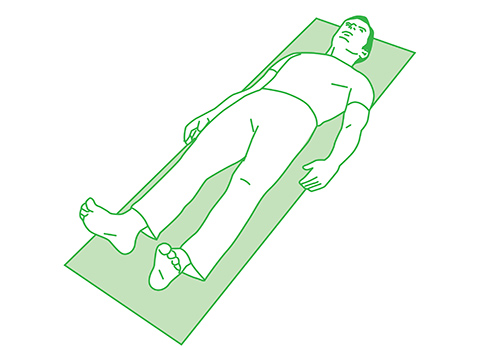
    We typically do the body scan by lying down on the floor or a soft surface, but if that’s not possible for you, you can certainly do the body scan while sitting in a chair.

    A 10-Minute Body Scan Practice

    As we begin this 10-minute body scan, we’ll be slowly and systematically moving attention through the various regions of the body, from the feet to the top of the head, noting any physical sensations as we go along.

    1. As you are lying on whatever surface you’re on, notice what it feels like to be lying there. Noticing the sensations present in this moment, noticing temperature, noticing points of contact with the body and the surface, noticing the rise and the fall of the abdomen. Allowing the body to rest in this position and noticing sensations as you breathe in and as you breathe out.
    2. Left foot and leg: Feeling the air move in and out of your body, let’s begin by bringing attention to the toes of your left foot. With the in-breath, noticing the sensations present or lack of sensation. And then with an out-breath, letting go of the toes and move your attention to the bottom of the left foot, including the heel touching the floor. Noticing all the sensations present in that region of the body, also notice how lack of sensation is something the mind can be aware of. Move on to the top of your left foot and ankle, noticing sensation. Now moving to the lower leg, knee, thigh, and hip on the left side of the body.
    3. Right foot and leg: Moving awareness, now, to the toes of the right foot, the bottom of the right foot, including the heel touching the floor. Bringing awareness to the sensations present in that part of the body. Moving on to the top of your right foot and ankle and scanning that region with awareness, noticing sensations present or lack of sensation. Now move into the lower leg, knee, thigh, and hip on the right side of the body.
    4. Pelvis: Bringing awareness now to the pelvic region, noticing sensations present or lack of sensation.
    5. Lower back and abdomen: Bringing awareness to the lower back and abdomen, aware of what’s there, without judgment or assessment, simply noticing with awareness.
    6. Upper back, ribs, and chest: Continuing to scan the back, the rib cage, and chest.
    7. Shoulders: Moving now to the shoulder blades and shoulders, noticing what is present in those regions of the body.
    8. Fingers and hands: From here, go to the fingers and the hands, the left and right together. Tuning into the fingers, thumbs, palms, back of the hands, wrists, noticing what’s there, noticing sensations present in the hands and the fingers.
    9. Wrists and arms: Now moving awareness to the wrists, forearms, elbows, upper arms, and shoulders, and noticing what sensations are present in those regions of the body. On an out-breath, let go of the whole of the arms and the hands.
    10. Neck and throat: Moving now to the neck and the throat, noticing what is there or not there.
    11. Head: Moving on to the head and face, and scanning with awareness the jaw, and the chin, the lips, the teeth, and gums, roof of the mouth, tongue, the back of the throat, the cheeks, and the nose. Feeling the air moving in and out of the nose. Then bringing awareness to the ears, the eyes, the eyelids, eyebrows, forehead, temples, and scalp, holding the whole of that region with awareness.
    12. Now, notice the breath: Stay in the present moment with the breath flowing in and out of the body, simply awake to whatever arises and predominates in your field of awareness at any given moment. And this may include thoughts or feelings, sensations, sounds, the breath, stillness, and silence. Be with whatever comes up in the same way you were with the scan.
    13. Notice how you may tend to react to impulses, thoughts, memories, and worries: Let yourself purposefully observe them without rejecting or pursuing. Practice simply seeing and letting go, seeing and letting go. No agenda other than to be present and awake.
    14. Closing:  In a moment, you’ll hear the sound of the chimes and move the awareness from the body to the sound. And as you follow the last sound to the end, gradually wiggle the toes and move the feet and stretch in whatever way you like. Coming back into the room, fully awake and fully present.

    As we bring this 10-minute body scan practice to a close, may we be peaceful and at ease, may our hearts be soft and open, may we be safe and protected, and our bodies healthy and strong. And for all of those known and unknown to us, may they be peaceful and at ease, may their hearts be soft and open, may they be safe and protected and their bodies healthy and strong. May the merit of this practice be for the benefit of all beings.

    Introduction text adapted from Harvard Pilgrim. This practice was originally published on Mindful.org in October 2018.


    Source link

  • Savor the Day With A Guided Walking Meditation

    Savor the Day With A Guided Walking Meditation

    This short walking meditation from Jon Kabat-Zinn encourages you to embracing mindful awareness with every footfall.

    Walking meditation is not about getting somewhere on foot. Instead, you are being with each step, fully here, where you actually are. You are not trying to get anywhere, even to the next step. There is no arriving, other than continually arriving in the present moment where you can savor the day.

    You are not trying to get anywhere, even to the next step. There is no arriving, other than continually arriving in the present moment.

    With walking, we have the opportunity to be in our bodies in a somewhat different way than when sitting or lying down. We can bring our attention to our feet and feel the contact of the foot with the floor or ground with every step. 

    Walking is a controlled falling forward, a process it took us a long time to master, and one that we often take completely for granted, forgetting just how wondrous and wonderful it is. So when the mind goes off, as it will do in walking meditation just as with any other practice, we take note of where it has gone, of what is presently on our mind, and then gently escort it back to this moment, this breath, and this step.

    Distance: How Long Should I Walk For? 

    Since you are not going anywhere, it is best to minimize opportunities for self-distraction by walking slowly back and forth in a lane, over and over again. The lane doesn’t have to be long. Ten paces one way, ten paces the other way would be fine. In any event, it is not a sightseeing tour of your environment. You keep your eyes soft and the gaze out in front of you. You do not have to look at your feet. They mysteriously know where they are, and awareness can inhabit them and be in touch with every part of the step cycle moment by moment by moment as well as with the whole of the body walking and breathing.

    Speed: How Fast Should I Walk? 

    Walking meditation can be practiced at any number of different speeds, and that gives it lots of applications in daily living. In fact, we can easily go from mindful walking to mindful running, a wonderful practice in its own right. There, of course, we abandon the lane, as we can certainly do for long-distance and faster formal walks. But when we introduce formal mindful walking in Mindfulness-Based Stress Reduction, it is done extremely slowly, to damp down on our impulse to move quickly, as well as to refine our intimacy with the sensory dimensions of the experience of walking and how they are connected with the whole of the body walking and with the breath, to say nothing about having a better sense of what is going on in the mind.

    If you want to try a walking meditation for yourself, try out the guided practice from Jon Kabat-Zinn below.

    A Guided Walking Meditation to Help You Savor the Day

    The above is adapted from Jon Kabat-Zinn’s Guided Mindfulness Meditation Series 3, available here. These guided meditations are designed to accompany Jon Kabat-Zinn’s book Falling Awake and the other three volumes based on Coming to Our Senses.

    Everyday Mindfulness with Jon Kabat-Zinn 

    When he started MBSR, Jon Kabat-Zinn didn’t have a detailed plan—just passion and an inkling that lots of good would come of it. He recently spoke with Mindful about his new MasterClass and shared insights on mindfulness and meditation.
    Read More 

    • Mindful Staff
    • February 1, 2024

    Take Your Mind for a Walk 

    Meditation can seem so meaningful and significant that it becomes a great big chore. In fact, with a slight shift in attitude, it can be as simple as walking the dog.
    Read More 

    • Steven Hickman
    • January 26, 2016


    Source link

  • 7 Steps to Relax Your Body

    7 Steps to Relax Your Body

    When was the last time you gave your body a break? And we’re not talking about sleep. Take ten minutes and try the body scan practice.  

    Time: 10–20 minutes

    When was the last time you noticed how your body was feeling? Not just when you have a headache or you’re tired or you have heartburn after that spicy taco you ate for lunch. But just noticing how your body is feeling right now, while you’re sitting or standing or lying down. How about noticing how your body feels while you’re sitting in an important meeting or walking down the street or playing with your children?

    In our busy, high-tech, low-touch lives, it’s easy to operate detached from our own bodies. They too easily become vessels we feed, water, and rest so they can continue to cart around our brains. We don’t pay attention to the information our bodies are sending us or the effect that forces such as stress are having—until real health problems set in.

    Let’s take a small and simple step in the direction of paying our body the attention it is due. Consider spending just a few minutes—every day, if you can—to notice your own physicality. Not to judge your body or worry about it or push it harder at the gym, but to be in it.

    Here’s an easy body-scan practice with just 7 steps to relax your body. It will tune you in to your body and anchor you to where you are right now. It will heighten your senses and help you achieve greater levels of relaxation. You can do it sitting in a chair or on the floor, lying down, or standing.

    Mindfulness Practice: 7 Steps to Relax Your Body

    1. Settle into a comfortable position, so you feel supported and relaxed.

    2. Close your eyes if you wish, or leave them open with a soft gaze, not focusing on anything in particular.

    3. Rest for a few moments, paying attention to the natural rhythm of your breathing.

    4. Once your body and mind are settled, bring awareness to your body as a whole. Be aware of your body resting and being supported by the chair, mattress, or floor.

    5. Begin to focus your attention on different parts of your body. You can spotlight one particular area or go through a sequence like this: toes, feet (sole, heel, top of foot), through the legs, pelvis, abdomen, lower back, upper back, chest shoulders, arms down to the fingers, shoulders, neck, different parts of the face, and head.

    6. For each part of the body, linger for a few moments and notice the different sensations as you focus.

    7. If you get distracted, gently bring your attention back. The moment you notice that your mind has wandered, return your attention to the part of the body you last remember.

    If you fall asleep during this body-scan practice, that’s okay. When you realize you’ve been nodding off, take a deep breath to help you reawaken, and perhaps reposition your body (which will also help wake it up). When you’re ready, return your attention to the part of the body you last remember focusing on.

    This article also appeared in the February 2014 issue of Mindful magazine.


    Source link

  • A 12-Minute Meditation to Relax Into Your Skin

    A 12-Minute Meditation to Relax Into Your Skin

    This week, Anu Gupta leads us through a detailed body scan, guiding us to relax, release, and shift our energy back to the present moment, coming back from any distracting thoughts and worries.

    Here and now, we can return to our breath. Take this time to feel wonder and gratitude for every part of your physical body, from head to toe, just the way you are today. Relax and release. With this practice, you’ll cultivate a sense of grounding and openness as you let this energy of relaxation soothe your whole body.

    1. Come to a comfortable seated position. As much as you can without creating tension, keep your spine long, feet planted on the ground, hands resting on your knees. Relax your shoulders, neck, and jaw, opening up your chest. Bring your eyes to a gentle close or place your gaze at a stationary point in front of you. 
    2. Bring your attention to your forehead. Do you notice any sensations in the forehead? Perhaps some holding, some tightness. See if you can relax and release. Consciously repeat those phrases: Relax. Release. 
    3. Now bring your attention to your jaw and your tongue. This is often a place we collect a lot of tension, a lot of tightness. So see if you can relax and release. 
    4. If the mind has begun to drift again, notice what it’s doing. Perhaps it’s thinking, or planning. Whatever it is, it’s just a habit. See if you can bring your awareness back to your jaw. This is the practice that we’re developing, the practice of returning to the present moment and bringing mindfulness to our body. Relax, release. 
    5. Now move your attention to your chest, releasing any holding. Feel a sense of expansion and openness. Relax. Release. Come down to your belly, noticing the expansion of the belly out on your inhales and the way it comes back in on your exhales. See if you can relax and release, refocusing your attention on your body in the now. 
    6. Now bring your attention to your arms. Your left arm. Your right arm. Your left hand. Your right hand. Notice if there’s any holding there. Notice the sensations of holding. Perhaps a tightness, some tingling. Be with your mind, and see if you can loosen, relax, release. We have the most nerve endings here, so often we feel a “doing” energy in our hands. But in this moment, we have nowhere to be, nowhere to go. Nothing to do, but just being aware, being mindful of what’s always here: our bodies. Relax. Release. 
    7. Bring your attention to your legs. Your thighs. Your knees. Notice any holding, any tension. Move down to your feet. Your left foot. Your right foot. Notice any contraction, any tension there. Gently focus on surrendering, releasing all that energy. Relax. Release. 
    8. Now take that energy of relaxation to all other parts of your body. See if there’s any other body part that’s holding some tension, some tightness. Right now, there is nowhere to go, no place to be but here. Savor the ease and openness of being here in your body. 
    9. Now bring your attention to your skin, the largest organ in our body. Notice what the skin feels like, this covering that really keeps the entirety of our body together. It regulates our body temperature, maintains homeostasis. In this moment, you’re just feeling the skin across your face, your scalp, your torso, your chest, your arms, your legs. Notice any sensations. What do they feel like? There’s no need to change them, just observe them.  
    10. You can bring this energy of release of relaxation to your body any time you notice holding or tension. This is the practice we’re cultivating, the practice of mindfulness. Notice if the mind has drifted. What is it doing? And see if you can bring it back to your body. Just for these last few moments, take these last few seconds to savor the openness you may feel in your body. This is available to you at any time, anywhere. By bringing awareness to your inner experience and to your body, you’ll be better able to make decisions that align with your purpose and values. 
    11. After your next exhale, bring your chin to your chest. If your eyes were closed, gently open them. Thank you for practicing today. Have a wonderful day ahead. 


    Source link